Bad Breath in Dogs: Symptoms, Types, Causes, Signs & Prevention

Canine Bible is reader-supported. We receive affiliate commissions via some of our links. Learn more.
Bad breath in dogs is a common issue that many owners overlook, often assuming it’s normal. In reality, persistent bad breath (halitosis) is usually a sign of underlying dental disease, such as plaque buildup, gum infection, or tooth decay. It can also be linked to other health problems, including digestive or systemic conditions. Left untreated, it may lead to pain, tooth loss, and more serious complications. The good news is that with proper care—regular dental cleanings, daily oral hygiene, and routine veterinary checkups—bad breath can often be prevented or effectively managed. This guide covers everything you need to know about bad breath in dogs, from causes and symptoms to treatment, prevention, and daily care, so you can keep your dog’s mouth healthy and their breath fresh.
What Is Bad Breath in Dogs?
Bad breath in dogs, also known as halitosis, is an unpleasant odor coming from a dog’s mouth that often signals an underlying issue. In most cases, it’s linked to dental disease, where plaque and tartar build up on the teeth, allowing bacteria to thrive and produce foul-smelling compounds. Over time, this can lead to gum inflammation, infection, and tooth damage. While mild odor can occur occasionally, persistent or strong bad breath is not normal and may also point to other health problems, such as digestive or metabolic conditions.
Types
Bad breath in dogs can have several underlying causes, each linked to different health issues:
| Cause | Description |
|---|---|
| Dental Disease | The most common cause, often linked to plaque buildup, tartar, gingivitis, or periodontal disease. |
| Food and Debris | Bad breath can happen when dogs eat smelly foods, raid the trash, or get food particles stuck between their teeth. |
| Oral Infections | Infections, abscesses, or mouth sores can create a strong, unpleasant odor. |
| Foreign Objects | Sticks, hair, bone fragments, or other debris lodged in the mouth can lead to odor and irritation. |
| Digestive Issues | Stomach upset, reflux, or other digestive problems may sometimes contribute to foul-smelling breath. |
| Underlying Illness | Conditions such as kidney disease, diabetes, or liver problems can sometimes cause unusual breath odors. |
Predisposed Dog Breeds
Some dog breeds are more prone to bad breath, especially small and short-nosed breeds. Crowded or misaligned teeth can lead to faster plaque buildup and dental disease.


| Category | Examples | Notes on Risk Factors |
|---|---|---|
| Small & Toy Breeds | Chihuahua, Yorkshire Terrier, Pomeranian, Shih Tzu | More prone to dental crowding and rapid plaque buildup → higher risk of periodontal disease. |
| Flat-Faced (Brachycephalic) | Pug, Bulldog, French Bulldog, Boxer | Compressed jaws and misaligned teeth trap food and bacteria → persistent bad breath. |
| Diet & Eating Habits | Wet food diets, scavenging, eating feces or garbage | Odor-causing bacteria and food residues contribute directly to foul breath. |
| Poor Dental Care | Infrequent brushing, no dental chews, lack of cleanings | Allows plaque and tartar to accumulate → leading cause of chronic halitosis. |
| Age (Senior Dogs) | Dogs over 7 years old | Higher likelihood of advanced dental disease and underlying health conditions. |
| Underlying Health Issues | Diabetes, kidney disease, liver disease | Can produce distinctive breath odors (sweet, ammonia-like, or musty). |
Causes
Symptoms
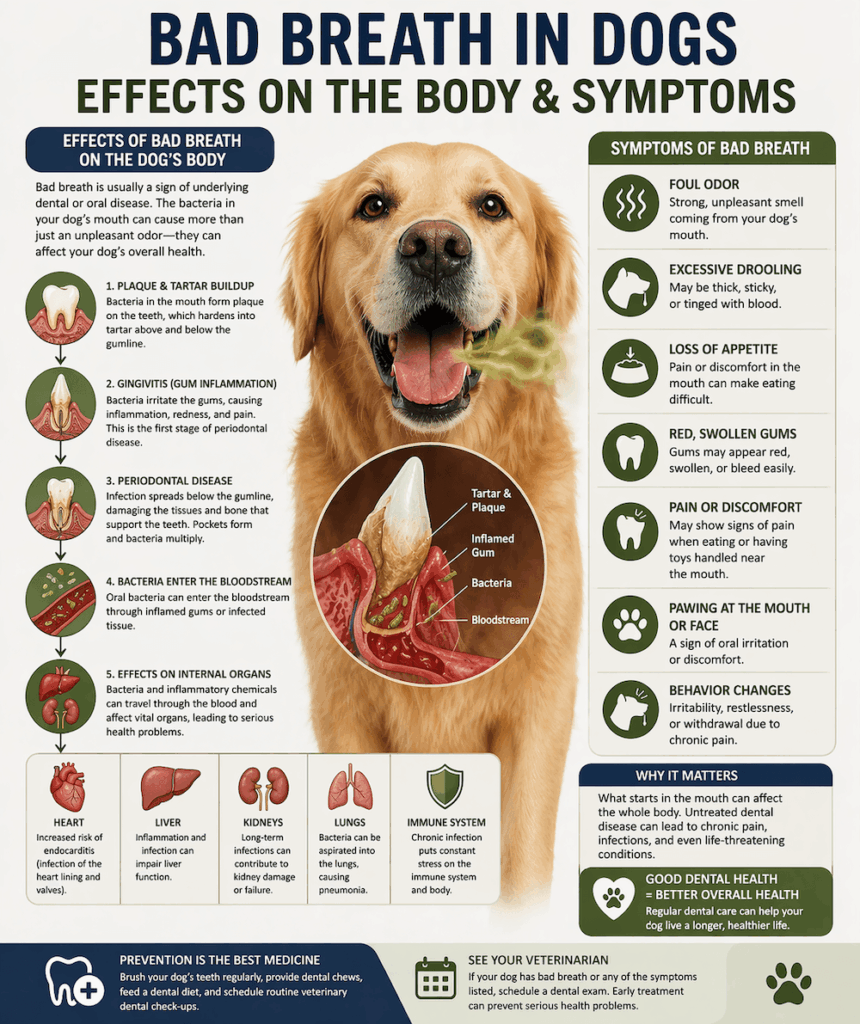
Bad breath in dogs is often a sign of underlying dental or health issues. While the odor itself is the most obvious symptom, it’s often accompanied by other changes in your dog’s mouth and behavior.
This visual guide highlights the most common symptoms associated with bad breath, helping you recognize early warning signs and take steps to protect your dog’s oral and overall health.
Stages of Bad Breath in Dogs
- Mild stage: Occasional bad breath, early plaque buildup, no obvious discomfort.
- Moderate stage: Persistent odor, visible tartar, red or irritated gums, and possible drooling.
- Severe stage: Strong foul smell, advanced periodontal disease, pain, loose teeth, possible infection or tooth loss.
Top Ways to Prevent Bad Breath in Dogs
Because bad breath is often a sign of underlying dental or health issues, prevention starts with consistent care. With proper oral hygiene and regular veterinary checkups, you can reduce plaque buildup, prevent infections, and keep your dog’s breath fresh and healthy.


| Prevention Strategy | Why It Helps | How to Do It |
|---|---|---|
| Regular Tooth Brushing | Removes plaque before it hardens into tartar and causes odor. | Brush daily or several times weekly using dog-safe toothpaste and a soft brush. |
| Dental Chews & Toys | Help scrape plaque and stimulate gums naturally. | Provide vet-approved dental chews or rubber toys designed for oral health. |
| Balanced Diet | Reduces buildup of odor-causing bacteria and supports oral health. | Feed high-quality food; limit table scraps and avoid frequent wet, sticky foods. |
| Routine Professional Cleanings | Removes tartar that brushing alone can’t eliminate. | Schedule veterinary dental cleanings as recommended (often yearly). |
| Fresh Water & Oral Rinses | Helps wash away food particles and bacteria. | Provide constant clean water; consider vet-approved dental water additives. |
| Prevent Scavenging | Eating garbage or feces causes immediate bad odor and bacteria buildup. | Supervise outdoor time, secure trash, and train “leave it” commands. |
| Regular Vet Checkups | Early detection of dental disease or underlying health issues. | Schedule routine exams and address any oral or health concerns promptly. |
Actionable Resources
If you want to prevent or reduce bad breath in your dog, here are some helpful resources and steps you can take with veterinary guidance:
How Bad Breath in Dogs Is Diagnosed
Diagnosing bad breath in dogs starts with identifying the underlying cause. Key steps include:
- Oral Examination: A vet checks teeth, gums, and mouth for plaque, tartar, infection, or injury.
- Dental Evaluation: May include probing under the gums or dental X-rays to assess hidden disease.
- Medical Assessment: If no obvious dental issue is found, further tests may be done to check for conditions like diabetes, kidney, or liver disease.
- History & Symptoms: Your vet will ask about diet, chewing habits, and any changes in behavior or appetite.
Early diagnosis is important, as persistent bad breath often signals problems that can worsen without treatment.
Treatment & Care
The most effective treatment for bad breath in dogs focuses on addressing the underlying cause—most often dental disease. Care typically combines professional cleaning, improved oral hygiene, and lifestyle adjustments.
Always consult your veterinarian before starting any new treatment or supplement for bad breath. You can get personalized joint-care advice from an online registered vet anytime, anywhere through Dutch. You can also chat with an online vet to ask questions about managing your dog’s bad breath symptoms, treatment options, and lifestyle adjustments tailored to their condition.
Conventional Medical Treatments
| Treatment | Benefits / Role |
|---|---|
| Professional Dental Cleaning | Removes plaque and tartar under anesthesia; the most effective way to eliminate persistent bad breath. |
| Tooth Extraction | Removes severely damaged or infected teeth that are causing pain and odor. |
| Antibiotics | Used to treat bacterial infections in the mouth, gums, or teeth when present. |
| Dental Rinses & Gels | Reduce oral bacteria and help control odor between cleanings. |
| Specialized Dental Diets | Formulated kibble helps mechanically reduce plaque buildup and improve oral hygiene. |
Supplement Support
| Supplement / Nutrient | Benefits / Role |
|---|---|
| Chlorophyll | Acts as a natural deodorizer and may help neutralize odor from the mouth and digestive tract. |
| Probiotics | Support healthy gut bacteria, which can reduce odor caused by digestive imbalances. |
| Parsley | Natural breath freshener with mild antibacterial properties. |
| Coconut Oil | May help reduce harmful oral bacteria when used in small amounts or for gentle oral care. |
| Omega-3 Fatty Acids | Help reduce inflammation in the gums and support overall oral health. |
| Zinc | Helps reduce bacteria and compounds that cause bad breath. |
| Vitamin C | Supports gum health and immune function, helping prevent oral infections. |
| Coenzyme Q10 (CoQ10) | Supports gum tissue health and may help reduce periodontal inflammation. |
| Dental Enzymes | Help break down plaque and bacteria that contribute to bad breath. |
Alternative & Integrative Therapies
| Approach | Benefits / Role |
|---|---|
| Herbal Oral Sprays | Natural ingredients like mint or neem may help reduce bacteria and freshen breath. |
| Oil Pulling (Pet-Safe Coconut Oil) | May help reduce oral bacteria and improve gum health when used carefully. |
| Raw Meaty Bones (Vet-Approved) | Provide natural mechanical cleaning of teeth and help reduce plaque buildup. |
| Probiotic Oral Supplements | Promote a healthier balance of oral bacteria, potentially reducing odor. |
| Natural Chew Options | Dried tendons or dental sticks can help clean teeth while satisfying chewing instincts. |
| Home Dental Wipes | Gentle alternative to brushing for dogs that resist toothbrushes. |
| Dietary Adjustments | Switching to less processed or dental-support diets may reduce odor-causing residue. |
Surgical Options
| Procedure | Benefits / Role |
|---|---|
| Dental Scaling & Polishing (Under Anesthesia) | Deep cleaning below the gumline removes tartar and bacteria—the most effective treatment for chronic bad breath. |
| Tooth Extraction | Removes infected, loose, or damaged teeth that are causing pain and strong odor. |
| Periodontal Surgery | Treats advanced gum disease by cleaning pockets and repairing damaged tissues. |
| Oral Tumor Removal | Eliminates abnormal growths that may cause foul odor and impact oral health. |
| Root Canal Therapy | Preserves important teeth while removing infected pulp and eliminating odor sources. |
Emotional & Lifestyle Impact
Bad breath in dogs can affect more than just their mouth—it may impact their comfort, behavior, and daily life. Dogs with dental issues may eat less, avoid chew toys, or become irritable due to oral pain.
For owners, persistent bad breath can be frustrating and may signal deeper health concerns. Addressing the issue often means adding regular dental care to your routine, along with veterinary visits. With proper care and consistency, you can improve your dog’s comfort, health, and overall quality of life.
Typical Annual Cost of Treating Bad Breath
| Category | Estimated Annual Cost Range | Notes |
|---|---|---|
| Routine Vet Visits | $100 – $300 | Basic exams to monitor oral health and detect early dental issues. |
| Professional Dental Cleaning | $300 – $1,000 | Performed under anesthesia; may cost more if extractions are needed. |
| Medications (Antibiotics, Oral Gels) | $100 – $400 | Used for infections, gum disease, or ongoing oral care. |
| Dental Products (Toothpaste, Chews) | $120 – $500 | Ongoing cost for maintaining oral hygiene at home. |
| Specialized Diets | $300 – $900 | Dental-support foods designed to reduce plaque and tartar buildup. |
| Advanced Dental Procedures | $500 – $2,500+ | Includes extractions, periodontal treatments, or root canals if needed. |
| Typical Annual Range | Basic Care: $300 – $1,200 | With Dental Procedures: $1,000 – $3,500+ | |
Dental care for bad breath in dogs can add up—from routine cleanings to treating dental disease. Pet insurance or wellness plans can help cover these costs and ensure your dog gets proper oral care. If you want to compare options, explore our guide to the Best Pet Insurance for Dogs and Best Pet Wellness Plans.
Other Health Issues Related to Bad Breath in Dogs
Bad breath in dogs can sometimes be a sign of other underlying health problems, including:
- Periodontal disease (advanced gum infection)
- Tooth decay or abscesses
- Oral tumors or injuries
- Digestive issues
- Kidney disease (often causes ammonia-like breath)
- Liver disease
- Diabetes (may cause sweet or fruity-smelling breath)
- Respiratory infections
- Foreign objects in the mouth
Frequently Asked Questions
The Bottom Line
Bad breath in dogs is common, but it’s not something to ignore. While it often points to dental disease, it can also signal other health issues. With early attention, regular dental care, and routine veterinary checkups, most causes can be treated or managed effectively. By maintaining good oral hygiene and staying proactive, you can keep your dog healthy, comfortable, and enjoying a fresher breath.