What Kind of Dog Is Doge From Dogecoin? A Shiba Inu? (The Truth)

Canine Bible is reader-supported. We receive affiliate commissions via some of our links. Learn more.
The famous face behind Dogecoin comes from a distinctive Japanese dog breed known for its fox-like appearance, expressive face, and independent personality. That instantly recognizable look helped turn one real dog into one of the internet’s most enduring memes. But the story of Doge goes far beyond a funny photo and a cryptocurrency logo. The original Doge had a name, an owner, and an unexpected path from an ordinary pet to a worldwide internet icon. Many people also wonder whether every dog with a similar appearance belongs to the same breed and what these dogs are actually like as pets. From the breed’s history and personality to the real dog behind the meme, there is much more to Doge than the famous sideways glance. Here’s everything to know about the dog that inspired Dogecoin and the breed behind the meme.
What Kind of Dog Is Doge From Dogecoin? History & Origin
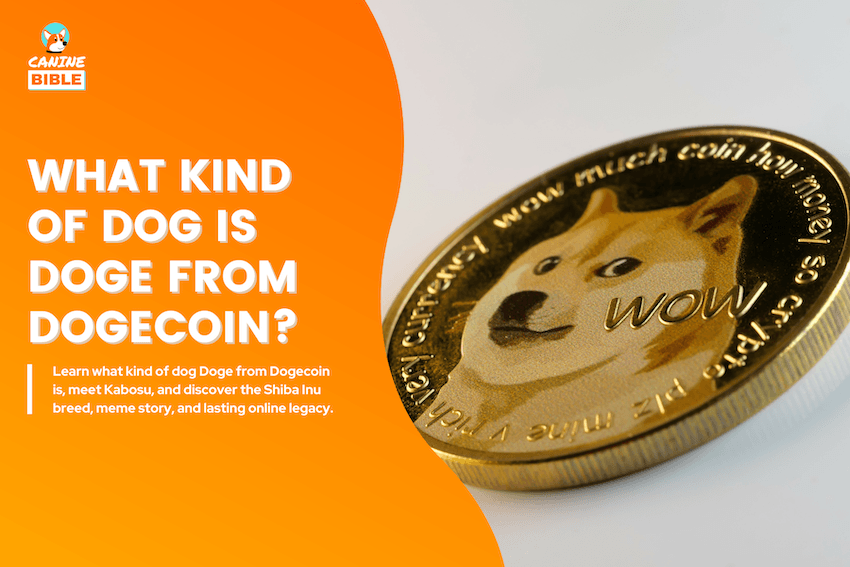
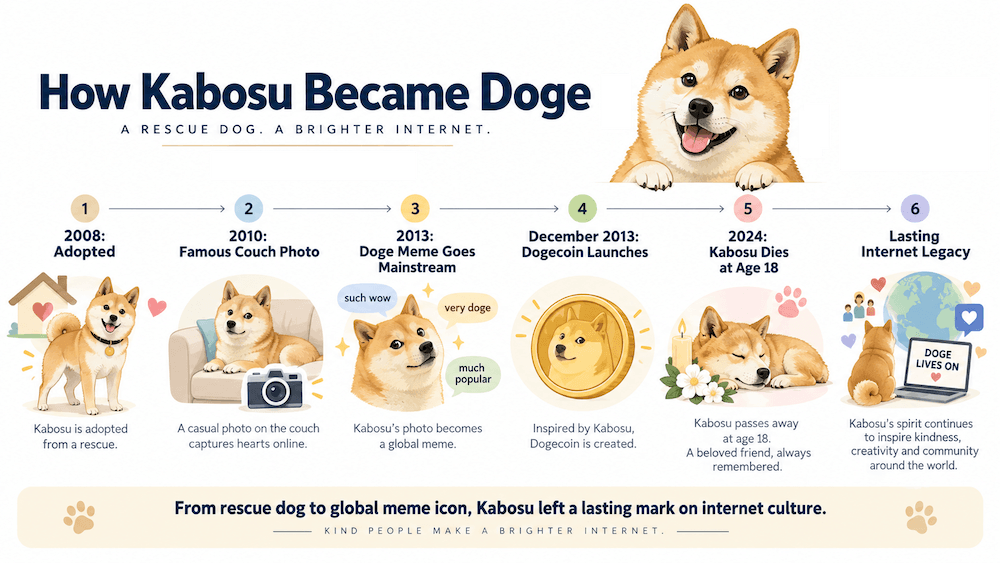
Doge from Dogecoin is a Shiba Inu, a small Japanese dog breed known for its pointed ears, curled tail, compact build, and fox-like expression. The dog most people recognize as Doge was Kabosu, a female Shiba Inu Atsuko Sato adopted in Japan in 2008 after rescuing her from a breeding operation that had shut down. In 2010, Sato photographed Kabosu sitting on a couch with her paws crossed and giving the camera her now-famous sideways look, an image that later spread widely online.
Internet users paired Kabosu’s photo with phrases like “such wow” and “much amaze,” making her the best-known face of the Doge meme. Dogecoin launched in December 2013 using imagery inspired by the Doge meme, further cementing Kabosu’s place in internet and cryptocurrency culture. She died peacefully in May 2024 at about 18 years old, leaving a lasting legacy that stretched from animal rescue to global meme culture.
What Did Doge Look Like?
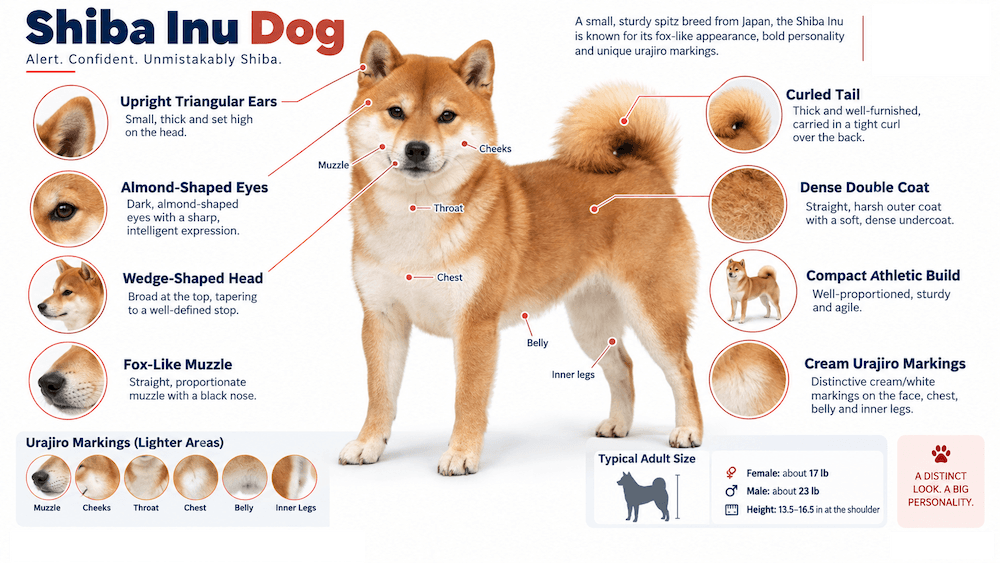
Shiba Inus are compact, athletic dogs with a distinctive fox-like appearance and balanced spitz-type build. Kabosu had the classic red coloring associated with the breed, along with lighter urajiro markings that contrasted with her warm reddish coat. Adult Shibas are relatively small but sturdy, with proportions that give them an alert, agile appearance rather than a delicate one.


Why Does Doge Look Like a Fox?
Shiba Inus are domestic dogs, not foxes or dog-fox hybrids. Their fox-like look comes from a combination of breed traits that developed independently within the canine family. Despite the resemblance, Shibas differ from foxes in their body structure, behavior, genetics, and domesticated ancestry. Their curled tail and compact, muscular build are especially unlike the leaner silhouette of most foxes. The resemblance is visual rather than biological.
Doge, a Shiba Inu, vs. Similar-Looking Breeds
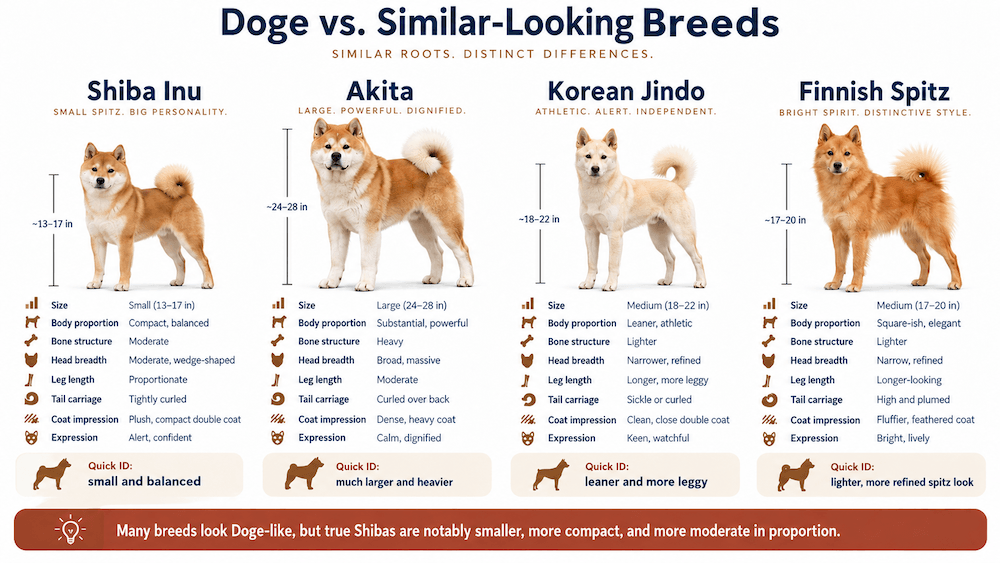
Several breeds can initially resemble Doge. The Akita has a similar Japanese spitz appearance but is dramatically larger, while breeds such as the Korean Jindo and Finnish Spitz can share erect ears, curled or elevated tails, and reddish coloring. A genuine Shiba has a particularly compact frame, relatively small size, dense coat, triangular ears, and characteristic curled or sickle-shaped tail.
Is Doge a Typical Shiba Inu?
Physically, Kabosu was an excellent example of why the Shiba Inu became so recognizable online. Her small erect ears, reddish coat, light facial markings, compact head, and expressive eyes all fit the general appearance associated with the breed.
Personality is less predictable. Kabosu was described by her owner as particularly calm and gentle, whereas Shiba Inus as a breed are commonly confident, alert, independent, intelligent, and sometimes reserved. Breed tendencies can help owners know what to expect, but individual personality varies considerably.


| Trait | Kabosu, the Doge Dog | Typical Shiba Inu |
|---|---|---|
| Breed | Female Japanese Shiba Inu. | Small native Japanese spitz-type breed. |
| Coat | Classic warm red coloring. | Red, sesame, or black and tan are recognized colors. |
| Ears | Small, upright, triangular ears. | Erect triangular ears are characteristic of the breed. |
| Tail | Characteristic Shiba tail carried over the back. | Usually curled or sickle-shaped over the back. |
| Expression | Famous for an expressive sideways glance. | Often alert, confident, and highly expressive. |
| Temperament | Reportedly calm, gentle, and laid-back. | Often confident, independent, alert, and spirited. |
| Trainability | Individual training history varied. | Intelligent but often independently motivated. |
| Prey Drive | Cannot be judged from the meme. | Chasing instincts can be strong in many Shibas. |
The Shiba Inu Dog Breed: Everything You Need to Know
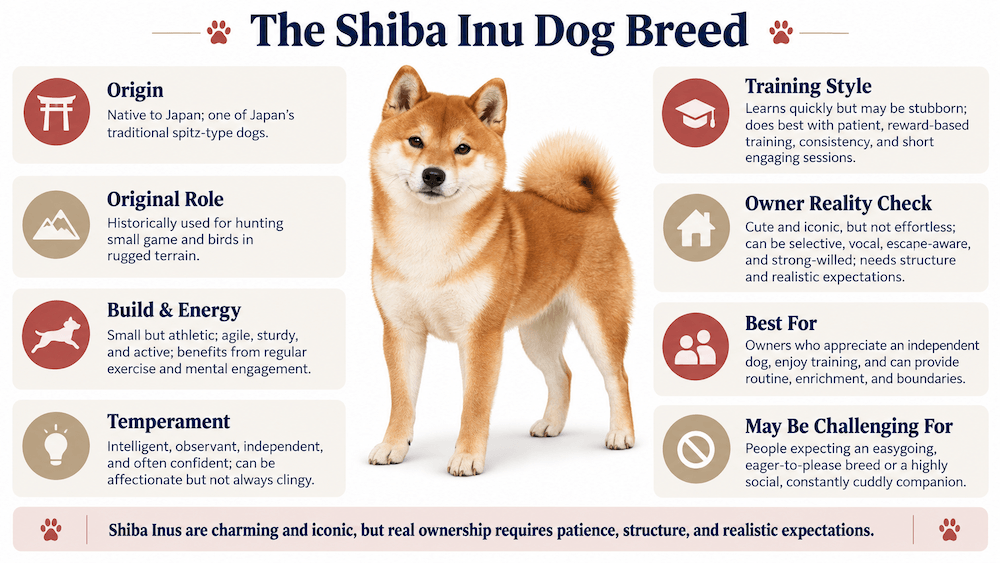
The Shiba Inu is a native Japanese breed originally developed for hunting in mountainous terrain. Despite its relatively small size, the breed is athletic, agile, alert, and highly aware of its surroundings.
Shibas are also intelligent and observant, but they tend to be independent rather than naturally eager to obey. They often respond best to consistent, reward-based training that keeps sessions engaging and avoids unnecessary repetition.
The relaxed expression associated with Doge memes can make Shiba Inus seem effortlessly easygoing, but real ownership can be more demanding. Their independence, strong instincts, and confident personality mean prospective owners should understand the breed beyond the famous internet image.
Is a Shiba Inu a Good Family Dog?
A well-socialized Shiba can live happily in a family, but suitability depends more on household expectations than on the Doge image. Owners who enjoy an intelligent, independent dog and are comfortable managing prey drive, shedding, training, and boundaries are often better prepared for the breed.
| Category | Good Fit | May Be Challenging |
|---|---|---|
| Training | You enjoy patient, reward-based training. | You expect immediate obedience with little practice. |
| Exercise | You can provide daily activity and enrichment. | You want a consistently low-energy lap dog. |
| Off Leash | You use secure fencing and leash management. | You require effortless off-leash reliability. |
| Children | Interactions are supervised and respectful. | Children regularly grab or crowd dogs. |
| Other Pets | You can manage careful introductions. | You cannot accommodate possible chasing behavior. |
| Grooming | You accept heavy seasonal shedding. | You need a minimally shedding household. |
| Personality | You appreciate an independent companion. | You want a constantly eager-to-please dog. |
Shiba Inu Temperament & Personality
Shiba Inus are known for a confident, independent personality paired with strong awareness of their surroundings. They can be affectionate and deeply bonded to their families, but they often prefer interaction on their own terms, making early socialization and respect for individual temperament especially important.
Shiba Inu Exercise, Training & Mental Stimulation
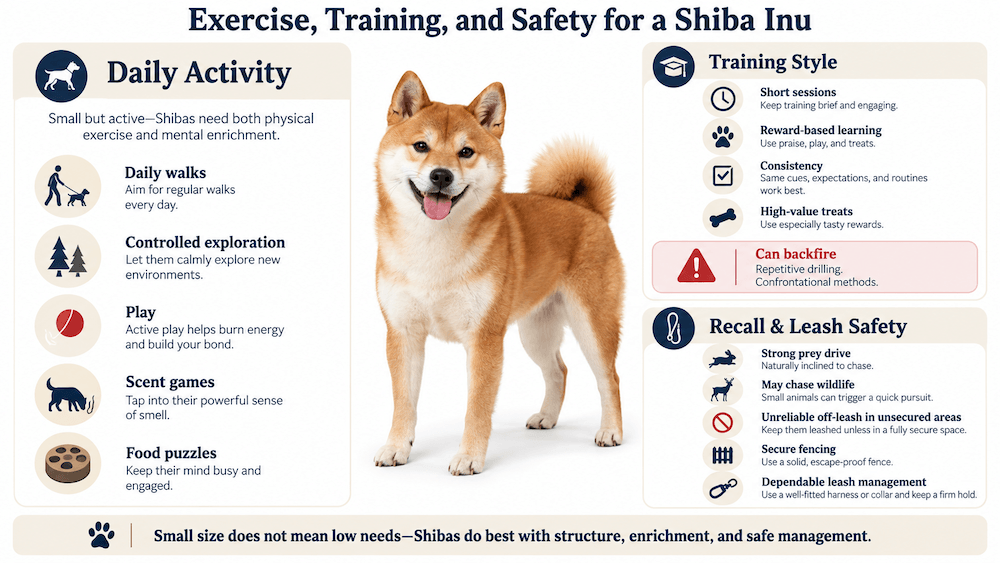
Shiba Inus may be small, but they need a thoughtful balance of daily activity, mental enrichment, consistent training, and safe management. Their intelligence and independence make short, reward-based sessions especially useful, while secure leash and fencing habits help manage their natural chasing instincts.
Shiba Inu Health, Lifespan & Responsible Breeding
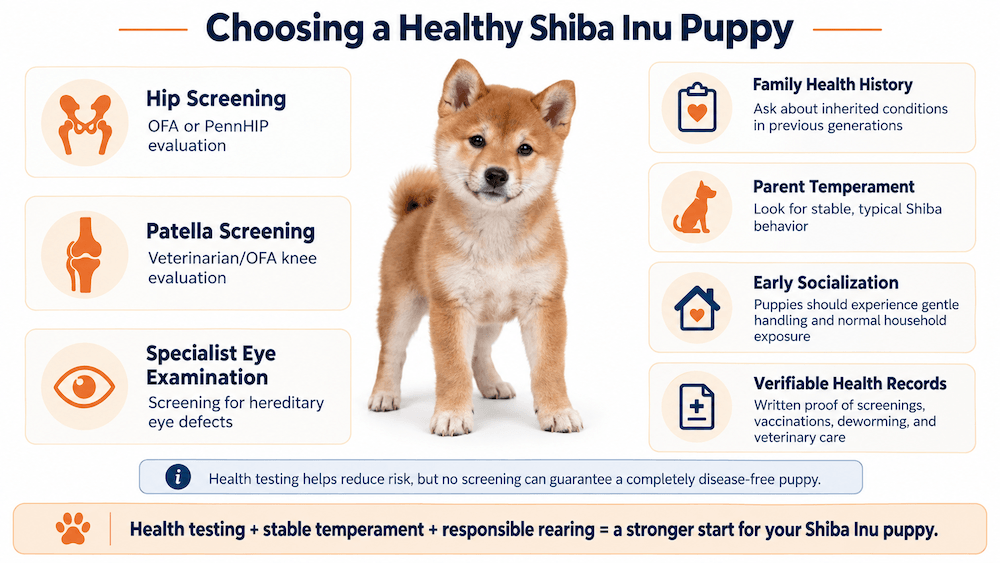
Shiba Inus are generally a healthy, long-lived breed, with many living well into their teens with good genetics, appropriate nutrition, regular exercise, and preventive veterinary care. However, they can be predisposed to certain concerns, including allergies, patellar luxation, hip dysplasia, eye disorders, and some inherited conditions such as glaucoma or progressive retinal atrophy. Prospective owners should choose breeders who complete recommended health screenings and provide clear records for both puppies and their parents. Responsible breeding, early socialization, and lifelong weight and wellness management can all help support a Shiba Inu’s long-term health.
Typical Shiba Inu Lifespan
A reasonable general expectation for a Shiba Inu is roughly 13–16 years, although lifespan varies among individuals. Some Shibas live longer, especially with strong preventive care and good overall health, but those longer lifespans should be viewed as exceptions rather than guarantees.
Those figures are population averages, not a prediction for an individual dog. Genetics, body condition, dental care, chronic disease management, accidents, and overall lifestyle can all influence longevity.
Common or Important Shiba Inu Health Concerns
Shiba Inus are not considered a heavily exaggerated breed in terms of structure, but several health problems still deserve attention. Orthopedic issues, inherited eye disease, and skin problems are among the more important concerns for owners and breeders to understand.
Choosing a Healthy Shiba Inu Puppy
Choosing a healthy Shiba Inu puppy starts with finding a responsible breeder who prioritizes health testing, stable temperament, and early socialization. Breeding dogs should be screened for important inherited concerns, and breeders should be willing to show the actual test results rather than simply saying their dogs are “health tested.” Puppies should also be raised in a clean, enriched environment, handled regularly, and sent home with verifiable veterinary, vaccination, and deworming records. Family health history and the temperament of both parents are also worth reviewing because health and behavior are influenced by more than appearance alone.
How Kabosu Became the Face of Dogecoin
The connection between Kabosu and Dogecoin happened in a clear sequence: Kabosu → Doge meme → Dogecoin. Kabosu’s photograph existed first, and internet users later transformed Shiba Inu imagery—especially her distinctive expression—into the increasingly popular Doge meme.
Dogecoin launched in December 2013, after Doge was already established as an internet meme. The cryptocurrency adopted Shiba Inu imagery inspired by that existing phenomenon, meaning Kabosu was never photographed or created specifically to serve as a cryptocurrency mascot. Dogecoin then introduced the Doge image to an even broader audience, strengthening the connection between Kabosu, Shiba Inus, meme culture, and cryptocurrency.
Kabosu’s Legacy
Kabosu’s significance extends far beyond a single viral photograph. A rescue dog living an ordinary life in Japan became one of the most recognizable animals on the internet, eventually connecting several very different worlds: pet culture, internet memes, digital art, online communities, and cryptocurrency. Her image became so culturally established that a bronze monument honoring her was unveiled in Sakura, Japan, in 2023.
Yet Kabosu continued to be celebrated as an individual dog rather than simply as a logo or meme. Following her death in May 2024, tributes reflected both the enormous online phenomenon surrounding Doge and the affection people had developed for the real Shiba Inu behind it. Her legacy also helped cement the Shiba Inu as one of the dog breeds most instantly associated with internet culture.
Interesting Facts About Doge
Frequently Asked Questions
The Bottom Line
Doge from Dogecoin is a Shiba Inu, and the real dog behind the famous meme was a female Shiba named Kabosu. Her distinctive expression helped turn an ordinary photograph into one of the internet’s most recognizable memes. Dogecoin later adopted imagery inspired by that already-popular Doge phenomenon, further expanding Kabosu’s cultural reach. Beyond the meme, Shiba Inus are confident, intelligent, athletic dogs with an independent personality that can make ownership more demanding than their laid-back internet image suggests. Prospective owners should be prepared for consistent training, early socialization, secure management, regular grooming, and responsible health care. Kabosu’s story also shows how one rescue dog became permanently linked with both internet culture and cryptocurrency. Today, her image remains closely associated with the Shiba Inu breed and the lasting legacy of Doge.