
What to Do When a Dog Dies: 5 Steps Aftercare & Grief Guide


Canine Bible is reader-supported. We receive affiliate commissions via some of our links. Learn more.
When a dog dies, the first steps are to give yourself a moment to process what has happened, keep your dog’s body in a cool and respectful place, and contact your veterinarian or a pet aftercare service for guidance. Depending on the circumstances, you may need to arrange cremation, burial, or veterinary examination, especially if the death was sudden or unexplained. Losing a dog can be deeply painful, and it is normal to feel overwhelmed or unsure about what to do next. Practical decisions often have to be made while you are still grieving, from choosing between cremation and burial to deciding what to do with your dog’s belongings. Families with children or other pets may also face difficult questions about how to explain the loss and help everyone adjust. There are also important considerations if your dog dies at home, during the night, or under unexpected circumstances. Knowing what to expect can make these first difficult hours a little more manageable and help you say goodbye in a way that feels right for you and your dog.
Assessing Your Dog’s Quality of Life
Quality-of-life assessment can help you and your veterinarian judge whether your dog is still comfortable and enjoying daily life, especially with advanced age, cancer, chronic pain, or terminal illness. Look at the overall pattern across several days rather than relying on one unusually good or bad moment.
Keeping a simple daily record can make gradual decline easier to recognize. If your dog is experiencing persistent pain, breathing difficulty, inability to eat or drink, severe weakness, or more bad days than good, speak with your veterinarian about comfort care, hospice, and whether euthanasia may prevent further suffering.
Signs That a Dog is Dying
Dogs approaching the end of life can show a combination of physical and behavioral changes. No single sign proves that death is imminent, and several of these signs can also occur with treatable medical emergencies, so new or severe changes should be discussed with a veterinarian.
What to Do After Your Dog Dies
Losing a dog can feel overwhelming, especially when you are unsure what to do next. These steps can help you handle your dog’s body respectfully, make aftercare arrangements, and understand when veterinary guidance may still be needed.


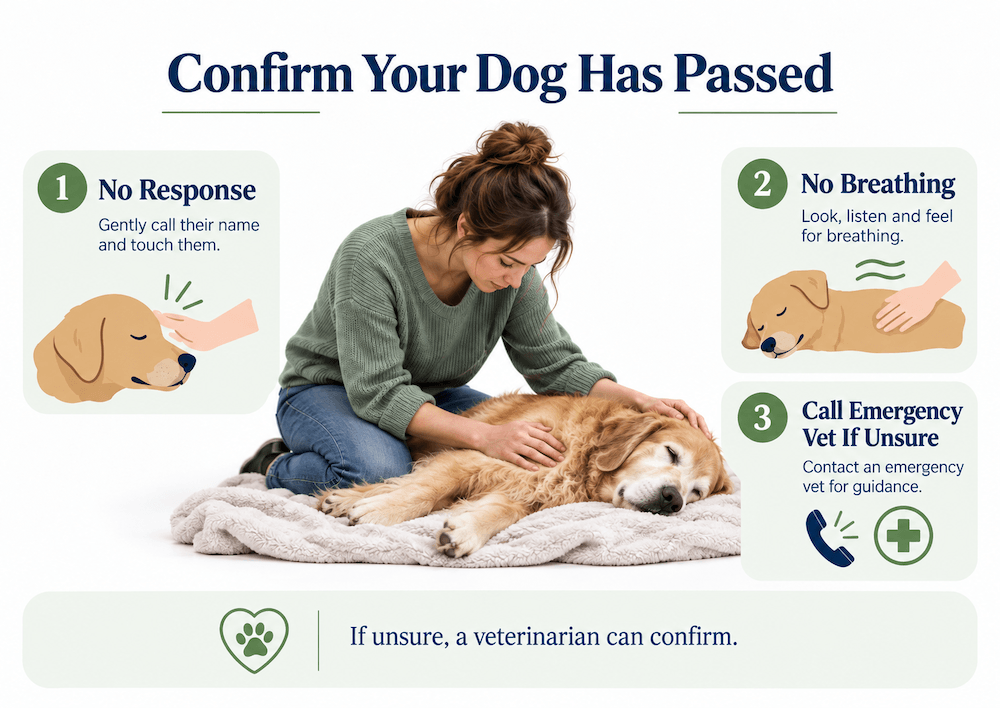
1: Confirm That Your Dog Has Died
If your dog is completely unresponsive and not breathing, they may have passed. If there is any uncertainty—especially after a sudden collapse—contact an emergency veterinarian immediately rather than assuming death has occurred.
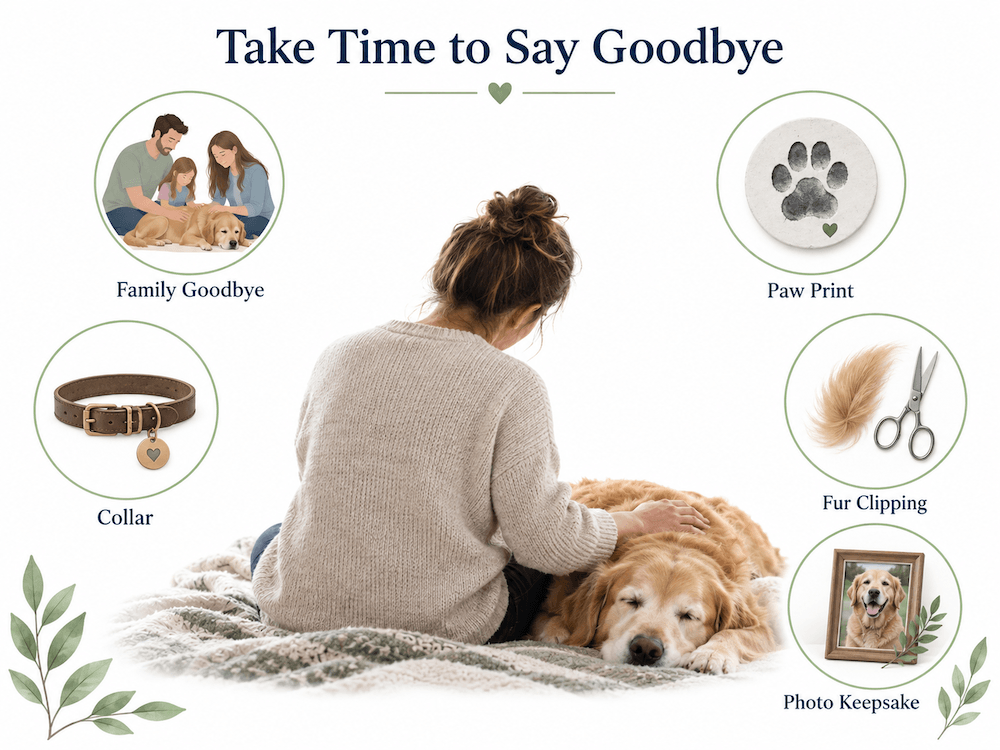
Step 2: Take a Moment to Say Goodbye
If the death is confirmed and there is no urgent safety concern, you can spend some quiet time with your dog before making arrangements. Family members may also want an opportunity to say goodbye or collect a small keepsake such as a paw print or fur clipping.
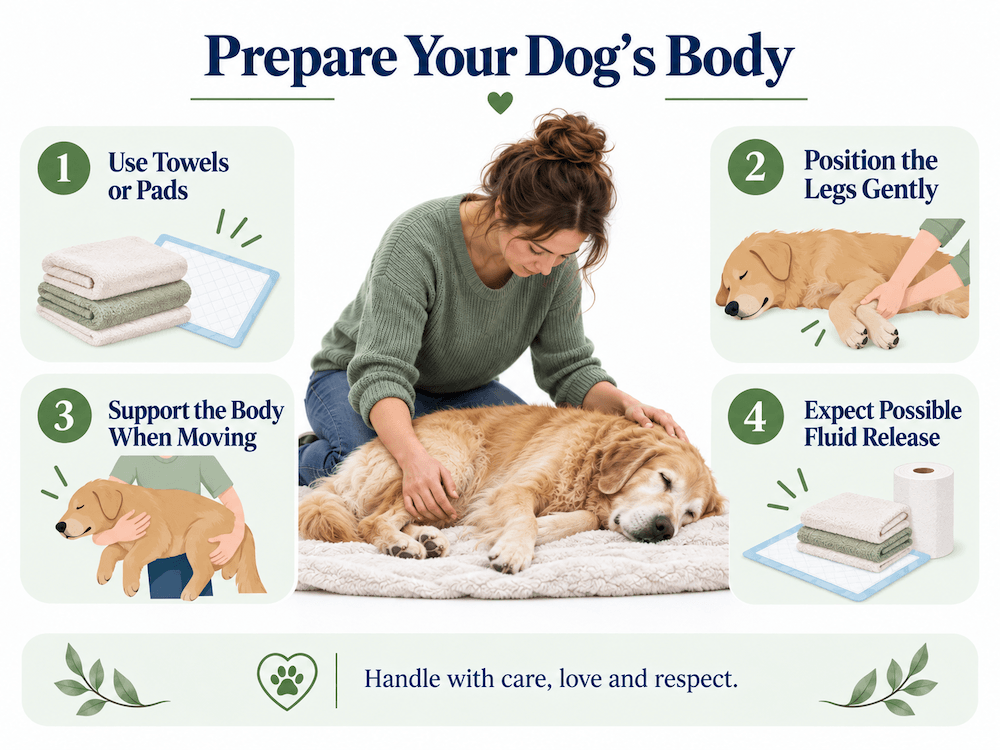
Step 3: Prepare and Position the Body
Place your dog on towels, an absorbent pad, or a blanket because urine, stool, or other fluids may be released after death. Gently position the legs in a natural resting position before rigor mortis makes the body more difficult to move.
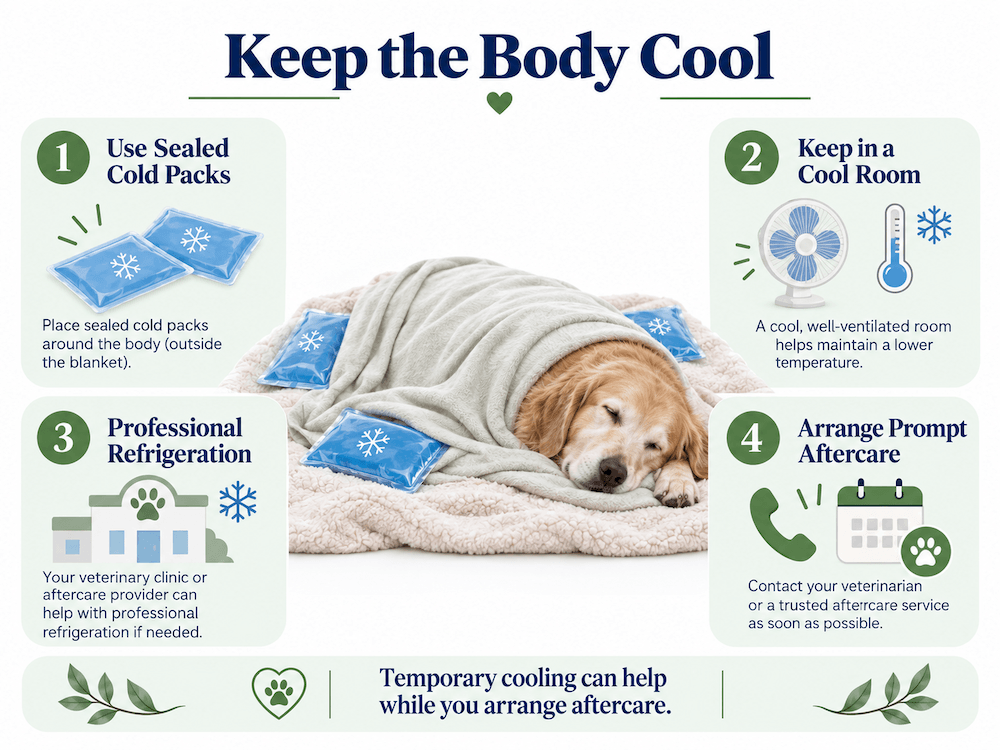
Step 4: Keep Your Dog’s Body Cool
Cooling slows normal postmortem changes while you arrange transportation, cremation, burial, or veterinary examination. Professional refrigeration is ideal, but sealed cold packs can be placed around the wrapped body temporarily if immediate refrigeration is unavailable.
Step 5: Choose the Next Step for Aftercare
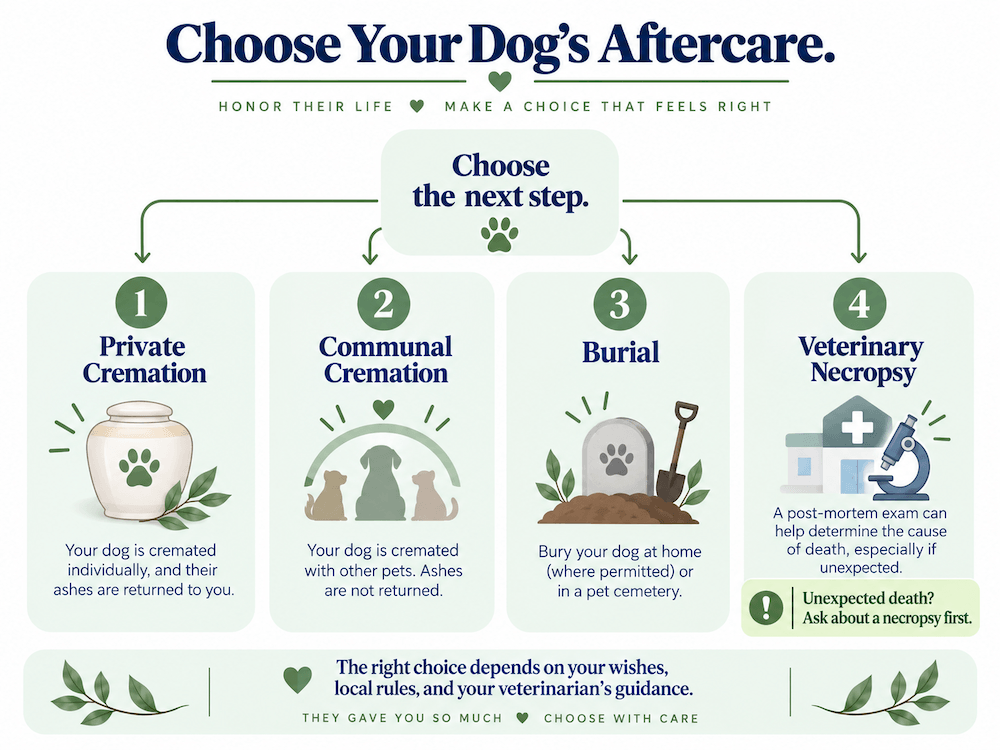
Contact your veterinarian or a reputable pet aftercare provider to discuss cremation, burial, or other options. If the death was sudden or unexplained, ask whether a necropsy should be considered before cremation or burial, since those choices may prevent later diagnostic testing.


What to Do When a Dog Dies Suddenly or Unexpectedly
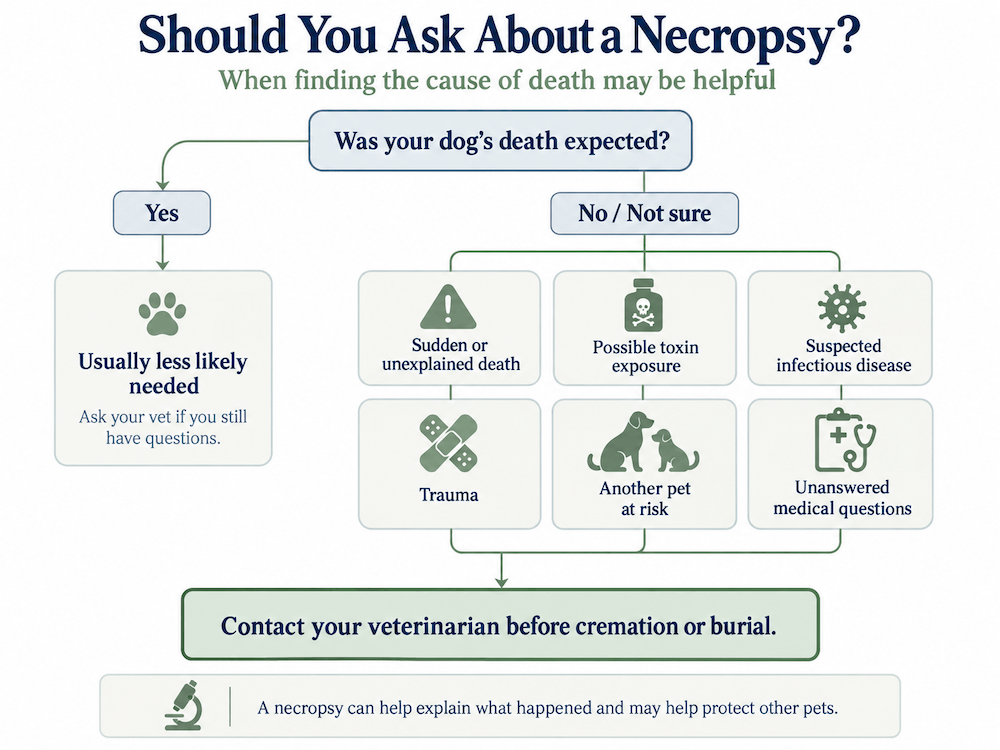
If a dog dies without a known explanation, do not automatically proceed with cremation or burial before speaking with a veterinarian. A veterinary postmortem examination, called a necropsy, may help identify disease, internal bleeding, trauma, infection, cancer, toxic exposure, or another cause.
A necropsy becomes particularly useful when the answer could affect another animal in the household. For example, two dogs may have shared the same food, medication, yard, household chemical, toxic plant, or environmental exposure.
If poisoning is possible, preserve relevant packaging, medications, food, treats, supplements, pesticide containers, plants, or other suspected materials. Avoid cleaning away potential evidence if deliberate poisoning, abuse, or another legal matter may be involved.
When to Call a Veterinarian After a Dog Dies
If you are not completely certain that your dog has died, contact a veterinarian immediately. Very shallow breathing, profound unconsciousness, severe weakness, or an extremely slow heart rate can sometimes make a critically ill dog appear lifeless, so veterinary guidance is important when there is any uncertainty.
If your dog dies at home after an expected illness or end-of-life decline, you generally do not need to rush to an emergency clinic once death has been clearly confirmed. Contact your regular veterinarian when practical to report the death and ask about transportation, cremation, burial, or other aftercare arrangements.
Contact a veterinarian promptly if your dog recently bit or scratched someone, was under rabies observation, or may have had an infectious disease that could affect people or other animals. Your veterinarian can advise you about safe handling and whether public-health authorities need to be involved before the body is buried, cremated, or otherwise handled.
What Happens to a Dog’s Body After Death?
A few normal physical changes can be unsettling when you are not expecting them. A dog’s eyes may remain partly open, and relaxation of the muscles can allow urine, stool, saliva, or other fluids to be released.
Small muscle movements or twitching can sometimes occur, and moving the body may force air from the lungs and create a sigh-like sound. Once death has been confirmed, these physical reactions do not mean the dog has regained consciousness.
The body also gradually becomes stiff, a normal postmortem change called rigor mortis. Because this can make repositioning more difficult, gently placing the legs in a natural resting position earlier may make later handling easier.
If you are not completely certain your dog has died, do not rely on stiffness, closed eyes, or lack of obvious movement alone. Contact an emergency veterinarian.
How to Keep and Move Your Dog’s Body Safely
The main goals are cleanliness, respectful handling, and keeping the body cool until transportation or aftercare can be arranged. Disposable gloves can be useful when bodily fluids are present, and hands should be washed thoroughly afterward.
Professional refrigeration is ideal when there will be a delay, particularly if a postmortem examination may be requested. If immediate refrigeration is unavailable, keep the wrapped body in the coolest practical place and position sealed cold packs around it while arranging veterinary or aftercare guidance. Warm conditions make prompt cooling especially important.
If a necropsy is being considered, ask your veterinarian before freezing the body. Freezing can interfere with some types of tissue examination, whereas refrigeration generally preserves diagnostic value better.
For transportation, an absorbent layer inside a leak-resistant covering or container can help contain fluids. Do not use loose melting ice against the body; sealed cold packs are cleaner and easier to manage.
Dog Cremation: What to Expect and Your Options
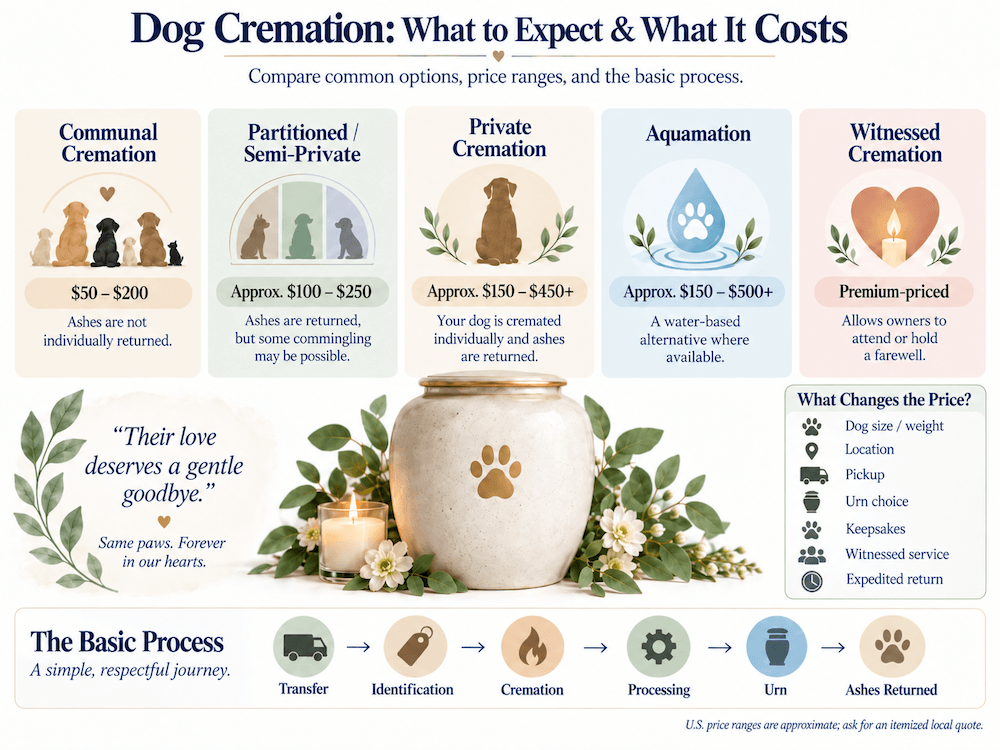
Dog cremation typically involves reducing the body to processed bone fragments, commonly called ashes or cremains, with options including communal, partitioned or semi-private, and private cremation. In the U.S., communal cremation often costs about $50–$200, while private cremation is commonly $150–$450+, with prices affected by dog size, location, pickup, urns, keepsakes, expedited return, and witnessed services.
Communal cremation usually does not return individual ashes, while private cremation does; partitioned services fall between the two and may allow some commingling. Ashes are often returned within several days to two weeks, and some providers also offer witnessed cremation or aquamation, a water-based alternative available in certain areas.
Burial and Other Aftercare Options After a Dog Dies
There are several aftercare options for a dog’s remains, and the best choice depends on your preferences, local regulations, cost, and availability. Understanding what each option involves can help you make a decision that feels appropriate for your family.
| Option | What It Typically Involves | What to Check |
|---|---|---|
| Pet cemetery | Your dog is buried in a designated pet cemetery. | Ask about plots, markers, fees, and visitation. |
| Home burial | Your dog is buried on private property where permitted. | Check local laws, burial depth, and environmental rules. |
| Green burial | Biodegradable materials are used with minimal environmental impact. | Availability and local burial requirements vary. |
| Alkaline hydrolysis | A water-based process produces processed mineral remains. | Check availability, pricing, and local regulations. |
| Body donation | Some veterinary programs accept animals for teaching or research. | Acceptance usually requires advance approval and eligibility. |
Home burial deserves extra consideration if your dog was euthanized with injectable medication. Some euthanasia drugs remain in the body and can seriously poison wildlife or other animals if they later uncover or consume the remains. Discuss safe disposition with your veterinarian and follow applicable local requirements.
How Much Does Dog Aftercare Cost?
Dog aftercare costs vary widely depending on your dog’s size, location, and the service you choose. In the U.S., simple communal cremation or home burial can cost relatively little, while private cremation, aquamation, or cemetery burial may cost several hundred to several thousand dollars. The ranges below are practical 2026 estimates based on current provider pricing.
Typical Costs for Dog Aftercare
| Service | Main Factors Affecting Cost | Typical U.S. Cost |
|---|---|---|
| Private cremation | Weight, provider, ashes returned, and urn choice. | $150–$550; giant dogs may reach about $825. |
| Communal cremation | Dog’s weight, location, and provider. | $50–$300; very large dogs may cost more. |
| Pet cemetery burial | Plot, burial service, container, and grave marker. | $400–$2,000+, depending on burial and memorial choices. |
| Home burial | Burial materials, container, marker, and local permits. | $0–$300+ where home burial is legally permitted. |
| Green burial | Dog’s size, cemetery, plot, and biodegradable materials. | $300–$2,750+, depending heavily on the cemetery. |
| Alkaline hydrolysis | Dog’s weight, provider, location, and remains returned. | $150–$600+, with larger dogs typically costing more. |
Private cremation prices can rise substantially for giant breeds, while natural burial pricing varies especially widely because some providers include the plot, grave preparation, marker, and perpetual care in one fee.
Additional Fees You May Encounter
The advertised aftercare price does not always include transportation or memorial products, so ask for an itemized total before authorizing the service.
What Affects the Total Cost?
The biggest factors are your dog’s size or weight, your location, the type of aftercare chosen, whether your dog is collected from home or transferred from a veterinary clinic, whether remains are returned, transportation distance, and optional memorial items. Asking what is included in the base price can prevent unexpected charges for pickup, urns, keepsakes, or return delivery.
Helping Your Family and Other Pets After a Dog Dies
The practical arrangements may happen quickly, but grief can last much longer. Owners may experience sadness, guilt, anger, numbness, relief that suffering has ended, or several emotions at the same time.
Frequently Asked Questions
The Bottom Line
Knowing what to do when a dog dies can make an overwhelming moment a little easier to navigate. Start by confirming that your dog has passed, then handle and cool the body respectfully while you arrange the next steps. Cremation, burial, and other aftercare options each have different costs, processes, and considerations, so choose the option that feels appropriate for your family. If the death was sudden or unexplained, speak with your veterinarian before cremation or burial in case a necropsy is recommended. Dogs nearing the end of life may also show changes in comfort, appetite, mobility, breathing, and behavior that can help guide quality-of-life discussions. There is no single correct way to memorialize a dog or cope with the loss, and grief can look different for every person and household. Taking care of the practical decisions while allowing yourself time to grieve can help you say goodbye in a thoughtful and meaningful way.