Dog Quality of Life Calculator: Estimate Wellbeing (Checklist, HHHHHMM Scale & Charts)


Canine Bible is reader-supported. We receive affiliate commissions via some of our links. Learn more.
Watching a dog decline is one of the hardest parts of loving them. You may wonder whether your dog is still comfortable, whether their bad days are becoming too frequent, or whether it is time to talk with your veterinarian about palliative care or end-of-life support. That’s why we created this Dog Quality of Life Calculator— to help you assess your dog’s comfort, appetite, hydration, hygiene, happiness, mobility, and number of good days. It is designed to organize what you are seeing at home so you can make clearer, more compassionate care decisions. This guide explains how quality of life is commonly assessed in dogs, which signs matter most, how to track changes, when to call your veterinarian, and how to use your results responsibly.
How Do I Know If My Dog Has a Good Quality of Life?
A dog usually has a better quality of life when pain is controlled, breathing is comfortable, appetite is stable, hydration is adequate, hygiene is manageable, and they still enjoy parts of daily life. Mobility also matters, but a dog does not need to move perfectly to have meaningful comfort and happiness.
The key is to look at your dog’s pattern over time. One tired afternoon does not always mean poor quality of life, but repeated painful nights, refusal to eat, trouble breathing, inability to rise, or mostly bad days are serious warning signs.
A helpful question is: Is my dog still able to enjoy the things that make them themselves? For one dog, that may be short walks and greeting family. For another, it may be eating, cuddling, sniffing outside, or resting peacefully near their favorite person.
For example, a senior Labrador with arthritis may still have acceptable quality of life if pain is controlled, appetite is good, bathroom needs are manageable, and they still enjoy short walks. But if that same dog cannot stand without distress, refuses food, pants from pain, and has more bad days than good, it is time for a serious veterinary conversation.


HHHHHMM Scale for Dogs
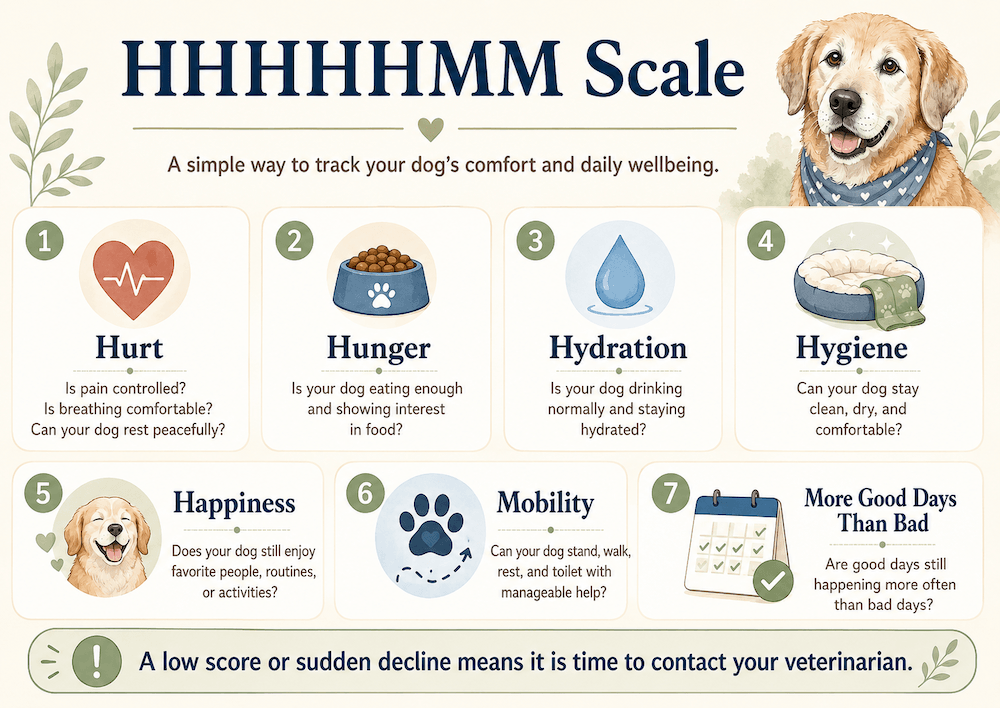
The HHHHHMM scale is a simple quality-of-life framework that helps dog owners look at seven important comfort areas: Hurt, Hunger, Hydration, Hygiene, Happiness, Mobility, and More Good Days Than Bad. Each category is usually scored from 0 to 10, then added for a total score out of 70. A higher score generally suggests better daily comfort, while a lower score means your dog may need more veterinary support, pain control, palliative care, or a quality-of-life discussion.
This scale is most helpful when used more than once. One score gives you a snapshot, but repeated scores show whether your dog is improving, stable, or declining. It should not be used as a final decision-maker or diagnosis. Instead, use it to track patterns, identify weak areas, and have a clearer conversation with your veterinarian.
Dog Quality of Life Chart for Dogs
Quality of life is not one single sign. The most useful approach is to score several daily comfort categories together.
Dog Quality of Life Score Chart
Use this chart as a general guide after using the calculator. A score is only one part of the picture. A dog with breathing distress, uncontrolled pain, collapse, or inability to stand needs veterinary help even if some other categories seem normal.
| Score Range | Quality-of-Life Signal | What It May Mean | Owner Next Step |
|---|---|---|---|
| 56–70 | Stronger | Most daily needs appear supported. | Keep monitoring and continue routine vet care. |
| 36–55 | Watch closely | Some comfort areas may need support. | Track trends and discuss changes with your vet. |
| 21–35 | Concerning | Comfort, mobility, appetite, or happiness may be affected. | Schedule a quality-of-life consult soon. |
| 0–20 | Urgent concern | Your dog may be struggling with daily comfort. | Contact your veterinarian promptly. |
Dog Quality of Life Chart by Weight
Weight does not determine quality of life by itself, but it can affect mobility, caregiver support, and how quickly certain issues become difficult to manage. Large dogs may need earlier mobility support because small changes in strength can make standing, toileting, and safe lifting much harder.
| Dog Weight | Common Concerns | What to Watch |
|---|---|---|
| Under 10 lb | Dental pain, appetite loss, dehydration risk. | Eating, drinking, gums, breathing, and weakness. |
| 10–25 lb | Heart signs, mobility changes, medication tolerance. | Sleep, appetite, stairs, coughing, and mood. |
| 26–50 lb | Arthritis, pain, reduced activity. | Rising, limping, play interest, and good days. |
| 51–75 lb | Joint pain, hygiene issues, difficulty standing. | Toileting, bedding comfort, falls, and sores. |
| 76+ lb | Severe mobility strain and lifting challenges. | Standing, walking, breathing, and caregiver safety. |
Quality of Life Chart by Category
These are the main categories most owners should track. If one category is very poor, do not average it away. Severe pain, breathing distress, or inability to eat can outweigh a higher score in another area.


| Category | Better Signs | Warning Signs |
|---|---|---|
| Comfort | Rests peacefully and breathes normally. | Panting, trembling, crying, hiding, or guarding. |
| Appetite | Eats willingly or with mild help. | Refuses food, vomits, or loses weight quickly. |
| Hydration | Drinks normally and urinates as expected. | Not drinking, weakness, dry gums, or collapse. |
| Hygiene | Stays clean or accepts gentle help. | Soiling, urine scald, sores, or matted coat. |
| Happiness | Enjoys people, food, toys, or routines. | Withdraws, seems distressed, or loses interest. |
| Mobility | Can rise, walk, and toilet with manageable help. | Cannot stand, falls often, or cries when moving. |
| Good Days | Good days still happen often. | Bad days are frequent or severe. |
Good Days vs. Bad Days Tracking Chart
Tracking good days and bad days can make a difficult situation clearer. A “good day” should be based on your dog’s normal joys, not a perfect day. Comfort, calm rest, appetite, interaction, and manageable movement all count.
| Weekly Pattern | What It Suggests | Suggested Next Step |
|---|---|---|
| 5–7 good days | Quality of life may be stable. | Keep monitoring weekly. |
| 3–4 good days | Comfort may be mixed. | Track daily and review care options. |
| 1–2 good days | Decline may be significant. | Book a quality-of-life appointment. |
| Mostly bad days | Your dog may be struggling. | Contact your veterinarian promptly. |
Dog Quality of Life Guidelines for Dogs
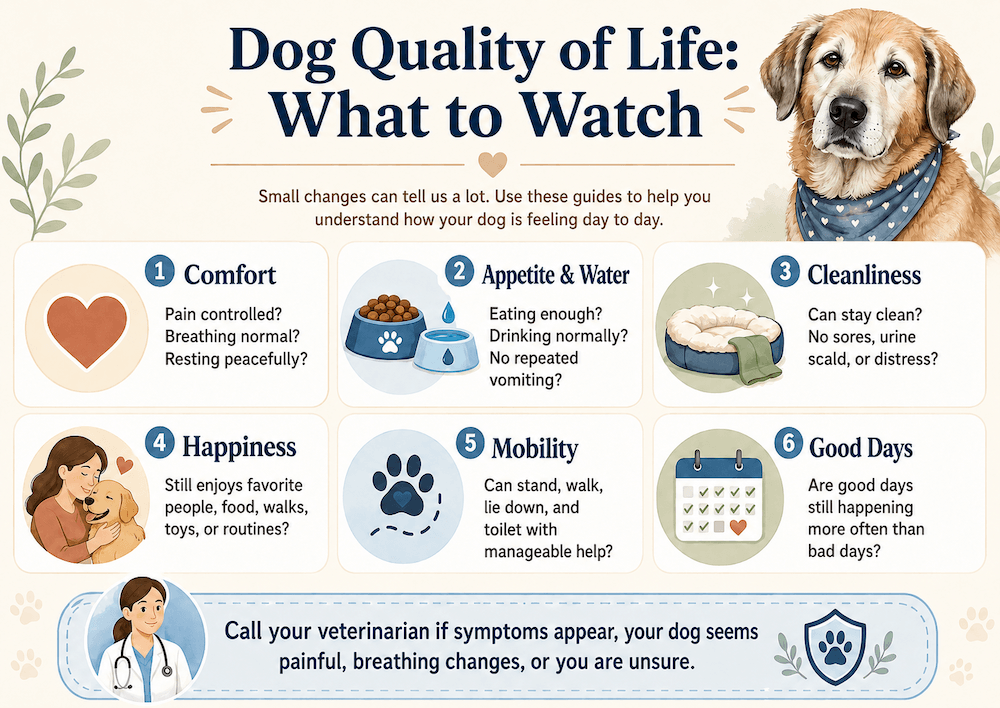
1. A good quality-of-life assessment looks at the whole dog. Pain, breathing, appetite, hydration, cleanliness, mobility, mood, and daily enjoyment all matter.
2. Comfort should come first. A dog who cannot rest, pants from distress, cries, trembles, hides, or cannot get comfortable may need better pain control or urgent care.
3. Appetite and hydration are also important. A dog who skips one meal may simply feel off, but repeated refusal to eat or drink can signal pain, nausea, organ disease, dental pain, medication side effects, or serious decline.
4. Mobility is more than walking around the block. It includes getting up, lying down, reaching food and water, toileting, avoiding falls, and resting without distress.
5. Happiness is personal to each dog. Make a short list of your dog’s favorite things, such as greeting you, eating a treat, sniffing the yard, playing, cuddling, or following family members around. If your dog can no longer enjoy most of them, that deserves attention.
6. The “more good days than bad” question is often the most emotional one. A single bad day may not tell the whole story, but a steady pattern of pain, distress, or withdrawal should not be ignored.
Factors That Can Affect Your Dog’s Results
Several factors can change your dog’s quality-of-life score from day to day. If your dog’s score changes suddenly, treat that as meaningful. Rapid decline should be discussed with your veterinarian.
| Factor | Why It Matters | What Owners Should Check |
|---|---|---|
| Age | Senior dogs often need closer comfort tracking. | Sleep, appetite, pain, and mobility changes. |
| Diagnosis | Chronic disease can change comfort quickly. | Known disease signs and vet care plan. |
| Pain control | Unmanaged pain can lower every score. | Panting, pacing, trembling, or restlessness. |
| Breed size | Large dogs may struggle more with mobility. | Standing, stairs, falls, and lifting needs. |
| Home setup | Floors, stairs, and bedding affect comfort. | Traction, ramps, bedding, and food access. |
| Medication | Side effects can affect appetite or energy. | New symptoms after medication changes. |
| Caregiver ability | Daily care must be safe and realistic. | Cleaning, lifting, feeding, and monitoring needs. |
Common Mistakes to Avoid
Quality-of-life tracking is emotional, and it is easy to focus on one sign while missing the bigger pattern. The goal is not to “score perfectly.” The goal is to notice what your dog needs and get help before distress becomes severe.
| Mistake | Why It Matters | Better Approach |
|---|---|---|
| Using one score | Quality of life can change daily. | Track patterns over several days. |
| Ignoring pain | Dogs often hide discomfort. | Watch movement, breathing, sleep, and behavior. |
| Focusing only on food | Eating does not rule out suffering. | Score comfort, mobility, mood, and breathing too. |
| Waiting too long | Decline can become urgent quickly. | Call your vet when bad days increase. |
| Comparing dogs | Every dog’s normal is different. | Compare your dog to their own baseline. |
| Treating results as exact | A calculator cannot diagnose suffering. | Use results to guide a vet discussion. |
| Changing medication | Dose changes can be dangerous. | Ask your veterinarian before adjusting anything. |
What to Do If the Calculator Shows a Low Quality of Life Score
1. Look at which categories scored lowest. Pain, breathing, appetite, hydration, mobility, hygiene, and good days should be prioritized because they directly affect comfort.
2. Start a simple daily log. Write down meals, water intake, bathroom habits, pain signs, sleep quality, mobility, mood, medication timing, and whether the day was good, mixed, or bad.
3. Call your veterinarian and ask for a quality-of-life appointment. Bring the calculator result and your daily log so the visit can focus on specific changes, not vague worries. If you can't reach your vet, you can chat live with a registered online veterinary professional via our online vet chat or video chat support (24 hours a day, 7 days a week). Or use Chewy's online vet services (6 a.m. - midnight ET).
4. Ask whether comfort-focused care may help. Depending on your dog’s condition, this may include pain control, nausea support, appetite support, mobility aids, bedding changes, ramps, home modifications, hospice care, or a discussion about humane end-of-life options.
5. Do not adjust medications on your own. If your dog seems worse after a medication change, call your veterinarian and explain what changed, when it started, and what signs you are seeing.
If your dog has trouble breathing, collapses, cannot stand, cries in pain, has seizures, or seems severely distressed, seek urgent veterinary care.
Special Considerations for Certain Dogs
Senior dogs, dogs with cancer, and dogs with chronic organ disease may need closer quality-of-life checks because small changes can build slowly. Watch for pain, appetite loss, nausea, weight loss, weakness, breathing changes, swelling, bleeding, dehydration, or whether treatment is truly improving comfort.
Dogs with arthritis, mobility problems, cognitive dysfunction, heart disease, or breathing disease need special attention to daily comfort. Track how well they can rise, walk, toilet, rest, sleep, breathe, and stay calm; urgent signs include labored breathing, blue or pale gums, collapse, severe coughing, panic, falling, or crying with movement.
Puppies and young dogs can also have poor quality of life if they are seriously ill, injured, in pain, or born with a severe condition. A low score in a young dog should prompt a veterinary exam instead of assuming quality-of-life concerns only apply to senior dogs.
Dog Quality of Life Checklist
Use this checklist to score each quality-of-life category from 0 to 10. Lower scores suggest your dog may need more support, while higher scores suggest that area is currently more stable or comfortable.
| Category | Score 0–3 | Score 4–6 | Score 7–10 |
|---|---|---|---|
| Hurt | Pain, breathing trouble, or distress may be frequent. | Some discomfort is present but may be partly managed. | Pain appears controlled and your dog can rest comfortably. |
| Hunger | Refuses food or eats very little. | Eats inconsistently or needs strong encouragement. | Eats enough and shows normal interest in food. |
| Hydration | Drinks poorly or may show dehydration signs. | Drinking is reduced, inconsistent, or concerning. | Drinks normally and appears well hydrated. |
| Hygiene | Cannot stay clean or has sores, scald, or distress. | Needs frequent help staying clean and comfortable. | Stays clean or accepts gentle hygiene support. |
| Happiness | No longer enjoys favorite people, food, or routines. | Enjoyment is reduced or only happens sometimes. | Still shows interest in familiar joys and interactions. |
| Mobility | Cannot stand, walk, rest, or toilet comfortably. | Moves with difficulty but can manage with help. | Can move, rest, and toilet with manageable support. |
| Good Days | Bad days are more frequent or severe. | Good and bad days are mixed. | Good days still happen more often than bad days. |
After scoring each category, add the numbers together for a total out of 70. Contact your veterinarian if your dog scores low in any major comfort area, declines suddenly, or you are unsure how to interpret the result.
How to Calculate Dog Quality of Life Manually
A simple manual method is to score seven categories from 0 to 10. A score of 0 means that category is very poor, while 10 means it is strong or well supported.
- Use this formula: Quality of Life Score = Hurt + Hunger + Hydration + Hygiene + Happiness + Mobility + Good Days
- The total score is out of 70. Use the number as a guide, then look at which categories are weakest.
Example Calculation
A 12-year-old mixed-breed dog with arthritis has these scores:
- Hurt: 5
- Hunger: 8
- Hydration: 8
- Hygiene: 6
- Happiness: 6
- Mobility: 4
- Good Days: 5
Calculation: 5 + 8 + 8 + 6 + 6 + 4 + 5 = 42 out of 70
This result suggests the dog still has some strong areas, especially appetite and hydration, but pain and mobility need attention. You should track daily changes and ask the veterinarian whether pain control, mobility support, home changes, or palliative care could improve comfort.
Frequently Asked Questions
The Bottom Line
The Dog Quality of Life Calculator is designed to help you look at your dog’s comfort, appetite, hydration, cleanliness, happiness, mobility, and good days more clearly. It should not be used to make end-of-life decisions by itself, replace your veterinarian’s guidance, or assume your dog is suffering based on one score alone. If your dog’s result is low, declining, or difficult to interpret, use it as a starting point for a conversation with your veterinarian. Contact your vet right away if your dog has trouble breathing, uncontrolled pain, collapse, repeated vomiting, refusal to eat or drink, seizures, severe confusion, inability to stand, crying, extreme weakness, or a sudden decline.
If pain may be affecting your dog’s comfort, read our guide on what you can give your dog for pain at home. If your dog is aging and you want to better understand life stage changes, you may also find our Dog Age Calculator helpful. For symptoms that may affect daily comfort, you can also read our guides on what you can give your dog for an upset stomach and what to do when a dog has a seizure, but always contact your veterinarian if your dog seems painful, distressed, weak, confused, or no longer able to rest comfortably.