Anal Sac Disease in Dogs: Symptoms, Types, Causes, Signs & Prevention

Canine Bible is reader-supported. We receive affiliate commissions via some of our links. Learn more.
Anal sac disease is a common but often overlooked condition in dogs, affecting an estimated 4.4% to 15.7% of the canine population. Many owners mistake early signs—such as scooting, excessive licking of the rear end, or a strong fishy odor—for minor irritations, when they may indicate impacted or infected anal glands. Left untreated, anal sac disease can lead to painful inflammation, abscesses, and difficulty defecating. The good news is that with prompt veterinary care and appropriate management, most dogs recover well and avoid complications. This guide covers everything you need to know about anal sac disease in dogs—from causes and symptoms to diagnosis, treatment, prevention, and long-term care—so you can help keep your dog comfortable and healthy.
What Is Anal Sac Disease in Dogs?
Anal sac disease, in simple terms, is a condition affecting the anal sacs (anal glands) located on either side of a dog’s anus. These small sacs normally release a scent-marking fluid during defecation. In dogs with anal sac disease, the glands may become impacted, inflamed, infected, or abscessed, preventing them from emptying properly. As fluid builds up inside the sacs, dogs can experience discomfort, irritation, pain, and swelling around the rear end. If left untreated, the condition can progress to severe infection and rupture of the affected gland, requiring prompt veterinary care.
Types
Anal sac disease can take several forms, each with different causes and levels of severity:
| Type | Description |
|---|---|
| Anal Sac Impaction | The most common form, occurring when thickened gland secretions fail to empty normally and accumulate within the sacs. |
| Anal Sacculitis | Inflammation of the anal sacs, often caused by irritation, allergies, or bacterial overgrowth. |
| Anal Sac Infection | Develops when bacteria invade the anal sacs, leading to pain, swelling, and discharge. |
| Anal Sac Abscess | A severe infection causing pus accumulation within the gland, which may eventually rupture through the skin. |
| Recurrent Anal Sac Disease | Repeated episodes of impaction or infection, often associated with chronic allergies, obesity, or poor gland function. |
| Anal Sac Tumors | A less common but serious condition involving cancerous growths of the anal sac glands that may require surgery and additional treatment. |
Predisposed Dog Breeds
Anal sac disease can affect dogs of any age or breed. However, some dogs may be more prone to developing anal gland problems due to their breed, body size, anatomy, obesity risk, or underlying allergies. Small and toy breeds are particularly overrepresented among dogs diagnosed with anal sac disease.


| Size / Group | Breeds | Notes on Risk Factors |
|---|---|---|
| Toy Breeds | Chihuahua, Yorkshire Terrier, Toy Poodle, Pomeranian | Small body size and narrow anal sac ducts may increase the risk of impaction and poor gland emptying. |
| Small Companion Breeds | Shih Tzu, Bichon Frisé, Cavalier King Charles Spaniel, Maltese, Havanese | Frequently affected due to a combination of small size, obesity risk, and allergic skin disease. |
| Spaniels | Cocker Spaniel, English Springer Spaniel, Cavalier King Charles Spaniel | Higher prevalence of allergies and chronic inflammation, which may contribute to recurrent anal sac problems. |
| Doodle Breeds | Cockapoo, Cavapoo, Labradoodle | May inherit allergy predispositions that increase the likelihood of anal sac inflammation and infection. |
| Overweight-Prone Breeds | Beagle, Pug, Labrador Retriever, French Bulldog | Excess body fat around the anal region can interfere with normal gland emptying and increase disease risk. |
| All Breeds | Any dog can be affected | Chronic soft stools, diarrhea, obesity, food allergies, and environmental allergies are major risk factors regardless of breed. |
Causes
Anal sac disease occurs when the anal glands do not empty properly, causing secretions to accumulate and thicken. Common causes include chronic soft stools, diarrhea, allergies, obesity, and infections. These factors can lead to impaction, inflammation, and painful gland infections.
Symptoms
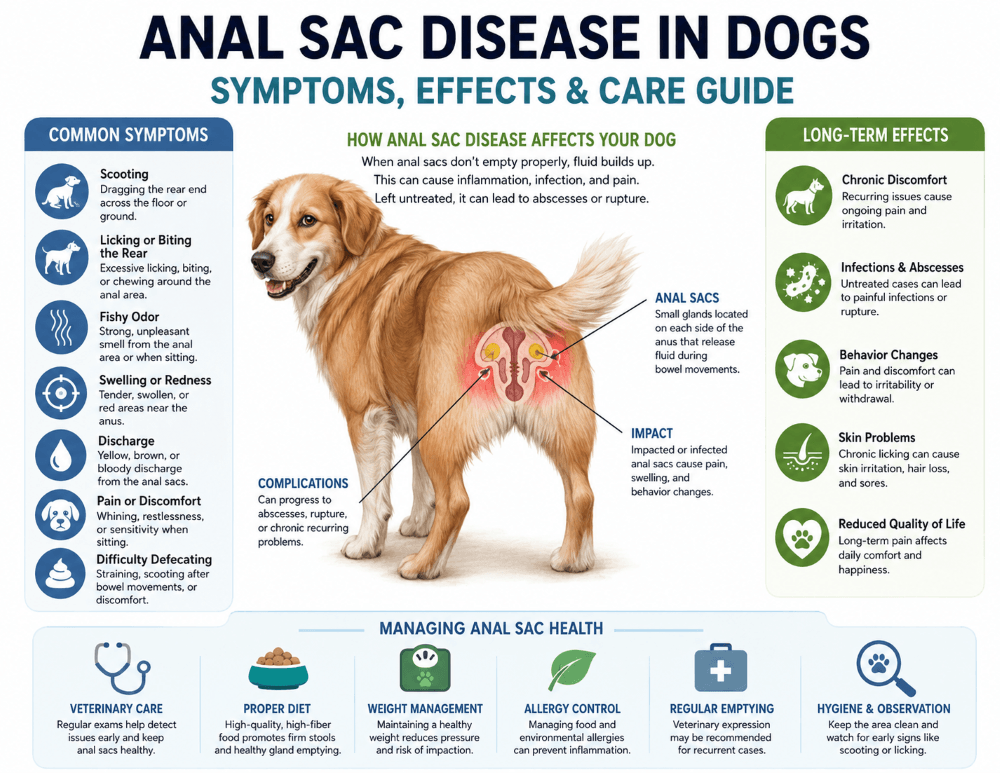
Anal sac disease in dogs is a common condition that affects the anal glands and can significantly impact comfort and quality of life. Early signs are often subtle—such as scooting, excessive licking of the rear end, or a fishy odor—but can worsen over time if left untreated.
This visual guide highlights the most common symptoms and how anal sac disease affects different areas of a dog’s body, helping you recognize changes early and seek appropriate veterinary care.


Stages of Anal Sac Disease
- Early stage: Mild scooting, occasional licking of the rear end, and a faint fishy odor due to incomplete anal sac emptying.
- Moderate stage: Anal sac impaction or inflammation causing discomfort, swelling, excessive licking, and difficulty sitting or defecating.
- Advanced stage: Infection or abscess formation resulting in severe pain, discharge, rupture of the gland, and recurrent complications.
Top Ways to Prevent Anal Sac Disease in Dogs
Because anal sac disease is a common and often recurring condition, early recognition and proactive care are crucial. By promoting healthy bowel movements, maintaining an ideal weight, and addressing underlying allergies or digestive issues, many cases can be prevented or managed before they progress to painful infections or abscesses.
| Prevention Strategy | Why It Helps | How to Do It |
|---|---|---|
| Maintain a Healthy Weight | Excess body fat can interfere with normal anal sac emptying. | Feed portion-controlled meals, limit treats, and encourage regular exercise. |
| Provide a High-Fiber Diet | Firm stools create natural pressure that helps empty the anal sacs during bowel movements. | Feed a balanced diet and discuss fiber supplements with your veterinarian if needed. |
| Manage Allergies Promptly | Food and environmental allergies can cause inflammation that contributes to anal sac disease. | Work with your veterinarian to identify triggers and develop an allergy management plan. |
| Support Digestive Health | Chronic diarrhea and soft stools increase the risk of impaction and infection. | Address gastrointestinal issues early and feed a consistent, high-quality diet. |
| Regular Veterinary Checkups | Early detection can prevent minor anal sac problems from progressing to infections or abscesses. | Schedule routine wellness exams and discuss any scooting, licking, or odor concerns. |
| Monitor for Early Signs | Prompt treatment reduces the risk of painful complications and recurrence. | Watch for scooting, excessive licking, swelling, discomfort, or a fishy odor. |
| Follow Vet-Recommended Anal Sac Care | Dogs with recurrent issues may benefit from targeted management. | Only have anal sacs expressed when recommended by your veterinarian and avoid unnecessary expression. |
Actionable Resources
If you want to help prevent or reduce the risk of anal sac disease in your dog, here are some resources that may support healthy digestion, weight management, and anal gland function under veterinary guidance.
How Anal Sac Disease Is Diagnosed in Dogs
Diagnosing anal sac disease requires a veterinary examination to determine the severity of the condition and rule out other causes of scooting, discomfort, or swelling around the rear end. Key steps include:
- Physical Examination: A veterinarian checks the anal area for swelling, redness, pain, discharge, and signs of infection.
- Rectal Examination:
- Anal Sac Assessment – the glands are palpated to evaluate their size, contents, and whether they are impacted, inflamed, or abscessed.
- Expression of Anal Sacs – examining the gland secretions can help identify abnormal thickening, infection, or blood.
- Ultrasound or Advanced Imaging – occasionally used to evaluate abscesses, masses, or anal sac tumors in complex cases.
- Assessment of Underlying Conditions: Veterinarians may investigate allergies, chronic digestive problems, obesity, or skin disease that could contribute to recurrent anal sac issues.
Early diagnosis is important because impacted or infected anal sacs can progress to painful abscesses and rupture if left untreated. Prompt veterinary care often leads to faster recovery and fewer complications.
Treatment & Care
According to current veterinary guidelines, the most effective treatments for anal sac disease in dogs depend on the underlying cause and severity of the condition. Treatment commonly includes manual expression of impacted anal sacs, flushing of infected glands, antibiotics when infection is present, anti-inflammatory medications for pain and swelling, and management of underlying allergies or digestive disorders to help prevent recurrence.
Always consult your veterinarian before starting any new treatment or supplement for anal sac disease. If you can’t reach your vet, you can chat live with a registered online veterinary professional via our online vet chat or video chat support (24 hours a day, 7 days a week). Or use Chewy’s online vet services (6 a.m. – midnight ET).
Conventional Medical Treatments
| Treatments | Benefits / Role |
|---|---|
| Manual Anal Sac Expression | Removes accumulated secretions from impacted glands and provides immediate relief from discomfort. |
| Anal Sac Flushing | Flushes debris, inflammatory material, and bacteria from the sacs, especially in infected or recurrent cases. |
| Antibiotics | Used to treat bacterial infections and anal sac abscesses when infection is present. |
| Anti-Inflammatory & Pain Medications | Reduce pain, swelling, and irritation associated with inflamed or infected anal sacs. |
| Anal Sacculectomy (Surgical Removal) | Recommended for severe, recurrent, or cancerous anal sac disease when medical management is unsuccessful. |
Supplement Support
| Supplement / Nutrient | Benefits / Role |
|---|---|
| Dietary Fiber (Psyllium, Pumpkin, Beet Pulp) | Helps produce firmer stools, which naturally compress and empty the anal sacs during defecation. |
| Probiotics | Support digestive health and may help reduce chronic soft stools that contribute to anal sac problems. |
| Omega-3 Fatty Acids (Fish Oil) | May help reduce inflammation associated with allergies and recurrent anal sac irritation. |
| Prebiotics | Promote beneficial gut bacteria and support healthy stool quality. |
| Digestive Enzymes | May improve digestion and nutrient absorption in dogs with gastrointestinal sensitivities. |
| Vitamin E | Provides antioxidant support and may help protect tissues from oxidative stress. |
| Zinc | Supports skin integrity, immune function, and healing in dogs with allergy-related anal sac disease. |
| Vitamin A | Supports healthy skin and mucous membrane function, which may aid tissue repair. |
| Novel Protein or Hydrolyzed Diets | May help reduce food allergy triggers that contribute to chronic anal sac inflammation. |
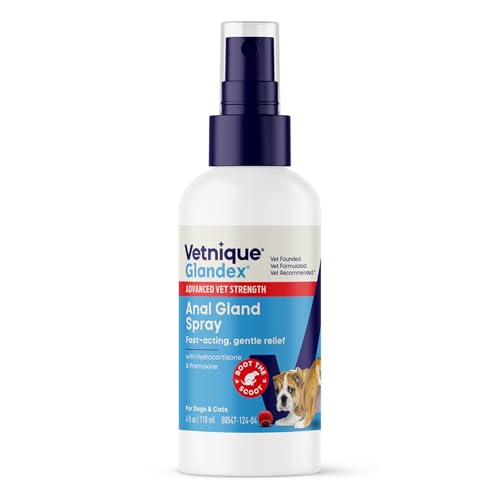
Find the best over-the-counter treatments and supplements for anal sac disease in dogs on Amazon and Chewy.
Alternative & Integrative Therapies
| Supplement / Nutrient | Benefits / Role |
|---|---|
| Dietary Fiber (Psyllium, Pumpkin, Beet Pulp) | Helps produce firmer stools, which naturally compress and empty the anal sacs during defecation. |
| Probiotics | Support digestive health and may help reduce chronic soft stools that contribute to anal sac problems. |
| Omega-3 Fatty Acids (Fish Oil) | May help reduce inflammation associated with allergies and recurrent anal sac irritation. |
| Prebiotics | Promote beneficial gut bacteria and support healthy stool quality. |
| Digestive Enzymes | May improve digestion and nutrient absorption in dogs with gastrointestinal sensitivities. |
| Vitamin E | Provides antioxidant support and may help protect tissues from oxidative stress. |
| Zinc | Supports skin integrity, immune function, and healing in dogs with allergy-related anal sac disease. |
| Vitamin A | Supports healthy skin and mucous membrane function, which may aid tissue repair. |
| Novel Protein or Hydrolyzed Diets | May help reduce food allergy triggers that contribute to chronic anal sac inflammation. |
Surgical Options
| Surgical Option | Benefits / Role |
|---|---|
| Anal Sacculectomy (Anal Sac Removal) | The definitive treatment for severe or recurrent anal sac disease; removes the affected glands and prevents future episodes. |
| Abscess Drainage & Debridement | Used for ruptured or severely infected anal sac abscesses to remove infected tissue and promote healing. |
| Tumor Removal Surgery | Performed when anal sac adenocarcinoma or other masses are present; may improve comfort and disease control. |
| Advanced Oncologic Surgery | In complex cancer cases, surgery may be combined with lymph node removal or additional treatments to improve outcomes. |
Emotional & Lifestyle Impact
Dogs with anal sac disease may experience more than just occasional scooting or discomfort—it can affect their daily routine, behavior, and overall quality of life. Dogs dealing with recurrent impactions, inflammation, or infections may become restless, frequently lick or chew the rear area, avoid sitting comfortably, or show signs of irritability due to pain, especially during bowel movements.
For owners, managing anal sac disease often involves ongoing monitoring and preventive care. Daily routines may need to include dietary adjustments, weight management, allergy control, and regular observation for early warning signs such as scooting, swelling, or a fishy odor. With timely veterinary care and attention to underlying causes, most dogs can remain comfortable, active, and free from recurring anal gland problems.
Typical Annual Cost of Treating Canine Anal Sac Disease
| Category | Estimated Annual Cost Range | Notes |
|---|---|---|
| Routine Vet Visits & Exams | $150 – $600 | Includes wellness exams, anal sac evaluations, and follow-up appointments. |
| Anal Sac Expression | $100 – $600 | Costs vary depending on frequency and whether performed during routine visits. |
| Medications | $100 – $800 | May include antibiotics, anti-inflammatory medications, and pain relief. |
| Dietary & Nutritional Support | $150 – $900 | High-fiber diets, probiotics, omega-3 supplements, and allergy-support nutrition. |
| Diagnostic Testing | $100 – $1,000 | Cytology, bacterial cultures, bloodwork, ultrasound, or biopsy in complex cases. |
| Surgery (if needed) | $1,500 – $5,000+ | Anal sacculectomy or tumor removal; typically a one-time expense. |
| Insurance & Wellness Plans | $360 – $960 | May help offset costs for examinations, diagnostics, medications, and surgery. |
| Typical Annual Range | Non-Surgical Cases: $500 – $2,500 | With Surgery: $2,000 – $7,500+ | |
Anal sac disease can lead to ongoing veterinary expenses—from routine gland expressions and medications to diagnostic testing or, in severe cases, surgery. Pet insurance and wellness plans may help reduce the financial burden and ensure your dog receives timely treatment when needed. If you want to compare coverage options for anal gland conditions and related health issues, explore our guides to the Best Pet Insurance for Dogs and Best Pet Wellness Plans.
Other Health Issues Related to Anal Sac Disease in Dogs
As anal sac disease progresses or becomes recurrent, dogs may develop additional physical and behavioral problems. Some conditions can contribute to anal sac disease, while others may arise as a result of chronic inflammation, infection, discomfort, or underlying allergies.
- Chronic Skin Allergies (Atopic Dermatitis)
- Food Allergies / Food Sensitivities
- Obesity
- Chronic Diarrhea
- Soft Stools or Digestive Disorders
- Recurrent Anal Sac Impactions
- Anal Sac Infections
- Anal Sac Abscesses
- Perianal Dermatitis (Skin Inflammation Around the Anus)
- Secondary Bacterial Infections
- Constipation or Painful Defecation
- Excessive Licking and Chewing
- Scooting-Related Skin Trauma
- Behavioral Changes (Irritability, Restlessness)
- Reduced Activity Due to Discomfort
- Anal Sac Tumors (Anal Sac Adenocarcinoma)
- Reduced Quality of Life
Frequently Asked Questions
The Bottom Line
Anal sac disease is a common condition in dogs that can range from mild discomfort to painful infections and abscesses. Fortunately, with early recognition, prompt veterinary care, and attention to underlying factors such as allergies, obesity, and digestive health, most cases can be successfully managed. By maintaining healthy bowel habits, monitoring for recurring symptoms, and following your veterinarian’s recommendations, you can help reduce the risk of future flare-ups. Ultimately, the goal is not only to treat existing anal gland problems but also to support your dog’s long-term comfort, health, and quality of life.