What Are Anal Glands in Dogs? Signs, Problems & Treatment

Canine Bible is reader-supported. We receive affiliate commissions via some of our links. Learn more.
Anal glands in dogs are two small scent sacs located just inside the anus, usually at the four o’clock and eight o’clock positions. They produce a strong-smelling fluid that is normally released during bowel movements. These glands help dogs communicate through scent, but they can sometimes become overly full, blocked, infected, or abscessed. Scooting, licking the rear, swelling, or a sudden fishy odor may signal a problem. However, not every dog needs routine gland expression, and unnecessary squeezing can cause irritation. Stool quality, body weight, allergies, and anatomy may all affect how well the glands empty. Understanding what is normal—and when veterinary care is needed—can help prevent pain and more serious complications.
Anal Glands in Dogs: What Owners Should Know
| Key Point | What It Means for Dog Owners |
|---|---|
| What they are | Anal glands are two small scent sacs located just inside a dog’s anus. |
| Normal function | They usually release strong-smelling fluid naturally when a dog passes firm stool. |
| Warning signs | Repeated scooting, licking, odor, swelling, or painful defecation may indicate a problem. |
| Common problems | The sacs can become impacted, inflamed, infected, abscessed, or rarely affected by tumors. |
| Contributing factors | Soft stool, allergies, excess weight, and individual anatomy may increase recurrence. |
| Routine expression | Most symptom-free dogs do not need their anal glands manually expressed on a schedule. |
| Veterinary care | Pain, blood, pus, a firm lump, or one-sided swelling requires prompt veterinary attention. |
What Dog Anal Glands Are and How They Work
The term “anal glands” is commonly used, although each structure is technically a sac lined with scent-producing glands. The lining releases fluid into the sac, where it remains until pressure pushes it through a narrow duct beside the anus.
The fluid varies between dogs. It may be thin or slightly oily, and its color can range from pale tan to dark brown. Its odor is often described as fishy, metallic, or intensely musky. Color and consistency alone do not reliably determine whether a sac is healthy or diseased.
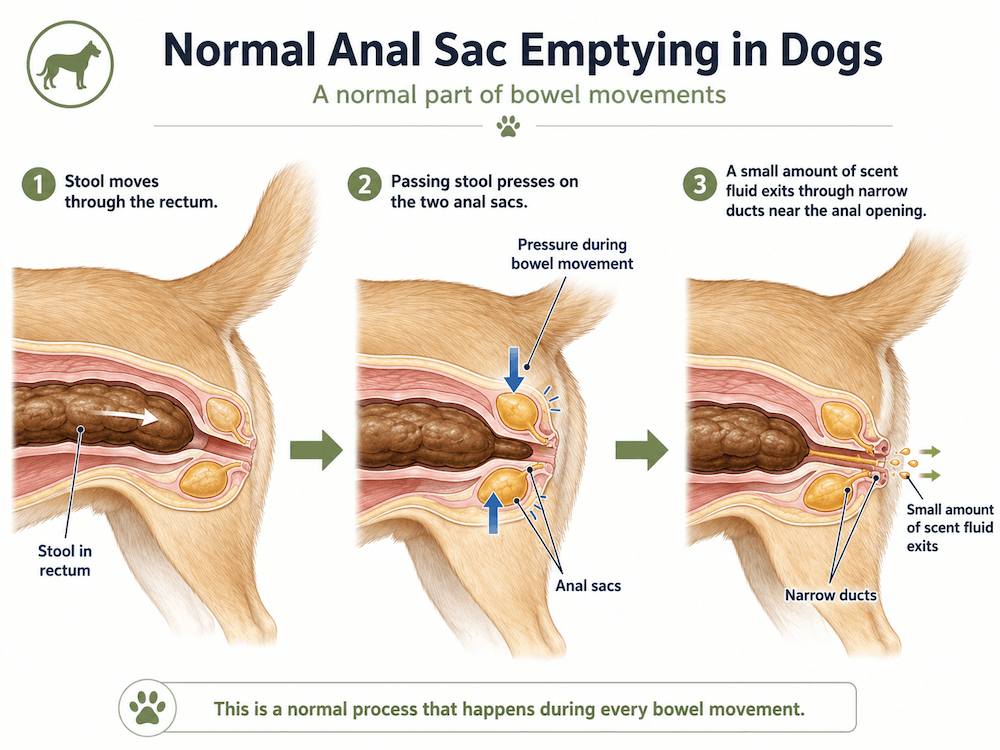
Firm stool normally presses against the sacs during a bowel movement, helping release a small amount of fluid. Dogs may also release the fluid suddenly when frightened, excited, stressed, or startled. A one-time odor after a stressful event does not automatically mean that the glands are blocked or infected.
Anal sac fluid contributes to scent communication between dogs. It can add an individual scent to stool and may help explain why dogs closely investigate areas where other dogs have defecated. However, the complete biological purpose of the anal sacs is not fully understood.
What Is Normal and What May Signal an Anal Gland Problem?
Healthy anal glands should not cause ongoing discomfort. Most owners do not need to see, clean, or manually empty them. An occasional brief odor may be normal, especially after fear or excitement, but repeated odor combined with scooting, licking, swelling, or pain deserves attention.


| Pattern | What You May Notice | What It May Mean | Owner Action |
|---|---|---|---|
| Usually normal | No scooting, swelling, pain, or persistent odor. | The sacs are likely emptying without difficulty. | Leave them alone and continue normal care. |
| One-time release | A sudden fishy smell follows fear or excitement. | Stress may have caused spontaneous fluid release. | Clean gently and watch for recurring signs. |
| Possible irritation | Occasional scooting occurs without pain or swelling. | Debris, itching, or mild irritation may be present. | Monitor closely and check the surrounding skin. |
| Likely problem | Scooting, licking, odor, or discomfort keeps returning. | The sacs may be impacted or inflamed. | Arrange a veterinary examination. |
| Urgent concern | Swelling, pus, blood, severe pain, or rupture appears. | An infection or abscess may be present. | Seek prompt veterinary care without squeezing it. |
What Happens When Anal Glands Do Not Empty Properly?
Anal sac problems are sometimes described as a progression, but not every dog moves neatly through each stage. Some dogs experience a simple impaction that resolves after appropriate expression. Others develop significant inflammation or infection without a long history of obvious blockage.
| Condition | What Is Happening | Common Clues | Typical Veterinary Approach |
|---|---|---|---|
| Impaction | Thick material remains trapped inside the sac. | Scooting, licking, odor, or discomfort while sitting. | Gentle expression and assessment for underlying causes. |
| Anal sacculitis | The sac lining becomes inflamed and painful. | Recurring irritation, tenderness, or abnormal discharge. | Flushing, local medication, and inflammation control. |
| Infection | Bacteria multiply within an inflamed or blocked sac. | Increasing pain, redness, pus, or strong odor. | Cleaning, targeted medication, and pain relief. |
| Abscess | Infected material forms a painful swollen pocket. | One-sided swelling, blood, pus, or an open wound. | Drainage, flushing, medication, and wound protection. |
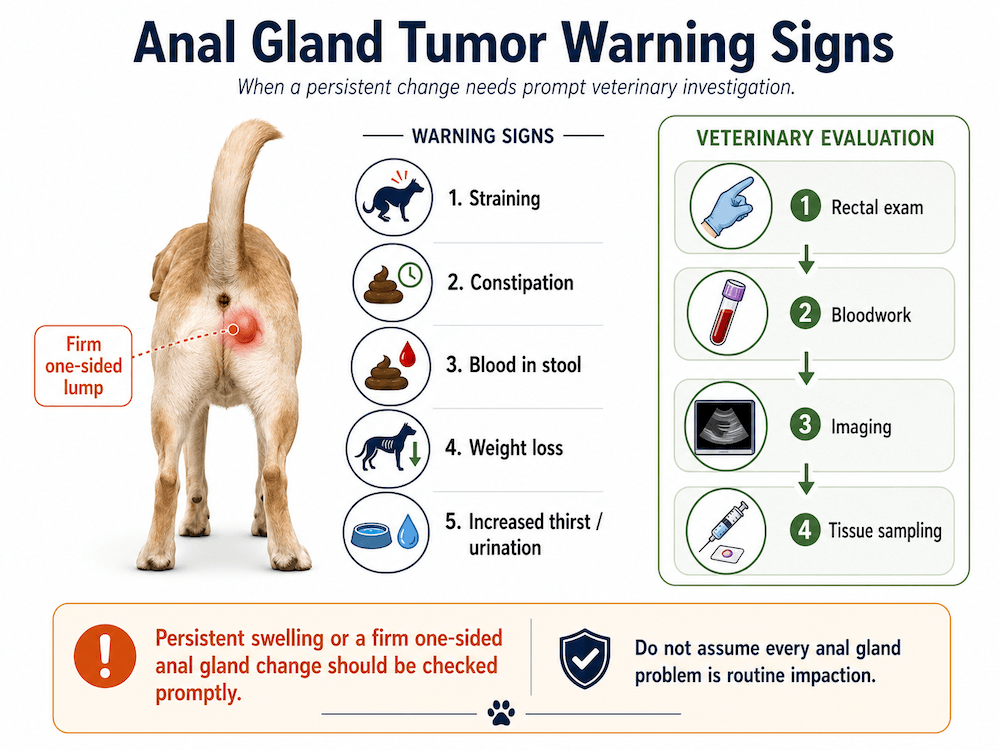
| Tumor | Abnormal tissue develops within an anal sac. | Firm mass, straining, constipation, thirst, or urination changes. | Sampling, imaging, bloodwork, staging, and possible surgery. |
Signs of Anal Gland Problems in Dogs
Scooting is the sign most owners associate with anal glands, but it is not a diagnosis. A dog may drag its bottom because of anal-sac discomfort, itchy skin, fecal residue, parasites, allergies, or irritation around the anus.
Anal-sac pain can also produce subtle behavior changes. A dog may sit abruptly, avoid sitting on hard surfaces, hold the tail down, look repeatedly toward the rear, or resist having the hindquarters touched. Some dogs become restless before or after bowel movements.
An anal gland problem does not always produce every sign. Some dogs show only repeated licking, while others develop an obvious painful swelling with little scooting.
What Scooting and Fishy Odor Can—and Cannot—Tell You
A fishy smell confirms that anal-sac fluid was probably released, but it does not explain why. A frightened dog may release normal fluid once, while a dog with impaction may leak repeatedly. Infection is more likely when odor occurs with pain, redness, swelling, pus, or illness.
Scooting has an equally broad meaning. Anal-sac discomfort is common, but itchy skin, flea irritation, tapeworm segments, diarrhea, feces caught in the coat, and wounds around the anus can cause similar behavior. Dogs with perianal fistulas may develop painful draining tracts around the anus that are separate from anal-sac abscesses.


A veterinarian may need to check the skin, coat, stool history, parasite prevention, rectum, and anal sacs before identifying the cause. Repeatedly emptying the sacs without investigating other possibilities can delay treatment for allergies, parasites, digestive disease, or a mass.
Other Conditions That Can Look Like an Anal Gland Problem
Scooting, licking, odor, straining, and discomfort around the anus do not always mean the anal sacs are blocked. Allergies, parasites, contaminated fur, digestive irritation, wounds, perianal fistulas, hernias, and masses can produce similar signs, so repeated symptoms warrant an examination rather than automatic gland expression.
| Possible Cause | How It May Look Similar | Clues to Look For |
|---|---|---|
| Allergic skin disease | Causes licking, scooting, redness, and irritation. | Itching may also affect the paws, ears, or belly. |
| Intestinal parasites | May irritate the anus and trigger scooting. | Segments, diarrhea, or an overdue parasite plan may occur. |
| Matted or dirty fur | Creates odor, pulling, itching, and rubbing. | Debris or tangled hair is visible around the anus. |
| Digestive irritation | May cause straining, mucus, soreness, or scooting. | Diarrhea, constipation, or frequent bowel movements are present. |
| Perianal fistula or wound | Causes pain, discharge, licking, and difficulty defecating. | Open sores or draining tracts surround the anus. |
| Perineal hernia | May cause swelling, straining, and stool difficulty. | A soft bulge develops beside the anus. |
| Mass or tumor | May resemble firm impaction or one-sided swelling. | The lump persists, feels firm, or cannot be expressed. |
Why Some Dogs Develop Repeated Anal Gland Problems
The following factors may raise risk, but none guarantees that a dog will develop anal-sac disease.
| Risk Factor | Why It May Matter | Practical Owner Focus |
|---|---|---|
| Small body size | Smaller dogs are diagnosed more frequently overall. | Watch for recurring signs without expressing routinely. |
| Breed or anatomy | Sac position or duct shape may affect drainage. | Discuss repeated episodes during veterinary examinations. |
| Soft stool | Loose stool may provide insufficient emptying pressure. | Investigate recurring diarrhea or food intolerance. |
| Constipation | Hard stool and straining may make emptying painful. | Address persistent stool difficulty with a veterinarian. |
| Excess weight | Reduced muscle tone may interfere with normal drainage. | Maintain a veterinarian-guided healthy body condition. |
| Skin allergies | Inflammation and itching may contribute to recurrence. | Treat ear, paw, skin, and anal symptoms together. |
| Past anal-sac disease | Previous inflammation may narrow or damage drainage pathways. | Track recurrence patterns and follow veterinary guidance. |
Do All Dogs Need Their Anal Glands Expressed?
Most healthy dogs do not need routine anal gland expression. When the sacs empty normally and the dog has no symptoms, unnecessary manipulation offers little practical benefit.
Some dogs with a documented history of impaction may need scheduled checks or expression. The interval should be based on that individual dog’s symptoms and veterinary examination rather than an automatic monthly grooming routine.
External expression, sometimes performed during grooming, presses from outside the anus. It may release some fluid but does not allow a full internal examination of the sacs, ducts, surrounding tissue, or rectum. A veterinarian or trained veterinary professional can evaluate whether a sac is enlarged, painful, unusually firm, asymmetrical, or impossible to empty.
Repeatedly expressing healthy sacs may irritate sensitive tissue and can make it harder to recognize why a dog is scooting. Routine expression should not replace an examination when symptoms keep returning.
Is It Safe to Express a Dog’s Anal Glands at Home?
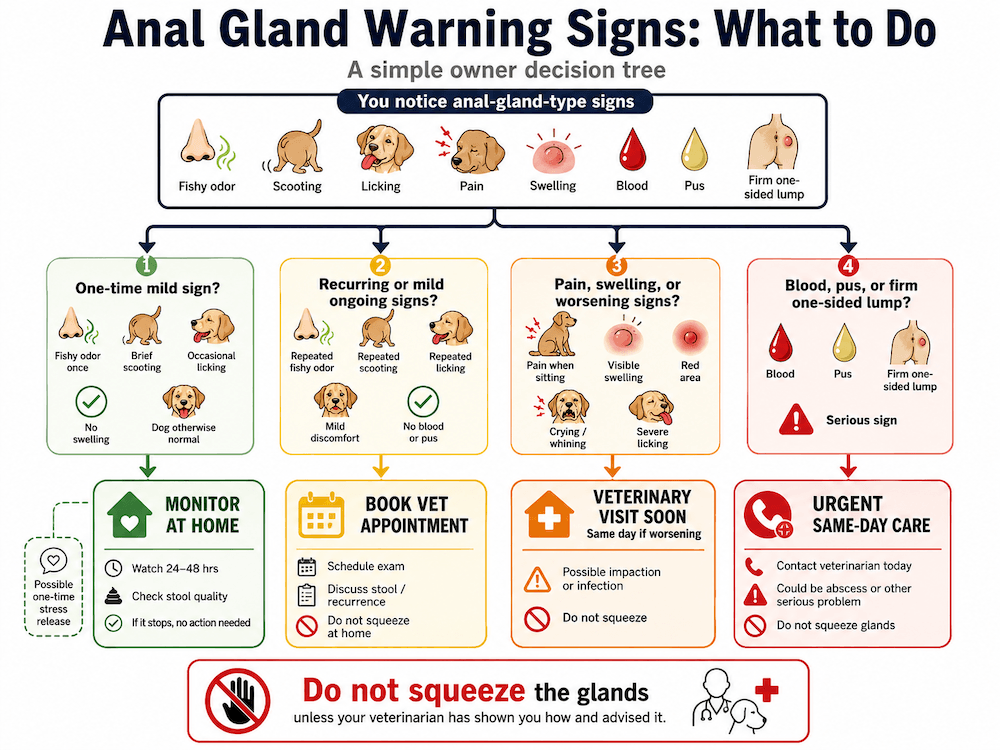
Home expression is not appropriate for every dog or every anal-sac problem. A dog may bite when painful, and forceful or incorrectly directed pressure can bruise tissue, worsen inflammation, or cause injury.
Owners should never attempt expression when the area is swollen, red, bleeding, draining pus, unusually firm, or extremely painful. These signs may indicate an abscess, infection, rupture, or mass that needs veterinary assessment.
A veterinarian may occasionally teach an owner how to manage a specific dog with simple recurrent impaction. That decision should follow an examination confirming that home care is appropriate. Written or video instructions cannot reveal whether the tissue feels abnormal, so they are not a substitute for hands-on training.
How Veterinarians Diagnose Anal Gland Problems
Diagnosis begins with the dog’s history and symptoms. The veterinarian may ask about scooting, painful bowel movements, stool changes, recurring episodes, itching, ear problems, constipation, diarrhea, or weight changes.
The area is checked for redness, discharge, wounds, swelling, parasites, and abnormal tracts. A lubricated rectal examination allows the veterinarian to feel each anal sac, assess pain and firmness, and determine whether it can be emptied. Fluid appearance may provide clues, but it must be considered alongside the dog’s symptoms and physical findings.
Recurrent, severe, or unusual cases may require microscopy, bacterial culture, bloodwork, ultrasound, needle sampling, or biopsy. Sedation may be needed when the area is very painful or when safe flushing, drainage, or a thorough examination would otherwise be difficult.
Anal Gland Tumors in Dogs
Anal gland tumors are different from ordinary impaction and should be investigated when a dog has a firm, persistent, or one-sided enlargement, particularly if the sac cannot be emptied normally. Possible signs include constipation, straining, blood in the stool, weight loss, or swelling beside the anus; some tumors can also raise blood calcium, leading to increased thirst and urination. Diagnosis may involve a rectal examination, bloodwork, imaging, needle sampling, and assessment for spread, while treatment commonly involves surgery and may include additional cancer therapy based on the findings.
How Anal Gland Problems Are Treated
Treatment depends on whether the dog has impaction, inflammation, infection, an abscess, recurrent disease, or a tumor. A simple impaction may be relieved through careful manual expression, while thick or dry material may need to be softened or flushed rather than forced out.
Inflamed or infected sacs may require flushing, medication placed inside the sac, pain relief, anti-inflammatory treatment, or antibiotics when infection is severe or has spread. Abscesses may need drainage and cleaning, and an Elizabethan collar can help prevent licking while the area heals.
Recurring problems often require treatment of the underlying cause, such as poor stool consistency, diarrhea, constipation, excess weight, or allergic skin disease. Surgical removal of the anal sacs is usually reserved for severe recurrent disease or tumors because complications may include infection, wound problems, painful defecation, or loss of fecal control.
What to Expect After Anal Gland Treatment
After a simple expression, scooting, licking, pressure, and discomfort should gradually improve. Mild temporary tenderness may occur, while dogs treated for inflammation or an abscess may have a small amount of drainage as the area heals.
Follow the veterinarian’s instructions for cleaning, warm compresses, medication, and follow-up visits. Complete the full treatment course, and use an Elizabethan collar when needed to prevent licking, chewing, or contamination of an open or healing area.
Contact the clinic if pain, swelling, odor, bleeding, or discharge increases rather than improves. Difficulty passing stool, reduced appetite, lethargy, repeated scooting, wound breakdown, or renewed swelling may indicate that infection remains, the opening has closed too early, or another problem needs attention.
Can Diet, Fiber, or Supplements Help Dog Anal Glands?
Diet may help when soft or poorly formed stool prevents the anal sacs from emptying naturally. Firmer, well-formed stool can place more pressure on the sacs during bowel movements, but recurring digestive problems should still be investigated.
Fiber may improve stool bulk, but more fiber is not always better. Pumpkin, psyllium, pectin, probiotics, and anal gland chews may help some dogs, while excessive or sudden fiber changes can cause gas, constipation, diarrhea, or reduced nutrient intake.
Supplements cannot unblock a duct, drain an abscess, treat a tumor, or correct allergic inflammation. Owners should also check calories and ingredients, since weight gain or a food-sensitive reaction could worsen the underlying problem.
How Dog Owners May Reduce Recurrent Anal Gland Problems
Prevention depends on the dog’s underlying risks. There is no guaranteed home method, and dogs without symptoms generally do not need preventive expression.
You can also look beneath the tail during normal grooming without pressing the area. Check for redness, swelling, discharge, broken skin, fecal matting, or changes in symmetry.
Do not apply hydrogen peroxide, alcohol, essential oils, fragranced wipes, hemorrhoid products, or human antibiotic creams unless a veterinarian specifically directs their use. The tissue around the anus is sensitive, and licking can expose the dog to ingredients not intended for ingestion.
When to Call a Veterinarian About Dog Anal Glands
A single brief odor or isolated scoot may be monitored if your dog remains comfortable and has no swelling, licking, pain, stool difficulty, or behavior changes. Book a veterinary visit if scooting, leaking, odor, licking, or discomfort repeats or lasts longer than one or two days.
Arrange prompt care if your dog strains or cries while passing stool, avoids sitting, or becomes sensitive around the tail. Seek same-day care for redness, painful one-sided swelling, blood, pus, a draining opening, or a suspected ruptured abscess.
Older dogs with a firm, uneven lump, constipation, unexplained weight loss, or increased thirst and urination need a thorough examination. Use emergency care if your dog cannot pass stool, has rapidly worsening pain or swelling, repeatedly vomits, collapses, or appears severely unwell. Do not wait for an abscess to rupture, as earlier treatment is usually less painful and may prevent further tissue damage.
What Veterinary Research Says About Anal Glands in Dogs
The Merck Veterinary Manual describes anal sac disease as a group of conditions that includes impaction, inflammation, abscesses, and tumors. It emphasizes physical and rectal examination for diagnosis and outlines expression, flushing, local medication, pain control, and surgery for selected severe cases. This supports matching treatment to the type and seriousness of the problem rather than treating every fishy odor the same way.[1]
A Royal Veterinary College VetCompass analysis published in Veterinary Record examined records from more than 104,000 dogs. Anal sac disorders affected 4.4% of the study population, with higher risk reported in several small, spaniel-type, poodle-type, dachshund-type, and flat-faced groups; surgical removal occurred in fewer than 1% of affected dogs. The findings show that these disorders are common but that surgery is not the usual first treatment.[2]
A 2021 cross-sectional study of canine and feline anal sac disease identified associations with diarrhea, skin problems, small body size, and obesity in dogs. It also concluded that diagnosis should be based on clinical signs and rectal examination rather than relying only on the appearance of anal-sac contents. This supports investigating stool quality, weight, skin disease, and anatomy in dogs with recurring episodes.[3]
A 2023 study in Veterinary Dermatology reviewed 190 dogs with anal sacculitis. Most episodes treated with local flushing, medication placed in the sacs, with or without anti-inflammatory treatment, resolved clinically; recurrence was more likely in dogs with concurrent allergic skin disease. This reinforces the importance of local treatment and controlling underlying allergies instead of relying only on repeated expression.[4]
Frequently Asked Questions
The Bottom Line
Anal glands in dogs are small scent sacs that usually empty naturally during bowel movements. Most healthy dogs do not need routine gland expression or special care. Repeated scooting, licking, fishy odor, pain, swelling, blood, or discharge may indicate impaction, inflammation, infection, or an abscess. Owners should avoid squeezing painful or visibly abnormal glands at home because this can worsen irritation or injury. Recurring problems may be linked to stool consistency, allergies, excess weight, or individual anatomy. Prompt veterinary care can relieve discomfort, identify the underlying cause, and help prevent more serious complications.
For more guidance, learn about anal sac disease in dogs and how to express dog anal glands safely when your veterinarian recommends it. You can also compare the best foods for dogs with anal gland issues and high-fiber dog foods, or explore how allergies in dogs and constipation in dogs may relate to recurring discomfort, scooting, or difficulty passing stool.