What Can You Wash a Dog With? Safe & Vet-Approved Options

Canine Bible is reader-supported. We receive affiliate commissions via some of our links. Learn more.
You can wash a dog with a gentle, dog-specific shampoo and lukewarm water. If dog shampoo is unavailable, plain water or a veterinarian-approved temporary alternative may be safer than using harsh household products. Human shampoo, dish soap, essential oils, and strongly scented cleansers can irritate a dog’s skin or disrupt its protective oils. The right choice also depends on whether your dog has sensitive skin, fleas, allergies, wounds, or a strong odor. Some homemade options may work in limited situations, but others can cause dryness, toxicity, or further irritation. Knowing what is safe—and what should never touch your dog’s coat—can help you avoid turning a simple bath into a skin problem. This guide explains the best washing options for everyday baths, emergencies, and dogs with special skin-care needs.
What Can You Wash a Dog With? Safety Overview
The Best Dog-Washing Options for Everyday Needs
For an ordinary bath, choose a dog-specific cleansing shampoo with clear directions and a complete ingredient list. A fragrance-free or lightly scented formula is often the most practical starting point, especially when a dog has previously developed dryness, redness, or itching after grooming. “Hypoallergenic” can be a helpful label, but it does not guarantee that every dog will tolerate the product.
Dogs with naturally dry or allergy-prone skin may benefit from a moisturizing formula containing ingredients such as colloidal oatmeal, ceramides, fatty acids, or skin-supporting lipids. These products are intended to clean without aggressively removing surface oils, although any shampoo can cause trouble when used too frequently, left on too long, or poorly rinsed.
Puppies should be washed with a product specifically labeled for their age and species. Senior dogs do not necessarily need a special “senior shampoo,” but they may need a gentler formula, warmer surroundings, a nonslip surface, shorter bathing sessions, and careful drying because stiffness, thin skin, or reduced temperature control can make bathing harder.
Remember to ALWAYS consult your veterinarian before using a medicated shampoos, unfamiliar cleanser, or bathing method that could irritate your dog’s skin or worsen an existing condition. If you can’t reach your vet, you can chat live with a registered online veterinary professional via our online vet chat or video chat support (24 hours a day, 7 days a week). Or use Chewy’s online vet services (6 a.m. – midnight ET).


How to Match the Cleanser to the Situation
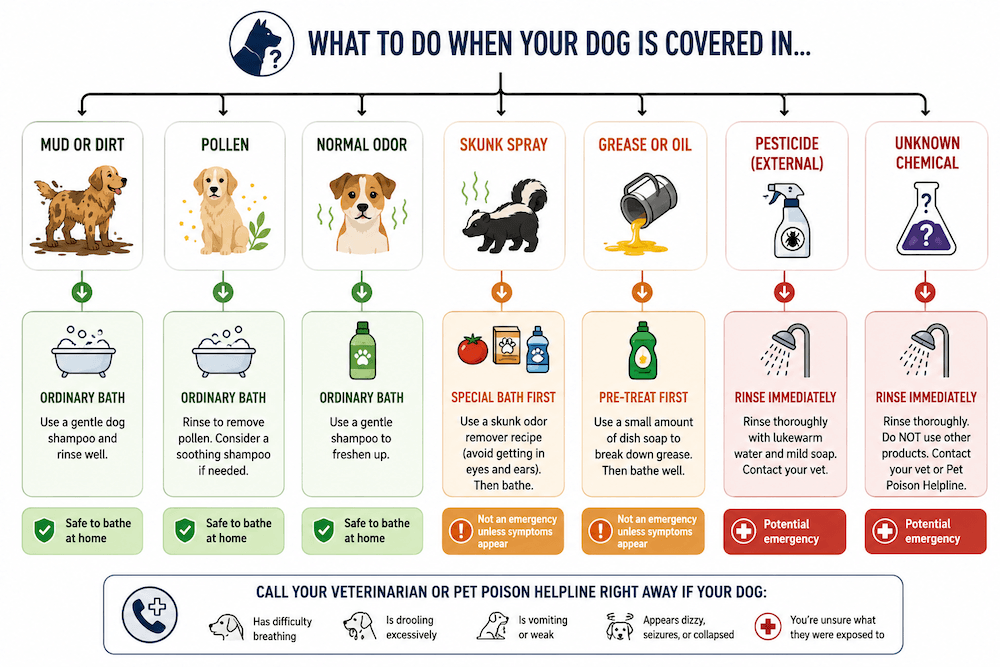
For mud, dust, sand, pollen, or ordinary dog odor, lukewarm water or a mild dog-specific shampoo is usually enough. Spot-cleaning the paws, belly, and lower legs with a damp cloth or dog-safe wipe may reduce the need for frequent full baths. If odor returns quickly or smells sour, musty, or unusually strong, the dog may need a veterinary check for skin, ear, dental, or anal gland problems.
For dry, flaky, itchy, or allergy-prone skin, choose a fragrance-free moisturizing dog shampoo and avoid harsh degreasing, whitening, or heavily scented products. Bathing can remove surface allergens, but repeated itching, red paws, greasy skin, hair loss, odor, sores, or recurring ear problems may indicate allergies, parasites, or infection. Flea and tick shampoos should only be used according to the dog’s species, age, weight, and existing parasite treatments.
For skunk spray, use a dog-labeled odor remover and avoid the eyes and mouth. Grease, motor oil, paint, pesticides, and household chemicals require decontamination rather than a routine bath, so prevent licking, wear gloves, and contact a veterinarian or animal poison service before washing. Dishwashing detergent may be advised for certain oily toxins, but it is not appropriate for every chemical or for regular bathing.
What to Use When You Have No Dog Shampoo
When dog shampoo is unavailable, plain lukewarm water is usually the safest temporary option. It can remove loose debris, mud, salt, pollen, and some surface dirt without introducing an unsuitable cleanser. A damp washcloth can also clean the face, paws, belly, and rear end more precisely.


For a dog that is merely dusty or muddy, it is generally better to rinse now and use an appropriate canine shampoo later than to substitute human shampoo, body wash, hand soap, laundry detergent, or a scented household product. One water-only bath will not leave the coat as clean as shampoo, but it is less likely to create a new skin problem.
A dog-safe grooming wipe or waterless pet cleanser is another practical backup. Check that it is intended for dogs, does not contain a harsh disinfectant, and is suitable for the area being cleaned. Products made for surfaces, babies, makeup removal, or household disinfection are not automatically safe for a dog that may lick its coat.
A homemade oatmeal rinse is sometimes used for comfort, but it is not a reliable cleanser and should not replace diagnosis when a dog is itchy. A properly formulated dog shampoo containing colloidal oatmeal provides more predictable concentration, spread, and rinsing than kitchen oatmeal mixed into bathwater.
What You Should Not Wash a Dog With
The fact that a product is mild for human skin, plant-based, “natural,” antibacterial, or commonly found in a kitchen does not make it suitable for dogs. Canine skin differs from human skin, dogs lick residues from their coats, and household products may contain fragrances, medications, essential oils, disinfectants, or detergents that were never intended for that exposure route.
| Product | Why It Is a Poor Routine Choice | Safer Approach |
|---|---|---|
| Human shampoo | Its formulation may dry or irritate canine skin. | Use a mild shampoo specifically labeled for dogs. |
| Baby shampoo | Gentle for babies does not mean canine-formulated. | Use plain water until dog shampoo is available. |
| Dishwashing liquid | Frequent degreasing strips oils and may increase dryness. | Reserve it for professionally guided decontamination situations. |
| Hand or bar soap | Fragrance and alkalinity may irritate or leave residue. | Choose an easy-rinsing canine cleansing shampoo. |
| Laundry detergent | Concentrated surfactants can irritate skin, eyes, and mouth. | Rinse exposure and seek veterinary guidance promptly. |
| Essential oils | Concentrated oils may irritate skin or cause toxicity. | Avoid homemade oil mixtures and fragranced rinses. |
| Vinegar mixtures | They may sting inflamed, wounded, or infected skin. | Use a diagnosis-appropriate dog cleanser instead. |
| Baking soda paste | It may dry skin and is difficult to rinse completely. | Use dog shampoo or plain-water spot cleaning. |
| Hydrogen peroxide | It can irritate tissue and damage coat color. | Use only when a veterinarian gives specific instructions. |
| Disinfectant cleaners | Some ingredients are corrosive or toxic when licked. | Use pet grooming products, not surface-cleaning products. |
Essential oils deserve particular caution. Concentrated tea tree oil exposures have caused neurologic and systemic illness in dogs and cats, and adding an oil to shampoo does not guarantee safe dilution or even distribution.
Human medicated shampoos are also poor substitutes. Anti-dandruff, psoriasis, lice, acne, or antifungal shampoos may contain active ingredients and strengths that are unsuitable for a dog, especially when the dog can lick the wet coat.
How Often Should You Wash a Dog?
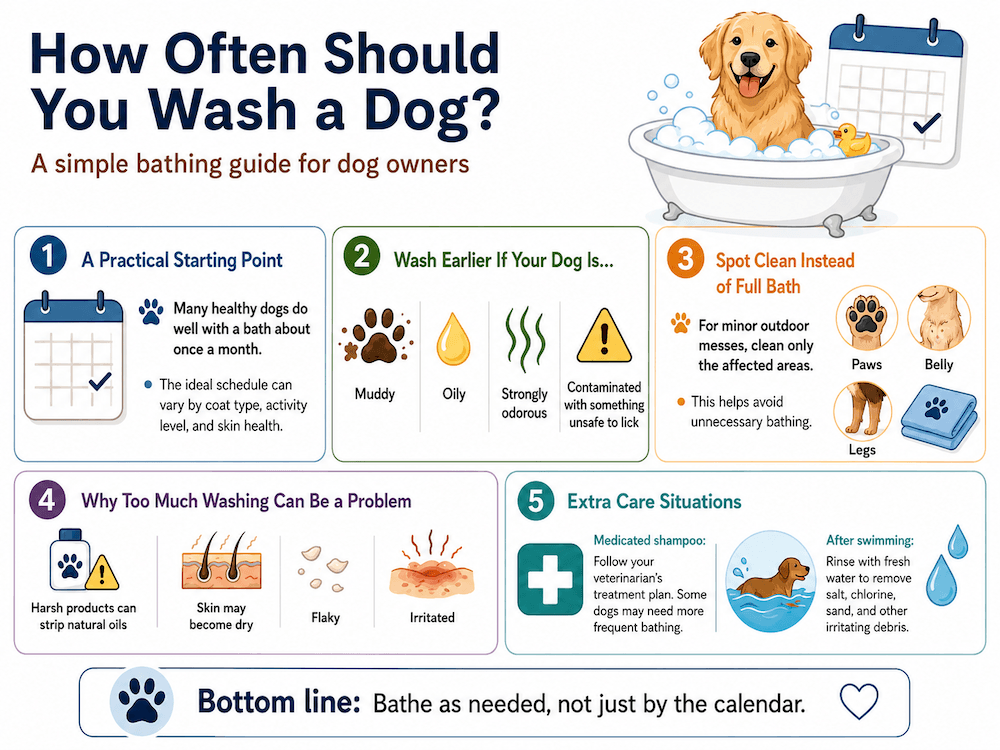
For many healthy dogs, bathing about once a month is a practical starting point, although coat type, activity level, and skin health may require a different schedule. Bathe sooner when the coat is muddy, oily, strongly odorous, or contaminated with something the dog should not lick.
For minor outdoor messes, clean only the affected areas, such as the paws, belly, or legs, instead of giving a full bath. Avoid unnecessary bathing with harsh products, as this can strip protective oils and leave the skin dry, flaky, or irritated.
Dogs using medicated shampoo should be bathed according to their veterinarian’s treatment plan, which may require more frequent washing. After swimming, rinse the coat with fresh water to remove salt, chlorine, sand, and other irritating debris.
How to Wash a Dog Without Irritating the Skin
The product matters, but bathing technique matters too. Hot water, vigorous scrubbing, shampoo residue, moisture trapped beneath a dense coat, and water forced into the ears can all create discomfort even when the shampoo itself is suitable.
Clean the face with a damp cloth rather than pouring shampoo over the head. Do not insert cotton swabs into the ear canal, and do not use ordinary body shampoo as an ear cleaner. Dogs with known ear disease may need a separate veterinary ear product and instructions about whether the ears should be protected during bathing.
Bathing frequency should be individualized. An active dog that swims, rolls in dirt, or has a prescribed topical treatment may need frequent washing, while a clean indoor dog may need baths much less often. The condition of the skin after bathing is more informative than following a universal calendar.
Bathing Considerations for Puppies, Senior Dogs, & Sensitive Skin
Different dogs need different bathing setups. Product choice, water temperature, bath length, footing, and drying method should reflect the dog’s age, mobility, coat, and skin condition.
| Dog | Bathing Setup | Product Choice | Main Safety Consideration |
|---|---|---|---|
| Puppies | Keep baths warm, calm, brief, and closely supervised. | Use a mild shampoo labeled for puppies. | Dry promptly because young puppies can become chilled. |
| Senior dogs | Use nonslip mats and support stiff or weak legs. | Choose a gentle, easy-rinsing dog shampoo. | Shorten baths to reduce fatigue, stress, and joint discomfort. |
| Sensitive skin | Use lukewarm water and avoid vigorous scrubbing. | Choose a fragrance-free moisturizing canine formula. | Stop if redness, itching, or discomfort increases. |
| Allergy-prone dogs | Rinse the paws and coat after allergen exposure. | Follow the veterinarian’s cleansing or medicated-shampoo plan. | Recurring odor or redness may indicate secondary infection. |
| Damaged skin | Avoid scrubbing wounds, sores, or inflamed areas. | Use only products approved for the diagnosed condition. | Open, painful, or infected skin needs veterinary assessment. |
| Reduced mobility | Consider spot cleaning or a supported walk-in shower. | Use dog-safe wipes or waterless cleanser when appropriate. | Never leave an unstable dog standing unsupported. |
When Medicated Shampoo Is the Right Choice
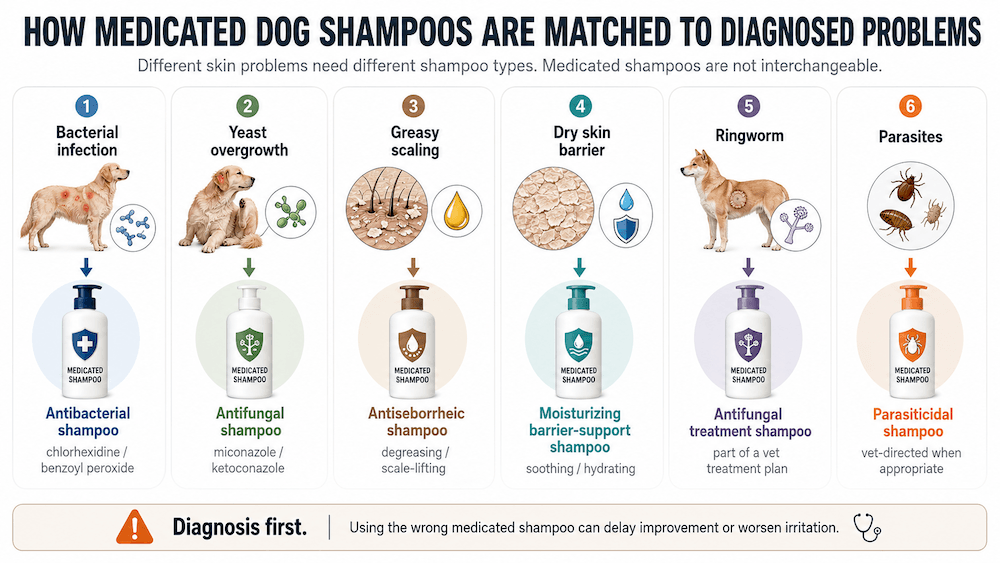
Medicated dog shampoos are treatments, not upgraded grooming products. They may contain antibacterial, antifungal, degreasing, exfoliating, moisturizing, antiparasitic, or anti-inflammatory ingredients, but the correct formula depends on the underlying skin problem. Chlorhexidine may help selected bacterial infections, antifungal ingredients may be used for yeast or fungal conditions, and benzoyl peroxide may suit certain greasy or follicular disorders. Because these ingredients are not interchangeable and may cause dryness or irritation, veterinary testing or examination may be needed before choosing one.
Follow the product or veterinary directions carefully, especially for contact time, application, and rinsing. Do not use antimicrobial shampoo simply because your dog smells yeasty or has red skin, since infections may be secondary to allergies, parasites, hormonal disorders, skin folds, or trapped moisture. Treating only the surface problem without managing the cause can lead to recurring flare-ups.
Washing a Dog After Chemical, Oil, or Irritant Exposure
When a Bathing Problem Needs Veterinary Attention
Mild dryness or brief itching after a bath may improve after the coat is rinsed again with lukewarm water and dried carefully. Stop using the suspected product and watch the skin closely over the next several hours.
A veterinarian should also examine a dog whose skin condition repeatedly improves with shampoo and then quickly returns. The recurring need to “wash away” odor, grease, itching, or flakes often signals a problem that bathing alone cannot resolve.
What Veterinary Research Says About Washing Dogs
A paper indexed by the National Center for Biotechnology Information reported that canine skin tends to be more alkaline than human skin, with variation among dogs and body sites. The study focused on how pH affected the growth of Malassezia pachydermatis, but its description of canine skin pH helps explain why products formulated for human skin should not automatically be treated as equivalent to dog shampoos.[1]
The 2023 American Animal Hospital Association guidelines for allergic skin disease state that routine bathing with shampoos containing moisturizing factors such as oatmeal, ceramides, fatty acids, and lipids can support dogs with atopic dermatitis. The guidelines also note that antimicrobial shampoos, mousses, and sprays may help reduce recurrent bacterial and yeast infections when used as part of a broader veterinary plan.[2]
The Merck Veterinary Manual explains that medicated shampoos may require a clean coat, appropriate dilution, adequate skin contact, and thorough rinsing. It specifically identifies leftover shampoo residue as a common cause of irritation, reinforcing why technique is as important as product selection.[3]
A controlled clinical comparison published in Veterinary Record found that shampoos containing 3% chlorhexidine and 2.5% benzoyl peroxide produced similar improvements in dogs with superficial bacterial skin disease. This does not mean either product is suitable for every itchy dog; it supports using diagnosis-specific active ingredients rather than selecting shampoo by scent or advertising alone.[4]
Frequently Asked Questions
The Bottom Line
For most routine baths, wash your dog with lukewarm water and a mild shampoo made specifically for dogs. Plain water, dog-safe wipes, or a damp cloth may be enough for light mud, dust, pollen, or spot cleaning. Choose fragrance-free or moisturizing formulas for sensitive skin, and use medicated shampoos only when they match a diagnosed skin problem. Avoid human shampoo, harsh soaps, essential oils, disinfectants, and homemade mixtures that may irritate the skin or leave unsafe residue. Persistent odor, itching, flakes, redness, sores, or hair loss may signal a problem that bathing alone cannot fix. Chemical, pesticide, paint, or oily toxin exposure should be treated as a decontamination concern rather than an ordinary bath. When in doubt, use the gentlest dog-safe option and contact your veterinarian for guidance.
For more bathing guidance, learn when you can bathe a puppy, follow our practical guide on how to bathe a dog, and find out how often you should wash your dog. You can also compare the best dog shampoos, explore flea shampoos for dogs, and consider the best dry dog shampoos for quick cleanups between baths.