
What Can Dogs Take for Pain? 15 Vet-Approved Safe Options


Canine Bible is reader-supported. We receive affiliate commissions via some of our links. Learn more.
Dogs can take veterinarian-approved pain medications, including certain NSAIDs made specifically for dogs and other prescription drugs chosen for the type and severity of pain. Human painkillers such as ibuprofen, naproxen, and acetaminophen should never be given unless a veterinarian specifically instructs you to do so, as some can cause serious or fatal poisoning. The safest option depends on whether your dog has an injury, arthritis, dental pain, post-surgical discomfort, or another underlying condition. Age, weight, kidney or liver health, and other medications can also change which treatments are appropriate. Even aspirin, supplements, and seemingly harmless over-the-counter products can carry risks or interact with medications. Knowing which options veterinarians commonly use, which drugs to avoid, and when pain requires urgent care can help you make safer decisions for your dog.
What Dog Owners Should Know About Pain Relief
| Key Area | What Dog Owners Should Know |
|---|---|
| Veterinary pain relief | Dogs can take several prescription pain medications chosen for their specific condition. |
| Human medications | Ibuprofen, naproxen, and other human painkillers can be dangerous without veterinary guidance. |
| Cause of pain | Arthritis, injuries, nerve pain, dental disease, and surgery may require different treatments. |
| Individual safety | Age, hydration, organ health, and current medications influence which options are appropriate. |
| Side effects | Vomiting, appetite loss, stool changes, weakness, or unusual behavior warrant veterinary advice. |
| Non-drug support | Weight control, rehabilitation, controlled exercise, and home modifications can improve comfort. |
| Urgent pain | Severe pain, major trauma, collapse, paralysis, or abdominal swelling needs prompt veterinary care. |
Remember to ALWAYS consult with your vet before giving your dog any pain medications. If you can’t reach your vet, you can chat live with a registered online veterinary professional via our online vet chat or video chat support (24 hours a day, 7 days a week). Or use Chewy’s online vet services (6 a.m. – midnight ET).
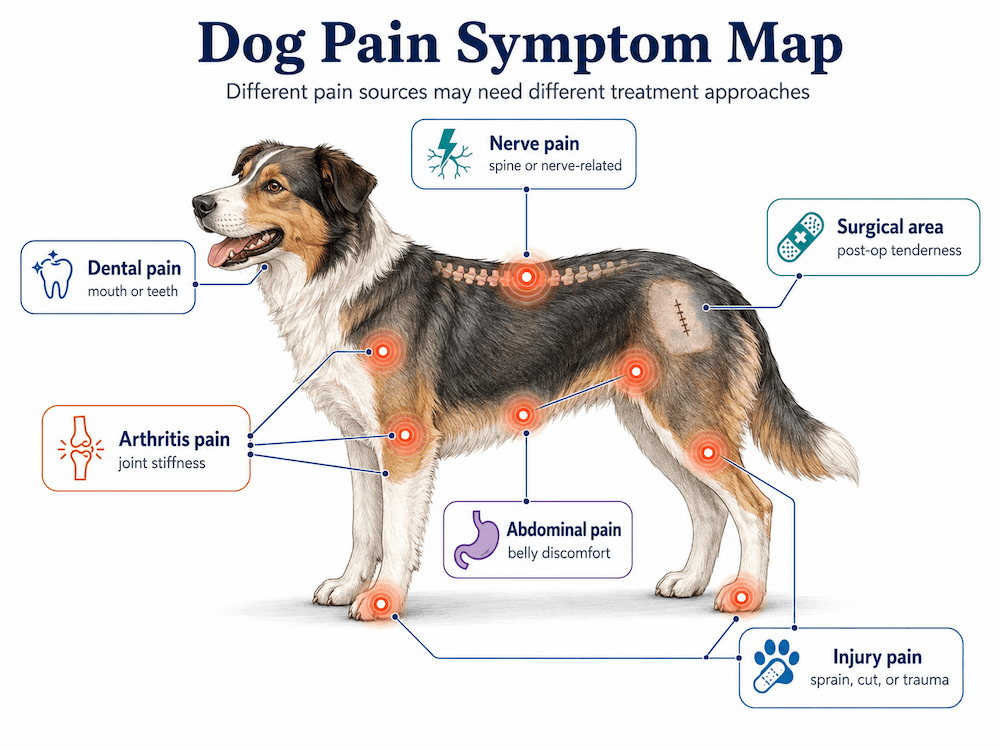
What Type of Pain Does Your Dog Have?
Different types of pain can look similar at home, but they may require very different treatments. Watching when the pain started, where it seems to be located, and how your dog moves or behaves can help your veterinarian narrow down the cause.
How to Tell if Your Dog Is in Pain
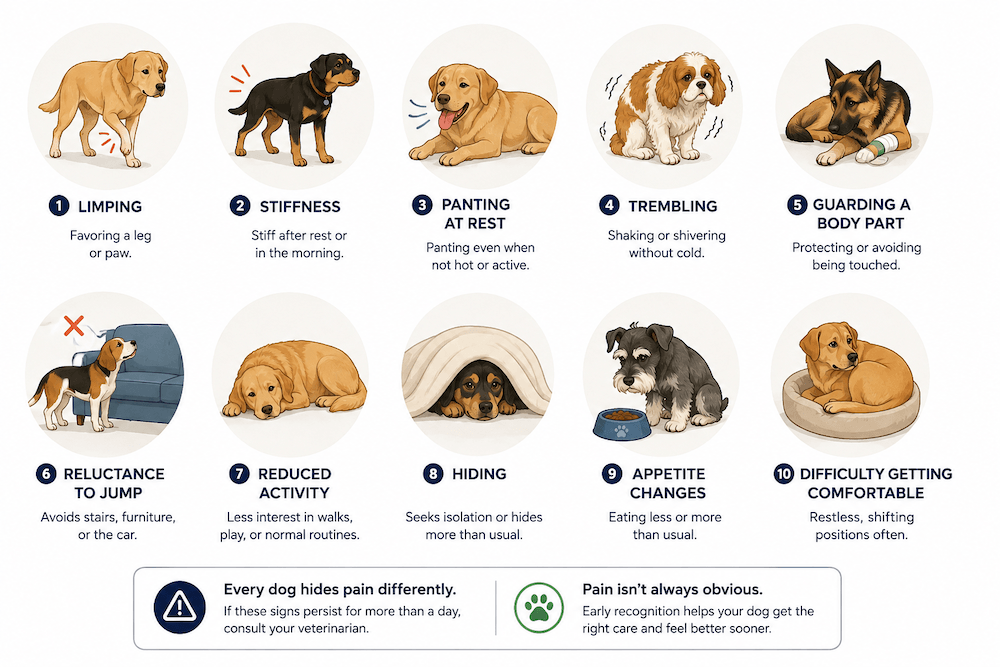
Dogs do not always cry or yelp when they hurt, so pain often appears through subtle changes in movement, posture, appetite, sleep, or behavior. Common signs include limping, stiffness, panting at rest, trembling, reluctance to jump or climb stairs, guarding part of the body, reduced interest in walks, hiding, irritability, or difficulty getting comfortable. A dog that suddenly stops doing normal activities, changes how it sits or lies down, or reacts when touched may also be uncomfortable. Persistent or worsening changes deserve veterinary attention, especially when they appear with weakness, vomiting, breathing difficulty, or inability to use a limb normally.


Why the Cause of Pain Changes What a Dog Can Take
Pain is a symptom, not a diagnosis. Treating the discomfort without identifying the cause can temporarily hide a problem that needs different care. A dog limping after an awkward landing may have a mild muscle strain, but the same limp could come from a torn ligament, fractured toe, infected nail, dislocated joint, spinal problem, or bone disease. Giving a pain reliever does not make those conditions equivalent.
What Dogs Can Safely Take for Pain
Pain relief for dogs can include prescription medications, targeted injections, rehabilitation, and supportive lifestyle changes. The best option depends on the cause and severity of the pain, and medications should be selected or approved by a veterinarian rather than chosen from a human medicine cabinet.
| Pain Relief Option | Common Use | Important Consideration |
|---|---|---|
| Carprofen | Arthritis, inflammation, and postoperative pain. | Prescription NSAID requiring appropriate health monitoring. |
| Deracoxib | Osteoarthritis and certain postoperative pain. | Use only at the veterinarian-prescribed dose and duration. |
| Firocoxib | Osteoarthritis and inflammatory musculoskeletal pain. | Kidney, liver, and digestive health should be considered. |
| Grapiprant | Pain and inflammation associated with osteoarthritis. | Prescription treatment intended specifically for canine arthritis. |
| Meloxicam | Arthritis, inflammation, and selected acute pain. | Requires careful dosing and veterinary supervision. |
| Robenacoxib | Short-term control of pain and inflammation. | Approved canine use is limited in duration. |
| Bedinvetmab | Osteoarthritis-associated pain in dogs. | Monthly veterinary injection with ongoing safety monitoring. |
| Gabapentin | Often used as an adjunct for nerve-related pain. | Evidence varies by pain type; sedation may occur. |
| Pregabalin | May help manage neuropathic or nerve-related pain. | Drowsiness or poor coordination may occur. |
| Amantadine | Adjunct treatment for difficult chronic pain. | Usually combined with another pain-management approach. |
| Opioids | Severe acute, surgical, or traumatic pain. | Generally used under close veterinary supervision. |
| Local anesthetics | Surgical, dental, wound, and localized procedural pain. | Usually administered directly by veterinary professionals. |
| Cold therapy | Early swelling and discomfort after some injuries or surgery. | Use briefly and protect skin from direct ice contact. |
| Physical rehabilitation | Arthritis, orthopedic recovery, and mobility problems. | A tailored program reduces the risk of overexertion. |
| Therapeutic exercise | Chronic joint pain and muscle-strength maintenance. | Exercise intensity should match the dog’s condition. |
| Weight management | Chronic arthritis and weight-related joint strain. | Reducing excess weight can decrease joint loading. |
| Omega-3 fatty acids | Supportive management of osteoarthritis and inflammation. | Use an appropriate diet or veterinarian-guided supplement. |
| Home modifications | Arthritis, weakness, and chronic mobility-related discomfort. | Ramps, rugs, and supportive bedding reduce painful movement. |
Can Dogs Take Human Pain Medications?
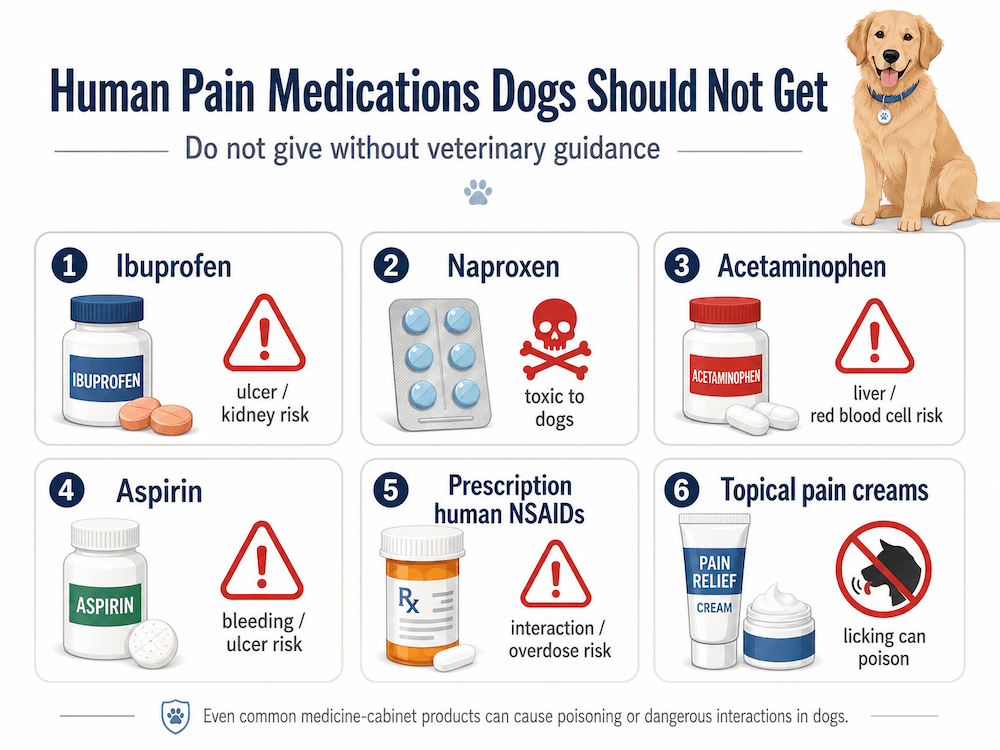
Seeing a dog limp often leads owners to the bathroom cabinet, but this is where many preventable medication emergencies begin. Dogs process medications differently from humans, and a normal human dose can produce gastrointestinal ulceration, kidney injury, liver damage, abnormal blood function, neurologic problems, or other serious effects.
How Veterinarians Choose Safe Pain Relief for Dogs
The safest medication is determined by more than body weight. Veterinarians consider where the pain originates, how severe it is, whether inflammation is involved, how long treatment may be needed, and whether the dog has other health problems.


Kidney disease, liver disease, gastrointestinal ulcers, heart disease, dehydration, clotting problems, and previous medication reactions can all affect treatment decisions. Puppies, senior dogs, pregnant dogs, and dogs taking multiple medications may require additional caution.
Medication history is particularly important. Tell the veterinary team about everything your dog receives, including prescriptions, flea and tick medications, corticosteroids, supplements, CBD products, aspirin, and medicines given only occasionally.
Side Effects to Watch for When Dogs Take Pain Medication
Pain medications can cause side effects ranging from mild digestive upset to more serious kidney, liver, or neurologic problems. Watch for changes in appetite, vomiting, stool, thirst, energy, coordination, or behavior, and contact your veterinarian if concerning symptoms develop.
| Side Effect | What It May Signal | Commonly Linked Medication Type |
|---|---|---|
| Loss of appetite | Digestive upset or medication intolerance. | NSAIDs, opioids, or other oral medications. |
| Vomiting or diarrhea | Gastrointestinal irritation or drug reaction. | Most commonly associated with NSAIDs or oral drugs. |
| Black or bloody stool | Possible gastrointestinal bleeding. | Particularly concerning with NSAID use. |
| Increased thirst or urination | Possible kidney-related changes. | Can occur with NSAID-related kidney effects. |
| Yellow gums or eyes | Possible liver or blood-related problem. | May occur with medications affecting liver function. |
| Marked sleepiness | Possible central nervous system effect. | Gabapentin, pregabalin, opioids, or sedating drugs. |
| Weakness or poor coordination | Possible neurologic medication effect. | Gabapentin, pregabalin, or other neurologic drugs. |
| Unusual behavior | May indicate a medication-related reaction. | Can occur with several pain medication classes. |
CBD and Joint Supplements for Dog Pain
Many products advertised for canine pain are supplements rather than medications. That distinction matters because evidence, product consistency, quality control, dosing information, and side-effect data can vary considerably.
Joint supplements containing ingredients such as glucosamine, chondroitin, omega-3 fatty acids, or green-lipped mussel products may be incorporated into some arthritis-management plans. These products should be viewed as potential supportive therapies, not quick substitutes for appropriate analgesia when a dog is clearly painful.
CBD products, including CBD oil for dogs, are also marketed widely for canine arthritis. Some dogs appear to tolerate veterinary-oriented CBD products, and early clinical work has explored potential benefits, but evidence remains less consistent than it is for established veterinary analgesics. CBD may also cause sedation, gastrointestinal effects, or changes in liver enzymes and can potentially interact with other medications.
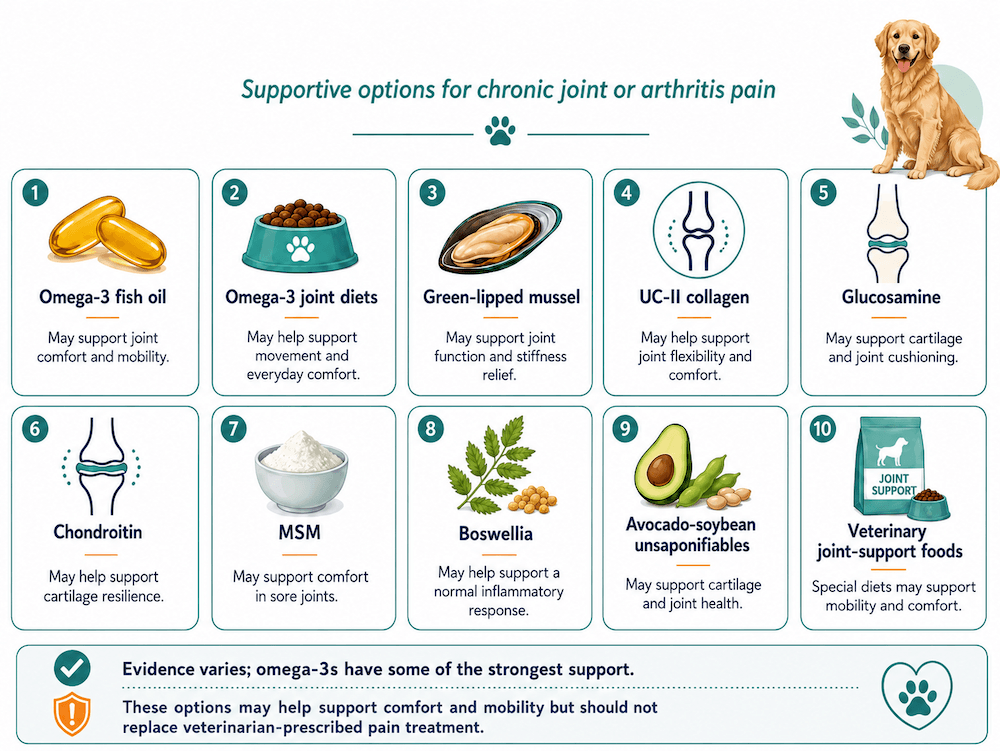
10 Home Remedies & Natural Options Dogs Can Take for Pain
Some home remedies and joint-support options may help dogs with chronic joint or arthritis discomfort. Omega-3 fatty acids have some of the strongest evidence, while options such as green-lipped mussel, UC-II collagen, glucosamine, chondroitin, MSM, and Boswellia have varying levels of support. These products are best used to support mobility and comfort rather than as substitutes for veterinary pain medication.
What Can Owners Safely Do at Home for a Dog in Pain?
Simple home adjustments can help keep a painful dog more comfortable while limiting unnecessary strain. The goal is to reduce activity that may worsen the problem, provide a safe resting environment, and support controlled movement when appropriate. Avoid manipulating painful areas or using heat, cold, or splints without veterinary guidance, especially when the cause of pain is unknown.
When to Call a Veterinarian About Pain in Dogs
Mild soreness or stiffness that is short-lived and clearly improving can sometimes be monitored briefly at home. However, persistent limping, repeated pain, reduced activity, difficulty using stairs, or noticeable behavior changes should prompt a veterinary appointment. Dogs can hide discomfort well, so worsening or recurring signs should not be ignored.
Seek same-day veterinary care if your dog will not bear weight, cries repeatedly, has obvious swelling, develops a painful abdomen, cannot get comfortable, or has experienced significant trauma. Emergency care is warranted when pain occurs with collapse, breathing difficulty, a swollen abdomen, repeated vomiting, uncontrolled bleeding, paralysis, seizures, extreme weakness, or inability to urinate. These signs can indicate a problem that needs immediate diagnosis and treatment.
Medication exposure can also become an emergency. Contact a veterinarian or animal poison-control service promptly if your dog receives ibuprofen, naproxen, an unknown drug, an excessive dose, another pet’s medication, or multiple pain relievers. Bring or photograph the package so the exact ingredient and strength can be identified, and do not induce vomiting or give another medication unless a veterinary professional instructs you to do so.
What Veterinary Research Says About Pain Relief for Dogs
The U.S. Food and Drug Administration lists several prescription NSAIDs currently approved for use in dogs, including carprofen, deracoxib, firocoxib, grapiprant, meloxicam, and robenacoxib. Its veterinary safety guidance emphasizes that these medications can provide valuable pain control but can also affect the gastrointestinal tract, kidneys, and liver, making veterinary selection and monitoring important. It also advises against combining NSAIDs with another NSAID or with corticosteroids.
The 2022 American Animal Hospital Association Pain Management Guidelines for Dogs and Cats emphasize individualized and multimodal pain management. The guidelines distinguish acute from chronic pain and support combining appropriate medications with nonpharmacologic strategies rather than relying on a single drug for every painful condition. They also note that evidence for some commonly used adjuncts is less robust than owners may assume.[1]
A randomized multicenter study evaluated bedinvetmab in dogs with osteoarthritis and found improved owner-assessed pain outcomes compared with placebo during the controlled study period. This supports its role as one available option for osteoarthritis-associated pain rather than as a universal treatment for every type of canine pain.[2]
Post-approval monitoring has added important context to that evidence. In 2025, the FDA updated Librela’s safety information after evaluating adverse-event reports involving signs including ataxia, seizures, paresis, urinary changes, and other abnormalities. Spontaneous adverse-event reports cannot reliably establish how frequently an event occurs or prove that the drug caused every reported event, but the updated information reinforces the importance of discussing benefits, risks, and new symptoms with the veterinarian before and after treatment.
Frequently Asked Questions
The Bottom Line
Dogs have several effective pain-relief options, but the safest treatment depends on the cause of the pain, your dog’s overall health, and any medications they already take. Veterinary NSAIDs are commonly used for arthritis and inflammatory pain, while medications such as gabapentin, pregabalin, amantadine, opioids, and other therapies may be appropriate in specific situations. Human pain relievers such as ibuprofen and naproxen should not be given at home, and aspirin or acetaminophen should only be used when a veterinarian specifically directs their use. Supportive measures such as controlled activity, weight management, rehabilitation, comfortable bedding, and better traction can also improve comfort, especially for dogs with chronic joint problems. Watch closely for vomiting, appetite changes, black stool, unusual thirst, weakness, sedation, or behavior changes after starting medication. Sudden, severe, persistent, or unexplained pain should always be evaluated rather than treated by trial and error. The goal is not simply to mask discomfort, but to identify the cause and give your dog the safest, most effective relief possible.
Sources
- 2022 AAHA Pain Management Guidelines for Dogs and Cats
- A prospective, randomized, double-blind, placebo-controlled multisite, parallel-group field study in dogs with osteoarthritis conducted in the United States of America evaluating bedinvetmab, a canine anti-nerve growth factor monoclonal antibody