What Is the Biggest Dog in the World? Tallest, Heaviest & Largest Breeds

Canine Bible is reader-supported. We receive affiliate commissions via some of our links. Learn more.
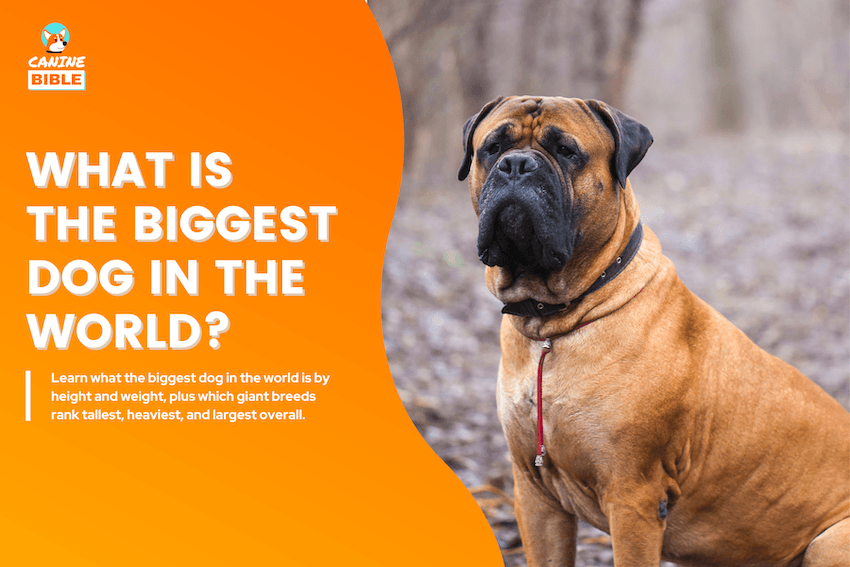
The biggest dog in the world is generally considered the English Mastiff when measuring by overall size, weight, and body mass. If height is the main measure, the Great Dane is often the breed that stands tallest. But “biggest” can mean different things depending on whether you are talking about weight, height, length, or a specific record-holding dog. Some giant breeds are massive but calm, while others are tall, athletic, and surprisingly gentle. Their size can be impressive, but it also brings special care needs, health risks, and lifestyle challenges. This guide explains which dogs truly rank as the biggest, how records are measured, and what owners should know before living with a giant breed.
What to Know About the Biggest Dog in the World
| Key Point | What It Means for Dog Owners |
|---|---|
| Meaning of Biggest | Biggest can refer to weight, height, body mass, or an individual record. |
| Weight Winner | The English Mastiff is usually the top answer for overall size and mass. |
| Height Winner | The Great Dane is usually the top answer when measuring shoulder height. |
| Record Changes | Individual tallest-dog records can change as new dogs are officially measured. |
| Health Planning | Giant dogs need careful nutrition, joint support, and regular veterinary care. |
| Lifestyle Fit | Large breeds need enough space, training, budget, and safe daily handling. |
| Owner Takeaway | The best answer depends on whether the article means heaviest or tallest. |
What Is the Biggest Dog in the World?
The biggest dog in the world depends on whether you mean tallest, heaviest, or biggest breed overall. The tallest dog ever officially recorded was Zeus, a Great Dane from Michigan, who measured 44 inches at the withers, or shoulder area. Guinness World Records currently lists Reginald “Reggie” Johnson Reiss, another Great Dane, as the tallest living male dog at 3 feet 3 inches, while Minnie Nogacek, also a Great Dane, is listed as the tallest living female dog at 3 feet 2 inches.
For breed size, the answer is slightly different. Great Danes dominate height records, Irish Wolfhounds are often recognized as the tallest breed, and Mastiffs are among the heaviest common dog breeds. For dog owners, the most important takeaway is not just which dog is biggest, but what giant size means for training, feeding, health, safety, cost, and everyday care.
Biggest Dog in the World: Tallest vs Heaviest vs Biggest Breed
When people ask “What is the biggest dog in the world?” the answer depends on how size is measured. A dog can be the tallest without being the heaviest, and a breed can be massive on average without holding an individual height record. That is why Great Danes, Irish Wolfhounds, and Mastiffs all belong in the discussion.


Official height records are usually measured at the withers, the highest point of the shoulders when a dog stands naturally on all four paws. This is more consistent than measuring to the top of the head, since posture, ears, and excitement can change how tall a dog appears. Guinness World Records uses this shoulder-height method for tallest-dog records.
By height, the Great Dane is the most famous “biggest dog” breed, with record holders such as Zeus, who measured 1.118 meters, or 44 inches, and Reggie, currently listed by Guinness at 1.007 meters, or 3 feet 3 inches. By weight and body mass, however, the Mastiff is often the stronger answer, with adult males starting around 30 inches tall and weighing up to about 200 pounds.
| Type of “Biggest” | Best Answer | What It Means | Owner Takeaway |
|---|---|---|---|
| Tallest Dog Ever | Zeus, a Great Dane | Measured 44 inches at the withers. | Record dogs are exceptional individuals, not normal breed targets. |
| Tallest Living Male Dog | Reggie, a Great Dane | Listed by Guinness at 3 feet 3 inches. | Current records can change, so official record pages matter. |
| Tallest Living Female Dog | Minnie, a Great Dane | Listed by Guinness at 3 feet 2 inches. | Great Danes frequently appear in tallest-dog records. |
| Tallest Breed | Irish Wolfhound | Often recognized as the tallest breed overall. | Breed averages are different from individual world records. |
| Heaviest Giant Breed | Mastiff | One of the heaviest common dog breeds. | Weight affects handling, food costs, travel, and vet care. |
Biggest Dogs in the World by Height, Weight, and Build
When comparing giant dog breeds side by side, the biggest differences come down to height, weight, and body build. A tall, lean breed like the Irish Wolfhound can look very different from a heavier, broader breed like the Mastiff, even when both are considered among the biggest dogs in the world.


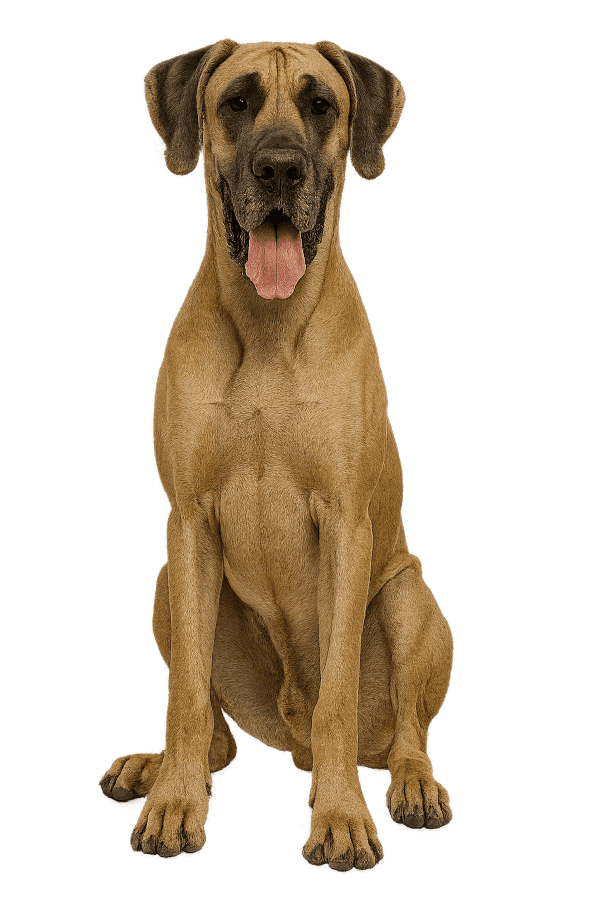
Great Dane

Irish Wolfhound

Mastiff
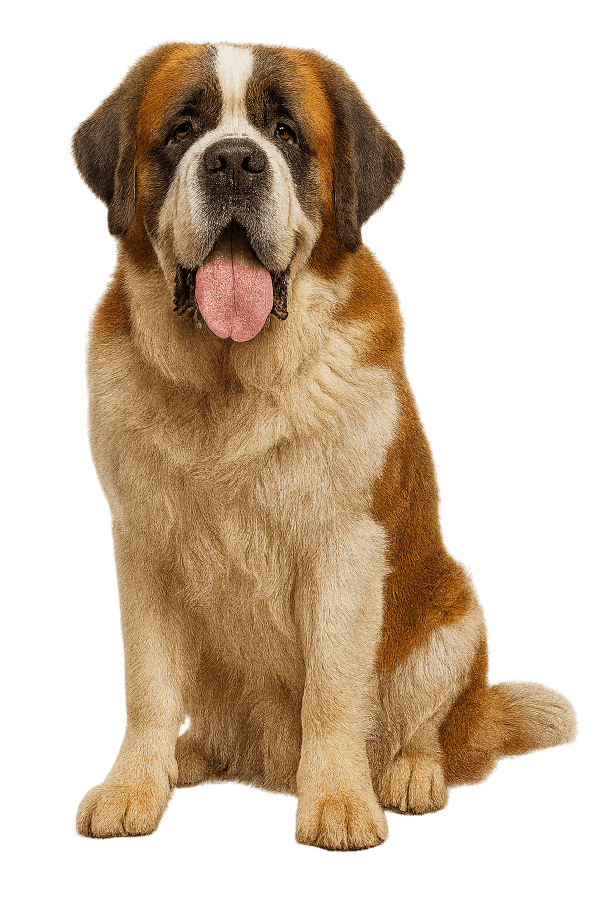
Saint Bernard

Newfoundland
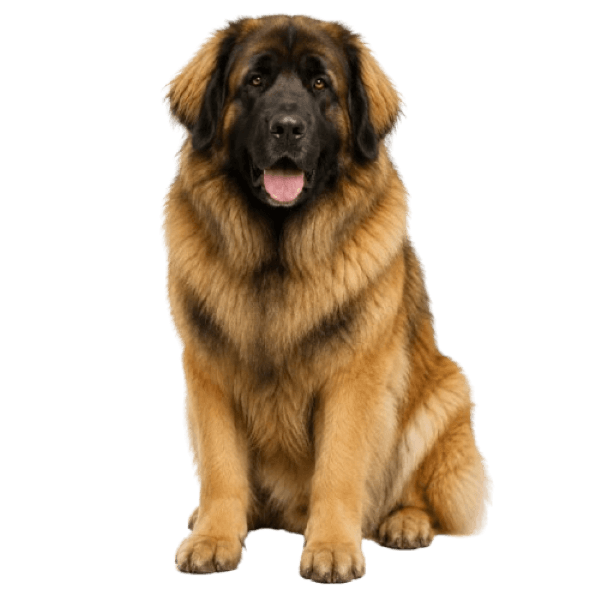
Leonberger
Biggest Dog in the World: Official Records and Breed Standards
Different organizations answer this question differently because some focus on verified individual records, while others focus on breed standards, typical breed weight, or breed height. Guinness World Records identifies Great Danes for tallest-dog records, the AKC weight chart supports the Mastiff as the largest by typical body mass, and breed-standard organizations such as the Royal Kennel Club and FCI define size through official breed measurements.
| Organization | Measurement Focus | Dog or Breed Identified | How to Interpret It |
|---|---|---|---|
| Guinness World Records | Verified tallest living male dog. | Reggie, a Great Dane, at 1.007 m. | Best source for current individual height records. |
| Guinness World Records | Verified tallest male dog ever. | Zeus, a Great Dane, at 1.118 m. | Best source for historic individual height records. |
| American Kennel Club | Typical adult breed weight ranges. | Mastiff, listed at 120–230 pounds. | Best support for “biggest” by body mass. |
| Royal Kennel Club | Breed-standard height and weight. | Great Dane males start at 76 cm. | Shows why Great Danes rank among the tallest breeds. |
| FCI | International Great Dane breed standard. | Great Dane males start at 80 cm. | Confirms the breed’s exceptional shoulder height. |
| Britannica | Educational breed-height comparison. | Irish Wolfhound is often the tallest breed. | Useful when comparing breed averages, not records. |
What Makes the Biggest Dogs in the World So Large?
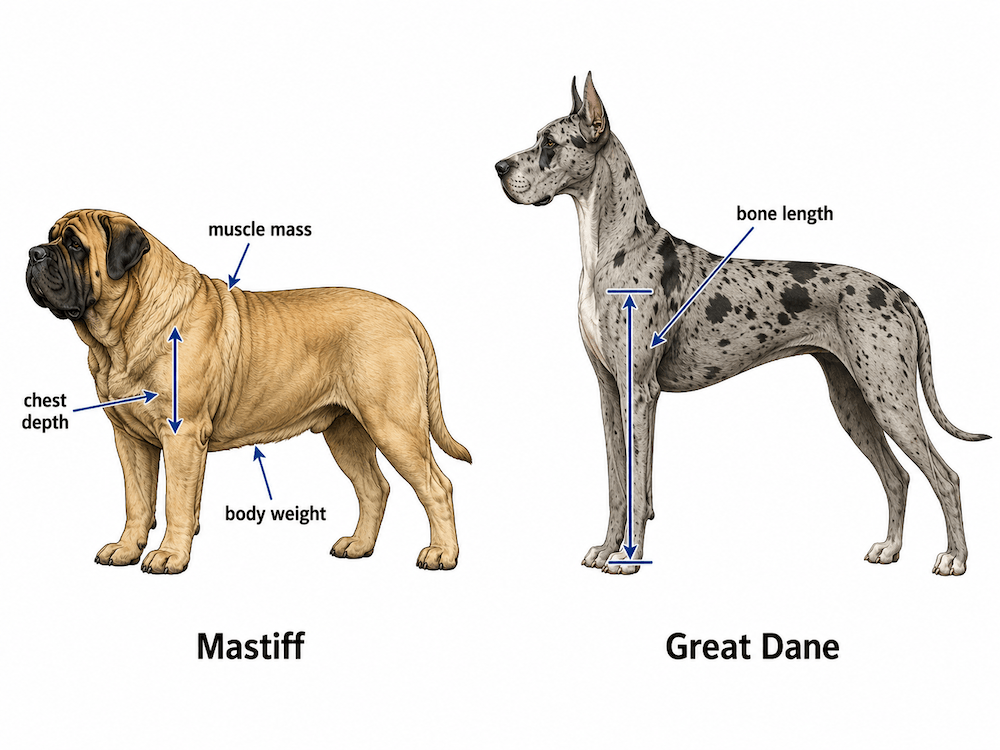
The biggest dogs are large because of selective breeding, inherited skeletal structure, long-bone growth, muscle mass, and breed-specific body proportions. Mastiff-type dogs tend to have broad chests, heavy bone, and thick musculature, while Great Danes and Irish Wolfhounds appear larger because of leg length and shoulder height. Breed standards and registries help preserve these physical traits across generations, which is why giant breeds remain predictably larger than average dogs.
Size also depends on sex, maturity, nutrition, and body condition. A giant-breed puppy may not be fully mature until roughly 18–24 months, and overfeeding during growth can increase orthopedic risk without improving the dog’s healthy adult size.
Health Risks and Safety Concerns for the Biggest Dog Breeds
Giant dogs are not automatically unhealthy, but their size changes the health risks owners need to watch. Their large bodies place more pressure on joints, their growth requires careful nutrition, and certain emergencies are more common in large or deep-chested breeds. Preventive care matters because problems can be harder to manage once a dog weighs as much as, or more than, many people.
One of the most serious risks is gastric dilatation-volvulus, or GDV, often called bloat. This life-threatening emergency is more common in large and giant breeds, especially deep-chested dogs such as Great Danes and Saint Bernards. Risk factors may include chest shape, family history, age, stress, rapid eating, and once-daily feeding.
Joint problems, mobility issues, heart disease, and some cancers can also affect certain giant breeds, depending on genetics and breed risk. Keeping a giant dog lean helps reduce unnecessary joint strain, while routine veterinary care can help catch subtle changes in stamina, appetite, breathing, weight, or movement early. Owners should choose responsible breeders or well-screened rescues and avoid treating extreme size as more important than health.
| Health Issue | Common in Which Large Breeds? | Symptoms | Preventive Action |
|---|---|---|---|
| GDV/Bloat | Great Danes, Irish Wolfhounds, Saint Bernards, Mastiffs | Retching, drooling, swollen belly, restlessness | Feed smaller meals and seek urgent care for warning signs |
| Hip Dysplasia | Mastiffs, Newfoundlands, Saint Bernards, Great Danes | Limping, stiffness, bunny hopping, trouble rising | Keep dogs lean and choose breeders who screen hips |
| Elbow Dysplasia | Newfoundlands, Mastiffs, Saint Bernards, Leonbergers | Front-leg lameness, stiffness, shortened stride | Control growth and avoid excess weight during puppyhood |
| Rapid Growth Problems | Great Danes, Mastiffs, Newfoundlands, Irish Wolfhounds | Soreness, awkward gait, fast weight gain | Use a large-breed puppy diet with vet guidance |
| Obesity | Mastiffs, Saint Bernards, Newfoundlands, Leonbergers | No waist, hard-to-feel ribs, low stamina | Measure food and track body condition regularly |
| Heart Disease | Great Danes, Irish Wolfhounds, Newfoundlands, Dobermans | Coughing, weakness, fainting, exercise intolerance | Schedule regular vet exams and investigate breathing changes |
| Senior Mobility Loss | All giant breeds, especially heavy senior dogs | Slipping, slow rising, stair trouble, reluctance to walk | Add traction, ramps, supportive bedding, and early vet support |
Cost of Owning One of the Biggest Dog Breeds
Large and giant dogs often cost more than smaller dogs because food, medication doses, beds, crates, grooming, transportation, and emergency care all scale with size. ASPCA lists food, routine medical care, preventive medication, insurance, grooming, crates, and training among common dog ownership costs, while AKC notes that giant breeds such as Great Danes can cost more to feed and may bring higher medical expenses.
Lifespan of the Biggest Dog Breeds
Giant dog breeds often have shorter average lifespans than smaller breeds. AKC notes that giant breeds tend to average about 8–10 years, while large breeds often average 10–12 years, though individual dogs can live shorter or longer depending on genetics, care, health, and lifestyle.
| Dog Breed | Average Lifespan |
|---|---|
| English Mastiff | About 6–10 years |
| Great Dane | About 7–10 years |
| Irish Wolfhound | About 6–8 years |
| Saint Bernard | About 8–10 years |
| Newfoundland | About 9–10 years |
| Leonberger | About 7–10 years |
Feeding and Exercise Needs for the Biggest Dog Breeds
Large and giant dogs need careful feeding because they require more total food than small dogs but fewer calories per pound of body weight. VCA also notes that large and giant breeds are more prone to digestive sensitivity, joint problems, and developmental orthopedic disease, especially if puppies grow too quickly or are overfed.
| Need | Practical Guidance | Why It Matters |
|---|---|---|
| Puppy Diet | Use food formulated for large or giant breed growth | Controlled growth helps protect developing bones and joints |
| Meal Portions | Measure meals instead of free-feeding throughout the day | Body condition matters more than reaching maximum size |
| Meal Timing | Split daily food into two or more measured meals | Smaller meals may support digestion and reduce strain |
| Treat Control | Keep treats limited and include them in daily calories | Extra weight puts major pressure on giant joints |
| Daily Exercise | Use steady walks, training games, and low-impact play | Moderate activity supports muscle without overloading joints |
| Joint Safety | Avoid repetitive jumping, hard landings, and slippery floors | Large bodies place more force on hips and elbows |
| Heat Care | Exercise during cooler hours and provide plenty of water | Large dogs can overheat quickly in warm weather |
Frequently Asked Questions
The Bottom Line
The biggest dog in the world depends on how “biggest” is measured. By height, Great Danes are the best-known record holders, with dogs like Zeus and Reggie showing just how tall the breed can become. By weight and overall body mass, the English Mastiff is usually the strongest answer. Other giant breeds, including Irish Wolfhounds, Saint Bernards, Newfoundlands, Leonbergers, and Tibetan Mastiffs, also belong in the conversation because each is large in a different way. For dog owners, the real takeaway is that giant size comes with extra responsibility, including higher costs, careful feeding, training, health monitoring, and enough space. These dogs can be gentle, loyal companions, but they need owners who are prepared for their size and care needs. In the end, the most accurate answer is simple: Great Dane by height, Mastiff by weight.