Newfoundland Dog Breed Information: Traits, Facts, Care & More

Canine Bible is reader-supported. We receive affiliate commissions via some of our links. Learn more.

Newfoundland
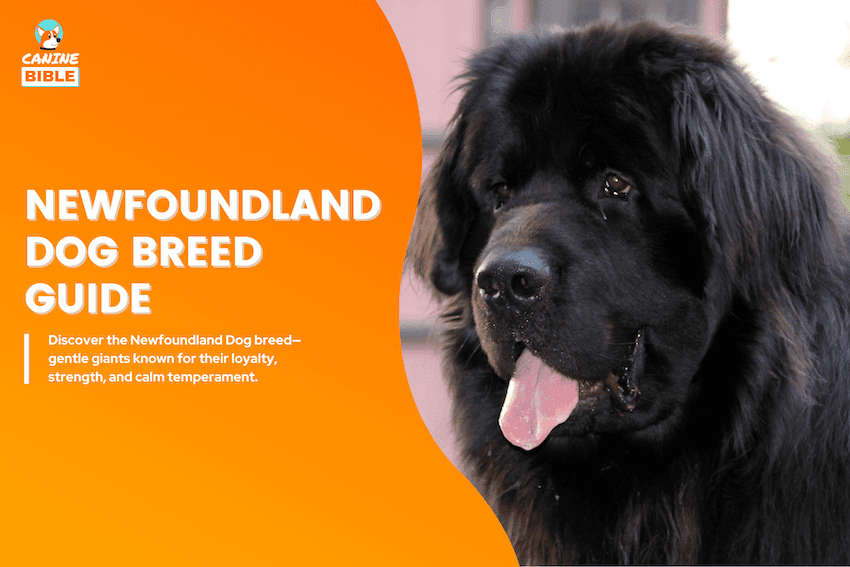
Newfoundlands are gentle, loyal, and strong working dogs known for their massive size, thick double coat, and famously sweet temperament. Originally bred to work alongside fishermen, these dogs excelled at hauling nets, pulling carts, and performing dramatic water rescues. Today’s Newfoundlands are cherished as family companions, therapy dogs, and lifesaving water rescue dogs. Despite their giant build, they are often called “gentle giants” thanks to their calm and affectionate nature, especially around children. Newfoundlands thrive on companionship and form deep bonds with their families. They need space to move comfortably, regular exercise to maintain their strength, and consistent grooming to care for their dense, water-resistant coats.
- Breed popularity ranking: 40 of 202
- Club: Newfoundland Club of America
- Population: Estimated 30,000–40,000 in the U.S.
- Price: $1,500 – $3,500

Weight
100–150 lbs

Height
26–28 in (M) · 24–26 in (F)

Lifespan
9–10 years


Breed Group
Working Group
Newfoundland Growth Chart
History and Origin
The Newfoundland, a powerful and gentle giant, originated on the island of Newfoundland, Canada. Bred by fishermen in the 18th century, these dogs were developed to assist with demanding tasks such as pulling fishing nets, hauling loads, and performing heroic water rescues. Their webbed feet, dense water-resistant coats, and natural swimming ability made them indispensable working companions in harsh maritime conditions.
Unlike many breeds developed solely for companionship, the Newfoundland’s history is deeply tied to labor and lifesaving. Their strength, endurance, and instinctive lifesaving skills earned them a reputation as one of the world’s greatest water rescue dogs. The breed’s mix of power and tenderness made them invaluable both at sea and on land, where they also worked as draft animals.
Officially recognized by major kennel clubs such as the AKC in the late 19th century, the Newfoundland has since become a beloved family companion while retaining its heritage as a working breed. Today, the Newfoundland is celebrated worldwide for its calm temperament, loyalty, and courage—earning the nickname “gentle giant” and continuing to serve as a symbol of strength and devotion.


Appearance
| Feature | Description |
|---|---|
| Body Build | Massive, powerful, and well-balanced with a deep chest and strong bone; slightly longer than tall. |
| Coat Type | Thick, water-resistant double coat; coarse, straight outer coat with dense, soft undercoat. |
| Coat Colors | Black, brown, gray, and Landseer (white with black markings). |
| Facial Markings | Typically solid on black/brown/gray; Landseer may show white blaze and muzzle markings; soft, sweet expression. |
| Chest Markings | May have white spot on chest (solids); Landseer has white chest as part of pattern. |
| Tail | Broad and strong, reaches the hock; carried straight or with slight curve, never tightly over the back. |
| Ears | Small to medium, triangular, set well back and close to the head (pendant). |
| Eyes | Dark brown (lighter brown acceptable in browns/grays), relatively small, set wide, with a gentle expression. |
| Nose | Black on black/gray; brown on brown dogs; large with wide nostrils. |
| Feet | Large, tight, and webbed with thick pads—optimized for swimming. |
| Overall Expression | Dignified, gentle, and sweet-tempered; “gentle giant” with strong working ability in water. |

Newfoundland Characteristics
The further out a point is along a spoke, the stronger that trait is in the breed (on a scale of 1 to 10).

| Trait | Score | Description |
|---|---|---|
| Temperament | 9 | Sweet-natured, patient “gentle giant” that is calm in the home and tolerant with kids. |
| Sociability & Friendliness | 9 | Affectionate with family and generally friendly with strangers and other pets when well socialized. |
| Intelligence | 7 | Capable working dog with water-rescue heritage; learns tasks well but can be laid-back at times. |
| Trainability | 7 | Eager to please and responsive to positive reinforcement; keep sessions short and consistent. |
| Energy Level | 4 | Low to moderate. Prefers steady walks and swims over high-intensity exercise; watch weight gain. |
| Shedding Level | 9 | Heavy seasonal shed from a dense double coat; needs frequent brushing and coat management. |
| Protective Instinct | 5 | Good watchdog that will alert, but typically soft-tempered and not a traditional guard dog. |
| Loyalty | 10 | Deeply devoted and people-oriented; thrives on close companionship—classic “Velcro” dog. |
| Barking Level | 3 | Generally quiet; tends to bark only to alert or when something is unusual. |
| Adaptability | 7 | Adapts to many homes if space and climate needs are met; heat-sensitive and prefers cool areas. |
Exercise & Activity Breakdown
Newfoundlands are large, powerful working dogs with a calm and steady temperament. While not as high-energy as some breeds, they require regular exercise to maintain their strength, prevent obesity, and support joint health. Because of their history as water rescue dogs, they especially enjoy swimming and other low-impact activities that keep them active without stressing their joints.
- Puppy (0–12 months): Newfoundland puppies grow rapidly, so exercise should be controlled to avoid damaging developing joints. Short walks, early interactive games, gentle play, and early socialization are key. Swimming in safe, shallow water is an excellent activity, as it provides exercise without impact on growing bones.
- Adult (1–6 years): Adult Newfoundlands benefit from daily walks, canine sports, swimming, and moderate play sessions. Activities like cart pulling (draft work), obedience training, and water-based canine sports help channel their working instincts and keep them both physically and mentally stimulated.
- Senior (7+ years): As they age, Newfoundlands are prone to joint issues and slower mobility. Gentle walks, light swimming, and short play sessions are ideal to maintain muscle tone and heart health. Low-impact activities and a steady routine help preserve mobility and overall well-being.
Newfoundland Daily Activity Breakdown
Nutrition
Newfoundlands need a high-quality diet that matches their life stage (e.g., puppy, adult, senior) and supports their large size, strong build, and working heritage. As a giant breed, they grow rapidly during puppyhood and are prone to joint stress, so it’s essential to feed them large-breed puppy formulas designed to support steady growth and prevent developmental issues. For adults and seniors, nutrient-dense large-breed dog foods help maintain muscle strength, joint health, and overall well-being.
These diets should include balanced nutrients to support heart health, joint strength, and immune function. Because Newfoundlands are prone to obesity and orthopedic problems if overfed, portion control and large-breed specific formulas are critical. A diet rich in omega-3s, antioxidants, and joint-supporting nutrients like glucosamine and chondroitin can help reduce inflammation, support mobility, and protect heart health. As water-loving dogs, they also benefit from proper hydration and a steady routine to maintain digestive and cardiovascular health. Read our “Best Newfoundland Dog Food“ guide to explore targeted nutrition tips and top food recommendations.
Nutritional Breakdown by Activity Level for Newfoundland
Common Health Issues
Most Newfoundlands are healthy, but like all dogs, they can be prone to certain health conditions. Common health concerns include:
*EI: Eye Issues (Entropion/Ectropion)
*EI: Ear Infections (Otitis)
*SI: Skin Issues / Hot Spots
Recommended Health Tests for Newfoundlands:
Proactive health measures, attentive care, and regular veterinary visits can help ensure your Newfoundland lives a happy and healthy life as your loyal companion.
💡 Due to this breed’s high proclivity to health issues, we recommend getting pet insurance for financial protection against unexpected medical emergencies, ensuring your pet receives the best possible care without the burden of high out-of-pocket expenses. Check out our best pet insurance guide to find a suitable plan for your pet.
Care Requirements
| Grooming Task | Recommended Frequency | Importance | Tools Needed | Recommended Product |
|---|---|---|---|---|
| Brushing | At least 3–4 times per week | Prevents mats and tangles, removes loose fur, and promotes healthy skin | Slicker brush, de-shedding tool, grooming rake, comb | Hertzko Self Cleaning Slicker Dog Brush (View on Amazon) |
| Bathing | Every 6–8 weeks | Keeps coat clean, reduces odor, and helps control heavy shedding | dog-safe shampoo, conditioner, towels, dryer (high velocity ideal) | OUAI Fur Bébé Pet Shampoo (View on Amazon) |
| Nail Trimming | Every 3–4 weeks | Prevents overgrowth, pain, and potential injury while walking | dog nail clippers, nail grinder, styptic powder | Coastal Pet Safari Nail Clipper (View on Amazon) |
| Ear Cleaning | Weekly to every 2 weeks | Prevents ear infections, especially in floppy-eared breeds like Newfoundlands | Ear cleaning solution, cotton balls or pads (no Q-tips) | Zymox Ear Cleanser (View on Amazon) |
| Oral Care (Brushing Teeth) | Daily or at least 3–4 times per week | Reduces plaque and tartar buildup, prevents gum disease and bad breath | Dog toothbrush, enzymatic toothpaste, dental chews | Greenies Dental Care Chews (View on Amazon) |
Newfoundland Dog Trainability
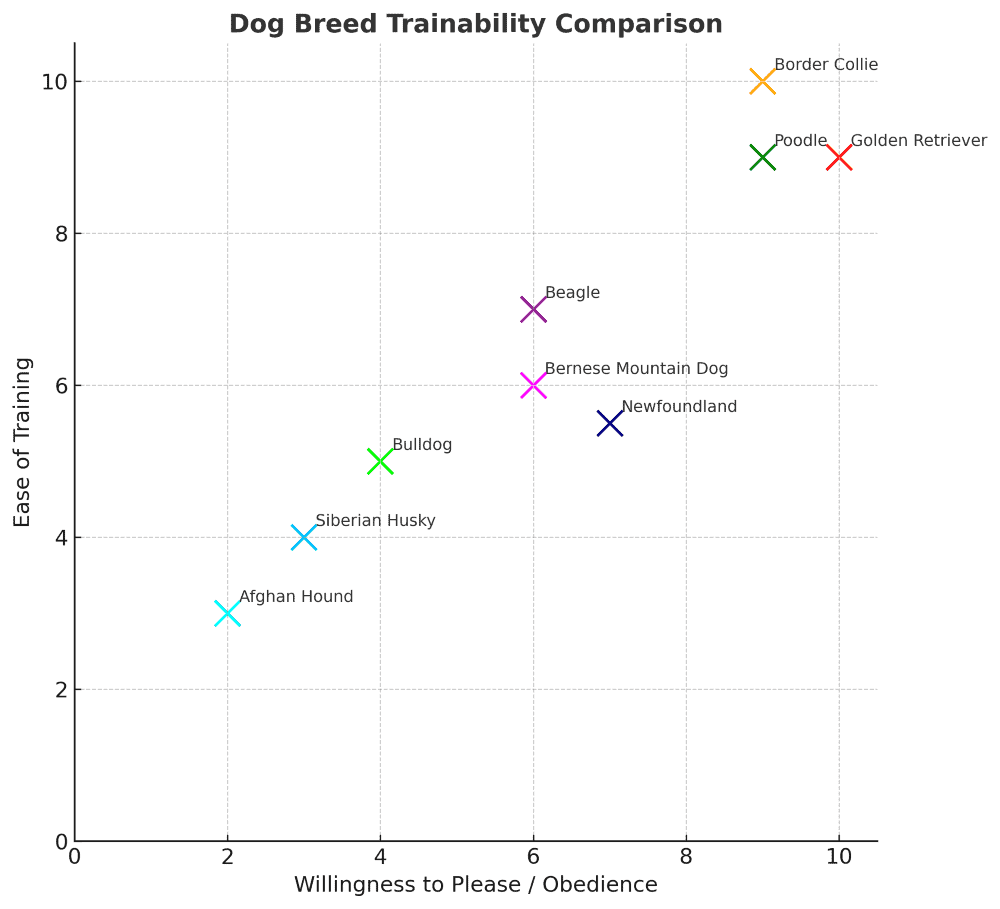
Newfoundlands are gentle, patient, and highly trainable dogs, best known for their eagerness to please and calm demeanor. While they may not be as quick or energetic in training as smaller breeds, their intelligence and loyalty make them excellent learners when guided with consistency. Positive reinforcement training that emphasizes encouragement, rewards, and steady repetition works best. Because of their size, early obedience training and socialization are essential to ensure they grow into well-mannered adult dogs. They respond especially well to activities that connect with their working heritage—such as swimming, cart pulling, and rescue-style games—which keep them engaged mentally and physically. Their natural desire to help and protect makes them well-suited for families who dedicate time to patient, structured guidance.
When compared to other breeds, Newfoundlands thrive with calm, consistent instruction and benefit from early training to prevent unwanted habits tied to their large size. With patience, praise, and regular practice, they grow into dependable, gentle companions, renowned for their steady temperament and willingness to work alongside their families.
Intelligence
According to canine psychologist Stanley Coren (author of The Intelligence of Dogs – View on Amazon), dog intelligence can be broken down into three types:
- Instinctive Intelligence – What a dog is bred to do (herding, guarding, retrieving).
- Adaptive Intelligence – A dog’s ability to solve problems and learn from the environment.
- Working & Obedience Intelligence – How quickly a dog learns commands and obeys them.
IQ Comparison
Newfoundlands are known for their working intelligence and dependable nature, especially in environments where calm focus, problem-solving, and cooperation are needed. While they may not rank among the fastest learners in obedience-based IQ studies, they excel in practical intelligence—using judgment, patience, and instinct to carry out complex tasks. Their natural lifesaving abilities in water rescue, combined with their strong memory and loyalty, highlight a different kind of intelligence: one rooted in service, reliability, and emotional awareness. Their steady temperament and willingness to please make them excellent partners in activities like water rescue training, cart pulling, and advanced obedience work, where patience and persistence matter more than speed. They thrive in environments where their size and strength are guided by consistent leadership and purposeful work.
Newfoundlands shine when their intelligence is directed toward meaningful tasks. While they may not display the quick, flashy problem-solving of smaller breeds, their calm decision-making, loyalty, and protective instincts allow them to excel in roles requiring courage and dependability. With guidance and steady training, they grow into thoughtful, trustworthy companions whose intelligence is measured not by speed, but by heart and purpose.
Newfoundland Dog Intelligence Comparison
Breeding
Newfoundlands are cherished for their gentle nature, loyalty, and working ability. Like many large and giant breeds, however, they can be prone to inherited health conditions such as hip and elbow dysplasia, subvalvular aortic stenosis (SAS), cystinuria, gastric dilatation-volvulus (bloat), hypothyroidism, and cruciate ligament injuries. This makes responsible breeding essential. Ethical breeders should conduct thorough health screenings and genetic testing to reduce the risk of passing on serious conditions. Proper spacing between litters is important to protect the health of both the dam and puppies, and only physically healthy, mentally stable Newfoundlands should be bred.
- Age: Newfoundlands should not be bred until they are fully mature—typically between 24 and 30 months of age, due to their slow physical development.
- Litter size: A typical Newfoundland litter includes 6–12 puppies.
- Temperament: Breeding dogs should have sound temperaments—gentle, patient, and dependable, without signs of aggression, fearfulness, or extreme shyness.
Is The Newfoundland A Good Family Dog?
If the conditions below align with your lifestyle, personal preferences, and living situation, a Newfoundland could be a wonderful pet for your family. Otherwise, you may want to consider other breeds.
✅ = Ideal / Strong Match | ⚠️ = Needs Consideration | ❌ = Not Recommended
| Suitability | Category | Score (1–10) | Notes |
|---|---|---|---|
| ✅ | Family Bonding | 10 | Devoted “gentle giant” that thrives on close companionship. |
| ✅ | Child Friendliness | 9 | Very patient and tolerant; supervise due to size. |
| ✅ | Good With Other Pets | 8 | Generally sociable and calm around other animals. |
| ⚠️ | Maintenance Level | 8 | Heavy coat needs frequent brushing; seasonal blowouts. |
| ⚠️ | Monthly Expenses | 4 | Large-breed food, grooming, and meds increase costs. |
| ⚠️ | Home Size Compatibility | 4 | Best in larger homes with space; not ideal for small apartments. |
| ⚠️ | Lifestyle Match | 7 | Suits families who enjoy leisurely walks and water activities. |
| ✅ | Trainability | 6 | Eager to please but mellow; responds to positive, patient training. |
| ⚠️ | Alone Time Tolerance | 4 | Prefers company; can develop separation anxiety if left long hours. |
| ⚠️ | Shedding & Drool Level | 3 | Heavy seasonal shedding; noticeable drool, especially after drinking. |
| ❌ | Hypoallergenic | 1 | Not allergy-friendly due to shedding and dander. |
| ⚠️ | Protectiveness | 5 | Watchful and reassuring presence; not a true guard dog. |
| ✅ | Mental Stimulation Needs | 7 | Enjoys training games, nose work, and tasks—especially water work. |
| ⚠️ | Climate Tolerance | 6 | Excellent in cold; monitor closely in warm/humid weather. |
| ⚠️ | Life Expectancy | 5 | Typically 9–10 years; prioritize joint and heart health. |
| ✅ | Barking Level | 3 | Generally quiet; barks to alert, not excessively. |
| ⚠️ | Travel Friendliness | 3 | Size and weight complicate travel and lodging. |
| ✅ | Potty Training Ease | 7 | Usually reliable with consistent routine and crate training. |
Average Score: 5.56 / 10
Annual Cost of Ownership
| Category | Estimated Annual Cost (USD) |
|---|---|
| Food & Treats | $1,200 – $2,000 |
| Routine Vet Care | $500 – $800 |
| Vaccinations & Preventatives | $300 – $500 |
| Pet Insurance | $600 – $1,200 |
| Grooming | $400 – $700 |
| Training & Socialization | $250 – $500 |
| Toys & Enrichment | $150 – $300 |
| Supplies (bed, bowls, leash, etc.) | $250 – $400 |
| Emergency Vet Fund (recommended) | $500 – $1,000 |
| Boarding or Pet Sitting | $500 – $900 |
$4,650 – $8,800
Best Places to Get A Newfoundland
Online marketplaces: For pre-screened, healthy puppies, Pawrade and PuppySpot are recommended resources, offering puppies from reputable U.S. breeders.
Rescue shelters: While Newfoundlands are rarely available at local shelters, opportunities can occasionally arise. Check your local animal shelters or dog rescue organizations for information. Online communities, such as Facebook groups, can also be helpful resources.
Breeders: Finding a reputable Newfoundland breeder can be challenging due to the complex nature of breeding this large, purebred working dog. Start by searching locally within your state. You may need to travel out of state if local options are unavailable. If purchasing from a breeder further away, consider the possibility of shipping the puppy if pickup is not an option. It’s essential to request medical records and health certifications for both parents. The American Newfoundland Association’s approved breeder list is a trusted resource for finding ethical breeders.
Avoid breeders who:
- Don’t provide health clearances for both parents
- Don’t allow visits to meet the dogs or see their living conditions
- Have frequent litters with no waiting list
- Emphasize appearance over health and temperament