
How Much Does A Dog Cost 2026? Price Guide Per Day, Month & Year

Canine Bible is reader-supported. We receive affiliate commissions via some of our links. Learn more.
A dog can cost anywhere from about $500 to $5,000 in the first year, and often $1,000 to $3,000 per year after that, depending on the breed, size, health needs, and where you get your dog. That wide range surprises many people because the adoption fee or purchase price is only the beginning. Food, vet care, grooming, training, supplies, insurance, and emergencies can quickly change the real number. A small mixed-breed rescue may cost far less than a purebred puppy from a reputable breeder. Some dogs are relatively affordable to own, while others come with ongoing costs that add up fast. The key is understanding not just what a dog costs to get, but what it costs to care for properly over time.
Why Understanding How Much A Dog Costs Matters
| Why It Matters | Why Knowing How Much a Dog Costs Is Important |
|---|---|
| Budget Planning | Knowing the full cost of a dog helps you decide whether you can realistically afford both the upfront and ongoing expenses. |
| Health Care Readiness | Understanding dog ownership costs makes it easier to prepare for routine vet visits, vaccinations, medications, and emergency care. |
| Preventive Care | When you budget properly, you are more likely to stay on top of preventive care that can reduce bigger health problems later. |
| Behavior and Training | Knowing the cost of training, enrichment, and socialization helps prevent behavior problems caused by underinvestment in a dog’s needs. |
| Breed and Size Differences | Cost awareness helps you compare breeds and sizes more carefully since larger or more complex dogs often cost much more over time. |
| Owner Peace of Mind | Having a realistic financial picture reduces stress and helps owners feel more confident about providing proper lifelong care. |
| Long-Term Commitment | Dogs can live 10 to 15 years or more, so understanding the long-term cost helps you make a more responsible commitment. |
| Avoiding Misconceptions | Many people focus only on the adoption fee or purchase price, but knowing the full cost prevents expensive surprises later. |
| Lifestyle Fit | Understanding dog costs helps you choose a pet whose needs match your schedule, home setup, and daily routine. |
| Better Quality of Life | A well-planned budget makes it easier to provide quality food, proper supplies, grooming, and care that support a healthier life. |
Why Dog Ownership Costs More Than Many People Expect
The price of getting a dog is only the entry point. After that come food, parasite prevention, vaccines, routine exams, grooming, training, dental care, travel coverage, and surprise vet bills. Costs also vary sharply between a small, low-maintenance rescue dog and a large, high-maintenance purebred puppy. Preventive care usually costs far less than treating preventable disease, which is why a cheap dog up front can still become expensive if the budget does not account for ongoing care.
The Price of Dogs Themselves
The cost of a dog can vary widely depending on things like breed, source, and whether you adopt from a shelter or buy from a breeder. Because of that, there is no single price that fits every situation. To give you a clearer idea of what to expect, here’s a snapshot of the typical price ranges for some of today’s most popular dog breeds.
| Breed | Typical Adoption Cost | Typical Breeder Cost | Upfront Cost Level | Notes |
|---|---|---|---|---|
| French Bulldog | About $1,200 | Around $5,000 | High | Very high demand |
| Labrador Retriever | $100–$450 | $250–$2,000 | Medium | Wide price range |
| Golden Retriever | $200–$500 | $1,000–$5,000 | High | Popular family breed |
| German Shepherd | $250–$350 | $450–$1,900 | Medium | Moderate to high cost |
| Beagle | $100–$300 | $1,000–$1,500 | Medium | Usually lower than premium breeds |
| Poodle | $150–$500 | $1,200–$3,500 | High | Price varies by size and lineage |
| Dachshund | $100–$400 | $800–$2,500 | Medium | Popular small breed |
| Rottweiler | $150–$500 | $1,500–$3,000 | High | Often higher from working lines |
| Bulldog | $300–$800 | $2,000–$4,500 | High | Typically expensive to purchase |
| Cane Corso | $200–$600 | $1,500–$4,000 | High | Large guardian breed |
| Average | About $418 | About $2,375 | High | Based on midpoint estimates across these 10 breeds |
This shows that the price of a dog can vary quite a bit, and purebred puppies from reputable breeders usually come with a much higher upfront cost. If you already have your heart set on a specific breed, that does not mean you should not go for it, but it does mean it is worth thinking honestly about what fits your budget.
At the same time, it is important not to focus only on finding the lowest possible price. Dogs advertised far below the usual range can sometimes come from irresponsible breeding situations, which may lead to bigger health and behavior expenses later on.
For many families, adoption is the more affordable path and often the more practical one as well, especially since adoption fees may already cover things like vaccines, microchipping, and spay or neuter services. And beyond the financial side, adoption also gives a dog the chance to be part of a safe, loving home.


How Much Does a Dog Cost Up Front?
| Cost Category | What It Covers | Typical Cost | Upfront Cost Level | Why It Matters |
|---|---|---|---|---|
| Adoption vs. Breeder Cost | Adoption fee or puppy purchase price | Adoption: $102–$350 Breeder: $1,000–$5,000 |
Low–High | Biggest starting cost difference |
| Initial Vet Care | Exam, vaccines, deworming, microchip, spay/neuter | $20–$300+ Puppy first year: $480–$2,400 |
Medium–High | Higher for puppies |
| Supplies and Setup | Crate, leash, bowls, bed, toys, grooming tools | General supplies: about $350 Total setup: about $1,030 |
Medium–High | Essentials add up fast |
| Training Startup Costs | Classes, lessons, basic training tools | $39–$379 Average basics: $200–$340 |
Low–Medium | Early behavior support |
Adoption vs. Breeder Cost
Adopting a dog is usually the more affordable way to get started because adoption fees often already include basics like vaccinations, spay/neuter, microchipping, deworming, and flea or tick treatment. In many cases, adoption fees range from about $102 to $350, depending on the organization and the dog’s age. A responsibly bred puppy, on the other hand, often costs around $1,000 to $5,000 before you even add supplies, vet care, or training.
Initial Vet Care
Your first veterinary costs can include an exam, vaccine series, deworming, fecal testing, parasite prevention, microchipping, and sometimes spay/neuter if those were not already included. A reasonable estimate is about $300 for initial medical care, $300 for spay/neuter, and about $20 for microchipping. For puppies, first-year veterinary care can range from roughly $480 to $2,400, which is one reason they often cost more than adult dogs in year one.
Supplies and Setup
Most new owners need at least a crate, leash, collar or harness, bowls, bed, toys, and basic grooming tools. Common one-time costs include about $60 for a collar, leash, or harness, $60 for a crate, and about $40 for grooming tools. Altogether, total startup costs can reach around $1,030 when early medical and training items are included, while general supplies alone often average around $350.


Training Startup Costs
Training is part of the real upfront budget for many dogs, especially puppies. A basic estimate is around $200 for initial training assets, while combined training fees and supplies can average closer to $340. Entry-level private lessons may start at about $39, puppy classes around $149, and larger training packages can go up to about $379.
How Much Does a Dog Cost Per Day, Month & Per Year?
| Recurring Cost Category | What It Covers | Daily Cost | Monthly Cost | Yearly Cost | Cost Level | Why It Matters |
|---|---|---|---|---|---|---|
| Food | Dry, wet, fresh, or prescription food | $0.75–$2.20 | $23–$67 | $275–$800 | Medium | Higher for large dogs |
| Preventives | Flea, tick, heartworm, parasite control | $0.77–$1.34 | $23–$41 | $280–$490 | Medium | Year-round expense in many areas |
| Routine Vet Care | Exams, vaccines, fecal checks, dental monitoring | $0.41–$1.10 | $13–$33 | $150–$400 | Medium | Prevention costs less than treatment |
| Grooming | Bathing, trims, coat care, nail care | $0.14–$1.37 | $4–$42 | $50–$500 | Low–Medium | Depends heavily on coat type |
| Insurance or Emergency Fund | Pet insurance or emergency savings | $0.53–$2.05 | $16–$62 | $193–$749 | Medium–High | Protects against surprise bills |
| Boarding, Pet Sitting, and Enrichment | Boarding, daycare, dog walking, toys, treats | $0.33–$1.32 | $10–$40 | $120–$480 | Low–Medium | Quiet costs that add up |
Food
Food is one of the most predictable recurring dog expenses, but the total can still vary a lot depending on your dog’s size and diet. Annual food costs often fall around $275 to $800 per dog, with about $300 per year being a common baseline estimate. Larger dogs usually cost more to feed because they need more calories and often require larger doses of medications and preventives too.
Preventives
Flea, tick, heartworm, and parasite prevention should be treated as a regular part of the budget, not an occasional extra. For many dogs, year-round protection is the standard approach, which makes this a steady recurring expense. A realistic estimate is around $185 per year at the lower end, though many owners may spend closer to $280 to $490 annually once multiple preventives are included.
Routine Vet Care
Routine care typically includes wellness exams, vaccines, fecal checks, and dental monitoring. Staying current with preventive care is usually far less expensive than dealing with illness later, which makes it important for both health and budgeting. In many cases, routine annual medical costs land around $150 to $400, with about $225 per year being a reasonable midpoint estimate.
Grooming
Grooming costs depend heavily on coat type. Some dogs need little more than basic bathing supplies and regular nail trims, while others need frequent professional grooming throughout the year. Basic grooming supplies may cost around $28 per year, while total annual grooming expenses can range from about $50 to $500. Professional services can start at about $24 for a bath and $46 for a bath and haircut, so higher-maintenance coats can raise yearly costs quickly.
Insurance or Emergency Fund
Many owners either buy pet insurance or keep a dedicated emergency fund. Annual premiums for dog insurance can average about $749.29 per year for accident-and-illness coverage or $193.29 per year for accident-only coverage. That kind of planning matters because a single emergency vet visit can start around $200 and quickly climb into the thousands, depending on the problem and treatment needed.
Boarding, Pet Sitting, and Enrichment
Travel-related care and enrichment costs are easy to overlook, but they can add up quickly. Boarding often costs around $25 to $75 per day, pet sitting may run $45 to $75 per night, and dog walking or daycare can cost about $12 to $40 per day. On top of that, treats and toys may add another $120 to $480 per year, especially for active dogs that need more stimulation.
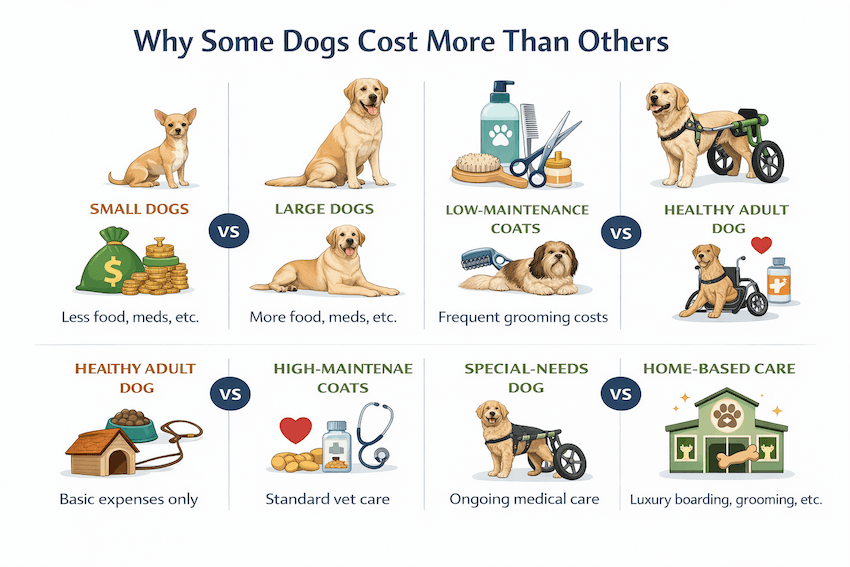
What Makes Some Dogs More Expensive Than Others?
| Cost Factor | Why It Affects Cost |
|---|---|
| Small vs. Large Dogs | Larger dogs usually eat more, need bigger supplies, and often cost more for medications, grooming, and boarding. |
| Low-Maintenance vs. High-Maintenance Dogs | Dogs with demanding coats, skin needs, or specialized care routines often require more grooming, products, and ongoing upkeep. |
| Breed Differences | Breed can influence purchase price, grooming needs, training demands, and the likelihood of certain health expenses over time. |
| Lifestyle Factors | Your schedule and routine can add costs through boarding, pet sitting, daycare, dog walking, toys, training, and enrichment. |
| Age (Puppy vs Adult vs Senior) | Puppies require upfront costs like vaccines and training, while senior dogs often need more frequent vet care, medications, and monitoring. |
| Health & Genetics | Dogs prone to inherited conditions or chronic health issues can lead to significantly higher long-term veterinary expenses. |
| Location (Cost of Living) | Veterinary care, grooming, and services are typically more expensive in urban or high cost-of-living areas. |
| Training & Behavior Needs | Dogs that require professional training or behavior support can add hundreds to thousands in additional costs. |
| Activity Level | High-energy dogs often need more toys, training, enrichment, or paid services like dog walkers or daycare. |
Evidence-Backed Insights on Dog Ownership Costs
Preventive care is not just a clinical recommendation; it is also one of the clearest cost-management strategies in dog ownership. AVMA states that wellness care is often only a fraction of the cost of treating disease, which is why skipping basics like exams, vaccines, and parasite prevention can become more expensive later.
AAHA-AVMA canine preventive guidance recommends core vaccination planning, year-round broad-spectrum parasite control, behavioral recommendations, dental recommendations, and dietary recommendations as routine preventive care elements. In practical terms, that means dog budgets should include more than food and annual shots.
A 2024 Frontiers in Veterinary Science paper examining veterinary care prices across several countries highlights how veterinary pricing is a meaningful and growing concern, reinforcing the importance of budgeting for care rather than assuming vet costs will stay minimal.[1]
Research on access to veterinary care also shows cost is a major barrier. A 2024 open-access study in Frontiers in Veterinary Science discussed financial constraints as a key reason some owners delay or miss care, which matters clinically because delayed care can worsen outcomes and raise eventual costs.[2]
Tips to Budget for a Dog Realistically
| Tip | Why It Helps | How to Apply It |
|---|---|---|
| Budget the first year separately | Startup costs are usually much higher than later years. | Estimate adoption or breeder, setup, vaccines, and training first. |
| Choose by total cost | A cheap purchase price can still mean expensive care. | Compare food, grooming, vet, and training before choosing. |
| Plan for preventive care | Routine care often costs less than treating disease. | Set aside money for exams, vaccines, and parasite prevention. |
| Expect size-based costs | Larger dogs usually cost more to feed and medicate. | Check adult size before estimating long-term expenses. |
| Account for coat maintenance | Grooming can become a major recurring expense. | Research grooming frequency before committing to a breed. |
| Use an emergency buffer | Unexpected vet bills can disrupt your budget quickly. | Keep a separate pet emergency fund or insurance plan. |
| Do not ignore training | Behavior problems often cost more later to fix. | Budget for classes, enrichment, and early socialization support. |
| Include your lifestyle costs | Travel and work schedules can raise ownership costs. | Price boarding, daycare, walkers, or pet sitting early. |
| Avoid premium impulse spending | New owners often overspend on unnecessary gear. | Start with essentials and upgrade later if needed. |
| Review costs every year | Dog budgets change with age, health, and routine. | Recalculate food, vet, and preventive costs annually. |
After You Get a Dog: Managing Costs Over Time
Once your dog is home, the goal is to keep costs predictable without cutting corners on care. Track monthly spending for food, preventives, routine vet care, grooming, and lifestyle services so you can spot budget creep early. Signs your budget is working include staying current on wellness care, replacing supplies before they fail, and handling routine expenses without financial strain. Monitor more closely when your dog becomes a puppy, senior, or develops chronic medical needs, because those transitions often change costs fast. If you are delaying vaccines, preventives, or vet visits because of money, it is a sign to adjust your plan, scale back nonessentials, or talk to your veterinarian about priority care options.
Frequently Asked Questions
The Bottom Line
The cost of a dog is never just the adoption fee or purchase price. What you really pay depends on the dog you choose, the care you provide, and how well you prepare for both routine and unexpected expenses. For some owners, costs stay manageable with smart planning and preventive care. For others, grooming, training, medical needs, and lifestyle factors can raise the total far beyond the original budget. That is why the best question is not just how much a dog costs to get, but how much it costs to care for properly over its lifetime. When you understand the full picture, you can choose a dog more responsibly and avoid costly surprises later.