How to Stop a Dog Pooping in the House: Causes, Fixes & Training Tips

Canine Bible is reader-supported. We receive affiliate commissions via some of our links. Learn more.
To stop a dog pooping in the house, first rule out medical issues, then rebuild a consistent potty routine with close supervision, rewards, and proper cleanup. Most dogs improve when they are taken outside often, praised immediately after toileting outdoors, and prevented from sneaking off indoors. House soiling is not always stubbornness or “bad behavior.” It can happen because of poor training, stress, schedule changes, aging, illness, diet changes, or confusion about where to go. The right fix depends on why your dog is having accidents. A puppy needs a different approach than a senior dog, a newly adopted rescue, or a dog that suddenly starts pooping inside after years of being house-trained. This guide explains the most common causes, what to do first, when to call your vet, and how to rebuild reliable house-training step by step.
Why Dogs Poop in the House
| Common Reason | What It Means for Your Dog |
|---|---|
| Medical issue | Illness, pain, parasites, medication changes, or digestive upset can cause sudden indoor pooping. |
| Incomplete training | Some dogs never fully learned that outside is the only acceptable place to poop. |
| Routine change | New work hours, missed walks, travel, or household changes can disrupt your dog’s normal potty timing. |
| Anxiety or stress | Dogs may poop indoors when they feel panicked, unsettled, or distressed by being alone or by changes at home. |
| Poor outdoor access | A dog may have accidents if potty breaks are too far apart or the outdoor area feels difficult to reach. |
| Senior dog changes | Older dogs may struggle with mobility, urgency, confusion, or reduced bowel control even after years of good habits. |
| Lingering odor | Old accident smells can draw a dog back to the same indoor spot unless the area is cleaned properly. |
What to Check Before You Start House-Training Again
Before treating indoor pooping as a training problem, check whether your dog may be physically unable to hold stool or uncomfortable going outside. Sudden accidents in a previously house-trained dog deserve more caution than occasional mistakes in a young puppy.
How Anxiety Can Cause Indoor Pooping
Some dogs poop indoors because they panic when left alone, hear loud noises, fear going outside, or feel unsettled after a major household change. In these cases, potty training alone may not solve the problem.
Look at when the accident happens. If your dog poops only when alone and you also notice barking, drooling, pacing, destruction, or escape attempts, the main issue may be distress rather than poor training.
For anxiety-related indoor pooping, focus on calm departures, gradual alone-time practice, safe confinement, enrichment, and professional behavior support when needed. Punishment can make anxiety worse and may cause your dog to hide accidents.


How to Handle Puppies, Rescue Dogs, and Senior Dogs Differently
Puppies need frequent potty breaks, close supervision, and simple routines because they are still learning both body control and household rules. Do not expect adult-level reliability too early.
Rescue dogs may be house-trained in one environment but confused in a new home. Treat the first few weeks like a reset period, with clear access to the door, limited freedom, and generous rewards.
Senior dogs need extra patience. Pain, vision changes, cognitive decline, digestive changes, or reduced mobility can make old routines harder, even when the dog still wants to be clean indoors.
How to Stop a Dog Pooping in the House Step by Step
Follow these steps to stop indoor pooping, identify the cause, clean accidents properly, and help your dog rebuild reliable bathroom habits.
Step 1: Track the accident pattern for 3–5 days
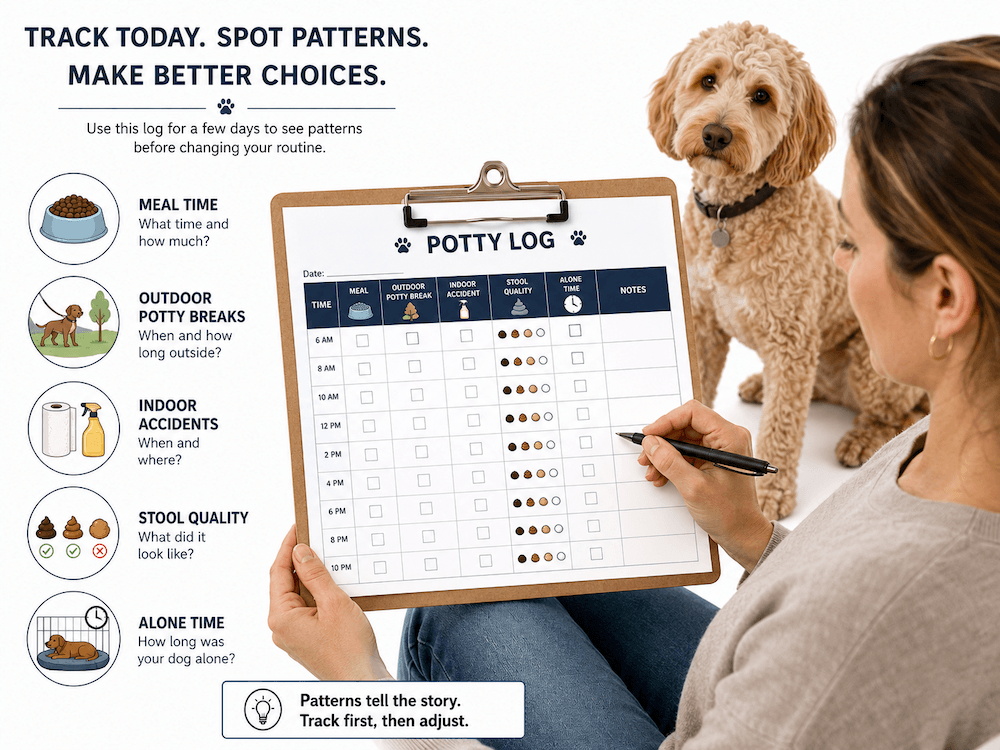
Write down when your dog eats, drinks, poops outside, poops inside, sleeps, plays, and gets left alone. This quickly shows whether accidents happen after meals, during long gaps, overnight, during stress, or when your dog sneaks away.


Look at stool quality too. Soft stool, mucus, blood, urgency, or repeated small amounts can point toward a health issue instead of simple house-training.
Step 2: Put meals on a predictable schedule
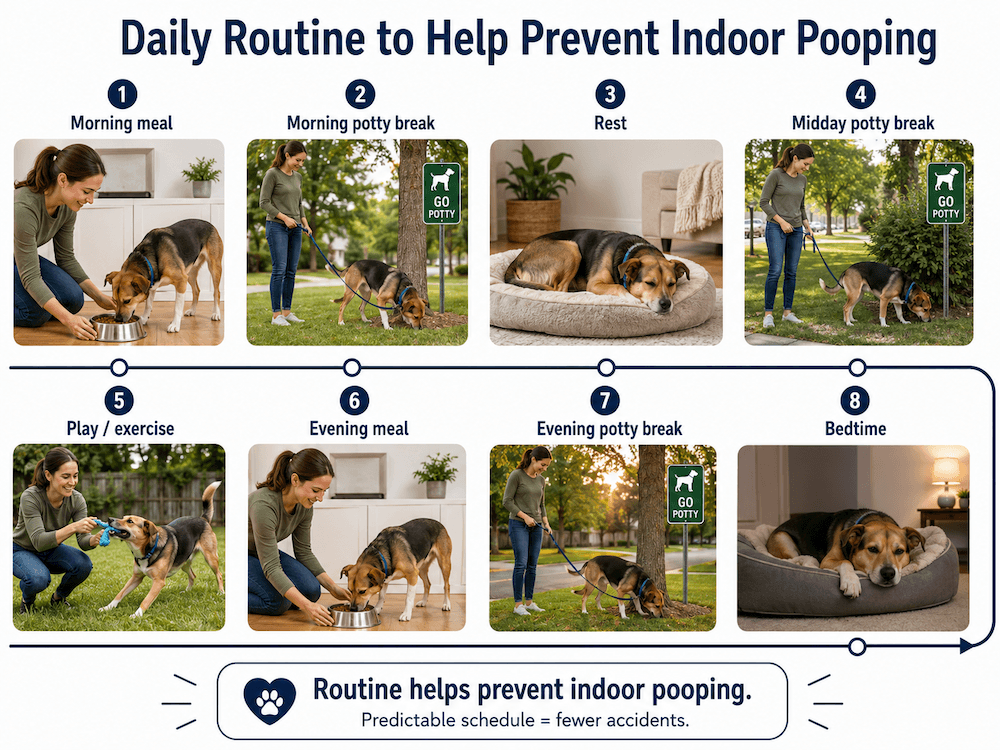
Feed your dog at consistent times instead of free-feeding all day. Predictable meals make poop timing easier to predict, especially for puppies and dogs that tend to have accidents after eating.
Most dogs need a chance to poop after waking, after meals, after play, before bedtime, and after being confined. Start with more breaks than you think your dog needs, then slowly stretch the time only after success.
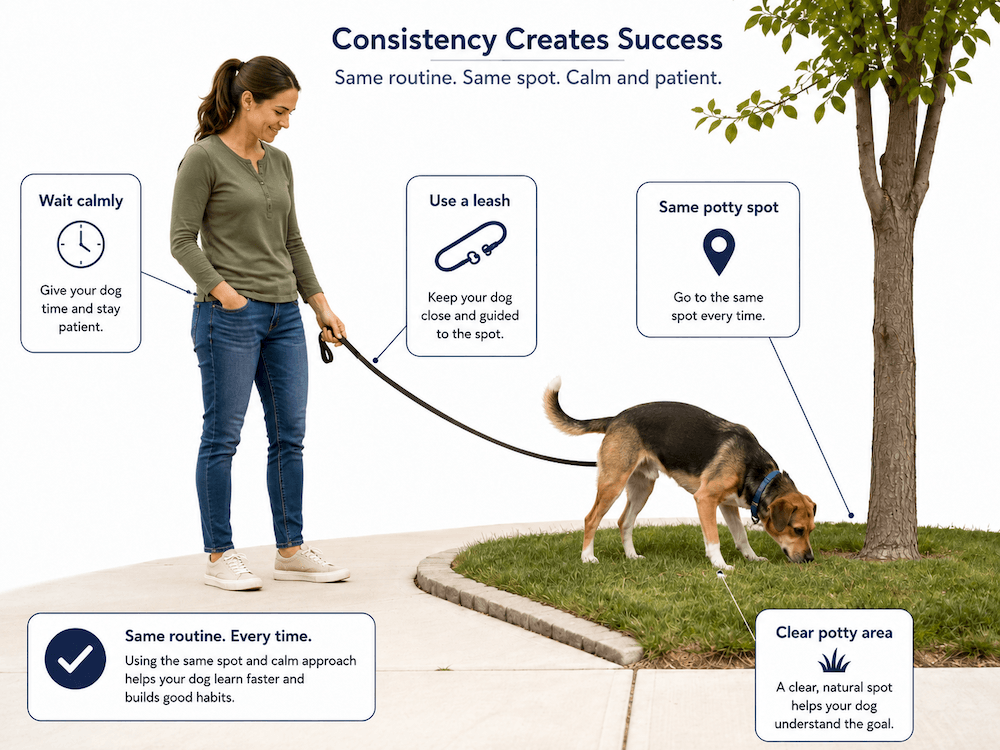
Step 3: Take your dog to the same outdoor potty spot
Use a leash and calmly bring your dog to the same outdoor area each time. Stand quietly, avoid play at first, and give your dog a few minutes to sniff and settle.
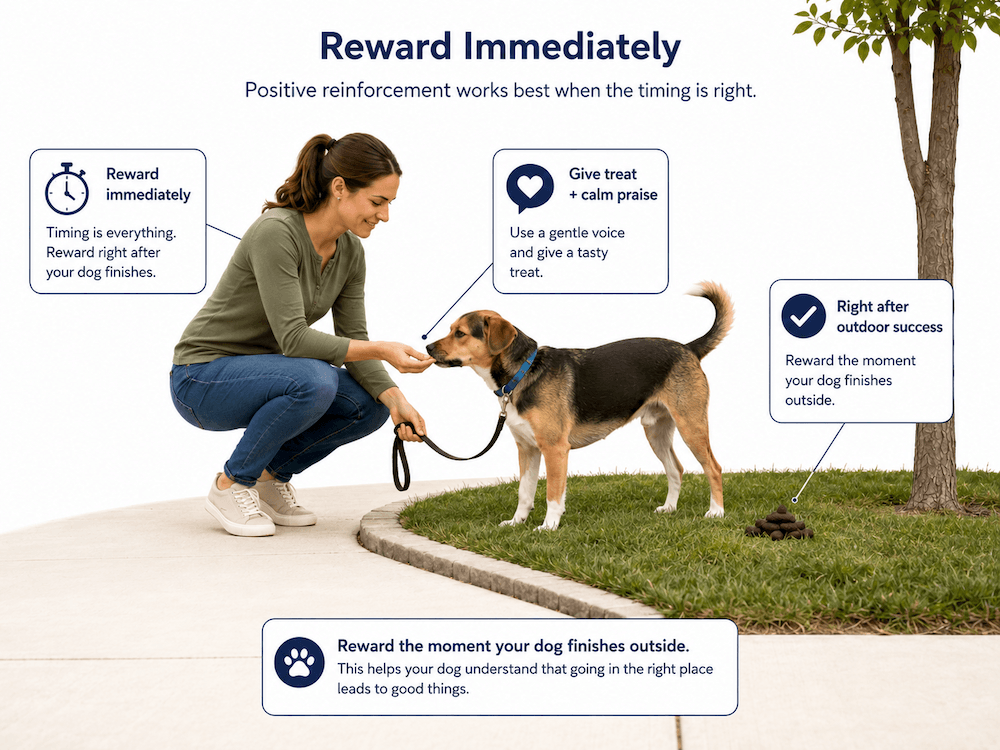
If your dog poops, reward immediately after they finish. If they do not poop, go back inside and supervise closely instead of giving full freedom.
Step 4: Reward outdoor pooping right away
Reward your dog within seconds of finishing outside. Use small treats, praise, and then a pleasant follow-up, such as a short walk, sniff time, or calm play.
Do not rush your dog back indoors immediately every time they poop. Some dogs learn that pooping ends outdoor time, so they delay going or come inside still needing to finish.
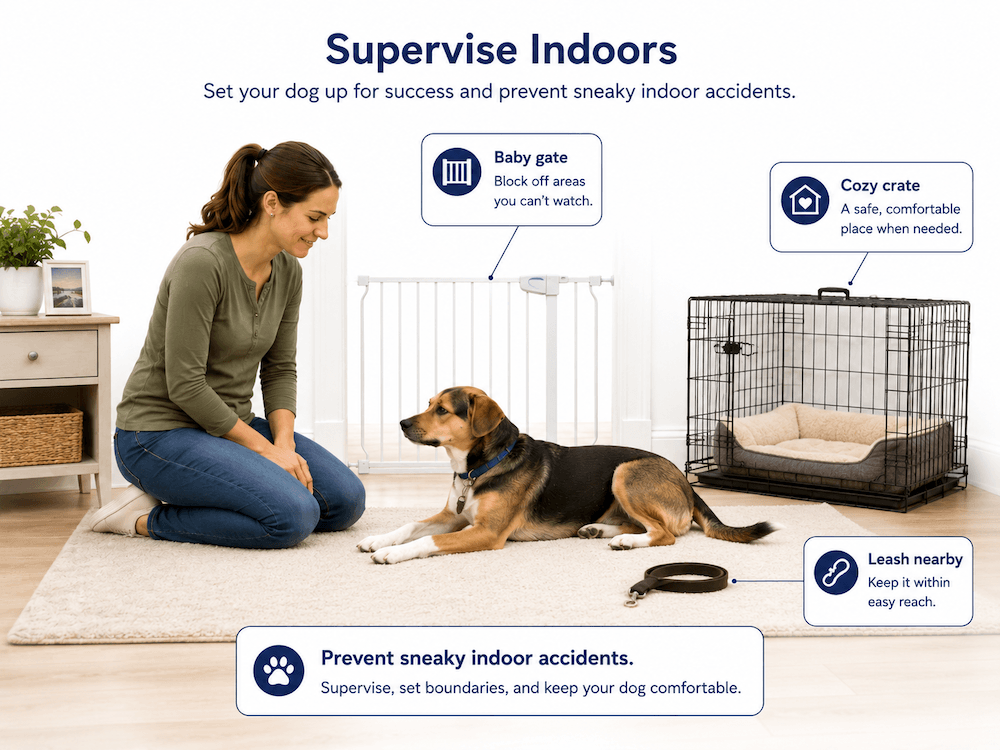
Step 5: Prevent sneaking away indoors
When your dog is not fully reliable, do not allow unsupervised access to bedrooms, hallways, rugs, basements, or quiet corners. Keep your dog in the same room, use a leash indoors if needed, or use a crate or pen during short periods when you cannot watch.
This is management, not punishment. Every prevented accident makes the new outdoor habit easier to build.
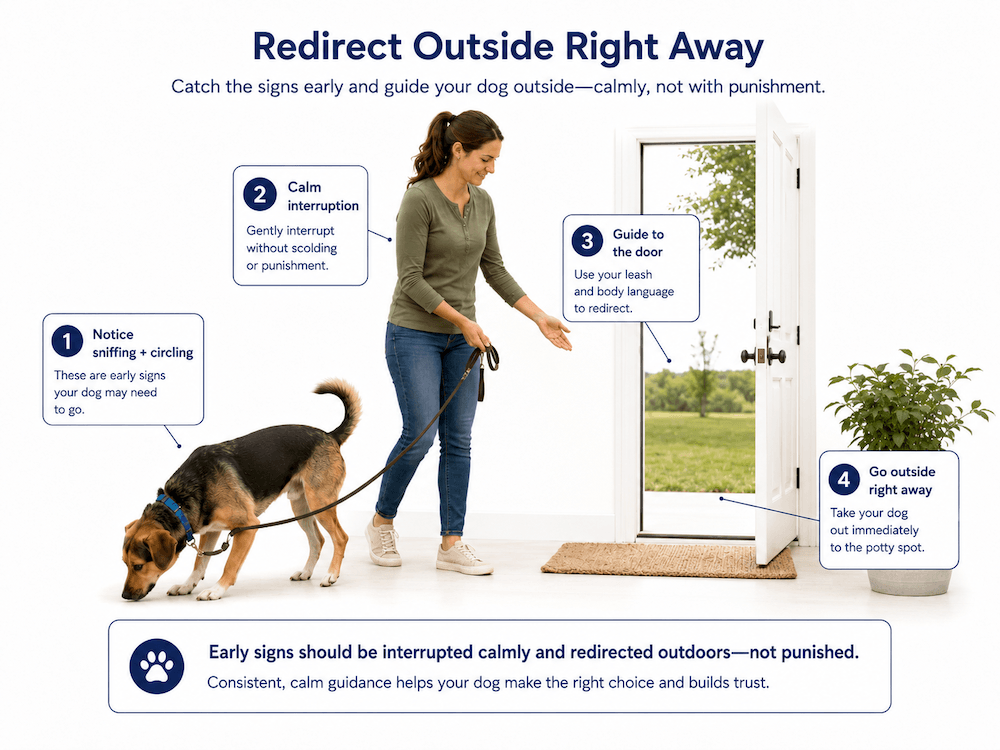
Step 6: Interrupt calmly if you catch the accident happening
If you see your dog starting to poop indoors, use a calm sound or gentle cue to interrupt, then take your dog outside right away. If they finish outside, reward the outdoor finish.
Do not yell, chase, grab, or rub your dog’s nose in the mess. That can teach your dog to hide before pooping instead of teaching where to go.
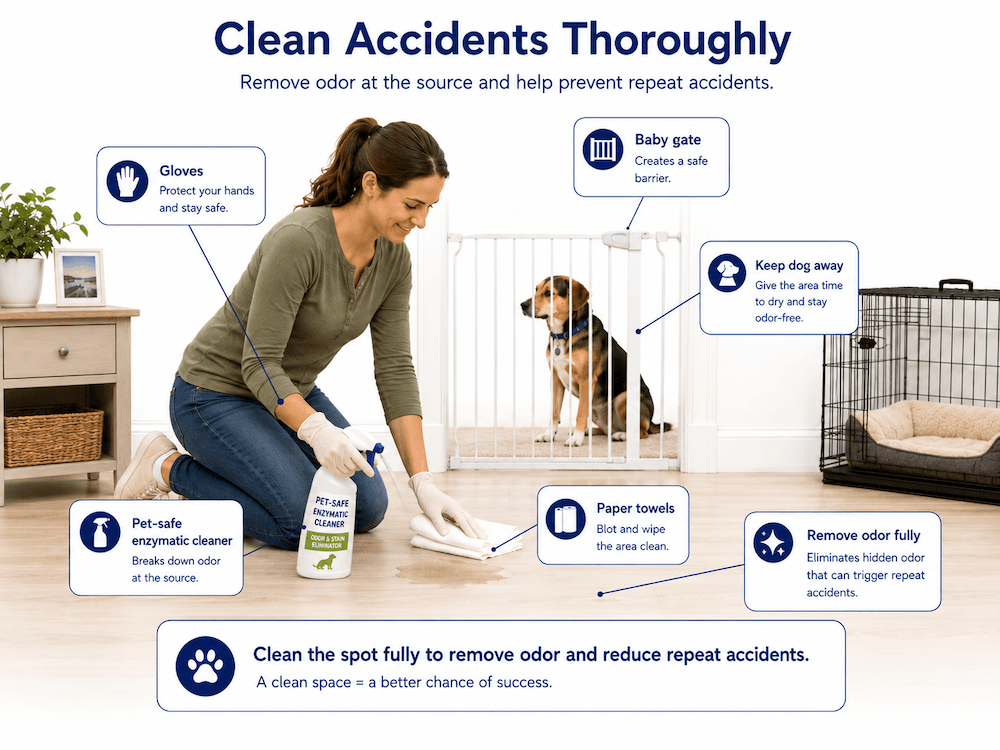
Step 7: Clean every accident with an enzymatic cleaner
Pick up the stool, then clean the area with a pet-safe enzymatic cleaner made for urine and feces. Regular soap may remove visible mess but leave odor cues your dog can still detect.
For rugs or carpet, follow the cleaner’s contact-time instructions. Blocking access to repeat spots while they dry can prevent the habit from restarting.
A Practical Potty Schedule for Dogs That Poop Indoors
A dog that is pooping indoors usually needs more structure before they need more freedom. Start with a schedule that creates easy wins, then adjust based on age, health, stool quality, and your dog’s actual pattern.
| Dog Situation | Starting Potty Plan | Adjustment Tip |
|---|---|---|
| Young puppy | Go out after waking, eating, playing, and naps. | Increase freedom only after several accident-free days. |
| Adult dog | Start with morning, post-meal, afternoon, and bedtime trips. | Add breaks if stool timing is still unpredictable. |
| New rescue | Treat them like untrained until routines are clear. | Use patience while they learn the new home. |
| Senior dog | Offer shorter gaps and easier outdoor access. | Ask your vet about pain, cognition, or bowel control. |
| Anxious dog | Build calm exits, short absences, and predictable returns. | Seek behavior help if distress signs appear. |
| Soft stool | Use more frequent breaks until stool normalizes. | Call your vet if diarrhea continues or worsens. |
Helpful Tips for Stopping a Dog Pooping in the House
Small changes often make the biggest difference. The most effective plan combines health awareness, prevention, outdoor rewards, and cleanup.
| Tip | Why It Helps | How to Apply It |
|---|---|---|
| Reward fast | Dogs connect rewards best when timing is immediate. | Treat your dog right after outdoor pooping. |
| Use one spot | A familiar area helps trigger the potty habit. | Return to the same outdoor location daily. |
| Watch body language | Sniffing and circling often happen before pooping. | Take your dog out as soon as signs appear. |
| Manage freedom | Accidents happen faster when dogs roam unseen. | Use gates, crates, or room supervision temporarily. |
| Keep meals steady | Predictable meals create predictable bowel habits. | Feed at consistent times each day. |
| Clean deeply | Odor cues can invite repeat indoor pooping. | Use a pet-safe enzymatic cleaner every time. |
| Adjust gradually | Too much freedom too soon causes setbacks. | Add rooms back after reliable success. |
Mistakes That Can Make a Dog Keep Pooping in the House
The biggest mistake is reacting only after the accident. House-training works better when you prevent mistakes, reward the right behavior, and remove confusion.
| Mistake | Why It Backfires | Better Approach |
|---|---|---|
| Punishing later | Your dog cannot connect punishment to old poop. | Clean calmly and improve supervision. |
| Too much freedom | Dogs can sneak away before you notice. | Limit rooms until reliability improves. |
| Inconsistent timing | Random breaks make bowel habits harder to predict. | Use steady meals and potty trips. |
| Weak rewards | Outdoor pooping may not feel worth repeating. | Use treats your dog truly values. |
| Rushing indoors | Dogs may delay pooping to stay outside. | Offer sniff time after successful pooping. |
| Ignoring stool changes | Soft stool or urgency may signal illness. | Call your vet if stool is abnormal. |
| Using harsh cleaners | Strong smells may not remove pet odor cues. | Choose enzymatic cleaners made for pets. |
What to Monitor After Your Dog Stops Pooping Indoors
Once accidents stop, keep the routine steady for at least a few weeks before giving full freedom again. Many owners relax too quickly, and the dog slips back into old habits.
Success signs include normal stool, fewer pre-poop accidents, faster outdoor elimination, and your dog moving toward the door when they need to go. If accidents return, go back one stage: more supervision, more scheduled breaks, and stronger rewards.
Monitor stool quality, appetite, energy, and stress triggers. If the behavior returns suddenly after clear improvement, think beyond training and check whether something changed in your dog’s health or environment.
What Research Says About House Soiling in Dogs
The Merck Veterinary Manual explains that house soiling can be linked to pain, mobility problems, sensory decline, cognitive dysfunction, and medical conditions that increase elimination frequency, urgency, pain, or loss of control. For owners, this supports the rule that sudden or unusual indoor pooping should be treated as a possible health signal first.[1]
A veterinary behavior article in Today’s Veterinary Practice describes canine house soiling as a common behavior problem that can affect the human–animal bond, and it emphasizes veterinary evaluation because medical problems may contribute. It also notes that incomplete house-training often improves with careful environmental management.[2]
A retrospective study of canine house soiling found that 105 of 1,173 referred behavior cases involved house soiling, and incomplete housebreaking was the most frequent diagnosis within those cases. This matters because many dogs with indoor pooping are not being “bad”; they may simply need a clearer training reset.[3]
The American Veterinary Society of Animal Behavior’s humane training statement supports reward-based methods as the preferred approach for dog training. That aligns with using supervision, prevention, and immediate rewards instead of scolding or punishment for indoor accidents.[4]
Frequently Asked Questions
The Bottom Line
Stopping a dog from pooping in the house starts with understanding why it is happening, not just cleaning up the mess. A consistent potty schedule, close supervision, immediate rewards for outdoor pooping, and proper enzymatic cleanup can help most dogs rebuild reliable habits. If the behavior starts suddenly, happens at night, or comes with diarrhea, blood, pain, weight loss, vomiting, or low energy, your dog should be checked by a veterinarian. Puppies, rescue dogs, anxious dogs, and senior dogs may all need slightly different support, so avoid a one-size-fits-all approach. Punishment usually makes the problem worse because it can teach dogs to hide instead of teaching them where to go. With patience, structure, and the right medical or behavioral support when needed, most indoor pooping problems can improve. The goal is to make outdoor pooping clear, rewarding, and easy for your dog to repeat.