How to Crate Train a Dog or Puppy 101: 8 Trainer-Approved Steps


Canine Bible is reader-supported. We receive affiliate commissions via some of our links. Learn more.
Crate training a dog means teaching your dog to see the crate as a safe, comfortable place through short, positive, and gradual practice. The goal is not to force your dog to stay inside, but to help them relax there willingly and build good habits over time. When done correctly, crate training can support house training, prevent destructive behavior, and give your dog a secure place to rest. But success depends on more than just putting a dog in a crate and closing the door. Age, temperament, past experiences, and how long a dog is left inside can all affect the process. Many owners also wonder how long crate training takes, what to do if a dog cries, and whether crates are helpful or harmful. This guide explains how to crate train the right way, avoid common mistakes, and make the crate work for both you and your dog.
Why Crate Training a Dog Matters
| Crate Training | Details |
|---|---|
| Builds a safe space | A crate can become a calm, familiar place where your dog feels secure and can rest without interruption. |
| Supports house training | Using the crate properly can help dogs learn bladder control and reduce accidents in the house. |
| Prevents bad habits | Crate training can limit chewing, destructive behavior, and unsafe roaming when you cannot supervise. |
| Reduces stress | A dog that is introduced to the crate gradually is more likely to settle calmly during naps, bedtime, or routine downtime. |
| Improves safety | The crate can keep your dog away from household hazards, cords, toxic items, or rough activity when needed. |
| Helps with routine | Regular crate use can make daily schedules more predictable for sleeping, potty breaks, and quiet time. |
| Eases travel and vet stays | Dogs that are comfortable in a crate often handle car trips, boarding, grooming, and medical recovery more easily. |
| Requires gradual training | Crate training works best when the dog is introduced slowly with positive reinforcement rather than being forced inside. |
Things to Consider Before Crate Training a Dog
Before you start crate training, consider your dog’s age, temperament, potty needs, and comfort level so the process feels safe instead of stressful. The right crate size, location, routine, and exercise can make it easier for your dog to settle calmly. Crate training works best when it is gradual, positive, and treated as one part of your dog’s overall daily routine.
Crate Training a Puppy vs Adult Dog
Crate training follows the same positive, gradual process for puppies and adult dogs, but the pace, potty needs, comfort levels, and past experiences can vary widely.
| Factor | Puppy Crate Training | Adult Dog Crate Training |
|---|---|---|
| Training pace | Needs short, frequent sessions. | May progress faster or slower. |
| Potty breaks | Needs more frequent potty trips. | Usually holds it longer. |
| Crate introduction | Should feel playful and calm. | May need extra trust-building. |
| Nighttime routine | May need overnight potty breaks. | May settle faster overnight. |
| Alone time | Build in tiny steps. | Depends on confidence and history. |
| Stress signs | Whining may signal potty needs. | Panic may signal deeper anxiety. |
| Main goal | Build routine and bladder control. | Build comfort and trust. |
When Not to Use a Crate
A crate is not the right tool in every situation. If a dog has severe separation anxiety, panics when confined, or becomes highly distressed the moment the door closes, crating can make the problem worse instead of helping. In those cases, the dog may need a slower training plan, a larger safe area, or help from a qualified professional.
Crating is also not appropriate when a dog repeatedly tries to escape, injures itself, or shows signs of extreme fear inside the crate. Medical issues can matter too, especially if a dog is sick, recovering in a way that makes crating uncomfortable, or unable to hold their bladder and bowels for normal periods. Long confinement is another problem, since even dogs that tolerate a crate should not be left in it for excessive stretches without breaks, movement, and interaction.


The crate should never be used as punishment. When it is used that way, the dog can start to associate it with fear, frustration, or isolation. Some dogs do well with crate training, but others do better with an exercise pen, a dog-proofed room, or another safe setup that fits their needs more appropriately.
How to Crate Train a Dog & Puppy
Follow these steps to successfully crate train your dog or puppy.
Step 1: Choose the Right Crate and Set It Up Well
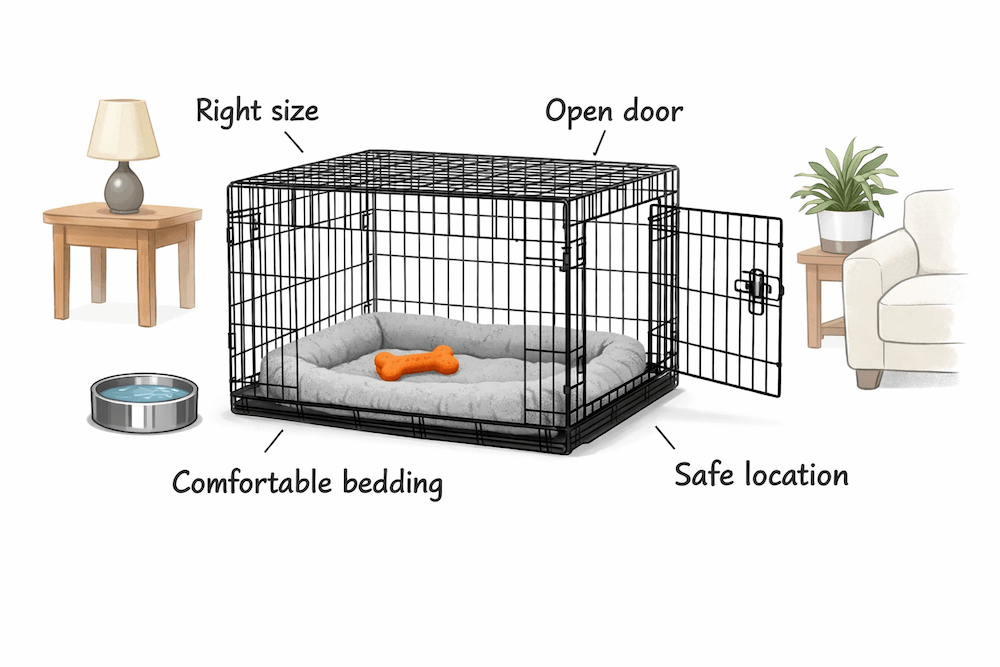
Pick the best dog crate that is large enough for your dog to stand up, turn around, and lie down comfortably, but not so large that it feels open and unstructured during early house training. Put it in a quiet but lived-in part of the home, add comfortable bedding if your dog does not chew it, and place safe dog chews or enrichment inside.
Step 2: Let Your Dog Explore the Crate Freely
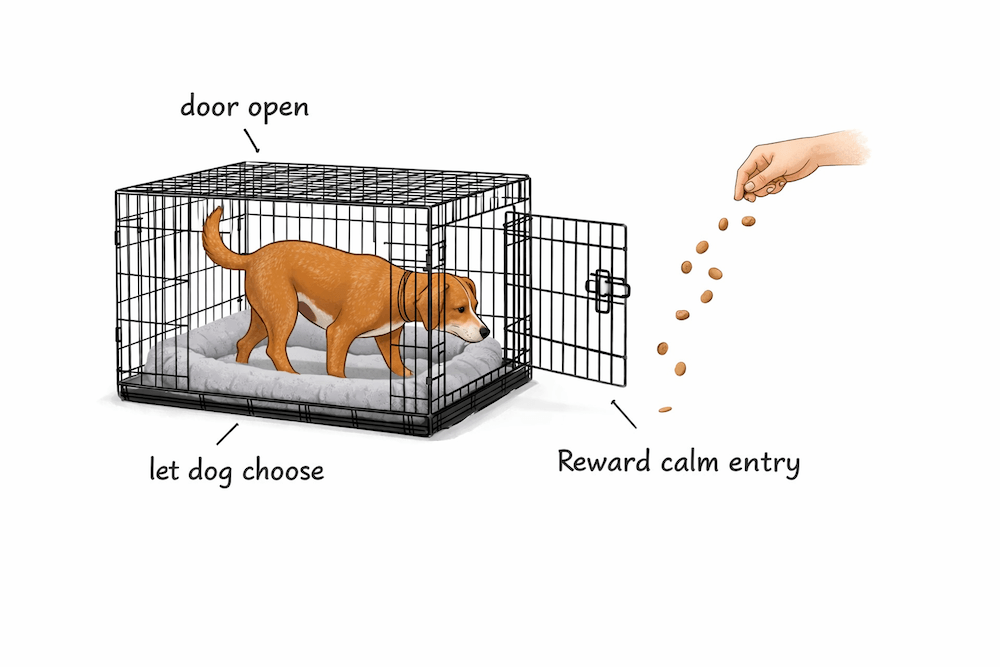
Leave the crate door open and allow your dog to investigate on their own. Toss a few dog training treats just outside, then just inside, and let your dog go in and come back out without pressure. At this stage, the goal is curiosity and choice, not duration. The dog should learn that approaching the crate makes good things happen.
Step 3: Feed Meals in or Near the Crate
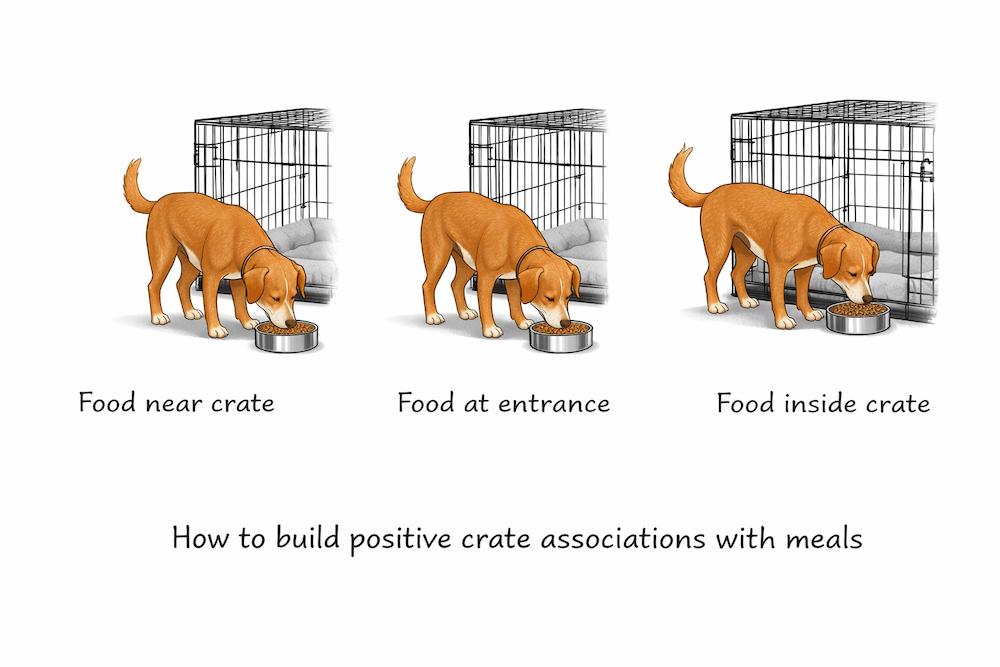
Start feeding your dog near the crate, then at the entrance, then just inside the crate as comfort improves. Meals create a strong positive association and help your dog stay in the crate longer without thinking of it as a stressful event. Move at your dog’s pace. If your dog hesitates or backs away, return to an easier version for a day or two.


Step 4: Build Short Calm Stays With the Door Open
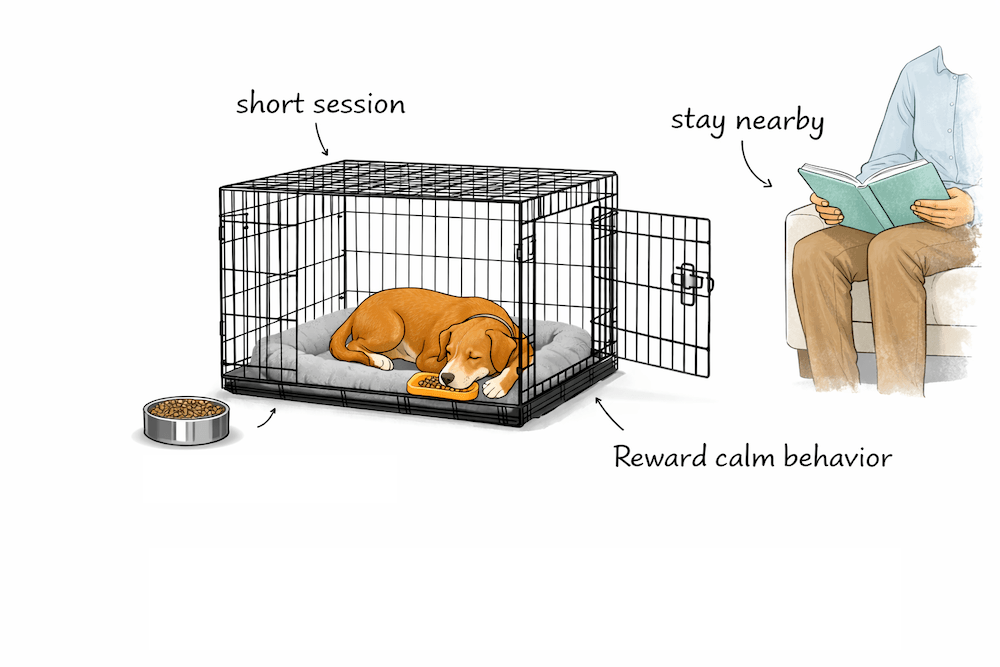
Once your dog is comfortable entering, encourage brief stays inside by giving a chew, dog puzzle toy, or a few treats while your dog remains in the crate. Sit nearby at first. Keep sessions short and end before your dog becomes restless. This teaches that staying inside calmly is rewarding and temporary. The key is many easy wins rather than one long session.
Step 5: Close the Door Briefly, Then Reopen It
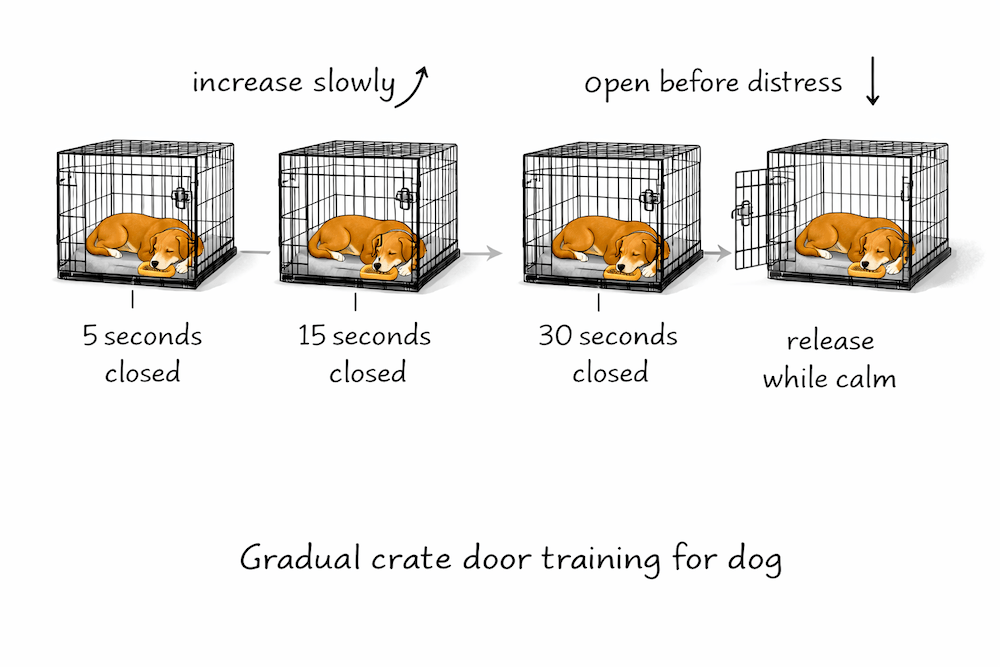
After your dog can relax inside, close the door for a few seconds while staying close, then open it before your dog becomes upset. Gradually increase the time with the door closed in very small increments. Avoid waiting for barking or scratching before opening the door, because that can accidentally teach your dog that noise makes the door open. Slow, calm repetition works better than rushing.
Step 6: Add Distance and Short Absences
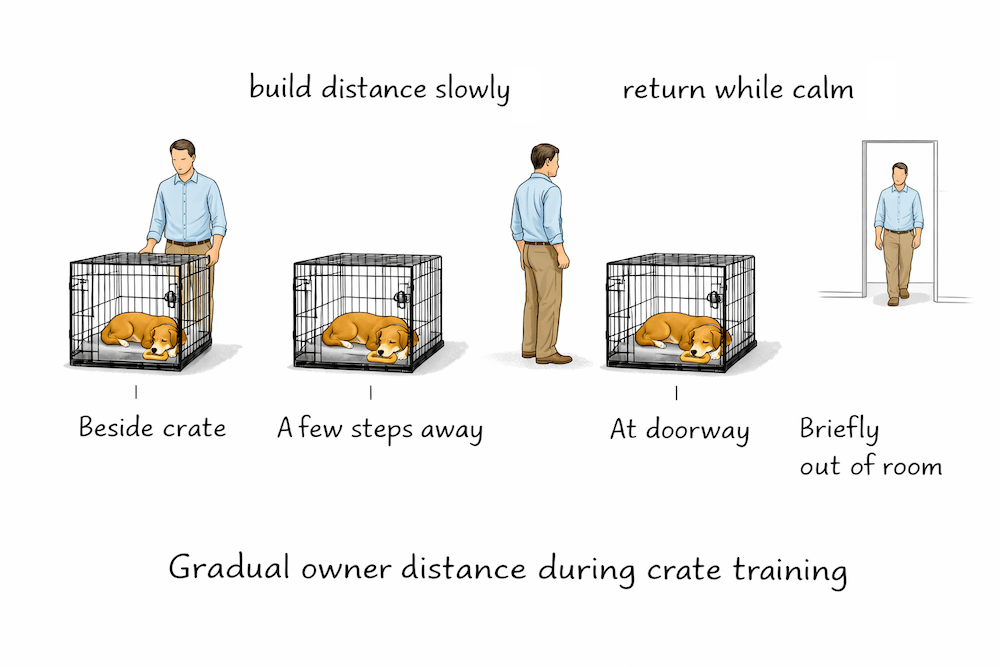
When your dog can stay relaxed with the door closed, begin stepping a few feet away, then leaving the room briefly, then returning. Keep departures and returns low-key. If your dog becomes distressed, you progressed too fast. Back up to a shorter absence your dog can handle calmly. This matters because confinement problems can overlap with separation-related distress, and dogs showing panic may need a different plan than simple crate training.
Step 7: Practice Crate Time at Real-Life Moments
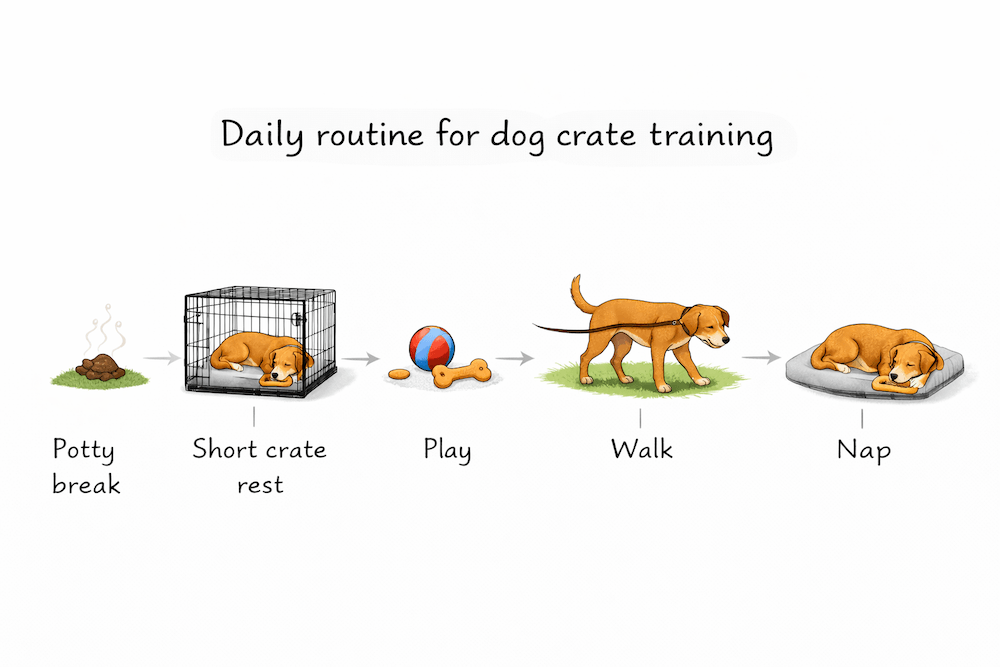
Start using the crate during naps, bedtime, short errands, or quiet parts of the day once your dog has built a good association with it. Give a predictable potty break before crating, and avoid leaving your dog crated for excessive periods. The crate should be one management tool in a broader routine that includes exercise, training, enrichment, and social contact.
Step 8: Watch for Signs the Crate Is Not the Right Tool Yet
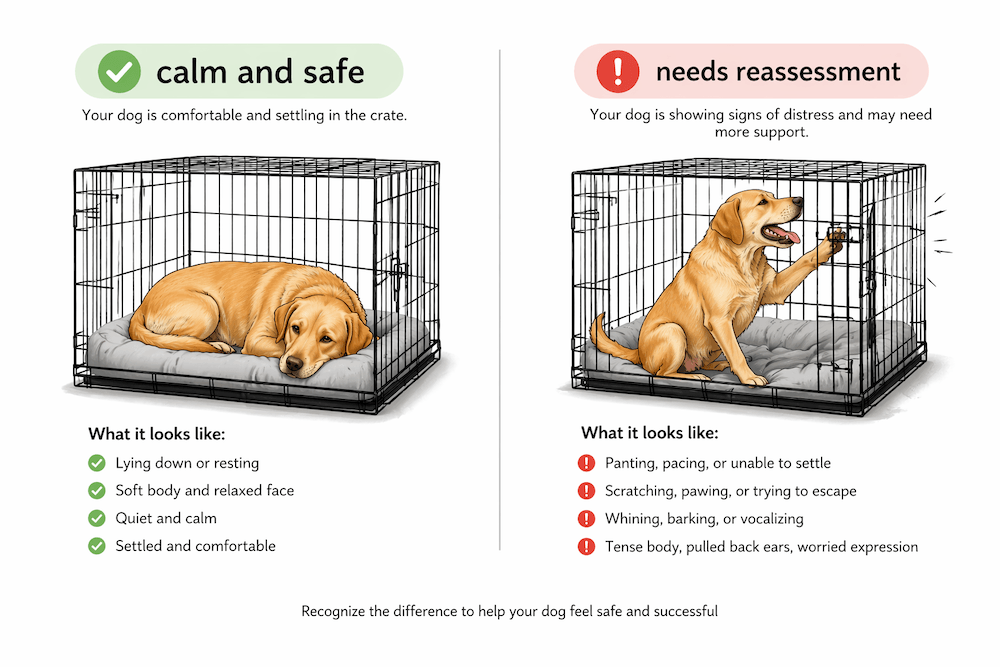
If your dog shows panic, drooling, frantic escape attempts, repeated self-injury risk, or extreme distress when crated, stop pushing longer crate sessions and reassess. Some dogs with separation-related distress or negative past confinement experiences need a slower desensitization plan or help from a qualified trainer or veterinary behavior professional. Crate training should build security, not intensify fear.
How Crate Training Helps With Potty Training
Crate training can make puppy potty training easier because most dogs naturally try not to soil the place where they rest. When the crate is the right size and used properly, it can help dogs learn to hold their bladder for short, appropriate periods and build better bathroom habits over time.
It also helps create a more predictable routine. When crate time is followed by regular trips outside, dogs begin to connect waking up, leaving the crate, and going to the bathroom in the right place. This structure can reduce random accidents in the house and make it easier for owners to supervise patterns, especially with puppies.
The key is to keep crate sessions reasonable and pair them with frequent potty breaks based on the dog’s age, schedule, and progress. The crate should never be used as punishment, and it should not replace supervision, outdoor trips, or consistent training. For both puppies and adult dogs, it works best as one
Additional Tips for How to Crate Train a Dog
Small, consistent adjustments can make crate training feel calmer, more predictable, and easier for your dog to accept.
| Tip | Why It Helps | How to Apply It |
|---|---|---|
| Use food rewards | Food builds fast positive crate associations. | Toss treats in whenever your dog enters calmly. |
| Keep sessions short | Short practice prevents overwhelm and frustration. | End each session before your dog becomes restless. |
| Stay consistent | Predictability helps dogs understand the routine faster. | Practice at similar times every day. |
| Potty first | Emptying the bladder reduces accidents and discomfort. | Take your dog out right before crate time. |
| Use calm exits | Low-key releases reduce excitement and demand barking. | Open the crate only when your dog is settled. |
| Add enrichment | Chews and stuffed toys make crate time easier. | Offer safe long-lasting items during short sessions. |
Common Mistakes When You Crate Train a Dog
Most crate training setbacks happen when the process moves too quickly, or the crate starts to feel stressful instead of safe.
| Mistake | Why It’s a Problem |
|---|---|
| Moving too fast | Your dog may start fearing the crate. |
| Using it as punishment | This can create a negative emotional association. |
| Releasing during barking | Your dog may learn barking opens the door. |
| Skipping exercise needs | An under-stimulated dog settles much less easily. |
| Crating too long | Long confinement can increase stress and discomfort. |
| Ignoring distress signs | Panic signals may point to a deeper issue. |
When to Get Help With Crate Training a Dog
It is a good idea to get professional help if crate training is not just slow, but clearly causing distress or getting worse over time. A certified trainer, veterinary behaviorist, or veterinarian can help you determine whether the problem is the training plan itself, the crate setup, a medical issue, or a deeper anxiety issue.
You should reach out if your dog panics in the crate, tries to break out, drools heavily, or injures itself while confined. Help is also important if your dog barks for long periods, refuses to enter even with gradual training, or repeatedly soils the crate despite appropriate potty breaks and schedule management.
It is especially worth asking for support if your dog seems fine when you are home but falls apart when left alone, since that can point to separation distress rather than a basic crate-training issue. Getting help early does not mean you failed. It simply gives you a safer, more effective plan for your dog.
Evidence-Backed References for How to Crate Train a Dog
The American Veterinary Society of Animal Behavior states that reward-based methods offer the most advantages and the least harm for canine training, while aversive methods are associated with more stress-related behaviors. That matters for crate training because forcing the dog into the crate, using it for punishment, or relying on distress to “wear the dog out” can damage the association you are trying to build.
RSPCA crate guidance emphasizes using the crate as a safe haven, not a “sin bin” or time-out area, and recommends comfortable bedding, safe chew items, and gradual positive exposure. This supports the practical idea that crate success depends heavily on setup and emotional association, not just repetition.
A review on canine separation anxiety notes that dogs left in crates while home alone are not necessarily less likely to show separation-related problem behaviors than dogs left uncrated. In other words, a crate is not a treatment for true separation distress, so dogs that panic when alone may need behavioral treatment beyond standard crate training.[1]
Frontiers in Veterinary Science also highlights that separation-related problems are not all the same and may involve fear, frustration, or panic linked to the owner’s absence. Clinically, this matters because a dog that merely needs crate acclimation should be handled differently from a dog whose distress is rooted in being left alone.[2]
How to Maintain Crate Training Success
After you complete the initial crate training process, keep reinforcing the crate as a normal, safe part of daily life. Continue pairing it with calm rewards, naps, chew time, bedtime, or short predictable absences. Success signs include your dog entering willingly, lying down quickly, staying relaxed, and showing less resistance when the door closes.
Keep monitoring for changes. If your dog suddenly begins panicking, drooling heavily, trying to break out, or vocalizing intensely, reassess whether the crate routine has become too difficult or whether separation-related distress may be involved. In those cases, reduce the difficulty, rebuild gradually, and consider help from a qualified reward-based trainer or veterinary behavior professional.
Frequently Asked Questions
The Bottom Line
Crate training can be a helpful way to build routine, support potty training, and give your dog a safe place to rest, but it works best when it is introduced gradually and used thoughtfully. The goal is not simply to keep a dog contained, but to help them feel calm, comfortable, and secure in the space. Every dog adjusts at a different pace, so patience matters. Age, temperament, daily routine, exercise, and past experiences can all affect how easily a dog accepts the crate. When used correctly, the crate can become a useful part of everyday life, but it should never replace training, supervision, or your dog’s physical and emotional needs. A calm, reward-based approach usually leads to the best results. If your dog is struggling, showing distress, or not improving with gradual practice, it may be a sign to slow down, change the setup, or get professional help.