What Do Dogs Dream About? Nightmares, Facts & When to Worry

Canine Bible is reader-supported. We receive affiliate commissions via some of our links. Learn more.
Dogs most likely dream about familiar parts of their daily lives, such as playing, exploring, chasing, eating, and interacting with their favorite people. Like humans, dogs enter sleep stages linked to dreaming, and their twitching paws, soft barks, or moving eyes may reflect dream activity. But not every movement during sleep means the same thing. Some dogs dream more visibly than others, and puppies, seniors, and highly active breeds may show different sleep behaviors. There are also times when shaking, whining, or sudden movements may signal discomfort instead of a normal dream. Understanding what dogs dream about can help you tell the difference between harmless sleep habits and signs worth paying closer attention to.
What Dogs May Dream About Most Often
| Dream Theme | What It May Involve | Possible Sleep Signs | Owner Takeaway |
|---|---|---|---|
| Daily activities | Running, sniffing, playing, or exploring familiar places from everyday life. | Paw twitching, leg paddling, or gentle body movements during sleep. | This is usually normal if your dog settles and wakes normally. |
| Social moments | Interacting with owners, other dogs, or familiar household routines. | Soft vocalizing, tail movement, or relaxed facial motion while asleep. | These dreams may reflect meaningful emotional experiences from the day. |
| Training memories | Processing commands, rewards, games, or recently learned behaviors. | Subtle movement, quiet sounds, or brief twitches during deeper sleep. | Sleep may help dogs process learning, memory, and new experiences. |
| Chase behavior | Pursuing toys, prey-like objects, moving animals, or fast motion. | Running motions, paw flicks, short barks, or light leg kicks. | This is common in active, playful, or prey-driven dogs. |
| Stressful events | Replaying fear, conflict, discomfort, overstimulation, or stressful encounters. | Whining, restlessness, growling, sudden waking, or tense body movement. | Repeated distress during sleep may deserve veterinary attention. |
Do Dogs Really Dream?
Dogs likely do dream, although we cannot know exactly what those dreams look or feel like from their perspective. Like humans, dogs move through different sleep stages, including REM sleep, when the brain becomes more active while the body stays mostly relaxed.
During this stage, small twitches, eye movements, or soft sounds may happen when dream-related brain activity reaches the body’s muscles. These moments can make it seem like a dog is reacting to something in their sleep, but the exact content of the dream is still unknown.
Dog dreaming is inferred from sleep behavior, brain activity, and what science already understands about sleep. Dreaming is also closely tied to normal rest patterns, so understanding how many hours a day dogs sleep can help owners recognize what is typical for their dog versus a sudden change in sleep habits. The safest takeaway is that dreaming appears to be a normal part of canine sleep, but we should avoid assuming every movement tells a complete story.


Dog Dreams vs Human Dreams: How Are They Different?
Dogs and humans both experience sleep stages associated with dreaming, but we understand them in very different ways. Humans can wake up and describe dream content directly, while dog dreams can only be inferred from sleep behavior, brain activity, learning patterns, and daily experiences. That means dogs may dream about familiar parts of life, but we cannot say they dream exactly like humans do.
| Comparison Category | Dogs | Humans |
|---|---|---|
| Dream content | Likely based on familiar experiences and daily routines. | Can include memories, emotions, imagination, and abstract scenes. |
| How we know | Content is inferred from behavior, sleep studies, and brain activity. | People can describe dreams directly after waking. |
| Sleep behavior | May show subtle movement or vocal sounds during sleep. | May move, speak, or react depending on sleep stage. |
| Emotional experiences | May reflect comfort, stress, excitement, or fear. | Dreams can clearly involve joy, fear, stress, or sadness. |
| Memory processing | Sleep may help process learning and daily experiences. | Sleep supports memory, emotion, and learning consolidation. |
| Nightmares | Unpleasant dreams are possible but cannot be confirmed directly. | People can report nightmares and describe their content. |
| What remains unknown | The exact images, emotions, or storylines remain unknown. | Dream meaning and function are still not fully understood. |
Do Puppies, Adult Dogs, and Senior Dogs Dream Differently?
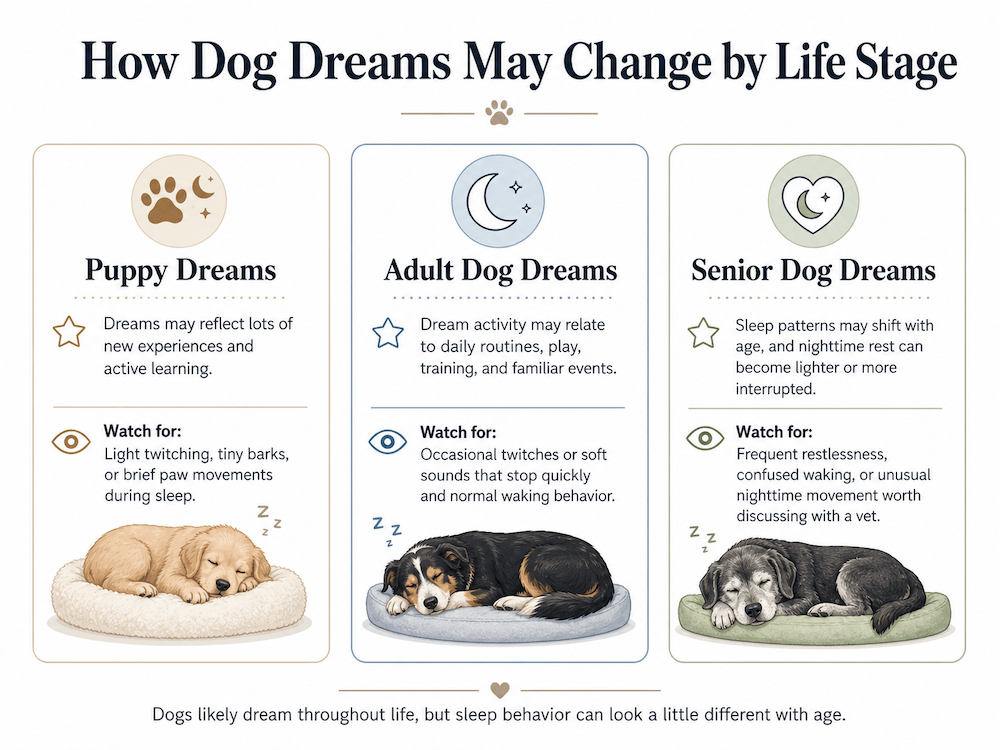
Dogs may show different dream-like sleep behavior at different life stages, but we cannot know exactly what they dream about. Puppies are constantly learning, exploring, and building social memories, so their sleep may help process a flood of new experiences. Adult dogs may be more likely to process familiar routines, play, training, and interactions with their owners. Senior dogs may show sleep changes related to aging, comfort needs, health conditions, or cognitive changes, which can make their nighttime patterns look different from when they were younger.
What Dog Dream Behaviors Usually Mean
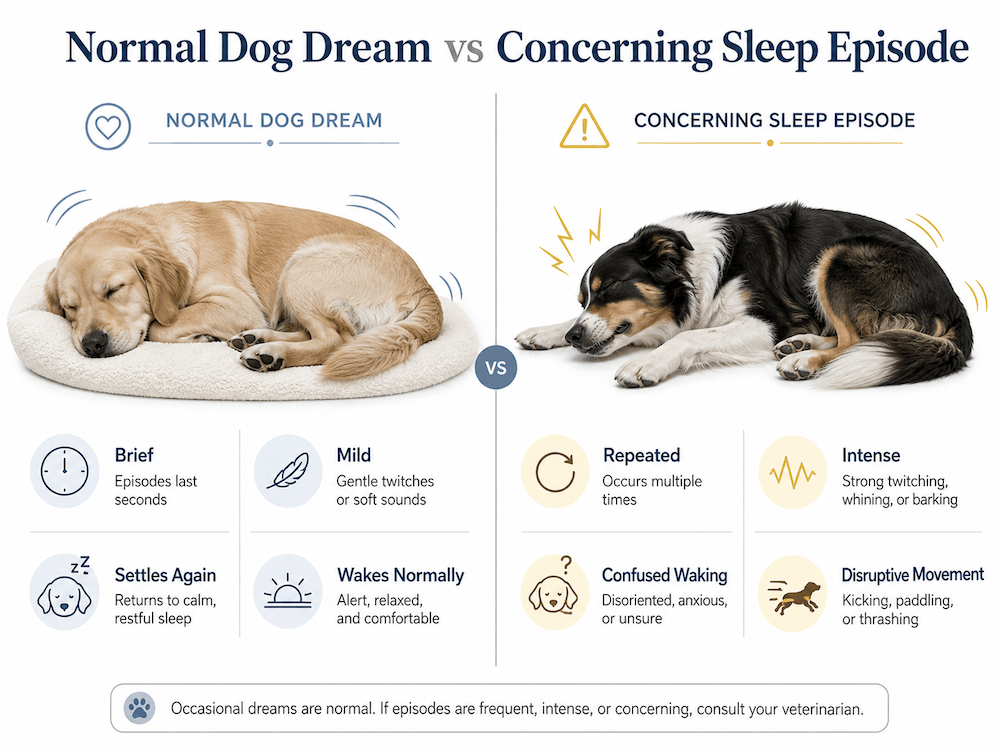
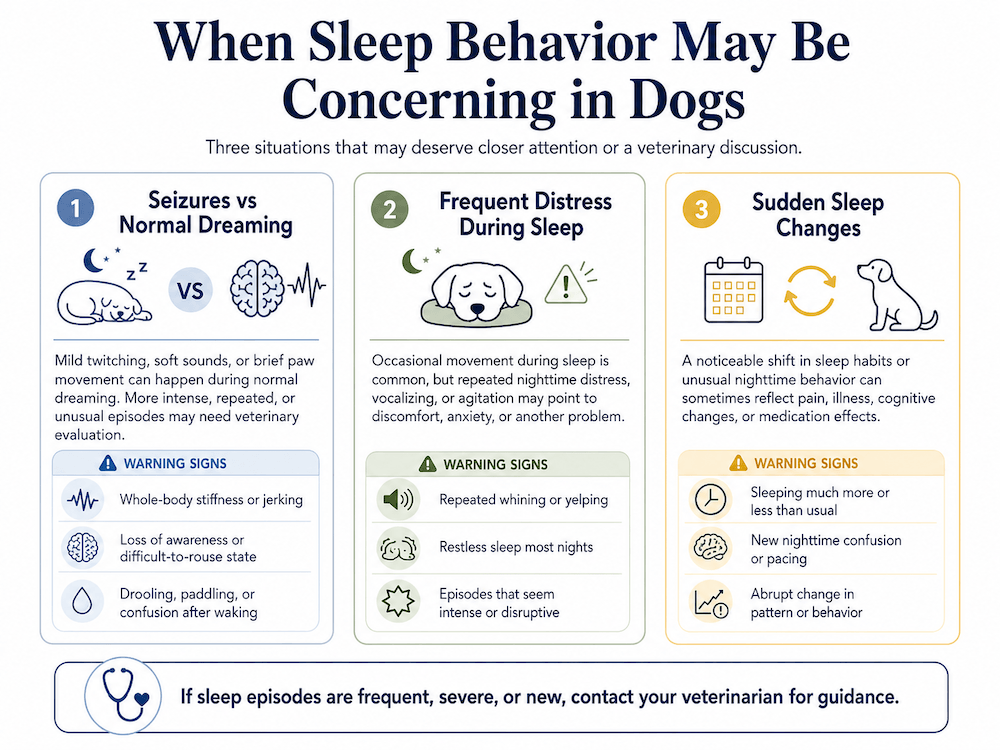
Most sleep movements are harmless when they are brief, mild, and followed by normal rest. The main difference is in intensity and pattern: normal dreaming is usually rhythmic or short-lived, whereas sleep behavior may appear violent, prolonged, repetitive, or difficult to interrupt. Research on clinically probable REM sleep behavior disorder in dogs describes abnormal dream-enactment behaviors such as twitching, running movements, and vocalization when they become unusually intense or disruptive.


| Sleep Behavior | Likely Meaning | Usually Normal When | Ask a Vet When |
|---|---|---|---|
| Paw Twitching | Muscle activity may occur during dream-related sleep. | Movements are brief, gentle, and stop naturally. | Twitching becomes violent, rigid, or seizure-like. |
| Soft Barking | The dog may be reacting within a dream. | Vocal sounds are occasional and low intensity. | Vocalizing becomes panicked, frequent, or intense. |
| Leg Paddling | The dog may be dreaming about movement. | The body remains relaxed between movements. | The dog thrashes or risks injuring itself. |
| Whimpering | The dream may involve stress or emotional content. | Whimpering is mild and the dog stays asleep. | Distress repeats nightly or disrupts sleep quality. |
| Sudden Waking | The dog may wake from an intense dream. | The dog quickly relaxes and acts normally. | Waking includes confusion, aggression, or collapse. |
What Dog Dream Patterns Can Look Like in Real Life
A dog who spent the afternoon playing fetch may later sleep deeply and show brief, mild dream-like movements before settling again. A dog who repeatedly wakes in panic, seems confused, vocalizes intensely, or moves violently during sleep may be showing something more concerning than a normal dream. The key difference is pattern and intensity: occasional, gentle sleep behavior is usually less concerning than repeated, disruptive, or distressing episodes.
Do Dogs Have Nightmares?
Dogs may have unpleasant dreams or nightmare-like sleep experiences, especially after stressful, frightening, painful, or overstimulating events. We cannot know exactly what a dog is dreaming, but sleep behaviors such as brief whimpering, mild restlessness, or suddenly waking may reflect emotional processing during sleep. In many cases, a soft whimper or short period of movement is not automatically a problem. However, repeated panic-like episodes, violent thrashing, intense vocalizing, or waking in a confused, fearful, or aggressive state should be taken more seriously.
If your dog seems to be having a bad dream, avoid shaking or grabbing them awake. A startled dog may react defensively before fully realizing where it is. Instead, speak softly from a short distance, keep the environment calm, and let them wake naturally when possible. If the episodes are frequent, worsening, or paired with other changes like disorientation, seizures, pain, anxiety, or senior cognitive decline, it is best to discuss the pattern with your veterinarian.
Should You Wake a Dreaming Dog?
In most cases, you should let a dreaming dog sleep. Mild twitching, paw movement, soft barking, or brief whimpering can pass naturally and does not always mean your dog is distressed.
Avoid touching, shaking, or putting your face close to a sleeping dog, even if you are trying to comfort them. A startled dog may react suddenly before fully waking. If your dog seems upset, use a calm voice from a safe distance instead. If the behavior is violent, repeated, or followed by confusion, contact your veterinarian.
- Let mild twitching, paw movement, or soft barking pass naturally.
- Do not shake, grab, or put your face close to a sleeping dog.
- If your dog seems distressed, use your voice first from a safe distance.
- Call your vet if the behavior is violent, repeated, or followed by confusion.
When Dreaming Might Actually Be a Health Concern
Most dream-like behaviors are harmless, but some sleep episodes may look unusual enough to deserve veterinary attention. This is especially true when the behavior is intense, repeated, new, or followed by abnormal behavior after waking.
What Owners Should Know About Dog Dreams
| Dream Insight | Why It Matters | Owner Interpretation |
|---|---|---|
| REM Sleep | REM sleep is strongly linked with vivid dreaming. | Movement during REM can be normal. |
| Memory Processing | Sleep may support learning after new experiences. | Training and play may influence sleep activity. |
| Age Changes | Senior dogs may show altered sleep structure. | New nighttime changes deserve closer monitoring. |
| Stress Effects | Sleep patterns can reflect welfare and environment. | Restlessness may follow stress or disruption. |
| Abnormal Movement | Some dream-like behaviors may indicate sleep disorders. | Violent or repeated episodes need veterinary review. |
What Science Says About Dogs Dreaming
Dogs exhibit sleep stages that can be studied using tools similar to those used in human sleep research, including EEG-based analysis. A 2017 study found evidence that sleep can support memory consolidation after learning in dogs, suggesting sleep helps dogs process experiences rather than simply “shut off.”[1]
A 2023 polysomnographic study in senior dogs found that sleep structure and brain-wave patterns change with age and cognitive performance, which matters because older dogs may sleep differently and show different nighttime behaviors.[2]
Research in shelter dogs has also explored sleep and resting behavior as possible welfare indicators, showing that sleep patterns can reflect a dog’s environment, stress level, and overall well-being.[3]
Finally, veterinary research on REM sleep behavior disorder shows that some dramatic sleep behaviors may be abnormal rather than ordinary dreaming, especially when movements become violent, repetitive, or disruptive.[4]
Frequently Asked Questions
The Bottom Line
Dogs likely dream about familiar parts of their everyday lives, from play and walks to routines, training, and time with their owners. While we cannot know exactly what a dog sees or feels during sleep, dream-like behavior is usually a normal part of healthy rest. Mild twitching, soft sounds, or brief movement often pass naturally and are not automatically a cause for concern. The bigger concern is when sleep episodes become intense, repeated, violent, or followed by confusion. By understanding the difference between normal dreaming and unusual sleep behavior, you can let your dog rest comfortably while knowing when to ask your veterinarian for guidance.
Sources
- The interrelated effect of sleep and learning in dogs (Canis familiaris); an EEG and behavioural study
- Sleep and cognition in aging dogs. A polysomnographic study
- Can Sleep and Resting Behaviours Be Used as Indicators of Welfare in Shelter Dogs (Canis lupus familiaris)?
- Association between clinically probable REM sleep behavior disorder and tetanus in dogs