How to Adopt a Dog 101: The Complete Guide (Processes, Tips & More)

Canine Bible is reader-supported. We receive affiliate commissions via some of our links. Learn more.
To adopt a dog, start by choosing a reputable shelter or rescue, finding a dog that fits your lifestyle, completing the application, and preparing your home before bringing them home. The best adoption is not just about finding a dog you like—it is about making a safe, realistic match that works for both you and the dog. Age, energy level, temperament, health needs, training history, and your daily routine all matter more than appearance alone. Some dogs settle in quickly, while others need weeks of patience, structure, and support after adoption. You may also need to consider landlord rules, other pets, children, adoption fees, veterinary care, and long-term costs. This guide explains how to adopt a dog step by step, what to ask before saying yes, and how to help your new dog adjust with confidence.
What to Know Before You Adopt a Dog
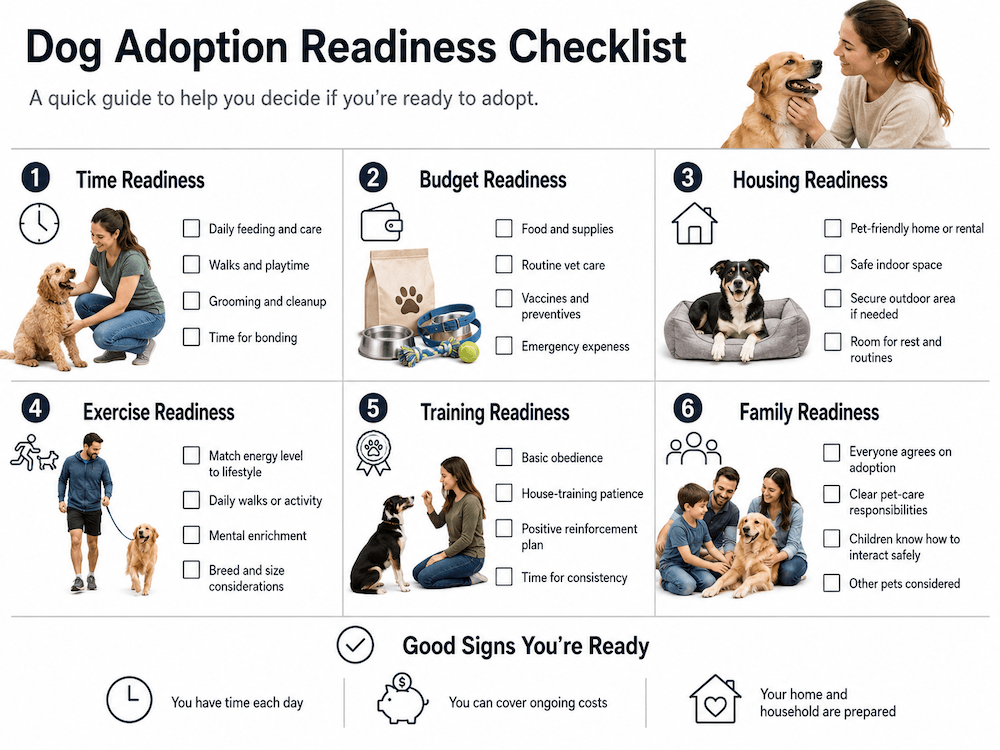
Adopting a dog is a long-term commitment that includes daily care, training, veterinary costs, exercise, grooming, and emotional patience. A dog may live with you for 10 years or longer, so the decision should fit your current life and your likely future life. Before you start looking at adoptable dogs, be clear about what you can realistically provide.
| Factor | What to Consider | Why It Matters |
|---|---|---|
| Daily time | Feeding, walks, play, and attention. | Dogs need daily care and routine. |
| Long-term care | Many dogs live 10 years or more. | Adoption is a long-term commitment. |
| Budget | Food, vet care, grooming, and supplies. | Costs add up over time. |
| Training needs | Patience, structure, and consistency. | Training prevents common behavior issues. |
| Exercise level | Walks, play, and mental activity. | Energy needs should match your lifestyle. |
| Grooming needs | Brushing, bathing, shedding, and trims. | Regular grooming keeps dogs comfortable. |
| Home fit | Space, rules, children, and other pets. | The right fit makes adjustment easier. |
| Emotional patience | Time to settle, trust, and learn routines. | Patience helps dogs feel secure. |
Before you adopt a dog, ask yourself:
Buying a Dog vs Adopting: Which Is Better?
Adoption is usually cheaper and supports rescue work, while buying may offer more predictable breed traits and puppy options. Both choices come with long-term costs, training needs, vet care, and responsibility, so the better option depends on your budget, lifestyle, ethics, and the dog’s fit for your home.
When Adopting a Dog Is the Right Choice—and When to Wait
Adoption is a good choice when your home, schedule, and budget are stable enough to support a dog’s daily needs. A steady routine makes it easier to choose a dog that fits your lifestyle and helps the dog adjust with less stress.
It may be better to wait if you are moving soon, facing major life changes, or unsure about basic care costs. A new baby, limited budget, or unstable housing can make adoption harder unless you have strong support and a clear plan.


Existing pets do not always prevent adoption, but careful introductions and history checks matter. If the decision feels impulsive, pause, visit again, ask more questions, and adopt only when the commitment feels realistic.
What You Need Before You Adopt a Dog
You do not need every dog product on the market before adoption, but you do need the basics ready. Set up a quiet, safe area before the dog arrives so the first day feels predictable instead of chaotic.
How Much Does It Cost to Adopt a Dog?
These estimates are based on common U.S. dog adoption and care costs. ASPCA lists annual dog costs such as food, routine medical care, preventive medication, insurance, and initial supplies, while Petfinder notes that adoption fees may include services like spay/neuter, vaccines, heartworm testing, and microchipping. Adoption fees commonly vary by shelter, location, dog age, and what care is included.
The adoption fee is only the beginning. You also need to budget for dog food, treats, bowls, leash, collar, harness, bed, crate, toys, grooming tools, routine vet visits, vaccines, flea and tick prevention, heartworm prevention, dental care, licensing, training, pet insurance, boarding, dog walking, and emergency medical care.
Planning for these costs before bringing a dog home helps prevent financial stress and makes it easier to provide consistent care. Even a low-cost adoption can become expensive over time, especially if the dog needs training, grooming, medication, or unexpected veterinary treatment.
| Cost Area | Estimated Cost | What It Usually Covers | What to Confirm |
|---|---|---|---|
| Adoption Fee | $50–$500+ one time. | May include vaccines, microchip, and spay/neuter. | Ask exactly what care is included. |
| Starter Supplies | $150–$500 one time. | Leash, collar, bowls, bed, crate, and toys. | Buy basics first, then upgrade later. |
| Veterinary Visit | $75–$300 for the first visit. | Exam, vaccines, testing, and health review. | Bring all shelter medical records. |
| Food | $25–$100 per month. | Daily meals based on size and diet. | Ask what food the dog currently eats. |
| Preventive Care | $15–$45 per month. | Heartworm, flea, tick, and parasite prevention. | Ask your vet about local parasite risks. |
| Training | $100–$300 for group basics. | Leash skills, manners, recall, and confidence. | Choose reward-based training methods. |
| Emergencies | $500–$2,000+ emergency fund. | Urgent illness, injury, diagnostics, or treatment. | Consider savings or pet insurance. |
Where to Adopt a Dog: Trusted Organizations & Shelters
These adoption resources help dog seekers compare nationwide directories, breed-specific rescues, no-kill shelters, local animal services, and adoption guidance in one place. Options like Petfinder, Adopt a Pet, ASPCA, Best Friends, PetSmart Charities, AKC Rescue Network, Rescue Me, No Kill Network, Humane World, and municipal shelters make it easier to search by location, breed, size, age, or shelter type before contacting an organization.


| Organization | Best For | Coverage | How to Use It | Website |
|---|---|---|---|---|
| Petfinder | Searching many shelters and rescues at once. | Nationwide shelter and rescue listings. | Search by ZIP code, breed, age, and size. | Visit Petfinder |
| Adopt a Pet | Finding local dogs through large adoption listings. | U.S. and Canada shelter partners. | Use filters and pet alerts for matches. | Visit Adopt a Pet |
| ASPCA | Adopting through ASPCA or nearby shelters. | Select ASPCA locations and national listings. | Search adoptable dogs by location or program. | Visit ASPCA |
| Best Friends | Adoption centers and shelter rescue connections. | Multiple U.S. locations and partner shelters. | Search local pets or find shelters nearby. | Visit Best Friends |
| PetSmart Charities | Meeting adoptable dogs through local rescue partners. | Nationwide adoption events and partners. | Search online, then meet pets in person. | Visit PetSmart Charities |
| AKC Rescue Network | Finding breed-specific dog rescues. | Breed rescue groups across the U.S. | Choose a breed, then contact listed rescues. | Visit AKC Rescue Network |
| Rescue Me | Browsing dogs listed by state and breed. | State-based rescue and rehoming listings. | Select your state and review available dogs. | Visit Rescue Me |
| No Kill Network | Finding no-kill shelters and rescue groups. | Directory-style U.S. shelter listings. | Search by state for local organizations. | Visit No Kill Network |
| Humane World | Learning how to adopt from shelters and rescues. | Educational adoption guidance for U.S. owners. | Use its guidance before contacting shelters. | Visit Humane World |
| Local Animal Services | Adopting from city or county shelters. | City, county, and municipal shelters. | Search your city plus “animal services.” | Search Local Dogs |
How to Choose the Right Dog to Adopt
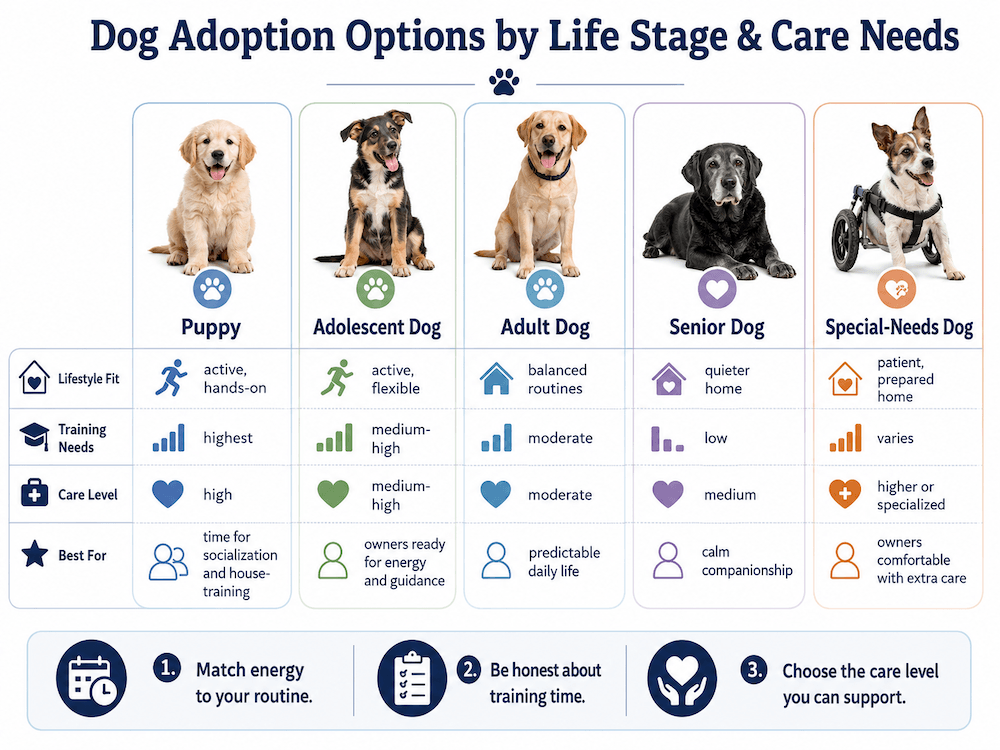
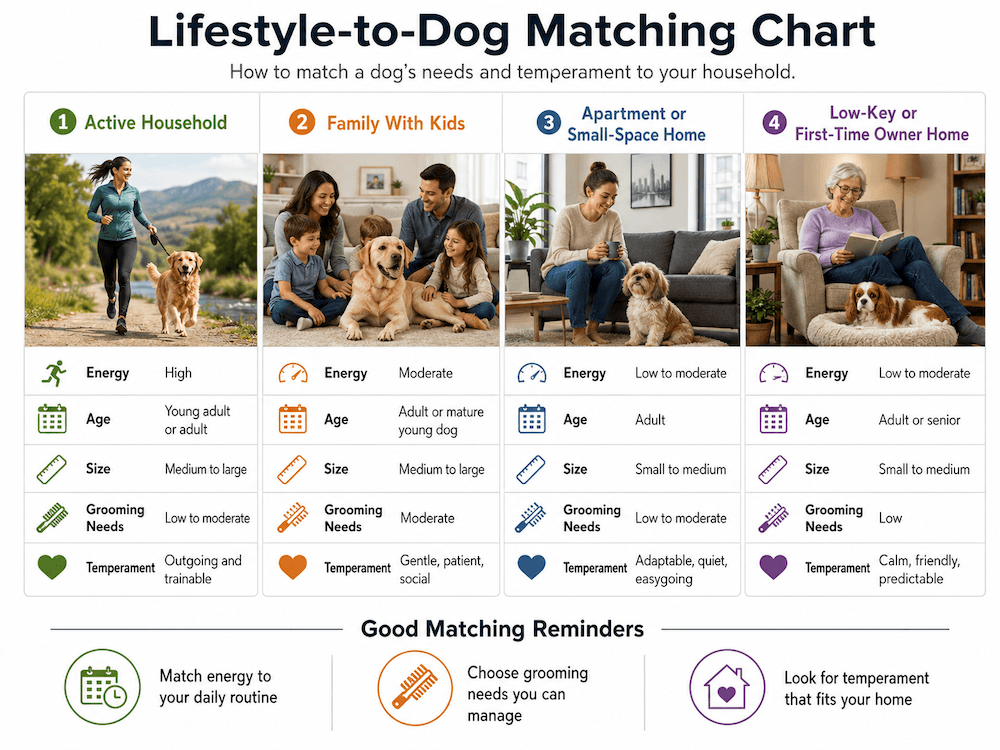
The “right” dog is the one whose needs match your life. Breed labels can be incomplete or inaccurate in shelter settings, especially for mixed-breed dogs, so focus more on the individual dog in front of you.
How to Adopt a Dog Step by Step
Adoption processes vary by shelter, rescue, city, and country, but the core steps are similar. Move slowly enough to make a thoughtful match, but be prepared with supplies and questions when you find the right dog.
Step 1: Check Your Lifestyle Before Looking at Dogs
Start with your real schedule, not your ideal schedule. A high-energy dog may sound fun, but it may not fit if you work long hours, travel often, or prefer quiet evenings.
Step 2: Choose a Reputable Shelter or Rescue
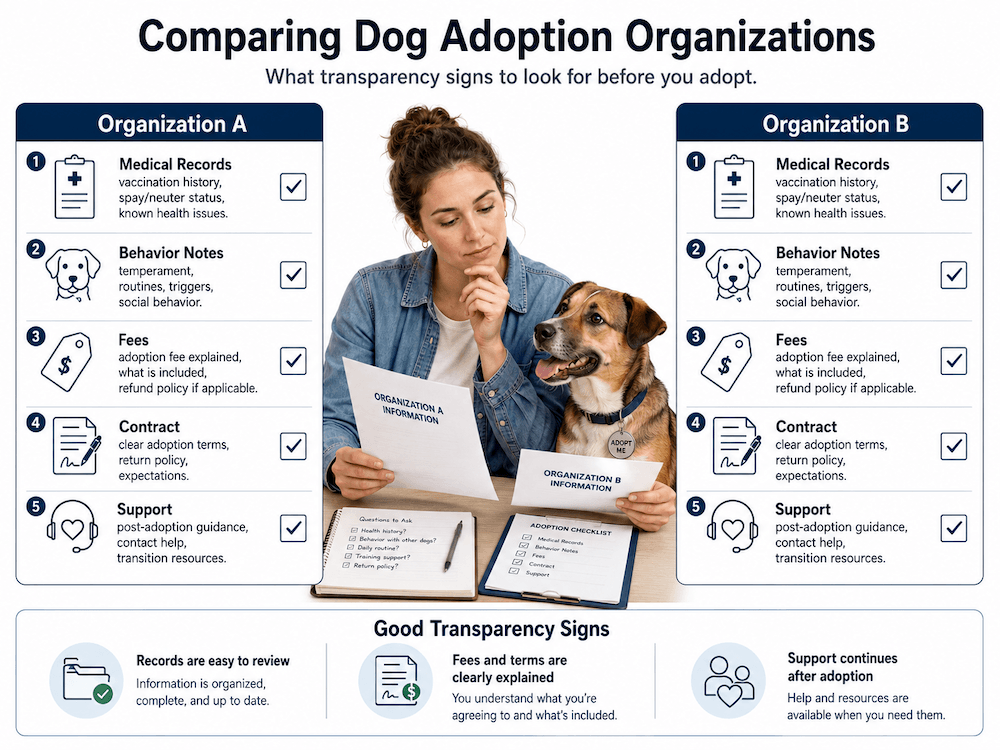
A reputable organization should be transparent about fees, medical records, behavior notes, spay/neuter status, microchip details, and return policies. They should also encourage questions rather than rush you into a decision.
Step 3: Search for Dogs That Match Your Life, Not Just Your Eye
Photos can be misleading. A beautiful dog may be a poor match if their exercise, training, health, or behavior needs do not fit your home.
Step 4: Ask About Health, History, and Behavior
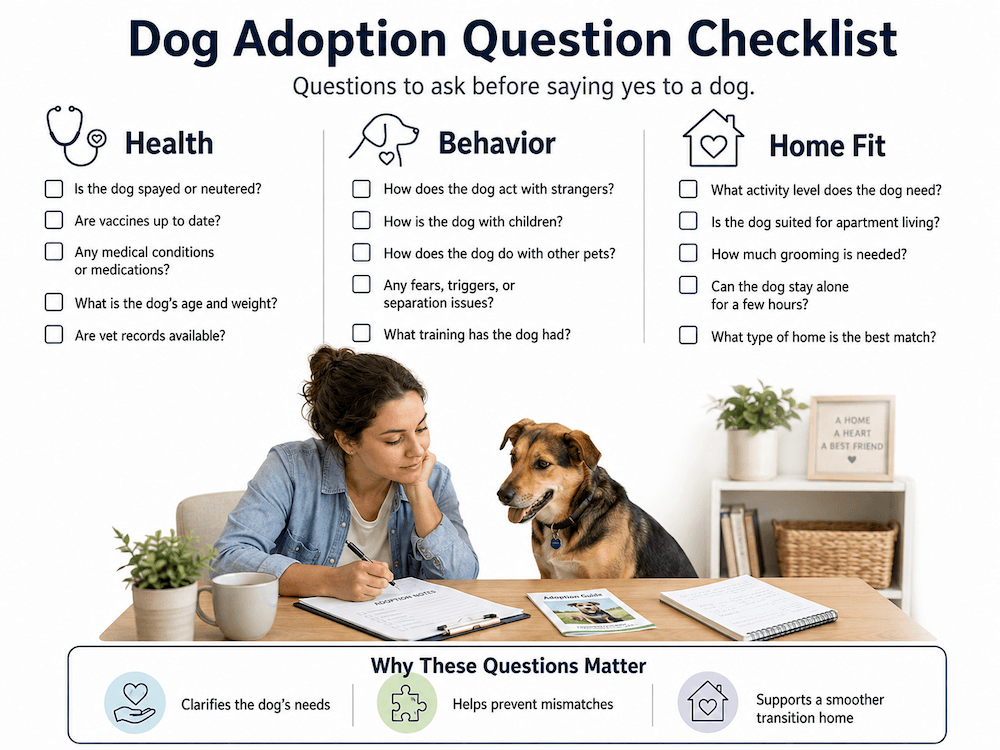
Before you commit, ask for the dog’s known medical and behavior history. Some dogs have incomplete histories, especially strays, but shelters can usually share what they have observed.
Step 5: Meet the Dog in a Calm, Neutral Way
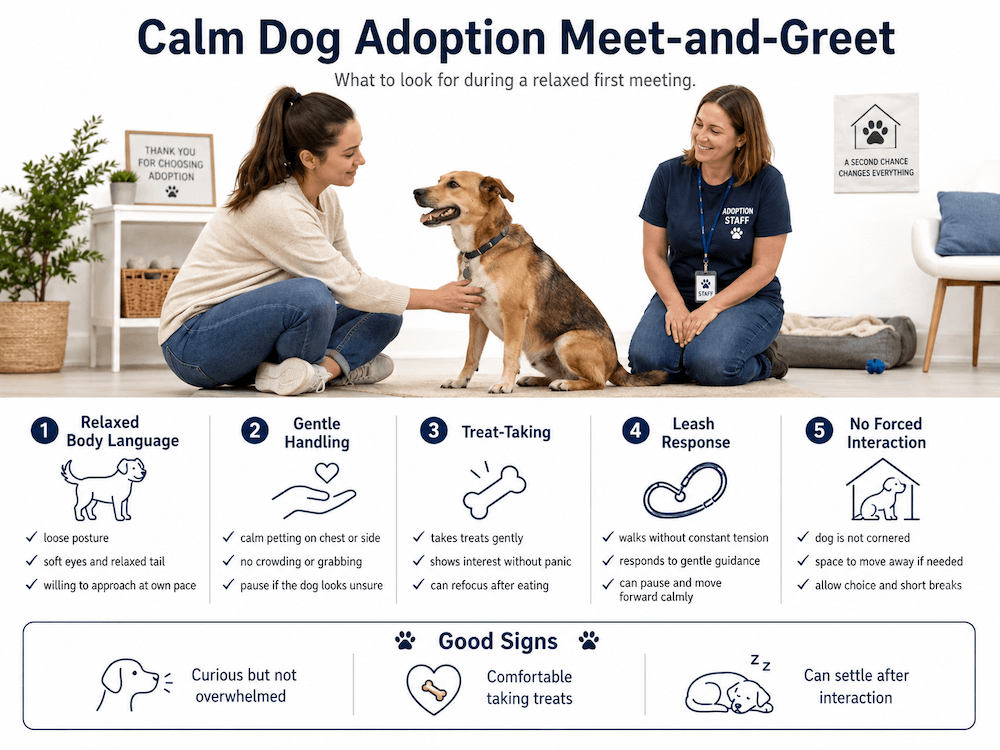
During the meet-and-greet, watch how the dog behaves after the first burst of excitement. A dog may jump, bark, hide, or freeze in a shelter setting, so ask staff how the dog behaves on walks and outside the kennel too.
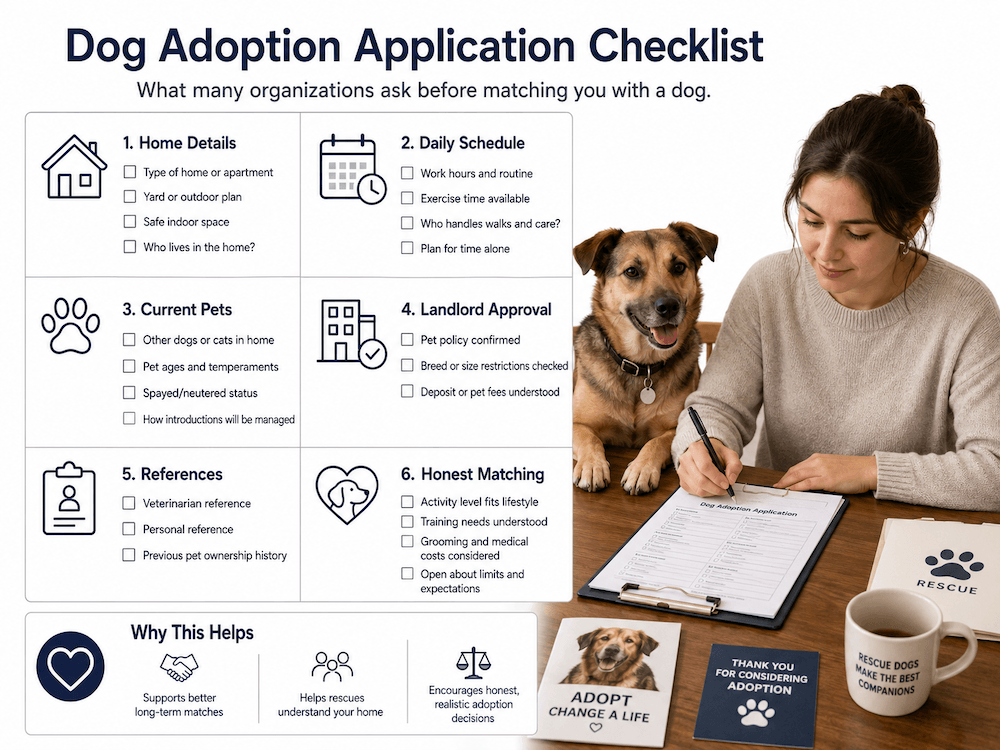
Step 6: Complete the Adoption Application Honestly
Most shelters and rescues ask about your home, schedule, landlord rules, other pets, children, dog experience, and care plans. Answer honestly so the organization can help you find a dog that truly fits.
If an application is denied, ask why. Sometimes the issue is fixable, such as missing landlord approval, incomplete pet records, or choosing a dog that does not match your home.
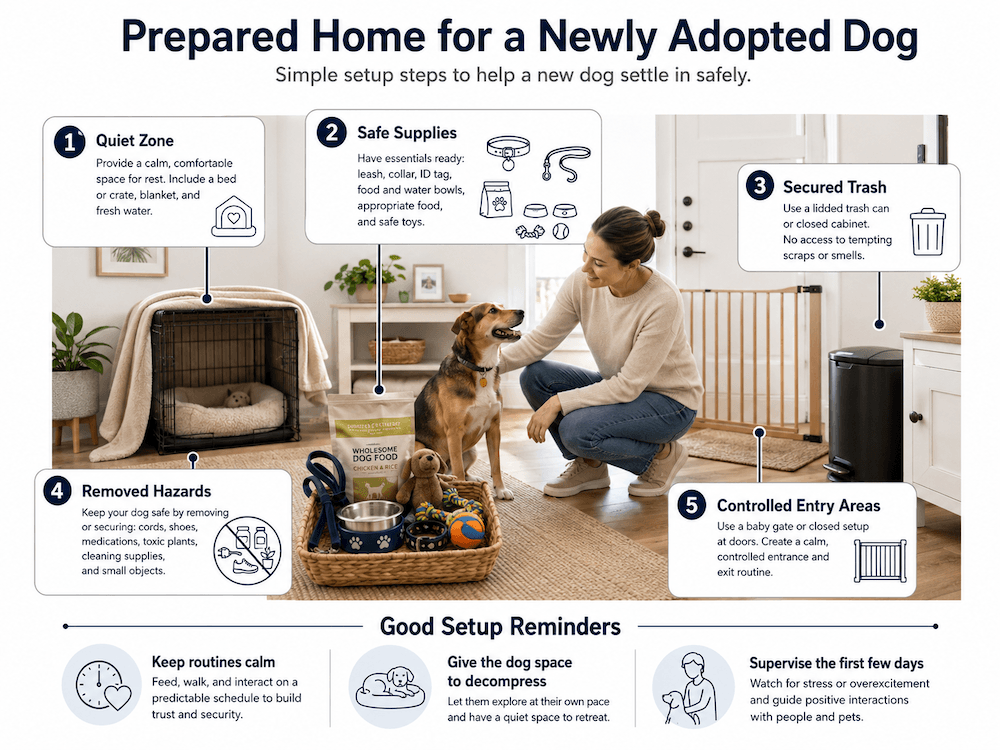
Step 7: Prepare Your Home Before Pickup Day
Set up one quiet area where the dog can rest without being overwhelmed. Remove hazards before the dog arrives, including loose cords, toxic foods, unsafe plants, medications, small swallowable objects, and open trash.
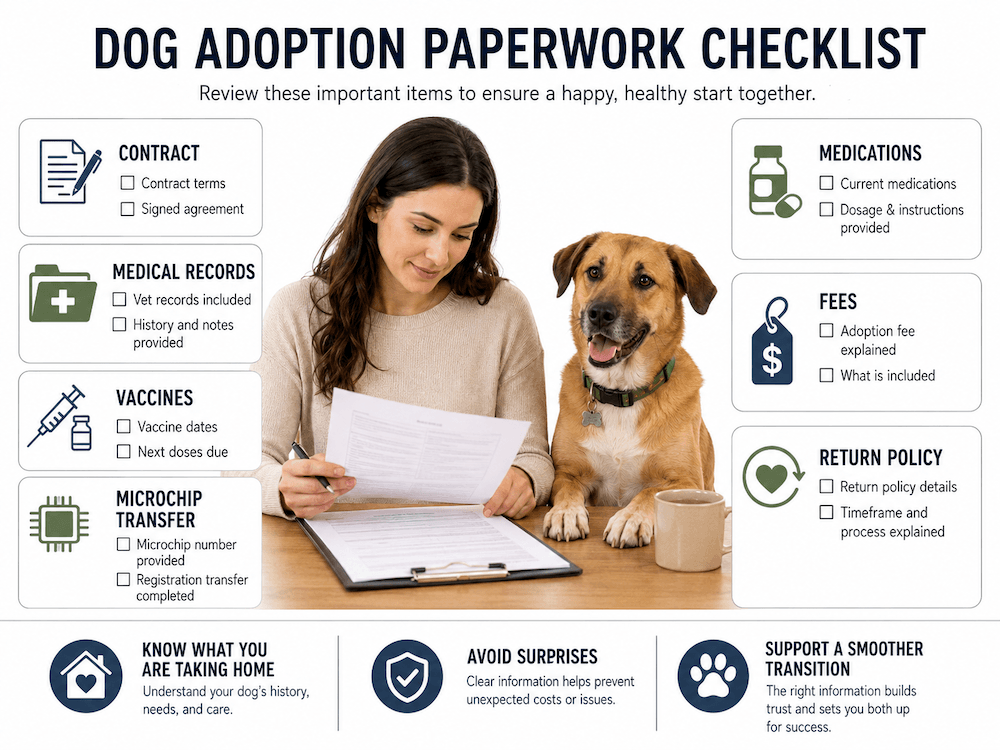
Step 8: Review the Paperwork Before You Sign
Before leaving with the dog, review the adoption contract carefully. Confirm what is included and what still needs to be done.
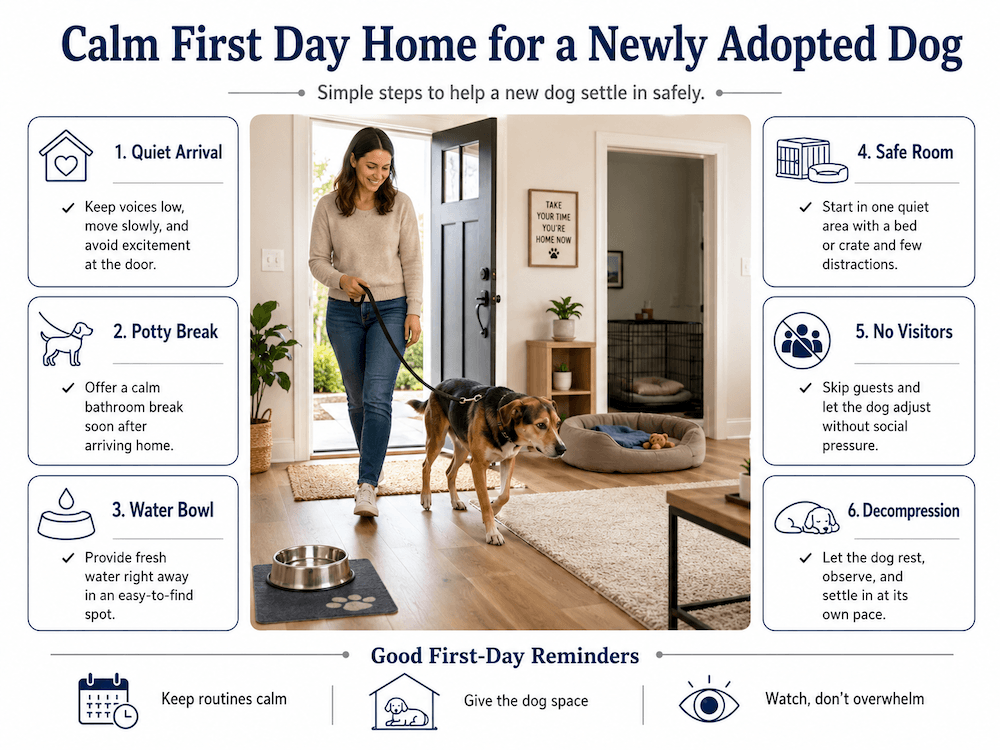
Step 9: Bring Your Dog Home Quietly
The first day should be calm and simple. Skip visitors, dog parks, pet stores, grooming appointments, and big introductions until the dog has had time to decompress.
Step 10: Schedule a Veterinary Visit and Build a Routine
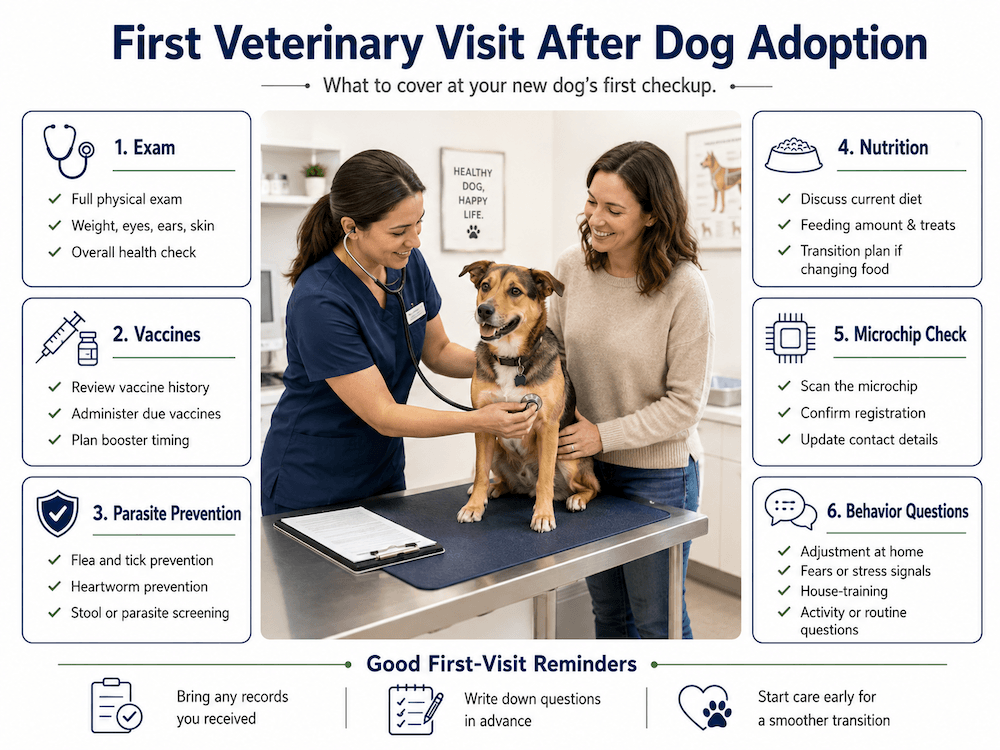
Schedule a veterinary visit soon after adoption, especially if records are incomplete or the dog shows health concerns. Bring all shelter records, medication instructions, diet information, and behavior notes.
Helpful Tips for Adopting a Dog Successfully
Small choices in the first few days can shape the dog’s comfort and confidence. Keep the transition calm, structured, and predictable.
| Tip | Why It Helps | How to Apply It |
|---|---|---|
| Match Lifestyle | Compatible needs reduce stress and returns. | Choose by energy, age, and temperament. |
| Ask Staff | Staff often know behavior beyond photos. | Request notes from walks and handling. |
| Go Slowly | Slow transitions help dogs decompress safely. | Limit visitors and outings at first. |
| Use Routine | Predictability helps anxious dogs feel secure. | Keep meals, walks, and bedtime consistent. |
| Reward Calm | Positive reinforcement builds trust and learning. | Praise quiet behavior and relaxed check-ins. |
| Save Records | Records help your veterinarian plan care. | Bring documents to the first vet visit. |
| Plan Training | Early guidance prevents avoidable behavior issues. | Start with name, recall, and leash basics. |
Mistakes to Avoid When Adopting a Dog
Most adoption problems come from rushing, poor matching, or expecting instant adjustment. A newly adopted dog needs structure, patience, and time to feel safe.
| Mistake | Why It’s a Problem | Better Approach |
|---|---|---|
| Choosing by Looks | Appearance does not predict household compatibility. | Prioritize temperament, needs, and lifestyle fit. |
| Skipping Questions | Unknown history can create surprises later. | Ask about health, behavior, and routines. |
| Rushing Introductions | Fast greetings can cause fear or conflict. | Introduce people and pets gradually. |
| No Quiet Space | Dogs need somewhere safe to decompress. | Create a calm rest area before arrival. |
| Ignoring Records | Missed medical details can delay care. | Review vaccines, medications, and microchip status. |
| Expecting Perfection | Adjustment behaviors are common after adoption. | Use patience, routine, and positive training. |
| Delaying Vet Care | Hidden problems may worsen without attention. | Book a wellness visit soon after adoption. |
How the First 3 Days, 3 Weeks, and 3 Months Usually Look
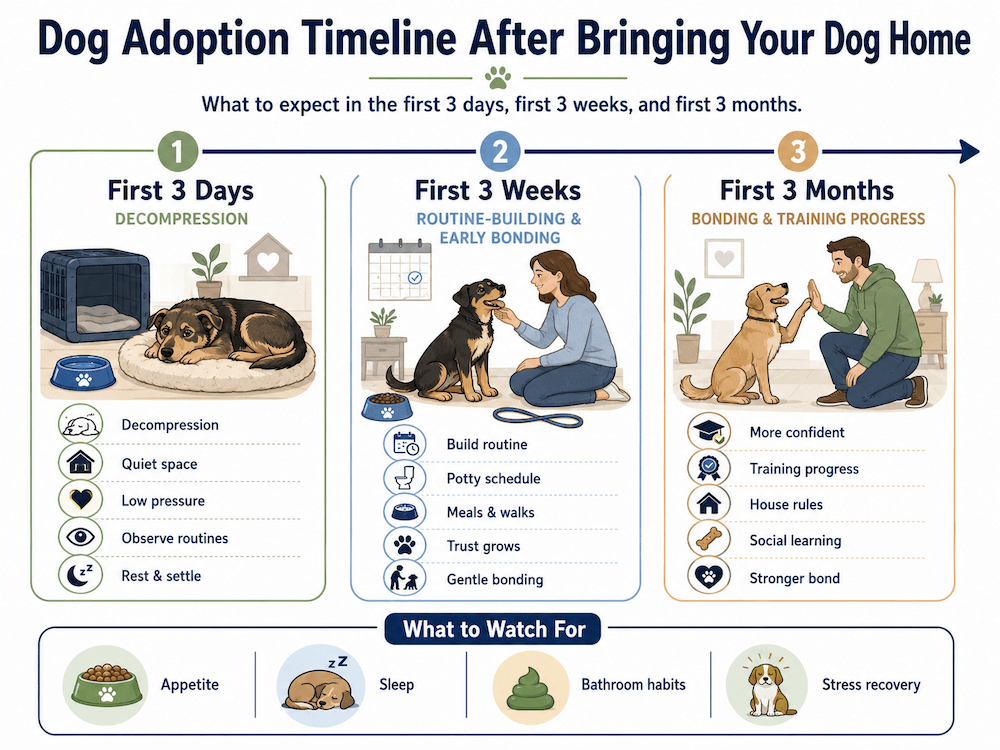
The popular “3-3-3” idea is not a medical rule, but it is a useful expectation-setting framework. Some dogs adjust faster, while others need more time.
In the first few days, focus on quiet, safety, and routine. During the first few weeks, start building trust, basic cues, and predictable household habits. Over the first few months, you will learn more about the dog’s true personality, triggers, confidence, and training needs.
What to Do After You Adopt a Dog
After adoption, focus on helping your dog feel safe through calm, predictable routines. Keep the first week quiet, use the same potty areas, feed on a schedule, practice gentle training, and avoid overwhelming outings.
Signs your dog is settling in include eating normally, resting comfortably, exploring with curiosity, recovering from mild startles, responding to their name, showing relaxed body language, seeking gentle interaction, and following routines.
Keep watching your dog’s behavior for several weeks. A dog that seems perfect on day one may show new habits later, while a nervous dog may improve once they feel secure.
When to Call a Veterinarian After Adopting a Dog
A veterinary visit is important after adoption, even if the dog seems healthy. It confirms the dog’s baseline health and helps you plan vaccines, parasite prevention, nutrition, dental care, weight management, and behavior support.
Call a veterinarian promptly if your adopted dog shows repeated vomiting, diarrhea lasting more than a day, blood in stool or urine, coughing, breathing difficulty, limping, pain, refusal to eat, extreme lethargy, severe itching, hair loss, sudden aggression, confusion, seizures, or collapse. These signs may point to illness, injury, or stress that needs professional care.
For behavior concerns, contact a veterinarian, certified trainer, or veterinary behavior professional if the dog shows panic, bite risk, severe separation distress, intense reactivity, or fear that prevents normal daily life. Medical issues, pain, anxiety, and past stress can all affect behavior.
What Veterinary Research Says About Dog Adoption
Veterinary and behavior research supports a careful, compatibility-first approach to dog adoption. The Merck Veterinary Manual recommends considering a dog’s size, activity level, temperament, coat type, housing fit, children, and lifestyle, noting that a poor match can create stress for both the family and the dog.
A PLOS ONE study followed 99 shelter dogs for six months after adoption using owner surveys and C-BARQ behavior scoring. The study found that some behavior concerns can change over time after adoption, which supports the idea that owners should expect an adjustment period rather than judging the dog only by the first few days.[1]
The AVMA’s responsible pet ownership guidance emphasizes that pet ownership requires a long-term investment of time, effort, money, food, shelter, veterinary care, training, and companionship. This matters because successful adoption depends on the owner’s ability to provide consistent care, not just affection.
AAHA canine life-stage guidelines highlight individualized care across a dog’s life, including behavior, nutrition, parasite control, vaccination, dental health, lifestyle safety, and preventive care. For newly adopted dogs, this supports scheduling a veterinary visit and creating a long-term wellness plan early.
Frequently Asked Questions
The Bottom Line
Adopting a dog is about finding the right match, not rushing to bring home the first dog you like. A successful adoption starts with honest preparation, a reputable shelter or rescue, clear questions about health and behavior, and a calm plan for the first few weeks at home. The best dog for you is the one whose age, energy level, temperament, care needs, and training needs fit your real lifestyle. With patience, routine, veterinary care, and positive guidance, an adopted dog can become a confident, loving companion for years to come.