
How Much Does It Cost to Spay or Neuter a Dog: 2026 Full Price Guide

Canine Bible is reader-supported. We receive affiliate commissions via some of our links. Learn more.
Spaying or neutering a dog usually costs about $150 to $500, but the final price can be lower or much higher depending on where you go. Low-cost clinics may charge far less, while full-service veterinary hospitals can cost several hundred dollars more. The price often changes based on your dog’s size, sex, age, health, location, and what is included in the surgery package. That is why two owners can ask the same question and get very different quotes. You also need to know what the fee covers, such as anesthesia, pain medication, bloodwork, or an e-collar. Some dogs may need extra care before or after surgery, which can affect the total cost. This guide breaks down the typical price ranges, what changes the bill, and how to choose the safest option for your dog.
Dog Spay and Neuter Cost Overview
| Cost Factor | What Dog Owners Should Know |
|---|---|
| Typical range | Most dog owners can expect to pay about $150 to $500, though prices vary widely by clinic and location. |
| Low-cost clinics | Shelters and nonprofit programs may offer lower prices, but services included in the fee can vary. |
| Full-service vets | Private veterinary hospitals often cost more because they may include exams, monitoring, pain control, and follow-up care. |
| Dog size | Larger dogs usually cost more because they need more anesthesia, medication, and surgical time. |
| Surgery type | Spaying often costs more than neutering because it is a more involved abdominal surgery. |
| Health needs | Older dogs, overweight dogs, or dogs with medical concerns may need extra testing or monitoring before surgery. |
| Included services | The quote may or may not include bloodwork, pain medication, an e-collar, IV fluids, or a recheck appointment. |
| Long-term value | Spaying or neutering can help prevent certain health risks and may reduce future costs related to unwanted litters. |
Do You Need to Have Your Dog Spayed or Neutered?
You do not always need to have your dog spayed or neutered, but it is strongly recommended for many pets unless there is a medical, breeding, or breed-specific reason to delay or avoid it. Spaying or neutering helps prevent unwanted litters and can reduce certain reproductive health risks.
For female dogs, spaying prevents pregnancy, heat cycles, and serious uterine infections. For male dogs, neutering prevents testicular cancer and may reduce some hormone-driven behaviors, although it is not a guaranteed fix for marking, roaming, mounting, or aggression.
The best decision depends on your dog’s age, breed, size, health, lifestyle, and future breeding plans. Talk with your veterinarian about the safest timing, especially if you have a large or giant breed, a senior dog, or a dog with medical concerns.
Why Spaying a Dog Usually Costs More Than Neutering
A spay is usually more expensive because it is an abdominal surgery. The veterinarian removes reproductive tissue from inside the abdomen, which usually requires more surgical time, more anesthesia planning, and a longer recovery incision.


A routine neuter is often less expensive because the testicles are removed through a smaller incision. However, neutering can become more expensive if a dog has a retained testicle, because the veterinarian may need to locate and remove it from the groin or abdomen.
| Procedure | What Happens | Cost Impact |
|---|---|---|
| Dog spay | The ovaries, and often uterus, are removed. | Usually costs more because it is abdominal surgery. |
| Dog neuter | The testicles are removed through a smaller incision. | Usually costs less when both testicles are normal. |
| In-heat spay | Reproductive tissue has more blood flow. | Many clinics charge more or reschedule surgery. |
| Pregnant spay | The surgery is more complex and sensitive. | Costs rise because time and risk increase. |
| Cryptorchid neuter | A retained testicle must be located surgically. | Costs may resemble a more complex surgery. |
What Affects the Cost to Spay or Neuter a Dog?
The same procedure can cost very different amounts depending on the dog and the clinic. A young, healthy, small male dog is often one of the least expensive cases, while an older large female dog may need more medication, monitoring, and surgical time.
Your location also matters. Veterinary pricing is usually higher in areas with higher rent, staffing costs, equipment costs, and demand for appointments.
| Cost Factor | Why It Changes the Price | Owner Takeaway |
|---|---|---|
| Dog size | Larger dogs need more anesthesia and medication. | Expect higher quotes for large and giant breeds. |
| Dog sex | Female spays are usually more involved than neuters. | Spay estimates often run higher than neuter estimates. |
| Age | Older dogs may need more screening and monitoring. | Ask what testing is recommended before surgery. |
| Health status | Medical issues can change anesthesia planning. | Share symptoms and medications before booking. |
| Clinic type | Nonprofit clinics and hospitals price differently. | Compare the full package, not just surgery. |
| Location | Overhead and staffing costs vary by region. | Local estimates are more useful than national averages. |
| Timing | Heat, pregnancy, or illness can add complexity. | Plan before surgery becomes urgent. |
What Should Be Included in a Dog Spay or Neuter Quote?
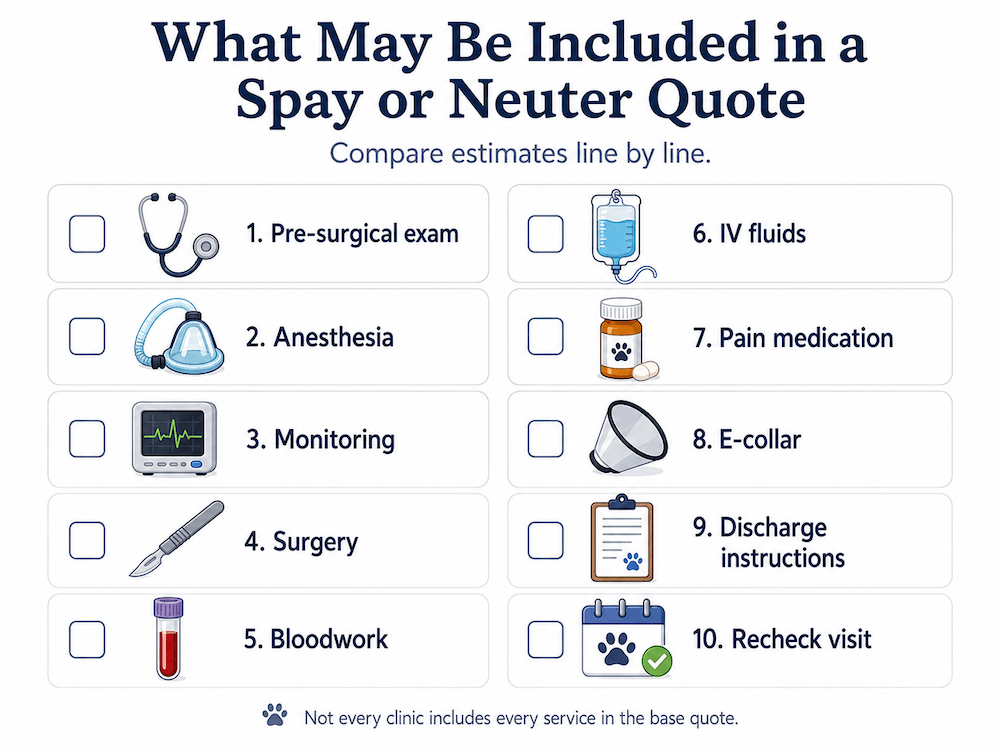
A quote should tell you more than the surgery price. It should explain what happens before surgery, how your dog is monitored during anesthesia, what pain control is provided, and what support is available after your dog goes home.


Ask for an itemized estimate before booking. This makes it easier to compare a low-cost clinic and a full-service hospital fairly.
Low-Cost Spay and Neuter Clinics vs Private Veterinary Hospitals
Low-cost clinics can be a good option for many healthy dogs, especially when affordability is the main barrier. These programs often focus on routine spay/neuter surgeries and may have eligibility rules, limited appointment dates, or fewer add-on services.
Private veterinary hospitals usually cost more, but they may offer more individualized care, broader testing options, longer appointments, and better continuity if your dog has a medical history. The right choice depends on your dog’s risk level and your budget.
| Clinic Type | Best For | Possible Limitation |
|---|---|---|
| Low-cost clinic | Healthy dogs needing affordable routine surgery. | Appointments may be limited or booked ahead. |
| Shelter program | Adopted dogs or owners qualifying for assistance. | Eligibility may depend on income or location. |
| Mobile clinic | Areas with limited access to veterinary care. | Follow-up may require a separate local vet. |
| Private vet | Dogs needing personalized screening or continuity. | The total price is usually higher. |
| Specialty hospital | Higher-risk dogs or complex surgical cases. | Costs can exceed routine surgery pricing. |
Ways to Find Affordable Dog Spay or Neuter Services
Affordable options often exist, but they may not appear in a basic clinic search. Start with local shelters, humane societies, municipal animal services, rescue groups, veterinary schools, nonprofit spay/neuter clinics, and community voucher programs.
Spay and Neuter Average Cost by State
Use this as a state-by-state average price guide for dog spay and neuter costs. These are estimated averages, not guaranteed quotes; costs vary by geography, provider, dog size, dog health, and possible added fees such as office visits.
| State/District | Average Dog Neuter Cost | Average Dog Spay Cost | Owner Budget Note |
|---|---|---|---|
| Alabama | $408 | $383 | Lower than the national average for routine surgery. |
| Alaska | $578 | $543 | Expect higher quotes because care access can vary. |
| Arizona | $505 | $469 | Plan for mid-to-higher pricing in many areas. |
| Arkansas | $404 | $378 | Often lower than many coastal-state estimates. |
| California | $651 | $607 | One of the higher-cost states for dog surgery. |
| Colorado | $493 | $464 | Budget near the national mid-range. |
| Connecticut | $523 | $491 | Prices may run higher in full-service hospitals. |
| Delaware | $477 | $445 | Expect moderate pricing for routine procedures. |
| District of Columbia | $661 | $619 | Among the highest average estimates listed. |
| Florida | $479 | $448 | Costs vary widely by city and clinic type. |
| Georgia | $425 | $398 | Often close to lower-middle national pricing. |
| Hawaii | $874 | $814 | The highest average in this state-by-state guide. |
| Idaho | $475 | $447 | Plan for moderate pricing, depending on location. |
| Illinois | $439 | $411 | Usually near the national middle range. |
| Indiana | $420 | $394 | Often lower than many large metro-state averages. |
| Iowa | $418 | $389 | Typically lower than many coastal regions. |
| Kansas | $403 | $376 | One of the lower average state estimates. |
| Kentucky | $433 | $403 | Expect lower-to-mid pricing for routine surgery. |
| Louisiana | $433 | $403 | Private clinic quotes may vary by parish and city. |
| Maine | $510 | $475 | Plan for slightly above-average pricing. |
| Maryland | $540 | $507 | Costs may be higher near major metro areas. |
| Massachusetts | $685 | $635 | Among the higher average state estimates. |
| Michigan | $422 | $396 | Often close to lower-middle national pricing. |
| Minnesota | $446 | $415 | Usually sits near the national middle range. |
| Mississippi | $390 | $368 | One of the lower average state estimates. |
| Missouri | $412 | $384 | Often lower than the national average. |
| Montana | $483 | $451 | Costs may vary with rural access and travel. |
| Nebraska | $437 | $408 | Usually falls in the lower-to-mid range. |
| Nevada | $470 | $443 | Expect moderate pricing, especially near cities. |
| New Hampshire | $524 | $493 | Often slightly above the national middle range. |
| New Jersey | $539 | $501 | Private-care quotes may be higher in dense areas. |
| New Mexico | $435 | $408 | Usually near lower-middle national pricing. |
| New York | $575 | $538 | Expect higher quotes in major metro areas. |
| North Carolina | $459 | $426 | Often moderate, with lower-cost programs available. |
| North Dakota | $429 | $400 | Generally near lower-middle national pricing. |
| Ohio | $441 | $412 | Usually near the national middle range. |
| Oklahoma | $402 | $375 | One of the lower average state estimates. |
| Oregon | $521 | $489 | Plan for slightly above-average pricing. |
| Pennsylvania | $446 | $416 | Costs vary widely between rural and metro areas. |
| Rhode Island | $523 | $489 | Expect slightly above-average routine pricing. |
| South Carolina | $447 | $418 | Usually near the national middle range. |
| South Dakota | $432 | $404 | Often lower-to-mid compared with national pricing. |
| Tennessee | $422 | $395 | Often below many national average estimates. |
| Texas | $430 | $403 | Costs vary greatly by city and clinic model. |
| Utah | $479 | $451 | Plan for moderate pricing in many areas. |
| Vermont | $534 | $501 | Often slightly above the national middle range. |
| Virginia | $473 | $441 | Costs may rise near large metro areas. |
| Washington | $534 | $500 | Often above the national middle range. |
| West Virginia | $393 | $367 | One of the lower average state estimates. |
| Wisconsin | $453 | $425 | Usually near the national middle range. |
| Wyoming | $445 | $417 | Costs may vary with travel and clinic access. |
Dog Spay and Neuter Cost by Size and Situation
Dog size affects cost because larger dogs often need more anesthesia, medication, surgical supplies, and recovery support. Tiny dogs can also need careful anesthesia monitoring, so the smallest dog is not always the simplest patient.
The dog’s situation matters just as much as weight. A healthy puppy and an older dog with a heart murmur may need very different levels of pre-surgical planning.
| Dog Type | Estimated Cost | Cost Pattern | Why It Matters |
|---|---|---|---|
| Toy dog | $100 to $450 | May cost less, but monitoring still matters. | Small size does not remove anesthesia risk. |
| Small dog | $125 to $500 | Often among the lower routine estimates. | Healthy young dogs may qualify for clinics. |
| Medium dog | $175 to $650 | Often falls near the middle range. | Medication needs increase with body weight. |
| Large dog | $250 to $850 | Usually costs more than small dogs. | Surgery uses more supplies and medication. |
| Giant breed | $350 to $1,000+ | Can be among the highest routine quotes. | Timing should be discussed before booking. |
| Senior dog | $300 to $1,200+ | May need testing before anesthesia. | Private care may be more appropriate. |
When a Higher Dog Spay or Neuter Quote Is Normal
A higher estimate is not always a bad sign. Sometimes it means the clinic is including services that make surgery safer or recovery easier, especially for dogs with extra needs.
A quote may rise when the dog is in heat, pregnant, overweight, older, sick, very large, very tiny, anxious, or has a retained testicle. The key is to ask why the price is higher and what care the extra cost provides.
| Situation | Why Cost May Rise | What to Ask |
|---|---|---|
| In heat | Tissue may be more vascular and delicate. | Should surgery wait until the cycle ends? |
| Pregnant | Surgery is more complex and sensitive. | What risks and fees apply? |
| Retained testicle | The testicle may require deeper surgery. | Where is it located and how removed? |
| Older dog | Testing and monitoring may be recommended. | What pre-surgical screening is needed? |
| Medical issue | Anesthesia planning may need extra care. | Is this still routine or higher risk? |
| Emergency timing | Urgent care costs more than planned care. | Can this be scheduled safely instead? |
Does Pet Insurance Cover Spaying or Neutering?
Most accident-and-illness pet insurance plans do not automatically cover routine spay or neuter surgery because it is usually considered preventive or elective care. These plans are mainly designed for unexpected problems, such as injuries, illnesses, emergencies, and certain medical treatments, rather than planned wellness procedures.
Some pet insurance companies offer wellness add-ons or preventive care packages that may reimburse part of a spay or neuter procedure. These plans often have a set annual allowance or reimbursement limit, so they may reduce your cost rather than pay the full surgery bill.
Before scheduling surgery, review your policy or ask the insurance company exactly what is covered. Look for terms such as wellness care, preventive care, routine surgery, sterilization, spay, neuter, waiting period, reimbursement limit, exclusions, and whether coverage applies only if the wellness plan was active before the procedure.
Tips for Managing Dog Spay and Neuter Costs
You do not have to choose between affordability and safety. The goal is to find care that fits your budget while still protecting your dog during surgery and recovery.
| Tip | Why It Helps | How to Apply It |
|---|---|---|
| Ask early | Low-cost appointments can fill quickly. | Start checking before surgery feels urgent. |
| Request itemization | It shows what the quote includes. | Compare surgery, medication, tests, and rechecks. |
| Check shelters | Many areas offer subsidized surgery programs. | Ask about vouchers or clinic days. |
| Budget extras | Small add-ons can change the final bill. | Plan for medication, cone, and recheck. |
| Share history | Health details help prevent unsafe surprises. | Mention medications, heat cycles, and illness. |
| Prepare recovery | Good home care helps prevent complications. | Set up a quiet recovery space early. |
Mistakes That Can Make Dog Spay or Neuter Costs More Stressful
The biggest mistake is comparing prices without comparing care. A lower quote may still be a good option, but only if you understand what is included and what support is available after surgery.
| Mistake | Why It Can Backfire | Better Choice |
|---|---|---|
| Choosing only by price | The cheapest quote may leave out care. | Compare what each clinic includes. |
| Skipping questions | Unclear estimates can create surprise charges. | Ask for written pricing before booking. |
| Waiting too long | Heat or pregnancy can raise complexity. | Discuss timing before it becomes urgent. |
| Hiding health issues | Anesthesia plans depend on accurate history. | Share symptoms, medications, and past reactions. |
| Underplanning recovery | Licking or jumping can cause complications. | Prepare rest space and incision protection. |
| Assuming all clinics match | Services and follow-up policies differ. | Choose based on safety and affordability. |
When to Ask a Veterinarian Before Spaying or Neutering Your Dog
Ask your veterinarian before scheduling if your dog is older, very small, a giant breed puppy, in heat, possibly pregnant, overweight, taking medication, or has a known medical condition. These situations do not always mean surgery should be avoided, but they may change the timing, testing, clinic choice, or estimate.
Also call before surgery if your dog is coughing, vomiting, losing weight, acting lethargic, having diarrhea, breathing harder than normal, or showing signs of pain. Elective surgery is safest when your dog is healthy enough for anesthesia.
What to Monitor After Your Dog’s Spay or Neuter Surgery
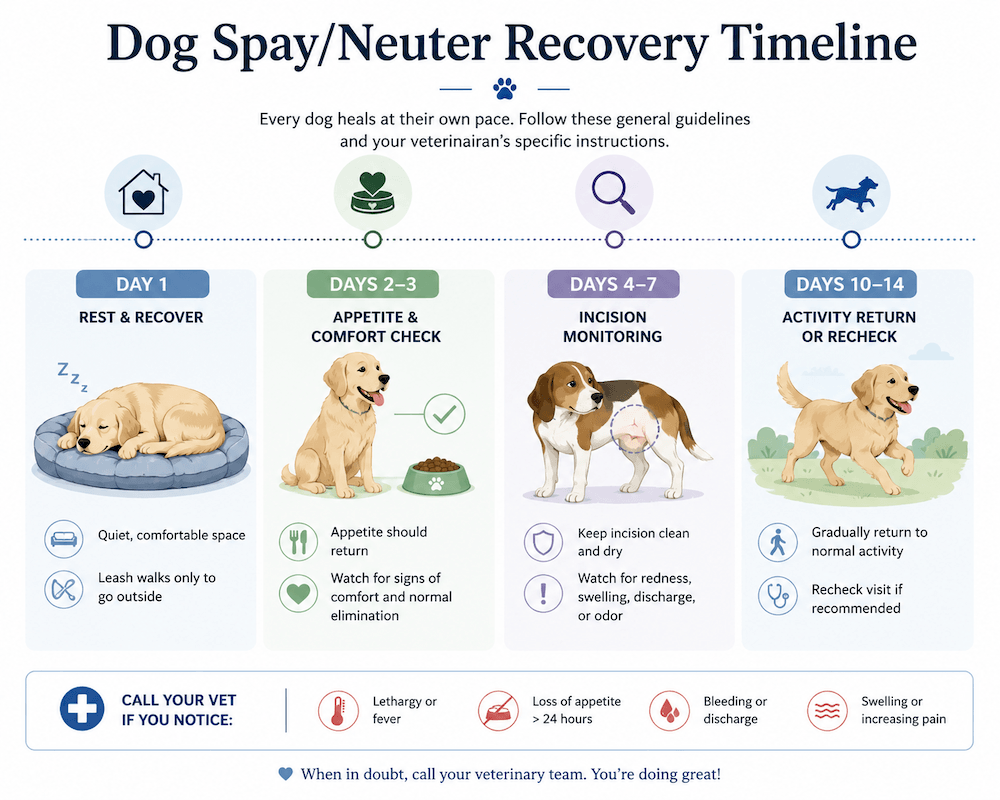
Most dogs need quiet rest, restricted activity, incision protection, and pain medication exactly as directed. Many routine recoveries take about 10 to 14 days, but your clinic’s instructions should guide your dog’s exact timeline.
A normal recovery usually includes mild tiredness the first day, gradual appetite return, and an incision that stays clean, closed, and dry. Call your veterinarian promptly if your dog has heavy bleeding, worsening swelling, discharge, repeated vomiting, severe pain, trouble breathing, pale gums, or an open incision.
Research On Dog Spay and Neuter Costs, Timing, and Safety
A BMC Veterinary Research study of a low-resource, high-volume dog sterilization clinic found that sterilization can be performed with a low incidence of short-term surgical complications and low mortality when strong surgical standards, aseptic technique, monitoring, and case assessment are used. For dog owners, this supports the idea that a lower-cost clinic is not automatically unsafe, but the clinic should still be able to explain its anesthesia, pain control, and recovery protocols.[1]
A study examined more than 42,000 dog spay and castration surgeries in a high-volume clinic and reported very low perioperative mortality in dogs. This does not mean surgery has no risk, but it shows why routine spay/neuter is generally considered a low-risk procedure for healthy, properly screened dogs.[2]
A study on 35 dog breeds found that the health effects of neutering age can vary by breed, sex, and condition, with some breeds showing higher risks for certain joint disorders or cancers when neutered early. This is why large-breed and giant-breed dogs may need a more individualized timing discussion instead of choosing surgery based only on price or convenience.[3]
A 2024 study found that female dogs neutered later had lower odds of early-onset urinary incontinence compared with dogs neutered early. For owners, this reinforces that spay/neuter decisions should balance cost, pregnancy prevention, recovery planning, breed size, and long-term health considerations with veterinary guidance.[4]
Frequently Asked Questions
The Bottom Line
Spaying or neutering a dog usually costs about $150 to $500, but the real price depends on your dog’s size, sex, age, health, location, and the type of clinic you choose. Low-cost clinics can make the procedure more affordable, while full-service veterinary hospitals may include more screening, monitoring, medication, and follow-up care. The most important step is to compare itemized estimates, not just the lowest advertised price. Ask what is included, what may cost extra, and who to contact if your dog has a problem after surgery. For puppies, senior dogs, giant breeds, dogs in heat, or dogs with medical concerns, talk with your veterinarian about the safest timing and care plan. A clear quote, safe anesthesia, good pain control, and proper recovery instructions are worth prioritizing. In the end, the best spay or neuter option is the one that fits your budget while keeping your dog safe, comfortable, and well supported.
Sources
- Investigation of short-term surgical complications in a low-resource, high-volume dog sterilisation clinic in India
- Perioperative mortality in cats and dogs undergoing spay or castration at a high-volume clinic
- Assisting Decision-Making on Age of Neutering for 35 Breeds of Dogs: Associated Joint Disorders, Cancers, and Urinary Incontinence
- Later-age neutering causes lower risk of early‐onset urinary incontinence than early neutering–a VetCompass target trial emulation study