How Do I Tell My Dog I Love Him: 8 Ways Dogs Actually Understand

Canine Bible is reader-supported. We receive affiliate commissions via some of our links. Learn more.
You can tell your dog you love him through calm attention, gentle touch, play, praise, routine, and care that makes him feel safe. Dogs understand love best through consistent actions, not words alone. A soft voice, relaxed body language, and respectful affection often mean more than a big hug or excited reaction. But every dog gives and receives affection a little differently, and what feels loving to one dog may feel overwhelming to another. Some dogs enjoy cuddles, while others prefer walks, training games, treats, or simply resting near you. It also matters how you show love, because some common human habits can confuse or stress dogs. This guide explains the best ways to communicate love in a language your dog actually understands.
What Telling Your Dog You Love Him Really Means
| Key Idea | What It Means for Your Dog |
|---|---|
| Builds trust | Consistent kindness helps your dog feel safe, understood, and secure around you. |
| Uses dog language | Dogs often understand calm actions, body language, and routine better than spoken words alone. |
| Respects comfort | Some dogs enjoy cuddles, while others prefer gentle petting, space, or simply being near you. |
| Strengthens bonding | Play, walks, training, and quiet time together can all deepen your relationship. |
| Reduces stress | A predictable routine and calm handling can help your dog feel more relaxed in daily life. |
| Avoids confusion | Human habits like tight hugging, loud excitement, or forced affection may feel stressful to some dogs. |
| Supports well-being | Love also means meeting your dog’s needs for exercise, food, rest, health care, and companionship. |
How Dogs Understand Love From People
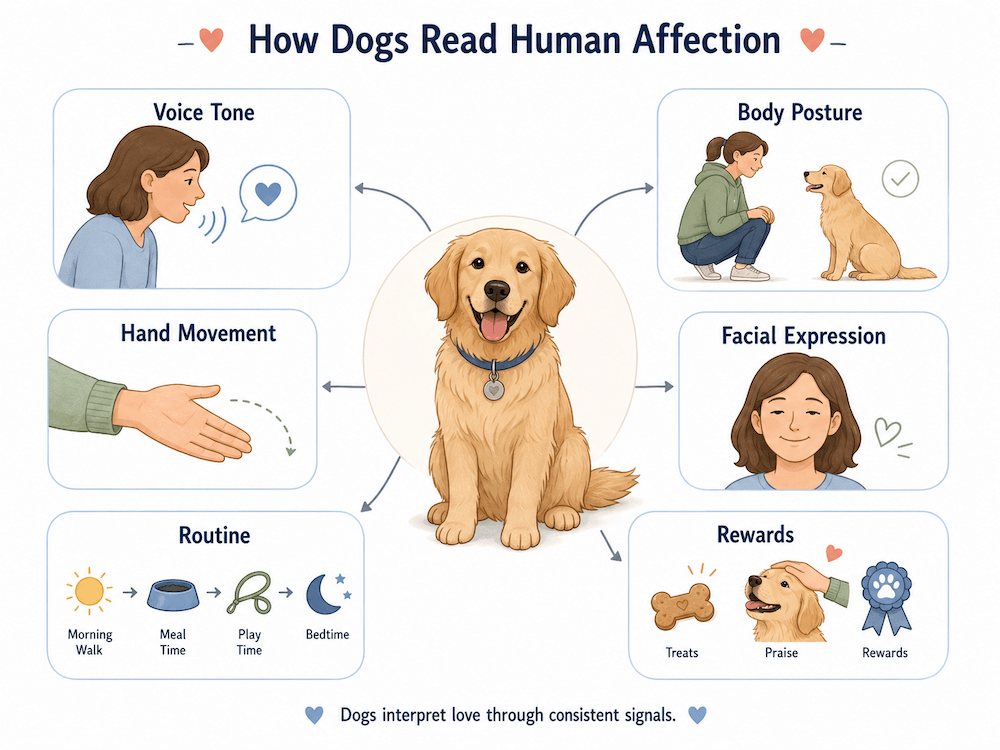
Dogs do not understand love exactly the way people do. They read patterns: your tone, posture, touch, timing, consistency, and response to their body language.
A dog may connect your words with good things over time, especially if “I love you” is said in a warm voice during calm, happy moments. But the phrase itself is not as important as what comes with it. A relaxed dog learns, “This person is safe. Good things happen with them.”
Love also means giving your dog choices when possible. A dog who can move away, pause, sniff, rest, or ask for more affection is more likely to enjoy being close to you.
Does My Dog Understand When I Say “I Love You”?
Your dog may not understand the phrase “I love you” as a human sentence, but he can learn that those words predict something positive. If you say it in a calm voice while giving gentle affection, a treat, a walk, or relaxed attention, the phrase becomes part of a loving routine.


Tone matters. A soft, warm voice is usually easier for dogs to process than loud, excited, or squealing affection. For sensitive dogs, quiet love often lands better than big emotional displays.
You can absolutely say “I love you” to your dog. Just make sure your body language says the same thing: relaxed shoulders, soft hands, no looming, no grabbing, and no pressure to interact.
The Best “Love Language” Depends on Your Dog
Some dogs love touch. Others love play, food rewards, sniffing, training, or simply being near you. The most loving approach is the one your dog actually enjoys.
A senior dog may prefer a slow walk and a soft bed. A young sporting dog may feel loved through fetch, training games, and outdoor time. A shy rescue dog may need space, patience, and predictable routines before cuddling feels safe.


| Dog Preference | Loving Choice | Watch For |
|---|---|---|
| Cuddly dog | Offer gentle petting and quiet couch time. | Stop if he stiffens or turns away. |
| Playful dog | Use tug, fetch, chase, or puzzle games. | Keep arousal from getting too intense. |
| Food-motivated dog | Use treats for training and calm rewards. | Keep portions balanced with meals. |
| Independent dog | Offer companionship without constant touching. | Do not take quiet affection personally. |
| Nervous dog | Use routine, distance, and soft praise. | Avoid forced greetings or hugging. |
| Senior dog | Prioritize comfort, gentle walks, and rest. | Watch for pain, stiffness, or fatigue. |
| Puppy | Use short training, play, naps, and handling practice. | Avoid overstimulation and rough handling. |
8 Ways to Tell Your Dog You Love Him Every Day
The best love signals are simple, repeatable, and easy for your dog to understand. You do not need to do everything at once. Choose the actions your dog clearly enjoys and build them into daily life.
Can You Tell a Dog You Love Him With Eye Contact?
Soft eye contact can feel bonding when your dog chooses it. Many dogs enjoy brief, relaxed eye contact with their trusted person, especially during calm interaction, praise, or training.
But staring is different. Hard, prolonged eye contact can feel threatening to some dogs, especially nervous dogs, unfamiliar dogs, or dogs guarding food, toys, or space. Keep your face relaxed, blink naturally, and look away often.
A good rule is to let your dog set the tone. If he looks at you with soft eyes and a loose body, you can smile gently and praise him. If he turns away, stiffens, or avoids your gaze, give him space.
How to Show Love Through Training and Boundaries
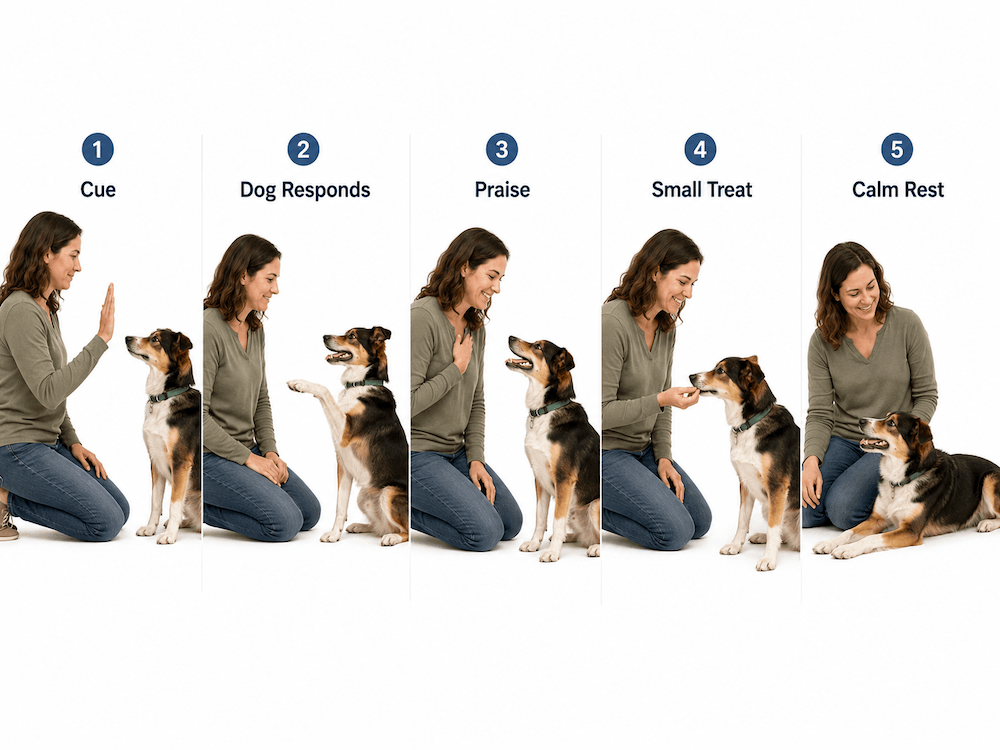
Training is one of the clearest ways to say “I love you” because it helps your dog understand what works. Reward-based training gives your dog a safe way to learn, earn rewards, and communicate with you.
Boundaries can also be loving. A dog who knows where to rest, how to greet people, when meals happen, and what behavior earns attention often feels more settled than a dog living with constant mixed signals.
Keep sessions short and positive. One to five minutes of easy practice can be more useful than a long session that ends in frustration.
How to Tell If Your Dog Feels Loved and Comfortable
A dog who feels safe with you usually has loose, easy body language. He may choose to come near you, rest close by, bring a toy, look at you softly, or relax enough to sleep in your presence.
Not every loving dog is clingy. Some dogs show affection by following you from room to room, while others simply nap nearby or check in briefly during the day.
| Dog Signal | What It Often Means | Owner Response |
|---|---|---|
| Loose body | Your dog is relaxed and comfortable. | Continue calmly and avoid sudden excitement. |
| Soft eyes | Your dog feels safe and connected. | Use gentle praise or quiet presence. |
| Leaning in | Your dog may want more contact. | Pet briefly, then pause to check. |
| Bringing toys | Your dog may be inviting shared play. | Play a short, positive game together. |
| Resting nearby | Your dog enjoys your presence without pressure. | Let him relax without constant handling. |
| Turning away | Your dog may need a break. | Stop touching and give space. |
| Lip licking | Your dog may feel unsure or stressed. | Pause and lower the intensity. |
| Freezing | Your dog may feel trapped or uncomfortable. | Stop immediately and create distance. |
How to Tell Your Dog You Love Him Without Overwhelming Him
Affection should feel like an invitation, not a trap. Many dogs enjoy petting, but they may not enjoy tight hugging, face-to-face pressure, being held still, or being kissed near the face.
A simple “consent check” can help. Pet your dog for a few seconds, then pause. If he leans in, nudges your hand, or stays loose and close, he may want more. If he turns away, ducks, licks his lips, yawns, stiffens, or walks off, let him have space.
Mistakes That Can Make a Dog Feel Less Loved
Most affection mistakes come from good intentions. The problem is that some human displays of love can feel intense, confusing, or threatening to a dog. The safest rule is simple: if your dog is trying to move away, let him. Trust grows faster when your dog learns that you listen.
| Mistake | Why It Can Backfire | Better Choice |
|---|---|---|
| Forced hugs | Some dogs feel trapped when restrained. | Offer petting and let him move freely. |
| Face kissing | Close face contact can feel threatening. | Use soft praise or shoulder petting instead. |
| Loud excitement | High energy can overwhelm sensitive dogs. | Keep greetings calm and low-pressure. |
| Ignoring signals | Stress signs can escalate if dismissed. | Pause when he turns away or stiffens. |
| Punishing warnings | Growling is communication, not disobedience. | Create space and identify the trigger. |
| Too many treats | Overfeeding can harm weight and health. | Use tiny rewards or meal portions. |
| Skipping exercise | Bored dogs may become frustrated or restless. | Match activity to age, breed, and health. |
| Inconsistent rules | Mixed messages can create confusion. | Keep cues, routines, and boundaries predictable. |
When Affection Changes May Need a Veterinarian or Behavior Professional
A change in how your dog receives affection can be a clue. Dogs may avoid touch because of pain, skin problems, dental disease, ear pain, arthritis, anxiety, fear, or a stressful event.
Call for help if affection suddenly becomes difficult, your dog seems painful, or normal handling triggers fear or aggression. A veterinarian can rule out health problems, while a qualified reward-based trainer or veterinary behavior professional can help with fear, anxiety, or handling sensitivity.
Veterinary Evidence Behind How Dogs Bond With People
A 2015 study in Science described an oxytocin-related feedback loop between dogs and owners during mutual gaze. In plain terms, calm, familiar eye contact may support bonding when the dog is comfortable and chooses the interaction; it does not mean owners should force staring or face-to-face pressure.[1]
A PLOS ONE study on the secure base effect found that dogs can use their owners as a source of security during problem-solving and exploration. This supports the everyday idea that love is not only affection; it is also being a reliable, safe presence your dog can return to.[2]
The Merck Veterinary Manual lists fear and anxiety signs in dogs that can include low body posture, vocalization, yawning, lip licking, and other stress-related behaviors. This matters because loving interaction should stop or soften when a dog shows discomfort, rather than pushing through the warning signs.
The American Veterinary Society of Animal Behavior recommends reward-based training methods for dog training and behavior modification. This supports using praise, food, play, and calm guidance to build trust instead of relying on punishment, intimidation, or painful tools.
How to Keep Showing Your Dog Love Every Day
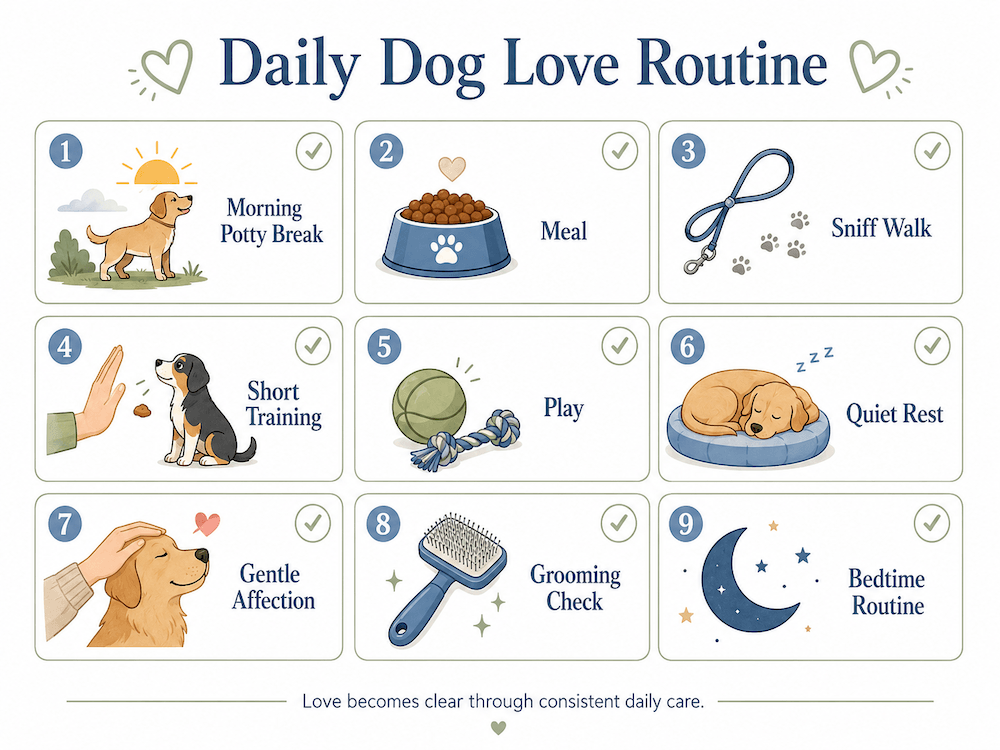
The best follow-up is consistency. Keep offering your dog the kind of affection he enjoys, while also meeting his needs for sleep, exercise, food, enrichment, health care, and calm companionship.
A good sign is that your dog stays loose, seeks you out, recovers quickly after excitement, and seems comfortable during normal routines. If your dog becomes more avoidant, clingy, reactive, or sensitive to touch, adjust your approach and look for stress, pain, or changes in the home.
Frequently Asked Questions
The Bottom Line
Telling your dog you love him is less about saying the perfect words and more about showing consistent care in ways he understands. Calm praise, gentle touch, play, sniff walks, training rewards, and predictable routines all help your dog feel safe and connected to you. The best kind of affection is the kind your dog chooses to receive, so always watch his body language and respect when he needs space. Avoid forcing hugs, kisses, or intense attention if they make him uncomfortable. A strong bond grows through trust, patience, and everyday moments that tell your dog he is protected and understood. When you meet his physical, emotional, and social needs, you are speaking his language clearly. In the end, love is something your dog feels through your actions every day.