What Does It Mean When Your Dog Stares at You? Common Reasons & Meaning


Canine Bible is reader-supported. We receive affiliate commissions via some of our links. Learn more.
When your dog stares at you, they are usually trying to communicate, whether they want attention, food, guidance, affection, or simply to understand what you are doing. In many cases, prolonged eye contact can also reflect a strong bond and close attention to your behavior. However, not every stare means the same thing, and your dog’s body language provides important clues about their intentions. A relaxed gaze can be very different from a hard, fixed stare paired with stiffness or tension. Dogs may also stare when they are confused, anxious, waiting for a cue, or hoping you will give them something they want. Some staring behaviors are perfectly normal, while sudden or unusual staring can occasionally point to a medical or behavioral concern. Understanding the context behind your dog’s gaze can help you tell whether they are showing affection, asking for something, feeling uncomfortable, or trying to send you a more important message.
Do Dogs Communicate When They Stare at You? The Truth
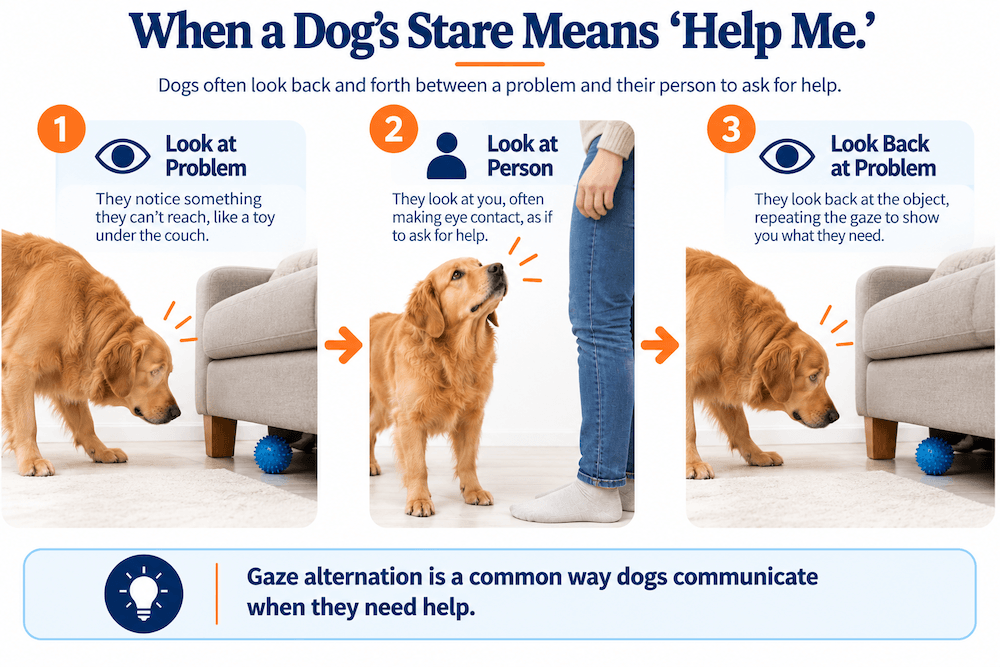
Yes. Dogs can use staring as part of intentional social communication, especially when they are trying to get a person’s attention or direct them toward something. One common pattern is gaze alternation, where a dog looks back and forth between a person and an object, door, toy, or problem—essentially using eye contact to recruit human help or attention.
A study found that dogs were more likely to alternate their gaze between a person and an unsolvable task when an attentive human was present. This “audience effect” suggests that dogs do not simply look at people randomly; they can adjust their gaze depending on whether someone is available to respond.[1] In practical terms, a dog staring at you and then looking toward a desired object may be actively communicating a request rather than simply watching you.
16 Common Reasons Dogs Stare at You
Dogs stare for many different reasons, ranging from ordinary social communication to requests, emotional responses, and occasionally medical concerns. The best clue is usually the combination of body language, context, and what happens immediately before and after the stare.
1. Affection and Social Bonding
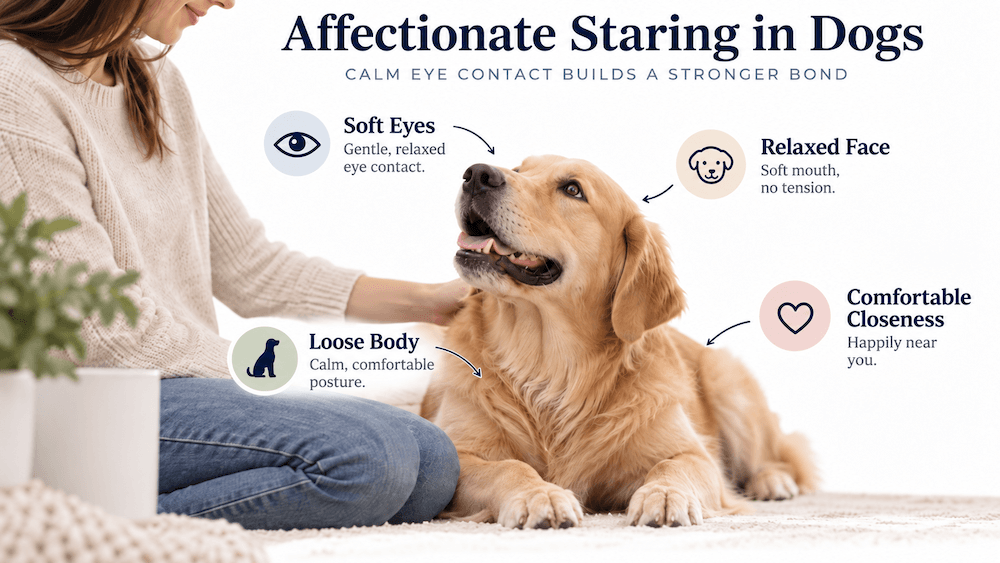
A relaxed gaze can be part of normal affectionate interaction between a dog and a trusted person. Look for soft eyes, a loose face, and relaxed posture rather than intense or rigid staring.


2. Wanting Attention
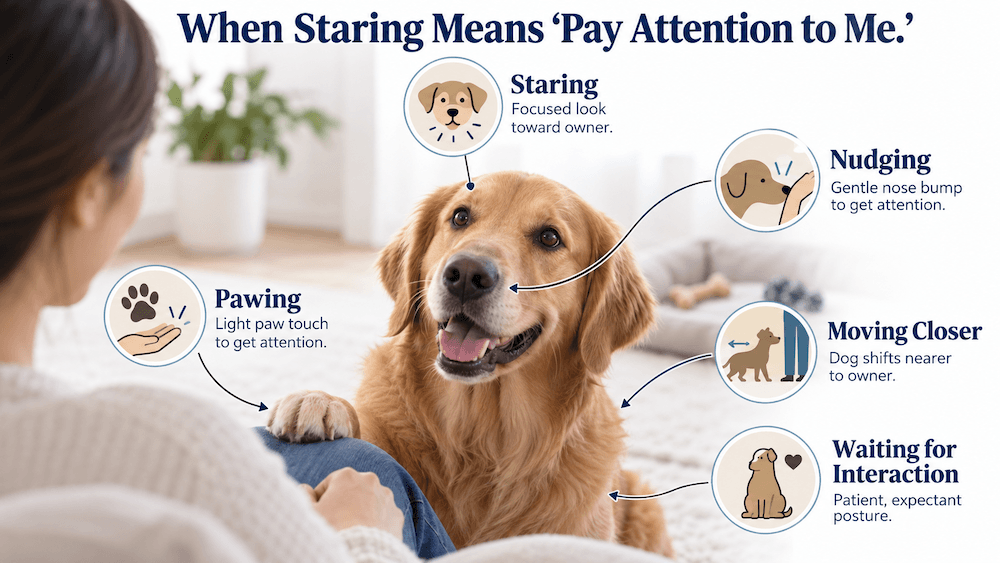
Staring is an effective way to get a person to notice, pet, or interact with a dog. Pawing, nudging, leaning, or moving closer may accompany the gaze.
3. Hoping for Food
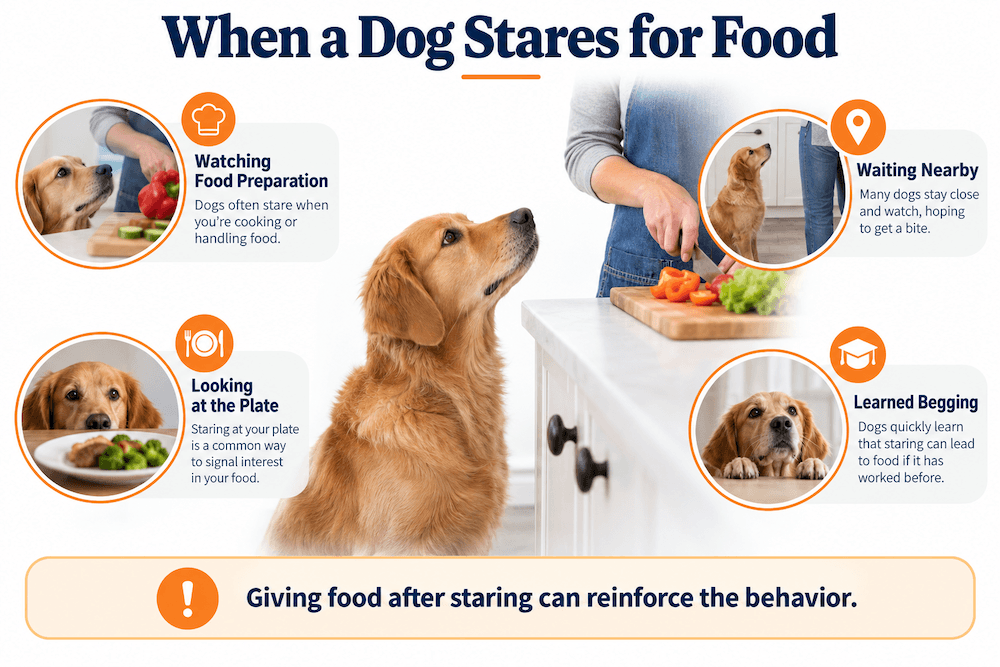
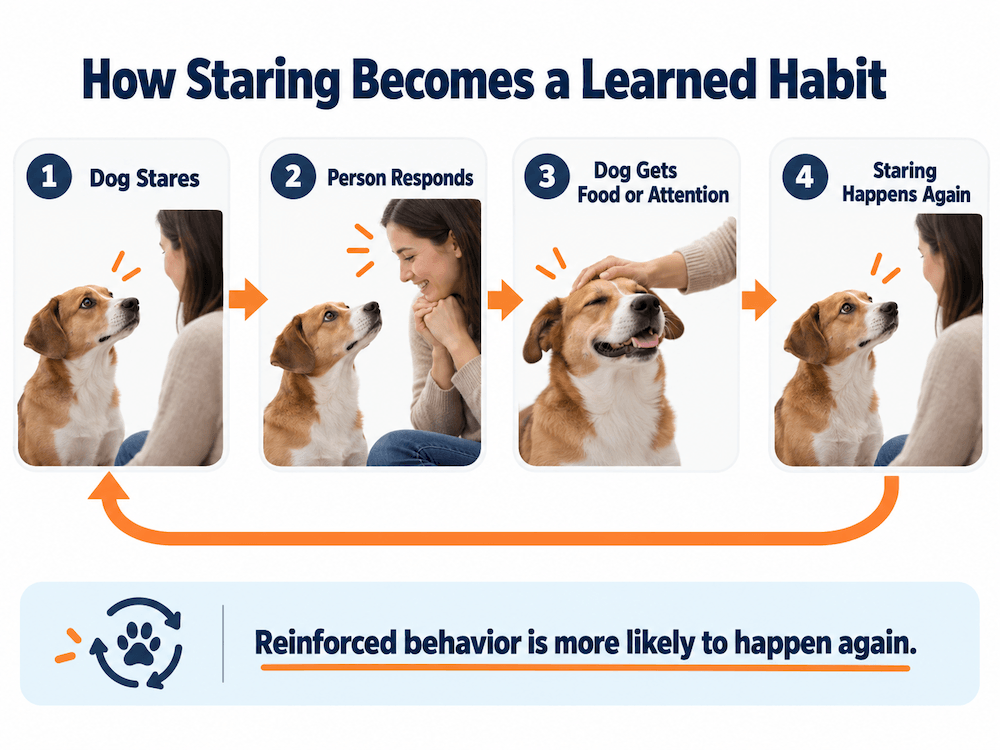
Dogs often stare when people are eating or preparing food because they have learned that food sometimes follows. The behavior can become stronger when staring or begging is occasionally rewarded.
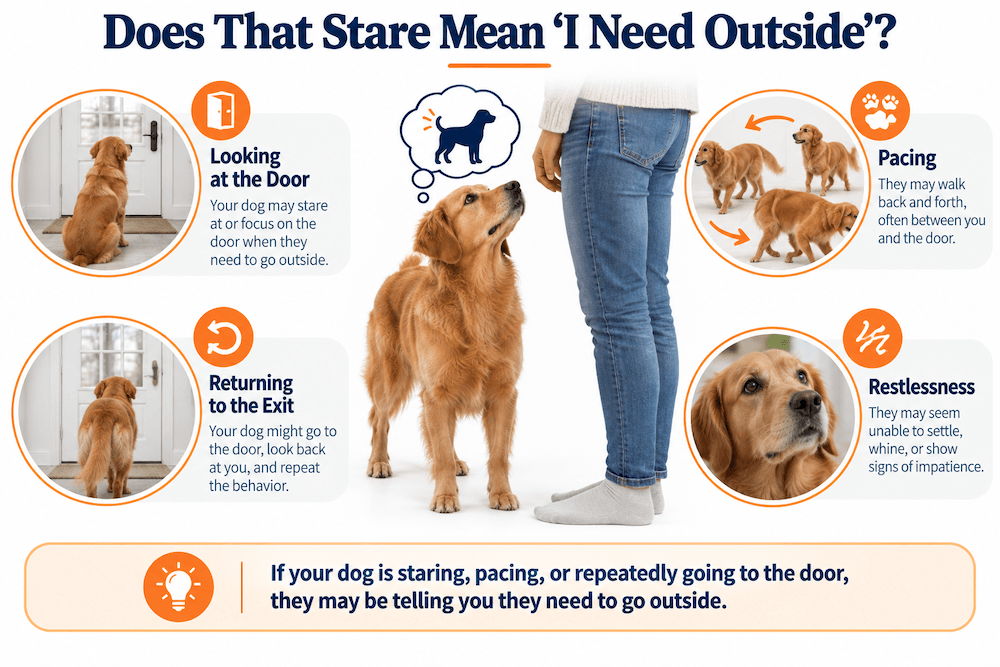
4. Needing a Bathroom Break
A prolonged look may be a simple request to go outside. Dogs may also glance toward the door, pace, circle, or return repeatedly to the same location.
5. Wanting to Play
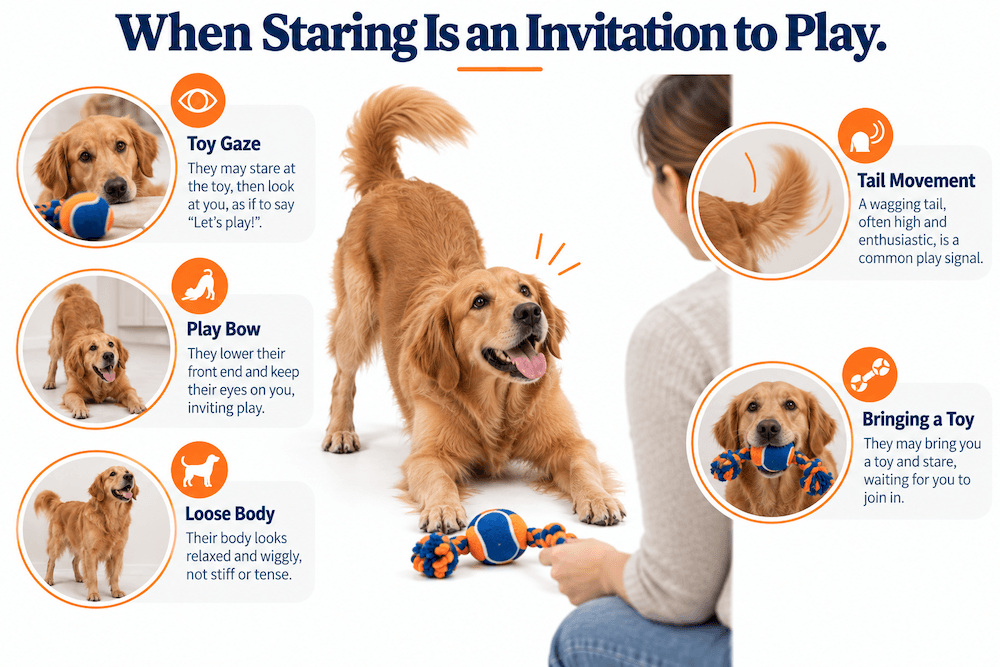
A playful stare may be an invitation to interact. The dog may look between you and a toy, bring an object over, bow, or display energetic but loose body language.
6. Asking for a Walk or Exercise
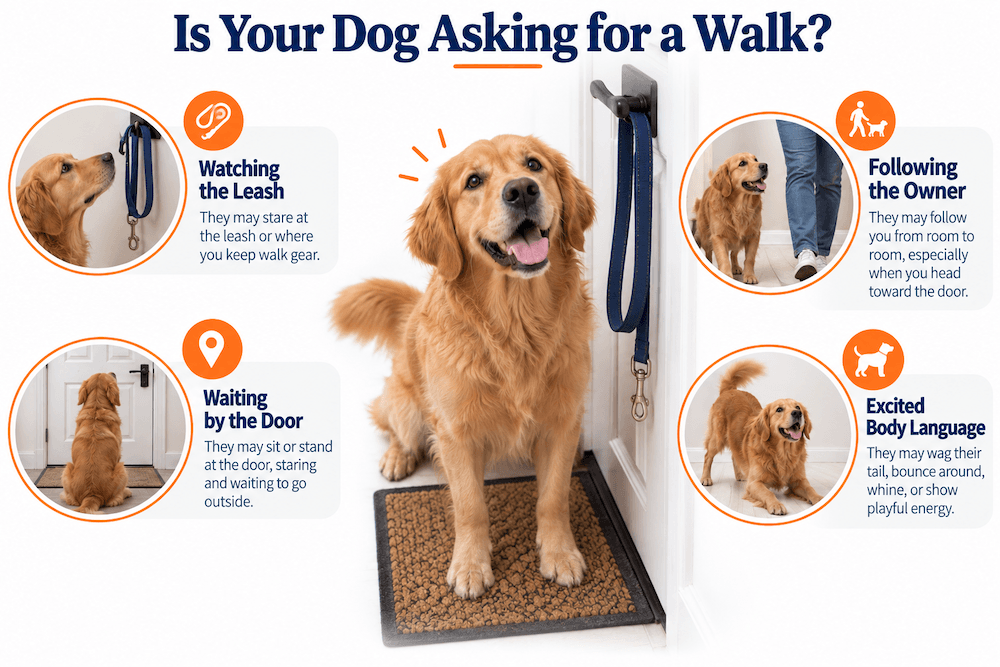
Some dogs stare when they expect physical activity or want to go outside. Standing near the leash, door, shoes, or other familiar walking cues can make the meaning clearer.
7. Waiting for a Cue
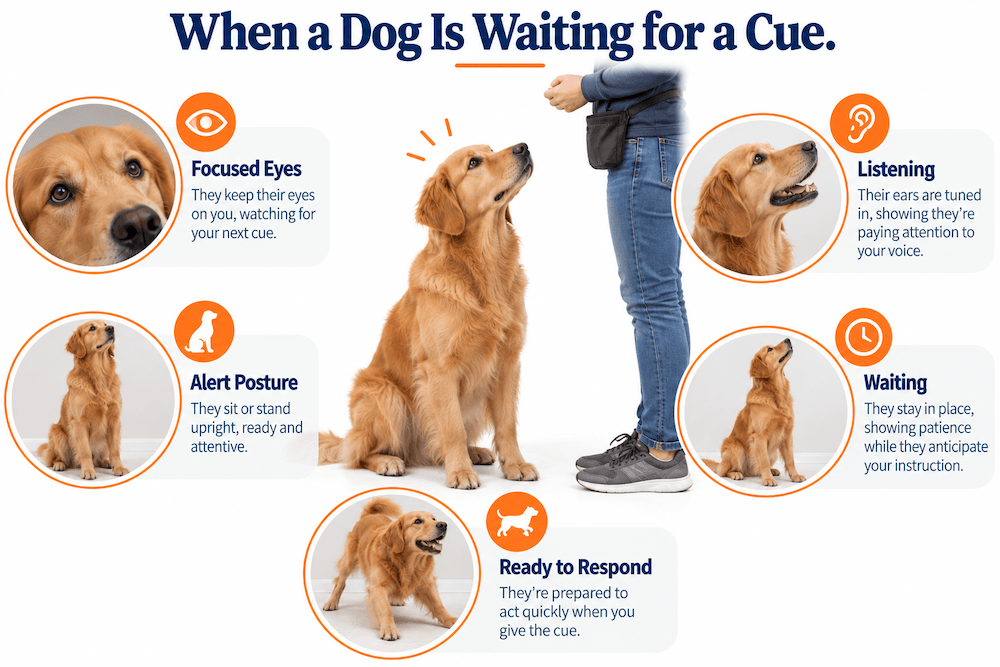
During training or familiar routines, focused eye contact can mean the dog is waiting for information. This type of gaze is often attentive rather than demanding.


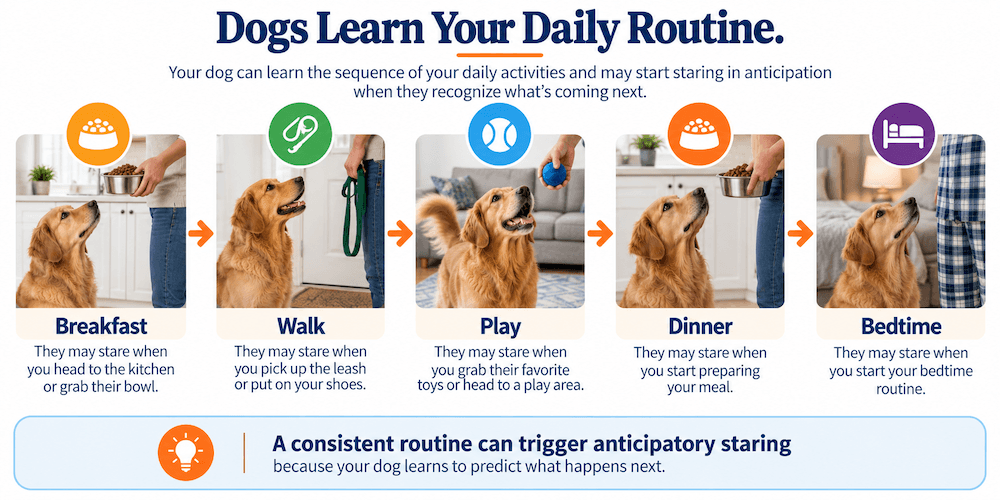
8. Anticipating a Familiar Routine
Dogs become highly sensitive to patterns such as feeding times, walks, bedtime, and departures. A stare at the usual time may simply mean, “Isn’t it time yet?”
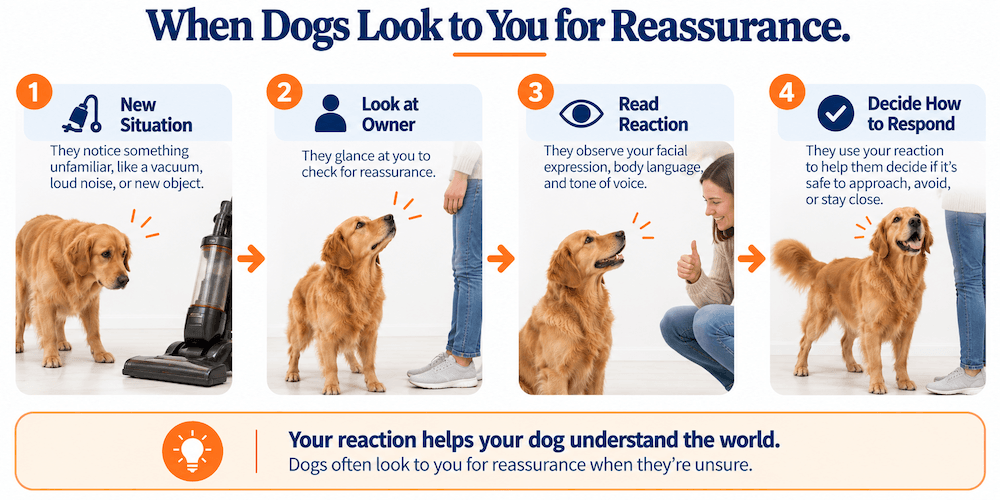
9. Seeking Reassurance
An uncertain dog may look toward a familiar person when something new or confusing happens. The gaze can function as a way of checking how you are reacting to the situation.
10. Asking for Help
Dogs sometimes alternate their gaze between a person and something they cannot reach or solve. A toy under furniture, closed door, empty water bowl, or inaccessible object may be the target.
11. Reading What You Are About to Do
Dogs pay close attention to human movement, posture, clothing, and habits. Staring while you put on shoes, grab keys, or pick up a bag may mean they are predicting what happens next.

12. Learned Begging
Staring can become a learned behavior when it reliably produces food, petting, play, or another reward. Even occasional success can encourage the dog to keep trying.
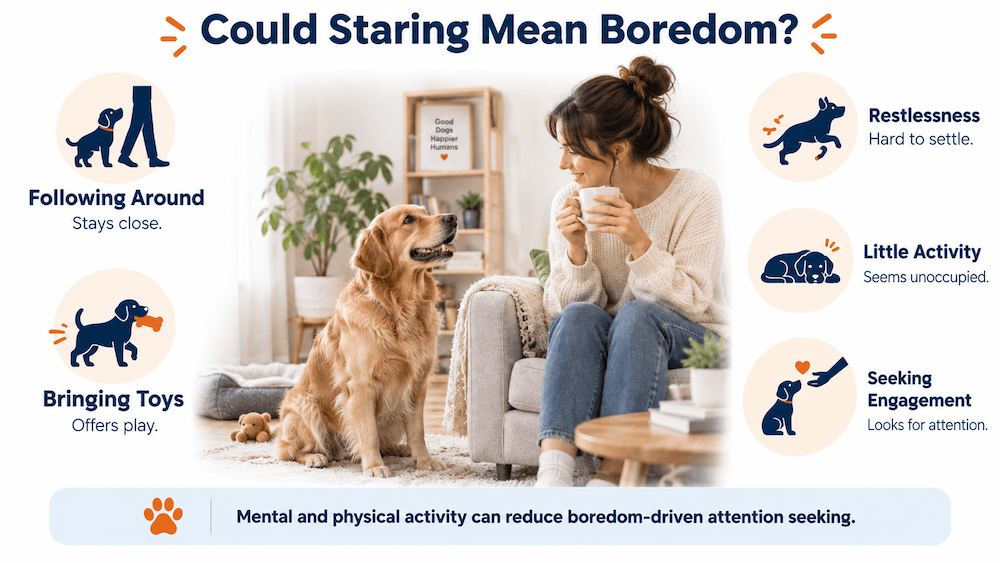
13. Boredom or Need for Stimulation
A dog with little to do may stare because they are waiting for interaction or activity. This is more likely when staring occurs alongside restlessness, following people around, or repeatedly bringing toys.
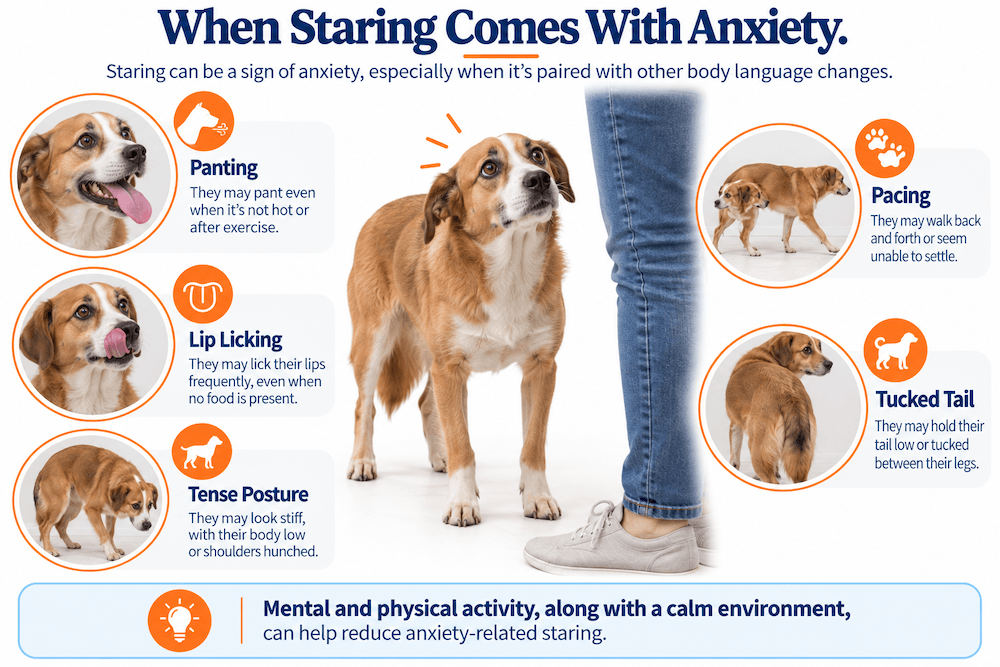
14. Anxiety or Uncertainty
Staring can occur when a dog feels unsure about a person, sound, environment, or event. Look for accompanying signs such as panting, pacing, lowered posture, tucked tail, lip licking, or muscle tension.
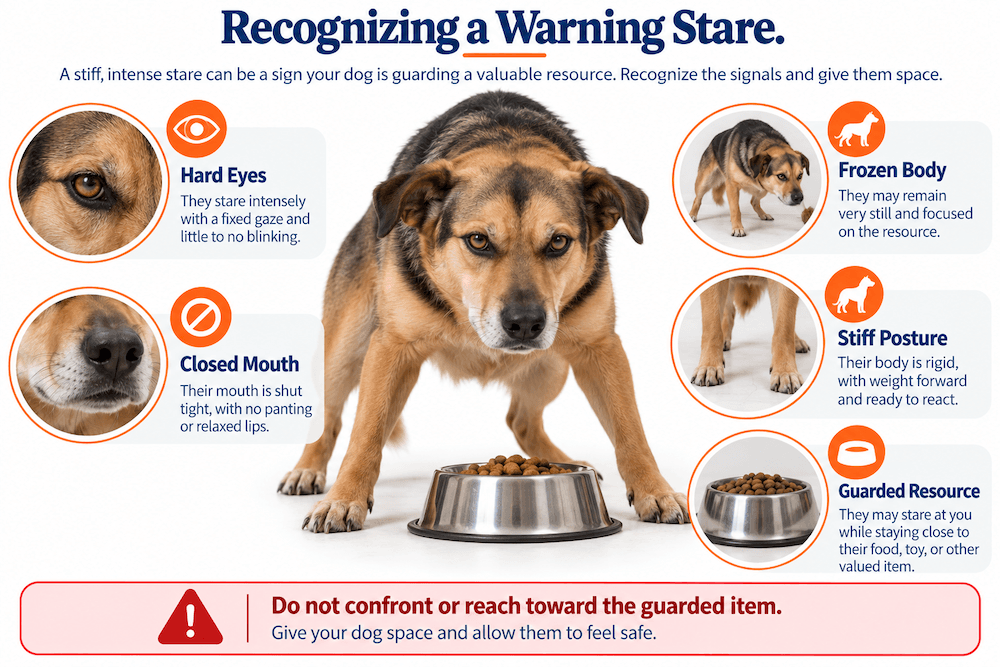
15. Guarding or Warning
A fixed, hard stare paired with a stiff body can signal discomfort, conflict, or resource guarding. Avoid approaching, reaching for the guarded item, or deliberately staring back.
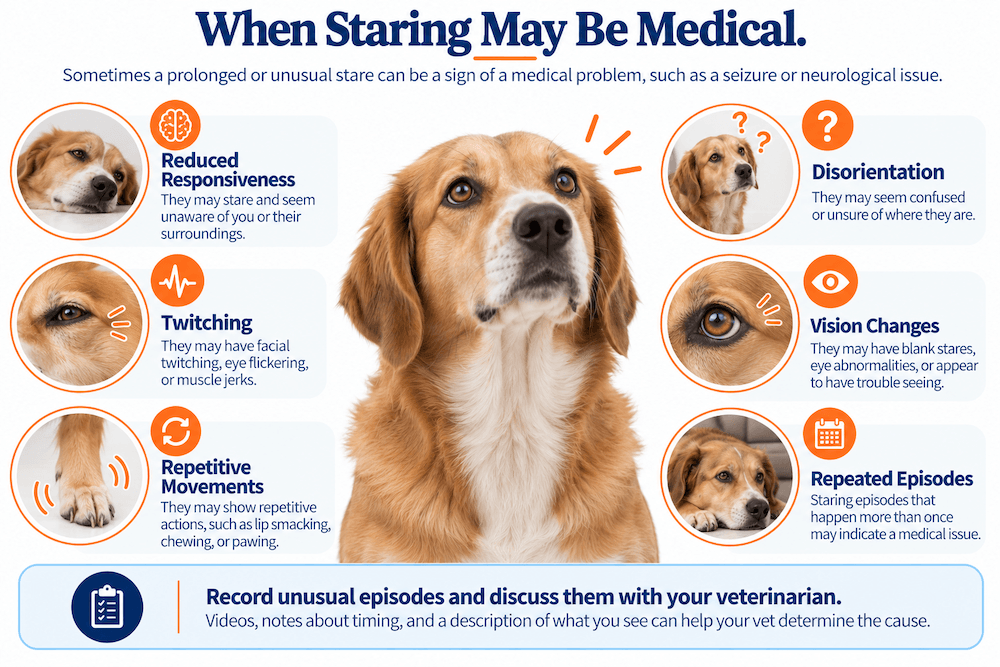
16. A Possible Medical Problem
Staring that looks blank, repetitive, or disconnected from the surroundings should be interpreted differently from normal social staring. Episodes accompanied by reduced responsiveness, twitching, unusual movements, vision changes, or disorientation can warrant veterinary evaluation.
How to Tell What Your Dog’s Stare Means
Start with the whole dog rather than the eyes alone. Posture, facial tension, surroundings, and what happened immediately before the stare can dramatically change its meaning.
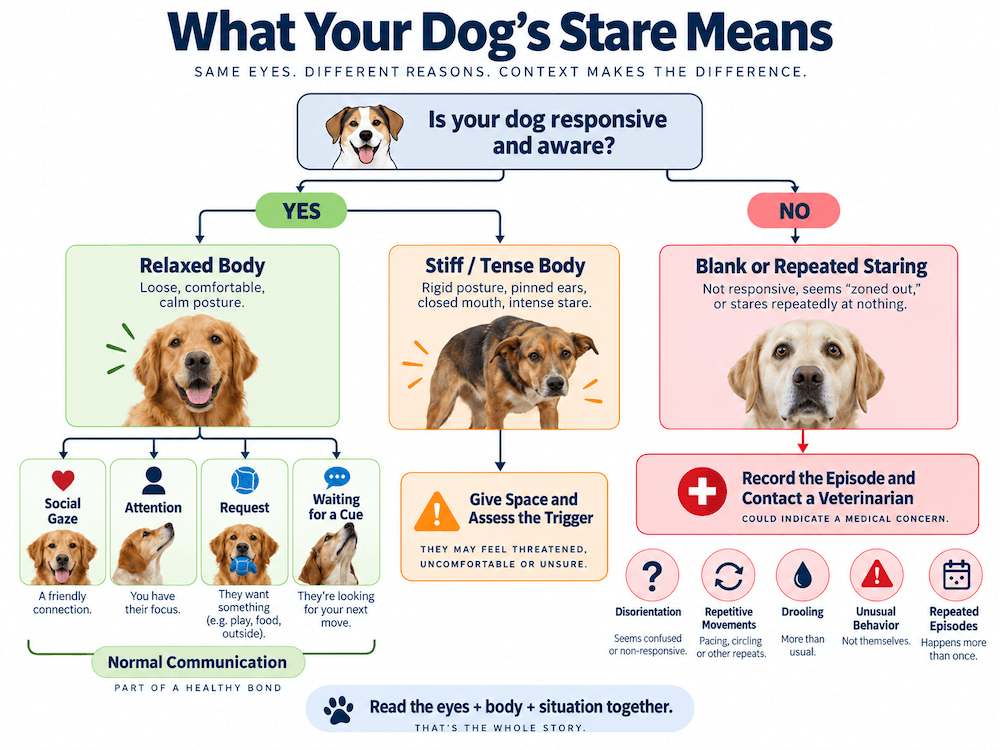
Soft Gaze vs. Hard Stare vs. Blank Stare
Not all eye contact should be treated the same. These three patterns are particularly useful for owners to recognize.
| Type of Stare | Typical Body Language | Likely Interpretation | Owner Response |
|---|---|---|---|
| Soft gaze | Relaxed eyes, loose face and body | Comfort, attention, or social interaction | Normal interaction is usually appropriate. |
| Focused stare | Alert but otherwise relaxed posture | Waiting, watching, or requesting something | Check the situation before responding. |
| Hard stare | Fixed eyes, stiff body, closed mouth | Stress, guarding, conflict, or warning | Increase distance and avoid confrontation. |
| Blank staring | Reduced response or apparent disconnection | May warrant medical evaluation if recurrent | Record details and discuss with your veterinarian. |
Never assume a hard stare means your dog is being stubborn or trying to “dominate” you. If the dog is guarding food, a toy, resting space, or another resource, do not stare back, reach toward the item, or force an interaction.
When Dog Staring May Signal a Medical Problem
Most staring is behavioral, but new, unusual, or repetitive staring can occasionally point to a medical problem—especially when awareness, movement, vision, or orientation also changes.
| Warning Sign | What It May Suggest | What to Do |
|---|---|---|
| Staring into space | Possible altered awareness or neurological episode. | Record when it happens and how long it lasts. |
| Staring at walls | May occur with disorientation, vision loss, or cognitive decline. | Arrange a veterinary check if new or repeated. |
| Reduced responsiveness | May indicate impaired awareness rather than normal attention. | Check response to voice and surroundings. |
| Twitching or unusual movements | Can occur with focal seizure activity. | Video the episode and contact a veterinarian. |
| Senior-dog disorientation | May be consistent with cognitive dysfunction. | Watch for sleep, house-training, or navigation changes. |
| Vision changes | Poor vision may cause fixed looking or spatial confusion. | Note bumping, hesitation, or trouble in dim light. |
| Repeated unexplained episodes | Recurrent events deserve medical investigation. | Schedule a veterinary evaluation and bring video if possible. |
Dog Staring in Different Situations: What It Means
The timing of the behavior often explains more than the staring itself.
A dog may also alternate their gaze between you and another object—a toy under the couch, for example. That pattern can function much like a request: look at me, then look at what I want.
Does Your Dog Stare Because They Love You?
Sometimes affection and social bonding are part of the explanation, particularly when the dog voluntarily makes gentle eye contact while remaining relaxed. Dogs are unusually attentive to human faces, gaze, gestures, and emotional cues compared with many other animals.
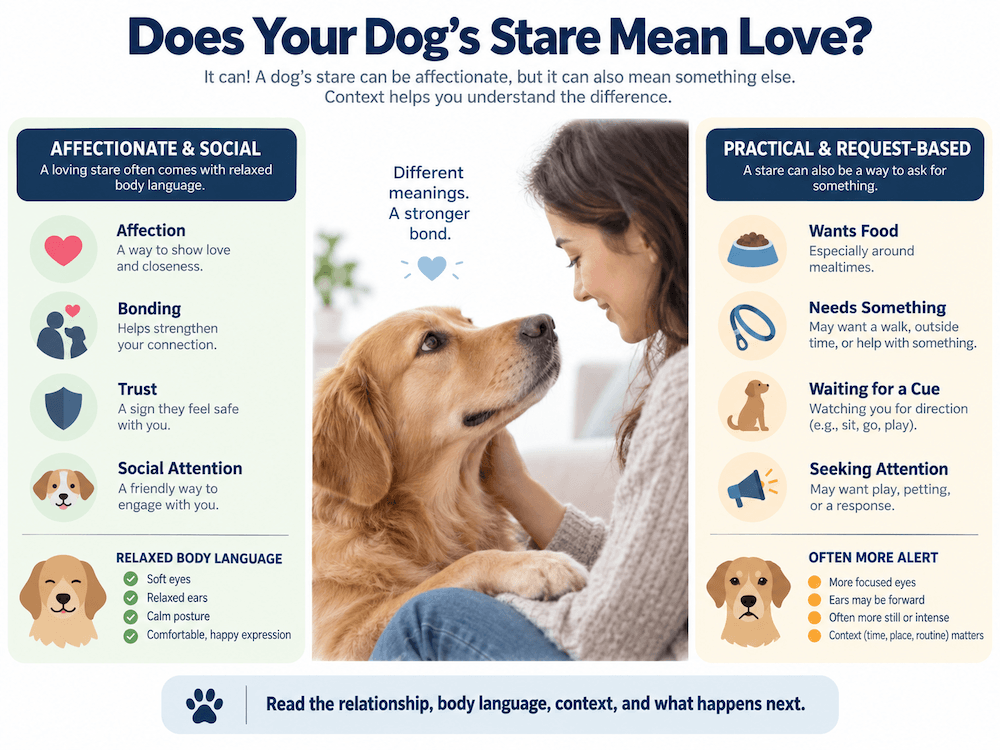
But staring should not automatically be translated as “I love you.” Dogs also gaze when seeking food, information, access, assistance, or attention. The most accurate interpretation comes from combining relationship, body language, context, and what the dog does next.
What You Should Do When Your Dog Stares at You
You do not need to respond to every stare. Instead, determine whether your dog is communicating something useful or has simply learned that staring makes humans react.
Eye contact can also be deliberately taught as a training behavior. Keep sessions voluntary and rewarding rather than holding your dog’s head or forcing prolonged eye contact.
What You Should Not Do When Your Dog Stares at You
Avoid treating every stare the same way. The safest response depends on whether the dog looks relaxed, demanding, anxious, tense, or unusually unresponsive.
| What Not to Do | Why | Better Response |
|---|---|---|
| Stare back at a tense dog | Direct eye contact may increase conflict. | Turn slightly away and create space. |
| Reach toward a guarded item | A hard stare may signal resource guarding. | Back away and avoid confrontation. |
| Punish the staring | Punishment can increase fear or uncertainty. | Identify what is triggering the behavior. |
| Force prolonged eye contact | Some dogs find sustained staring uncomfortable. | Keep eye contact voluntary and brief. |
| Reward every demand stare | Attention or treats can strengthen begging. | Reward calm, appropriate requests instead. |
| Assume every stare means affection | Staring can have many different meanings. | Read posture, context, and facial tension. |
| Ignore obvious needs | Staring may signal a bathroom or practical need. | Check water, toileting, and routine needs. |
| Corner a stiff or anxious dog | Removing escape options can increase stress. | Give room to move away comfortably. |
| Dismiss unusual blank staring | Repeated episodes can have medical causes. | Record episodes and contact a veterinarian. |
What Research Says About Dogs Staring at Humans
Dogs appear to use gaze as an important part of communication with people. A 2016 study published in Behavioural Processes found that owners’ direct gaze increased certain attention-seeking behaviors in dogs, including looking toward their owners’ faces. This supports the idea that dogs are sensitive to whether people are visually attending to them.[2]
Studies of social referencing have also found that dogs frequently look toward people when faced with uncertain situations. In one experimental study, most dogs looked back toward their owner after encountering an unfamiliar object, suggesting that human reactions can provide dogs with information about their environment.[3]
A well-known 2015 Science study by Nagasawa and colleagues found an association between mutual dog-owner gaze and changes in oxytocin under experimental conditions. The finding supports a biological connection between some forms of mutual gaze and dog-human affiliation, although it should not be interpreted to mean that every stare is an expression of love.[4]
Veterinary evidence also explains why abnormal staring deserves attention. The Merck Veterinary Manual includes staring among behaviors that can occur with focal neurological disorders, while research on canine cognitive dysfunction has identified staring into space among behavioral changes seen in some affected older dogs. More recently, a 2026 veterinary case series documented recurrent staring among behavioral signs associated with suspected focal impaired-awareness seizures in three dogs.
Frequently Asked Questions
The Bottom Line
When your dog stares at you, the behavior usually reflects communication, attention, anticipation, affection, or a request for something. The meaning becomes much clearer when you consider the dog’s body language, surroundings, and what happens immediately before and after the stare. Soft eyes and a relaxed posture generally point to comfortable social interaction, while a hard stare and stiff body deserve more caution. Dogs can also learn that eye contact is an effective way to get food, attention, help, or guidance from people. Unusual staring into space, reduced responsiveness, or staring accompanied by abnormal movements should be treated differently from ordinary social gaze. Senior dogs with new staring and disorientation may also benefit from veterinary assessment. Ultimately, understanding the whole context is the best way to determine what your dog is trying to communicate.
Want to better understand the ways your dog communicates? Read our guides on how to tell your dog you love them, what it means when a dog licks you, what different dog sounds mean, and how to pet a dog while reading their body language.