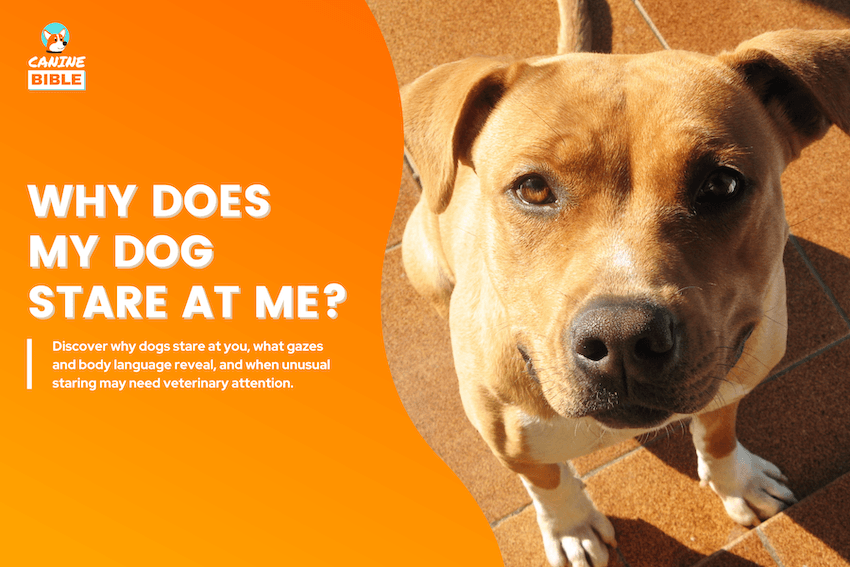
Why Does My Dog Stare at Me? 13 Reasons, Meanings & When to Worry

Canine Bible is reader-supported. We receive affiliate commissions via some of our links. Learn more.
Whether your dog watches you from across the room, follows your every move, or locks eyes with you for seemingly no reason, that steady gaze can leave you wondering what they’re trying to communicate. Sometimes, the meaning seems obvious, but other times, the behavior can be surprisingly difficult to interpret. Does staring mean your dog loves you, wants something, or is trying to tell you something important? And why do some dogs maintain prolonged eye contact while others rarely look directly at their owners? Understanding the difference between relaxed, attentive staring and more intense or unusual gazes can reveal important clues about your dog’s behavior. In this guide, we’ll explore what different types of staring may mean, how context and body language change their interpretation, and when your dog’s gaze deserves closer attention.
Is It Normal for Your Dog to Stare at You?
Staring is a normal part of canine communication, especially between dogs and people who interact regularly. Unlike dogs communicating with unfamiliar animals, where prolonged direct eye contact can sometimes be threatening, dogs often learn that looking toward familiar humans produces useful information or positive interactions. Many dogs naturally watch their owners throughout the day without showing any signs of distress.
However, not every stare is directed at the same thing. A dog may look directly into your eyes, focus on your hands, follow your movements, or appear to stare past you. The direction and quality of the gaze can help distinguish purposeful attention from simple visual tracking or an unusual change in awareness.
How Dogs Use Eye Contact to Communicate
Dogs use eye contact and visual cues to communicate, recognize familiar routines, and anticipate human actions. Their responses are shaped by experience and learning, making certain looks more meaningful over time.
| Communication Mechanism | How It Works | Example |
|---|---|---|
| Reading facial expressions | Dogs observe human faces for social information. | Watching an owner’s expression during interaction. |
| Following body language | Movement and gestures provide clues about upcoming actions. | Responding when an owner reaches for a leash. |
| Recognizing learned cues | Repeated experiences give familiar visual signals meaning. | Associating a hand signal with a command. |
| Learning through reinforcement | Rewarding outcomes encourage dogs to repeat eye contact. | Looking at an owner after receiving attention previously. |
| Individual communication styles | Dogs differ in their reliance on visual communication. | Some watch closely; others vocalize or initiate contact. |
13 Reasons Why Your Dog Stares at You
Your dog’s staring behavior can have several distinct explanations, ranging from normal social communication to responses influenced by their environment or health. Some forms of eye contact develop through repeated interactions, while others reflect immediate emotional or physical conditions. Recognizing the underlying motivation helps you understand what your dog may be communicating and whether the behavior needs attention.


1. To Express Affection and Social Connection
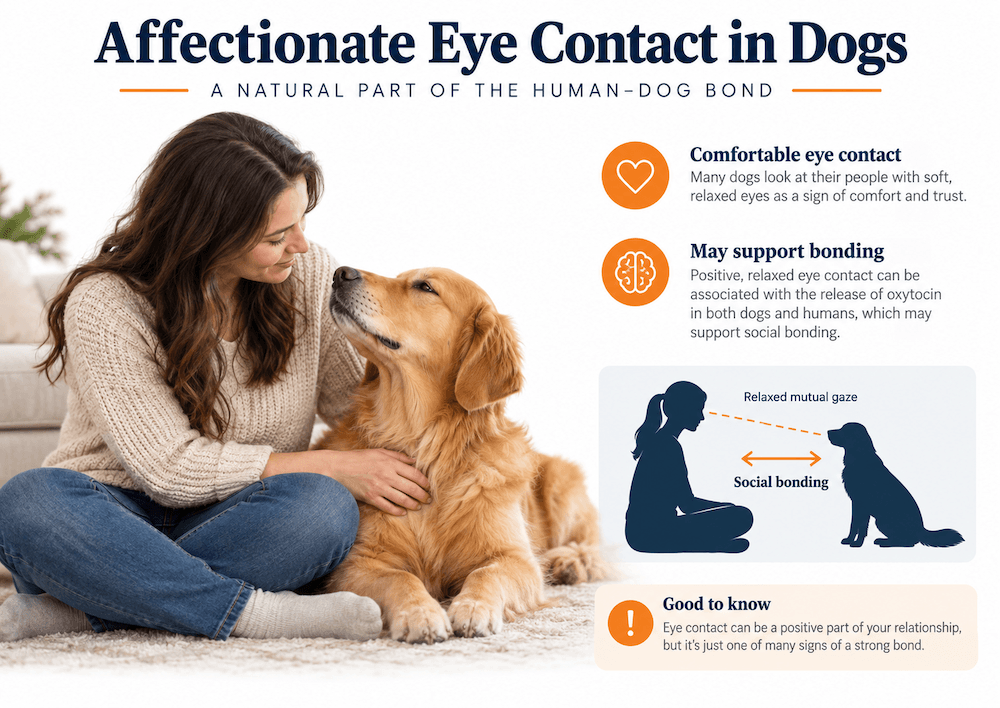
Dogs sometimes maintain relaxed, affectionate eye contact with familiar people during comfortable social interactions. Mutual gazing can engage biological systems associated with social bonding, including oxytocin activity, although eye contact alone cannot prove a specific emotion. A dog resting beside you with soft eyes, relaxed muscles, and comfortable body language may simply enjoy the interaction and your presence.
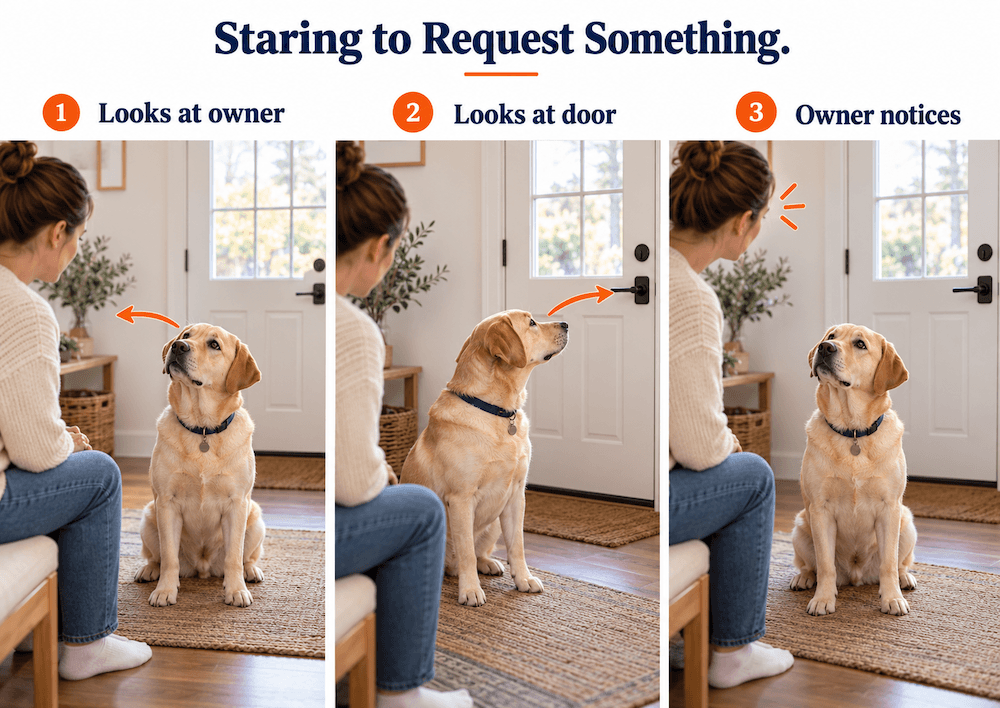
2. To Ask for Food, Water, or Something They Need
Dogs may use goal-directed staring to communicate that they want access to something their owner controls. If looking toward you has previously resulted in dinner, a drink, or an opened door, that successful outcome can reinforce the behavior. You might notice your dog alternating its gaze between your face and a food bowl, water dish, or doorway to draw attention to a specific need.
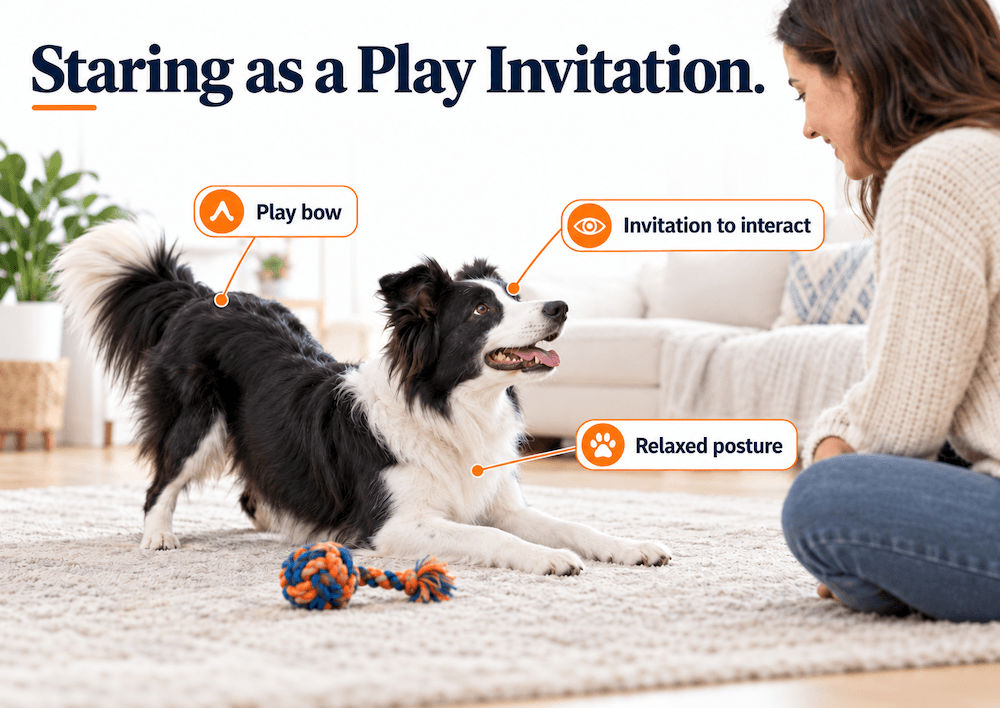
3. To Invite Attention, Affection, or Play
Some dogs learn that looking directly at their owner initiates social interaction, especially when a stare is followed by petting, talking, or playtime. Unlike a request for a particular resource, the desired outcome here is engagement with the person. A dog may stare while approaching with a loose, wagging body, offering a toy, or performing a play bow, making the invitation easier to recognize.
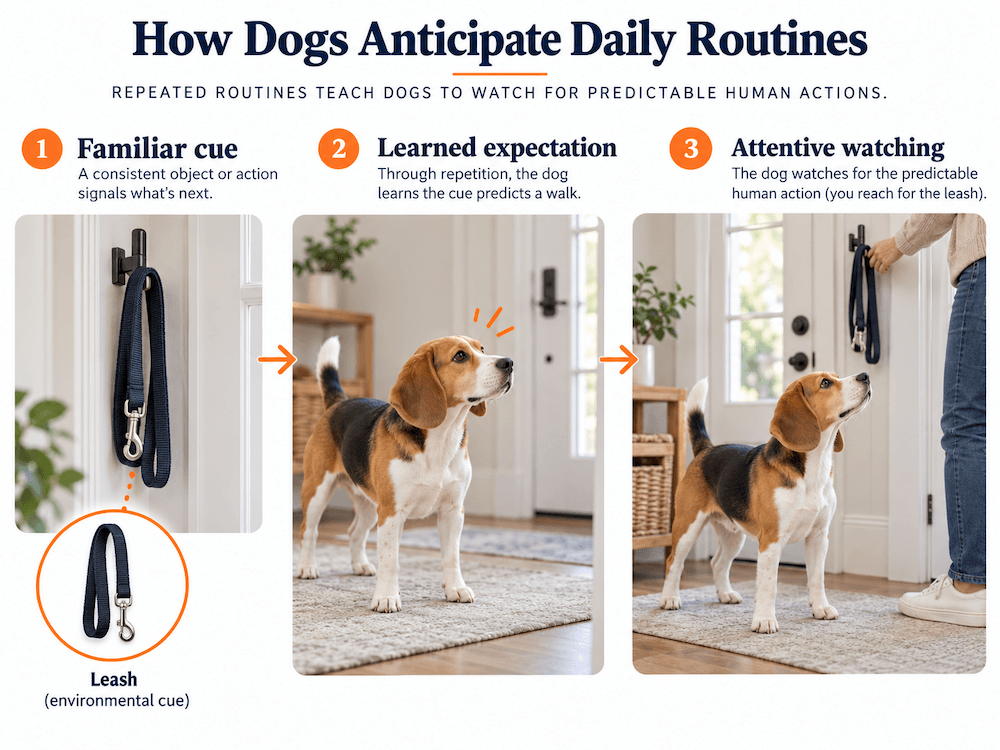
4. To Anticipate Familiar Daily Routines
Dogs become attentive to predictable patterns in their environment, allowing them to anticipate activities associated with recurring sights, sounds, and schedules. Repeated experiences can teach a dog that certain movements, such as approaching a cupboard or picking up shoes, usually precede something meaningful. As a result, your dog may begin staring at you before a walk, meal, or familiar activity, waiting to see whether the anticipated event follows.


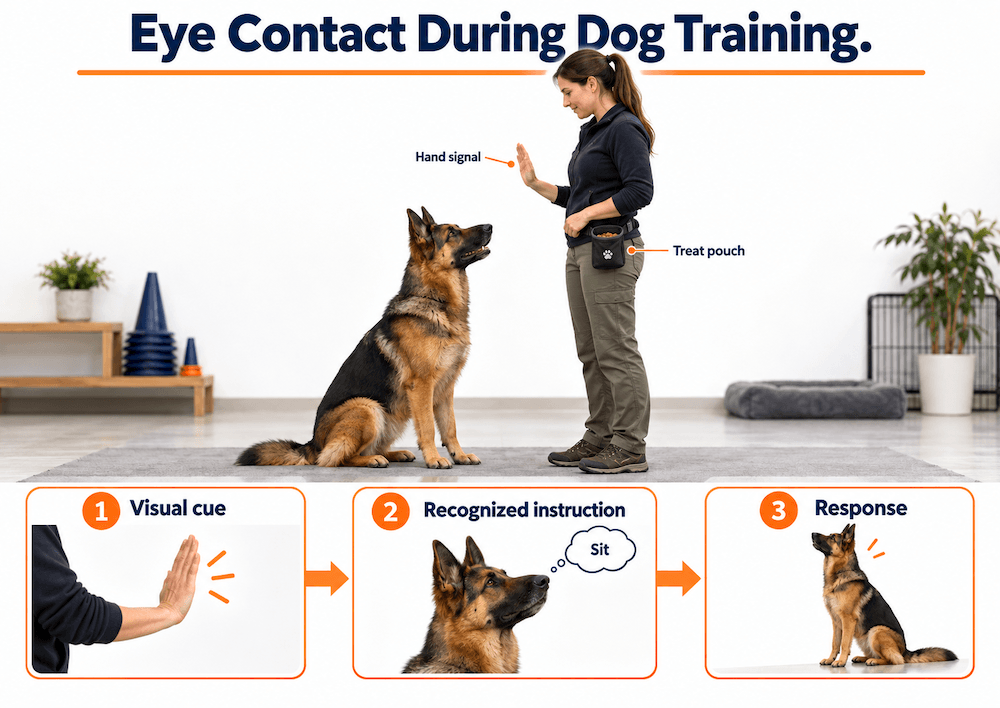
5. To Watch for Commands and Training Cues
Dogs trained to respond to visual or verbal instructions may develop focused attention toward their handlers because watching helps them recognize what to do next. Positive reinforcement strengthens this behavior when responding correctly produces a reward or another enjoyable outcome. This type of staring is particularly noticeable during obedience training, dog sports, or situations where the dog expects a familiar cue.
6. To Seek Information When Something Is Uncertain
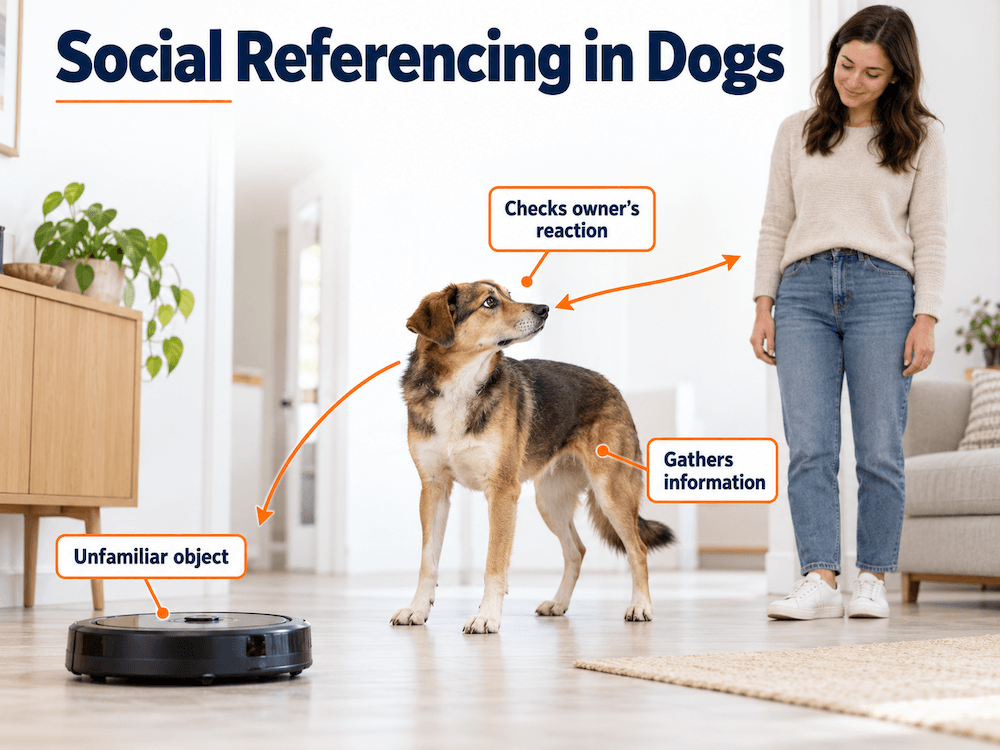
When dogs encounter unfamiliar or ambiguous situations, they may look toward their owners for social referencing, a process in which one individual uses another’s behavior to help interpret an event. A dog might glance between a strange object and its owner, observing the person’s reactions before deciding whether to approach. This behavior can indicate information-seeking, but it does not necessarily mean the dog wants reassurance or understands the owner’s emotions exactly as a human would.
7. To Track Your Movements
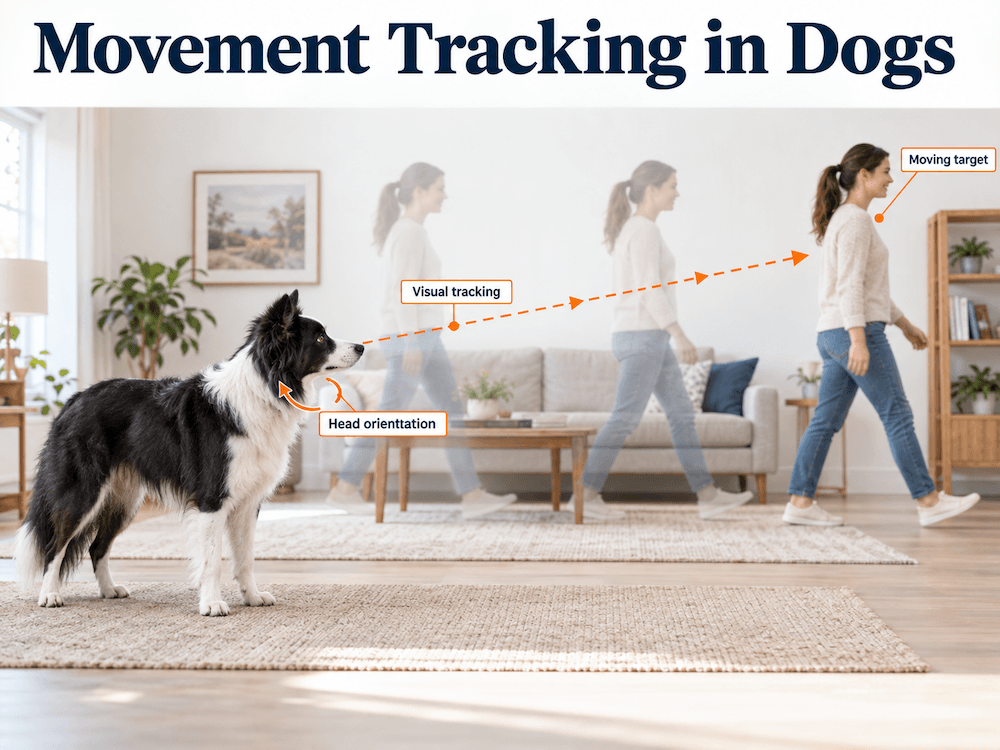
Dogs naturally orient toward movement, and some are especially attentive to human motion and changing body position. This tendency can be particularly noticeable in dogs bred for visually coordinated work, including certain herding breeds, although individual behavior varies considerably. Your dog might follow your movements across a room, watch your feet while you walk, or maintain visual focus as you move around the house without requesting anything specific.
8. To Monitor You When Feeling Anxious
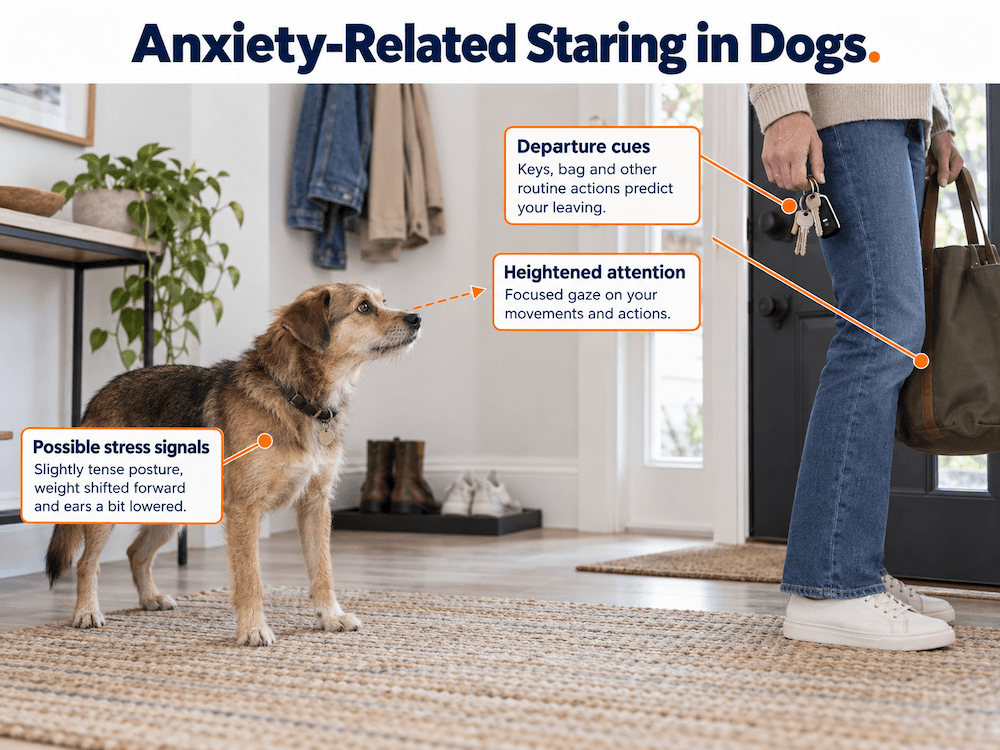
A dog experiencing uncertainty, environmental stress, or separation-related distress may stare at its owner as part of heightened vigilance. The dog may be closely monitoring changes in the person’s behavior, especially when those changes have previously preceded an unsettling experience, such as being left alone. Unlike comfortable eye contact, this gaze may accompany pacing, panting, trembling, whining, or difficulty settling.
9. To Warn You That They Feel Threatened
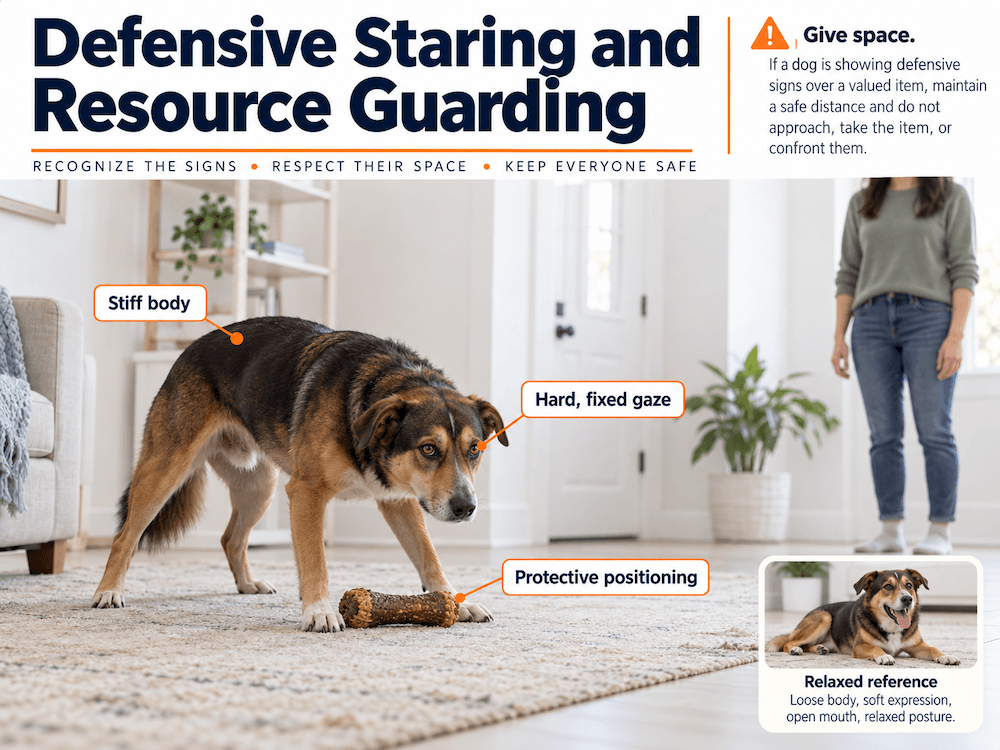
An intense, unblinking stare may form part of defensive or resource-guarding behavior when a dog perceives someone approaching as a threat to its safety or something valuable. The dog’s muscles may stiffen, its mouth may close tightly, and it may freeze over a toy, resting place, or food item. This behavior should not be mistaken for affection or a dominance contest; it may be a warning that the dog needs more space.
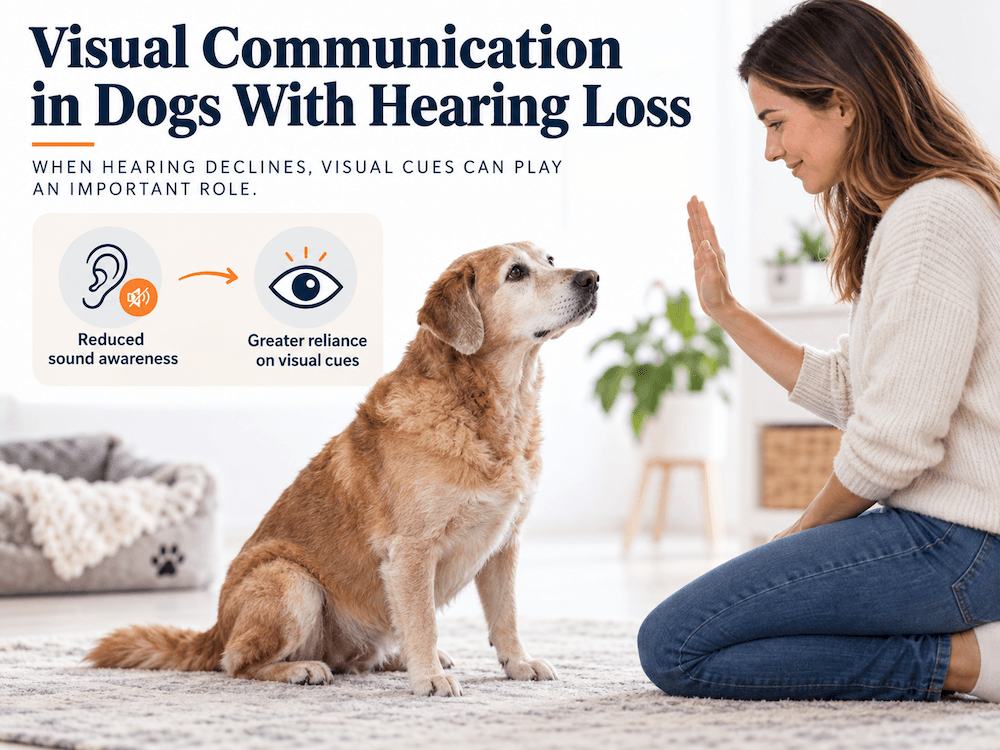
10. To Compensate for Changes in Hearing
A dog with reduced hearing may rely more heavily on visual information from familiar people because spoken cues and environmental sounds are less accessible. This can make watching an owner’s face, hands, or movements especially useful for understanding what is happening. Hearing loss does not automatically cause staring, but a noticeable increase in visual checking combined with reduced responses to familiar sounds may justify a veterinary hearing assessment.
11. To Respond to Physical Discomfort or Illness
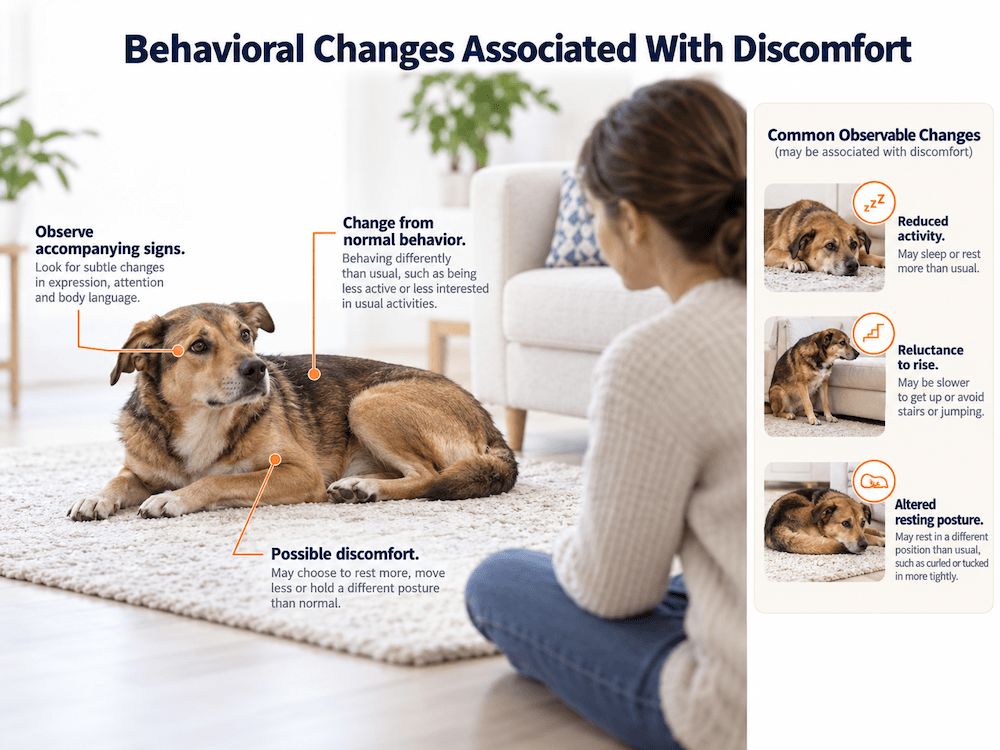
A dog experiencing pain or illness may show changes in normal social behavior, including unusually persistent attention toward its owner, withdrawal, or reduced responsiveness. Some dogs may seek proximity when uncomfortable, while others avoid interaction entirely, so staring is not a reliable standalone sign of pain. If the behavior appears suddenly alongside changes in appetite, movement, posture, or activity, a physical problem deserves consideration.
12. Because of Age-Related Cognitive Changes
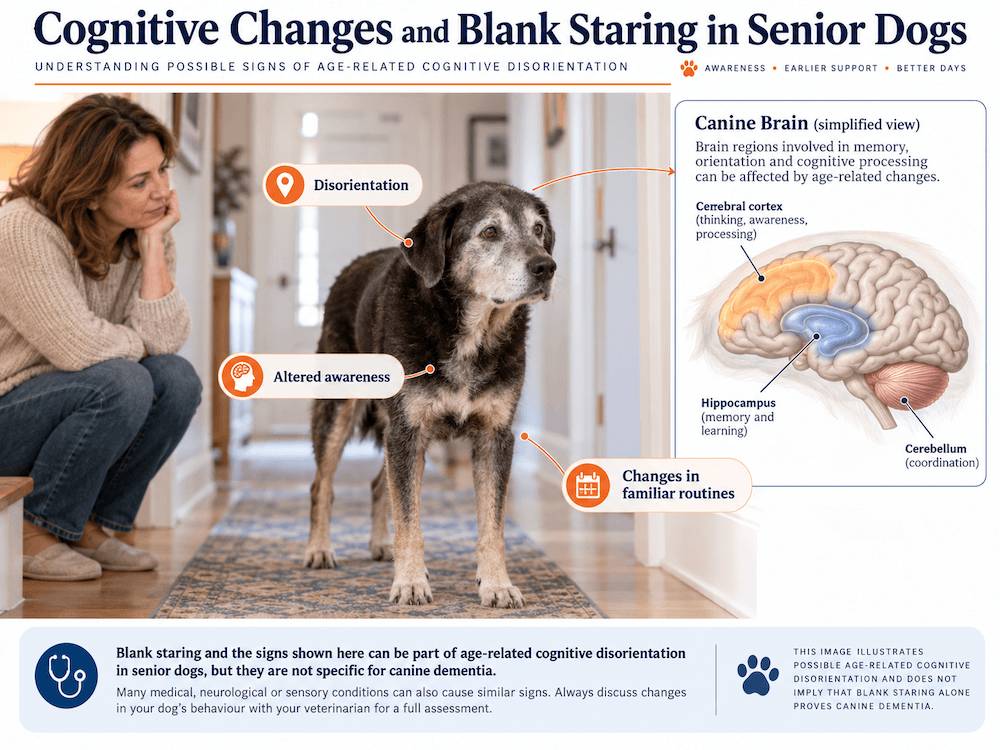
Older dogs can develop canine cognitive dysfunction, a condition involving changes in brain function that affect memory, orientation, sleep patterns, and behavior. Affected dogs may seem to stare blankly toward their owners, beyond them, or at walls without the usual signs of purposeful attention. Episodes accompanied by wandering, getting stuck in corners, nighttime restlessness, or confusion are more concerning than ordinary attentive watching.
13. Because of a Neurological Episode or Altered Awareness
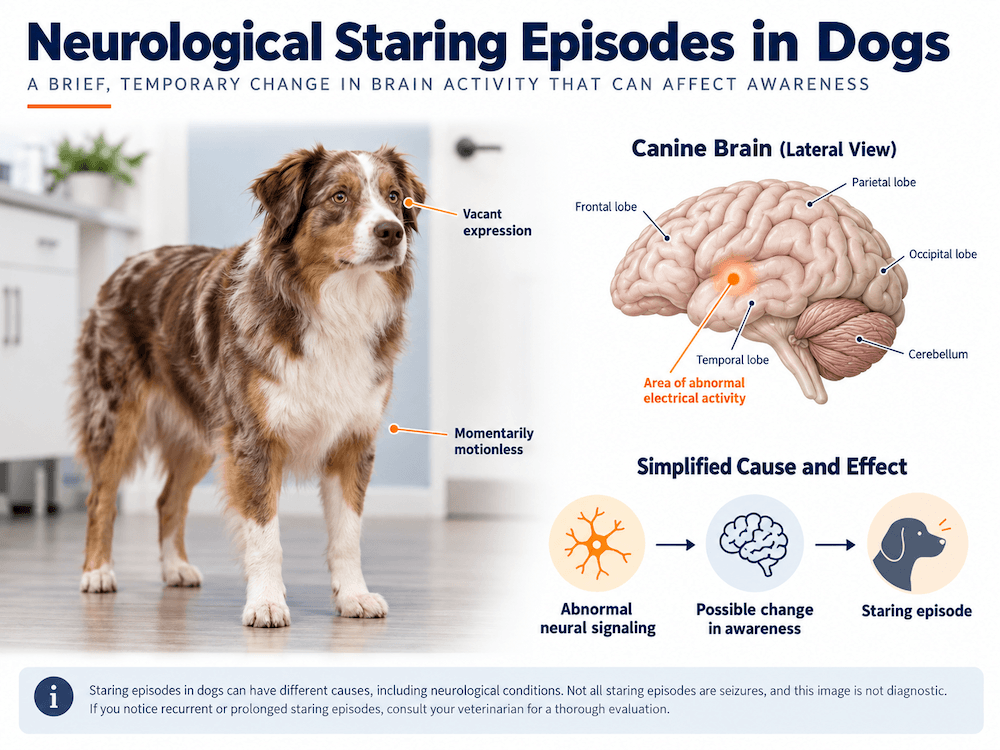
Some neurological conditions, including focal seizures, can produce brief episodes of abnormal awareness or vacant staring that differ from intentional eye contact. Depending on the area of the brain involved, a dog may suddenly become less responsive, freeze, display unusual facial movements, or repeat unexplained behaviors. Unlike an ordinary attentive stare, these episodes may begin and end abruptly and can occur without any apparent interaction with the owner.
Different Types of Dog Staring and What They Mean
Not all canine stares look or function the same way. The most useful clues come from the dog’s eyes, overall posture, responsiveness, and surrounding circumstances, rather than the length of eye contact alone.
| Type of Stare | What It Looks Like | Possible Interpretation |
|---|---|---|
| Soft, relaxed gaze | Soft eyes, loose muscles, comfortable posture. | Often associated with comfortable social interaction. |
| Focused, expectant stare | Alert expression while watching a person or familiar activity. | Waiting for a cue, reward, or anticipated event. |
| Alternating gaze | Looks between a person and an object or location. | May communicate a request or seek information. |
| Playful stare | Focused gaze with bouncing movements or a play bow. | May invite friendly play or interaction. |
| Hard, fixed stare | Unblinking eyes, stiff body, tightly closed mouth. | Possible discomfort or defensive warning. |
| Side-eye or whale eye | Turns head while the whites of the eyes become visible. | May indicate uneasiness, especially alongside tension. |
| Wide-eyed, vigilant stare | Round eyes, tense expression, frequent checking. | Possible fear, uncertainty, or heightened arousal. |
| Blank or unresponsive stare | Vacant expression with unusually reduced responsiveness. | Possible neurological or cognitive concern. |
How to Tell Why Your Dog Is Staring at You
Understanding your dog’s staring behavior starts with observing what happens before, during, and after the stare. The timing, surrounding environment, and your dog’s responsiveness can help identify its likely purpose. Consider the following questions to interpret the behavior without relying on eye contact alone.
| What to Check | What It Can Tell You |
|---|---|
| When does the staring happen? | Repeated timing may reveal a familiar routine or expectation. |
| What happened immediately beforehand? | Your actions or environmental changes may have triggered attention. |
| Are food, toys, or doors nearby? | Nearby resources may explain what your dog wants. |
| Does your dog respond when called? | Normal responsiveness suggests awareness; unusual unresponsiveness needs veterinary attention. |
| Is this behavior new or unusual? | Sudden changes warrant monitoring, especially with other symptoms. |
Why Some Dogs Stare More Than Others
Dogs vary in how often they make eye contact with their owners, and several factors influence their staring behavior. Genetics, age, temperament, training, and past experiences all shape how dogs use visual communication. Understanding these differences can help explain why some dogs watch their owners closely while others rarely maintain prolonged eye contact.
How to Respond When Your Dog Keeps Staring at You
Most ordinary staring does not require correction. Your response should depend on what you want to encourage, whether the dog appears comfortable, and whether the behavior disrupts daily routines. The following approaches can help you maintain clear communication without unintentionally encouraging demanding behavior or making an uncomfortable dog feel threatened.
| Goal | Helpful Approach | What to Avoid |
|---|---|---|
| Encourage healthy communication | Respond consistently to reasonable requests and reinforce clear signals. | Ignoring genuine needs or rewarding every demand. |
| Reduce food-related begging | Reward calm behavior away from the dining table. | Sharing food whenever your dog stares. |
| Build comfortable eye contact | Reward brief, voluntary attention during positive training sessions. | Physically holding the dog’s face toward yours. |
| Respect personal boundaries | Allow your dog to disengage or move away freely. | Forcing prolonged eye contact or approaching a tense dog. |
| Support an uneasy dog | Reduce pressure and provide a calm, predictable environment. | Scolding, cornering, or forcing interaction. |
| Identify unusual changes | Record concerning episodes and note responsiveness and associated symptoms. | Assuming every unusual stare is behavioral. |
When to Call a Veterinarian About Dog Staring
Seek immediate veterinary attention if your dog suddenly becomes unresponsive, collapses, experiences seizure-like movements, or develops serious neurological symptoms alongside abnormal staring. A seizure lasting five minutes or longer, or multiple seizures occurring close together, is a medical emergency. Sudden vision loss, severe pain, or difficulty breathing also requires urgent veterinary assessment.
Schedule a veterinary appointment if your dog’s staring becomes unusually frequent, persistent, or noticeably different from its normal behavior. This is particularly important if the change accompanies disrupted sleep, reduced appetite, difficulty navigating familiar surroundings, or altered social interactions. Senior dogs showing new disorientation or repeated vacant staring should be examined rather than having these changes automatically attributed to normal aging.
A professional veterinary assessment can help distinguish behavioral causes from neurological, sensory, cognitive, or other medical problems. Your veterinarian may recommend a physical examination, neurological assessment, eye examination, or additional diagnostic testing depending on the symptoms. If safe, record unusual staring episodes on video and note their duration, associated movements, and whether your dog responds normally when called.
What Research Says About Dog Staring and Eye Contact
Scientific evidence supports the importance of eye contact in canine social communication, but it does not establish one universal meaning for staring. A 2015 study by Nagasawa and colleagues identified an oxytocin-associated feedback loop during mutual gazing between dogs and their owners. The findings suggest that eye contact can contribute to social bonding, although they do not demonstrate that every prolonged stare reflects affection or that oxytocin changes reveal a dog’s precise emotional state.[1]
A 2012 study by Merola, Prato-Previde, and Marshall-Pescini, published in PLOS ONE, examined how dogs respond to unfamiliar objects and emotional information from people. The researchers documented social referencing behavior, including dogs looking toward people and adjusting their responses in relation to social cues. These findings support the idea that owner-directed gaze can help dogs gather information, rather than simply serving as a request for attention.[2]
Individual differences in eye contact are also supported by experimental evidence. A 2021 study by Bognár and colleagues in Scientific Reports examined 125 companion dogs and found that head shape, breed function, age, and playfulness were associated with how quickly dogs established eye contact with an unfamiliar person. The findings help explain why some dogs appear naturally more visually attentive, but the results do not establish the emotional meaning of an individual dog’s stare.[3]
Frequently Asked Questions
The Bottom Line
Your dog’s stare is best understood as part of a larger conversation, not a message with one fixed meaning. A relaxed gaze may reflect social connection, while a focused look can signal anticipation, learned expectations, or a request for something. The timing, surroundings, and events preceding the behavior often provide important clues about its purpose. Body language and responsiveness help distinguish ordinary attention from stress, discomfort, or unusual changes in awareness. Individual temperament, age, training, and past experiences also influence how frequently dogs watch their owners. Understanding these differences allows you to respond appropriately without misinterpreting your dog’s intentions. Although most staring is harmless, sudden changes or episodes accompanied by concerning symptoms deserve veterinary attention.
To better understand your dog’s communication, explore what dog licking means and learn how to show your dog love in ways they understand. If your dog displays a stiff, intense stare around food or toys, our guide to resource guarding in dogs explains the warning signs. These provide additional insight into canine body language, emotional comfort, and healthy communication.