Arrhythmia in Dogs: Symptoms, Types, Causes, Signs & Prevention

Canine Bible is reader-supported. We receive affiliate commissions via some of our links. Learn more.
Arrhythmia affects approximately 3% of dogs in the general veterinary population, with the risk increasing significantly in senior dogs and those with underlying heart disease. Studies also show that up to 40% of dogs referred for cardiac evaluation are diagnosed with an abnormal heart rhythm. Arrhythmia occurs when the heart beats too fast, too slowly, or irregularly because of abnormalities in its electrical conduction system. While some arrhythmias are harmless and require no treatment, others can reduce blood flow, leading to weakness, fainting, heart failure, or even sudden cardiac death. The good news is that with early diagnosis, appropriate treatment, and regular veterinary monitoring, many dogs with arrhythmias can live active, comfortable lives. This guide covers the causes, symptoms, diagnosis, treatment, prevention, and long-term management of arrhythmia in dogs.
What Is Arrhythmia in Dogs?
Arrhythmia, in simple terms, is an abnormal heart rhythm that causes the heart to beat too fast, too slowly, or irregularly. In dogs, it is most often linked to underlying heart disease, although it can also result from electrolyte imbalances, systemic illness, or inherited conditions. Depending on its severity, arrhythmia may be harmless or reduce blood flow, causing weakness, fainting, or heart failure.
Types
Arrhythmia can take several forms, each with different causes:
| Type | Description |
|---|---|
| Sinus Arrhythmia | A normal variation in heart rhythm commonly seen in relaxed, healthy dogs, especially during breathing. |
| Atrial Fibrillation | A rapid, irregular rhythm originating in the upper chambers (atria), often associated with underlying heart disease. |
| Ventricular Arrhythmias | Abnormal rhythms arising from the ventricles that may reduce the heart’s pumping ability and can be life-threatening. |
| Bradyarrhythmias | Abnormally slow heart rhythms caused by problems with the heart’s electrical conduction system. |
| Tachyarrhythmias | Abnormally fast heart rhythms that may decrease blood flow and place excessive strain on the heart. |
| Conduction Disorders | Conditions such as atrioventricular (AV) block that interfere with the transmission of electrical impulses between the heart’s chambers. |
Predisposed Dog Breeds
Predisposed Dog Breeds


Arrhythmia is commonly associated with underlying heart disease. However, some dogs may be more prone to developing abnormal heart rhythms due to genetic predisposition, breed, or inherited cardiac conditions.
| Size / Group | Breeds | Notes on Risk Factors |
|---|---|---|
| Large & Giant Breeds | Doberman Pinscher, Great Dane, Irish Wolfhound, Newfoundland | Higher risk of dilated cardiomyopathy (DCM), which commonly leads to atrial and ventricular arrhythmias. |
| Working Breeds | Boxer, German Shepherd, Rottweiler | Predisposed to inherited ventricular arrhythmias and cardiomyopathies that may cause fainting or sudden death. |
| Sporting Breeds | Labrador Retriever, Golden Retriever, Cocker Spaniel | May develop arrhythmias secondary to acquired heart disease, especially with advancing age. |
| Toy & Small Breeds | Cavalier King Charles Spaniel, Chihuahua, Miniature Pinscher | Mitral valve disease is common and can increase the risk of atrial arrhythmias as the condition progresses. |
| Sight Hounds | Greyhound, Whippet | Often have naturally slower heart rates; distinguishing normal rhythms from pathological arrhythmias is important. |
| Senior Dogs (All Breeds) | Any breed over 8 years of age | Age-related heart disease and degeneration of the electrical conduction system increase the likelihood of arrhythmias. |
Causes
Arrhythmia in dogs can result from inherited heart conditions, heart disease, electrolyte imbalances, systemic illnesses, medications, or toxin exposure. Identifying the underlying cause is essential, as treatment is most effective when both the arrhythmia and its cause are addressed.
Symptoms
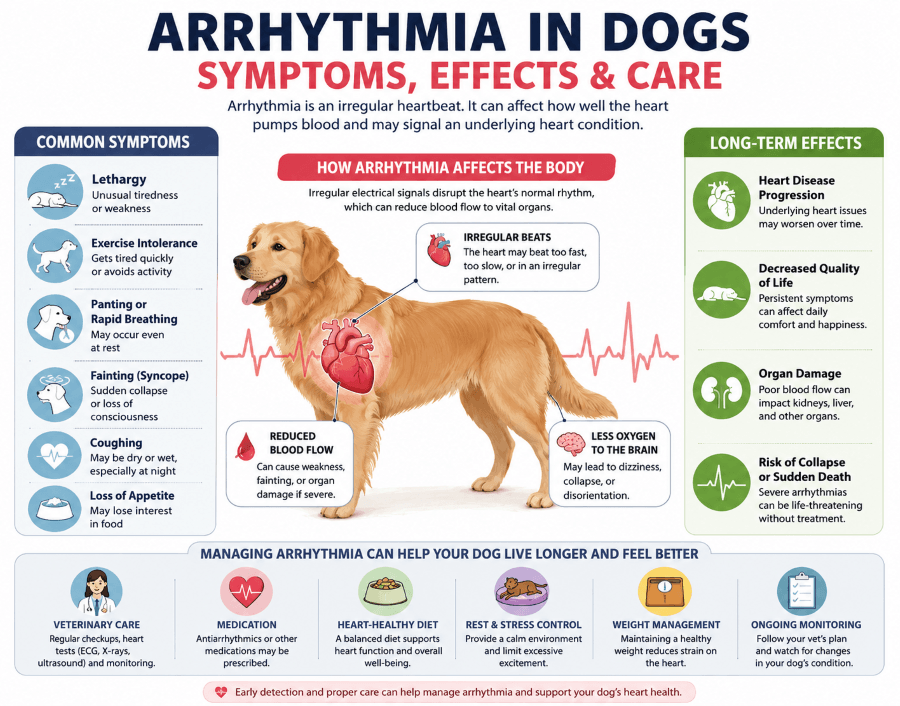
Arrhythmia in dogs is a condition that affects the heart’s normal rhythm and can significantly impact circulation and overall health. Early signs are often subtle—like reduced stamina, weakness, or occasional fainting—but can worsen over time if left untreated.
This visual guide highlights the most common symptoms of arrhythmia and how the condition affects your dog’s body, helping you recognize warning signs early and seek timely veterinary care.


Stages of Arrhythmia
- Early stage: Occasional irregular heartbeat with few or no noticeable signs.
- Moderate stage: Exercise intolerance, weakness, fainting episodes, and reduced stamina.
- Advanced stage: Persistent abnormal heart rhythm, heart failure, collapse, or sudden cardiac death.
Top Ways to Prevent Arrhythmia in Dogs
Because arrhythmia is often linked to underlying heart disease or other medical conditions, early detection and proactive veterinary care are essential. With regular checkups, prompt treatment of underlying illnesses, and ongoing monitoring, many arrhythmias can be effectively managed, helping protect your dog’s heart health and quality of life.
| Prevention Strategy | Why It Helps | How to Do It |
|---|---|---|
| Schedule Regular Veterinary Checkups | Detects heart disease and abnormal heart rhythms before they become serious. | Have annual wellness exams, or every 6 months for senior or high-risk dogs. |
| Feed a Heart-Healthy Diet | Supports cardiovascular function and helps maintain a healthy weight. | Provide a balanced diet with appropriate nutrients and avoid excessive treats or sodium. |
| Maintain a Healthy Weight | Reduces strain on the heart and lowers the risk of cardiovascular disease. | Control portions, encourage regular activity, and monitor body condition. |
| Treat Underlying Medical Conditions | Many arrhythmias develop secondary to heart disease, endocrine disorders, or electrolyte imbalances. | Follow your veterinarian’s recommendations and manage chronic illnesses promptly. |
| Prevent Exposure to Toxins | Certain toxins and medications can interfere with the heart’s electrical activity. | Keep toxic plants, chemicals, and human medications out of your dog’s reach. |
| Monitor Breeds at Higher Risk | Early screening improves the chances of detecting inherited heart conditions. | Discuss ECGs, Holter monitoring, or echocardiograms with your veterinarian if your dog is predisposed. |
| Exercise Appropriately | Regular activity supports cardiovascular health without overloading the heart. | Provide moderate exercise and avoid strenuous activity if your dog has known heart disease. |
Actionable Resources
If you want to prevent, manage, or slow the progression of arrhythmia in your dog, here are some expert-backed resources to explore under veterinary guidance.
How Arrhythmia Is Diagnosed in Dogs
Diagnosing arrhythmia requires a thorough veterinary evaluation to identify the abnormal heart rhythm and determine its underlying cause. Key steps include:
- Physical Examination: A veterinarian checks your dog’s heart rate, rhythm, pulse quality, and listens for heart murmurs or abnormal heart sounds.
- Heart Rhythm Testing:
- Electrocardiogram (ECG): The primary test used to detect and identify abnormal heart rhythms.
- Holter Monitor: A portable 24-hour ECG used to detect intermittent arrhythmias that may not appear during a routine exam.
- Cardiac Imaging: Echocardiography (heart ultrasound) and chest X-rays help identify structural heart disease that may be causing the arrhythmia.
- Laboratory Tests: Blood work, electrolyte testing, thyroid screening, and heartworm testing help identify underlying medical conditions.
- Blood Pressure & Additional Testing: Blood pressure measurement and advanced cardiac testing may be recommended for complex cases.
Early diagnosis is essential because some arrhythmias can progress to heart failure or sudden cardiac death if left untreated. Prompt detection allows for appropriate treatment and improves long-term outcomes.
Treatment & Care
According to current veterinary research, the most effective treatments for arrhythmia in dogs focus on identifying and treating the underlying cause, while controlling abnormal heart rhythms with medications, managing heart disease, and providing ongoing monitoring. In some cases, advanced procedures such as pacemaker implantation may be recommended.
Always consult your veterinarian before starting any treatment or medication for arrhythmia. If your dog develops collapse, fainting, severe weakness, or difficulty breathing, seek emergency veterinary care immediately. If you can’t reach your vet, you can chat live with a registered online veterinary professional via our online vet chat or video chat support (24 hours a day, 7 days a week). Or use Chewy’s online vet services (6 a.m. – midnight ET).
Always work closely with your veterinarian or a board-certified veterinary cardiologist when managing arrhythmia. Regular follow-up examinations, ECG or Holter monitoring, medication adjustments, and treatment of underlying heart disease are essential for improving your dog’s quality of life and reducing the risk of serious complications.
Conventional Medical Treatments
| Treatments | Benefits / Role |
|---|---|
| Antiarrhythmic Medications | Drugs such as sotalol, mexiletine, atenolol, or diltiazem help control abnormal heart rhythms and improve heart function. |
| Heart Failure Medications | Pimobendan, ACE inhibitors, and diuretics are used when arrhythmias occur alongside heart disease or congestive heart failure. |
| Pacemaker Implantation | Recommended for severe bradyarrhythmias or advanced atrioventricular (AV) block to maintain a normal heart rate. |
| Treatment of Underlying Disease | Managing heart disease, electrolyte imbalances, endocrine disorders, or infections can resolve or reduce arrhythmias. |
| Hospitalization & Emergency Care | Dogs with life-threatening arrhythmias may require oxygen therapy, intravenous medications, continuous ECG monitoring, and intensive care. |
Supplement Support
| Supplement / Nutrient | Benefits / Role |
|---|---|
| Taurine | Supports normal heart muscle function and may benefit dogs with taurine-deficient dilated cardiomyopathy. |
| Omega-3 Fatty Acids (Fish Oil) | May support heart rhythm, reduce inflammation, and promote overall cardiovascular health. |
| Coenzyme Q10 (CoQ10) | Acts as an antioxidant and supports energy production within heart muscle cells. |
| L-Carnitine | Helps heart muscle cells convert fat into energy and may benefit some dogs with cardiomyopathy. |
| Magnesium | Supports normal electrical conduction and healthy heart muscle contractions. |
| Potassium | Essential for maintaining a normal heartbeat; supplementation should only be given under veterinary supervision. |
| Vitamin E | Provides antioxidant protection that may help reduce oxidative stress in heart tissues. |
| B-Complex Vitamins | Support energy metabolism and overall cardiovascular function. |
| Selenium | Works with antioxidants to help protect heart cells from oxidative damage. |
Find the best over-the-counter treatments and supplements for arrythmia in dogs on Amazon and Chewy.

Alternative & Integrative Therapies
| Therapy | Benefits / Role |
|---|---|
| Acupuncture | May help reduce stress, improve circulation, and support overall cardiovascular health in some dogs. |
| Omega-3 Nutritional Therapy | Supports heart function and may help reduce inflammation when used alongside conventional treatment. |
| Weight Management & Exercise Therapy | Maintains cardiovascular fitness while reducing strain on the heart through veterinarian-approved activity. |
| Cardiac Rehabilitation | Individualized exercise and monitoring programs that improve endurance and quality of life in dogs with heart disease. |
| Stress Reduction | Reducing anxiety and excitement may decrease episodes of abnormal heart rhythms in susceptible dogs. |
| Traditional Chinese Veterinary Medicine (TCVM) | May complement conventional treatment through herbal medicine and acupuncture under veterinary supervision. |
| Holistic Lifestyle Management | Combines a heart-healthy diet, controlled exercise, routine monitoring, and environmental modifications to support long-term heart health. |
Surgical Options
| Surgical Option | Benefits / Role |
|---|---|
| Pacemaker Implantation | The gold-standard treatment for severe bradyarrhythmias and complete heart block, restoring a safe, normal heart rate. |
| Cardiac Tumor Surgery | Removal of certain heart tumors may resolve arrhythmias caused by abnormal cardiac tissue. |
| Correction of Congenital Heart Defects | Surgical or interventional procedures to repair birth defects that contribute to abnormal heart rhythms. |
| Catheter-Based Cardiac Procedures | In select specialty cases, minimally invasive catheter techniques may be used to diagnose or treat specific rhythm disorders. |
Emotional & Lifestyle Impact
Arrhythmia affects more than just a dog’s heart—it can influence their daily routine, activity level, and emotional well-being. Dogs with abnormal heart rhythms may become less energetic, tire easily, experience episodes of weakness or fainting, and avoid exercise or play, especially if the condition progresses or is associated with heart disease.
For owners, managing arrhythmia often requires ongoing veterinary visits, medication schedules, and close monitoring for changes in breathing, energy, or heart rate. Daily routines may need to shift toward moderate exercise, stress reduction, regular medication, and frequent cardiac checkups, while avoiding strenuous activity or extreme heat. With early diagnosis, proper treatment, and a supportive home environment, many dogs with arrhythmia can continue to enjoy a comfortable and fulfilling quality of life.
Typical Annual Cost of Treating Canine Arrhythmia
| Category | Estimated Annual Cost Range | Notes |
|---|---|---|
| Routine Vet Visits & Cardiac Testing | $400 – $1,500 | Includes exams, ECGs, bloodwork, chest X-rays, and occasional echocardiograms. |
| Medications | $300 – $2,000 | Antiarrhythmics, heart medications, and other drugs depending on the underlying condition. |
| Supplements & Nutritional Support | $200 – $1,000 | Taurine, omega-3 fatty acids, CoQ10, L-carnitine, and prescription cardiac diets. |
| Specialist Monitoring | $500 – $2,500 | Veterinary cardiology consultations, Holter monitoring, and follow-up evaluations. |
| Pacemaker Surgery (if needed) | $3,000 – $8,000+ | Typically a one-time procedure for severe slow heart rhythms or complete heart block. |
| Insurance & Wellness Plans | $360 – $1,200 | May help offset diagnostic testing, medications, and advanced cardiac procedures. |
| Typical Annual Range | Medical Management: $1,000 – $4,500 | With Pacemaker or Advanced Care: $5,000 – $12,000+ | |
Arrhythmia treatment can become costly over time—from ongoing medications and cardiac monitoring to advanced procedures such as pacemaker implantation. Pet insurance and wellness plans can help reduce out-of-pocket expenses and ensure your dog receives the best possible cardiac care. If you’re comparing coverage options for heart conditions and chronic illnesses, check out our guides to the Best Pet Insurance for Dogs and Best Pet Wellness Plans.
Other Health Issues Related to Arrhythmia in Dogs
Because arrhythmias are often associated with underlying heart disease, dogs may develop additional cardiovascular and systemic complications. Some symptoms attributed to arrhythmia may also result from these related conditions.
- Congestive Heart Failure
- Heart Murmur
- Dilated Cardiomyopathy (DCM)
- Hypertrophic Cardiomyopathy (rare in dogs)
- Weakness & Exercise Intolerance
- Fainting (Syncope)
- Low Blood Pressure (Hypotension)
- Blood Clots (Thromboembolism)
- Sudden Cardiac Arrest
- Pulmonary Edema (Fluid in the Lungs)
- Depression / Reduced Engagement
- Difficulty Breathing (Dyspnea)
- Kidney Disease (secondary to poor circulation)
- Electrolyte Imbalances
- Reduced Quality of Life
Frequently Asked Questions
The Bottom Line
Arrhythmia is a common cardiac condition in dogs that ranges from harmless irregular heartbeats to life-threatening rhythm disorders. While some cases can be corrected by treating the underlying cause, others require lifelong management with medications, regular cardiac monitoring, or advanced therapies such as pacemaker implantation. Early diagnosis, routine veterinary care, and prompt treatment can significantly improve outcomes and quality of life. By recognizing the warning signs, following your veterinarian’s recommendations, and maintaining regular heart health evaluations, you can help your dog live a longer, safer, and more comfortable life despite an abnormal heart rhythm.