How to Teach a Dog to Roll Over: Easy Step-by-Step Guide

Canine Bible is reader-supported. We receive affiliate commissions via some of our links. Learn more.
To teach a dog to roll over, start by asking for a “down,” then lure your dog gently onto one side and across with a treat. Reward small movements at first, then add the verbal cue once your dog understands the motion. This trick works best when your dog is relaxed, comfortable being handled, and already knows basic cues. Some dogs learn it quickly, while others need extra time because of body shape, age, stiffness, or nervousness. Rolling over should never be forced, especially if your dog resists, seems sore, or has back, hip, or belly discomfort. In this guide, you’ll learn how to teach the trick step by step, avoid common mistakes, and keep training safe, positive, and fun.
What to Know Before Teaching a Dog to Roll Over
| Key Point | What It Means for Your Dog |
|---|---|
| Builds confidence | Roll over can help your dog learn body control in a fun, low-pressure way. |
| Starts with “down” | Your dog should be comfortable lying down before you ask for the rolling motion. |
| Uses positive rewards | Treats, praise, and patience make the trick easier and prevent fear or frustration. |
| Needs body comfort | Dogs with stiffness, pain, or sensitivity may not enjoy rolling onto their side or back. |
| Avoids forcing | Physically pushing or flipping your dog can cause stress, resistance, or possible injury. |
| Works in small steps | Rewarding partial movements helps your dog understand the trick without rushing. |
| Fits short sessions | Brief training sessions keep your dog engaged and make the trick feel like a game. |
When Roll Over Is Safe to Practice at Home
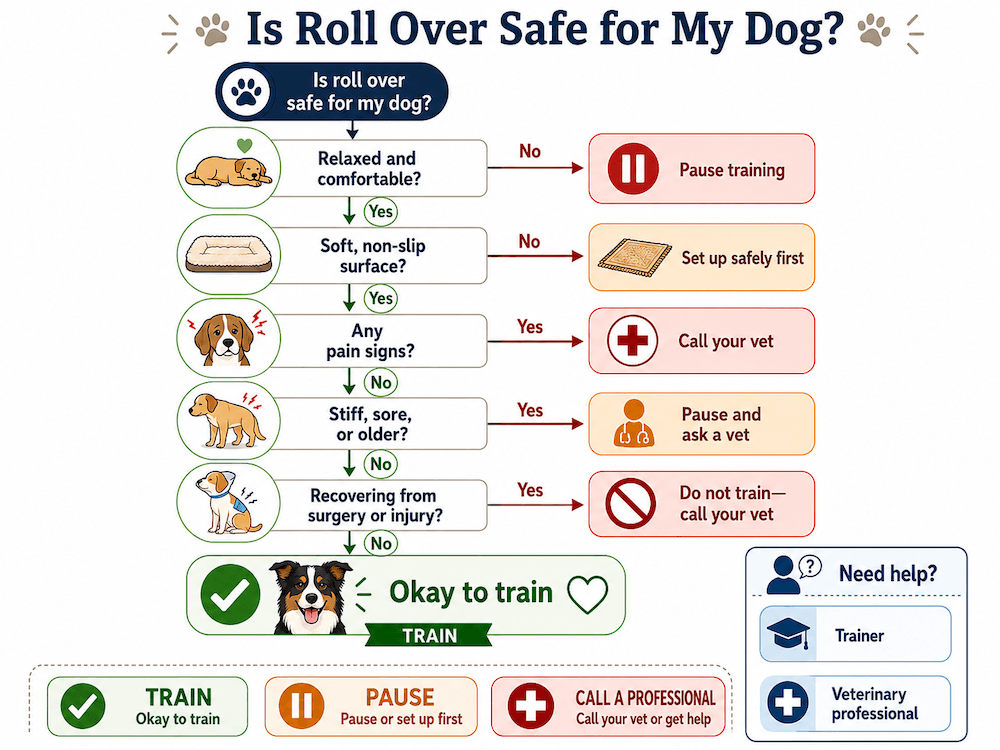
Roll over is usually safe for healthy, comfortable dogs who enjoy training and can lie down easily. Practice on a soft, non-slip surface so your dog does not slide, twist awkwardly, or bang the spine, hips, or shoulders on hard flooring.
It may not be the right trick for every dog. Dogs with arthritis, back pain, hip problems, recent surgery, pregnancy, obesity-related mobility trouble, or belly sensitivity may find the motion uncomfortable.
Supplies and Setup for Teaching a Dog to Roll Over
You do not need special equipment to teach roll over. The best setup is quiet, comfortable, and easy for your dog to understand.
Use very small treats so your dog can repeat the movement without getting full. A clicker is optional; a clear marker word like “yes” works well if you use it consistently.


| Supply | Why It Helps | How to Use It |
|---|---|---|
| Soft treats | They keep your dog motivated without long chewing breaks. | Use pea-sized pieces for repeated rewards. |
| Quiet space | Fewer distractions help your dog follow the lure. | Train away from pets, kids, and loud sounds. |
| Non-slip mat | It protects joints and prevents sliding. | Use a rug, yoga mat, or padded mat. |
| Marker word | It tells your dog the exact moment they succeeded. | Say “yes” right before giving the treat. |
| Clicker | It can mark small movements clearly. | Click once, then reward immediately. |
| Short session | Brief practice prevents frustration and fatigue. | Train for three to five minutes at a time. |
How to Teach a Dog to Roll Over Step by Step
Teach roll over in small pieces. Your dog does not need to understand the full trick at first; they only need to follow one easy movement at a time.
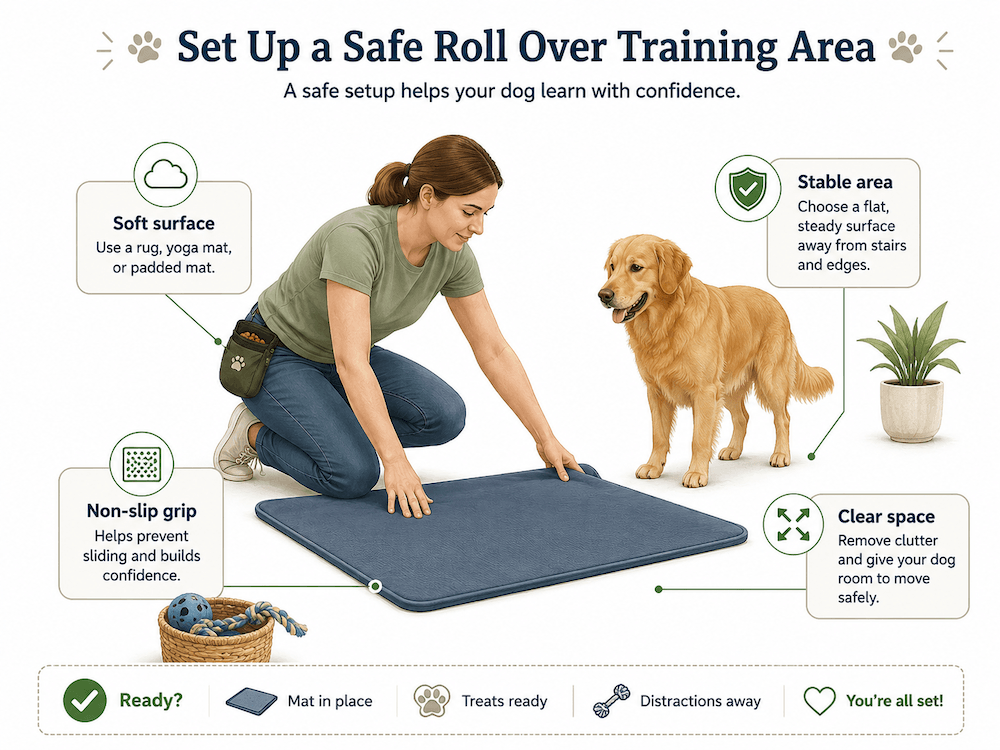
Step 1: Start on a soft, non-slip surface
Choose a rug, yoga mat, or padded training mat. Avoid slick tile, hardwood, gravel, concrete, or any surface where your dog may slide or feel unstable. Ask your dog to come onto the mat and reward calm attention. This makes the training area feel predictable and safe.
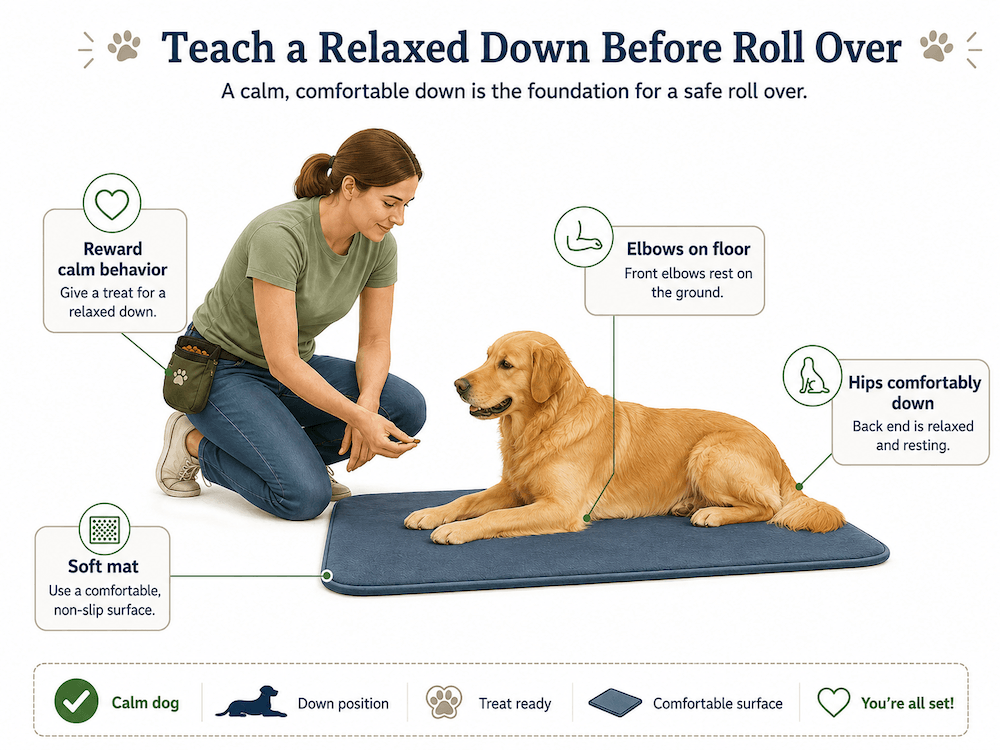
Step 2: Ask your dog to lie down
Cue your dog to “down.” Reward when your dog lies comfortably with the elbows and hips on the floor. Do not move to the rolling part if your dog is only half-down, tense, or ready to pop up. A relaxed down is the foundation of the trick.
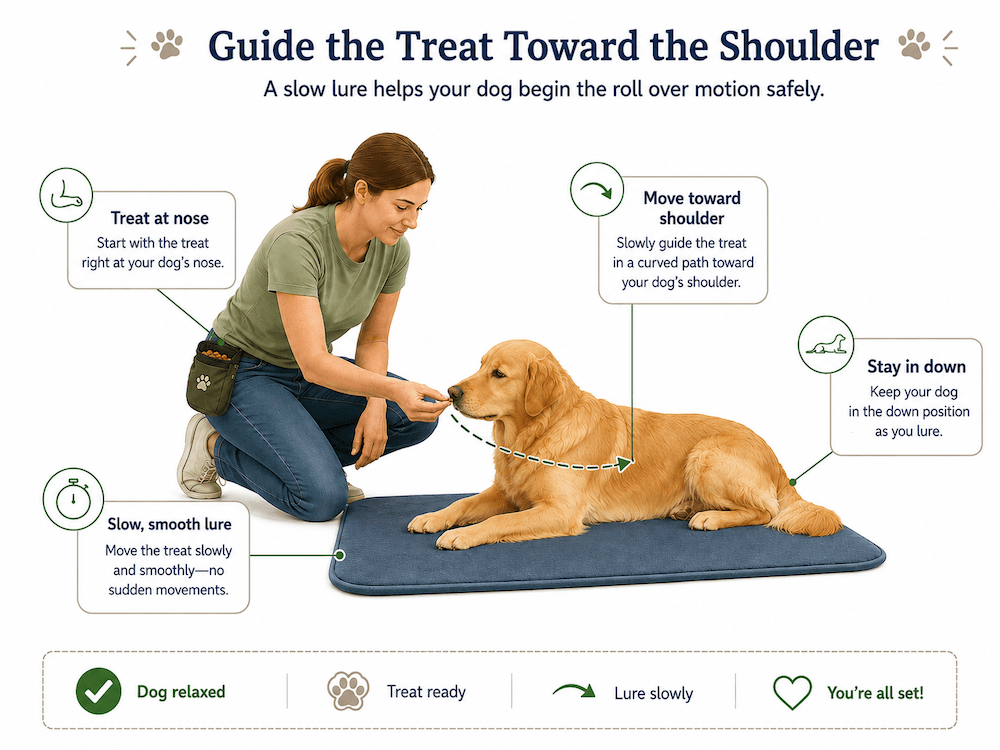
Step 3: Lure your dog’s nose toward one shoulder
Hold a treat close to your dog’s nose. Slowly move it toward one shoulder so your dog turns the head without standing up. The treat should stay close to the nose, almost like a magnet. If the treat moves too far away, many dogs will sit up or crawl forward instead of rolling.
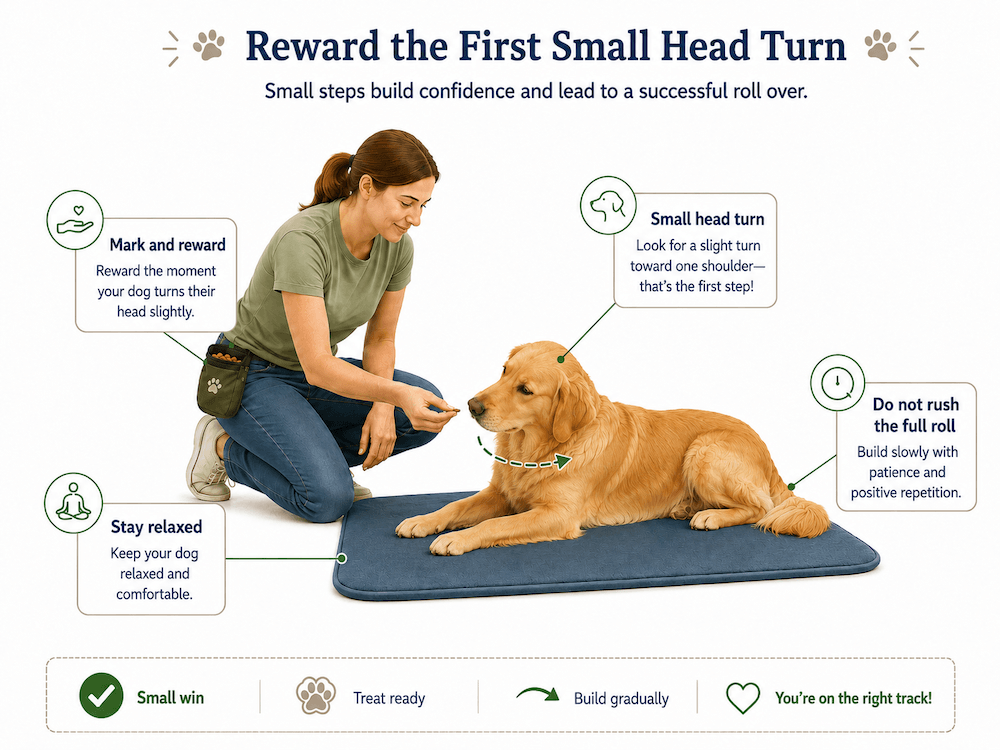
Step 4: Reward the head turn first
At first, reward even a small head turn toward the shoulder. This tells your dog that following the treat while staying down is the right idea. Once your dog turns the head easily, wait for a little more movement before rewarding. You are gradually shaping the trick instead of expecting the full roll all at once.


Step 5: Guide your dog onto one side
Move the treat from the shoulder slightly back and around, so your dog shifts weight onto one hip. Reward when your dog relaxes onto the side. Some dogs pause here because lying on the side feels vulnerable. Praise calmly and reward the side position before asking for more.
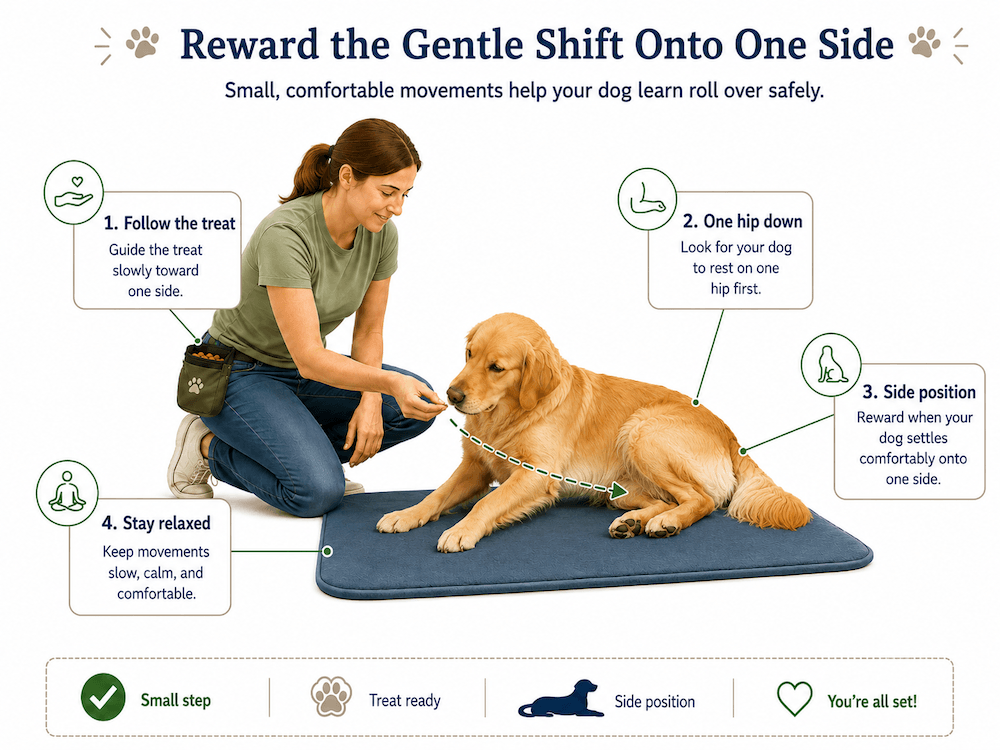
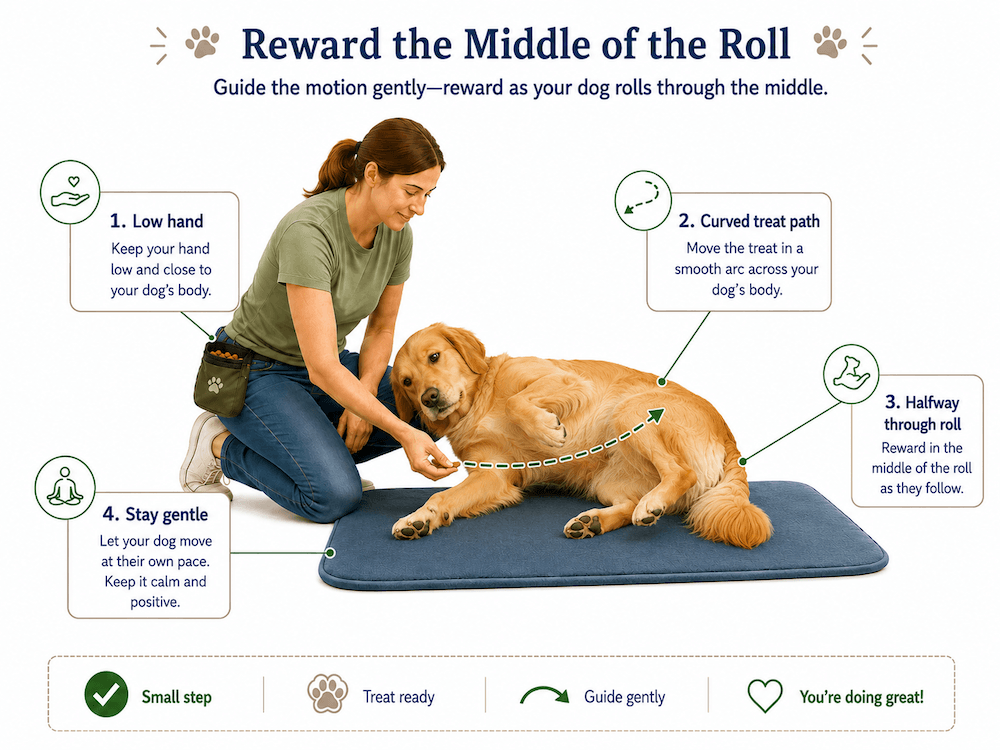
Step 6: Continue the treat arc across the body
Once your dog is comfortably on one side, move the treat in a smooth arc across the chest and toward the opposite side. Your dog should follow the treat with the head, shoulders, and body. Keep the treat low and close. If your dog stands up, reset to the down position and make the movement smaller.
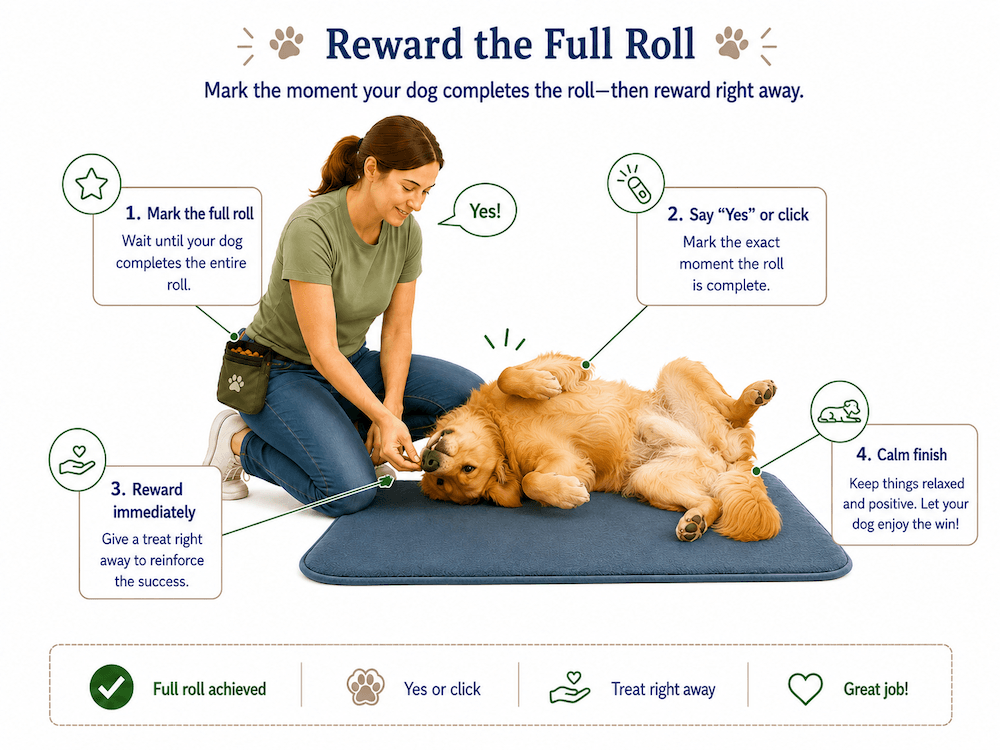
Step 7: Mark and reward the full roll
The moment your dog completes the roll, mark it with “yes” or a click, then reward. Keep your voice warm and calm so the trick stays fun. Do not ask for several full rolls in a row right away. One successful roll is enough to end on a win.
Step 8: Add the verbal cue
Add the cue “roll over” only when your dog is already following the lure smoothly. Say the cue once, then guide the treat through the familiar path. After several successful repetitions, begin using a smaller hand motion. Your goal is to turn the big treat lure into a simple hand signal.
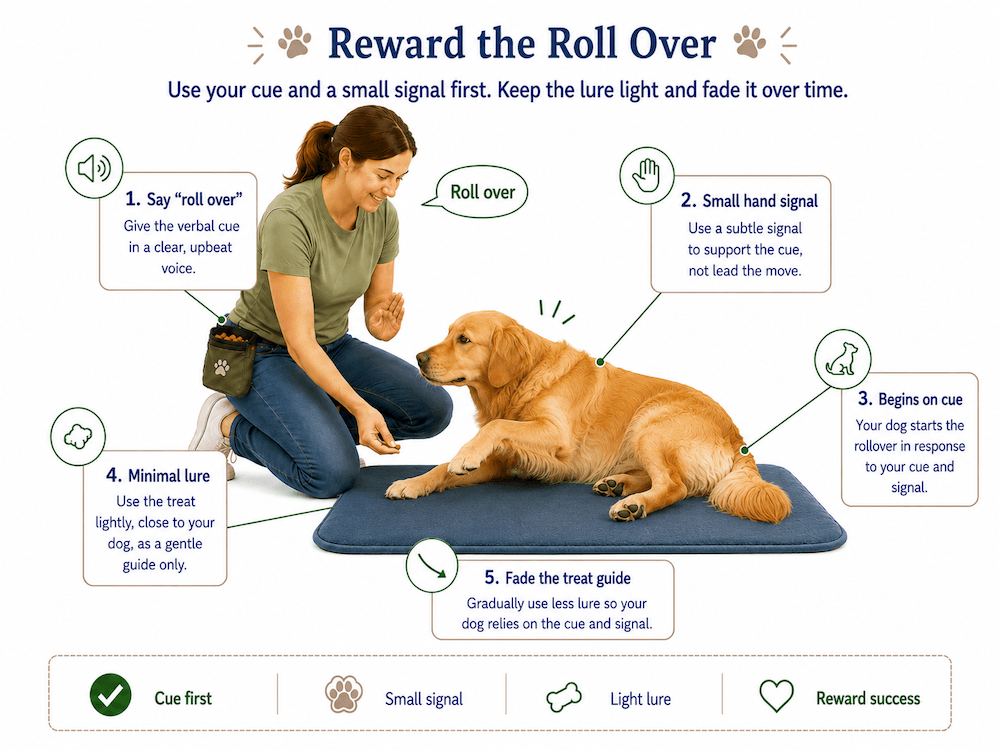
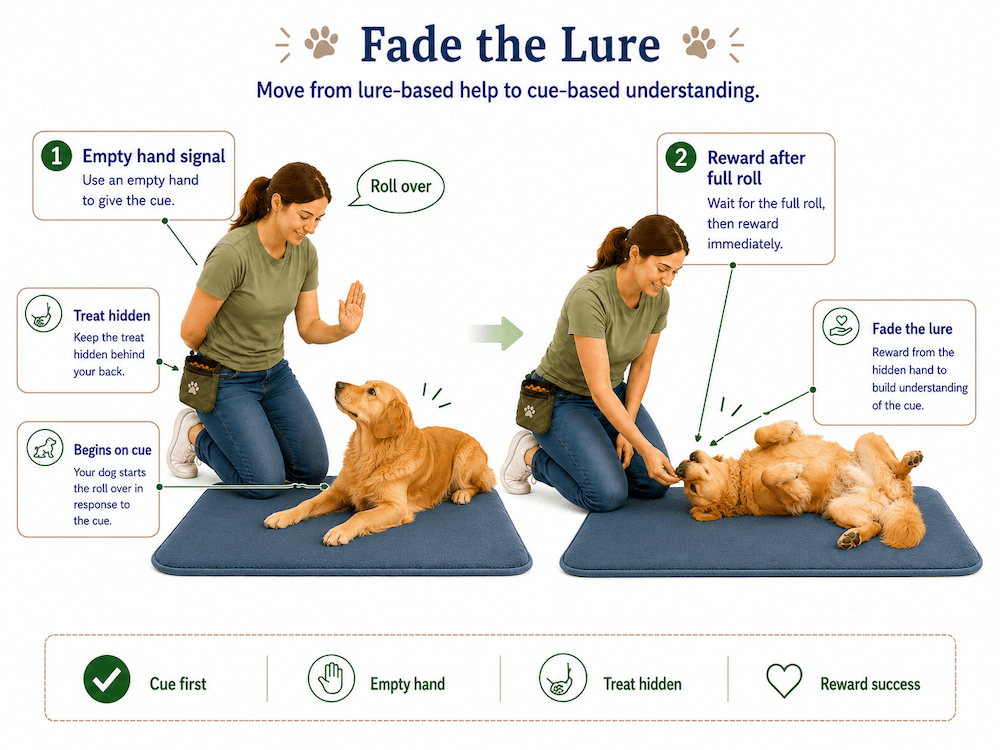
Step 9: Fade the treat lure
Start by hiding the treat in your other hand while your empty hand makes the same motion. Reward from the hidden hand after your dog rolls. Over time, make the hand signal smaller. Continue rewarding often while the trick is still new, then use treats less predictably once your dog understands the cue.
Helpful Tips for Teaching a Dog to Roll Over
Small changes can make roll over much easier. The trick often fails when the lure moves too fast, the surface is slippery, or the dog feels exposed. Focus on comfort, timing, and clear rewards. The more relaxed your dog feels, the more natural the roll becomes.
| Training Tip | Why It Helps | How to Apply It |
|---|---|---|
| Reward tiny progress | Small wins help your dog understand the motion. | Treat head turns before asking for a roll. |
| Keep treats low | A low lure prevents sitting up or jumping. | Move the treat close to your dog’s nose. |
| Use one cue | Consistent words reduce confusion during learning. | Say “roll over” once before the hand signal. |
| Train both sides | Some dogs prefer one direction over the other. | Practice the easier side before trying both. |
| End early | Stopping while happy protects motivation. | Finish after one or two good repetitions. |
| Use calm praise | Excited voices may make some dogs pop up. | Praise warmly without startling your dog. |
Mistakes That Make Roll Over Training Harder
Most roll over problems come from moving too quickly. Dogs may look “stubborn,” but they are often confused, uncomfortable, distracted, or unsure about exposing the belly. A good rule is to return to the last step your dog could do calmly. Then make the next repetition easier.
| Mistake | Why It Causes Problems | Better Approach |
|---|---|---|
| Forcing the roll | It can create fear, tension, or injury risk. | Let your dog choose each movement. |
| Moving too fast | Your dog may stand, twist, or quit. | Reward smaller parts of the motion. |
| Training on slick floors | Sliding makes the trick feel unsafe. | Use a soft mat or rug. |
| Repeating the cue | Multiple cues can teach your dog to wait. | Say the cue once, then help. |
| Ignoring stress signs | Stress can turn training into avoidance. | Pause and return to an easier step. |
| Training too long | Fatigue makes learning slower and messier. | Use short, upbeat practice sessions. |
Why Some Dogs Do Not Want to Roll Over
A dog may refuse to roll over for several reasons. The trick may feel physically awkward, emotionally vulnerable, or simply confusing.
Some dogs dislike exposing their belly. Others have deep chests, short legs, stiff backs, sensitive skin, or low confidence during handling. Instead of pushing through, treat hesitation as useful information.
Roll Over Troubleshooting Guide for Dog Owners
If your dog is struggling, change one thing at a time. Make the lure slower, use a better treat, practice on a softer surface, or reward an easier movement. The goal is not to “win” the session. The goal is to keep your dog engaged enough to try again tomorrow.
| Problem | Likely Reason | What to Do Next |
|---|---|---|
| Dog stands up | The treat is too high or far away. | Keep the lure lower and closer. |
| Dog freezes | The movement may feel unsafe or confusing. | Reward only a head turn today. |
| Dog grabs treat | The reward is too visible or exciting. | Use a closed hand and slower movement. |
| Dog rolls halfway | Your dog needs more practice on the side. | Reward the side position several times. |
| Dog avoids mat | The setup may feel uncomfortable or stressful. | Reward calm lying on the mat first. |
| Dog seems sore | The motion may be physically uncomfortable. | Stop training and contact your veterinarian. |
How Long It Takes to Teach a Dog to Roll Over
Many dogs can learn the basic motion within a few short sessions, but reliability takes longer. Your dog may understand the lure before they understand the verbal cue.
Practice for a few minutes at a time, one or two times a day. If your dog gets less accurate during a session, that usually means it is time to stop.
| Stage | What Your Dog Learns | Success Sign |
|---|---|---|
| First sessions | Your dog follows the treat while lying down. | Head turns happen without standing up. |
| Early progress | Your dog relaxes onto one side. | The side position looks calm and loose. |
| Full motion | Your dog rolls across with the lure. | The roll happens smoothly without force. |
| Cue learning | Your dog connects the words to the action. | The cue works before the full lure. |
| Reliability | Your dog responds in familiar, calm places. | The trick works without a visible treat. |
How to Maintain Roll Over Training Progress
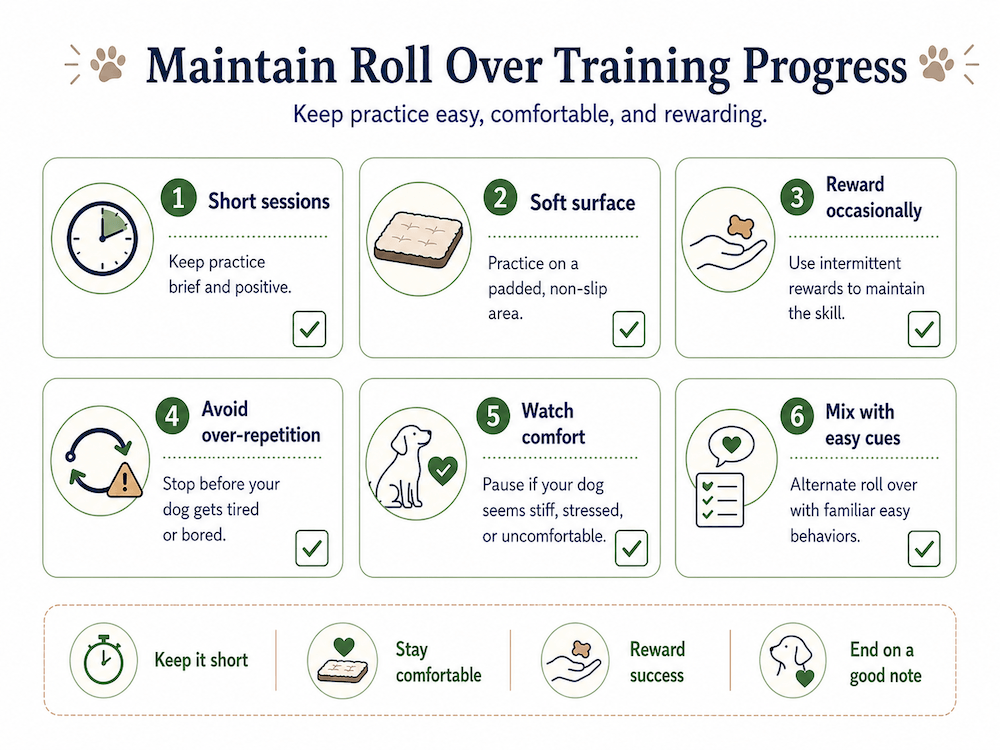
Once your dog learns roll over, keep the trick light and occasional. Practice in short sessions and reward often enough that your dog still enjoys it.
Do not ask for roll over repeatedly on hard surfaces, outdoors on rough ground, or when your dog is tired after exercise. Mix it with easier cues like “sit,” “touch,” or “down” so training feels balanced.
When to Call a Veterinarian or Dog Training Professional
Roll over should look loose, voluntary, and comfortable. If your dog seems physically sore or emotionally distressed, stop the trick and get guidance before practicing again.
Call your veterinarian if your dog shows limping, stiffness, trembling, yelping, reluctance to lie down, trouble getting up, sudden behavior changes, belly sensitivity, back sensitivity, or pain after training. Also check with your vet before teaching roll over to senior dogs, dogs recovering from surgery, pregnant dogs, and dogs with known spine, hip, knee, shoulder, or arthritis issues.
A qualified positive-reinforcement trainer can help if your dog is healthy but confused, fearful, or easily frustrated. A veterinary behaviorist may be a better fit if your dog growls, snaps, guards the body, panics when handled, or has a broader fear or anxiety history.
What Research Says About Roll Over Training in Dogs
The American Veterinary Society of Animal Behavior recommends reward-based training methods for dog training and behavior work, and its position statement says aversive methods are not more effective than reward-based methods and can harm animal welfare and the human-animal bond. That supports teaching roll over with treats, praise, shaping, and choice rather than force or physical pressure.[1]
A PLOS ONE study comparing companion dogs in reward-based and aversive-based training schools found that aversive-based methods, especially when used frequently, were linked with compromised welfare. For a trick like roll over, this matters because the dog is already being asked to take a vulnerable body position.[2]
The MSD Veterinary Manual explains that positive reinforcement increases desired behavior and that clickers or marker words can help signal that a reward is coming. It also describes shaping as rewarding gradual approximations, which fits the safest way to teach roll over: reward the head turn, then the side position, then the full roll.[3]
AAHA pain guidance emphasizes that dogs may show discomfort through changes in posture, movement, behavior, stiffness, reluctance to move, or difficulty changing positions. That is why dog owners should treat hesitation, stiffness, or sudden refusal during roll over training as a possible comfort signal, not simply disobedience.[4]
Frequently Asked Questions
The Bottom Line
Teaching a dog to roll over works best when the trick is broken into small, comfortable steps. Start with a relaxed “down,” use a treat to guide your dog’s head toward the shoulder, and reward each small movement before asking for the full roll. Keep sessions short, positive, and playful so your dog stays confident instead of frustrated. Never force your dog onto their side or back, especially if they seem stiff, nervous, or uncomfortable. Some dogs may need extra time, while others may prefer a different trick that feels safer for their body. With patience, a soft surface, and clear rewards, roll over can become a fun way to build trust, focus, and communication with your dog.