How to Kennel Train a Dog: 8 Easy Steps [Trainer-Approved Guide]

Canine Bible is reader-supported. We receive affiliate commissions via some of our links. Learn more.
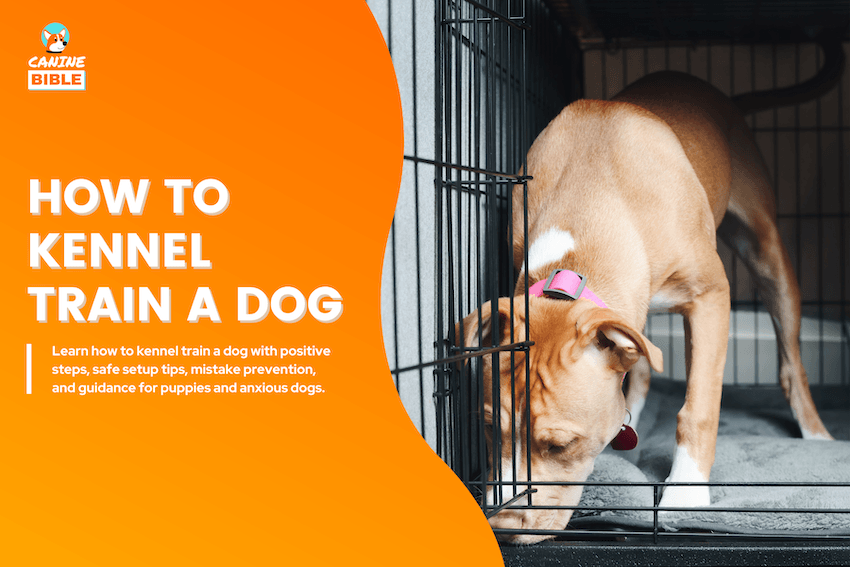
Kennel training a dog means teaching them to see the kennel as a safe, calm resting space—not a punishment. Start with short, positive sessions, reward your dog for entering willingly, and gradually increase the time they spend inside. When done correctly, kennel training can help with house training, travel, sleep routines, and preventing unsafe chewing when unsupervised. But the process is not the same for every dog. Puppies, anxious dogs, rescues, and dogs with past confinement stress may need a slower, gentler approach. Many owners also wonder how long a dog can stay in a kennel, what to do if the dog cries, and whether kennel training is cruel. This guide will walk you through how to kennel train your dog safely, confidently, and without turning the crate into a source of fear.
Why Kennel Training Your Dog Matters
| Key Benefit | Why It Helps Your Dog |
|---|---|
| Creates safety | A kennel gives your dog a secure place to rest when they cannot be fully supervised. |
| Supports house training | Many dogs learn bladder control more easily when the kennel is used with regular potty breaks. |
| Reduces stress | A properly introduced kennel can become a familiar retreat during visitors, noise, travel, or routine changes. |
| Prevents damage | Safe confinement helps stop chewing, trash raiding, and other risky behaviors when you are not watching. |
| Builds independence | Short, positive kennel sessions can help dogs learn to settle calmly without constant attention. |
| Improves travel | Dogs that accept a kennel are often safer and more comfortable during car rides, boarding, or vet visits. |
| Avoids misuse | Kennel training only works well when the crate is not used for punishment or excessive confinement. |
What to Know Before You Start Kennel Training
A kennel should feel like a bedroom, not a jail cell. Your dog should be able to stand, turn around, lie comfortably, and relax without being trapped there for long periods. A kennel that is too large for a puppy may encourage potty accidents, while one that is too small can cause discomfort and resistance.
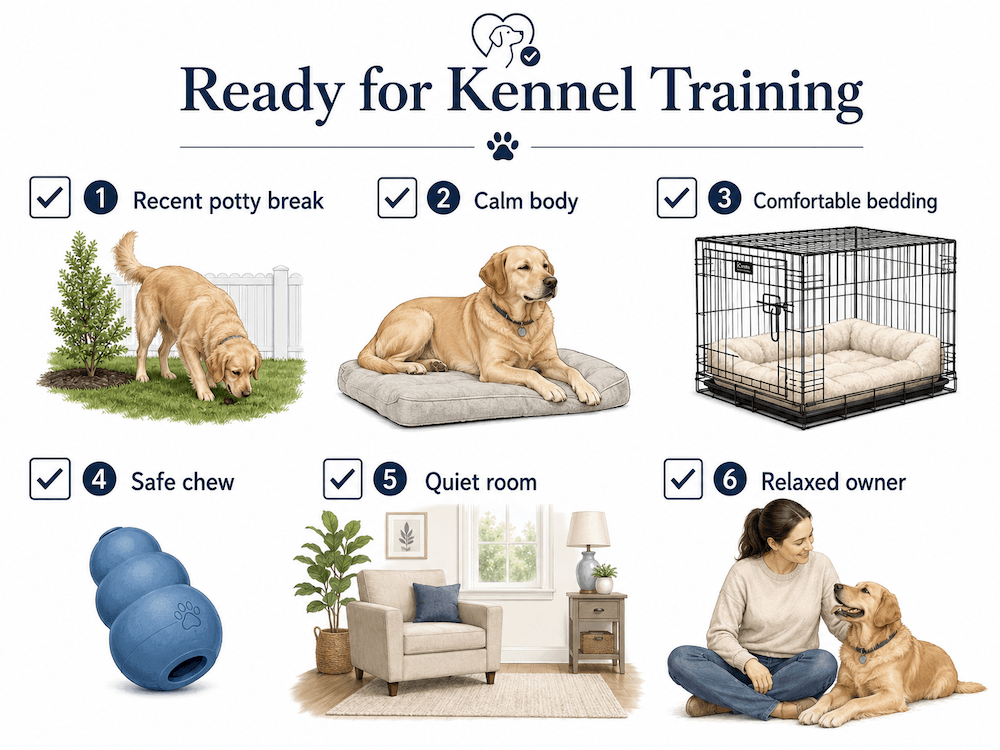
Kennel training also works best when your dog’s basic needs have already been met. Before a training session, give your dog a potty break, some age-appropriate movement, and a chance to settle. A tired, comfortable dog is more likely to learn than a dog who is full of energy, anxious, thirsty, or desperate to pee.
Use this checklist as a guide to decide whether your dog is ready to begin or whether you should slow down first. The goal is to start when the kennel can become a positive learning space, not a place where panic escalates.
How to Choose the Right Kennel and Setup
This setup helps dog owners choose the right supplies without overcomplicating the process. The goal is comfort, safety, and easy cleaning rather than creating a kennel full of clutter.


| Setup Item | Why It Matters | Owner Tip |
|---|---|---|
| Correct size | Comfortable sizing helps rest without encouraging potty corners. | Choose room to stand, turn, and lie down. |
| Safe bedding | Soft bedding can make the kennel more inviting. | Skip bedding if your dog chews or swallows fabric. |
| High-value treats | Food rewards create a positive kennel association. | Use tiny treats to avoid overfeeding. |
| Food toy | Stuffed toys encourage quiet chewing and settling. | Use only safe toys matched to your dog’s chewing style. |
| Water access | Water needs depend on age, weather, and duration. | Use a spill-resistant bowl for longer safe confinement. |
| Quiet location | A calmer spot helps reduce alert barking. | Keep the kennel near family without constant traffic. |
| Cleaning supplies | Accidents should be cleaned without adding fear. | Use enzymatic cleaner if urine or stool accidents happen. |
How to Kennel Train a Dog Step by Step
Kennel training should move at your dog’s pace. Some puppies accept the kennel within days, while adult dogs, rescues, or dogs with previous confinement stress may need weeks of calm practice. Progress is not measured by how fast the door closes; it is measured by whether your dog stays relaxed.
Step 1: Place the Kennel in a Familiar, Calm Area
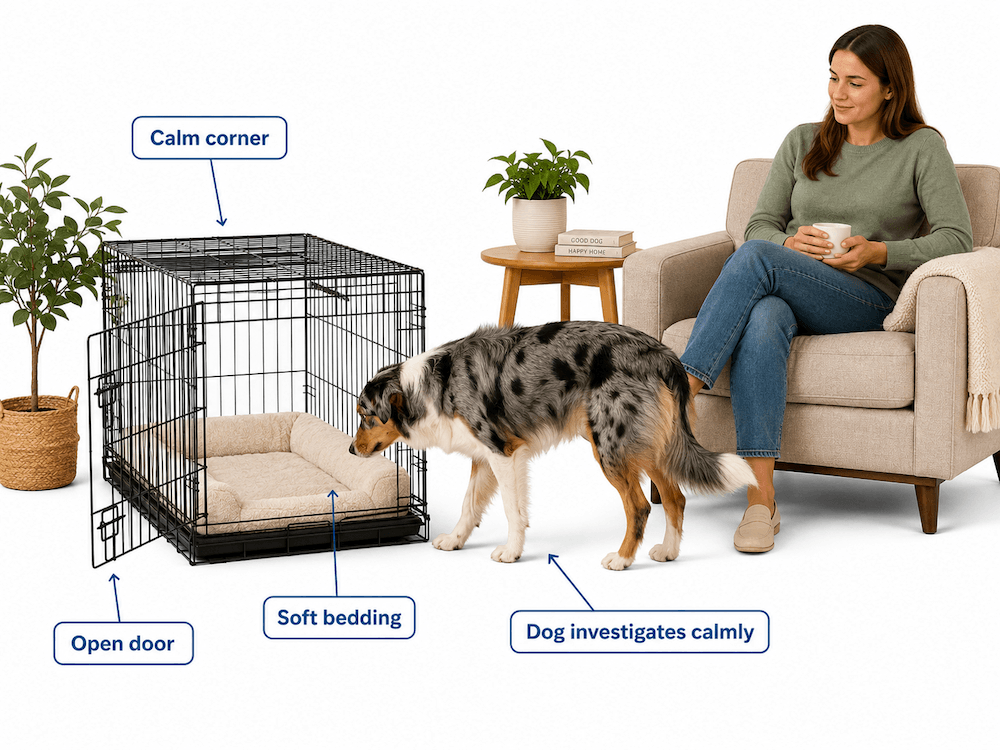
Put the kennel where your dog can still feel part of normal household life without being overstimulated. A living room corner during the day and a bedroom spot at night can work well for many dogs. Keep the door open and let the kennel become part of the room before expecting your dog to spend time inside.
Step 2: Let Your Dog Explore the Kennel Without Pressure
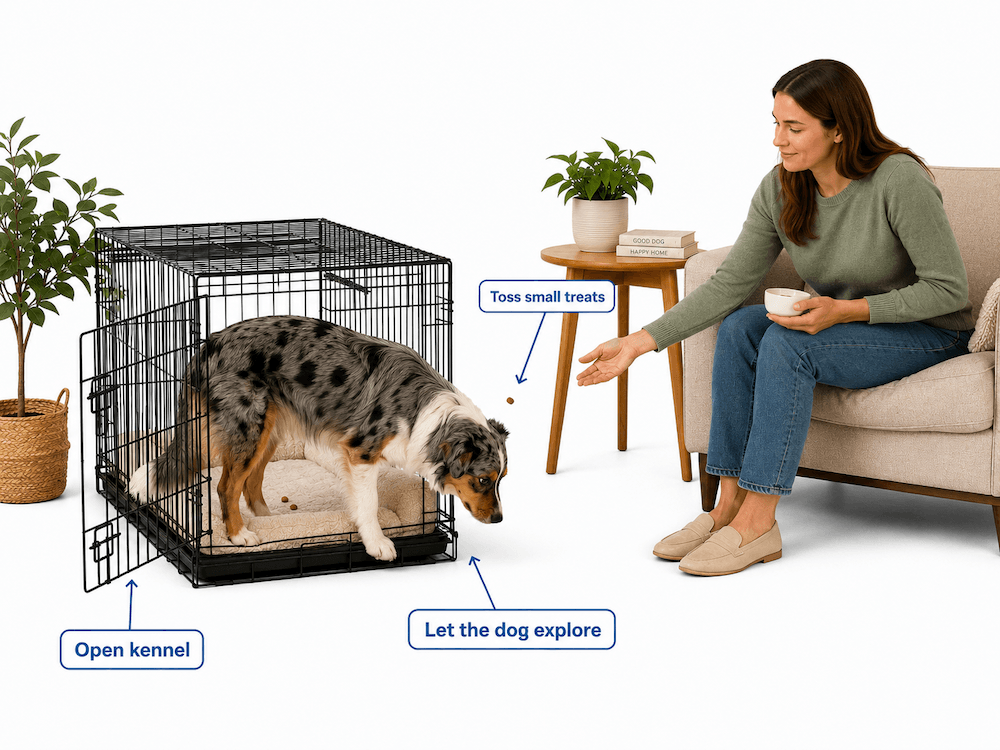
Allow your dog to sniff, step in, step out, and look around without being pushed or blocked. Toss a treat near the entrance, then just inside, then deeper into the kennel as your dog becomes comfortable. Keep your body relaxed and avoid leaning into the kennel, because crowding can make some dogs back away.
Step 3: Feed Meals and Special Chews Inside the Kennel
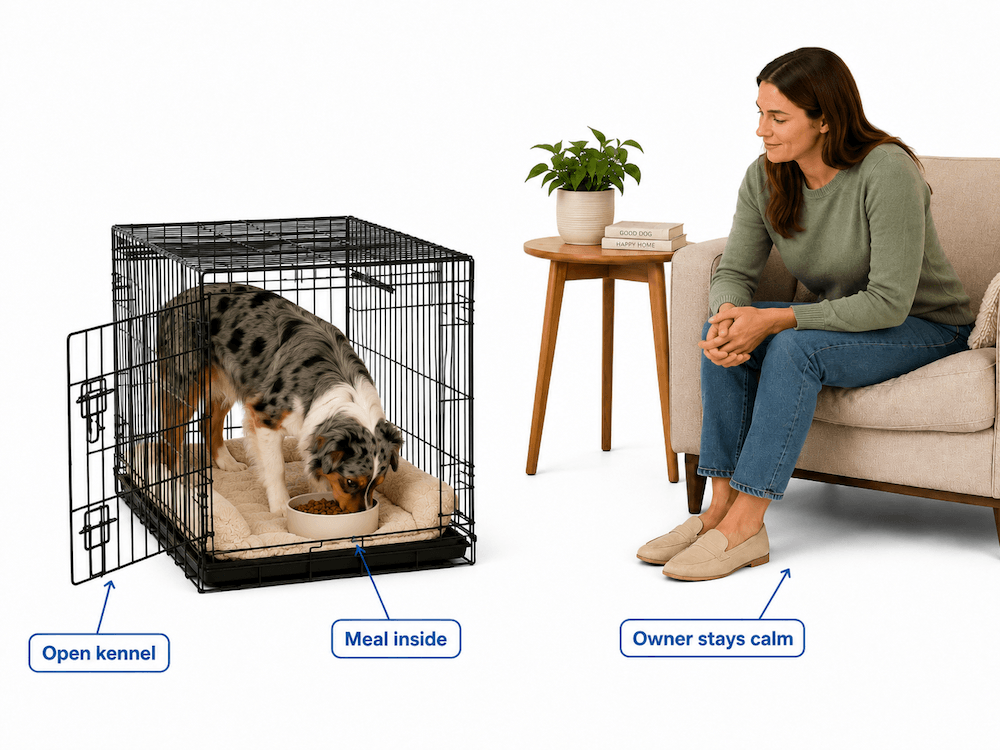
Once your dog willingly enters, begin feeding meals near the kennel opening and gradually move the bowl farther inside. You can also give a safe food-stuffed toy or chew in the kennel while the door remains open. This helps your dog learn that good, calm things happen inside the kennel.


Step 4: Close the Door Briefly While Your Dog Is Relaxed
When your dog is busy eating or chewing inside, close the door for a few seconds while you stay nearby. Open it again before your dog becomes worried, then calmly let them come out. Repeat this in short sessions until the door closing feels predictable and unimportant.
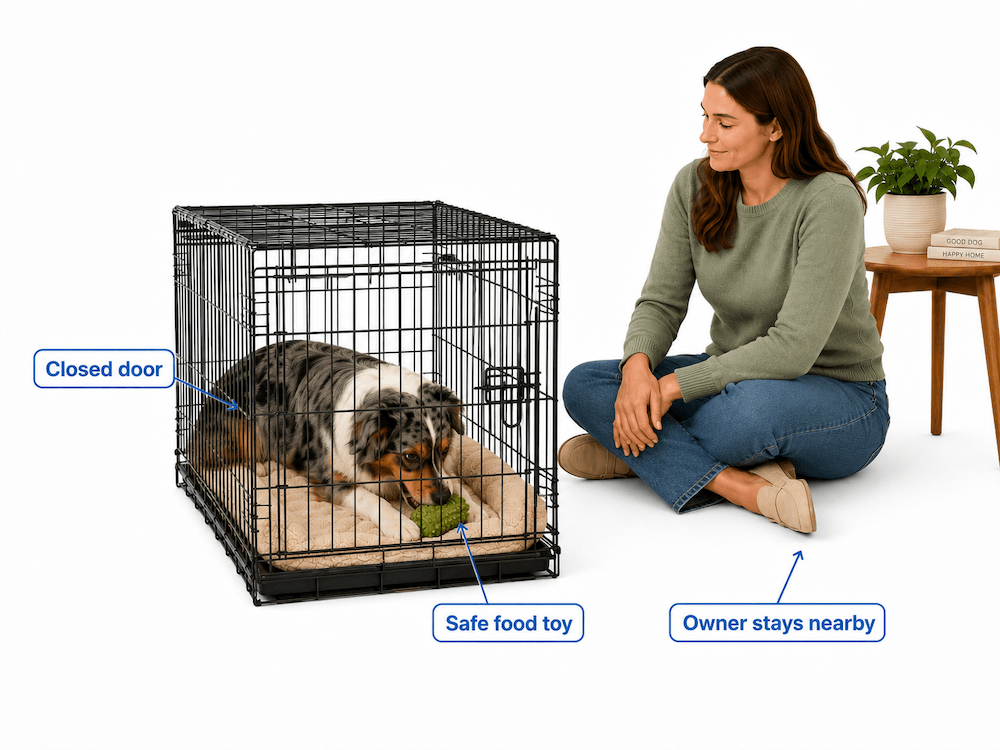
Step 5: Add a Clear Kennel Cue
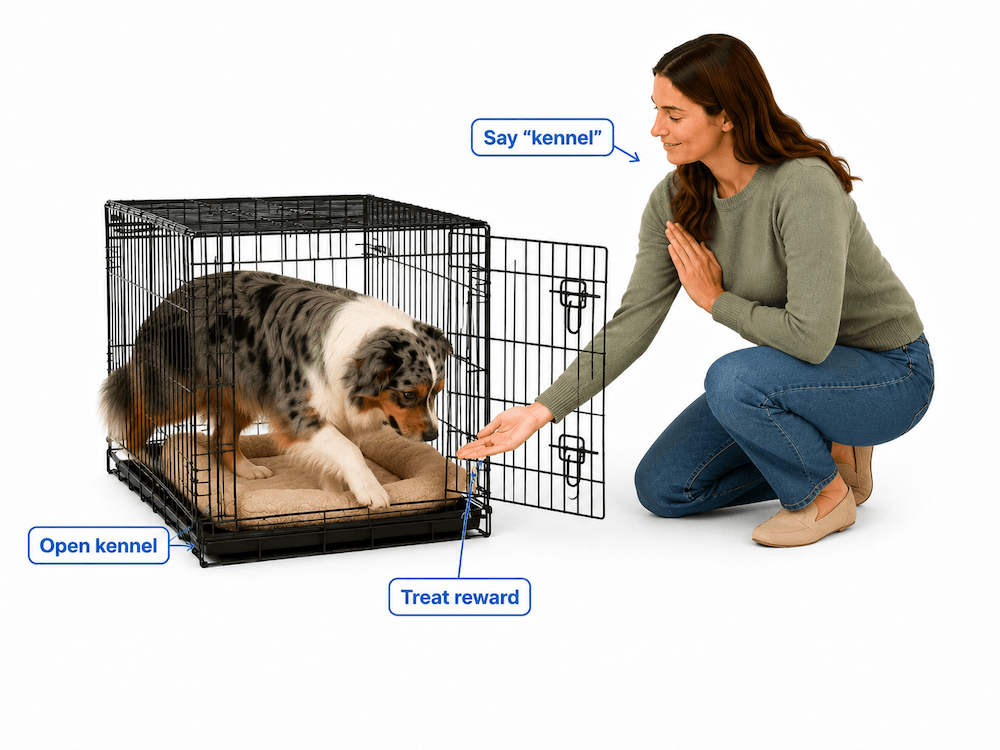
After your dog is happily entering, add a cue such as “kennel,” “crate,” or “bed.” Say the cue as your dog begins moving toward the kennel, then reward once they go inside. Over time, say the cue first, wait for your dog to enter, and reward the choice.
Step 6: Build Duration Gradually
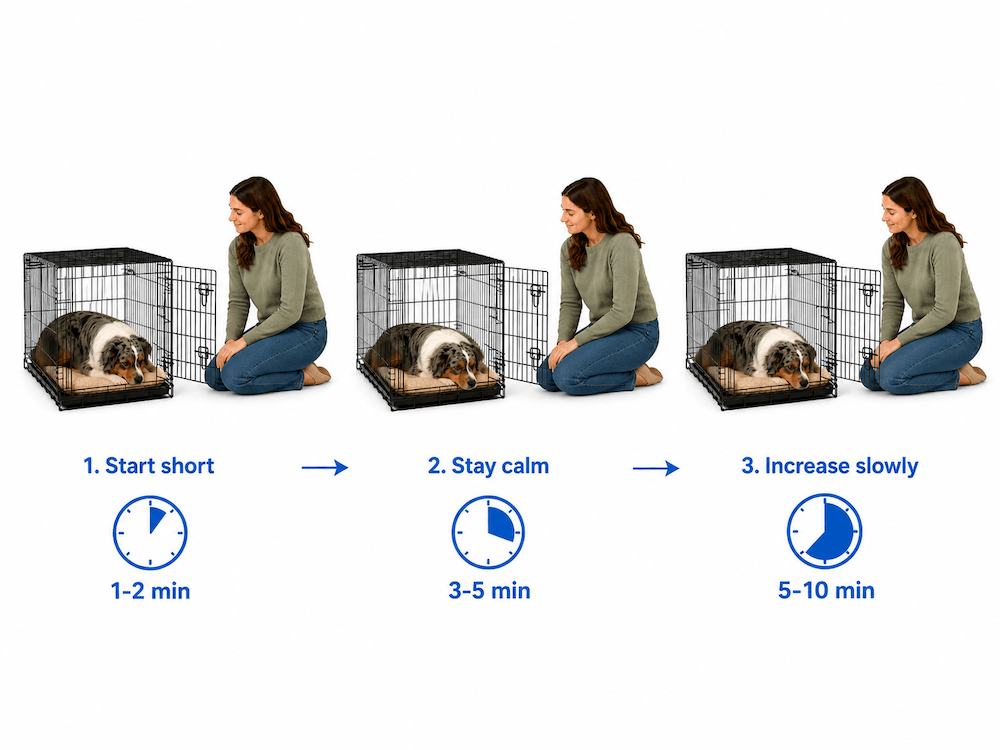
Start with seconds, then minutes, then longer calm rests as your dog succeeds. Stay in the room at first, then move around the room, then step away briefly. Increase only one challenge at a time: duration, distance, or distraction.
Step 7: Practice Short Absences Before Real Alone Time
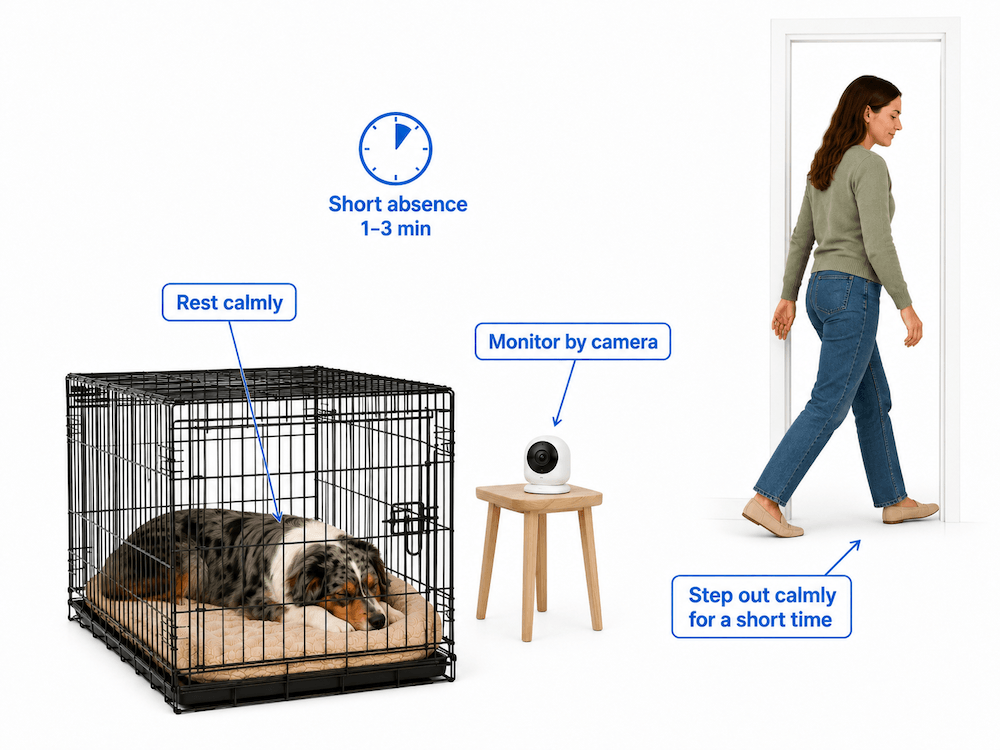
Before leaving your dog in the kennel while you are gone, practice tiny absences while you are still home. Step out of sight for a few seconds, return calmly, and release your dog only when they are settled. A camera can help you check whether your dog relaxes once you leave or becomes more distressed.
Step 8: Use the Kennel as Part of a Predictable Routine
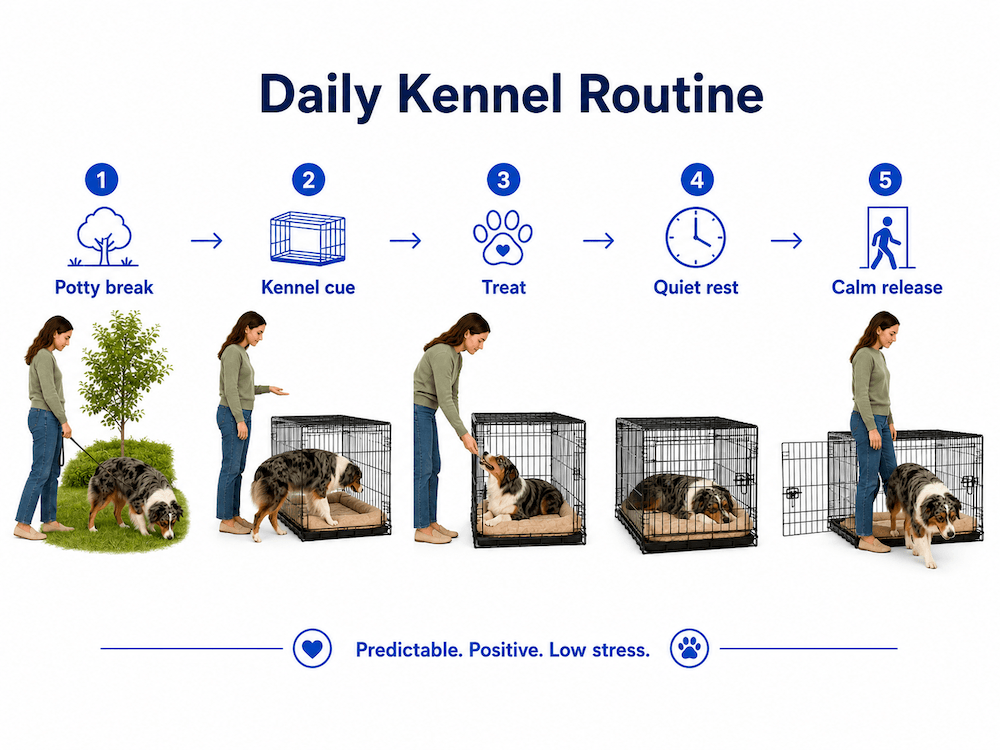
Once your dog is comfortable, use the kennel during normal rest times, short errands, bedtime, or quiet breaks. Keep the routine calm: potty first, kennel cue, reward, rest, then a relaxed release. The kennel should remain one tool in your dog’s life, not their main form of activity or social time.
Kennel Training Timeline for Puppies and Adult Dogs
There is no perfect schedule for every dog, but a gradual timeline helps owners avoid rushing. The table below shows a practical progression based on comfort, not strict deadlines.
| Training Stage | Goal | Move Forward When |
|---|---|---|
| Open door | Your dog explores the kennel without pressure. | They enter willingly for treats or meals. |
| Meal time | The kennel predicts food, chews, and calm rewards. | They stay inside comfortably with the door open. |
| Door closed | Your dog accepts brief closed-door moments. | They remain relaxed for several short repetitions. |
| Owner nearby | Your dog rests while you sit or move nearby. | They settle after finishing food or a chew. |
| Owner away | Your dog handles brief out-of-sight practice. | They stay calm when you return quietly. |
| Daily routine | The kennel becomes part of normal rest time. | They enter on cue and relax predictably. |
How to Handle Crying, Barking, or Refusing the Kennel
A little fidgeting or brief whining can happen when confinement is new, but panic is different. The key is to watch whether the behavior decreases and your dog settles, or whether it escalates into distress. If your dog is frantic, drooling, trying to escape, injuring themselves, or unable to calm down, the plan needs to change.
Do not assume a crying dog is being stubborn. Puppies may need to potty, adolescent dogs may be frustrated, and anxious dogs may be genuinely afraid. Your response should depend on the pattern, intensity, and timing of the behavior.
This table helps separate common kennel training problems from more concerning signs. Use it to adjust your next session instead of repeating a setup that is not working.
| Problem | Likely Meaning | Better Next Step |
|---|---|---|
| Brief whining | Your dog may be adjusting to a new routine. | Wait briefly if they are not escalating. |
| Urgent barking | Your puppy may need a potty break. | Take a boring leash potty trip outside. |
| Door pawing | The closed door may be too advanced. | Return to open-door meals and shorter closures. |
| Chewing bars | Your dog may be stressed or unsafe inside. | Stop the session and reassess the setup. |
| Drooling heavily | This may signal significant anxiety or nausea. | Pause kennel training and seek professional guidance. |
| Potty accidents | The session may be too long or poorly timed. | Shorten confinement and improve potty scheduling. |
| Escape attempts | Your dog may have confinement distress. | Use safer management and contact a professional. |
Helpful Tips for Kennel Training a Dog Safely
Small details can make kennel training smoother, especially for puppies, rescues, and dogs who become excited easily. The tips below refine the process without replacing the step-by-step plan.
| Kennel Tip | Why It Helps | How to Apply It |
|---|---|---|
| Practice daily | Short repetition builds comfort without overwhelming your dog. | Use two or three calm sessions each day. |
| Reward quiet | Calm behavior becomes more likely when it pays off. | Drop treats when your dog is resting quietly. |
| Use potty timing | Empty bladders reduce frustration and accidents. | Offer a potty break before every longer session. |
| Keep exits calm | Calm releases prevent door rushing and overexcitement. | Open the door when your dog is settled. |
| Rotate rewards | Variety keeps the kennel interesting and positive. | Use meals, treats, safe chews, or food toys. |
| Watch body language | Early stress signs tell you to slow down. | Look for pacing, panting, drooling, or escape attempts. |
Mistakes That Can Make Kennel Training Harder
Most kennel training setbacks come from moving too fast, using the kennel emotionally, or ignoring stress signals. A dog who feels trapped or punished may resist the kennel even more the next time. Preventing these mistakes is easier than fixing a strong negative association later.
| Mistake | Why It Backfires | Better Choice |
|---|---|---|
| Forcing entry | Physical pressure can make the kennel feel threatening. | Reward voluntary steps toward and inside the kennel. |
| Using punishment | The kennel becomes linked with fear or isolation. | Use the kennel for rest, rewards, and routine. |
| Going too long | Overlong confinement causes frustration and accidents. | Build duration gradually and meet exercise needs first. |
| Ignoring panic | Distress can worsen and create safety risks. | Stop, reassess, and get help when needed. |
| Skipping potty breaks | A full bladder makes resting nearly impossible. | Schedule potty trips before kennel sessions. |
| Unsafe toys | Chewed pieces can cause choking or obstruction. | Choose durable items suited to your dog. |
| Only crating when leaving | The kennel may predict owner absence every time. | Use it during calm home routines too. |
When to Contact a Veterinarian, Trainer, or Behaviorist
Some kennel problems are training issues, while others involve pain, panic, separation-related distress, or unsafe behavior. Getting help early can prevent injuries and keep your dog from rehearsing fear every day. This is especially important for dogs who are newly adopted, older, recovering from illness, or showing sudden behavior changes.
How to Maintain Kennel Training Progress
Once your dog is kennel trained, keep the kennel positive by using it for ordinary rest, not only stressful moments. Continue giving occasional treats, meals, or safe chews inside so the kennel remains rewarding. Dogs can lose comfort if the kennel suddenly becomes associated only with long absences, vet recovery, or punishment.
Watch for changes after moves, schedule disruptions, boarding, surgery, storms, or new pets in the home. A dog who previously loved the kennel may need a short refresher if the environment changes. Go back to easier steps for a few days instead of assuming your dog is being difficult.
Success looks calm and predictable. Your dog may enter on cue, lie down willingly, chew quietly, nap, and wait without rushing the door. If your dog starts barking, avoiding the kennel, or acting tense, reduce the difficulty and rebuild confidence before asking for longer confinement.
Veterinary Evidence Behind Kennel Training and Dog Behavior
The American Veterinary Society of Animal Behavior recommends reward-based training methods for dog training and behavior modification, and its public guidance emphasizes that aversive methods can carry welfare risks such as fear, anxiety, stress, and aggression. This supports using food, calm routines, and gradual exposure during kennel training instead of punishment, yelling, or forced confinement.[1]
VCA Animal Hospitals describes crate training as a confinement life skill that can help with supervision, house training, travel, rest, veterinary visits, boarding, and emergency sheltering. Its guidance also notes that distress signs such as salivation, persistent vocalizing, escape attempts, or failure to settle are reasons to consult a veterinarian before continuing.[2]
A 2024 study in Applied Animal Behaviour Science surveyed 1,305 dog owners across 23 countries and found that caging was reported more often for puppies and appeared more useful for training goals than behavioral treatment goals. The same paper warned that dogs caged for behavioral problems showed more distress, which supports using kennels as a positive training and management tool rather than as a stand-alone fix for anxiety or behavior disorders.[3]
The Merck Veterinary Manual explains that canine separation anxiety may require behavior modification and, in some cases, veterinary-prescribed medication as part of a broader treatment plan. This matters because a kennel alone does not treat separation anxiety, and dogs who panic when confined may need a different management plan and professional support.[4]
Frequently Asked Questions
The Bottom Line
Kennel training works best when it is built on patience, positive reinforcement, and your dog’s sense of safety. The goal is not simply to confine your dog, but to help them see the kennel as a calm place to rest, sleep, travel, or take a break from household activity. Start with short, low-pressure sessions, reward voluntary entry, and only increase time inside when your dog is relaxed. Puppies, rescues, anxious dogs, and dogs with past confinement stress may need a slower approach, and that is completely normal. Avoid using the kennel as punishment or leaving your dog confined for too long, because this can create fear and resistance. Watch your dog’s body language closely, and get help from a veterinarian, trainer, or behaviorist if you see panic, injury attempts, or sudden behavior changes. With consistent, gentle practice, kennel training can become a useful life skill that supports your dog’s comfort, safety, and daily routine.