Why Do Dogs Lick You? 13 Reasons & What They Mean

Canine Bible is reader-supported. We receive affiliate commissions via some of our links. Learn more.
Why do dogs lick you, and what are they really trying to tell you? This common canine behavior can have several meanings, and not every lick sends the same message. Some dogs lick their owners constantly, while others do it only in certain situations. But why do dogs lick your hands, face, or feet, and does the location make a difference? You might also wonder whether excessive licking is normal or a sign that something needs attention. Although licking is usually harmless, certain situations can raise concerns about your dog’s behavior and hygiene. Understanding these differences can help you interpret your dog’s licking habits and recognize when they deserve a closer look.
Understanding Dog Licking Behavior
Licking is a natural canine behavior that serves several purposes, including communication, sensory exploration, and social interaction. Dogs begin licking during puppyhood, and the behavior develops through instinct, experience, and interactions with their environment.
| Aspect | What Dog Owners Should Know |
|---|---|
| Why dogs lick people | Social bonding, communication, sensory exploration, and learned behaviors. |
| When licking begins | During puppyhood, through maternal care and early social interactions. |
| How dogs communicate through licking | Licking can accompany friendly greetings, requests, or appeasement signals. |
| What influences licking frequency | Individual temperament, experiences, routines, and environmental factors. |
| When licking is normal | Occasional, relaxed licking without distress or disruptive behavior. |
| When licking becomes concerning | Sudden, persistent, or compulsive licking, especially with other symptoms. |
| Potential hygiene concerns | Saliva may transmit bacteria, particularly through wounds or mucous membranes. |
| How owners should respond | Observe context, reinforce appropriate behavior, and investigate unusual changes. |
13 Common Reasons Why Dogs Lick You
Dogs use licking for several distinct purposes, from maintaining social connections to investigating their surroundings. Some motivations arise from natural canine behavior, while others develop through learning and everyday interactions with people. Understanding these differences can help you recognize what your dog may be communicating and whether their licking requires attention.
1. Show Affection and Maintain Social Bonds
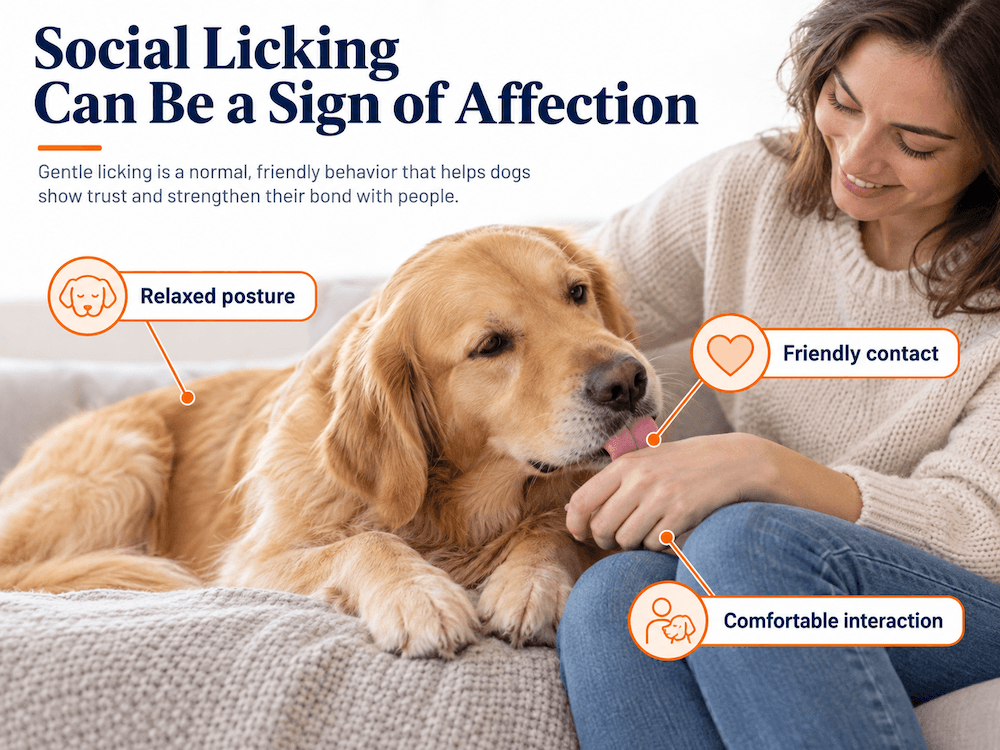
Dogs may lick familiar people as part of affectionate social interaction, particularly when they feel relaxed and comfortable. Physical contact helps maintain relationships within a dog’s social group, and licking is one behavior dogs may use during friendly encounters. A dog that gently licks your hand while resting beside you, with soft eyes and a loose body, may simply be enjoying your company.
2. Greet You When You Return
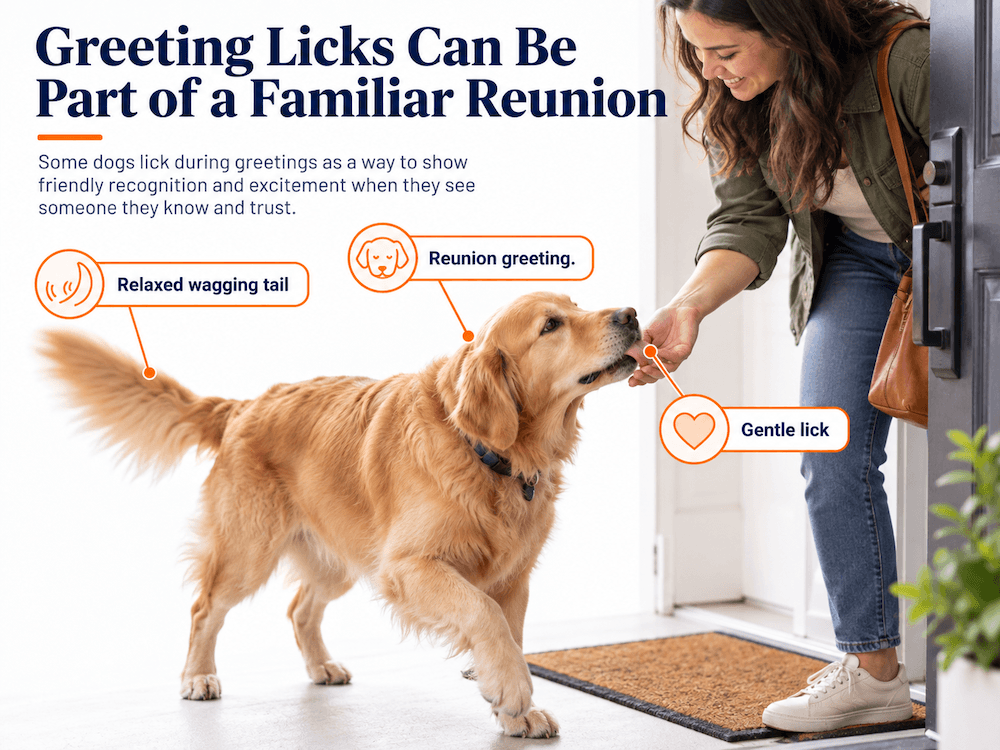
Dogs sometimes use licking as a social greeting behavior when reconnecting with familiar people after a separation. Licking the hands or face may accompany approaching, sniffing, tail movement, and other greeting behaviors, particularly when the dog is excited. This explains why some dogs enthusiastically lick their owners immediately after they arrive home but rarely do so during quiet periods.


3. Engage in Social Grooming
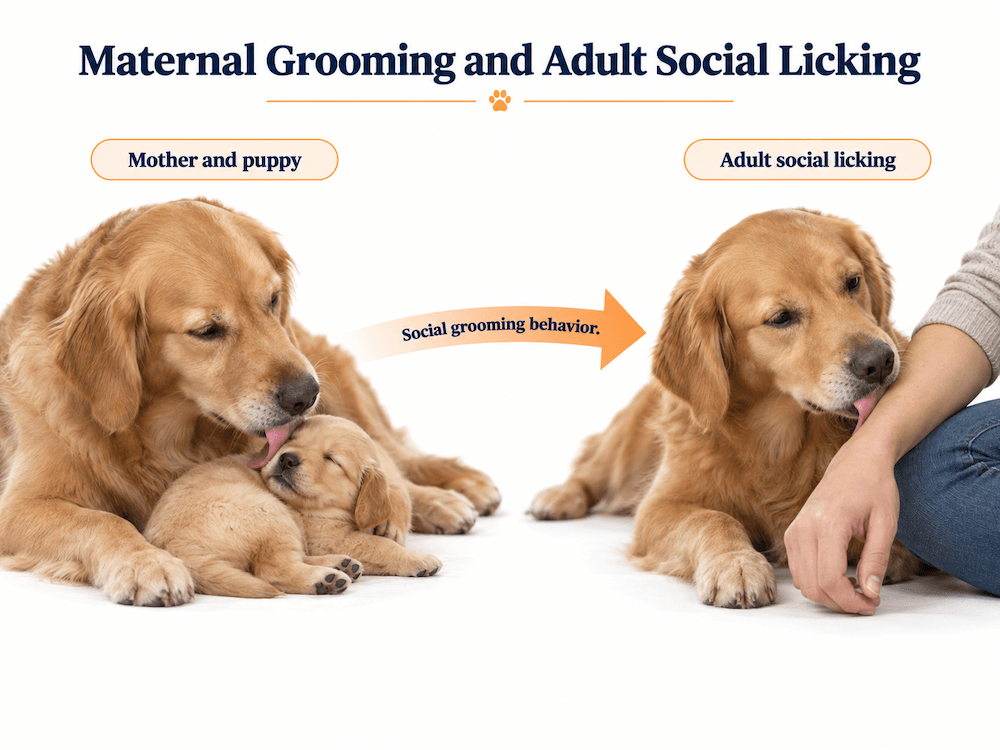
Licking is part of natural canine grooming behavior that begins when mother dogs clean their puppies and stimulate normal bodily functions. As dogs mature, some continue licking familiar companions during close social interactions, and this behavior may extend to humans. When your dog gently licks your arms, hands, or ears during quiet contact, social grooming may contribute to the behavior, although it does not mean your dog believes you need cleaning.
4. Licking Gets Your Attention
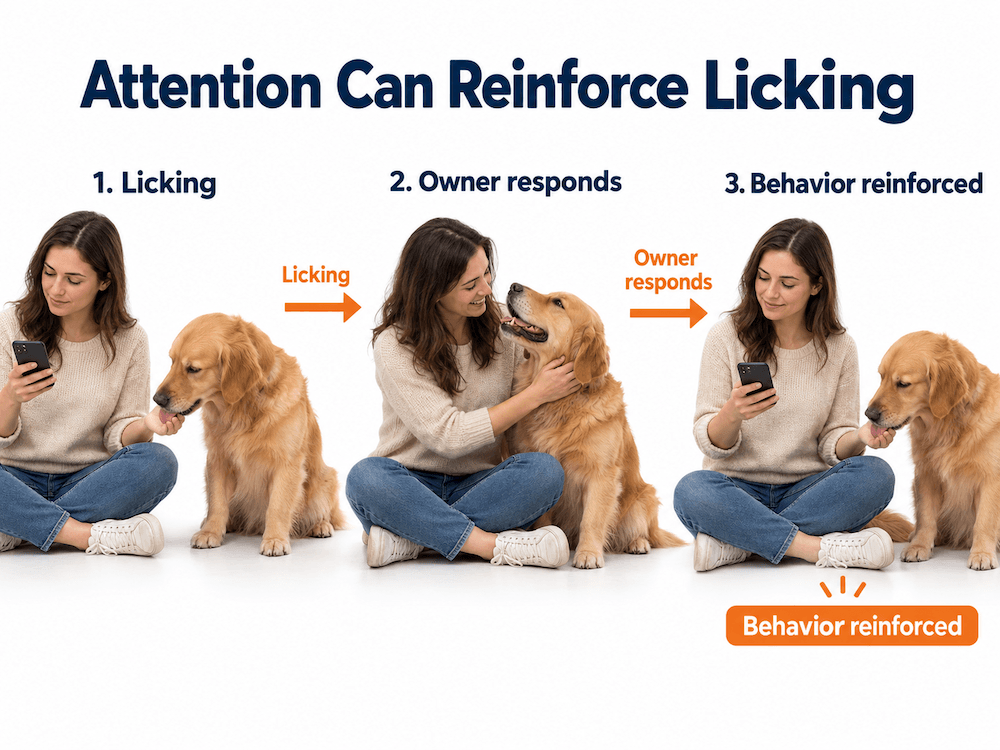
Dogs can learn that licking produces a rewarding response when their owners talk, laugh, pet them, or turn toward them afterward. Through positive reinforcement, a behavior followed by something the dog enjoys becomes more likely to happen again. Even pushing a dog away or repeatedly saying “stop” can maintain attention-seeking licking if the dog finds that interaction rewarding.
5. Ask for Food or Something They Want
Some dogs use licking as a learned request for a specific outcome, such as food, play, or access to another room. Food-related muzzle licking has roots in canine development, as young wild canids may lick adults’ mouths during food solicitation, although this does not establish the motivation behind every domestic dog’s licking. A dog that repeatedly licks your hand near its usual feeding time may have learned that the behavior helps initiate a familiar routine.

6. Your Skin Tastes Interesting
Human skin carries salts and chemical residues from sweat, natural oils, and food, which dogs may find interesting to taste. Sweat contains dissolved salts, while eating, cooking, and handling food can leave additional flavors on your hands or around your mouth. If your dog becomes especially interested in licking you after exercise or preparing a meal, these substances may explain the attraction without any deeper social meaning.

7. Investigate Your Scent and Gather Information
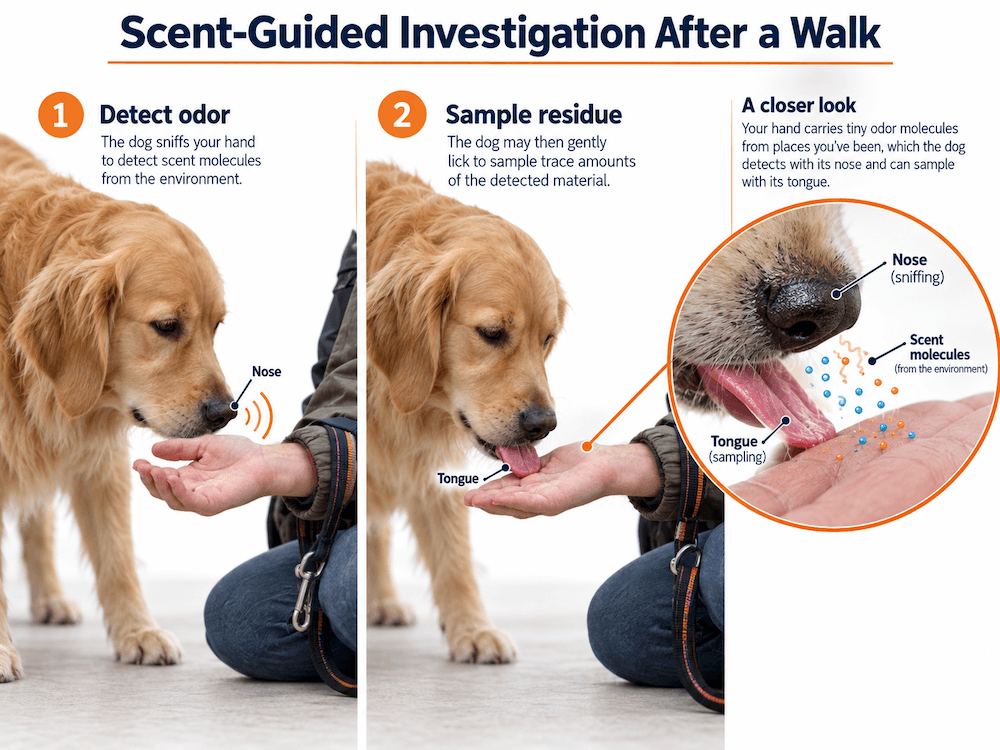
Dogs rely heavily on smell, and licking can complement scent investigation by allowing them to sample substances on a surface. Your skin and clothing may carry unfamiliar odors from other animals, outdoor environments, personal care products, or places you recently visited. A dog that carefully sniffs your hands before licking them may be investigating something new rather than initiating affection.


8. Signal Appeasement or Reduce Social Tension
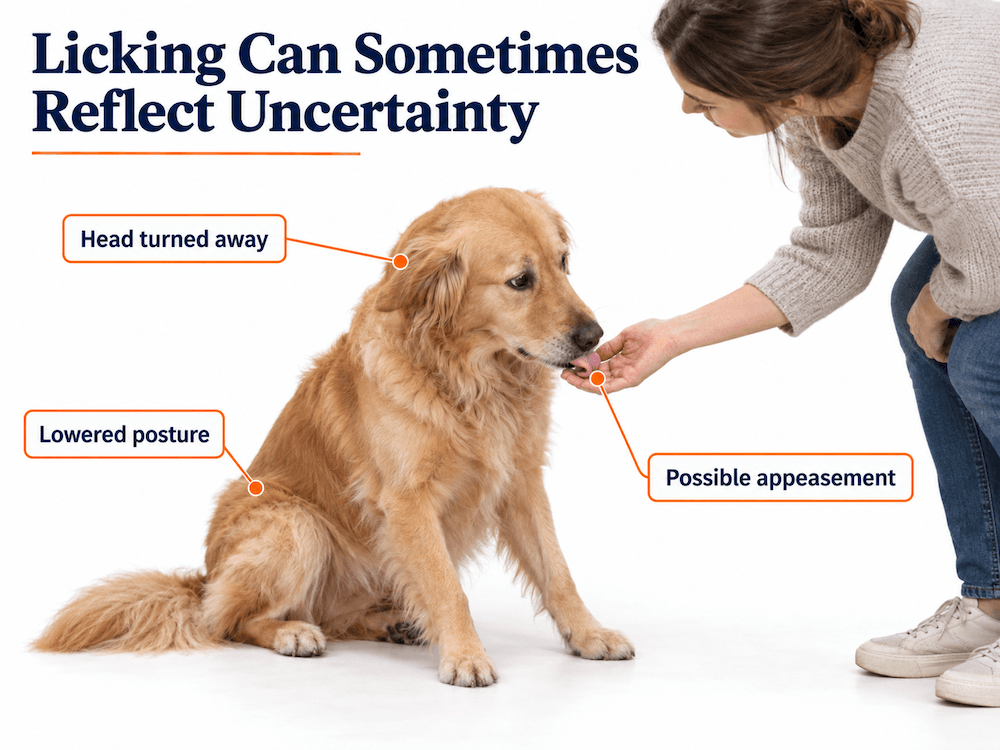
Dogs may use appeasement-related licking during interactions in which they feel uncertain or want to avoid conflict. A dog might lick someone’s hand while keeping its body low, turning its head away, or showing other signs of discomfort during close handling. This does not necessarily mean the dog is being submissive to a dominant person; the behavior may instead be part of an attempt to keep an uncomfortable encounter peaceful.
9. Cope With Stress or Emotional Arousal
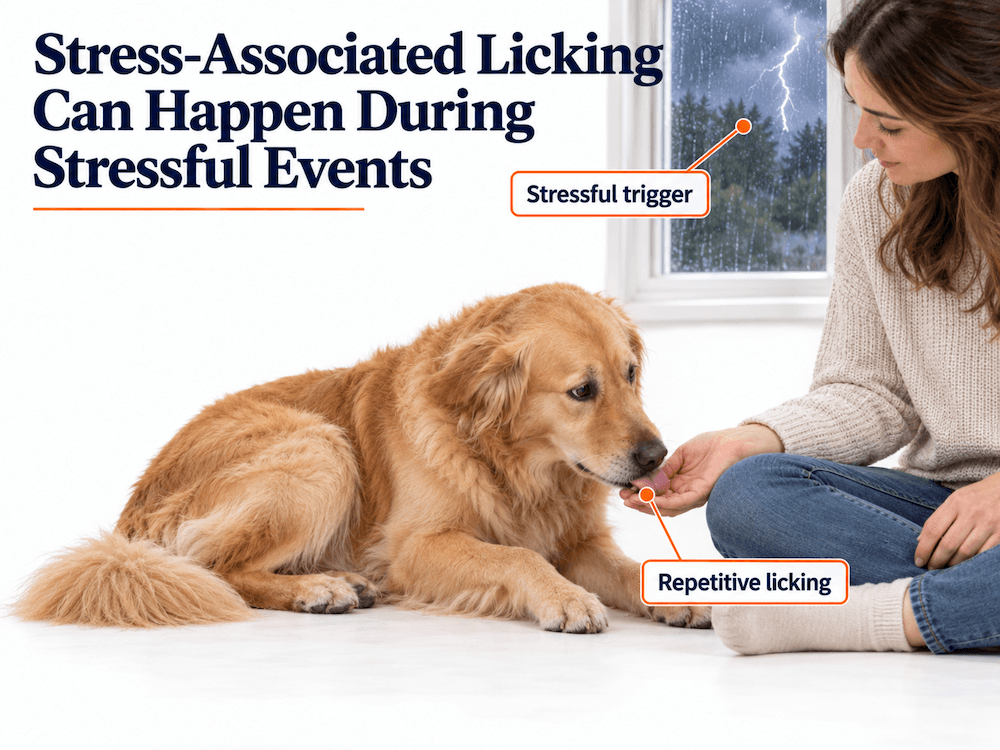
Some dogs engage in repetitive licking as a stress-related coping or displacement behavior when they feel anxious, conflicted, or overstimulated. Licking may provide a familiar activity during uncomfortable situations, although the claim that it reliably releases specific calming hormones in dogs is not well established. If your dog licks repeatedly during thunderstorms, unfamiliar visits, or tense interactions, examine their overall behavior for signs of distress.
10. They Are Bored or Understimulated
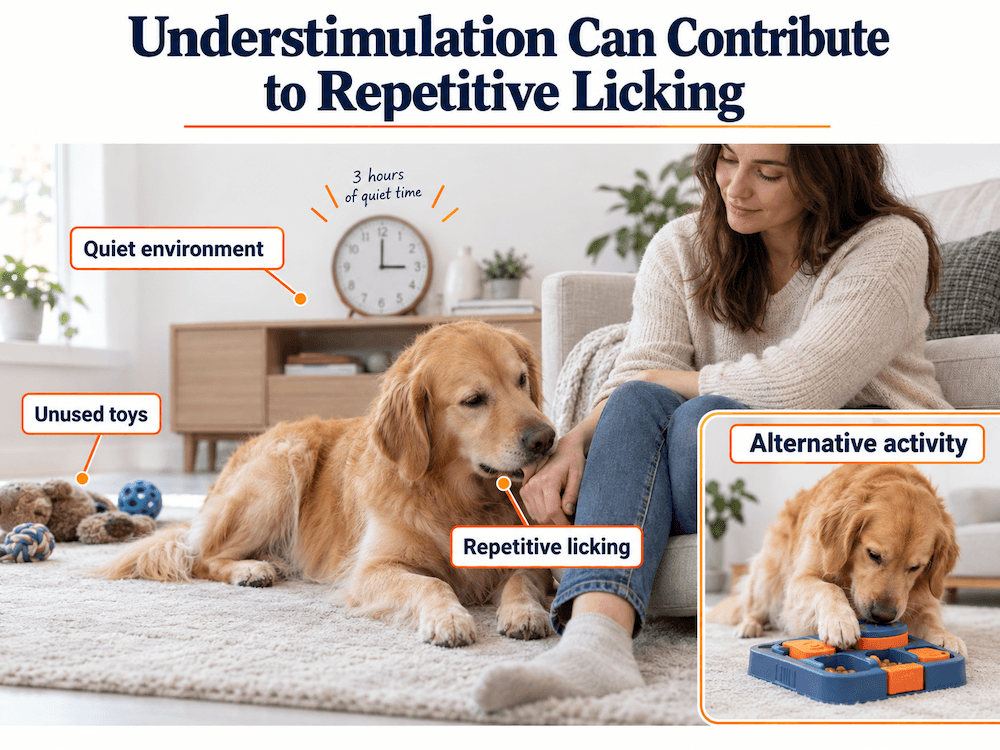
When dogs have limited opportunities for exercise, exploration, and engaging activities, repetitive licking may become an available source of stimulation. Licking a nearby person can provide sensory feedback and an activity during otherwise uneventful periods. This explanation becomes more plausible when the behavior appears during long stretches of inactivity and decreases when the dog has appropriate activities available.
11. Respond to Changes in Your Emotional State
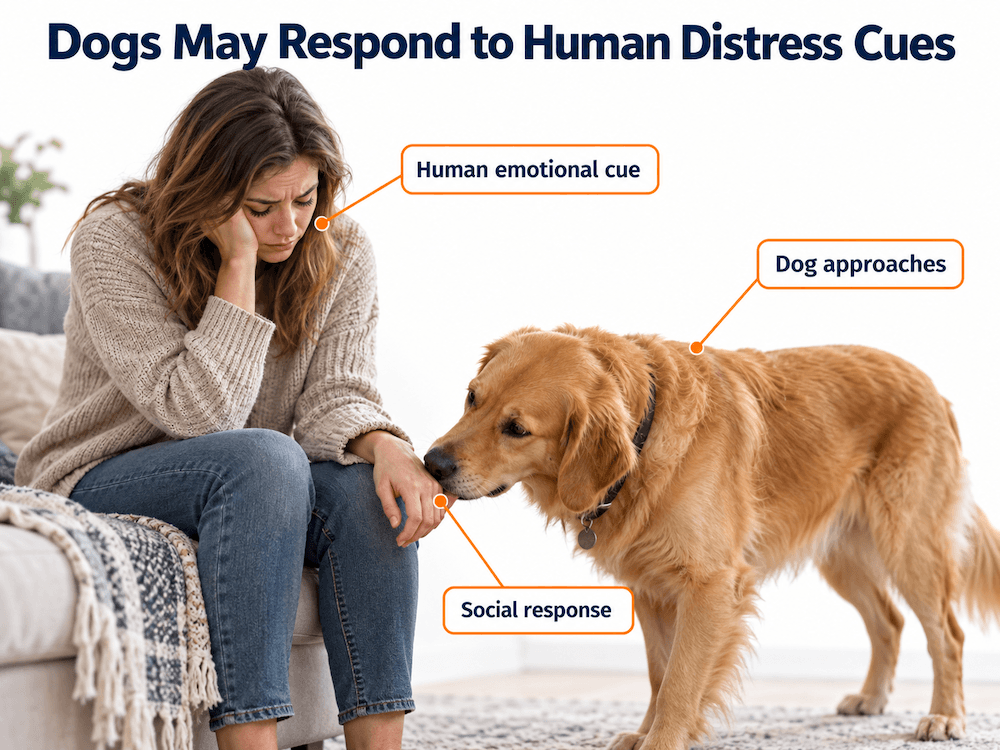
Dogs can respond to human emotional cues, and some approach, nuzzle, or lick people who appear distressed. Licking during human distress may reflect increased social attention, emotional responsiveness, previous learning, or a combination of these influences. Although owners may interpret this as comforting behavior, licking alone cannot establish that a dog understands a person’s emotions or is deliberately trying to make them feel better.
12. Physical Discomfort or an Underlying Health Problem
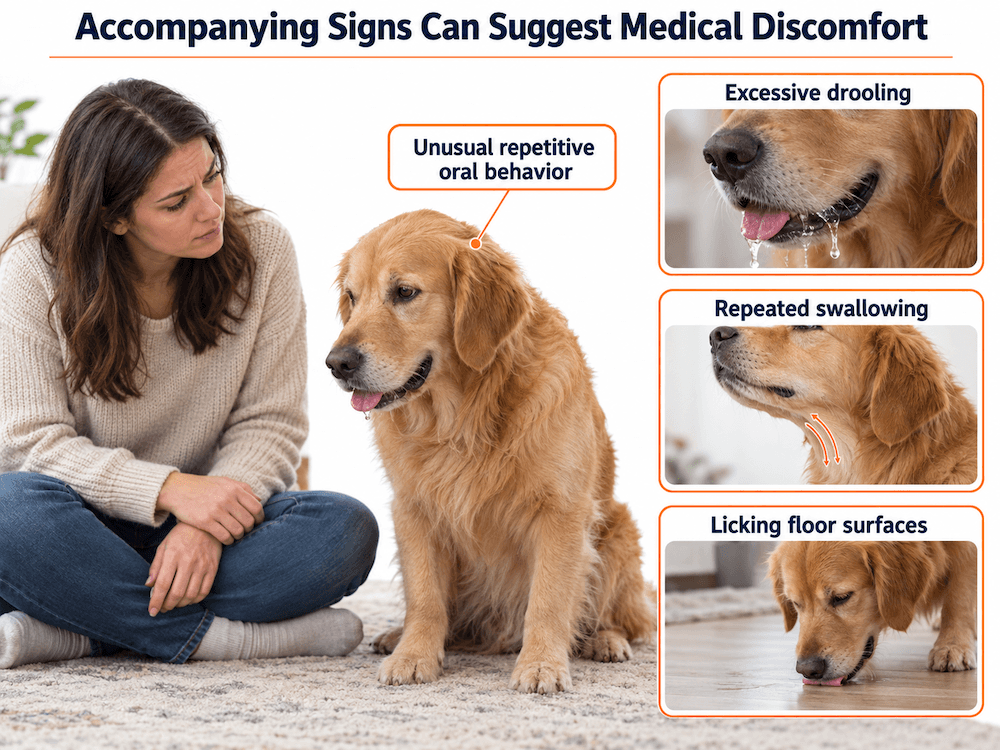
A sudden increase in repetitive licking can sometimes accompany medical discomfort, particularly when other unusual behaviors appear at the same time. Nausea, oral discomfort, pain, and certain neurological or gastrointestinal problems may contribute to abnormal oral behaviors, although the strongest direct evidence for gastrointestinal links involves dogs licking surfaces rather than people specifically. A dog that begins licking you unusually often while also swallowing repeatedly, drooling, avoiding food, or licking furniture deserves veterinary attention.
13. Licking Has Developed Into a Compulsive Pattern
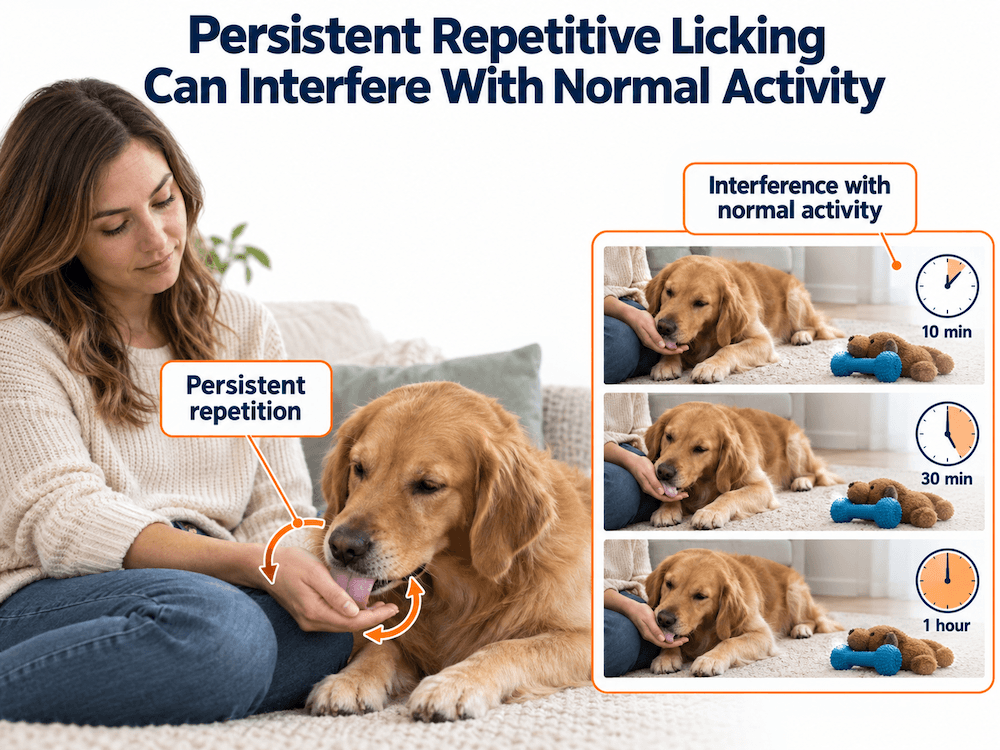
Occasionally, licking becomes a persistent, repetitive behavioral pattern that continues beyond an obvious trigger or reward. Compulsive behaviors may become difficult to interrupt and can interfere with normal activities such as resting, playing, or interacting comfortably. Repetitive licking is not automatically a compulsive disorder, however, because medical causes and environmental influences must be evaluated before reaching that conclusion.
Why Dogs Lick Different Parts of Your Body
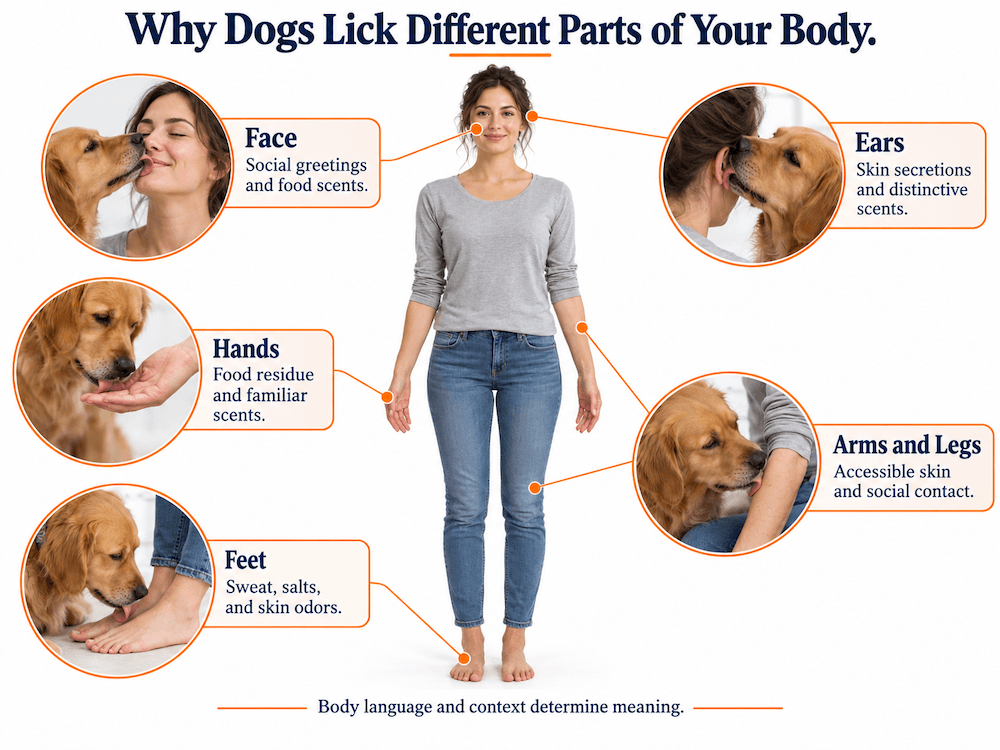
Dogs may lick different parts of your body because of variations in scent, taste, accessibility, and social interaction. Hands often carry food residues and unfamiliar smells, while feet may attract dogs because of sweat and skin odors. Face licking can occur during greetings or close social contact, while licking your arms, legs, or ears may reflect curiosity or familiar interaction. However, the location alone cannot reveal your dog’s exact motivation.
How to Tell What Your Dog’s Licking Means
The meaning of licking depends on what happens before, during, and after the behavior. A dog that approaches with a loose body and soft eyes may be comfortable, while one that licks during unwanted physical contact may be signaling unease.
| Licking Situation | Body Language or Clues | Possible Meaning |
|---|---|---|
| Gentle licking | Soft eyes, relaxed body. | Comfort or affection. |
| Licking during handling | Stiff body, head turning. | Discomfort or appeasement. |
| Licking after exercise | Sniffing sweaty skin. | Interest in taste or scent. |
| Licking before routines | Looking toward food or objects. | Anticipation or requesting something. |
| Persistent licking | Hard to interrupt. | Possible behavioral concern. |
| Sudden excessive licking | Drooling, swallowing, restlessness. | Possible medical discomfort. |
For example, imagine a dog gently licking your hand while lying comfortably beside you. If the dog remains relaxed and willingly stays close, the interaction is more consistent with friendly social contact. In contrast, a dog that licks while being hugged, turns its head away, and stiffens may be uncomfortable with the handling. The complete pattern of behavior matters more than the lick itself.
What Influences How Often Dogs Lick Their Owners?
Individual temperament and early experiences influence how frequently dogs use licking during human interactions. Some dogs naturally engage in more mouth-oriented social behavior, while others prefer leaning, pawing, or simply remaining close to their owners. Puppies may experiment with licking frequently as they explore their surroundings, but adult dogs can also be enthusiastic lickers. There is no dependable rule that a particular breed’s licking always carries a specific meaning.
Daily routines and interaction history also shape licking frequency. A dog whose owner regularly responds enthusiastically to licking may perform the behavior more often than a dog whose owner consistently rewards other forms of interaction. Changes in household schedules, social opportunities, and access to engaging activities can also influence how prominently licking appears in everyday behavior. An increase is most meaningful when compared with that individual dog’s usual pattern.
Is Your Dog’s Licking Normal or Excessive?
Most dogs lick occasionally, and frequency alone does not determine whether licking is excessive. The key differences involve how long the behavior lasts, whether your dog can stop, and whether it interferes with normal activities.
| Observation | Usually Normal | Potentially Excessive |
|---|---|---|
| Frequency | Occasional or predictable licking. | Frequent, repetitive, or increasing licking. |
| Duration | Brief licking episodes. | Prolonged or persistent licking. |
| Interruptibility | Easily redirects to other activities. | Difficult to interrupt or redirect. |
| Body Language | Relaxed posture and comfortable behavior. | Tension, restlessness, or distress. |
| Daily Activities | Normal eating, sleeping, and playing. | Licking disrupts normal activities. |
| Behavior Changes | Consistent with usual habits. | Sudden changes or accompanying symptoms. |
Is It Safe to Let Your Dog Lick You?
For most healthy people, occasional licking of intact skin by a healthy household dog presents a relatively low risk. However, dog saliva is not sterile, and direct contact with vulnerable tissues can allow bacteria or other microorganisms to cause infections. The risks depend on the type of contact, the person’s health, and whether substances on the skin could harm the dog.
| Licking Situation | Potential Risk | Precaution |
|---|---|---|
| Intact skin | Low risk; bacteria transfer possible. | Wash hands before eating. |
| Face, mouth, or eyes | Exposure to saliva-borne germs. | Avoid face licking. |
| Open wounds | Increased infection risk. | Prevent licking; clean wounds. |
| Infants or vulnerable people | Greater infection concerns. | Prevent licking; supervise closely. |
| Medicated skin | Possible poisoning from medications. | Prevent contact; consult a vet if ingested. |
| Food-covered skin | Possible ingestion of toxic ingredients. | Wash off food residues. |
What to Do If Your Dog Keeps Licking You
If your dog’s licking becomes excessive or unwanted, consistent, positive reinforcement can help manage the behavior without causing stress or confusion. Here are practical ways to respond:
When to Call a Veterinarian About Excessive Licking
Seek immediate veterinary attention if your dog develops sudden frantic licking alongside serious symptoms, such as repeated unproductive retching, a swollen abdomen, difficulty breathing, collapse, seizures, or severe pain. These symptoms can indicate an emergency unrelated to ordinary social licking. Suspected ingestion of toxic medication or another poisonous substance also requires prompt veterinary or animal poison-control advice, even if symptoms have not appeared.
Schedule a veterinary appointment if licking becomes persistent, difficult to interrupt, or noticeably different from your dog’s usual behavior. Additional signs such as excessive drooling, repeated swallowing, vomiting, reduced appetite, changes in drinking, bad breath, pawing at the mouth, or unusual self-licking may suggest a medical concern. Repetitive licking that disrupts sleep, eating, or normal activities also deserves evaluation.
A veterinarian can perform a physical examination and targeted diagnostic assessment to investigate possible medical contributors before treating the behavior as a training problem. Depending on the history and accompanying symptoms, this may involve evaluating the mouth, skin, digestive system, or other relevant areas. If medical problems are excluded, a qualified veterinary behaviorist or appropriately credentialed behavior professional can help assess environmental and behavioral influences.
What Research Says About Why Dogs Lick Humans
Veterinary behavioral guidance supports multiple motivations for human-directed licking rather than a single universal explanation. VCA Animal Hospitals describes how taste preferences, learned attention, social interaction, and individual behavioral patterns can influence licking. These explanations fit established principles of canine behavior and learning, although it is often difficult to identify the precise motivation behind an individual licking episode without observing its context.
A 2012 study by Deborah Custance and Jennifer Mayer, published in Animal Cognition under the title Empathic-like responding by domestic dogs (Canis familiaris) to distress in humans: an exploratory study, examined how dogs reacted to people displaying apparent distress. Dogs approached, sniffed, nuzzled, and sometimes licked distressed people, including unfamiliar individuals. The findings are consistent with dogs responding to human emotional cues, but the authors also identified emotional contagion and prior learning as possible explanations. The study does not prove that every dog licking an upset person is intentionally offering comfort.[1]
Medical explanations also require careful interpretation. In a 2012 Journal of Veterinary Behavior study, Véronique Bécuwe-Bonnet and colleagues investigated excessive licking of surfaces in dogs and identified gastrointestinal abnormalities in 14 of 19 affected dogs. Some dogs improved after treatment directed at their medical findings, suggesting an important relationship between abnormal surface licking and gastrointestinal disorders. However, this was a small study of dogs licking objects and surfaces, not a demonstration that frequent licking of owners generally indicates digestive disease.[2
For human health, the Centers for Disease Control and Prevention explains that dog saliva can occasionally transmit harmful bacteria, including Capnocytophaga, particularly when saliva enters an open wound. Serious infections are uncommon, but people with weakened immune systems face greater risks. This supports sensible precautions around broken skin and vulnerable individuals without treating every instance of ordinary dog contact as dangerous.]
Frequently Asked Questions
The Bottom Line
Dogs lick people for many reasons, and the meaning often depends on the situation. Affection, social communication, sensory curiosity, and learned behaviors can all contribute to this natural canine habit. Occasional licking is generally normal, especially when your dog appears relaxed and comfortable. Understanding your dog’s body language, surroundings, and usual behavior can help you interpret what each interaction means. However, sudden, excessive, or persistent licking may indicate stress, discomfort, or an underlying health concern. Setting gentle boundaries and rewarding appropriate behaviors can help manage unwanted licking without causing unnecessary stress. Ultimately, recognizing why your dog licks you allows you to respond appropriately while maintaining a healthy, comfortable relationship.
To better understand your dog’s communication and affection, explore our guides on how to pet a dog and how to show your dog love. For safety and behavioral concerns, learn what happens if a dog licks your cut and how to recognize compulsive behaviors in dogs. These resources offer additional guidance on understanding your dog’s behavior and keeping interactions safe.