How Long Can a Dog Go Without Eating? Warning Signs & What to Do

Canine Bible is reader-supported. We receive affiliate commissions via some of our links. Learn more.
How long can a dog go without eating, and when should a missed meal become a cause for concern? While some dogs occasionally skip meals without serious consequences, going without food can quickly become dangerous depending on the dog’s age, health, and circumstances. A temporary loss of appetite may be caused by stress, changes in routine, or picky eating, but it can also signal an underlying medical problem. Puppies, senior dogs, and dogs with existing health conditions may face greater risks than healthy adults. But what if your dog is drinking water but refusing food, or acting completely normal despite not eating? How can you tell the difference between a harmless skipped meal and a situation that requires veterinary attention? This guide explains what affects how long dogs can safely go without food, the warning signs to watch for, and when it’s time to seek help.
How Long Can a Dog Go Without Eating? The Truth
A healthy adult dog may survive approximately 3–5 days (72–120 hours) without food if it continues drinking water, but this is a rough survival estimate, not a safe waiting period. An otherwise healthy dog that skips one meal may not be in immediate danger, but contact a veterinarian after 12 hours without eating and arrange an examination if food refusal reaches 24 hours. Puppies, senior dogs, small breeds, and dogs with underlying health conditions may require veterinary attention after just one missed meal, sometimes within a few hours. The most important factors are your dog’s age, overall health, access to water, and the underlying cause of its appetite loss.
Remember to consult your veterinarian immediately if your dog suddenly stops eating, especially if they also show signs of illness, weakness, vomiting, or unusual behavior. If you can’t reach your vet, you can chat live with a registered online veterinary professional via our online vet chat or video chat support (24 hours a day, 7 days a week). Or use Chewy’s online vet services (6 a.m. – midnight ET).
Understanding Different Appetite Changes in Dogs
Not all appetite changes involve completely refusing food. How your dog eats, how much it consumes, and whether its eating habits change suddenly can provide useful clues about its health.


| Appetite Change | What It May Mean |
|---|---|
| Complete Loss of Appetite | Refusing all food may indicate nausea, pain, illness, or significant stress. |
| Reduced Appetite | Eating smaller portions may reflect discomfort, illness, or lower energy needs. |
| Sudden Food Refusal | An abrupt change may signal acute illness, pain, or environmental stress. |
| Gradual Appetite Decline | Progressively eating less may indicate chronic disease or ongoing discomfort. |
| Intermittent Appetite | Alternating between eating normally and refusing meals may suggest recurring discomfort. |
| Refusing Kibble but Eating Soft Food | Preference or dental pain may make crunchy food less appealing. |
| Showing Interest but Not Eating | Approaching food without eating may indicate nausea or difficulty chewing. |
| Eating Treats but Refusing Meals | Food preferences or excess snacks may contribute, but illness remains possible. |
| Increased Appetite | Greater hunger may reflect higher energy needs, medication effects, or disease. |
How Long Is Too Long for Different Dogs to Go Without Food?
How long a dog can tolerate missing food depends on its age, size, health, and nutritional needs. There is no medically established survival time for each category, so the ranges below indicate when to seek veterinary advice rather than how long a dog can safely survive without eating. Dogs showing concerning symptoms may need immediate attention regardless of the time elapsed.
| Dog’s Situation | Why Missing Food Matters | Hours Without Food Before Seeking Advice |
|---|---|---|
| Healthy Adult Dogs | Healthy adults generally have greater energy reserves than puppies. | 12 hours: call a vet; 24 hours: arrange assessment. |
| Young Puppies and Toy Breeds | Limited energy reserves increase the risk of hypoglycemia. | 0 hours: call promptly after a missed scheduled feeding. |
| Senior or Underweight Dogs | Age-related illness or reduced reserves may increase risks. | 0–12 hours: seek same-day veterinary advice. |
| Pregnant or Nursing Dogs | Higher nutritional demands make missed meals more concerning. | 0–12 hours: contact a veterinarian promptly. |
| Dogs With Chronic Illness | Fasting may worsen existing disease or interfere with treatment. | 0–12 hours: seek advice sooner for higher-risk conditions. |
| Insulin-Treated Diabetic Dogs | Missing meals can cause dangerous blood sugar changes. | 0 hours: contact a veterinarian immediately after a missed meal. |
Can a Dog Go Without Eating if It Is Still Drinking Water?
A dog that continues drinking water may maintain hydration despite refusing food, but water cannot replace essential nutrients and calories. Drinking helps support circulation, temperature regulation, and normal organ function. However, prolonged inadequate food intake can still compromise energy balance, muscle maintenance, and recovery from illness. A dog that drinks normally is not necessarily healthy.
Refusing both food and water is more concerning than refusing food alone, particularly when the dog is also losing fluids through vomiting or diarrhea. Dehydration can cause dry or tacky gums, reduced urination, weakness, and, in more advanced cases, sunken eyes. These signs can be difficult to assess accurately at home, especially in small or elderly dogs. Never assume that occasional licking or a few sips means your dog is adequately hydrated.
Common Reasons Dogs Stop Eating
Dogs may stop eating because of temporary changes in their environment, feeding habits, or underlying health problems. Understanding the possible causes of appetite loss can help owners recognize whether their dog is experiencing a minor disruption or needs veterinary attention.


| Common Cause | Why It Affects Appetite |
|---|---|
| Stress or Anxiety | Travel, boarding, moving, or unfamiliar surroundings may temporarily reduce appetite. |
| Changes in Food | Sudden diet changes or unfamiliar flavors may cause food refusal. |
| Too Many Treats | Excess treats or table scraps can reduce hunger at mealtimes. |
| Hot Weather | Heat and reduced activity may temporarily decrease interest in food. |
| Digestive Problems | Nausea, infections, or gastrointestinal inflammation can make eating uncomfortable. |
| Dental or Mouth Pain | Damaged teeth, gum disease, or oral injuries can make chewing painful. |
| Underlying Illness | Kidney disease, liver problems, pancreatitis, or intestinal blockages may suppress appetite. |
| Medication Side Effects | Certain medications may cause nausea, stomach discomfort, or reduced hunger. |
| Pain or Physical Discomfort | Injuries, arthritis, or other painful conditions may decrease interest in eating. |
| Difficulty Swallowing | Throat or swallowing problems may cause dogs to avoid food despite hunger. |
What Happens to a Dog’s Body When It Stops Eating?
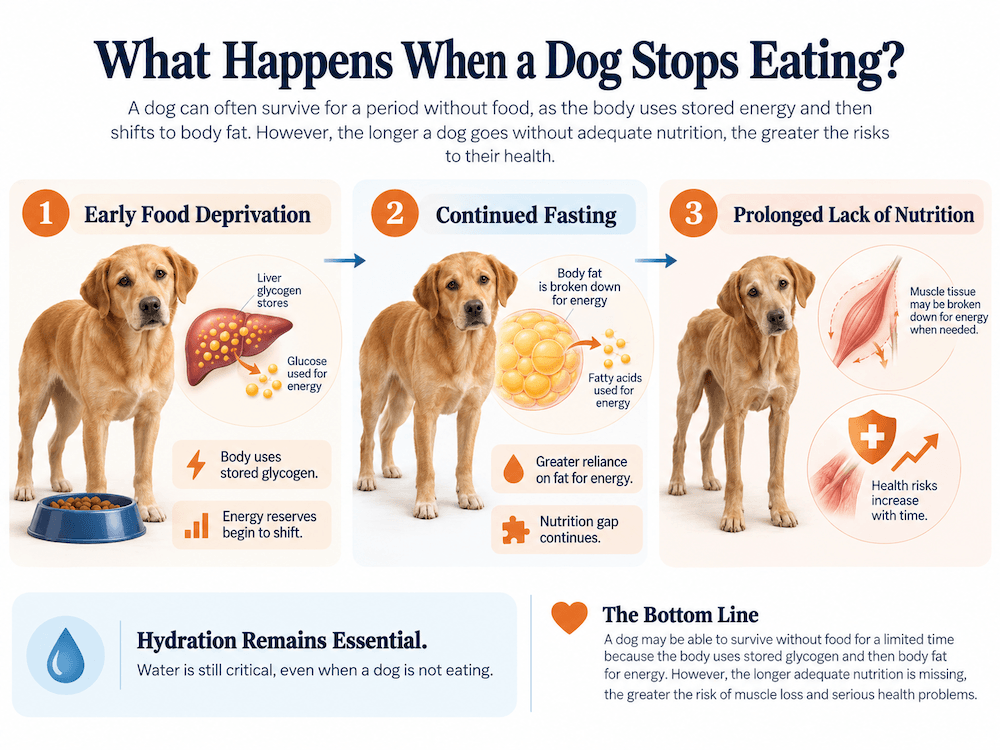
When a dog stops eating, its body begins relying on stored energy reserves to maintain essential functions. Initially, the body uses readily available glucose and stored glycogen, a form of carbohydrate kept mainly in the liver and muscles. As fasting continues, fat becomes an increasingly important energy source, while prolonged inadequate nutrition can also cause muscle loss. Illness, dehydration, and limited energy reserves can make these changes more dangerous.
What to Do if Your Dog Skips a Meal
If your otherwise healthy adult dog misses a meal but remains playful, alert, and comfortable, a few simple checks may help identify a temporary appetite change. For example, a dog that received more treats than usual might be less interested in dinner while otherwise behaving normally. Home measures are appropriate only when there are no concerning symptoms, and the dog is not in a high-risk group.
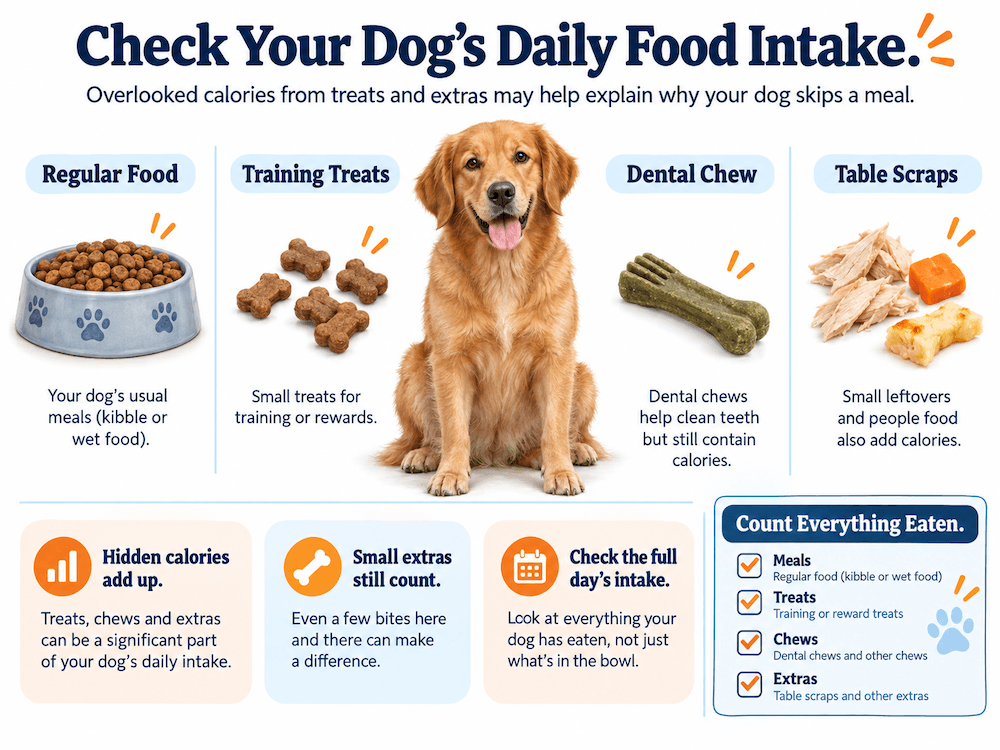
1. Check Your Dog’s Total Food Intake
Your dog may have eaten more than you realize throughout the day. Account for treats, dental chews, table scraps, and food used to give medications, as these can reduce hunger at regular mealtimes. Consider whether another family member has already fed your dog or offered extra snacks.
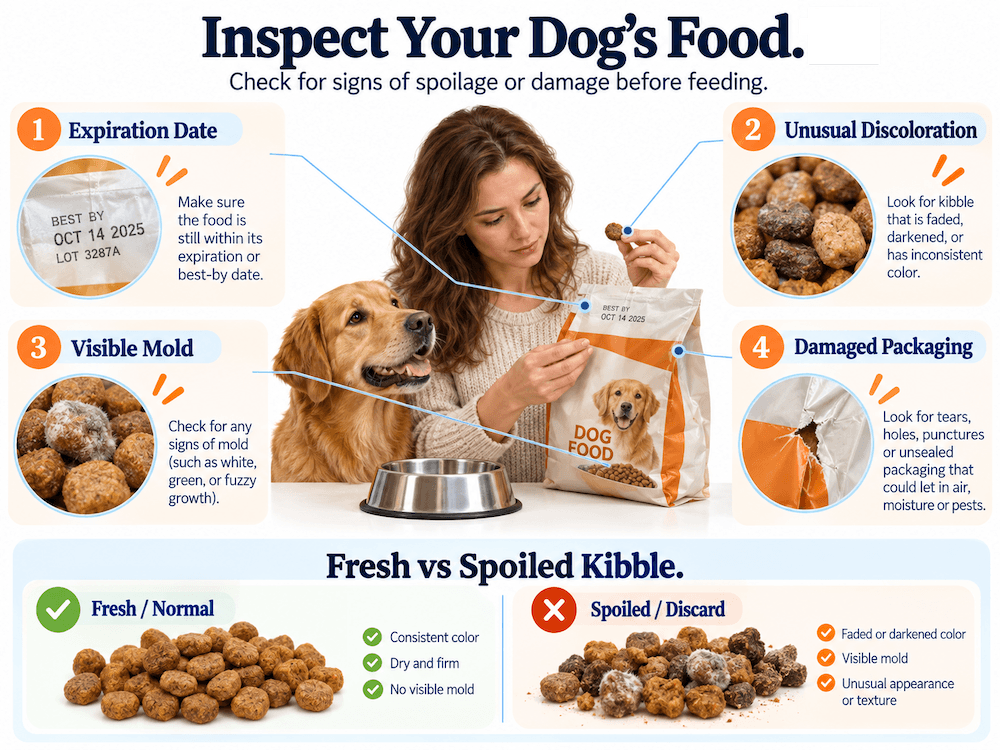
2. Inspect Your Dog’s Food
Check your dog’s food for signs of spoilage or changes in quality before offering another meal. Look for unusual odors, discoloration, mold, expired products, or damaged packaging. If the food appears questionable, discard it and use a fresh, properly stored portion instead.
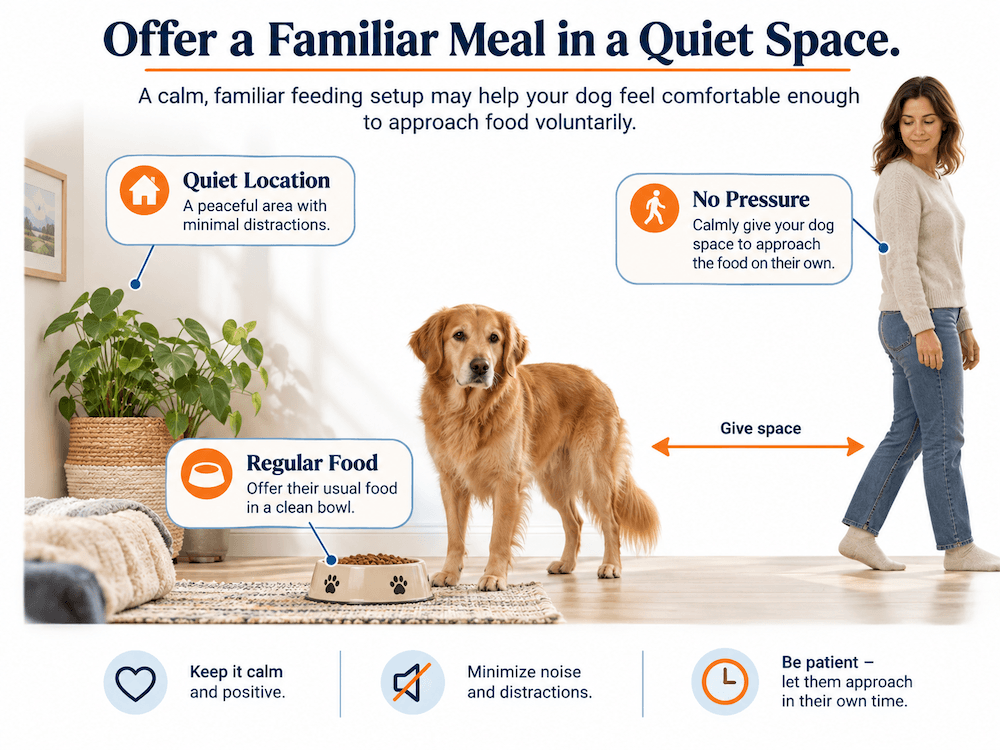
3. Offer a Familiar Meal in a Quiet Environment
Serve a small portion of your dog’s regular food in a clean bowl and place it somewhere peaceful, away from household distractions. Give your dog space to approach and eat voluntarily without pressure or repeated encouragement. Avoid introducing several unfamiliar foods at once, which can make it harder to identify the cause of appetite changes.
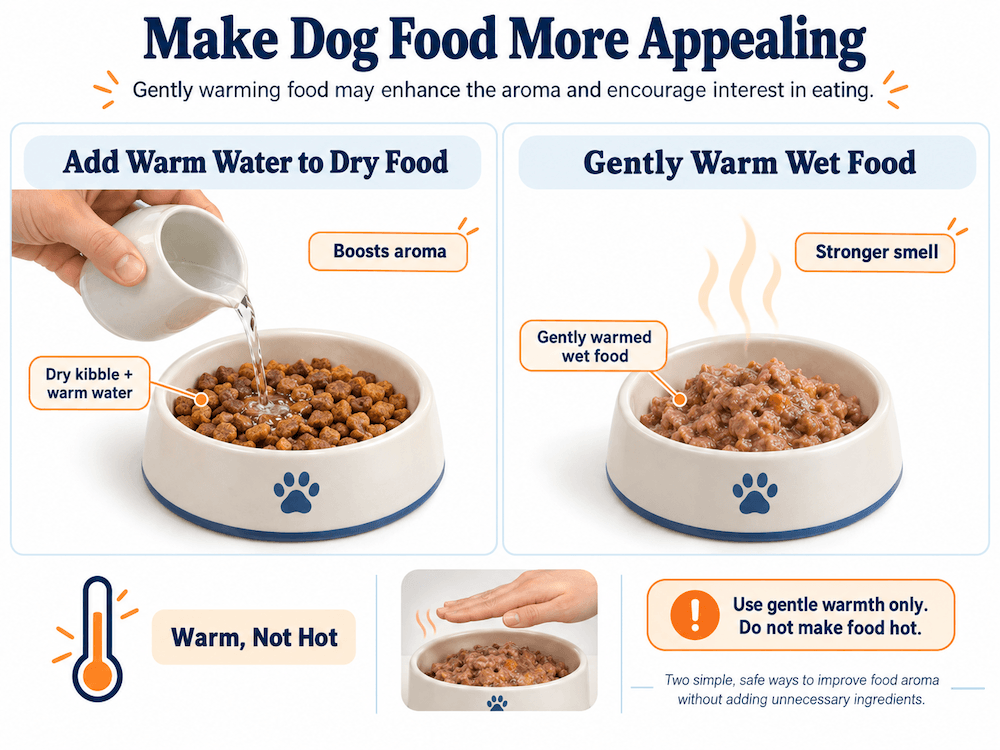
4. Make Your Dog’s Food More Appealing
If your dog seems mildly uninterested in its usual meal, try enhancing the food’s aroma without significantly changing its ingredients. Add a small amount of warm water to dry kibble or gently warm suitable wet food to make its smell more noticeable. Stir thoroughly and check the temperature before serving to ensure the food is comfortably warm, not hot.
5. Observe How Your Dog Responds to Food
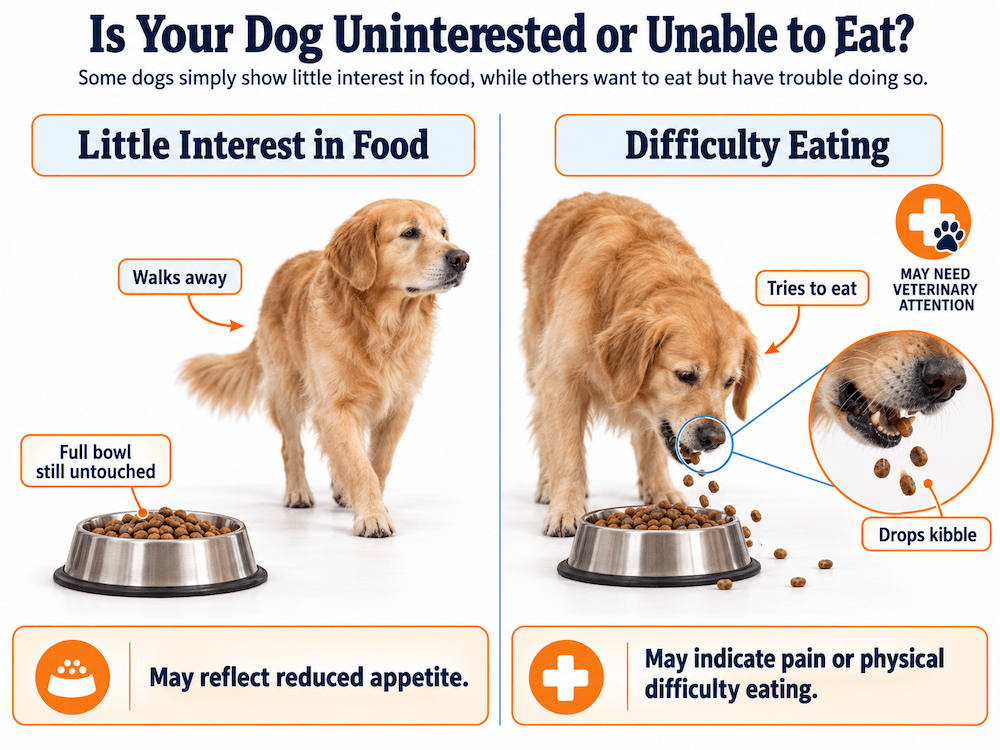
Pay attention to whether your dog ignores food or appears interested but cannot eat comfortably. A dog that approaches the bowl, attempts to chew, drops kibble, or repeatedly backs away may be experiencing oral pain or another physical problem. Record these behaviors and seek veterinary advice rather than repeatedly changing foods if eating appears difficult.
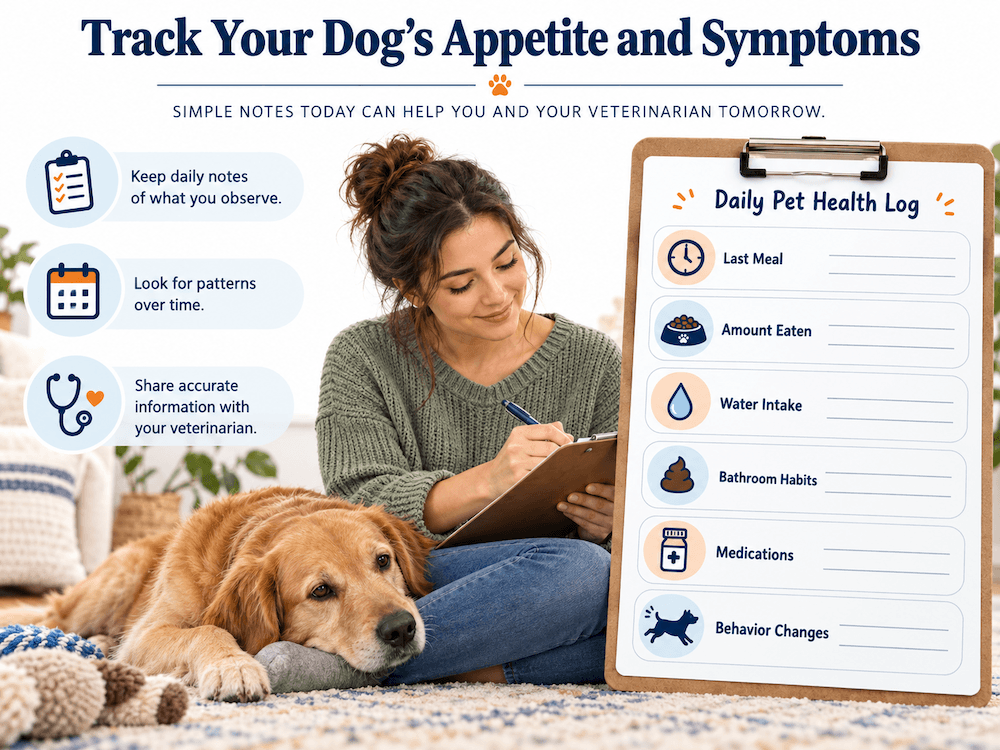
6. Keep a Record of Your Dog’s Symptoms and Eating Habits
Document when your dog last ate normally and any changes in food intake, drinking, or behavior. Include recent medications, vomiting, diarrhea, bowel movements, and unusual signs such as lethargy or discomfort. A brief written record can help your veterinarian assess how the problem has developed and determine whether further examination is necessary.
Mistakes to Avoid When Your Dog Refuses Food
Trying to encourage a dog to eat can sometimes create additional problems. The goal is to avoid unsafe feeding methods and unnecessary dietary changes, especially when the reason for food refusal is uncertain. The following table identifies common errors and safer alternatives.
| Mistake | Why It’s a Problem | Safer Alternative |
|---|---|---|
| Force-Feeding With a Syringe | May cause aspiration, choking, distress, or food aversion. | Ask your veterinarian whether assisted feeding is medically appropriate. |
| Offering Greasy Leftovers | Fatty foods may aggravate digestive problems or trigger pancreatitis. | Use familiar food or veterinarian-approved dietary alternatives. |
| Giving Human Medications | Some medications are toxic or inappropriate for dogs. | Use only medications prescribed or approved by your veterinarian. |
| Constantly Switching Foods | Repeated dietary changes may cause digestive upset and obscure feeding patterns. | Maintain dietary consistency unless a medical change is recommended. |
| Leaving Perishable Food Out | Wet or fresh food can spoil when improperly stored. | Discard leftovers promptly and clean feeding bowls regularly. |
When to Call a Veterinarian About a Dog Not Eating
Seek emergency veterinary care immediately if your dog refuses food alongside repeated vomiting, collapse, seizures, difficulty breathing, severe weakness, or a swollen, painful abdomen. Repeated unsuccessful attempts to vomit, suspected poisoning, or an inability to keep water down also require urgent attention. These symptoms can indicate serious conditions that must be assessed regardless of how recently your dog last ate.
For an otherwise healthy adult dog, contact your veterinarian if food refusal continues beyond 12 hours and arrange an evaluation if it reaches 24 hours, even without obvious additional symptoms. Persistent reduced appetite, recurring missed meals, unexplained weight loss, or difficulty chewing also warrant a veterinary appointment. Describe when the appetite change began, how much your dog has eaten, and whether other behaviors have changed.
Dogs with additional health risks need an individualized veterinary assessment rather than a standard waiting period. Very young puppies, frail dogs, and pets with ongoing illnesses may require testing or treatment before prolonged food deprivation develops. If the cause remains uncertain or home measures have not helped, a veterinarian may perform an oral examination, abdominal assessment, blood tests, or diagnostic imaging. Treatment depends on the cause and may include medications, fluid therapy, dietary adjustments, or medically supervised nutritional support.
How Veterinarians Diagnose and Treat Dogs That Won’t Eat
When a dog refuses food, veterinarians focus on identifying the underlying cause and restoring normal eating habits. Depending on the dog’s symptoms and medical history, evaluation may involve physical examinations, diagnostic testing, or supportive treatment.
| Veterinary Approach | What It Involves |
|---|---|
| Medical History Review | Reviews appetite changes, symptoms, diet, medications, and recent activities. |
| Physical Examination | Checks hydration, abdominal discomfort, body condition, teeth, and gums. |
| Blood Tests | Checks for infection, anemia, organ dysfunction, and metabolic abnormalities. |
| Urine and Stool Tests | Investigates urinary problems, metabolic disorders, or intestinal parasites. |
| X-rays or Ultrasound | Examines internal organs and identifies possible obstructions or abnormalities. |
| Additional Diagnostic Tests | Investigates suspected conditions requiring specialized testing or procedures. |
| Fluids and Symptom Relief | Corrects dehydration and manages nausea or pain when appropriate. |
| Cause-Specific Treatment | Uses appropriate medications, dental care, surgery, or other targeted treatments. |
| Nutritional Support | May include prescribed diets, appetite stimulants |
What to Watch for When Your Dog Starts Eating Again
When your dog resumes eating after skipping a meal, monitor whether its appetite and overall behavior return to normal. Eating a few bites does not necessarily mean the underlying problem has resolved. Watch for the following signs to determine whether your dog is recovering or needs further evaluation.
What Veterinary Research Says About Dogs Going Without Food
Prolonged fasting changes how dogs use energy. A study by Brady et al. examined eight adult beagles during extended fasting. Researchers found that glucose utilization decreased while blood concentrations of free fatty acids and ketones increased, indicating a shift toward stored energy sources. These metabolic adaptations do not establish that prolonged fasting is safe, particularly for sick or vulnerable dogs.[1]
Even short periods without food can affect a dog’s metabolism. Leung et al. in Frontiers in Veterinary Science studied 10 healthy adult dogs undergoing a 48-hour intermittent fasting regimen. Researchers observed changes in blood glucose, insulin, and ketone concentrations, with results varying according to dietary composition. However, the study involved healthy dogs under controlled conditions and cannot establish a safe fasting duration for dogs refusing food because of illness.[2]
Inadequate calorie intake is associated with poorer outcomes in hospitalized dogs. Brunetto et al., writing in the Journal of Veterinary Emergency and Critical Care, evaluated nutritional support in 467 dogs and 55 cats. Higher energy intake was positively associated with hospital discharge, although illness severity also influenced both appetite and survival. The findings highlight the importance of nutritional assessment during illness but do not prove that feeding alone improves survival. They reinforce why persistent food refusal warrants veterinary evaluation rather than waiting for a presumed safe fasting limit.[3]
Frequently Asked Questions
The Bottom Line
A healthy adult dog may survive approximately 3–5 days without food if drinking water, but waiting that long can put its health at risk. While occasionally skipping a meal may be harmless, persistent appetite loss can indicate an underlying medical condition. Puppies, senior dogs, and dogs with existing health problems are especially vulnerable to prolonged food refusal. Paying attention to your dog’s hydration, energy levels, eating behavior, and accompanying symptoms can help you recognize when something is wrong. Simple feeding adjustments may help in mild cases, but they should never replace veterinary care when appetite loss continues. Early veterinary attention is the safest approach when your dog refuses food for an extended period or develops concerning symptoms. Understanding these warning signs can help you make informed decisions and protect your dog’s health.
For more information about digestive problems that may affect your dog’s appetite, read our guide on what to give a dog for an upset stomach. If your dog needs a gentle diet during recovery, explore our recommendations for the best bland diets for dogs. You can also use our dog symptom checker to better understand accompanying symptoms and recognize when veterinary attention may be necessary.