What Happens If a Dog Licks Your Cut? Risks, Infections & What to Do

Canine Bible is reader-supported. We receive affiliate commissions via some of our links. Learn more.
If a dog licks your cut, bacteria from its mouth can enter the wound and potentially cause an infection, even though many minor exposures do not lead to complications. Dog saliva is not sterile, so an open cut should be cleaned rather than relying on licking to “heal” it. The actual risk depends on the depth of the wound, your health, the dog’s health, and how quickly the area is washed. Small scratches may require little more than proper cleaning and monitoring, while deeper wounds or bites deserve more caution. Certain bacteria carried in a dog’s mouth can be especially concerning for people with weakened immune systems or other health conditions. So, should you worry if your dog gives a fresh cut one quick lick, and what warning signs suggest an infection is developing? Understanding what dog saliva contains, how to clean the wound, and when to seek medical care can help you respond appropriately.
Why Dogs Lick People: Dog Licking Behavior At a Glance
| Reason for Licking | What It May Mean |
|---|---|
| Social bonding | A friendly interaction with familiar people. |
| Attention | Licking may prompt petting, talking, or interaction. |
| Taste or scent | Skin can carry salt, food residue, and interesting odors. |
| Exploration | Dogs use their mouths and tongues to investigate. |
| Appeasement | Licking can accompany submissive or calming social signals. |
| Comfort | Some dogs lick when relaxed, excited, or seeking reassurance. |
| Learned behavior | Repeated attention can reinforce licking over time. |
What Happens If a Dog Licks Your Cut?
What happens after a dog licks your cut depends on the wound, the amount of saliva contact, your health, and the dog involved. In many cases, nothing serious happens after a brief lick and prompt cleaning. In other situations, the exposure can lead to irritation, infection risk, delayed healing, or the need for medical evaluation.
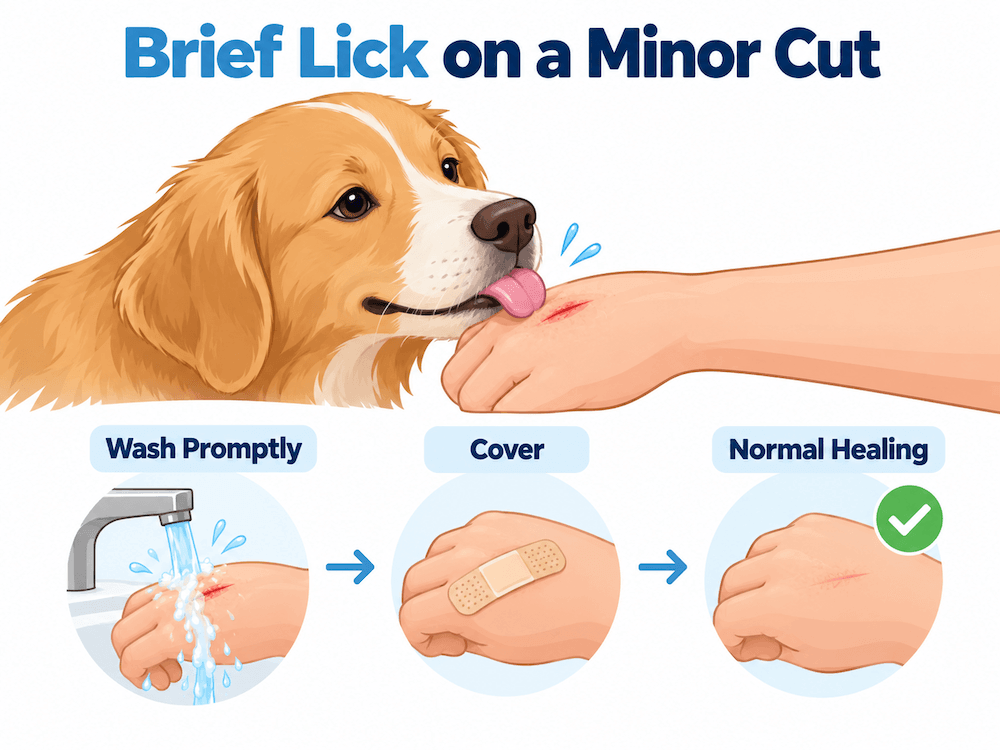
1. A Minor Cut Is Licked Briefly and Cleaned Right Away
If a dog briefly licks a small, superficial cut and you wash it promptly, nothing serious may happen. The wound may continue healing normally with no sign of infection or complication. This is generally the lowest-risk scenario, especially when the cut is shallow and the person is otherwise healthy. The key is immediate cleaning and preventing more licking.
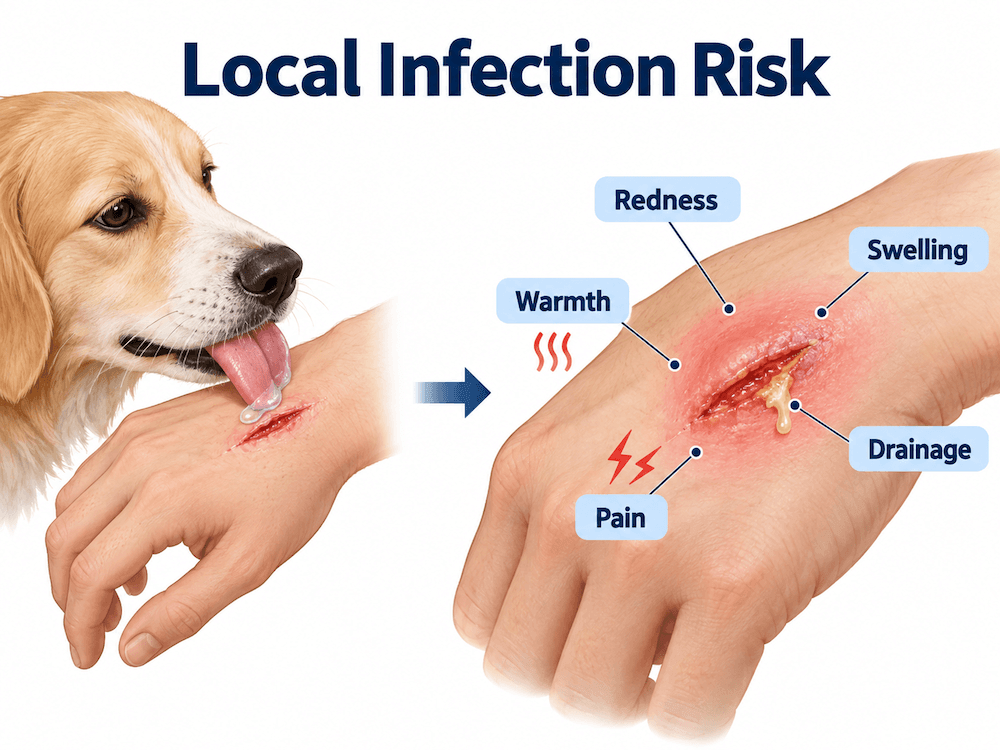
2. Saliva Enters the Wound, and the Area Becomes Irritated or Infected
If saliva reaches broken skin, bacteria from the dog’s mouth can contaminate the wound. In some cases, this may lead to worsening redness, swelling, warmth, tenderness, or drainage over the next several days. A wound that should have been improving may instead become more inflamed. This scenario is more likely if the wound is not cleaned promptly or is repeatedly licked.
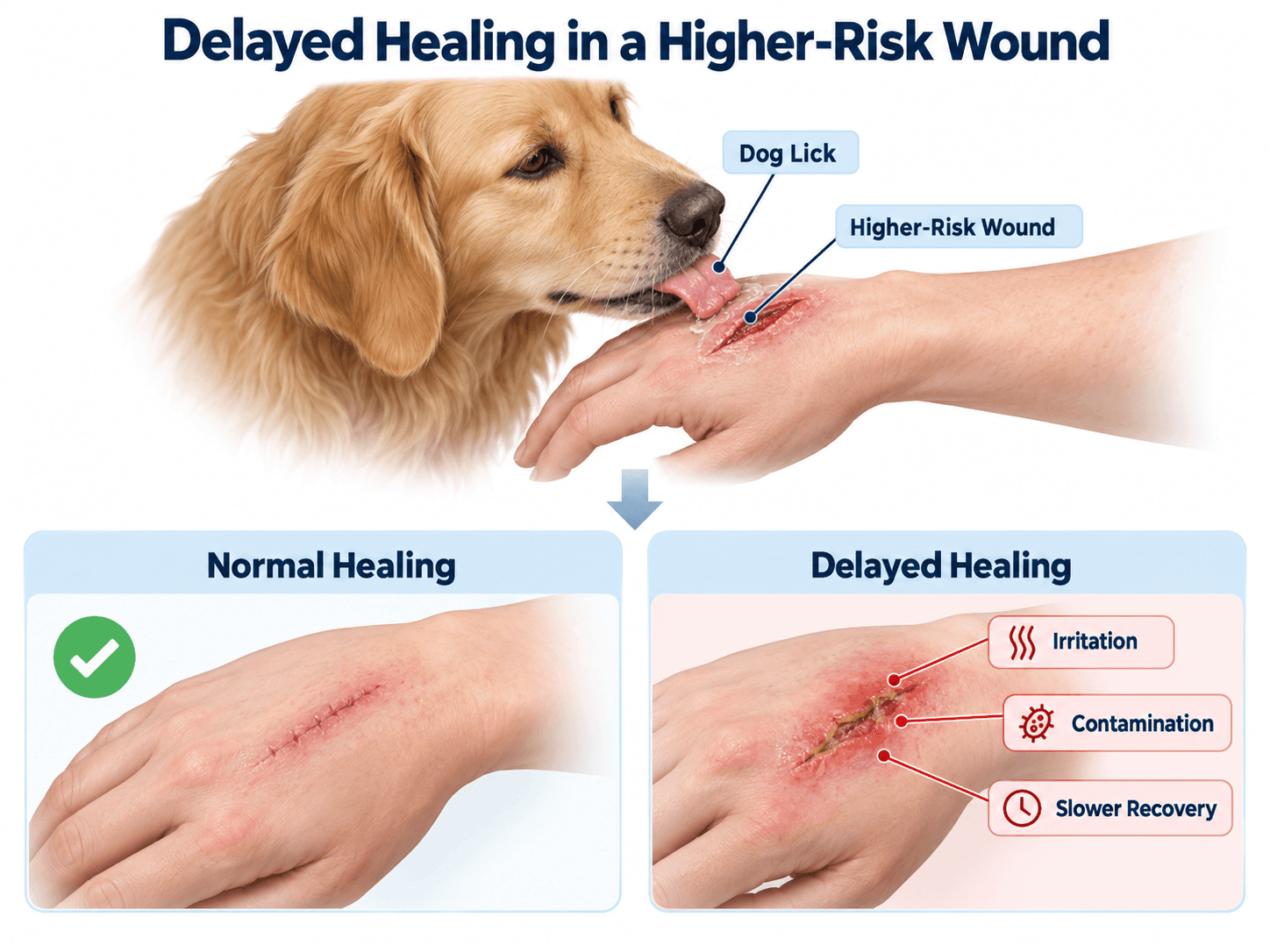
3. A Deep, Surgical, or Chronic Wound Has Delayed Healing
A deeper wound, surgical incision, burn, or chronic sore is more vulnerable than a small scrape. Dog saliva can interfere with normal healing by introducing bacteria and re-wetting or irritating already damaged tissue. Instead of closing and improving, the wound may stay inflamed, open, or more painful. These wounds deserve more caution because the consequences of contamination are greater.


4. A Higher-Risk Person Develops a More Serious Infection
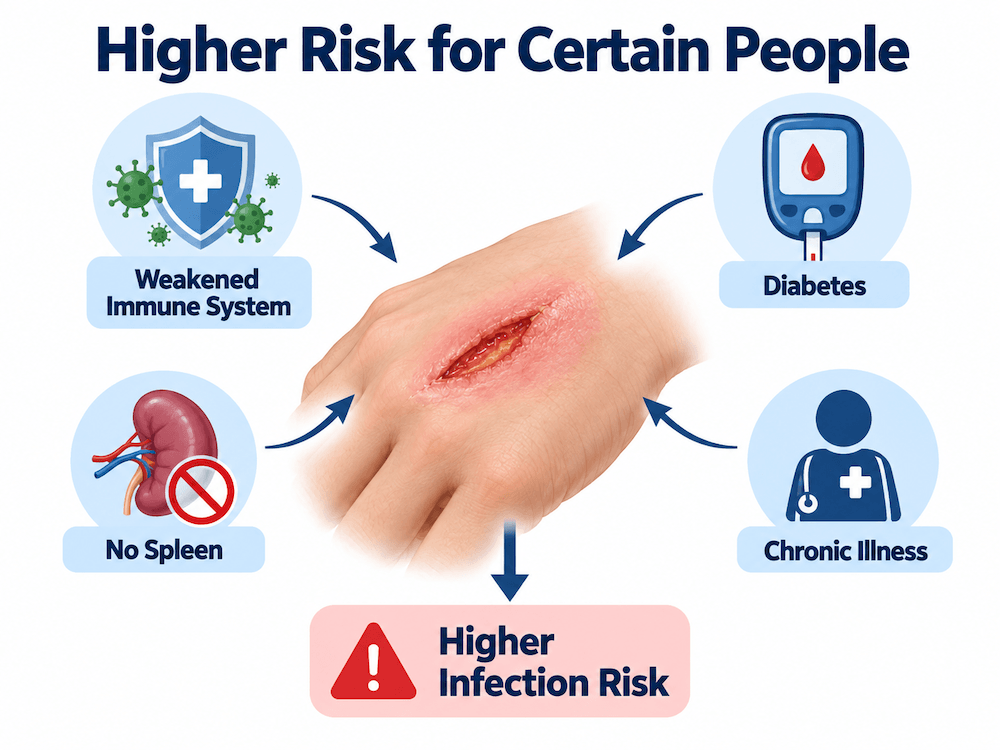
Some people are more vulnerable to complications after animal saliva contacts a wound. This includes those with weakened immune systems, diabetes, no spleen, or certain other health conditions. In these individuals, an exposure that seems minor at first may carry a greater chance of a more serious infection. That is why the same dog lick may be low risk for one person but more concerning for another.
5. The Exposure Raises a Rabies Concern
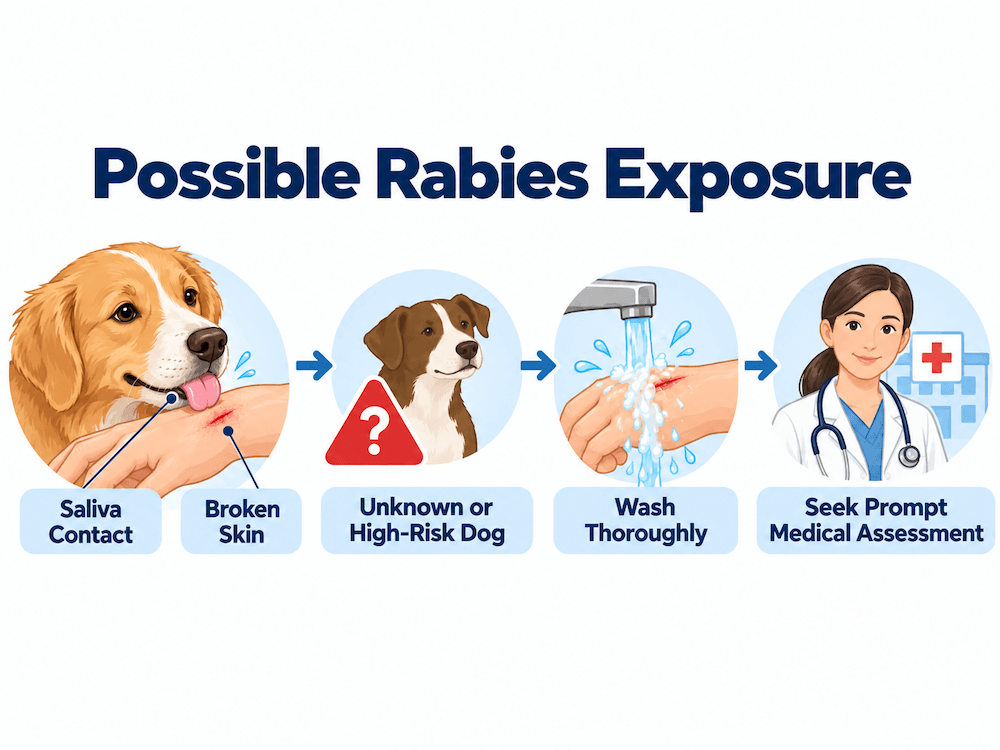
If saliva from a dog contacts broken skin and the dog could potentially have rabies, the issue becomes more serious. This is not about routine mouth bacteria alone, but about whether the dog is unknown, unvaccinated, behaving abnormally, or otherwise a realistic rabies concern. In that case, the wound should be washed thoroughly, and medical advice should be sought promptly. Rabies risk assessment should not be delayed while waiting for symptoms.
Why Dog Saliva Can Be a Problem for an Open Cut
A dog’s mouth naturally contains bacteria that can cause human infections, including Pasteurella and Capnocytophaga. These microorganisms can be present even when a dog appears healthy and receives regular dental care.
Although saliva contains compounds with antimicrobial activity, that does not make it sterile or a safe wound treatment. Those properties do not establish that letting a dog lick a cut helps it heal or protects it from infection.
| Stage | What Happens | Why It Matters |
|---|---|---|
| Dog Saliva | Saliva carries normal oral bacteria. | These germs can contaminate an open wound. |
| Broken Skin | A cut removes the skin’s protective barrier. | Bacteria have easier access to underlying tissue. |
| Bacterial Entry | Saliva may introduce bacteria into the wound. | Prompt cleaning helps reduce contamination. |
| Local Infection | Some wounds develop redness, swelling, pain, or drainage. | Worsening signs may need medical evaluation. |
| Intact Skin | Unbroken skin keeps most saliva on the surface. | It provides a strong natural protective barrier. |
What Should You Do If a Dog Licks Your Cut?
For a minor cut, start with simple first aid. The goal is to reduce contamination, protect the wound, and watch for any signs that healing is not going normally.


1. Wash your hands
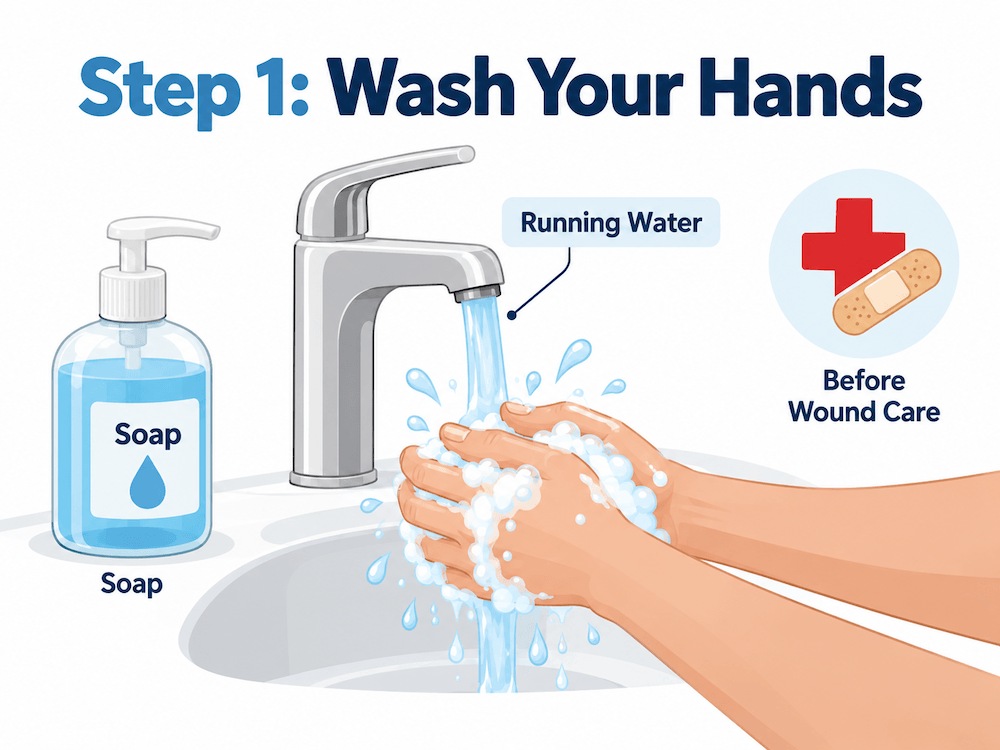
Clean your hands before touching the wound or changing its dressing. This helps avoid introducing additional bacteria while you care for the area. Soap and water are ideal, but an alcohol-based hand sanitizer is better than touching the wound with unclean hands.
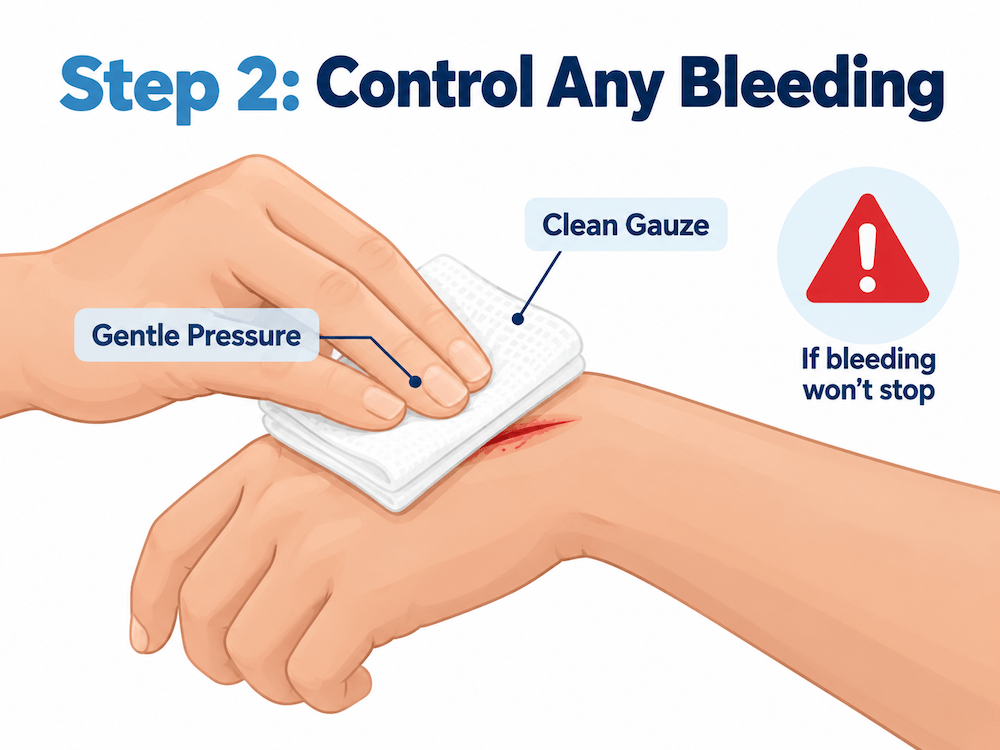
2. Control any bleeding
If the cut is bleeding, apply steady pressure with clean gauze or a clean cloth. Minor bleeding often stops within a few minutes, but heavy bleeding or bleeding that does not stop needs urgent medical attention. Avoid repeatedly lifting the cloth to check too soon, since that can restart bleeding.
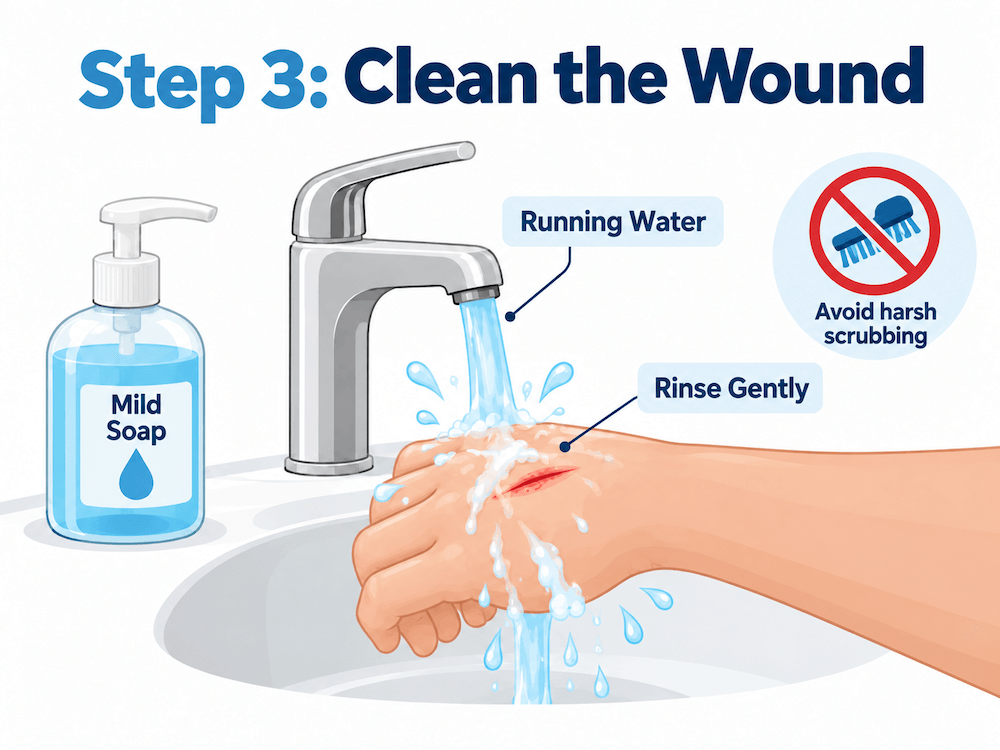
3. Clean the wound
Rinse the wound thoroughly under clean running water and gently wash the surrounding skin with soap. This helps remove saliva, dirt, and surface bacteria without irritating the tissue. Avoid harsh scrubbing or using irritating products directly in the wound unless a medical professional advises it.
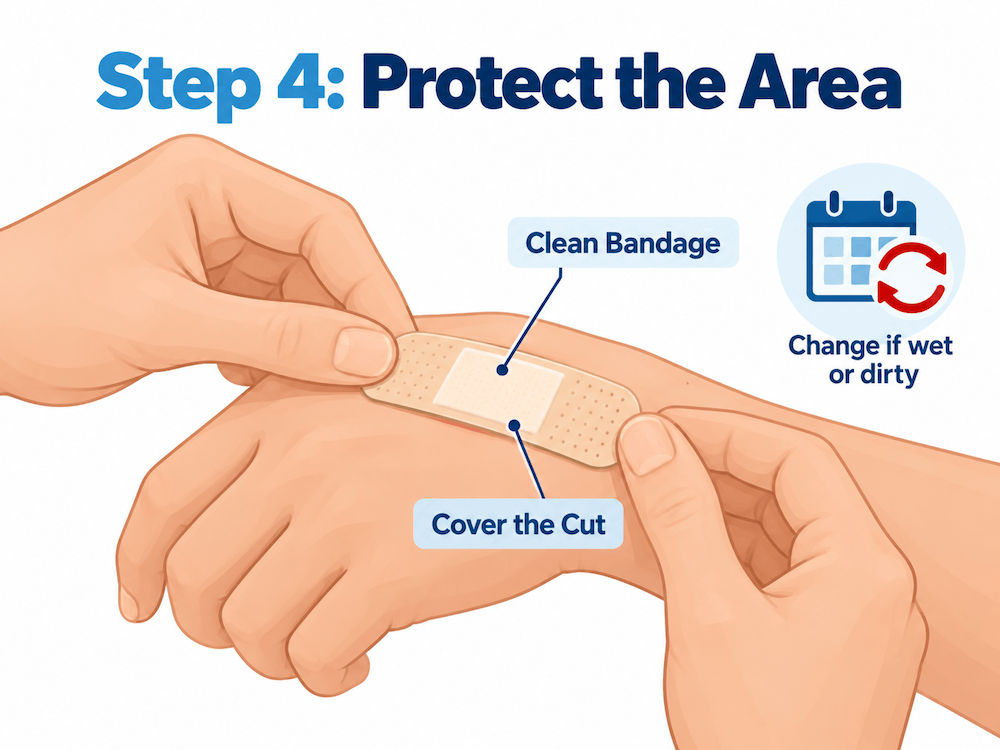
4. Protect the area
Gently pat the surrounding skin dry and cover the cut with a clean, nonstick dressing when appropriate. A covered wound is less likely to be re-contaminated by saliva, dirt, or friction. Replace the dressing if it becomes wet, dirty, or loosened.
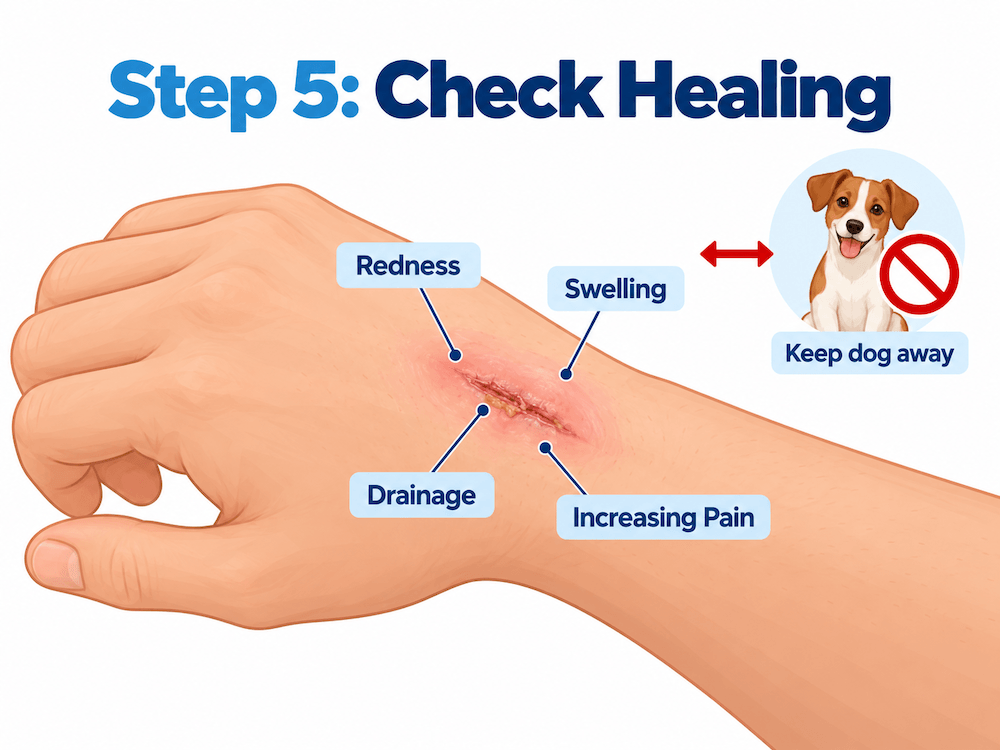
5. Check healing
Monitor the cut over the next several days and look for worsening redness, swelling, warmth, pain, or drainage. A minor wound should gradually improve, not become more inflamed or tender. Keep the area out of your dog’s reach so repeated licking does not interfere with healing.
What Raises the Risk After a Dog Licks a Cut?
The wound and your ability to fight infection matter more than whether the lick was affectionate or accidental. Use these factors to identify exposures that deserve extra caution.
| Risk Factor | Lower Concern | Higher Concern |
|---|---|---|
| Wound | Small, shallow cut or scrape. | Deep or gaping wound, open surgical incision, burn with broken skin, or chronic ulcer. |
| Cleaning and Exposure | Cleaned promptly, with further licking prevented. | Cleaning was delayed, contamination remains, or licking happens repeatedly. |
| Personal Health | No known conditions that significantly impair immunity or wound healing. | Weakened immunity, no functioning spleen, diabetes, or alcohol use disorder. |
| Dog and Local Rabies Context | Known healthy dog with documented vaccination and no identified rabies exposure concerns. | Possible rabies exposure, concerning animal behavior, or an unknown dog in an area where canine rabies circulates. |
Lower concern does not mean no risk. A dog’s rabies vaccination status helps inform rabies assessment, but it does not make its saliva bacteria-free. People with significant infection-risk conditions should seek advice promptly, even if the wound initially looks minor.
Signs of Infection After a Dog Licks Your Cut
Some tenderness or slight redness can come from the original injury. The more useful distinction is whether the wound is steadily improving or becoming worse.
| What to Watch | More Consistent With Normal Healing | Possible Infection |
|---|---|---|
| Redness or Discoloration | A small area that stays stable or fades. | Redness or discoloration spreads beyond the wound. |
| Pain | Mild tenderness that gradually improves. | Pain becomes stronger, persistent, or throbbing. |
| Swelling and Warmth | Mild swelling that decreases. | Increasing swelling, warmth, or tightness. |
| Drainage | Little or no drainage; a small amount of clear fluid can occur. | Pus, increasing cloudy drainage, or a foul smell. |
| Surrounding Skin | The surrounding area gradually returns to normal. | Red streaks, new blisters, or rapidly changing skin. |
| Overall Health | You otherwise feel well. | Fever, chills, unusual weakness, or feeling increasingly unwell. |
When to Seek Medical Care After a Dog Licks Your Cut
Home monitoring may be reasonable for a superficial cut that has been cleaned, is improving, and involves no significant health risks or rabies concerns.
Contact a healthcare professional promptly for an open surgical incision, chronic ulcer, significant burn, or wound that remains contaminated. Seek advice sooner if you have a condition that increases infection risk. New or worsening infection signs need assessment; fever, red streaking, or a worsening wound with general illness warrant urgent same-day care.
Seek emergency care now for uncontrolled bleeding, a very deep or large wound, rapidly worsening severe pain or swelling, confusion, fainting, breathing difficulty, or rapid deterioration. Do not wait for the wound itself to look severely infected if you feel seriously unwell.
Possible rabies exposure also requires urgent assessment, even when there are no symptoms. The appropriate service may be an emergency department, an animal-bite treatment center, or a local public-health service.
What to tell your healthcare professional:
Make sure to mention the dog-saliva exposure even if someone else originally treated the wound.
Can You Get Rabies If a Dog Licks Your Cut?
Rabies can spread when saliva from an infected animal reaches broken skin or the eyes, nose, or mouth. A lick on intact skin is not considered a rabies exposure.
Risk assessment considers the animal, its history, and local rabies activity. An unfamiliar dog in an area where canine rabies circulates needs a different assessment from a known pet with no identified exposure risks. Appearance alone cannot reliably rule rabies out.
When indicated, post-exposure treatment includes rabies vaccination and, for some people, rabies antibodies. Previous rabies vaccination affects the treatment plan. Medical or public-health professionals should decide whether treatment and supervised animal observation are appropriate; do not postpone seeking advice while watching the dog yourself.
What Research Says About Infection Risk From Dog Saliva
Dog saliva contacting broken skin is medically different from ordinary licking of intact skin. The World Health Organization classifies licks on intact skin as Category I rabies contact, while saliva from a suspected rabid animal contacting broken skin is Category III exposure. WHO guidance calls for immediate wound washing and prompt post-exposure treatment when indicated, including rabies vaccination and additional antibody treatment for appropriate Category III exposures.
The Centers for Disease Control and Prevention notes that Capnocytophaga bacteria occur in the mouths of dogs and cats and can occasionally cause serious human infections. People without a spleen, those with weakened immune systems, and people with alcohol use disorders are among those at greater risk of severe illness, which is why seemingly minor animal-saliva exposures deserve more caution in these groups.
Research has also identified Pasteurella multocida in dog saliva. One study found the organism in the saliva of 17 of 21 pet dogs, while a published case report documented P. multocida infection of an existing human wound following contact with a pet dog’s mouth.[1][2] These findings support keeping dog saliva away from open wounds even though serious infections after casual contact are uncommon.
Rare invasive infections after wound licking have also been documented. A 2026 case report described Capnocytophaga canimorsus endocarditis believed to have followed a dog licking an open wound; earlier reports have described severe bloodstream infection after similar exposures.[3] Case reports demonstrate that these outcomes are possible, not that they are typical after an ordinary dog lick.[4]
How to Prevent a Dog From Licking Your Wound
The safest approach is to make the wound physically inaccessible rather than relying on verbal correction or deterrent products. Keep the area clean and covered when appropriate, and use supervision, clothing, or temporary separation to prevent repeated licking while the wound heals.
| Method | How It Helps |
|---|---|
| Cover the wound | Use a clean dressing when appropriate to block direct saliva contact. |
| Wear protective clothing | Long sleeves or pants can make covered wounds harder to reach. |
| Supervise closely | Redirect your dog before licking starts. |
| Create distance | Use a gate, closed door, or separate resting area when needed. |
| Redirect the behavior | Offer a toy, chew, or calm activity instead of access to the wound. |
| Change contaminated dressings | Replace any bandage that becomes wet, dirty, or exposed to saliva. |
| Avoid wound deterrent sprays | Do not apply bitter sprays or homemade mixtures directly to open skin. |
Frequently Asked Questions
The Bottom Line
If a dog licks your cut, the most important step is to clean the wound promptly and prevent further licking. Brief contact with a small, superficial cut often does not cause a serious problem, but dog saliva can introduce bacteria through broken skin. Deeper wounds, surgical incisions, chronic sores, and wounds that are repeatedly licked deserve more caution. Watch the area for increasing redness, swelling, warmth, pain, or drainage rather than normal improvement. People with certain health conditions may also face a greater risk of serious infection after saliva reaches an open wound. Possible rabies exposure requires prompt medical assessment rather than waiting for symptoms to appear. Keeping wounds clean, covered when appropriate, and away from your dog’s mouth is the safest approach.
Want to understand the behavior behind the lick? Read our guide on what it means when a dog licks you, including common reasons and when licking may become concerning. If rabies is part of your concern, our rabies in dogs guide explains transmission, warning signs, prevention, and exposure risks. For dogs recovering from their own wounds or surgery, see our guide to the best dog cones for preventing licking and protecting healing areas.