10 Home Remedies for Dog Coughing: Natural Suppressants

Canine Bible is reader-supported. We receive affiliate commissions via some of our links. Learn more.
For a dog with a mild cough, simple home remedies like fresh water, plenty of rest, and a cool-mist humidifier may help soothe throat irritation. A small amount of plain honey may also provide temporary relief for healthy adult dogs, but it won’t treat the underlying cause. Soft, easy-to-eat foods may also help keep your dog nourished if throat irritation makes regular meals uncomfortable. Not all dog coughs are the same, and what works for minor irritation may not help with kennel cough, allergies, or respiratory infections. Some common household remedies can even make symptoms worse or pose serious health risks. So, how can you tell whether your dog’s cough is mild enough to manage at home or requires veterinary attention? Understanding the type of cough, accompanying symptoms, and potential triggers can help you make safer decisions. This guide explores vet-informed home remedies for dog coughing, what to avoid, and the warning signs that mean it’s time to see a veterinarian.
What to Know About Coughing in Dogs
Coughing in dogs is a natural reflex that helps clear irritants, mucus, or foreign material from the respiratory tract. While occasional coughing may result from temporary irritation, recurring or unusual coughing can indicate an underlying health problem. Understanding the basics can help you recognize meaningful changes.
| Key Aspect | What Dog Owners Should Know |
|---|---|
| What coughing is | A protective reflex that helps clear the respiratory tract. |
| Common cough sounds | Dry, hacking, honking, moist, or rattling. |
| Possible causes | Airway irritation, infections, respiratory disorders, or heart problems. |
| Similar symptoms | Gagging, retching, and reverse sneezing can resemble coughing. |
| Important patterns | Frequency, duration, timing, and triggers provide useful clues. |
| Home care limitations | Supportive remedies may ease discomfort but cannot treat every cause. |
| Higher-risk dogs | Puppies, seniors, and dogs with existing heart or lung disease. |
Is It Safe to Give Home Remedies for Coughing in Dogs?
Yes, some home remedies for dog coughing are generally safe when the cough is mild and your dog is otherwise healthy. Simple measures such as fresh water, rest, and a clean cool-mist humidifier may help ease throat irritation without medication. However, not all home remedies are safe for every dog, and some ingredients or treatments can worsen symptoms or cause harm. Home care should provide temporary comfort, not replace veterinary treatment, especially if coughing persists, worsens, or occurs with breathing difficulties.
Remember to ALWAYS consult with your vet before trying any home remedies for your dog’s cough. If you can’t reach your vet, you can chat live with a registered online veterinary professional via our online vet chat or video chat support (24 hours a day, 7 days a week). Or use Chewy’s online vet services (6 a.m. – midnight ET).
10 Home Remedies for Dog Coughing
The best home remedies for dog coughing focus on soothing irritation, supporting hydration, and reducing coughing triggers. These 10 measures address different aspects of comfort and recovery, but they are not 10 proven cough treatments. Use them only when your dog is breathing comfortably, and home care is appropriate for their condition.
1. Offer Fresh Water to Keep Your Dog Hydrated
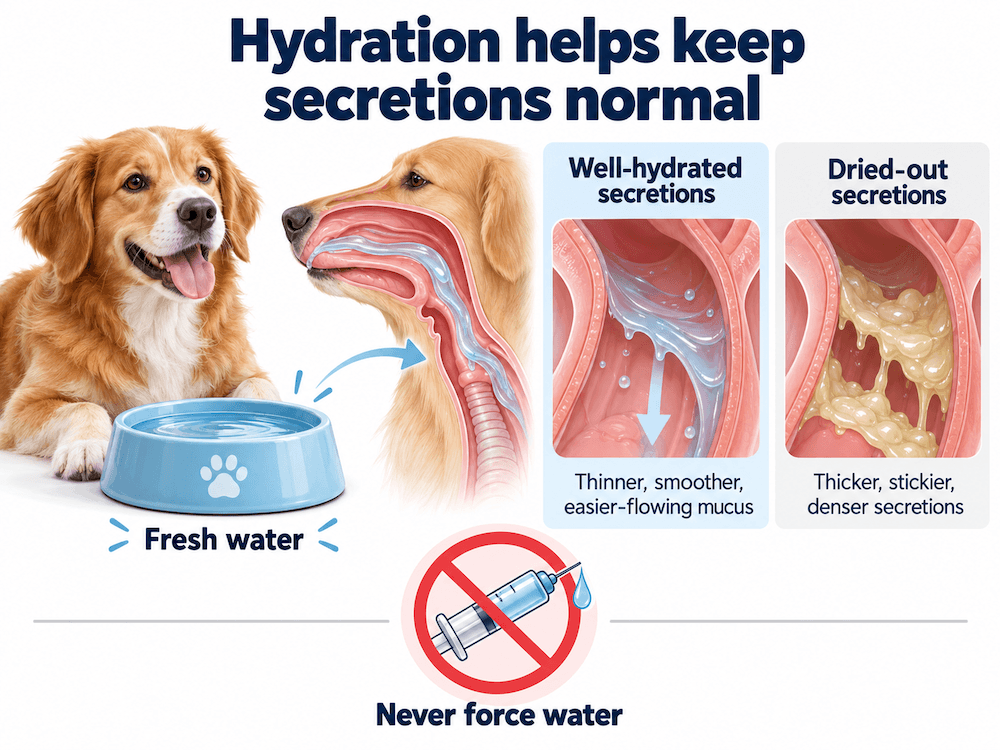
Proper hydration helps maintain moisture in the respiratory tract and supports normal mucus clearance. Keep clean, fresh water available throughout the day, especially when coughing episodes are frequent. Let your dog drink voluntarily, and never force water into their mouth or use a syringe to administer it.


2. Try a Small Amount of Plain Honey
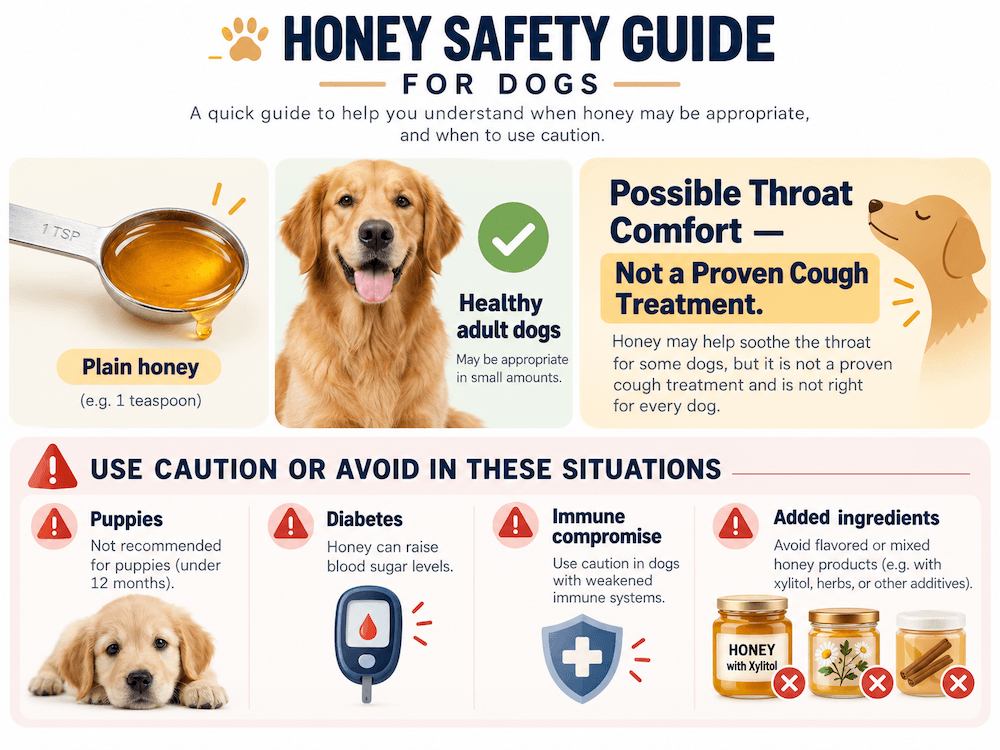
Plain honey may temporarily coat an irritated throat, but there is no established honey dose or proven cough-suppressing benefit in dogs. With veterinary approval, a healthy adult dog may have a small lick of plain honey as an occasional treat. Avoid honey for diabetic dogs, puppies, or immunocompromised dogs without specific veterinary guidance, and never use honey mixtures containing added sweeteners or medications.
3. Use a Clean Cool-Mist Humidifier
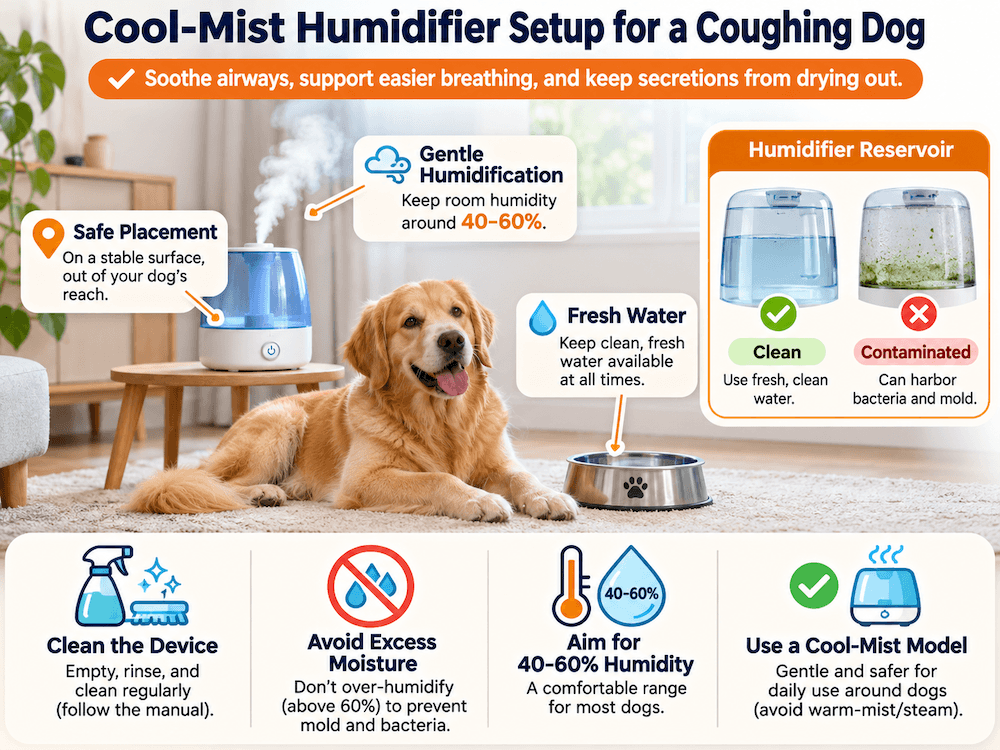
A cool-mist humidifier may make breathing more comfortable when dry indoor air irritates your dog’s throat and airways. Place the device safely away from your dog, use plain water, and follow the manufacturer’s cleaning instructions to prevent microbial buildup. Avoid excessive humidity, which can encourage mold growth and worsen indoor air quality.
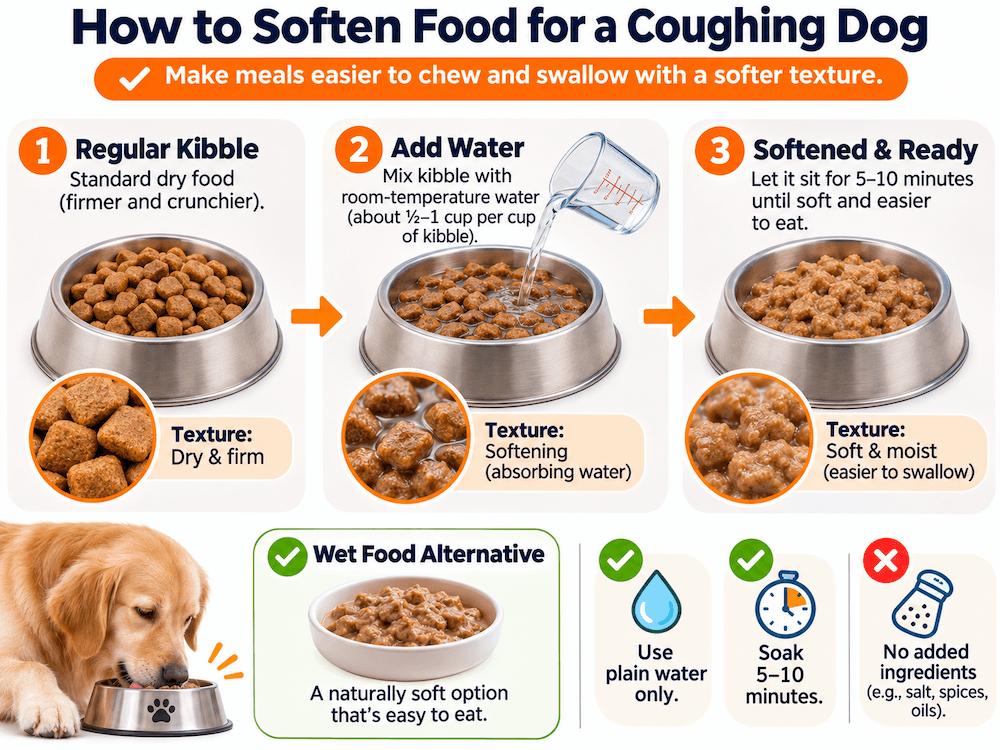
4. Soften Your Dog’s Regular Food
If throat irritation makes eating uncomfortable, try adding a little plain water to your dog’s regular kibble to create a softer texture. You can also offer their usual wet food if appropriate for their diet. This is a feeding-comfort measure rather than a cough treatment, and coughing or choking while eating requires veterinary evaluation.
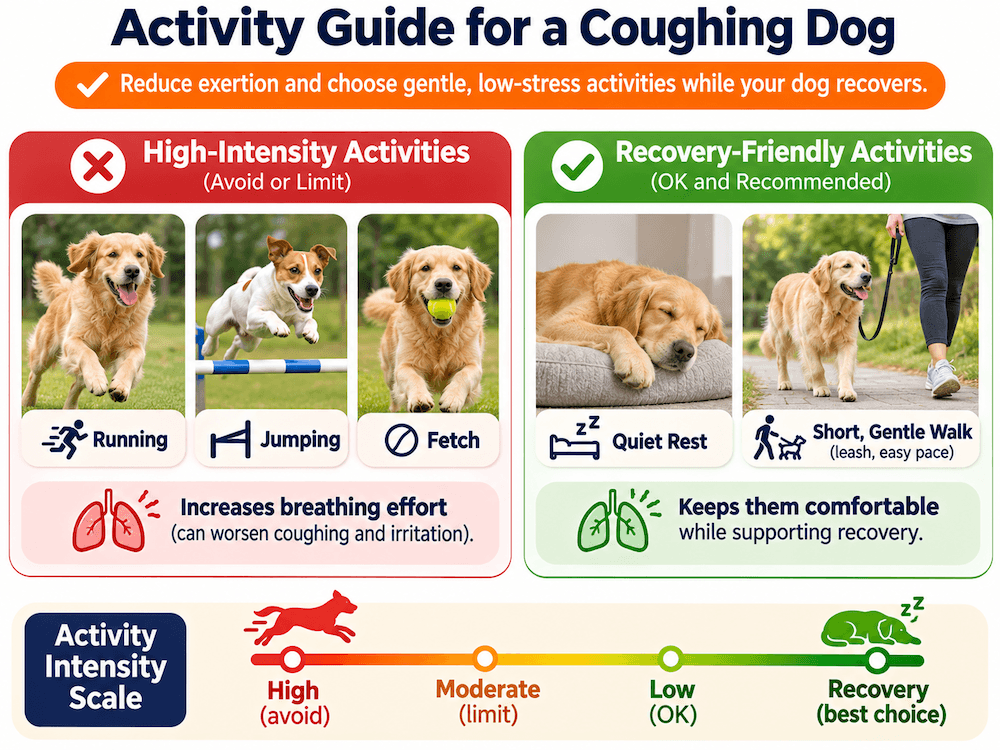
5. Encourage Rest and Limit Strenuous Exercise
Running, vigorous play, and excessive activity can increase respiratory effort and trigger additional coughing episodes. Give your dog time to recover by replacing exercise sessions with brief, relaxed bathroom walks when they are breathing comfortably. Gradually resume normal activity once the cough has improved and your veterinarian considers it appropriate.
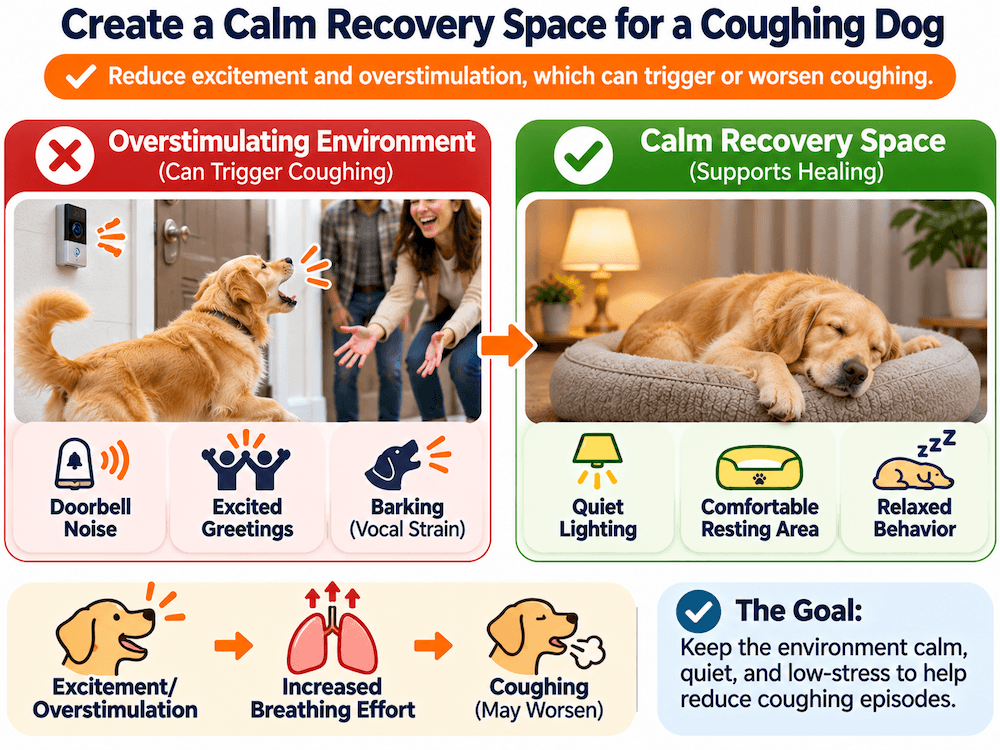
6. Create a Calm, Low-Stress Environment
Excitement can trigger coughing fits in dogs with irritated or sensitive airways, even without strenuous exercise. Keep their recovery area peaceful, reduce loud noises and overstimulating greetings, and offer quiet companionship. This is particularly useful when barking, visitors, or emotional excitement consistently precede coughing.
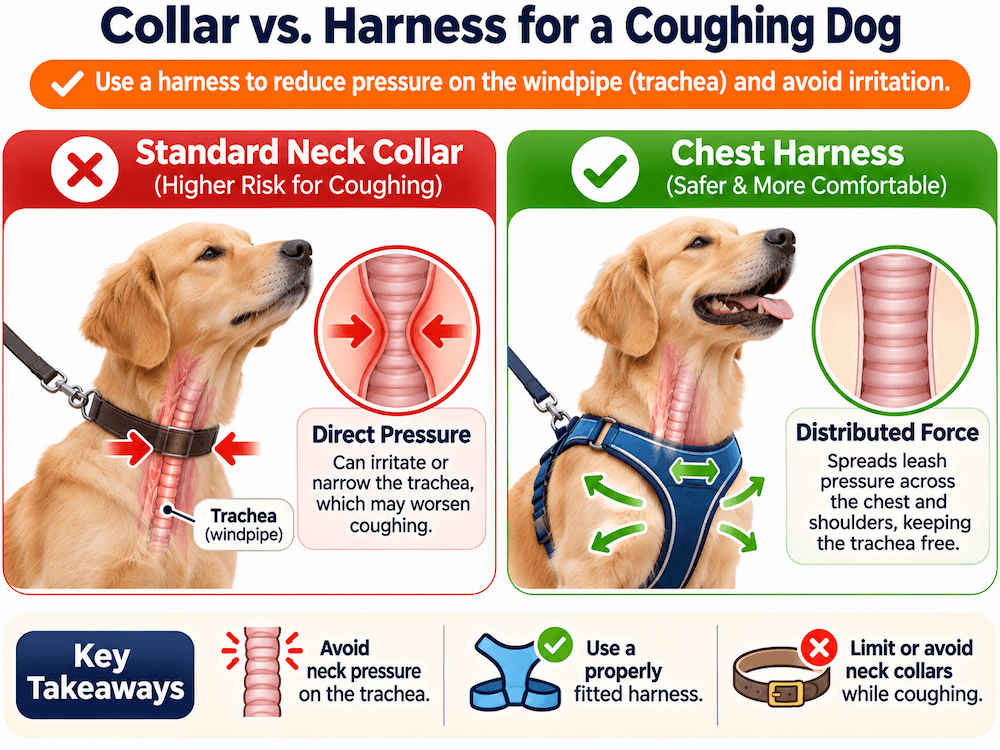
7. Switch From a Collar to a Harness
A collar can put pressure directly on the windpipe, potentially aggravating coughing when a dog pulls on the leash. A properly fitted, non-restrictive harness distributes force across the chest and reduces direct pressure on the neck. This adjustment is especially useful for dogs with tracheal sensitivity, although it cannot correct an underlying airway disorder.


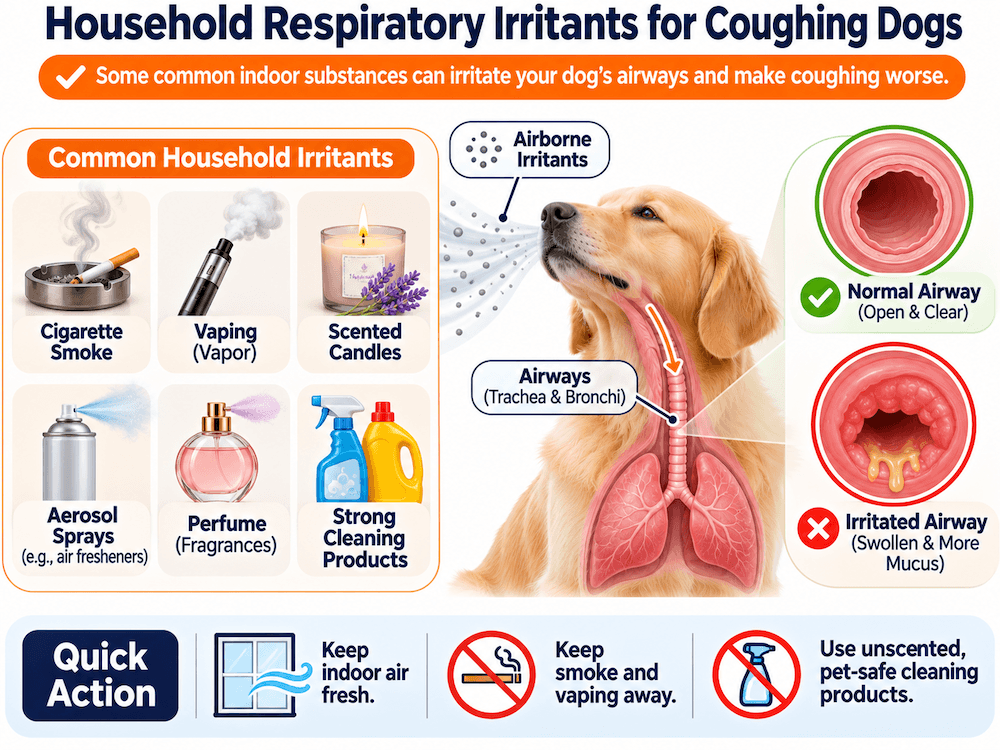
8. Eliminate Smoke, Fragrances, and Chemical Fumes
Cigarette smoke, vaping aerosols, perfume, scented candles, and household cleaning sprays can irritate already sensitive airways. Keep these substances away from your dog’s living and sleeping areas, and avoid spraying chemicals near them. Removing new irritants is particularly important when coughing begins or worsens after exposure to a specific product.
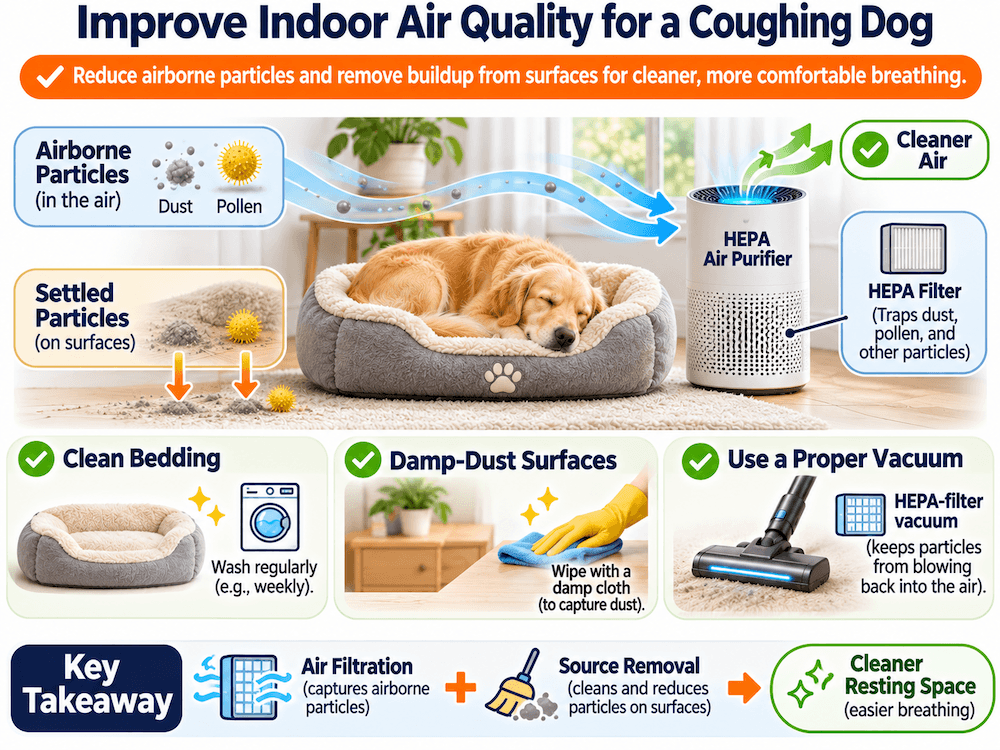
9. Reduce Dust and Airborne Particles Indoors
Dust, pollen, and other suspended particles can continue circulating even after obvious chemical irritants are removed. Wash your dog’s bedding regularly, damp-dust nearby surfaces, and consider a HEPA air purifier to reduce airborne particles. These measures may help dogs with environmental airway sensitivity but will not treat an infection or structural airway problem.
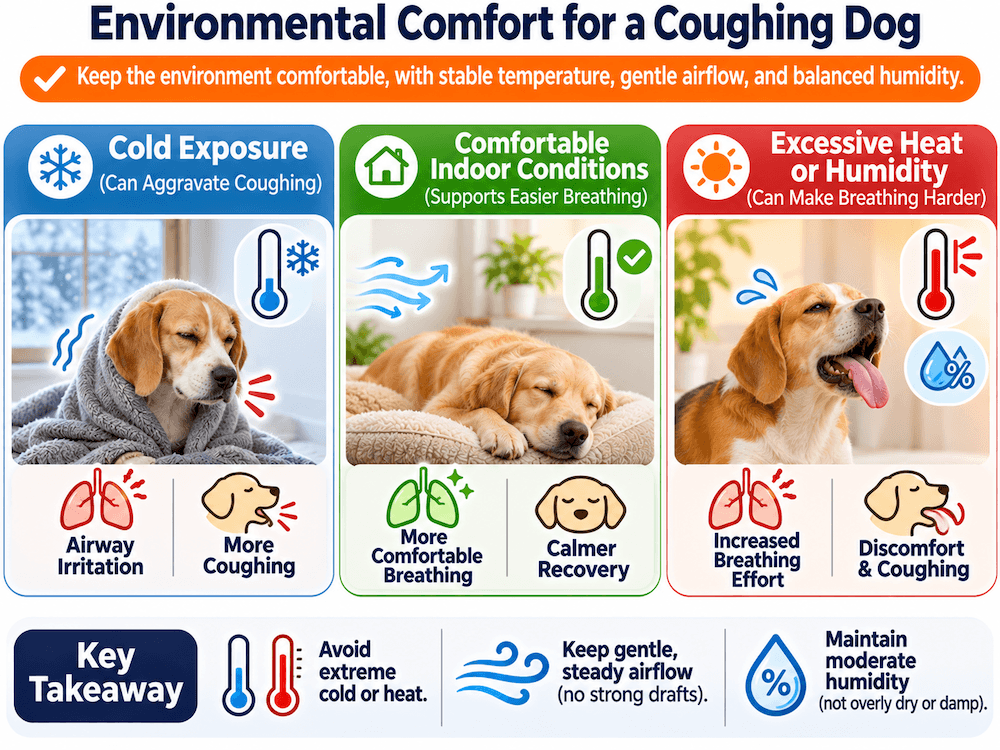
10. Maintain a Comfortable Indoor Temperature
Very cold, hot, or poorly ventilated environments may aggravate coughing in dogs with sensitive airways. Keep your dog’s resting space comfortably temperate, and avoid unnecessary exposure to weather extremes during recovery. Ensure the room is not overheated or excessively humid, particularly for short-muzzled dogs and those with existing respiratory conditions.
5 Safe Foods to Feed a Coughing Dog
Dogs with an irritated throat may find soft, moist foods more comfortable to eat than hard or crunchy meals. The following foods can help provide nourishment while your dog recovers, but they won’t treat the underlying cause of coughing. Only offer them if your dog is breathing and swallowing normally, and check with your veterinarian before making dietary changes.
1. Moist or Canned Dog Food
Complete and balanced wet dog food provides essential nutrients in a soft, moisture-rich texture. Choose your dog’s regular wet food when possible, or ask your veterinarian about temporarily adjusting their usual meals to make eating more comfortable.

2. Plain Boiled Chicken
Skinless, boneless boiled chicken provides lean protein and can be shredded into small, soft pieces. Serve it without oil, salt, garlic, onion, or other seasonings, and offer it in moderation rather than as a complete meal replacement.

3. Soft Cooked White Rice
Plain white rice is easy to prepare and has a soft texture when thoroughly cooked. Serve small amounts without butter, salt, or seasonings, and remember that rice alone cannot provide the nutrients your dog needs for long-term feeding.

4. Plain Pumpkin Puree
Cooked, mashed pumpkin has a smooth texture and provides dietary fiber that supports digestive health. Choose 100% plain pumpkin puree without sugar, spices, or other additives, and introduce it gradually to avoid digestive upset.

5. Fully Cooked Eggs
Plain scrambled or boiled eggs provide protein and have a soft texture when prepared appropriately. Serve small portions without butter, oil, salt, or seasonings, and avoid raw or undercooked eggs.

What Not to Give a Dog for Coughing
Not every human cough remedy is safe for dogs. Some products contain ingredients that can cause poisoning, stomach irritation, or additional respiratory problems.
Is Your Dog Coughing, Gagging, or Reverse Sneezing?
Not every strange throat or breathing noise is a cough. These events can resemble one another, but they involve different movements of air and the body. Recognizing the distinction can help you describe the episode accurately to your veterinarian.
| What You Notice | Typical Sound or Movement | How It Differs |
|---|---|---|
| Coughing | A sudden, forceful burst of air out of the lungs; may sound dry, wet, or honking. | Can end with gagging, especially after a coughing fit. |
| Gagging | Retching or throat-clearing movements as if something needs to come up. | May follow a cough or occur with throat irritation or a swallowing problem. |
| Reverse sneezing | Repeated, rapid snorting as air is pulled inward through the nose, often with the neck extended. | The dog generally inhales noisily rather than pushing air out in a cough. |
| Vomiting | Abdominal heaving that may bring up food, fluid, or other stomach contents. | Involves the digestive tract rather than an airway-clearing cough. |
A dog may cough and gag during the same episode, so the sounds are not always easy to separate. Record a short video if it is safe to do so, particularly if the episode has stopped by the time your veterinarian examines your dog. Repeated episodes, choking, or abnormal breathing should not be dismissed based on the sound alone.
Causes of Coughing in Dogs
Coughing is a protective reflex that helps clear irritants, mucus, and other material from the airways. However, the underlying cause determines whether simple home care is appropriate or medical treatment is necessary.
| Possible Cause | Common Clues | What’s Happening |
|---|---|---|
| Respiratory infection | Hacking or honking cough after contact with other dogs. | Infectious organisms may inflame the respiratory tract. |
| Airborne irritants | Coughing around smoke, dust, fragrances, or cleaning sprays. | Inhaled particles or chemicals irritate sensitive airways. |
| Tracheal problems | Honking cough triggered by excitement or collar pressure. | The windpipe may be narrowed, weakened, or sensitive. |
| Lung disease | Deep or moist cough with reduced energy or fever. | Inflammation, infection, or another problem affects the lungs. |
| Heart disease | Coughing with reduced stamina or faster resting breathing. | Cardiac problems may affect the lungs or surrounding airways. |
| Inhaled foreign material | Sudden coughing during chewing, eating, or outdoor activity. | Material may be irritating or obstructing an airway. |
Can a Coughing Dog Infect Other Dogs?
Coughing caused by smoke, dust, or a noninfectious airway problem is not itself contagious. However, respiratory infections such as kennel cough and canine influenza can spread between dogs, including dogs that still seem energetic and have a normal appetite.
If an infectious cause is possible, take these precautions while seeking veterinary guidance:
Ask your veterinarian when your dog can safely resume contact with other dogs. The isolation period depends on the suspected infection and its course, so a single number of days does not apply to every coughing dog.
How to Monitor Your Dog’s Cough at Home
Tracking your dog’s coughing pattern helps determine whether supportive care is making a difference. A brief video can also help your veterinarian distinguish coughing from gagging, reverse sneezing, or other breathing sounds.
When to Call a Veterinarian About Your Dog’s Cough
An occasional cough does not always indicate serious illness, but persistent coughing, changes in breathing, or additional symptoms should not be managed with home remedies alone. The following guide helps determine how urgently your dog needs attention.
| Care Level | What You Notice | Recommended Action |
|---|---|---|
| Monitor briefly | Occasional mild cough; normal breathing, appetite, and energy. | Observe closely for up to 24 hours if otherwise healthy. |
| Contact your veterinarian | Repeated, worsening, or persistent coughing, even without other symptoms. | Arrange an assessment, typically within 24 hours. |
| Prompt veterinary assessment | Fever, lethargy, poor appetite, thick nasal discharge, or reduced stamina. | Contact your veterinarian the same day. |
| Higher-risk dogs | New cough in puppies, frail seniors, or dogs with heart/lung disease. | Call your veterinarian promptly rather than waiting. |
| Emergency care | Labored breathing, blue gums, collapse, choking, or coughing blood. | Seek emergency veterinary care immediately. |
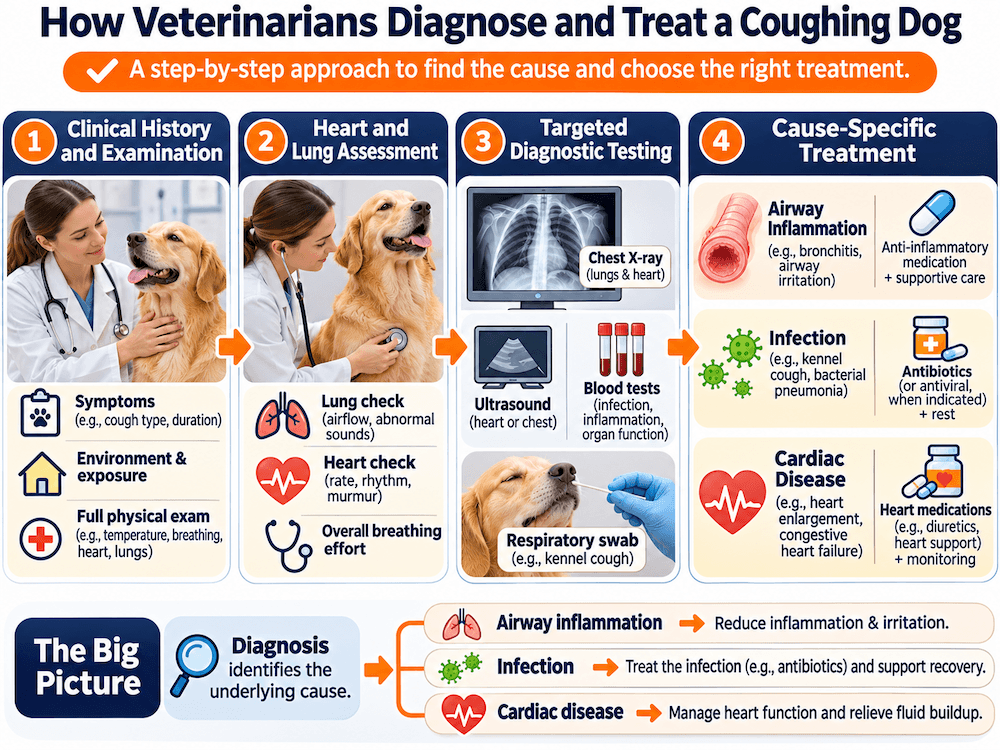
How Veterinarians Diagnose and Treat Dog Coughing
Veterinary treatment begins with identifying the underlying cause rather than simply suppressing the cough. Your veterinarian may examine the throat, listen to the heart and lungs, review your dog’s exposure history, and recommend chest X-rays or other tests when appropriate.
Treatment depends on the diagnosis. Options may include veterinarian-prescribed cough suppressants for selected dry coughs, anti-inflammatory or airway medications, treatment for specific infections, or management of heart disease. Dogs with pneumonia or significant respiratory compromise may require hospitalization, oxygen, or more intensive care.
How Long Does a Dog’s Cough Last?
Recovery depends on the cause rather than the home remedy being used. An occasional cough caused by a brief exposure to smoke or dust may stop once the irritant is removed, while uncomplicated kennel cough commonly takes about one to three weeks to resolve. Some dogs cough longer, especially if complications develop or their airways remain inflamed.
Coughing related to chronic bronchitis, tracheal collapse, or heart disease may recur until the underlying condition is managed. Do not wait several weeks to seek veterinary advice for a persistent or worsening cough. If your dog is not improving, becomes less active, or develops new symptoms, contact your veterinarian even if you have already started supportive home care.
How to Prevent Coughing in Dogs
Not every cough is preventable, especially when caused by underlying heart or airway conditions. However, preventive veterinary care and reducing exposure to respiratory infections can help lower the risk.
| Prevention Strategy | What Dog Owners Should Do |
|---|---|
| Respiratory vaccinations | Follow vet-recommended vaccines based on your dog’s exposure risks. |
| Avoid respiratory outbreaks | Avoid sick dogs and crowded canine activities during outbreaks. |
| Routine veterinary care | Schedule checkups, maintain parasite prevention, and investigate recurring coughs. |
What Veterinary Evidence Says About Home Remedies for Dog Coughing
The American Veterinary Medical Association (AVMA) explains that uncomplicated cases of canine infectious respiratory disease often improve with supportive care, including rest and avoiding activities or equipment that aggravate coughing. This supports practical environmental and activity changes but does not establish them as cures for the underlying infection.[1]
The Merck Veterinary Manual describes mild infectious tracheobronchitis as often self-limiting, while recognizing that more serious respiratory complications can occur, especially in vulnerable dogs. Its clinical guidance emphasizes identifying the cause and treating complications when present, rather than assuming all coughs require the same treatment.
The International Society for Companion Animal Infectious Diseases (ISCAID) published antimicrobial guidelines in the Journal of Veterinary Internal Medicine explaining why antibiotics should be used selectively for canine respiratory disease. For dog owners, this means a cough does not automatically indicate a bacterial infection or a need for antibiotics.[2]
Evidence for honey as a canine cough remedy remains limited. Veterinary-reviewed nutritional guidance notes that honey can be tolerated in small quantities by healthy adult dogs, but whether it actually relieves canine coughing is unclear. There is no established therapeutic honey dose for treating coughs in dogs.
Frequently Asked Questions
The Bottom Line
Home care for a coughing dog is about easing discomfort while understanding what may be causing the cough. Simple measures such as fresh water, rest, humidified air, and a clean environment can help relieve mild respiratory irritation. Plain honey may provide temporary throat comfort for some healthy adult dogs, but home remedies cannot treat every underlying condition. Avoid giving human cough medications or unverified homemade treatments without veterinary guidance. Monitoring your dog’s coughing patterns, energy, appetite, and breathing can help you recognize whether symptoms are improving or becoming more concerning. If coughing persists, worsens, or occurs with other signs of illness, seek veterinary advice, and treat breathing difficulties as an emergency.
To learn more about respiratory infections, explore our guide to kennel cough in dogs, including its symptoms, causes, and treatment options. If your dog coughs and gags as though something is stuck in their throat, read what to do if your dog is choking to understand important emergency warning signs. You can also use our dog symptom checker to better understand concerning symptoms and when veterinary attention may be necessary.