What Thanksgiving Foods Can Dogs Eat? 15 Safe Options & 11 to Avoid

Canine Bible is reader-supported. We receive affiliate commissions via some of our links. Learn more.
Dogs can safely eat certain Thanksgiving foods, including plain cooked turkey, pumpkin, sweet potatoes, green beans, and carrots, as long as they’re prepared without harmful seasonings or added ingredients. However, not everything on the holiday table is safe for your furry friend. Popular dishes like stuffing, gravy, and rich casseroles may contain ingredients that can cause digestive problems or even serious health issues. Even seemingly harmless Thanksgiving treats can become dangerous when prepared with butter, garlic, onions, or excessive salt. So, how can you tell which holiday favorites are safe to share and which should stay off your dog’s plate? Portion sizes, cooking methods, and hidden ingredients all play an important role in keeping your pup healthy during the festivities. This guide breaks down what dogs can eat on Thanksgiving, which foods to avoid, and how to include your four-legged companion in the celebration without putting their health at risk.
Can Dogs Eat Thanksgiving Food?
Yes, dogs can enjoy certain Thanksgiving foods, but their safety depends on the ingredients, preparation methods, and your dog’s individual dietary needs. Foods that are safe on their own may become unsuitable when combined with other ingredients in traditional holiday recipes. Dogs with food allergies, sensitive digestion, or medical conditions may also need additional dietary restrictions, even when a food is generally considered safe.
15 Thanksgiving Foods Dogs Can Safely Eat
The following Thanksgiving foods can make nutritious occasional treats for many healthy dogs when prepared and portioned appropriately. Each option includes its nutritional benefits and important serving precautions to help you make safer choices for your pup.
1. Turkey

Lean Protein
Turkey provides protein and can be a delicious Thanksgiving treat for dogs. Offer small pieces of fully cooked, unseasoned turkey breast, shredded or chopped into manageable bites.
Safe serving tips
- Remove all bones, skin, and visible fat.
- Avoid gravy, garlic, onions, and seasonings.
- Serve small portions of lean, fully cooked meat.
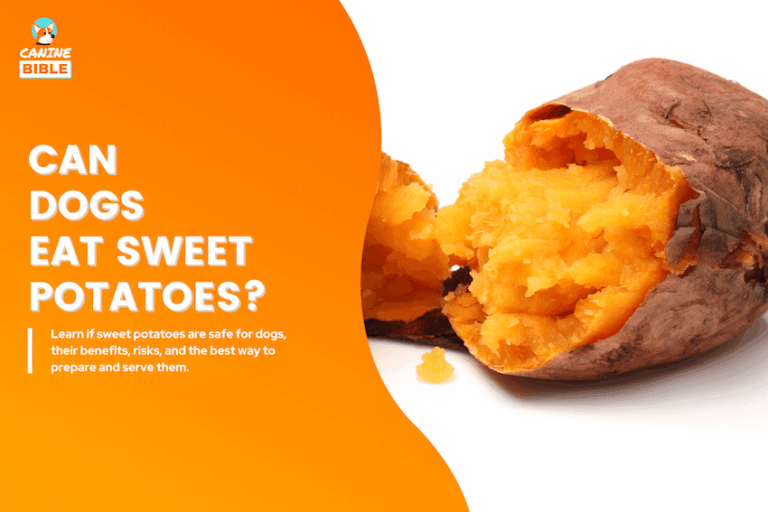
2. Sweet Potatoes

Fiber-Rich Vegetable
Sweet potatoes contain fiber and beneficial nutrients, including beta-carotene. Their naturally soft texture makes them an easy Thanksgiving addition when cooked thoroughly and served plain.


Safe serving tips
- Boil, steam, or bake until soft.
- Serve mashed or cut into small pieces.
- Skip marshmallows, sugar, butter, and casseroles.
3. Pumpkin

Fiber & Digestive Support
Plain pumpkin provides dietary fiber and moisture. A small spoonful can be mixed into your dog's regular food for a festive holiday topping.
Safe serving tips
- Use plain cooked pumpkin or 100% pumpkin puree.
- Never substitute pumpkin pie filling.
- Start with a small amount to avoid digestive upset.
4. Green Beans

Low-Calorie Vegetable
Green beans are naturally low in calories and provide fiber and vitamins. Dogs can enjoy them fresh or cooked, making them a convenient addition to a holiday meal.
Safe serving tips
- Serve plain, raw, steamed, or boiled.
- Cut long beans into manageable pieces.
- Avoid green bean casserole and fried onions.
5. Carrots

Crunchy, Low-Calorie Treat
Carrots contain beta-carotene, which the body can convert into vitamin A, along with dietary fiber. They can be offered raw for crunch or cooked for a softer Thanksgiving treat.
Safe serving tips
- Wash thoroughly and cut into safe-sized pieces.
- Steam or boil for dogs needing softer food.
- Avoid honey-glazed or buttery carrots.
6. Peas

Plant-Based Nutrients
Green peas contain fiber, vitamins, and plant-based protein. A small amount of plain peas can add variety and texture to your dog's Thanksgiving meal.
Safe serving tips
- Offer plain fresh, thawed, or cooked green peas.
- Avoid creamed peas and heavily salted canned peas.
- Ask your vet before offering peas to dogs with kidney disease.
7. White Potatoes

Starchy Holiday Treat
Fully cooked white potatoes provide carbohydrates and can be offered occasionally in small amounts. Plain boiled or mashed potatoes are preferable to traditional Thanksgiving mashed potatoes.
Safe serving tips
- Cook thoroughly and serve without added ingredients.
- Never feed raw, green, or sprouted potatoes.
- Avoid butter, garlic, cream, and excess salt.
8. Butternut Squash

Vitamin-Rich Vegetable
Butternut squash contains fiber, potassium, and beta-carotene. Its naturally sweet flavor and soft texture make it a simple dog-friendly Thanksgiving side when properly prepared.
Safe serving tips
- Cook until tender and remove the peel and seeds.
- Serve plain, mashed, or diced into small pieces.
- Skip butter, sugar, and holiday spices.
9. Corn

Occasional Grain Treat
Plain cooked corn kernels contain carbohydrates and fiber and are generally safe for dogs. They can be offered as a small Thanksgiving addition once completely removed from the cob.
Safe serving tips
- Serve only plain, cooked corn kernels.
- Never give corncobs because they can cause intestinal blockages.
- Avoid butter, salt, and creamed corn.
10. Brussels Sprouts

Fiber-Rich Vegetable
Brussels sprouts provide fiber, vitamins, and antioxidants. Dogs can eat small portions when they're thoroughly cooked, although larger servings may cause gas or bloating.
Safe serving tips
- Steam or boil until tender.
- Chop into small pieces before serving.
- Offer sparingly and avoid bacon or seasonings.
11. Apples

Fresh Fruit Treat
Apples provide fiber, vitamin C, and a naturally sweet crunch. Fresh apple slices can make a simple Thanksgiving dessert alternative without the sugar and fat found in baked holiday treats.
Safe serving tips
- Remove the core, seeds, and stem.
- Cut into bite-sized pieces to reduce choking risk.
- Avoid apple pie, caramel, and sugary toppings.
12. Cranberries

Antioxidant-Rich Fruit
Cranberries contain antioxidants and can be enjoyed by dogs in very small amounts. Their tart flavor may not appeal to every dog, but plain cranberries can be an occasional holiday fruit treat.
Safe serving tips
- Offer a few plain fresh or cooked cranberries.
- Chop appropriately for your dog's size.
- Avoid sugary cranberry sauce or products mixed with raisins.
13. Broccoli

Nutrient-Rich Vegetable
Broccoli contains fiber and vitamins C and K. Small amounts of plain broccoli can be a nutritious addition to a holiday meal, but excessive servings may irritate digestion.
Safe serving tips
- Serve raw or lightly steamed without seasonings.
- Cut florets and tough stems into small pieces.
- Limit quantities to reduce gas and stomach upset.
14. Celery

Low-Calorie Crunchy Treat
Celery is low in calories and contains water, fiber, and small amounts of vitamins. It can be offered raw or cooked as a light, crunchy Thanksgiving snack.
Safe serving tips
- Wash thoroughly and chop into small pieces.
- Remove or finely cut tough, stringy sections.
- Avoid celery mixed into seasoned stuffing.
15. Cooked Eggs

Protein-Rich Treat
Fully cooked eggs provide high-quality protein, essential amino acids, and other nutrients. A small portion of plain boiled or scrambled egg can be included in your dog's Thanksgiving meal.
Safe serving tips
- Cook eggs thoroughly before serving.
- Skip butter, oil, salt, and other seasonings.
- Avoid deviled eggs with mayonnaise or seasoned fillings.
Thanksgiving Foods Dogs Should Avoid
Some Thanksgiving foods are genuinely toxic to dogs, while others are unsafe because they’re excessively fatty, difficult to digest, or likely to cause choking or intestinal blockages. Knowing the difference helps you recognize which foods should never be shared.
| Thanksgiving Food | Main Risk | Possible Consequence |
|---|---|---|
| Stuffing and Dressing | May contain onions, garlic, or raisins. | Poisoning or red blood cell damage. |
| Gravy and Turkey Skin | High concentrations of fat. | Digestive upset or pancreatitis. |
| Cooked Turkey Bones | Can splinter or become lodged. | Choking, internal injury, or intestinal blockage. |
| Grapes and Raisins | Toxic even in potentially small amounts. | Sudden kidney injury or failure. |
| Chocolate Desserts | Contain theobromine and caffeine. | Heart abnormalities, tremors, or seizures. |
| Sugar-Free Desserts | May contain xylitol, also called birch sugar. | Dangerously low blood sugar or liver injury. |
| Raw Yeast Dough | Expands and produces alcohol during fermentation. | Stomach distension and alcohol poisoning. |
| Alcoholic Drinks | Dogs are sensitive to ethanol. | Neurological and breathing problems. |
| Macadamia Nuts | Contain compounds toxic to dogs. | Weakness, vomiting, tremors, and overheating. |
| Corncobs | Cannot be digested and may become lodged. | Intestinal obstruction requiring surgery. |
| Rich Casseroles and Creamy Sides | Often contain excessive fat, salt, or seasonings. | Digestive distress and other complications. |
Important distinction: A food doesn’t have to be poisonous to be dangerous. A large serving of buttery mashed potatoes may cause serious digestive problems, while a much smaller exposure to a toxic ingredient may require immediate veterinary assessment.
How Much Thanksgiving Food Can Dogs Eat?
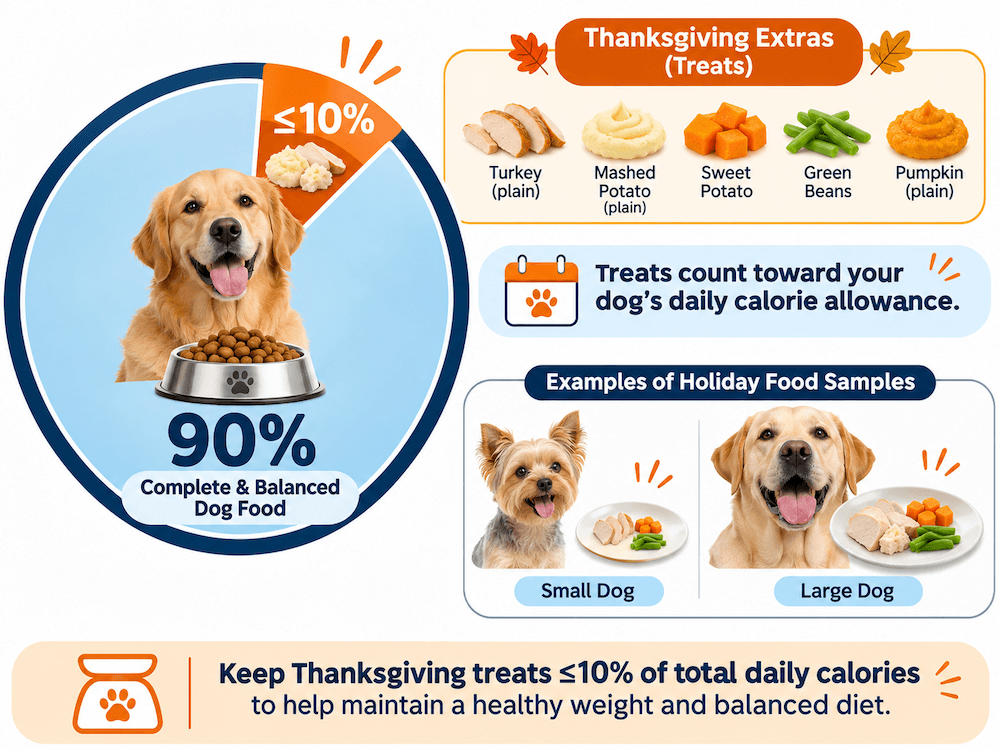
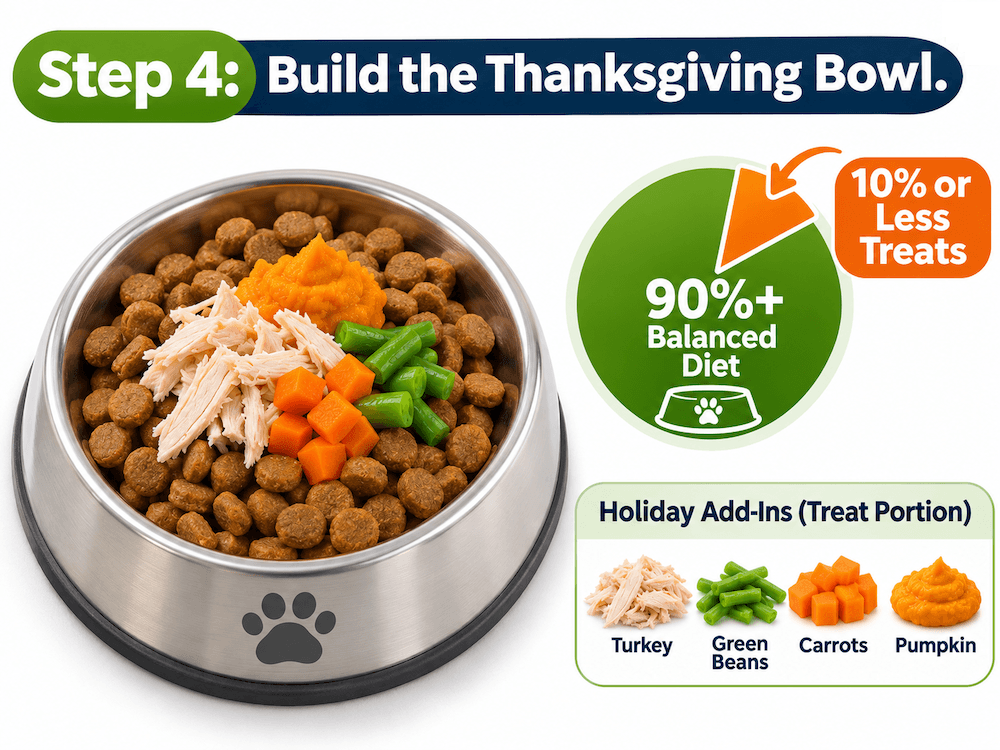
Thanksgiving treats should make up no more than 10% of your dog’s total daily calories, including any other snacks or rewards. The remaining 90% or more should come from a complete and balanced diet. For example, a dog that needs 500 calories daily should receive no more than 50 calories from all treats combined.
There’s no universal serving size because dogs vary in weight, activity level, and health. Start with a small bite or teaspoon-sized serving of a new food, especially for small breeds, and avoid introducing several unfamiliar ingredients at once. Dogs with pancreatitis, diabetes, food allergies, or prescription diets may require stricter feeding guidelines.
How to Make a Dog-Friendly Thanksgiving Plate
You don’t need to prepare an entirely separate Thanksgiving feast for your dog. By combining a few plain, dog-safe holiday ingredients with their regular food, you can create a festive meal that’s nutritious, enjoyable, and easy to prepare. Follow these simple steps to build a Thanksgiving plate your dog can safely enjoy.
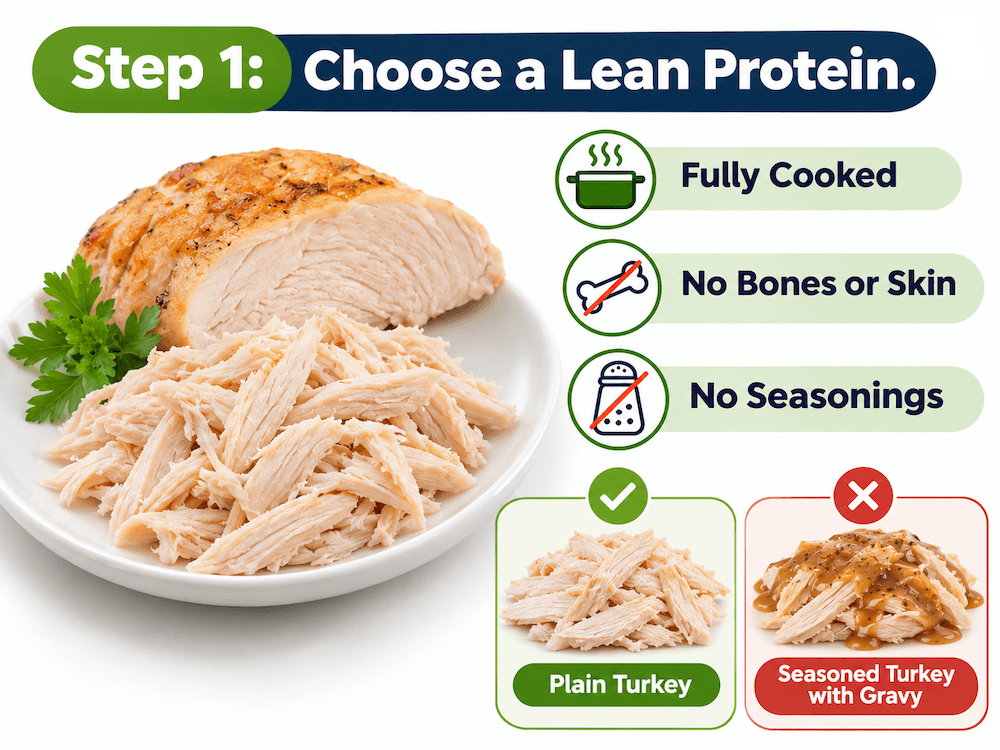
Step 1: Choose a Lean, Dog-Safe Protein
Start with a small portion of fully cooked, boneless, skinless turkey breast. Remove visible fat and make sure the meat contains no garlic, onion, gravy, or other seasonings. Shred or cut the turkey into bite-sized pieces appropriate for your dog’s size.
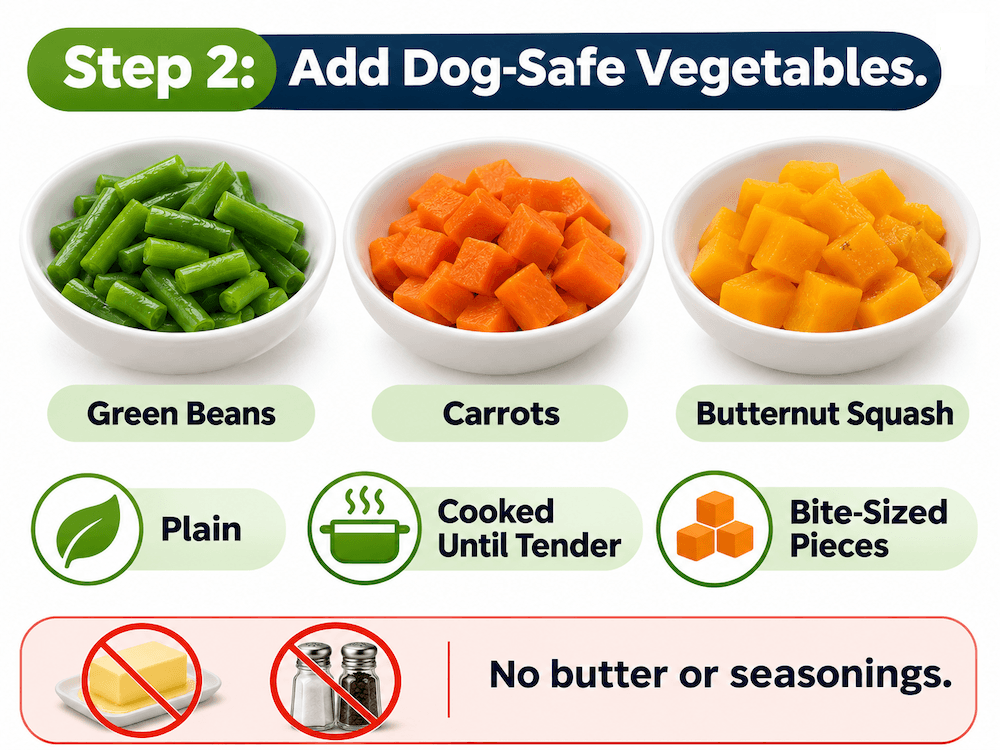
Step 2: Add Plain, Cooked Vegetables
Choose one or two dog-friendly vegetables, such as green beans, carrots, or butternut squash. Steam or boil them until tender without adding butter, salt, garlic, or other seasonings. Cut the vegetables into manageable pieces to make chewing and swallowing easier.
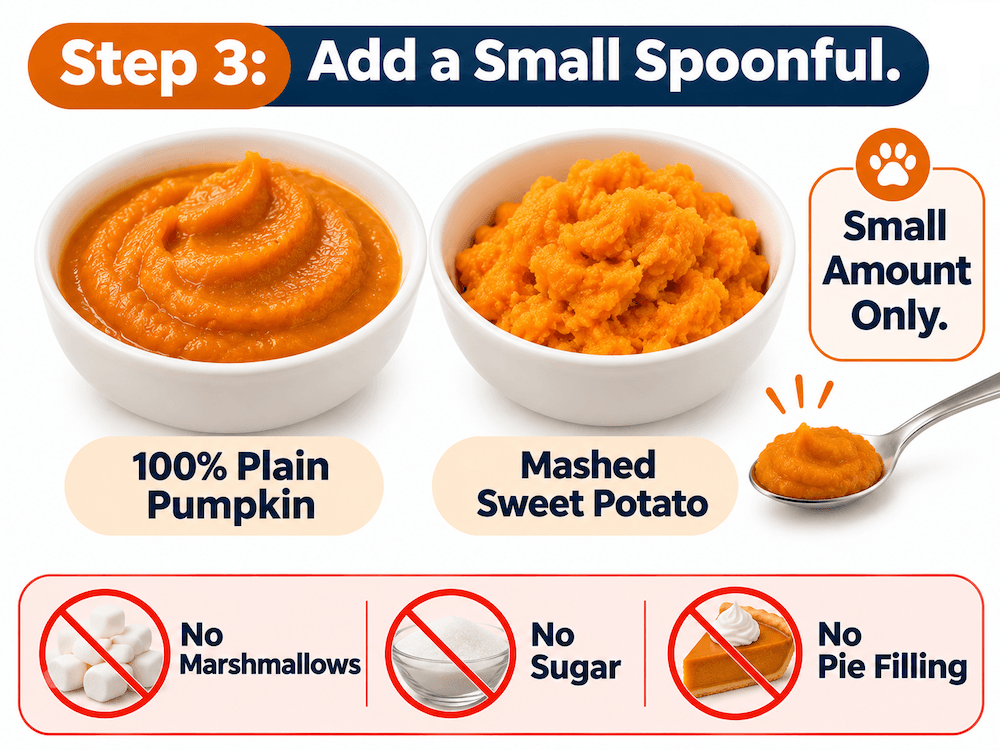
Step 3: Include a Small Spoonful of Pumpkin or Sweet Potato
Add a little plain pumpkin purée or cooked, mashed sweet potato for variety and flavor. Both provide dietary fiber, but excessive portions may cause digestive upset. Avoid pumpkin pie filling, sweet potato casserole, marshmallows, and added sugar.
Step 4: Combine Everything With Your Dog’s Regular Food
Place the prepared Thanksgiving ingredients on top of your dog’s usual complete and balanced food instead of replacing their regular meal. Keep all holiday extras, including other treats, within 10% of your dog’s daily calorie allowance. If necessary, slightly adjust the regular meal portion to account for the added calories without compromising the dog’s overall nutrition.
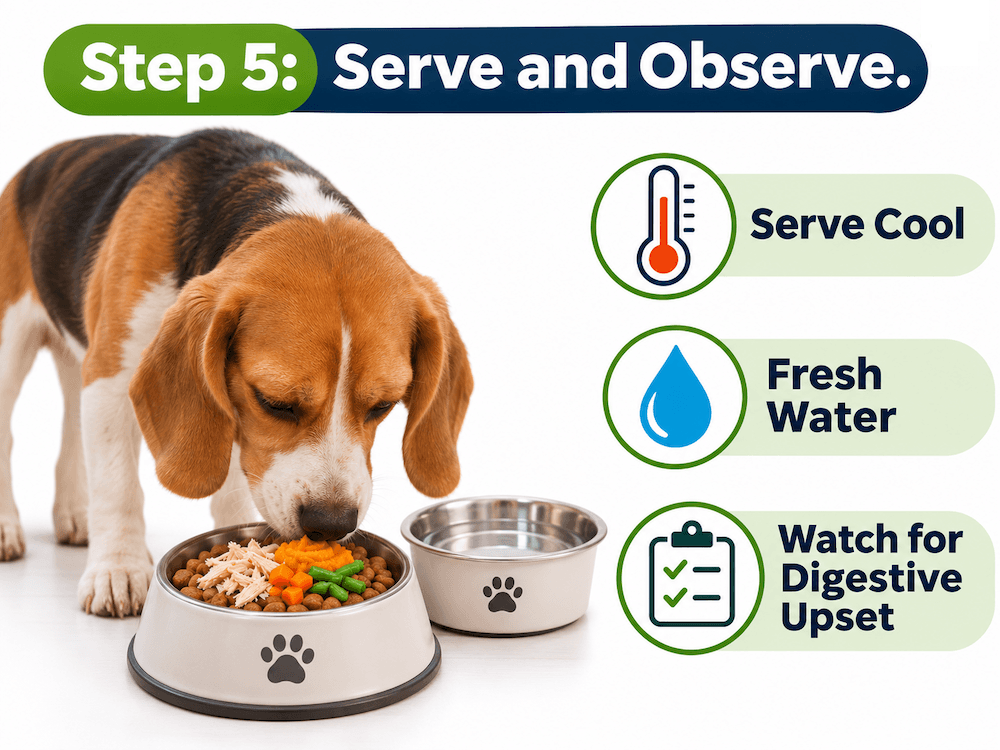
Step 5: Serve Safely and Monitor Your Dog
Serve the meal at a comfortable temperature, with fresh drinking water available nearby. If your dog hasn’t tried these ingredients before, introduce only one new food at a time and start with a small amount. Watch for vomiting, diarrhea, or other signs of digestive discomfort after eating.
Thanksgiving Food Safety Tips for Dog Owners
Even a carefully planned holiday menu can create problems if food is left unattended or guests unknowingly share inappropriate treats. A few preventive measures can make Thanksgiving safer for your dog.
These precautions are particularly important for dogs that counter-surf, scavenge, or become excited around visiting family members.
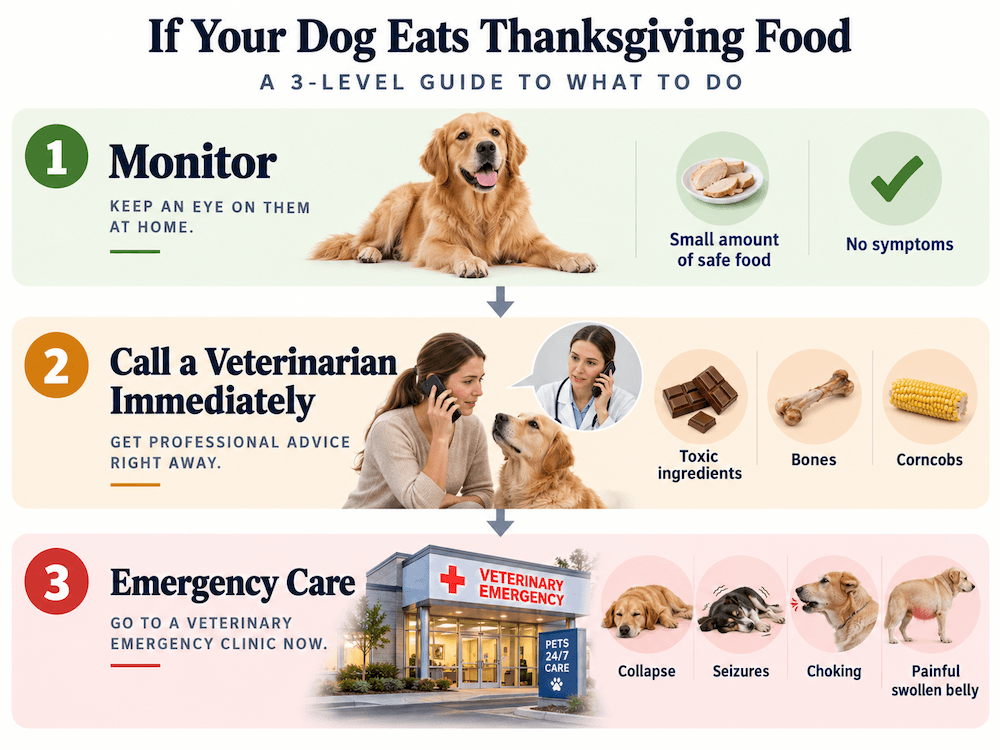
What to Do If Your Dog Eats Unsafe Thanksgiving Food
If your dog eats something potentially unsafe, remove access to the food and identify what was consumed. Record the approximate amount, time of ingestion, and your dog’s weight to help your veterinarian assess the risk. Do not induce vomiting or administer home remedies unless a veterinary professional specifically instructs you to.
Frequently Asked Questions
The Bottom Line
Thanksgiving can be a fun occasion to include your dog in the celebration, provided you choose foods that are safe and properly prepared. Plain turkey, pumpkin, sweet potatoes, green beans, and other dog-friendly ingredients can make delicious holiday treats when served in moderation. However, traditional dishes containing excessive fat, seasonings, or toxic ingredients should stay off your dog’s plate. Portion control is equally important, as even healthy foods can cause digestive upset when overfed. Preparing a small Thanksgiving plate with familiar ingredients is a simple way to let your dog participate without disrupting their balanced diet. Keeping leftovers secured and reminding guests about safe feeding habits can also prevent accidental ingestion. With thoughtful preparation and a few precautions, your furry companion can enjoy Thanksgiving safely alongside the family.