10 Signs Your Dog Is In Heat: Symptoms, Behaviors & What to Do


Canine Bible is reader-supported. We receive affiliate commissions via some of our links. Learn more.
The signs that your dog is going into heat include a swollen vulva, bloody vaginal discharge, frequent urination, increased licking of the genital area, and noticeable changes in behavior. Your female dog may also become more affectionate or restless, while male dogs may show increased interest in her. However, not every dog experiences the same symptoms, and some changes can be so subtle that owners barely notice them. Recognizing these signs can help you determine when your dog is entering heat, understand how long the cycle may last, and take precautions against unwanted pregnancy. It’s also important to distinguish normal reproductive changes from unusual discharge, excessive discomfort, or other symptoms that may require veterinary attention. Understanding what to expect throughout the cycle can help you keep your dog comfortable and safe.
What Does It Mean When a Dog Starts Going Into Heat?
Going into heat means a female dog’s reproductive system is beginning the part of its cycle that may lead to mating and pregnancy. The process starts with proestrus, when ovarian hormones prepare the reproductive tract, and continues into estrus, when the dog becomes receptive to mating. These are the two stages owners usually mean when they say a dog is “in heat” or “in season.”
A dog does not necessarily become willing to mate as soon as her heat begins. The early and receptive stages can last different lengths of time from one dog to another, which is why appearance, behavior, and counting calendar days cannot pinpoint ovulation or reliably identify a pregnancy-safe day.
10 Signs Your Dog Is Going Into Heat
Dogs entering heat typically show a combination of physical and behavioral changes. The first signs often appear during proestrus, the beginning of heat, while mating-related behaviors become more noticeable during estrus, the receptive stage.
1. Swollen Vulva
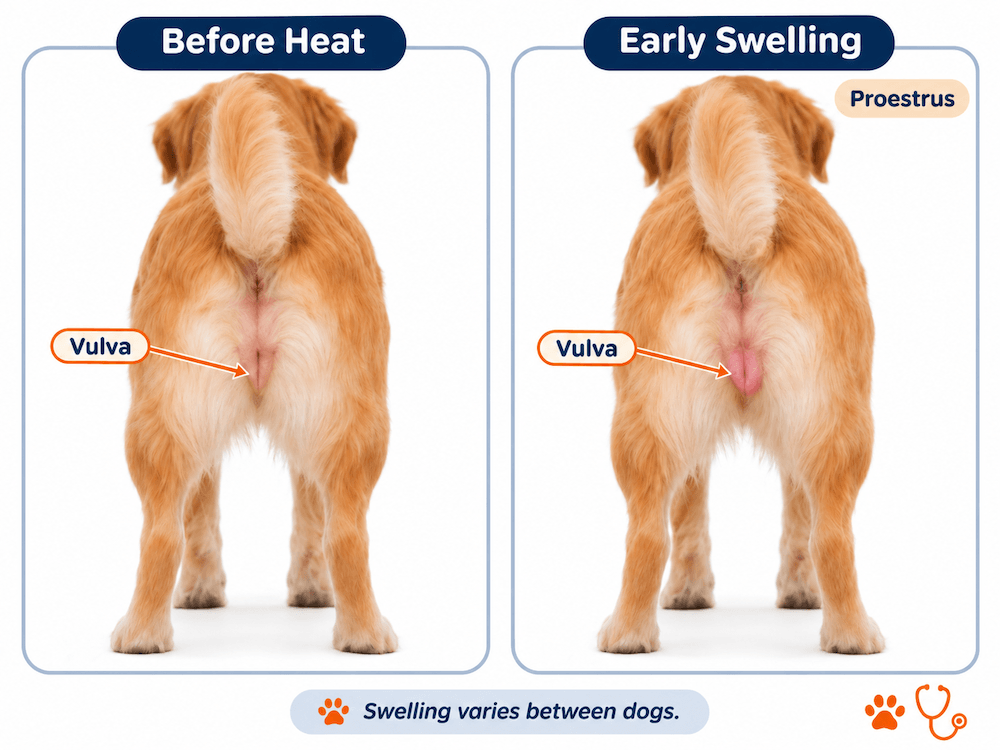
One of the earliest physical signs of heat is swelling of the vulva, the external part of your dog’s reproductive tract beneath her tail. The area may appear larger, rounder, or more prominent than usual as estrogen levels rise. Swelling can develop before any noticeable discharge, making it an important early indicator, although it may be subtle in some dogs.


2. Bloody or Pink Vaginal Discharge
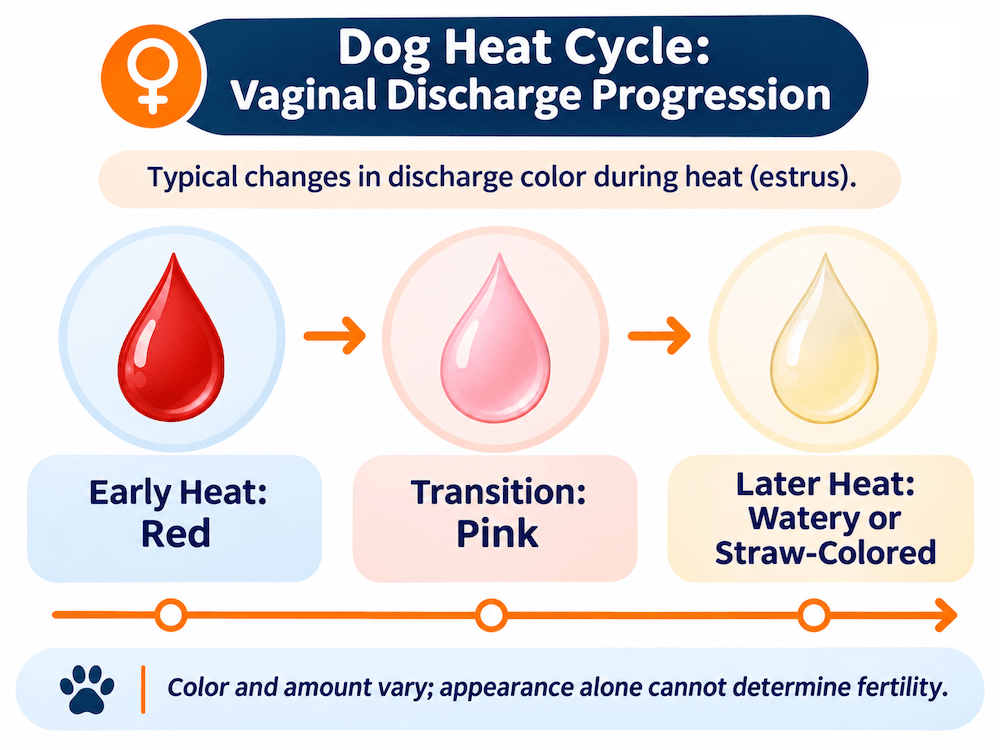
A bloody vaginal discharge is among the most recognizable signs that a female dog has entered heat. Initially, the discharge may appear red or blood-tinged, gradually becoming lighter pink, watery, or straw-colored as the cycle progresses. The amount varies considerably, so some dogs leave visible spots on bedding while others produce very little noticeable discharge.
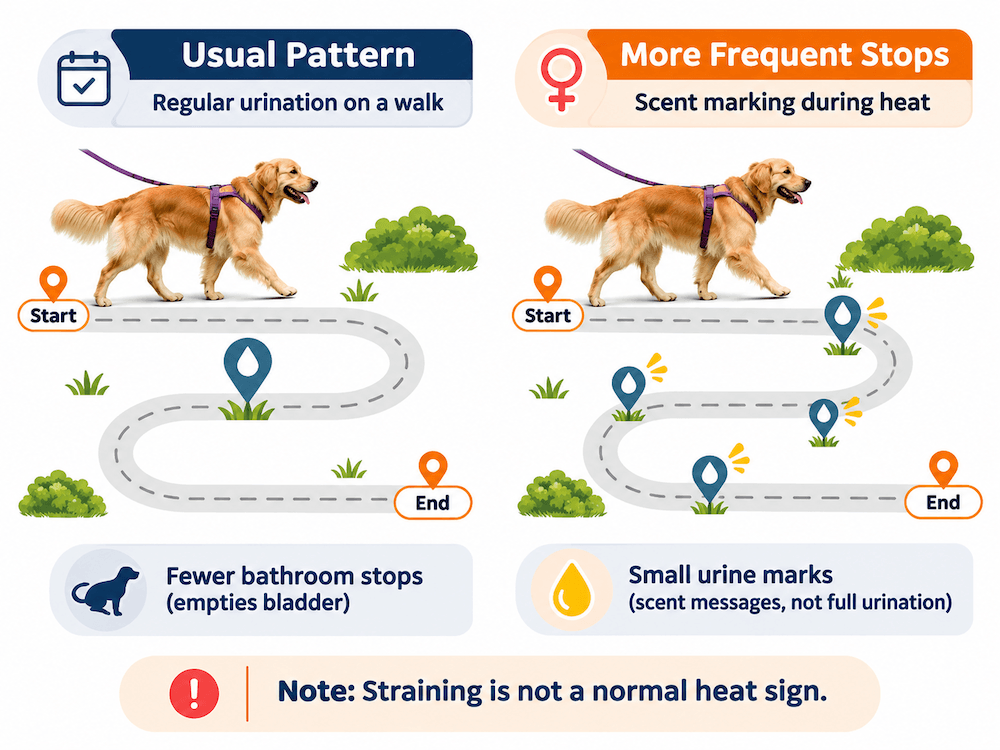
3. Increased Urination
Female dogs approaching or entering heat may urinate more frequently than usual, sometimes releasing only small amounts during walks. These urine deposits contain chemical scent signals that communicate reproductive information to other dogs. Owners may notice their dogs stopping more often to urinate or marking unfamiliar locations, even when their usual bathroom routine has not changed.
4. Frequent Licking of the Genital Area
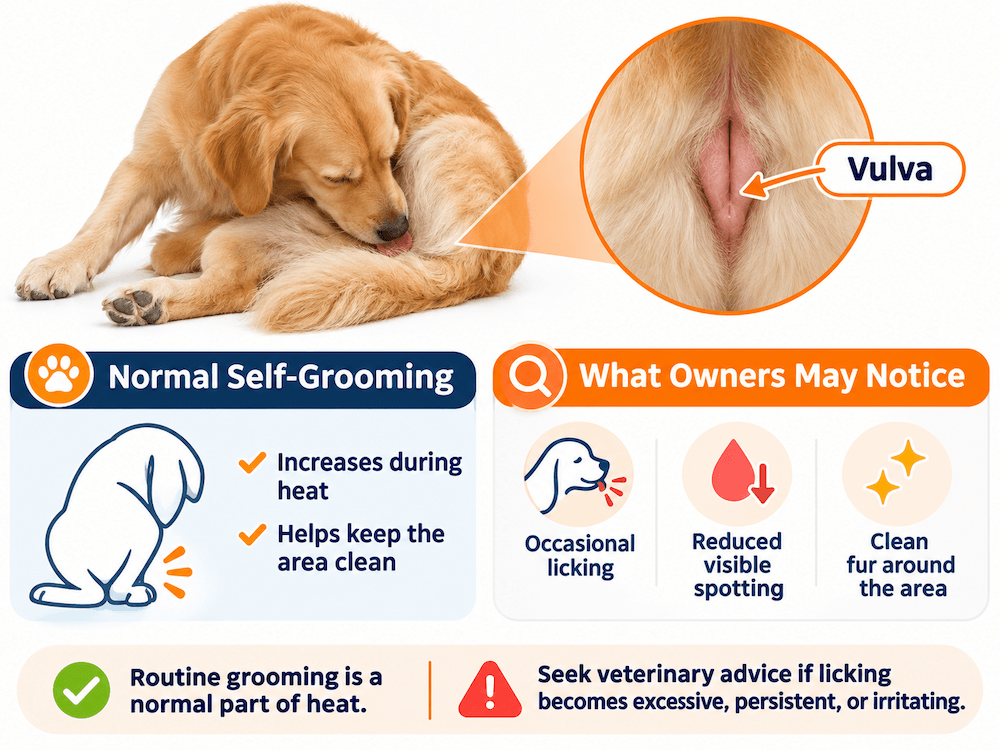
You may notice your dog licking around her vulva more frequently as heat begins. This behavior is often a natural response to vaginal discharge and helps keep the area clean. Some dogs groom themselves so thoroughly that owners rarely see visible blood, even when the reproductive cycle has started.
5. Increased Attention From Male Dogs
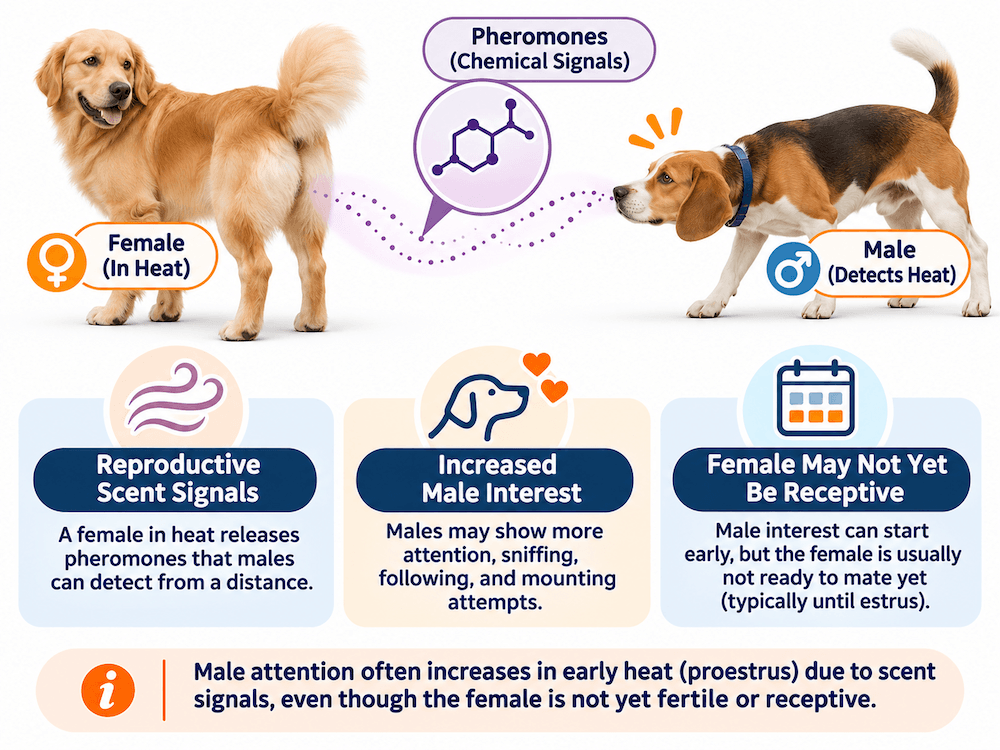
Male dogs may become unusually interested in your female dog before she is willing to mate. They can detect reproductive scent signals and may follow her, sniff her hindquarters, or repeatedly attempt to approach her. This attention can be an early clue that she is entering heat, even when physical symptoms are difficult to see.
6. Increased Affection or Clinginess
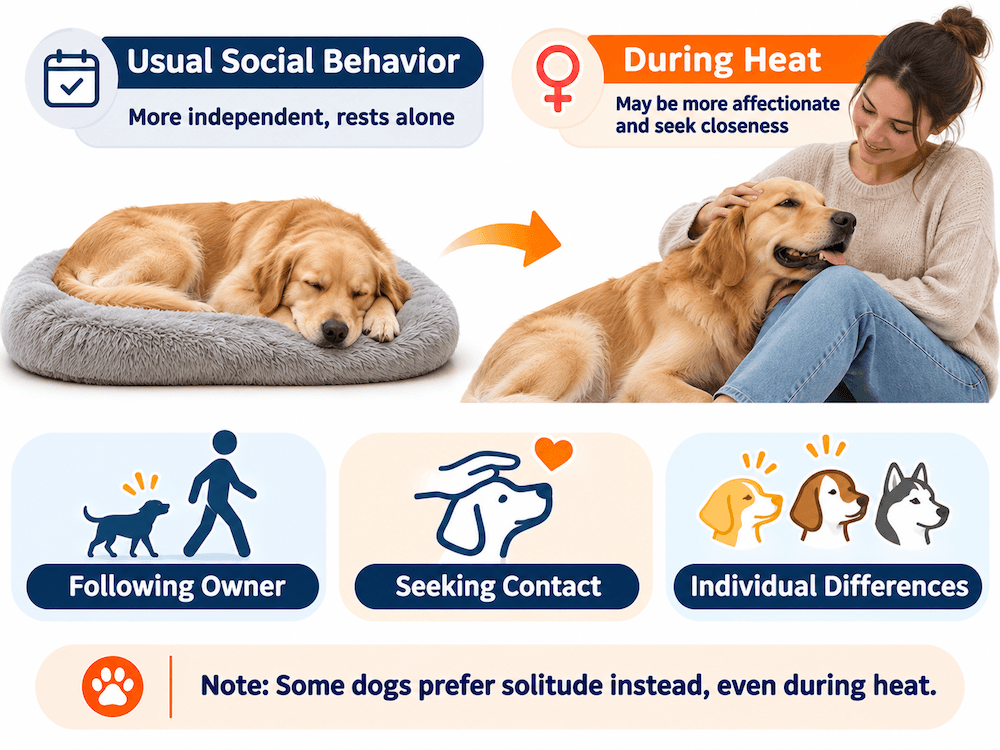
Some female dogs become noticeably more affectionate or dependent on their owners during heat. Your dog may follow you around the house, seek additional physical contact, or request attention more frequently than usual. This change is associated with hormonal fluctuations, although some dogs respond in the opposite way and prefer more personal space.


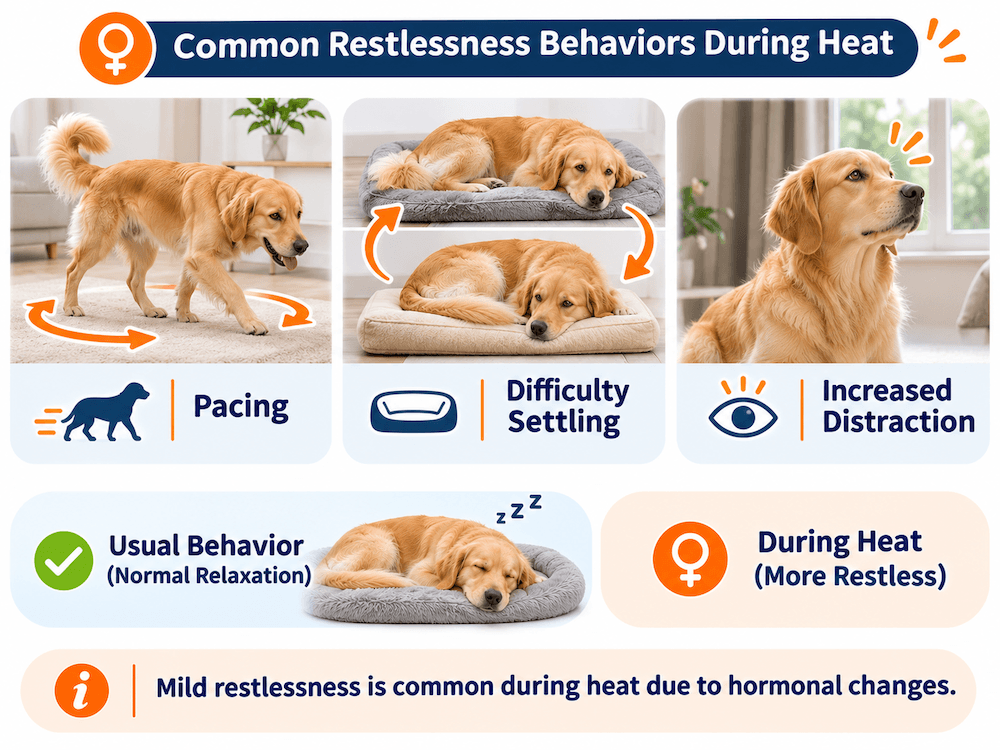
7. Restlessness or Pacing
Hormonal changes during heat can make some dogs appear unusually unsettled or restless. Your dog may pace around the house, struggle to settle into her usual resting spot, or become more distracted than normal. Mild restlessness can accompany heat, but persistent agitation or signs of pain should not automatically be attributed to reproductive hormones.
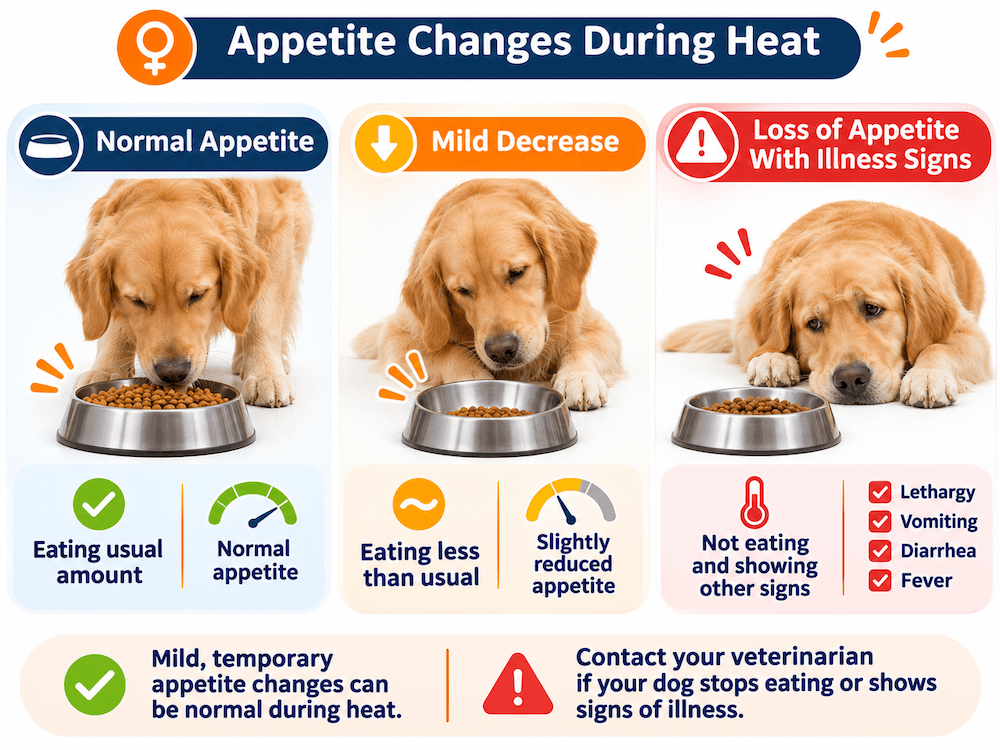
8. Changes in Appetite
Some female dogs experience a temporary decrease in appetite as their heat cycle begins. Your dog might eat smaller portions, show less enthusiasm for meals, or occasionally leave food unfinished while otherwise behaving normally. Appetite changes are less specific than reproductive signs and should not be used alone to identify heat.
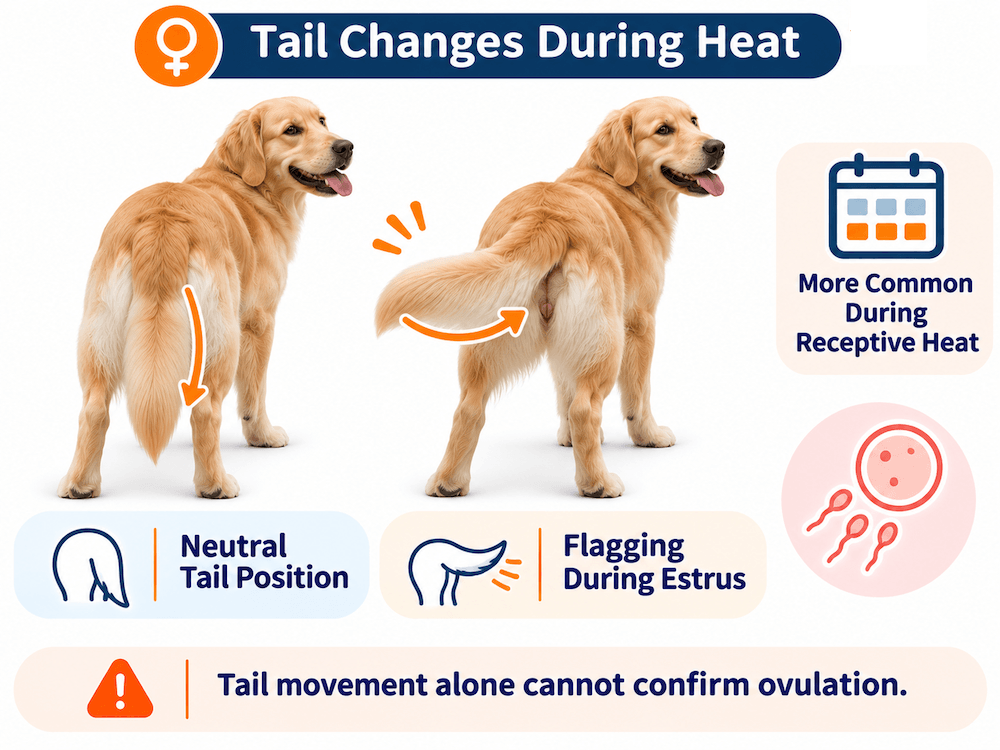
9. Tail Flagging or Moving the Tail to One Side
As a female dog progresses into the receptive stage of heat, she may deliberately move her tail to one side, a behavior known as flagging. This movement exposes the genital area and can occur when an interested male approaches. Flagging is more closely associated with mating receptivity than the earliest stage of heat, so it may appear after other symptoms have already developed.
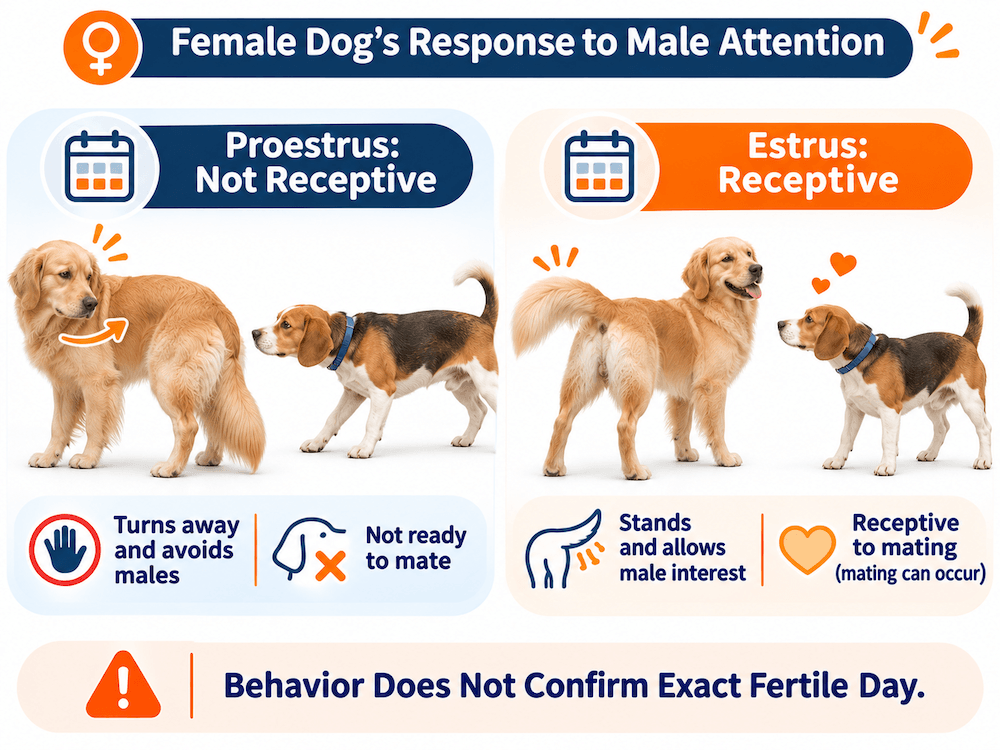
10. Standing Still and Allowing a Male Dog to Mount
During the receptive stage of heat, a female dog may stop avoiding male dogs and stand still when approached for mating. She may adopt a firm standing posture and present her hindquarters rather than moving away. This behavior is called standing heat and indicates mating receptivity, although it does not identify the exact day of ovulation.
When Do Dogs First Go Into Heat, and How Long Does It Last?
Most female dogs experience their first heat between 6 and 24 months of age, with smaller breeds generally starting earlier than large or giant breeds. Many dogs cycle approximately every six months, although intervals vary by breed, age, and individual reproductive patterns.
The visible heat period usually lasts around 2–4 weeks, but the full reproductive cycle includes four stages.
| Stage | Typical Duration | What’s Happening | Pregnancy Potential |
|---|---|---|---|
| Proestrus | About 9 days; highly variable. | Early heat develops; males are attracted. | Usually not yet receptive, but mating precautions are essential. |
| Estrus | About 9 days; highly variable. | Female becomes receptive; ovulation occurs. | Fertile period; pregnancy is possible. |
| Diestrus | Approximately 2 months in nonpregnant dogs. | Receptivity ends; progesterone remains elevated temporarily. | No longer receptive during a normal cycle. |
| Anestrus | Usually several months. | Reproductive resting period before the next cycle. | Not fertile during this stage. |
How Can You Tell When Your Dog’s Heat Is Over?
Heat is generally considered finished when vaginal discharge has stopped, the vulva has returned toward its usual size, and the female is no longer behaving receptively toward male dogs. These changes usually happen gradually, not on a single predictable calendar day.
Because symptoms may be subtle and fertility timing varies, do not assume that lighter bleeding, fewer spots, or temporary disinterest in males means pregnancy is no longer possible. Continue strict separation from intact males until the heat has clearly ended; if you are uncertain, ask your veterinarian to assess her cycle.
Can a Dog Go Into Heat Without Bleeding?
Yes. Some female dogs experience a silent or minimally noticeable heat, meaning the outward reproductive signs are subtle or absent. Others produce only a small amount of discharge or groom themselves frequently enough that visible spotting is difficult to detect.
This can be especially confusing during a dog’s first few cycles, which may be irregular. If heat is suspected but the signs are unclear, a veterinarian can evaluate her reproductive status using an examination and, when appropriate, vaginal cytology or hormone testing.
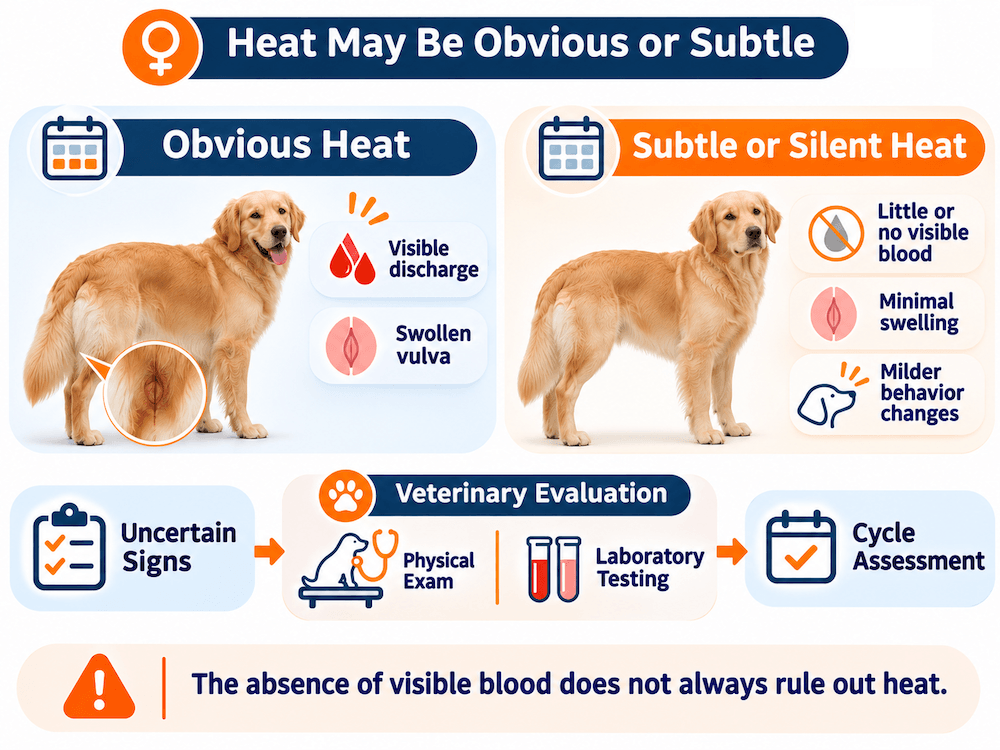
How Do Veterinarians Confirm Whether a Dog Is in Heat?
If a dog’s symptoms are unclear, her heat cycles are unusually irregular, or precise breeding timing matters, a veterinarian can assess her reproductive stage rather than relying on external signs alone.
Can a Dog Get Pregnant During Her First Heat?
Yes. A female dog can become pregnant during her first heat cycle, even if she is still physically immature. The likelihood of conception depends on ovulation timing, which cannot be reliably determined by counting days from the first appearance of bleeding.
One common misconception is that a dog is no longer fertile once her bloody discharge becomes lighter. In reality, lighter discharge may coincide with the receptive stage, when pregnancy becomes more likely. No visual sign can reliably establish a completely safe day for contact with an intact male.
How to Care for a Dog Going Into Heat
Most healthy dogs do not require medical treatment during a normal heat cycle. The main priorities are preventing unintended mating, maintaining hygiene, and supporting your dog’s comfort.
What Should You Do If Your Dog Accidentally Mates During Heat?
If your dog accidentally mates while in heat, stay calm and contact your veterinarian promptly, even if you are unsure whether mating occurred. The appropriate response depends on the situation, especially if the dogs are still physically tied. Follow these precautions to avoid injury and discuss the risk of an unplanned pregnancy.
| Situation | What to Do | What to Avoid |
|---|---|---|
| Suspected Mating | Contact your veterinarian promptly, even without a visible tie. | Do not assume pregnancy is impossible. |
| Dogs Physically Tied | Keep both dogs calm and allow natural separation. | Never pull the dogs apart or force separation. |
| After Mating | Discuss pregnancy risks and available options with your veterinarian. | Avoid human contraceptives, hormone treatments, and home remedies. |
Dog diapers do not prevent mating or pregnancy. If your dog lives with an intact male, use secure physical separation and do not rely on diapers, a single baby gate, or unsupervised yard access.
When to Call a Veterinarian About Heat Symptoms
A normal heat cycle should not cause significant illness. Some reproductive and urinary conditions can resemble heat, while pyometra, a serious uterine infection, may develop several weeks afterward. Pyometra can occur without visible vaginal discharge, so changes in your dog’s overall health are especially important.
| Care Level | What You May Notice | Recommended Action |
|---|---|---|
| Monitor at Home | Mild spotting or swelling with normal energy, appetite, and drinking. | Track symptoms and maintain mating precautions. |
| Book a Vet Visit | Heat symptoms lasting over four weeks, urinary straining, or signs in a spayed dog. | Arrange an examination to investigate the cause. |
| Urgent Same-Day Care | Foul or pus-like discharge, unexplained lethargy, vomiting, or excessive thirst after heat. | Seek immediate assessment for possible uterine infection. |
| Emergency Care | Collapse, severe weakness, painful abdominal swelling, or unusually heavy bleeding. | Go directly to an emergency veterinary hospital. |
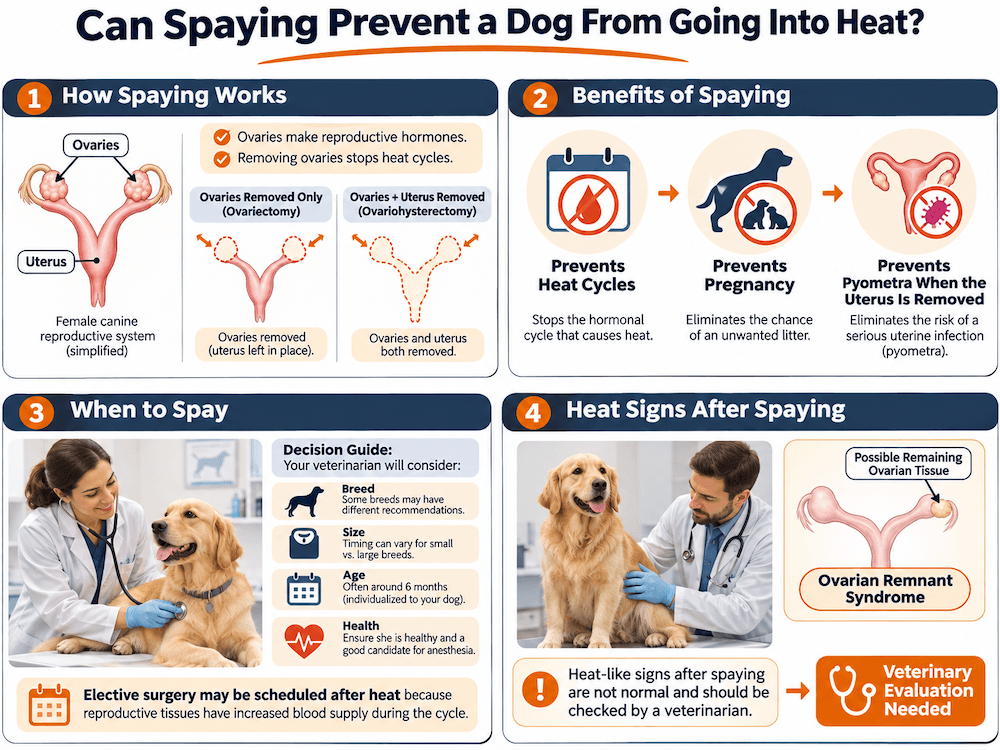
Can Spaying Prevent a Dog From Going Into Heat?
Spaying prevents future heat cycles by removing the ovaries, which produce the hormones responsible for reproductive cycling. It also prevents pregnancy and offers important reproductive health benefits. The best time to spay depends on your dog’s age, breed, size, and overall health, while any heat-like symptoms after surgery should be evaluated by a veterinarian.
What Scientific Studies Say About Heat Signs in Dogs
A study published in Biology of Reproduction found substantial variation in canine reproductive timing. Proestrus lasted 3–17 days, while estrus lasted 3–21 days. Researchers also found that mating receptivity could not reliably identify the exact time of ovulation, highlighting why outward signs alone cannot predict fertility.[1]
A study in Theriogenology monitored 16 female dogs using behavioral observations, vaginal cytology, and progesterone measurements. Researchers found that progesterone testing helped predict ovulation, while vaginal cytology provided useful information about reproductive stages. For owners, this means veterinary testing is more reliable than visible heat signs alone when precise reproductive timing matters.[2]
A study in Reproduction in Domestic Animals, involving more than 260,000 insured female dogs in Sweden, estimated that 19% developed pyometra by age 10, with substantial differences between breeds.[3] Separately, a clinical study published in Ciência Rural found that 47 dogs diagnosed with pyometra had last been in heat an average of 44 days earlier.[4] These findings reinforce the importance of monitoring unspayed dogs for illness in the weeks following heat.
Frequently Asked Questions
The Bottom Line
Recognizing the signs that your dog is going into heat starts with noticing physical changes such as vulvar swelling, bloody discharge, increased urination, and changes in behavior. These symptoms vary between dogs, and some females show only subtle signs, particularly during their first heat cycle. As the cycle progresses, your dog may become more receptive to mating even as visible bleeding decreases. Because fertility cannot be reliably determined by appearance alone, keeping her separated from intact male dogs throughout heat is essential. Maintaining good hygiene, providing a comfortable environment, and tracking her cycle can make the experience easier to manage. It’s equally important to recognize unusual symptoms, including abnormal discharge or signs of illness, that require veterinary attention. By understanding your dog’s reproductive cycle and taking appropriate precautions, you can help keep her comfortable, healthy, and safe.
Sources
- Relationship of reproductive behavior, serum luteinizing hormone and time of ovulation in the bitch
- Determination of ovulation time in bitches based on teasing, vaginal cytology, and elisa for progesterone
- Breed variations in the incidence of pyometra and mammary tumours in Swedish dogs
- The impact of clinical presentation, presence of SIRS and organ dysfunction on mortality in bitches with pyometra