What to Feed a Sick Dog That Won’t Eat: 15 Safe Options (Vet-Approved)

Canine Bible is reader-supported. We receive affiliate commissions via some of our links. Learn more.
If your sick dog won’t eat, try offering small portions of bland, easy-to-digest foods like plain boiled chicken, white rice, or a suitable complete and balanced dog food, provided your dog can safely eat and keep food down. Warming food slightly or adding warm water may also help encourage eating. However, the best feeding approach depends on the underlying illness, and some conditions require special diets or immediate veterinary attention. Understanding why your dog has lost their appetite, which foods are safe to offer, and when to seek veterinary care can help you support their recovery while avoiding unnecessary risks.
Possible Reasons a Sick Dog Won’t Eat
A sick dog may stop eating for many different reasons, and the cause can influence which foods are appropriate and how urgently your dog needs veterinary care. Appetite loss is often linked to nausea or digestive upset, but it can also happen because eating is painful, stressful, or physically difficult.
| Possible Cause | Why Your Dog May Not Eat |
|---|---|
| Nausea or Digestive Upset | Stomach discomfort, vomiting, or diarrhea can suppress appetite. |
| Dental or Mouth Pain | Tooth problems, inflamed gums, or sores make chewing painful. |
| Underlying Illness | Infections, pancreatitis, or organ disease may reduce appetite. |
| Stress or Medications | Anxiety, routine changes, or medication side effects can decrease interest in food. |
| Chewing or Swallowing Difficulty | Your dog may want food but struggle to chew or swallow. |
Before You Feed a Sick Dog That Won’t Eat
Before offering different foods, take a moment to assess your dog’s overall condition. A dog that skips a meal but remains alert, drinks water, and behaves normally is different from one that appears weak, nauseated, or physically unable to eat. Understanding the difference can help you decide whether trying food at home is appropriate or veterinary care should come first.
If your dog remains alert, drinks normally, and shows no concerning symptoms, offering a small amount of familiar, easily digestible food may be reasonable.
Remember to ALWAYS consult with your vet before making any changes that could affect your dog’s health, nutrition, or well-being. If you can’t reach your vet, you can chat live with a registered online veterinary professional via our online vet chat or video chat support (24 hours a day, 7 days a week). Or use Chewy’s online vet services (6 a.m. – midnight ET). Additionally, at-home dog gut health tests can analyze your dog’s microbiome, offering insights into which nutrients their diet should include. Similarly, at-home dog allergy testing kits can identify ingredients that may not be suitable for your dog, enabling you to choose the right diet and care plan to support optimal digestion, nutrition, and health.


15 Foods to Feed a Sick Dog That Won’t Eat
The following foods may help encourage a sick dog to eat, but they are not interchangeable. Complete dog foods can provide balanced meals, while most home-cooked ingredients are better suited to short-term feeding or small additions, depending on your dog’s condition.
Wet Dog Food
Wet dog food has a soft, moist texture and appealing aroma that may encourage a sick dog to eat. When labeled complete and balanced, it can provide essential nutrients while being easier to chew than dry kibble.

Why It May Help
- Its soft texture may be easier to chew for dogs with reduced appetite or dental discomfort.
- Its stronger aroma may encourage reluctant dogs to eat.
- Its high moisture content contributes to daily hydration while providing essential nutrients.
How to Prepare & Serve
- Choose a complete and balanced formula appropriate for your dog’s age and health.
- Warm slightly to enhance the aroma, stirring and checking the temperature before serving.
- Offer a small portion in a clean bowl and refrigerate unused food according to the label.
Softened Dry Dog Food
Softened dry dog food is regular kibble soaked in warm water until tender. The softer texture and enhanced aroma may encourage a sick dog to eat, while preserving the balanced nutrition of its familiar food.

Why It May Help
- Its softened texture may make chewing more comfortable for dogs with sensitive teeth or gums.
- Adding warm water can release aromas that make the food more appealing.
- Using your dog’s usual kibble maintains familiar nutrition without introducing new ingredients.
How to Prepare & Serve
- Place your dog’s regular kibble in a clean feeding bowl.
- Add warm water and let the kibble soak until the pieces become soft and easy to mash.
- Stir, check the temperature, and offer a small portion while freshly prepared.
Plain Boiled Chicken
Plain boiled chicken is a soft, lean protein that some sick dogs may find appealing when their appetite is low. Skinless, boneless chicken breast is relatively low in fat and may be suitable for short-term feeding when your dog’s condition allows it.

Why It May Help
- Its soft, shredded texture can be easier to chew than dry kibble.
- Its mild flavor and aroma may appeal to dogs with a reduced appetite.
- Skinless chicken breast provides high-quality protein with relatively little fat.
How to Prepare & Serve
- Choose skinless, boneless chicken breast and remove visible fat.
- Boil thoroughly without salt, oil, butter, garlic, onion, or other seasonings.
- Shred into small, manageable pieces, allow to cool, and offer a small portion.
Plain Cooked Turkey
Plain cooked turkey is a lean, mild-flavored protein that some sick dogs may find appealing when their appetite is low. Skinless turkey breast can be a temporary food addition when properly cooked and tolerated.


Why It May Help
- Its tender texture can make chewing easier.
- Its mild flavor may appeal to reluctant eaters.
- Skinless breast meat provides protein with relatively little fat.
How to Prepare & Serve
- Choose boneless, skinless turkey breast and trim visible fat.
- Cook thoroughly without oil, butter, salt, or seasoning.
- Shred into small pieces, cool, and offer a modest portion.
Cooked White Fish
Cooked white fish, such as cod, haddock, or pollock, provides lean protein with a mild flavor and soft texture. Thoroughly cooked, boneless fish may be a temporary food option for some sick dogs.

Why It May Help
- Its flaky texture is easy to break into small bites.
- Its mild taste may appeal to dogs reluctant to eat.
- Lean white fish provides protein with relatively little fat.
How to Prepare & Serve
- Choose a lean white fish such as cod or haddock.
- Steam, bake, or poach thoroughly without seasoning or oil.
- Remove every bone, flake finely, and serve a small cooled portion.
Extra-Lean Cooked Beef
Extra-lean cooked beef provides high-quality protein and a savory aroma that may encourage some sick dogs to eat. When fully cooked and drained of excess fat, it can be a temporary addition to an appropriate recovery diet.

Why It May Help
- Its savory aroma may encourage interest in food.
- Finely crumbled beef offers a manageable texture.
- It supplies protein, iron, and vitamin B12.
How to Prepare & Serve
- Choose extra-lean ground beef with minimal visible fat.
- Cook thoroughly without oil, salt, garlic, or onion.
- Drain excess fat, crumble finely, and serve a small portion.
Lean Cooked Pork
Lean cooked pork, especially boneless pork tenderloin, provides protein and a mild flavor that some dogs may accept during recovery. It should be thoroughly cooked, trimmed of visible fat, and offered only when medically appropriate.

Why It May Help
- Tender, finely chopped pork may be easier to chew.
- Its mild savory flavor may interest some reluctant eaters.
- Lean tenderloin provides protein and B vitamins.
How to Prepare & Serve
- Choose boneless pork tenderloin and trim visible fat.
- Cook thoroughly without oil, sauces, salt, or seasonings.
- Chop into small, soft pieces and serve a cooled portion.
Plain Cooked Egg
Plain cooked eggs provide high-quality protein and have a soft texture that some sick dogs may find appealing. When thoroughly cooked without added fat or seasoning, they can be a small temporary food addition if your dog’s condition allows it.

Why It May Help
- Their soft texture makes them easy to chew in small pieces.
- Their mild aroma may encourage a reluctant dog to eat.
- They provide high-quality protein and essential amino acids.
How to Prepare & Serve
- Boil or scramble eggs until the whites and yolks are fully cooked.
- Avoid butter, oil, milk, salt, and other seasonings.
- Remove the shell, cool, and offer a small chopped portion.
Plain White Rice
Plain white rice is a soft, low-fat carbohydrate that may be useful in a temporary bland diet for some dogs with mild digestive upset. When thoroughly cooked, it provides an easily digestible source of energy.

Why It May Help
- Well-cooked rice has a soft, easy-to-eat texture.
- Its low fat and relatively low fiber suit some bland diets.
- It provides carbohydrates that contribute energy during recovery.
How to Prepare & Serve
- Cook plain white rice thoroughly in water until very soft.
- Avoid butter, oil, salt, sauces, garlic, and onion.
- Cool slightly and pair with a veterinarian-approved lean protein.
Plain Cooked Pasta
Plain cooked pasta offers a soft, mild-flavored carbohydrate option that some sick dogs may tolerate. It can provide energy as a temporary food addition, but it is not a substitute for a balanced recovery meal.

Why It May Help
- Its soft texture can be comfortable to chew.
- Its neutral flavor may suit dogs sensitive to strong smells.
- It supplies carbohydrates with little fat when prepared plain.
How to Prepare & Serve
- Choose plain, unfilled pasta with suitable ingredients.
- Boil until soft, without salt, butter, oil, or sauces.
- Drain, cool, and cut into manageable pieces before offering.
Plain Cooked Oatmeal
Plain cooked oatmeal is a soft grain that provides carbohydrates and soluble fiber. Some dogs may tolerate small portions during recovery, although its fiber content is not suitable for every digestive condition.

Why It May Help
- Its smooth consistency requires little chewing.
- It supplies carbohydrates that contribute to energy intake.
- Its soluble fiber may support stool consistency in some dogs.
How to Prepare & Serve
- Choose plain rolled oats without added flavors.
- Cook thoroughly with water until soft and smooth.
- Allow to cool and offer a small portion without toppings.
Plain Boiled Potatoes
Plain boiled potatoes can provide a soft, low-fat source of carbohydrates when fully cooked and mashed. They may be suitable as a small temporary addition to a sick dog’s diet when medically appropriate.

Why It May Help
- Mashed potatoes offer a smooth, easy-to-chew texture.
- Their starch supplies carbohydrates and calories.
- Plain boiled potatoes contain very little fat.
How to Prepare & Serve
- Choose firm, fresh potatoes without green patches or sprouts.
- Peel and boil thoroughly until completely tender.
- Mash with a little water, cool, and serve plain.
Cooked Sweet Potatoes
Cooked sweet potatoes have a naturally mild sweetness and can be mashed into a soft texture. They provide carbohydrates and dietary fiber, making them a possible small addition to a sick dog’s meals when tolerated.

Why It May Help
- Mashing creates a tender, easy-to-chew consistency.
- Their natural sweetness may appeal to some reluctant eaters.
- They provide energy, fiber, and beta-carotene.
How to Prepare & Serve
- Wash and peel fresh sweet potatoes.
- Boil, steam, or bake until completely soft.
- Mash, cool, and offer a modest amount without additions.
Plain Pumpkin Puree
Plain pumpkin puree is a smooth, moisture-rich food addition that provides dietary fiber. Small amounts may help with certain mild stool changes, but pumpkin provides too few calories and essential nutrients to replace a meal.

Why It May Help
- Its smooth consistency requires almost no chewing.
- Its moisture and fiber may support stool consistency.
- A small amount can add variety to suitable meals.
How to Prepare & Serve
- Choose canned 100% pumpkin puree without additives.
- Alternatively, cook plain pumpkin and blend until smooth.
- Add a small amount to a suitable meal if tolerated.
Soft Cooked Carrots
Soft cooked carrots are a mild, naturally sweet vegetable that can be mashed or finely chopped for easier chewing. They add fiber and micronutrients to suitable meals but provide very few calories for a dog recovering from illness.

Why It May Help
- Cooking creates a soft texture that is easier to chew.
- Their natural sweetness may appeal to some dogs.
- They contribute fiber and beta-carotene to meals.
How to Prepare & Serve
- Wash and peel carrots before cooking.
- Boil or steam until completely tender without seasoning.
- Mash or chop finely, cool, and offer a small amount.
How Much and How Often Should You Feed a Sick Dog?
If your dog is stable and keeping food down, small, frequent meals may be easier to tolerate than one large serving. Start with a little suitable food and gradually increase portions based on your dog’s appetite, size, and medical needs.
| Feeding Situation | How Much to Offer | How Often to Feed |
|---|---|---|
| Reduced Appetite | Begin with a few bites of suitable food. | Offer small meals several times daily. |
| Mild Digestive Upset | Start with small portions if food is tolerated. | Consider meals spaced a few hours apart. |
| Appetite Improving | Gradually increase portions toward normal intake. | Slowly return to the usual feeding schedule. |
| Diabetes or Chronic Illness | Follow the prescribed meal portions. | Maintain the veterinarian-directed feeding schedule. |
| Continued Food Refusal | Do not force-feed or repeatedly increase portions. | Contact your veterinarian for feeding guidance. |
Which Foods Are Best for Different Health Problems?
A food that suits one sick dog may be inappropriate for another. Medical conditions can change the amount of fat, protein, minerals, or carbohydrates a dog should consume, making the underlying diagnosis more important than the food’s general reputation for being gentle.
| Health Situation | What Changes | Safer Feeding Approach |
|---|---|---|
| Mild Digestive Upset | Food tolerance may temporarily decrease. | Consider a vet-approved gastrointestinal or short-term bland diet. |
| Dental or Mouth Pain | Chewing firm food may be painful. | Use soft food while arranging a dental examination. |
| Pancreatitis | Dietary fat often needs strict control. | Use a veterinarian-recommended low-fat therapeutic diet. |
| Kidney or Liver Disease | Nutrient needs depend on disease and severity. | Follow the prescribed diet instead of improvising meals. |
| Diabetes Treated With Insulin | Missing meals can complicate insulin treatment. | Contact your veterinarian promptly for feeding and insulin instructions. |
| Food Allergies | New proteins may trigger allergic reactions. | Stick to previously tolerated, veterinarian-approved ingredients. |
How to Encourage a Sick Dog to Eat
When your dog is alert, swallowing normally, and not actively vomiting, small changes in food temperature, texture, and presentation may improve their willingness to eat. Start with one familiar, suitable food rather than repeatedly introducing new ingredients.
If your dog accepts food, gradually increase portions toward their usual daily intake as tolerated.
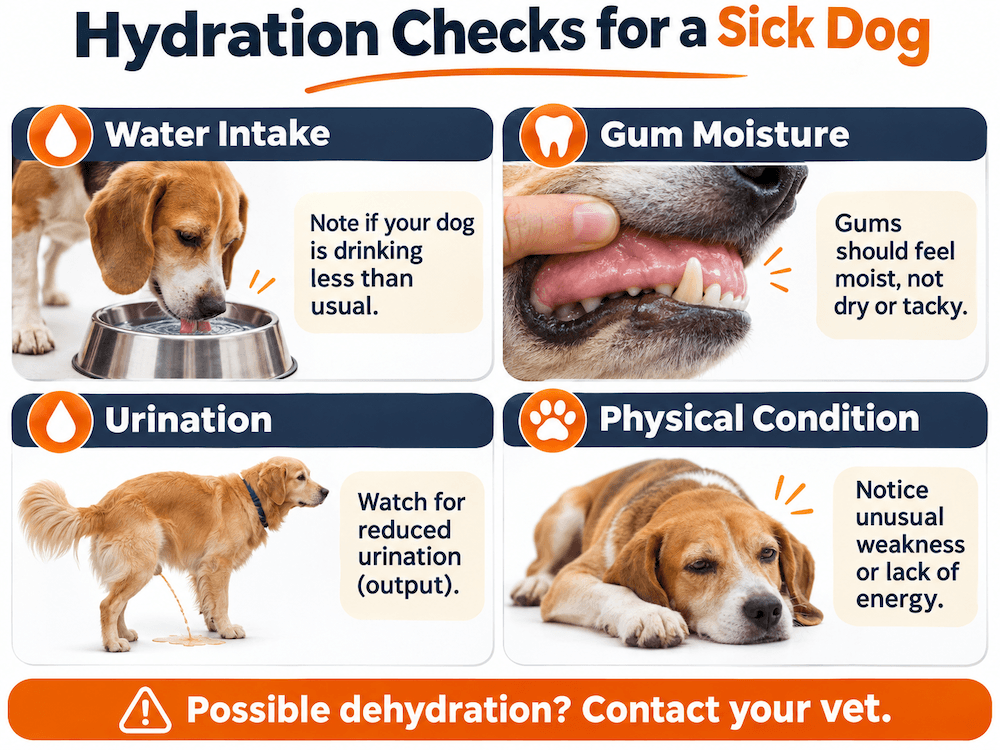
How to Keep a Sick Dog Hydrated
When a dog is eating less, hydration deserves separate attention. Vomiting and diarrhea can cause additional fluid loss, and refusing meals may also reduce the moisture a dog normally gets from wet food.
How to Monitor Your Dog’s Food Intake During Recovery
A few bites do not necessarily mean your dog is eating enough. Keep a simple record of what you offer and what your dog actually consumes, especially if appetite changes throughout the day. Feeding separately from other pets makes this easier to assess.
What Not to Feed or Do When Your Dog Is Sick
Trying to make food more appealing can sometimes introduce unnecessary risks, especially when a dog is already nauseated or has a sensitive digestive system.
| What to Avoid | Why It’s Risky | Safer Approach |
|---|---|---|
| Fatty Foods | Greasy meats and butter may worsen digestive upset or pancreatitis. | Choose suitable low-fat foods. |
| Toxic Ingredients | Onion, garlic, grapes, raisins, chocolate, and xylitol can cause poisoning. | Serve plain, dog-safe ingredients only. |
| Raw Meat or Bones | Risk of bacterial infection, choking, or internal injury. | Offer thoroughly cooked, boneless meat. |
| Force-Feeding | May cause choking, aspiration, distress, or food aversion. | Offer food gently; seek veterinary guidance. |
| Prolonged Homemade Diets | Unbalanced meals may cause nutritional deficiencies. | Use complete diets or veterinarian-formulated recipes. |
| Fasting Without Guidance | Can be dangerous for puppies, small dogs, or medically vulnerable pets. | Follow veterinarian-directed feeding instructions. |
| Multiple New Foods | May worsen digestive upset and obscure food intolerances. | Introduce one suitable food at a time. |
When to Call a Veterinarian if Your Sick Dog Won’t Eat
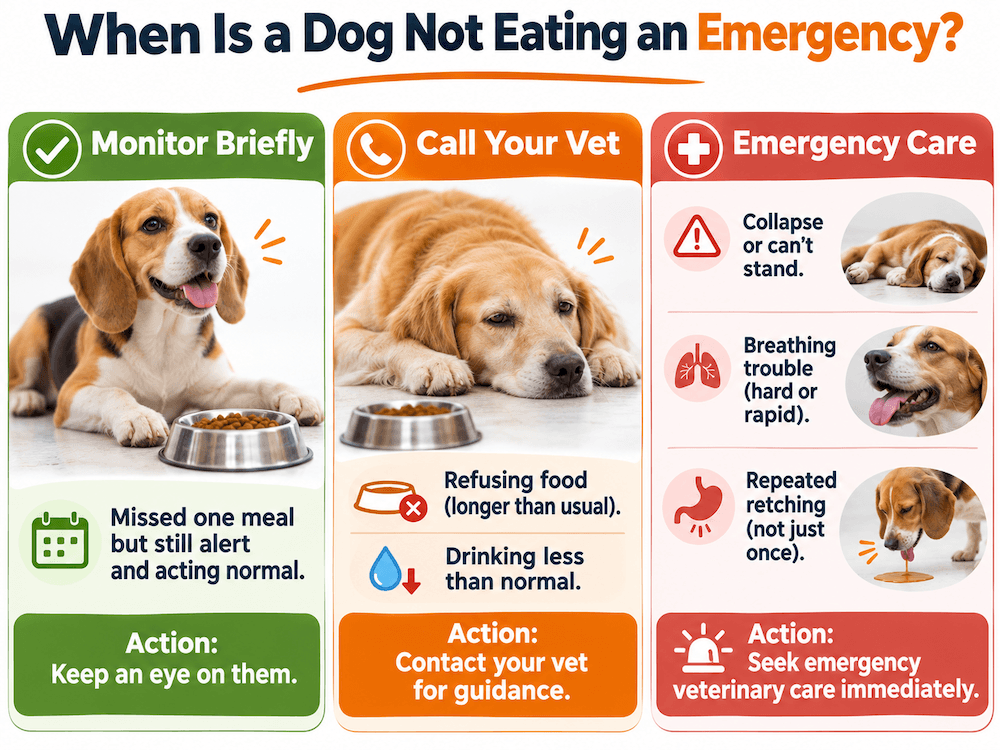
Not every dog that refuses food needs emergency care, but knowing when to seek veterinary attention is essential. The urgency depends on how long your dog has gone without eating, their age, medical history, and whether other concerning symptoms are present. While an otherwise healthy dog that misses one meal may only need close monitoring, persistent appetite loss or signs of serious illness require prompt action. Understanding these differences can help you determine when to monitor your dog, contact your veterinarian, or seek emergency care.
How to Transition Back to Your Dog’s Regular Food
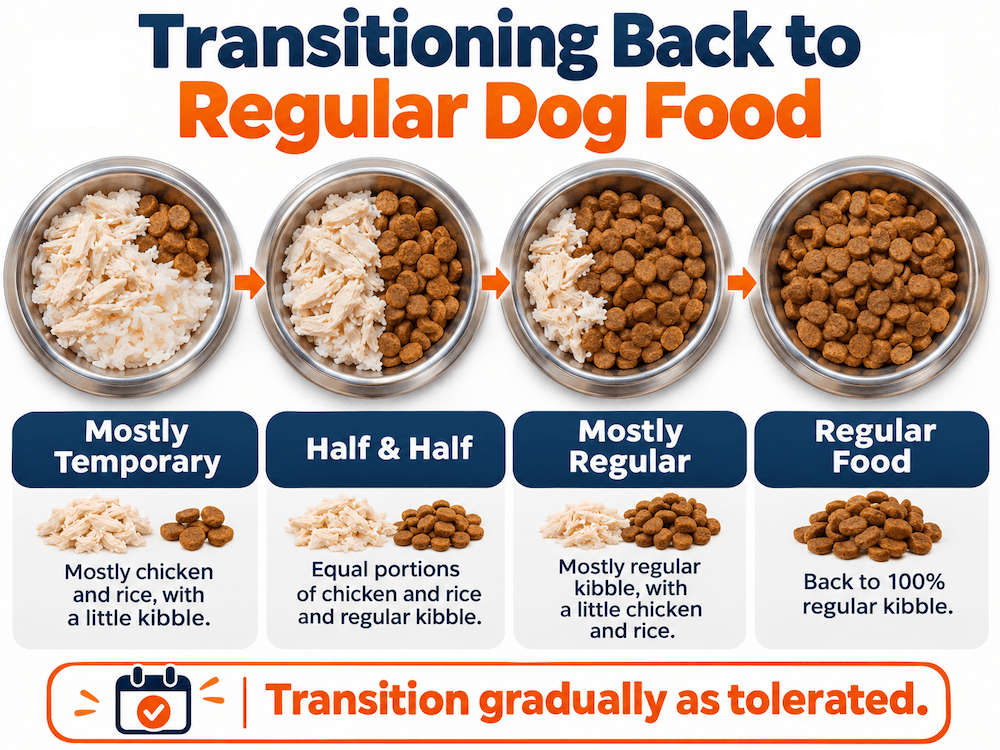
Once they have recovered, transition from any temporary homemade diet back to their regular balanced food over several days, following your veterinarian’s instructions.
Start by adding a small amount of your dog’s usual complete food to the temporary meal. If it is tolerated, gradually increase the regular-food portion while decreasing the temporary food until your dog is back on its normal diet. Dogs with sensitive digestion may need a slower transition, and those on prescribed diets should follow their veterinarian’s specific plan.
Frequently Asked Questions
The Bottom Line
Knowing what to feed a sick dog that won’t eat starts with understanding that appetite loss can have many causes, from mild digestive upset to more serious health problems. For dogs with uncomplicated stomach discomfort, small portions of easily digestible food may help encourage eating without overwhelming their digestive system. Plain boiled chicken, white rice, and veterinarian-recommended gastrointestinal diets can provide temporary feeding options when appropriate. Maintaining hydration, monitoring symptoms, and avoiding fatty or heavily seasoned foods are equally important during recovery. Never force-feed a reluctant dog or rely on home remedies when symptoms are persistent or worsening. If your dog continues refusing food, vomits repeatedly, or shows signs of dehydration or weakness, veterinary care should take priority. Once your dog begins feeling better, gradually transitioning back to a balanced regular diet can help restore its normal feeding routine.
For more guidance on gentle feeding options, explore our guide to the best bland diets for dogs. If your dog continues refusing meals, learn how long a dog can go without eating and when appetite loss requires veterinary attention. You can also discover what to give a dog for an upset stomach, including suitable foods, home care tips, and warning signs to watch for.