Why Do Dogs Sleep So Much? 8 Reasons, Is It Normal? When to Worry?

Canine Bible is reader-supported. We receive affiliate commissions via some of our links. Learn more.
If your dog spends most of the day sleeping, you may wonder why dogs sleep so much and whether all that rest is normal. While long naps are a familiar part of canine life, there’s more to your dog’s sleeping habits than meets the eye. But how much sleep is too much, and does every dog need the same amount? Age, breed, activity level, and daily routines can all influence sleeping patterns in surprising ways. Puppies and senior dogs may have very different sleep needs, while some dogs seem to snooze even when they’ve done little all day. Although extra sleep is often harmless, sudden changes in sleeping habits can sometimes point to an underlying health concern. Understanding what’s normal, what’s excessive, and which warning signs deserve attention can help you better assess your dog’s sleep habits.
How Much Sleep Do Dogs Actually Need?
Dogs’ sleep needs vary with age, activity, and overall health. Most healthy adults sleep around 10–14 hours daily, but these estimates are guidelines rather than strict requirements. Your dog’s usual sleep pattern and alertness while awake matter more than reaching a specific number.
| Dog’s Age | Daily Sleep | What to Know |
|---|---|---|
| Puppies (16 weeks) | 11.2 hours | Frequent daytime naps; individual sleep duration varies widely. |
| Young dogs (12 months) | 10.8 hours | More nighttime sleep and less daytime sleep than younger puppies. |
| Healthy adult dogs | Approximately 10–14 hours | General guidance, not a scientifically established requirement. |
| Senior dogs | Varies; often more resting | Aging can change sleep timing and frequency. |
8 Reasons Dogs Sleep So Much According to Science
Dogs’ sleeping habits reflect a combination of biological needs, normal behavioral patterns, and individual circumstances. Some explanations are supported by direct experiments measuring canine brain activity during sleep, while others come from observational studies of dogs at different life stages and in different environments.
1. Dogs Naturally Have Multiple Sleep Cycles Throughout the Day
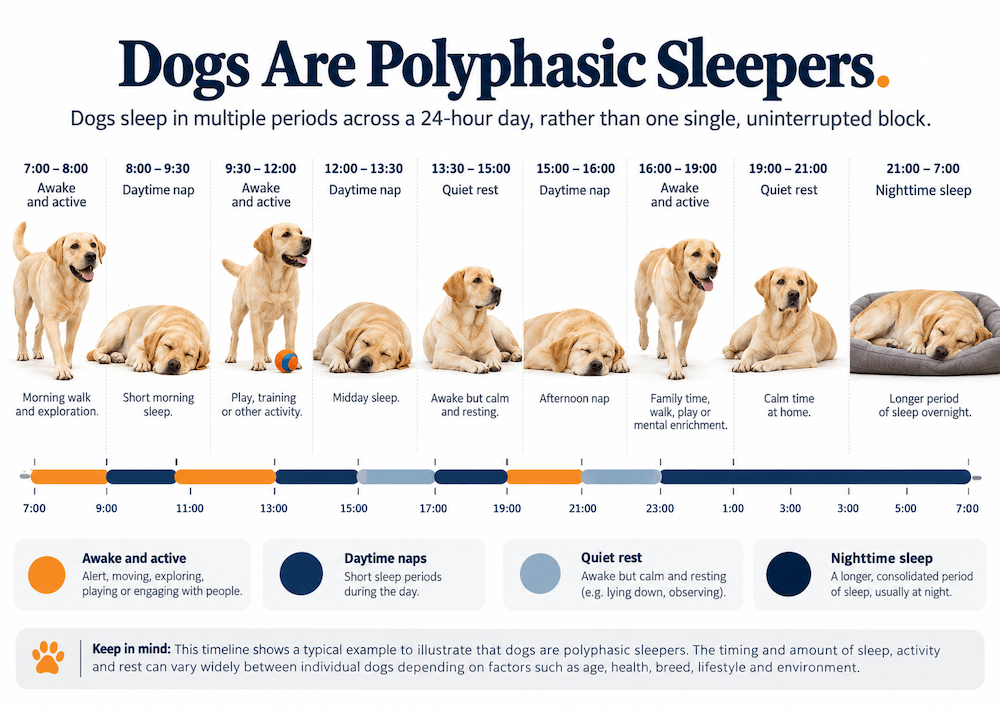
Dogs are polyphasic sleepers, meaning they naturally sleep in several separate periods rather than relying on one uninterrupted nighttime session. Their sleep alternates with waking, quiet resting, and activity, allowing them to take naps while remaining responsive to their surroundings. This pattern helps explain why a healthy dog might sleep through the night and still spend several hours napping during the day.[1]
2. Sleep Helps Dogs Process Information and Consolidate Memories
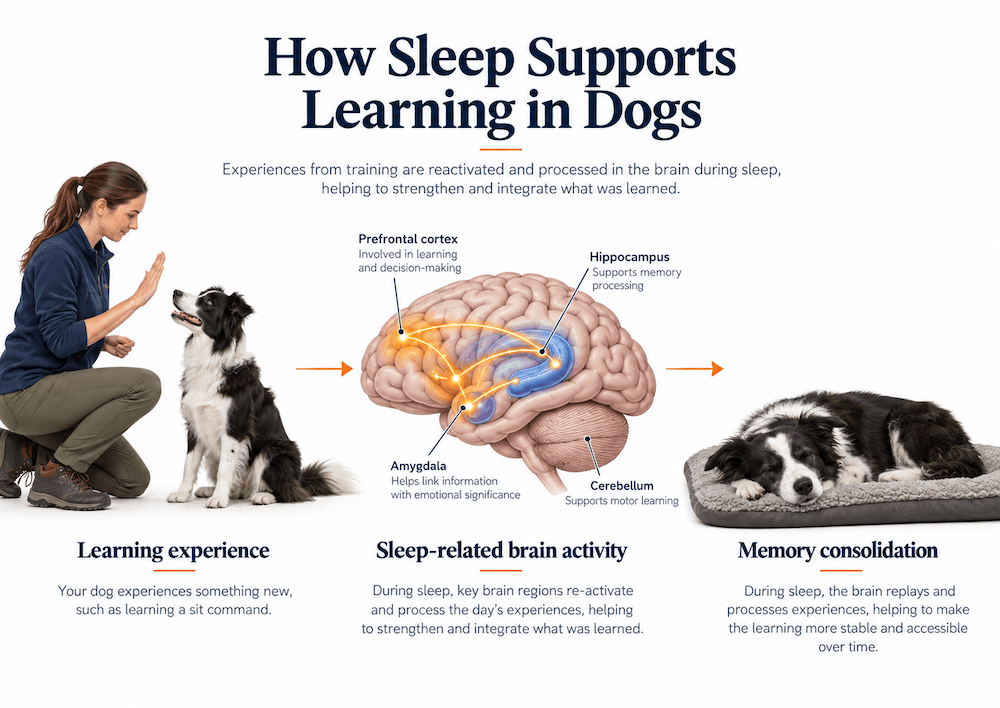
Sleeping allows the canine brain to continue processing information acquired during waking activities. During sleep-dependent memory consolidation, neural activity helps stabilize and organize newly learned information, supporting future performance on certain learning tasks. This explains why sleep is an important part of healthy cognitive functioning, although learning something new does not necessarily mean a dog will sleep for more hours.[2]


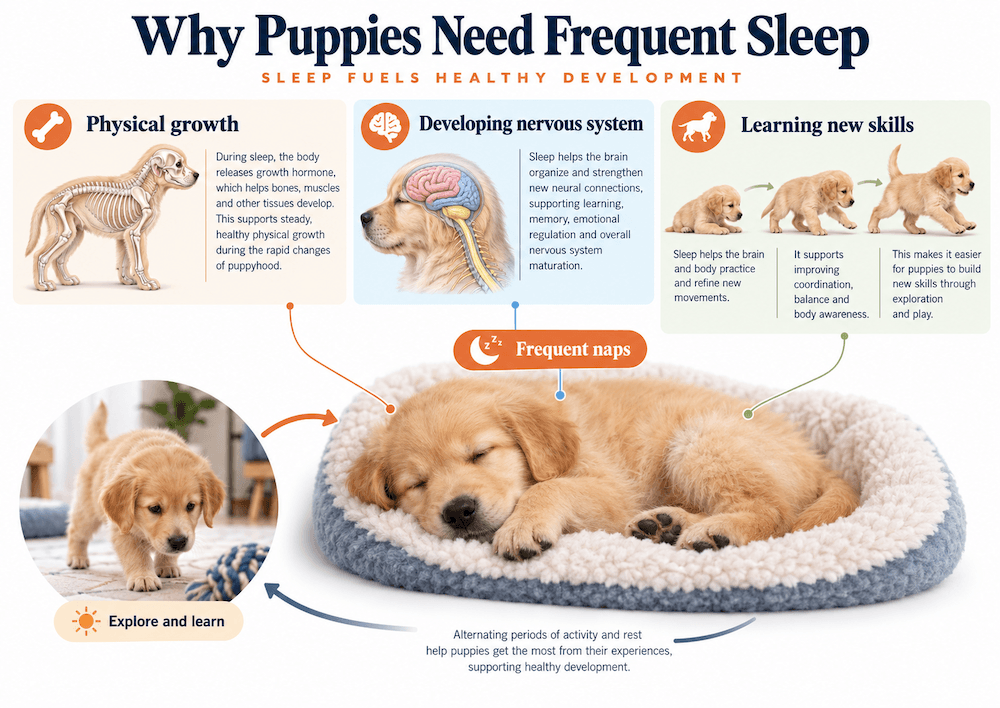
3. Puppies Need Sleep During Growth and Development
Puppies undergo rapid physical development while continuously acquiring new motor, sensory, and social skills. Developmental sleep needs are associated with these early life processes, and younger puppies commonly take frequent naps between periods of feeding, exploration, and play. Studies comparing young puppies with older juvenile dogs have documented age-related differences in total sleep duration and the balance between daytime and nighttime sleep.[3]
4. Aging Changes Sleep Patterns and Daily Activity
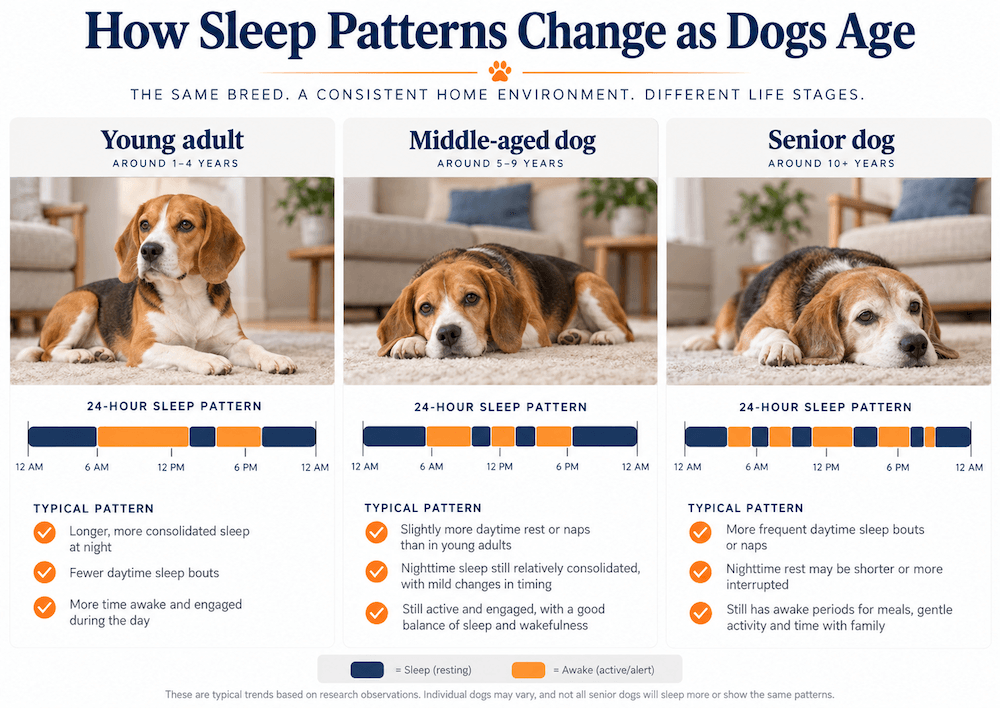
As dogs grow older, normal age-related changes can influence their activity levels and the timing of their sleep. Research has identified more frequent daytime naps and longer nighttime sleep periods in older dogs compared with younger adults under controlled conditions. However, aging alone should not be used to explain an abrupt increase in sleep, particularly when an older dog also experiences reduced mobility, confusion, or unusual behavior.[4]
5. Physical Activity Increases the Need for Recovery Sleep
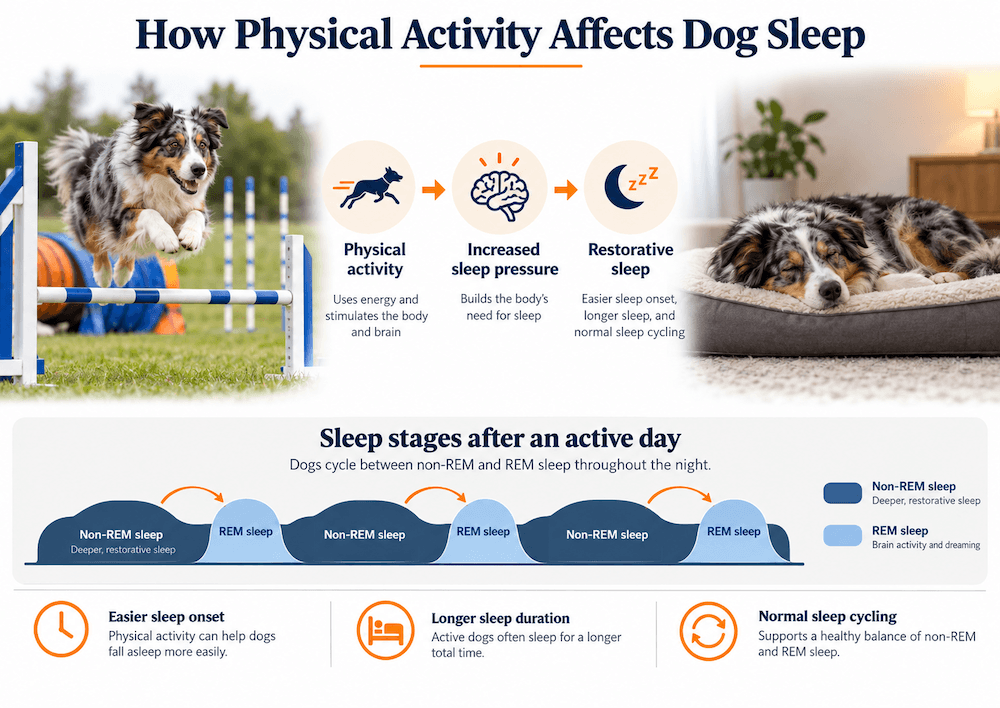
After a physically demanding day, dogs may sleep longer because increased activity influences the body’s need for recovery. Sleep pressure, the biological drive to sleep that builds during wakefulness, helps explain why active days can be followed by earlier sleep onset and more time spent in deeper sleep stages. This is particularly relevant after prolonged exercise, demanding training, or unusually busy outings.[5]
6. Their Biological Clocks Respond to Daily Routines
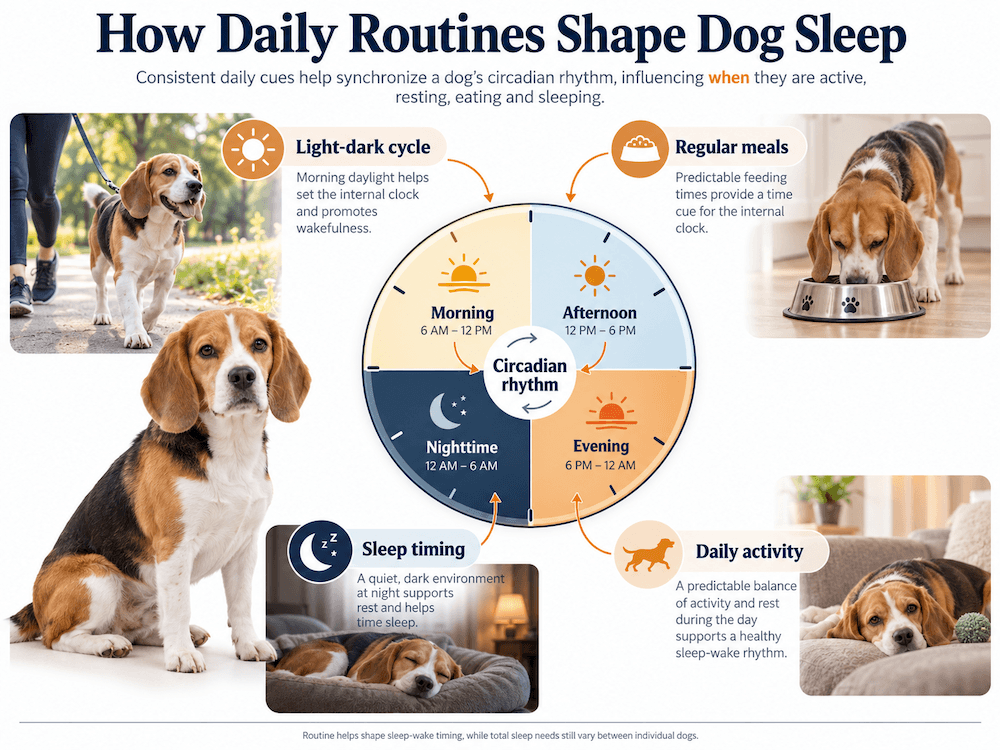
Dogs have an internal circadian timing system that helps organize periods of activity and rest across approximately 24 hours. Environmental light, feeding schedules, and predictable household activities influence when dogs become active, settle down, and wake up. Consequently, a dog may sleep through quiet portions of the day and become alert around familiar events such as morning walks, meals, or an owner’s return home.[6]


7. Emotional Experiences and Familiar Environments Affect Sleep Quality
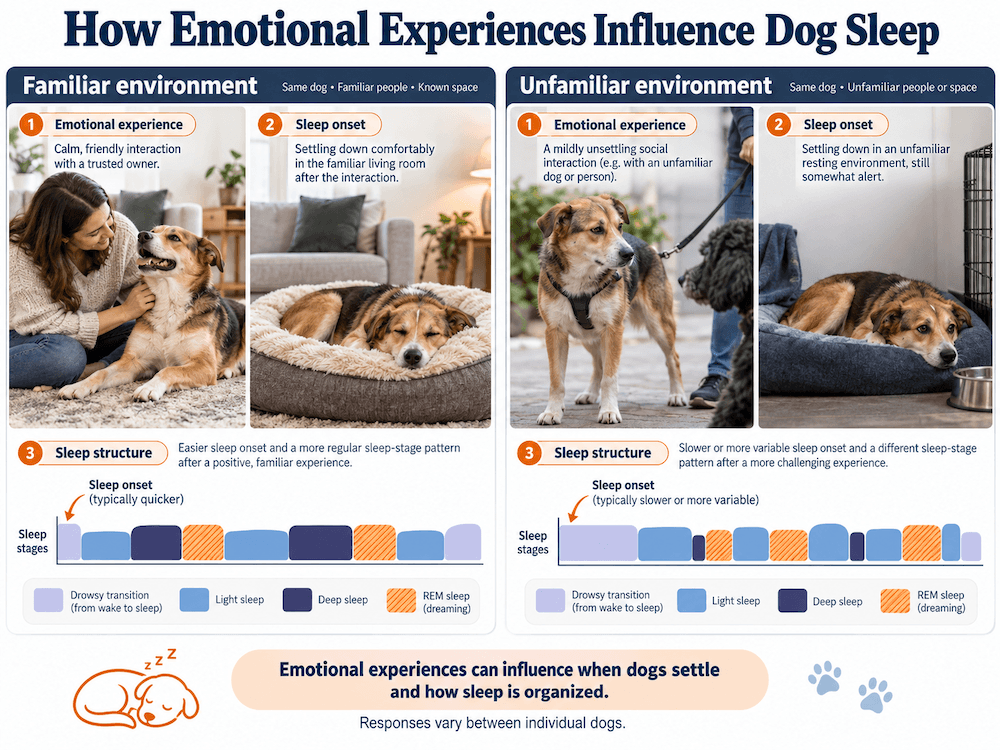
Dogs’ ability to settle and their distribution of sleep stages can change depending on what they experience before resting. Emotional arousal and environmental familiarity influence sleep physiology, with unfamiliar surroundings or stressful interactions potentially altering how quickly dogs fall asleep and how much time they spend in different sleep stages. A dog that appears to sleep more after a stressful experience is not necessarily obtaining better-quality sleep, so the surrounding context matters.[7]
8. Health Problems Can Cause Excessive Sleepiness or Disrupted Sleep
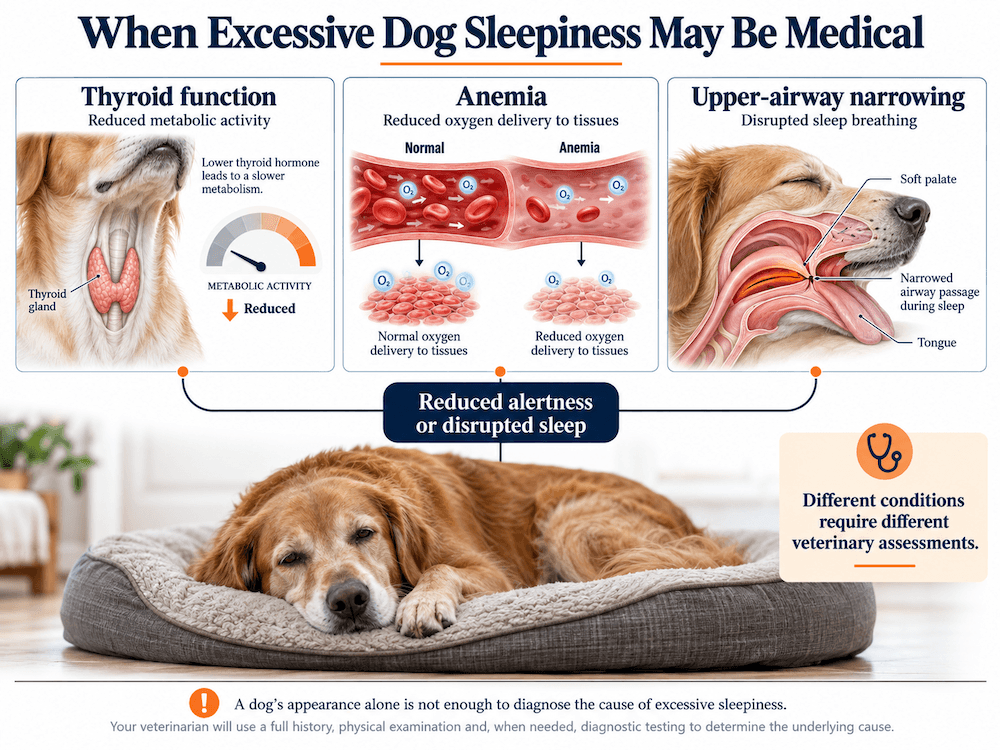
A dog may appear to sleep excessively because illness reduces normal energy levels or interrupts restorative sleep. Medical causes of unusual sleepiness include infections, anemia, hypothyroidism, medication-related sedation, and other systemic disorders, while conditions such as sleep-disordered breathing, chronic pain, or cognitive dysfunction may interfere with nighttime rest. Unlike ordinary napping, medically significant sleep changes often occur alongside altered appetite, exercise tolerance, breathing, mobility, or behavior.[8][9]
Does a Dog’s Breed Affect How Much They Sleep?
Breed characteristics can influence a dog’s activity patterns, temperament, and tendency to rest throughout the day. Working heritage, energy levels, and natural settling behaviors may contribute to differences in sleeping habits. However, breed alone cannot reliably predict total sleep duration, and individual variation remains important.
| Factor | What to Explain | Important Distinction |
|---|---|---|
| Working heritage | Herding, hunting, and companion breeds have different behavioral tendencies. | Historical roles don’t determine sleep requirements. |
| Activity drive | Some breeds naturally seek more activity and stimulation. | High energy doesn’t necessarily mean less sleep. |
| Indoor temperament | Some breeds settle and lounge more readily. | Resting isn’t always actual sleep. |
| Body size | Breeds vary considerably in physical size. | Size alone doesn’t predict sleep duration. |
| Breeding lines | Working and companion lines may differ in activity drive. | Dogs within the same breed can vary significantly. |
How Sleep Works in a Dog’s Brain and Body
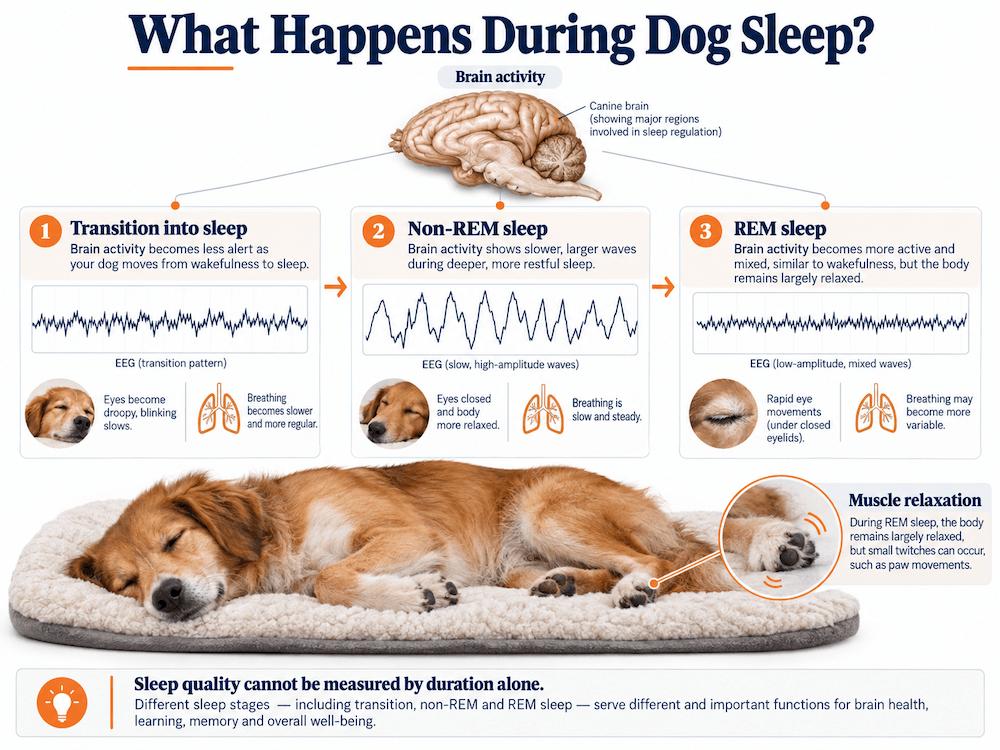
Canine sleep involves several physiological states, including drowsiness, non-rapid eye movement (NREM) sleep, and rapid eye movement (REM) sleep. During NREM sleep, brain activity follows patterns associated with quieter, more synchronized neural activity, while REM sleep involves a more activated brain state and substantial suppression of most skeletal muscle movement. Dogs transition between these states throughout their sleeping periods.
During REM sleep, owners may notice small paw movements, facial twitching, irregular breathing patterns, or occasional vocalizations. These movements are often normal, although they cannot reveal precisely what a dog is dreaming about. Healthy sleep depends on the organization and quality of sleep stages, not simply the number of hours a dog spends lying down.
Dog Sleep vs. Human Sleep: What’s the Difference?
Dogs and humans have noticeably different sleeping habits, especially in how they distribute rest throughout the day. Humans generally concentrate sleep into one main nighttime period, whereas dogs commonly sleep at night and take additional naps during daylight hours. Their routines also differ in how sleeping periods fit around daily activities and household schedules.
| Sleep Characteristic | Dogs | Humans |
|---|---|---|
| Sleep pattern | Several sleep periods throughout the day. | Usually one main nighttime sleep period. |
| Daytime naps | Common and naturally occurring. | Optional and often less frequent. |
| Nighttime sleep | Usually includes brief awakenings. | Generally more consolidated. |
| Sleeping locations | May use several resting spots. | Usually prefer a regular bed. |
| Daily scheduling | Often adapts to household activity. | Frequently shaped by work and social schedules. |
How to Tell Whether Your Dog Is Sleeping or Simply Resting
A dog lying quietly on the couch is not necessarily asleep. Quiet wakefulness and actual sleep are different physiological states, even though they may look similar from a distance. A resting dog might maintain visual awareness of nearby movement, respond immediately to familiar sounds, or remain alert while its body is relaxed.
During sleep, dogs generally show reduced responsiveness to ordinary environmental stimuli, although their sensitivity varies with sleep stage and individual temperament. Sleep tracking based on movement alone has limitations, because inactivity can be mistaken for sleep. This distinction matters when owners estimate how many hours their dogs sleep or worry that a dog spends most of the day lying down.
When Your Dog’s Sleeping Habits Are Normal vs. Concerning
The most useful way to evaluate your dog’s sleep is to consider how well they function when awake. A dog that naps frequently but remains alert, comfortable, and interested in normal activities is different from one that appears persistently exhausted or unusually difficult to engage.
| Observation | Normal Signs | Concerning Signs |
|---|---|---|
| Sleep duration | Consistent daily sleep pattern. | Sudden or unexplained increase. |
| Waking response | Wakes easily and becomes alert. | Difficult to awaken or disoriented. |
| Daytime energy | Active and responsive when awake. | Weak, withdrawn, or lethargic. |
| Appetite and thirst | Normal eating and drinking. | Noticeable appetite or thirst changes. |
| Nighttime behavior | Sleeps comfortably with occasional waking. | Frequent pacing, crying, or confusion. |
| Breathing | Quiet, comfortable breathing. | Gasping, choking, or labored breathing. |
| Movement | Rises and moves comfortably. | Stiffness, pain, or difficulty standing. |
Medical Conditions That Can Cause Excessive Sleeping in Dogs
Excessive sleeping can sometimes indicate an underlying health condition rather than a normal need for rest. Certain illnesses cause fatigue, reduced energy, or disrupted sleep, making dogs less active or more inclined to rest throughout the day. Changes in appetite, thirst, breathing, mobility, or behavior may provide important clues about the underlying problem.
| Possible Condition | Why It Can Affect Sleep | Other Signs to Watch For |
|---|---|---|
| Hypothyroidism | Reduced metabolism and energy. | Weight gain, coat changes. |
| Diabetes | Metabolic disturbances and weakness. | Increased thirst and urination. |
| Anemia | Reduced oxygen delivery to tissues. | Pale gums, weakness. |
| Heart or respiratory disease | Reduced exercise tolerance. | Coughing, breathing changes. |
| Kidney or liver disease | Systemic illness and fatigue. | Appetite, thirst, or urination changes. |
| Arthritis or chronic pain | Discomfort and reduced mobility. | Stiffness, difficulty getting up. |
| Infections or parasites | Illness-related fatigue. | Fever, digestive symptoms, or other signs. |
| Canine cognitive dysfunction | Disrupted sleep-wake patterns. | Nighttime pacing, confusion. |
Can Dogs Experience Sleep Problems?
Yes, dogs can experience sleep disorders that affect their ability to fall asleep, stay asleep, or get restorative rest. Sleep problems may cause nighttime restlessness, excessive daytime sleepiness, or unusual movements during sleep. Some involve neurological or respiratory conditions, while others develop alongside pain, anxiety, or age-related cognitive changes.
| Sleep Problem | Common Signs | Possible Explanation |
|---|---|---|
| Insomnia or disrupted sleep | Difficulty settling, frequent waking. | Pain, anxiety, or environmental disturbances. |
| Sleep apnea | Loud snoring, gasping, interrupted breathing. | Upper-airway obstruction during sleep. |
| Narcolepsy | Sudden sleep episodes or brief collapse. | Neurological disruption of sleep-wake regulation. |
| REM sleep behavior disorder | Unusually vigorous movements or vocalizations during sleep. | Abnormal muscle activity during REM sleep. |
| Sleep-wake cycle disruption | Nighttime pacing, daytime sleeping, confusion. | Possible age-related cognitive dysfunction. |
| Excessive daytime sleepiness | Unusual drowsiness despite adequate rest opportunities. | Underlying illness, medication effects, or disrupted sleep. |
When to Call a Veterinarian About Excessive Dog Sleeping
Seek immediate veterinary attention if your dog becomes unresponsive, collapses, has difficulty breathing, or experiences seizures or severe weakness. A dog that cannot be awakened normally may have an altered level of consciousness rather than ordinary sleepiness. Suspected poisoning, potentially dangerous medication exposure, or severe physical distress also requires urgent assessment. Do not wait to see whether these symptoms resolve after another nap.
Schedule a veterinary appointment if your dog develops persistent or progressively increasing sleepiness, especially when their behavior has changed from its usual pattern. Concerning accompanying signs include reduced appetite, unexplained weight changes, coughing, difficulty exercising, abnormal thirst, or signs of pain. Repeated nighttime disturbances, confusion, or unusual breathing sounds also warrant evaluation. Even subtle symptoms can be important when they represent a significant change for your dog.
A veterinary examination is appropriate when the reason for increased sleeping remains unclear, or your dog fails to return to their typical activity level. The veterinarian may review medications, assess cardiovascular and respiratory function, evaluate mobility, and recommend laboratory testing when indicated. Older dogs and dogs with existing medical conditions may benefit from earlier assessment. Identifying the underlying issue is more useful than attempting to reduce sleeping time without knowing its cause.
What to Do If Your Dog Sleeps Most of the Day
If your dog is healthy, comfortable, and behaving normally when awake, frequent napping usually does not require intervention.
Mistakes to Avoid When Evaluating Your Dog’s Sleep
Owners sometimes focus on the number of hours their dogs sleep while overlooking details that are more relevant to health and welfare. Accurate observation and appropriate responses are more useful than forcing a dog to follow a particular sleeping schedule.
| Mistake | Why It Matters | Better Approach |
|---|---|---|
| Following strict sleep targets | Sleep requirements vary by age, health, and individual needs. | Use sleep-hour estimates as guidelines, not rigid rules. |
| Ignoring loud snoring or breathing pauses | May indicate airway obstruction or sleep-disordered breathing. | Discuss these symptoms with your veterinarian. |
| Giving sleep aids without veterinary guidance | Human medications and supplements may cause toxicity or harmful interactions. | Use only veterinarian-approved treatments. |
| Overlooking medication-related drowsiness | Excessive sedation may indicate an adverse drug effect. | Contact the prescribing veterinarian about unexpected drowsiness. |
| Confusing inactivity with quality sleep | Lying quietly does not necessarily mean a dog is sleeping or getting restorative rest. | Distinguish actual sleep from quiet resting. |
| Dismissing nighttime pacing as bad behavior | Restlessness may result from pain, urinary problems, or cognitive changes. | Investigate persistent nighttime disturbances with your veterinarian. |
What Happens When Dogs Don’t Get Enough Sleep?
Insufficient sleep may affect a dog’s behavior, cognitive functioning, and overall well-being. Poor sleep quality or inadequate restorative sleep can influence how dogs respond to everyday experiences, although direct research on canine sleep deprivation remains limited. Importantly, a dog can spend many hours sleeping yet still experience inadequate restorative sleep if their rest is repeatedly disrupted.
| Area Affected | Possible Effects of Poor Sleep |
|---|---|
| Mood and behavior | Increased irritability or changes in normal behavior. |
| Stress tolerance | Greater sensitivity to everyday stressors. |
| Attention | Reduced alertness or difficulty maintaining focus. |
| Learning and memory | Potential difficulty retaining newly learned information. |
| General well-being | Daytime fatigue, reduced activity, or disrupted daily functioning. |
Note: These are potential effects, not definitive signs of sleep deprivation. Similar changes can occur with illness, pain, or other health problems.
How to Help Your Dog Maintain Healthy Sleeping Habits
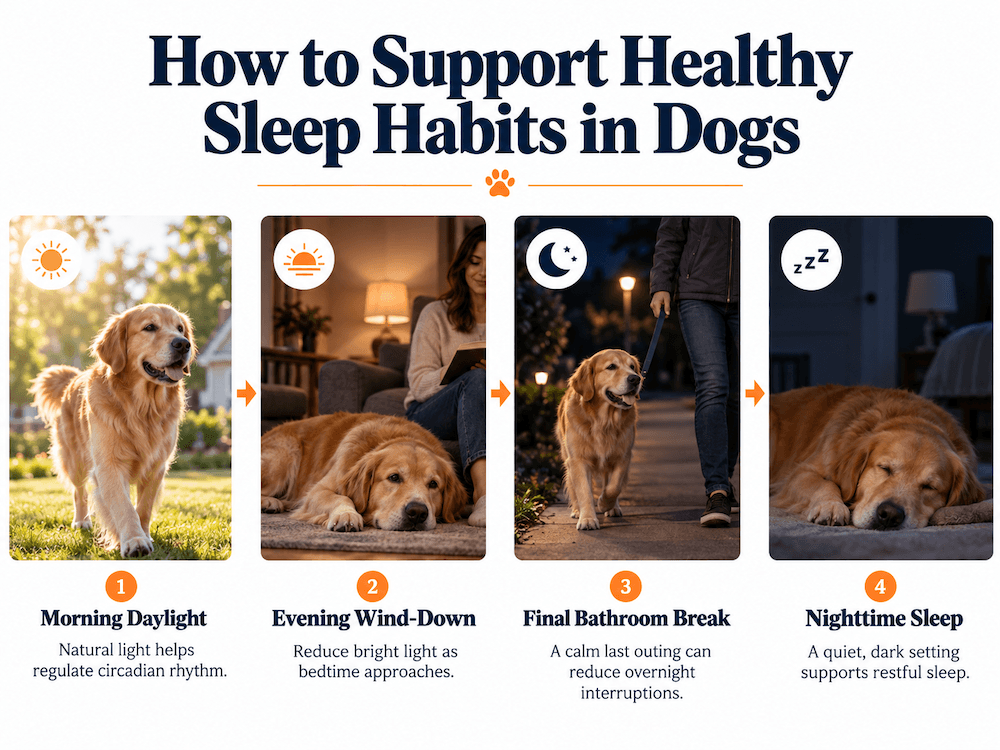
Healthy sleep depends on more than the number of hours your dog spends resting. Natural light exposure and a calming bedtime transition can help regulate your dog’s internal clock and support more predictable sleep-wake patterns. Morning daylight, reduced bright lighting in the evening, and a final bathroom opportunity before bedtime can help prepare your dog for nighttime sleep.
Frequently Asked Questions
The Bottom Line
Dogs spend much of their day sleeping because rest supports physical recovery, learning, and healthy biological rhythms. Their sleeping habits vary with age, activity level, environment, and individual characteristics. While breed tendencies may influence resting behavior, no single sleep schedule applies to every dog. Frequent napping is generally normal when dogs remain alert, comfortable, and active during waking hours. However, sleeping for long periods does not always guarantee restorative sleep, particularly when rest is repeatedly disrupted. Sudden changes in sleep duration, energy, appetite, or behavior may indicate an underlying health concern. Understanding your dog’s usual sleeping patterns can help you support healthy rest and recognize when veterinary attention is necessary.
Sources
- The Cyclic Interaction Between Daytime Behavior and the Sleep Behavior of Laboratory Dogs
- The Interrelated Effect of Sleep and Learning in Dogs: An EEG and Behavioural Study
- Sleep Duration and Behaviours: A Descriptive Analysis of a Cohort of Dogs up to 12 Months of Age
- Characterizing Behavioral Sleep Using Actigraphy in Adult Dogs of Various Ages Fed Once or Twice Daily
- Differences in Pre-Sleep Activity and Sleep Location Are Associated With Variability in Daytime/Nighttime Sleep Electrophysiology in the Domestic Dog
- Effect of Age and Feeding Schedule on Diurnal Rest/Activity Rhythms in Dogs
- Sleep Macrostructure Is Modulated by Positive and Negative Social Experience in Adult Pet Dogs
- Sleep Disorders in Dogs: A Pathophysiological and Clinical Review
- Evaluation of Risk Factors for Sleep-Disordered Breathing in Dogs