Why Do Dogs Wag Their Tails? 10 Reasons & Meanings

Canine Bible is reader-supported. We receive affiliate commissions via some of our links. Learn more.
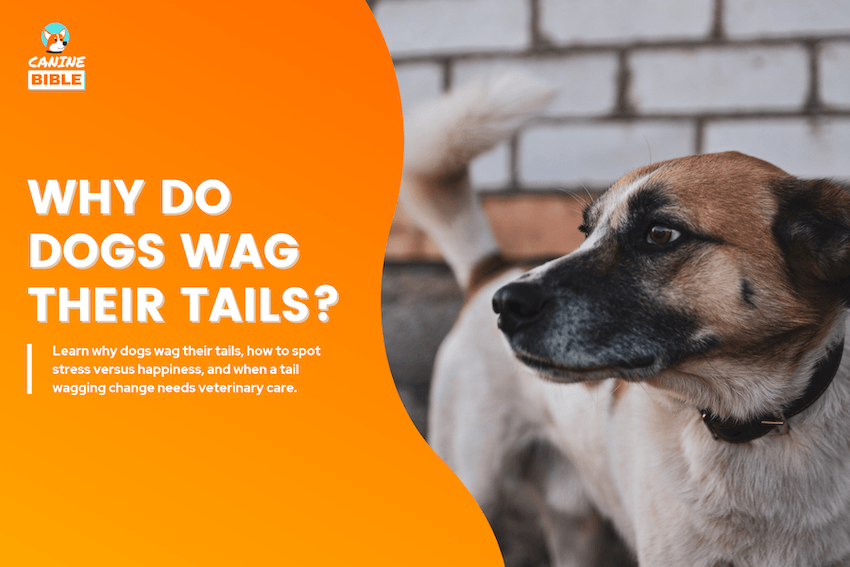
A wagging tail is one of the most recognizable dog behaviors, but its meaning isn’t always as simple as it seems. So, why do dogs wag their tails, and does every wag mean they’re happy? While tail wagging may seem straightforward, subtle differences in how dogs move their tails can reveal much more than most owners realize. The speed, position, and direction of a wag can all provide important clues about a dog’s emotional state. But what does it mean when a dog wags its tail slowly, holds it high, or keeps it unusually stiff? And can a wagging tail sometimes be a warning rather than a friendly greeting? Understanding these distinctions can help you interpret your dog’s body language, recognize potential warning signs, and respond more confidently in everyday situations.
How Dogs Use Their Tails to Communicate
Tail wagging is part of a dog’s broader nonverbal communication system. Muscles around the tail base and along the tail, controlled by the nervous system, produce movements that can vary in height, speed, direction, and range. A dog’s emotional state and level of arousal influence these movements, allowing the tail to convey information during interactions.
However, the tail does not communicate independently. Dogs combine tail movements with facial expressions, ear positions, body posture, movement, and vocalizations. Reading these signals together provides a more reliable picture of a dog’s emotional state than interpreting the tail alone.
| Communication Signal | What to Observe | What It Communicates |
|---|---|---|
| Tail movement | Height, speed, stiffness, and range of motion. | Emotional arousal, tension, or social engagement. |
| Facial expressions | Eye softness, mouth tension, and facial muscles. | Clues about comfort, stress, or defensive intent. |
| Body posture | Weight distribution, muscle tension, and movement. | Readiness to approach, interact, withdraw, or defend. |
| Ear position | Changes in ear orientation and muscle tension. | Attention, alertness, or possible discomfort. |
| Vocalizations | Barking, whining, growling, or other sounds. | Additional information about arousal and interaction. |
Why Do Dogs Wag Their Tails? 10 Common Reasons
Dogs wag their tails for several reasons, and the same movement can occur in very different emotional situations. Some wags accompany positive experiences, while others reflect heightened attention, conflicting emotions, or tension
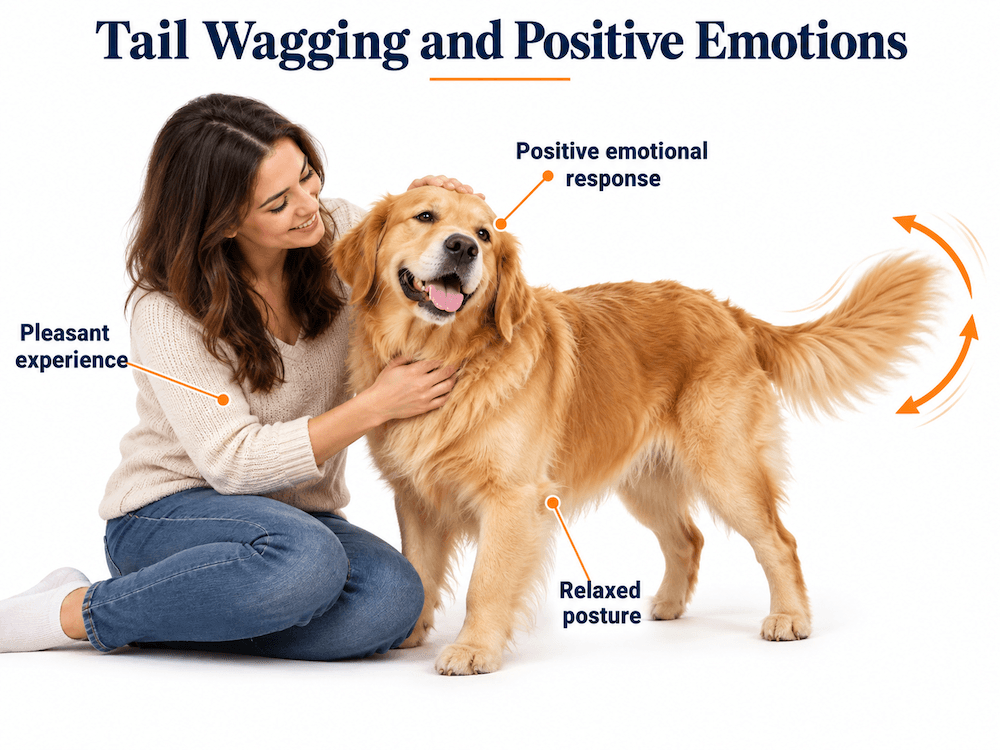
1. Happiness and Positive Emotions
Dogs commonly wag their tails during pleasant experiences that create positive emotions. Enjoyable activities, successful problem-solving, and receiving something rewarding can trigger tail movement as part of a broader positive emotional response. When a dog feels comfortable and content, the wag often accompanies relaxed muscles, natural movement, and an easy facial expression.


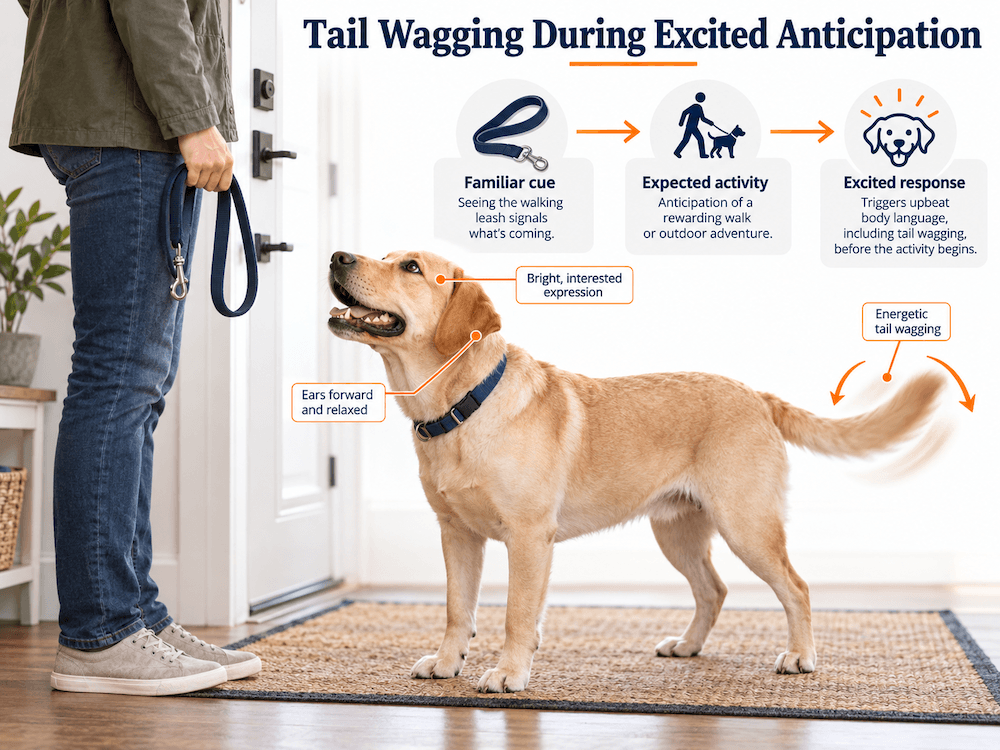
2. Excitement and Anticipation
Dogs may wag their tails when they expect something enjoyable to happen, even before the anticipated activity begins. Familiar cues such as picking up a leash, preparing food, or reaching for treats can trigger an excited response through learned associations. Unlike calm happiness, anticipation often involves increased movement, alert attention, and stronger emotional arousal.
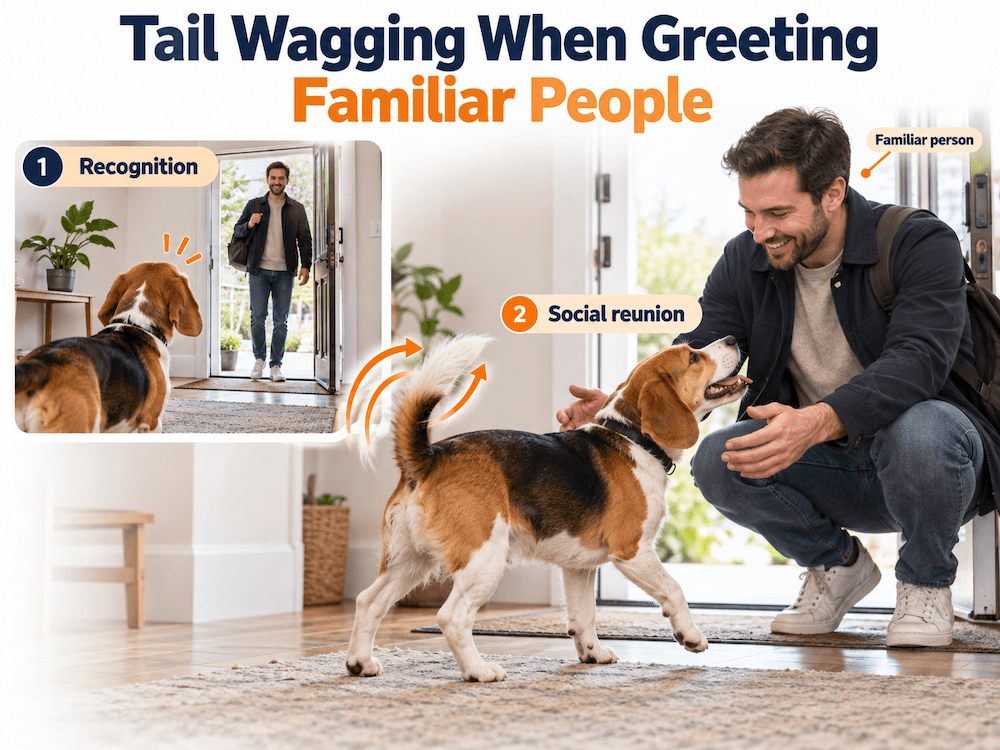
3. Greeting Familiar People
Many dogs wag their tails when they recognize and reunite with familiar people. Familiarity can change a dog’s emotional response to a person, influencing how confidently and enthusiastically it approaches. A dog greeting a trusted family member may display more comfortable social behavior than when encountering an unfamiliar visitor, although greeting intensity varies between individuals.
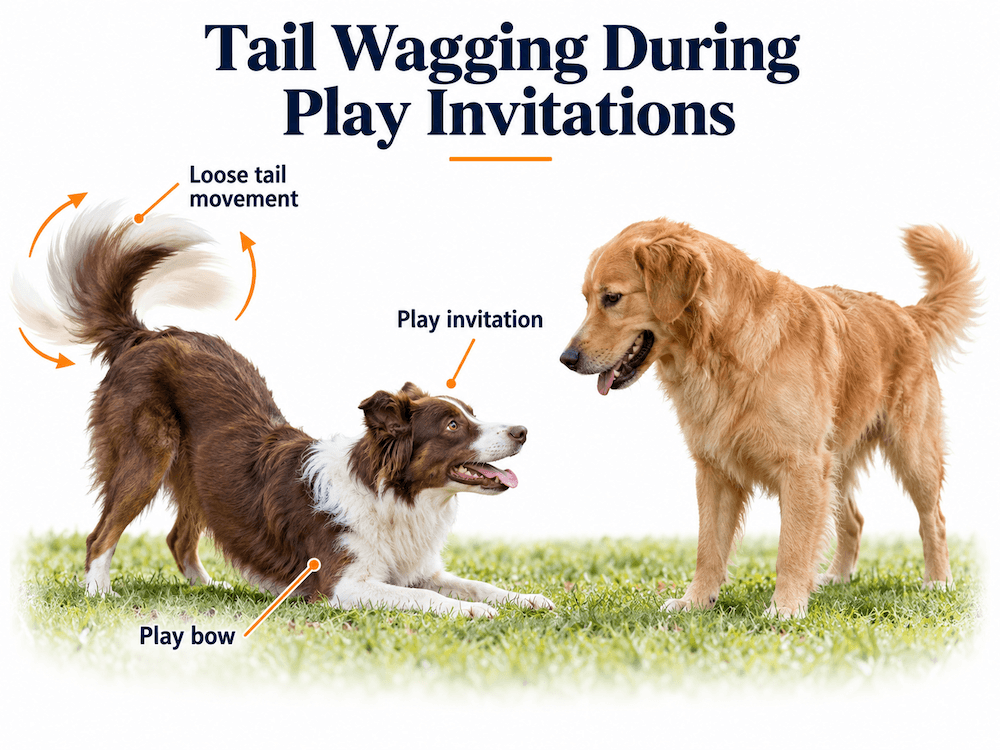
4. Playfulness and Invitation to Play
Tail wagging often accompanies playful social behavior between dogs or during interactions with people. A dog inviting another dog to play may lower its front body into a play bow while keeping its hindquarters raised and moving its tail. The combination of flexible movements, playful pauses, and repeated invitations helps communicate that the interaction is intended as play rather than confrontation.
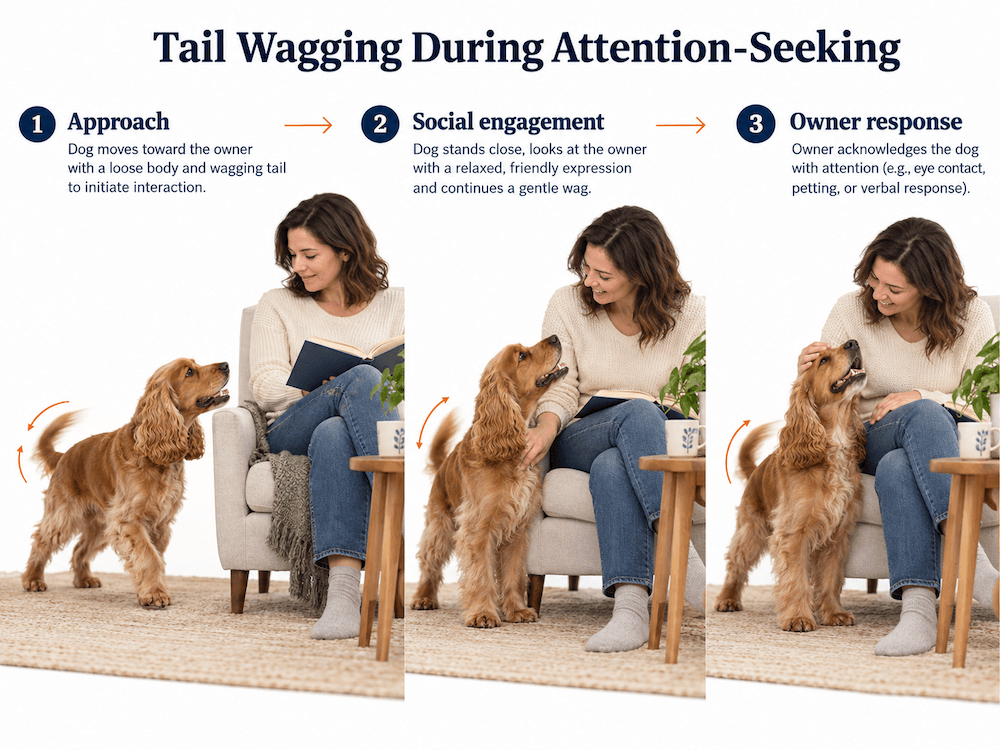
5. Seeking Attention or Interaction
Some dogs wag their tails while actively soliciting social engagement from their owners. They may approach, look toward a person, or position themselves nearby while displaying tail movements that accompany their attempt to interact. Attention, petting, or conversation may reinforce these approaches over time, although wagging itself is not necessarily a deliberate request.
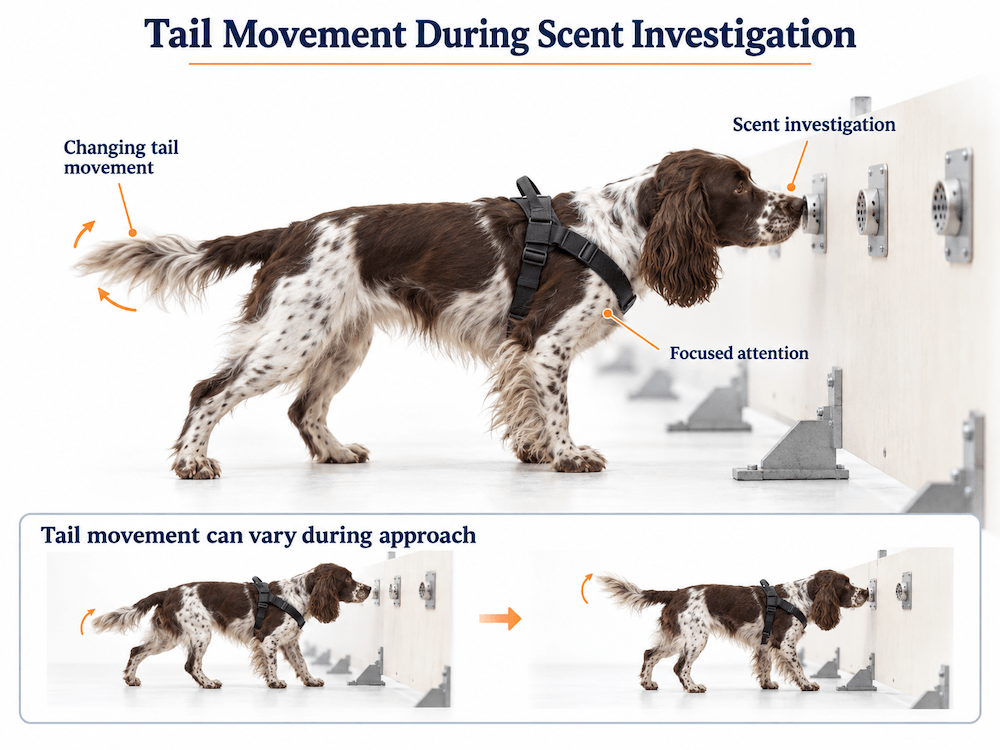
6. Curiosity and Focused Interest
A dog’s tail may move differently during focused attention and environmental investigation. When exploring unfamiliar objects, following scents, or concentrating on a task, changes in attention and arousal can influence tail movement. These movements are not reliable proof of curiosity by themselves, but they may provide additional information when interpreted alongside sniffing, searching, and other investigative behaviors.


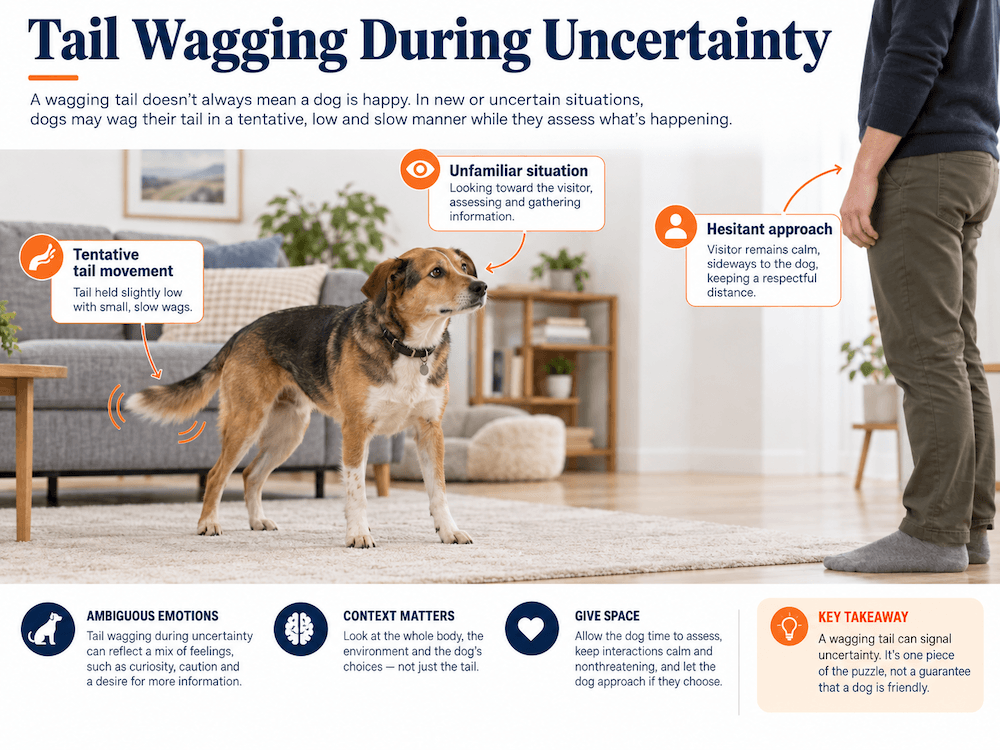
7. Nervousness and Uncertainty
Dogs sometimes wag their tails when experiencing uncertainty about a situation. An unfamiliar person, unusual environment, or ambiguous interaction may produce competing tendencies to investigate and remain cautious. The dog might approach hesitantly, pause frequently, or display a restrained wag while assessing whether the situation is comfortable.
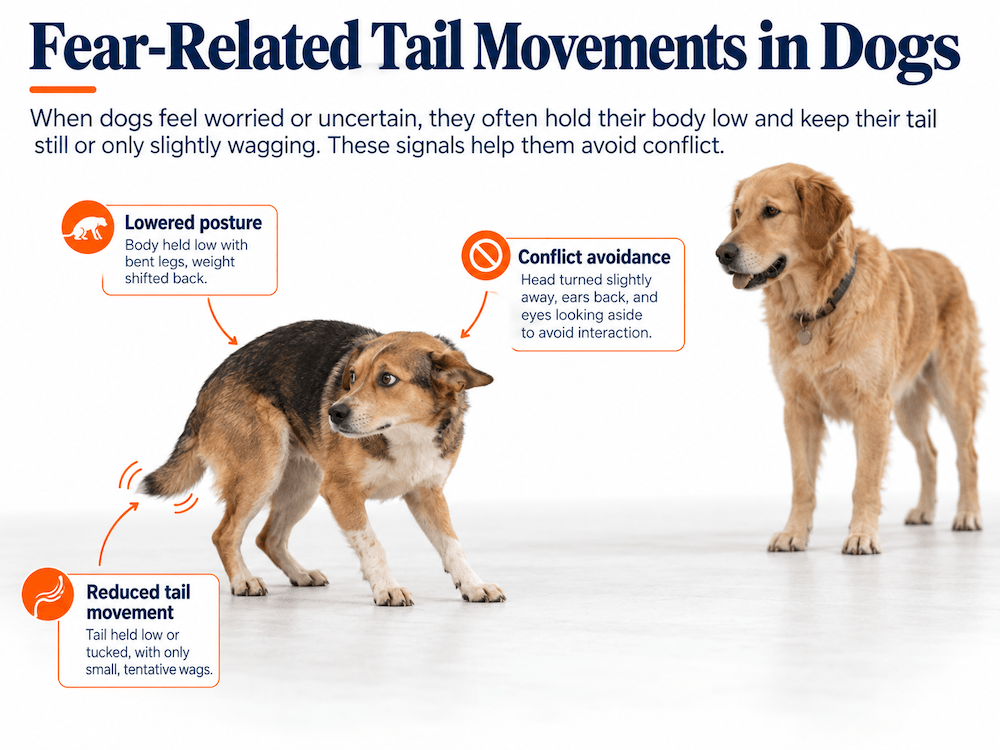
8. Fear and Appeasement
A frightened dog may make small tail movements while displaying fear-related or appeasing body language. Lowering the tail, reducing body height, turning away, or avoiding direct confrontation can communicate discomfort and a tendency to avoid conflict. Not every frightened dog wags its tail, and a severely fearful dog may tuck it tightly or remain motionless instead.
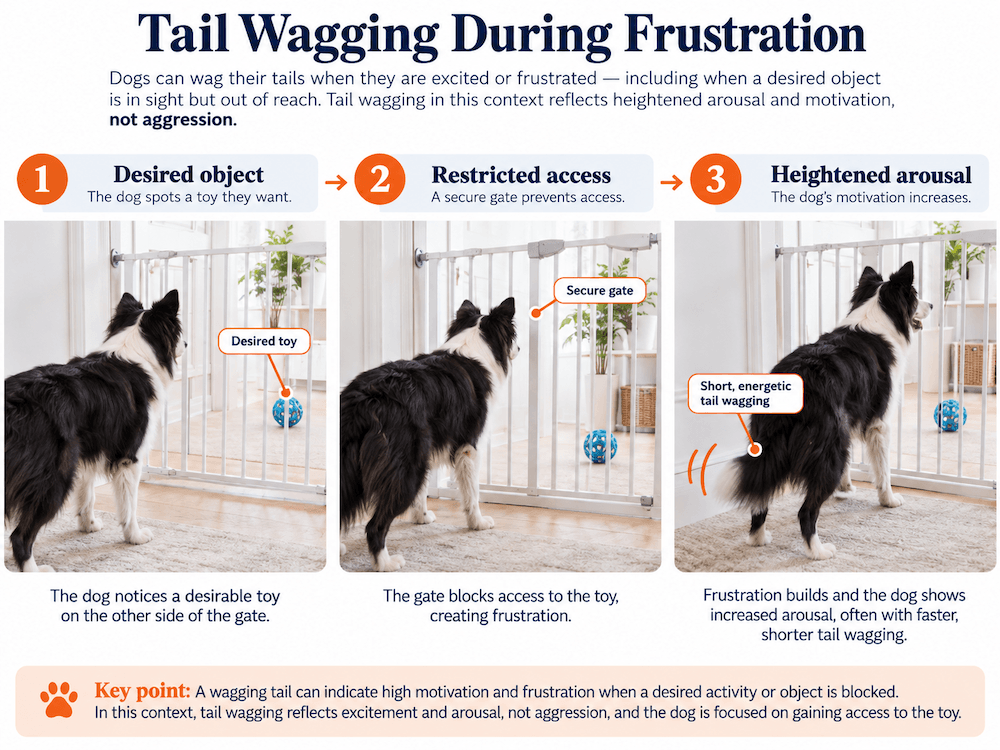
9. Frustration and Overstimulation
Tail wagging can also occur during heightened arousal when a desired outcome is blocked or delayed. A dog that cannot reach a toy, another dog, or an anticipated reward may become increasingly restless while continuing to move its tail. In these situations, wagging should not be interpreted as proof of enjoyment because frustration and excitement can coexist with similar outward activity.
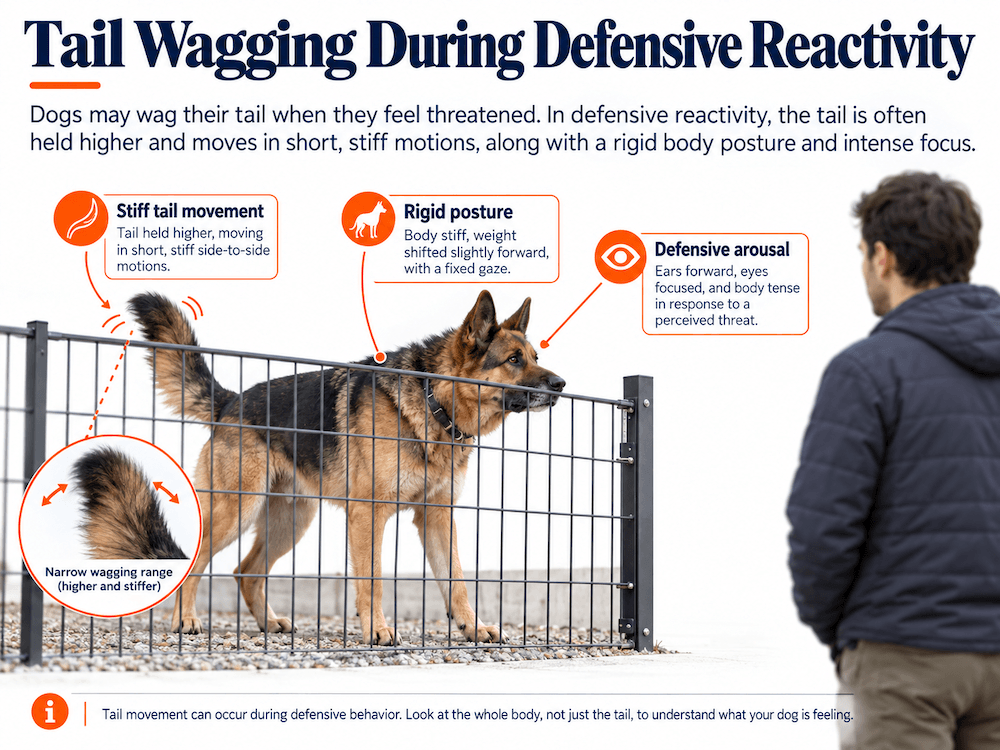
10. Defensive or Aggressive Reactivity
Dogs may wag their tails during tense or potentially aggressive encounters, particularly when highly aroused by a perceived threat. These movements can appear short, rapid, or stiff and may accompany rigid posture, intense staring, growling, or forward weight distribution. A wagging tail in this context does not indicate friendliness or permission to approach, and the complete body-language pattern should guide how much distance is needed.
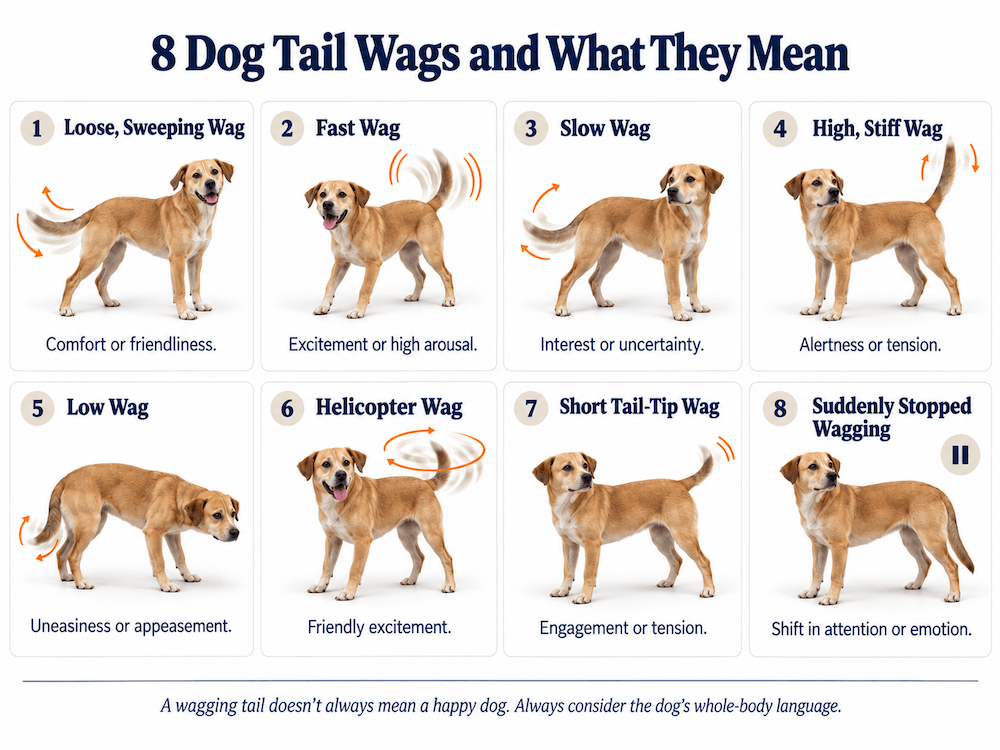
What Do Different Dog Tail Wags Mean?
The appearance of a tail wag can provide useful clues about a dog’s emotional state, but no individual wag pattern has one guaranteed meaning. Movement speed, range, and stiffness can vary even when two dogs are experiencing similar emotions.
What Influences the Meaning of a Dog’s Tail Wag?
Interpreting tail wagging requires more than recognizing the movement itself. The same tail position or speed can carry different implications depending on the individual dog and the circumstances. Understanding the factors below helps prevent overly simplistic interpretations, especially when meeting an unfamiliar dog.
| Factor | How It Affects Interpretation |
|---|---|
| Tail height | Interpret relative to the dog’s natural resting position. |
| Wagging speed | Often reflects arousal intensity, not emotional positivity. |
| Movement stiffness | Greater rigidity may indicate increased muscle tension. |
| Overall body language | Facial expressions and posture clarify emotional context. |
| Environment | Unfamiliar, crowded, or noisy settings can affect responses. |
| Social familiarity | Relationships can influence confidence and greeting behavior. |
| Individual differences | Normal wagging patterns vary across dogs. |
| Physical comfort | Pain or restricted movement may change tail use. |
How to Tell a Happy Tail Wag From a Warning Sign
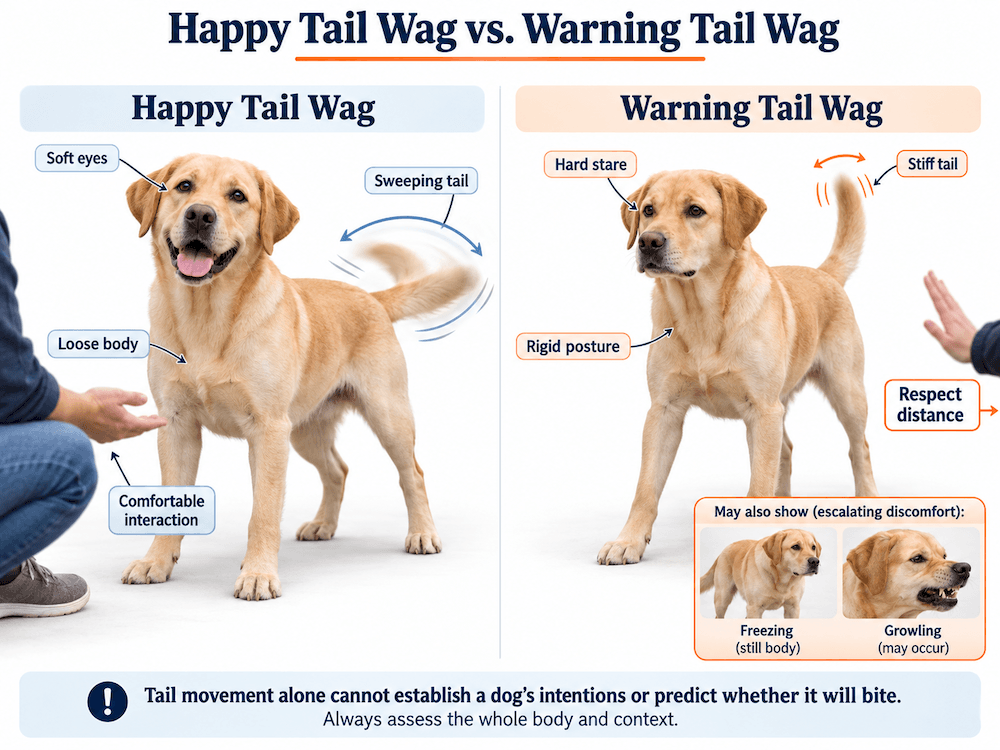
A happy dog and an uncomfortable dog may both wag their tails, making the surrounding body language especially important. Relaxed dogs generally display flexible, fluid movements, while dogs experiencing significant tension may become rigid, freeze, or focus intensely on a perceived threat. These differences are particularly important when deciding whether an unfamiliar dog is comfortable with an interaction.
For example, imagine a dog greeting a visitor with a sweeping tail, relaxed muscles, and a soft facial expression. The dog approaches voluntarily and can move away without resistance, making friendly interest a reasonable interpretation. Now consider a dog that stands motionless near its food bowl, maintains a hard stare, and produces short, stiff tail movements as someone approaches. That second pattern warrants caution, even though the tail is moving.
How to Respond to Your Dog’s Tail Wagging
Your response should depend on the dog’s comfort level and willingness to interact, not simply whether its tail is moving. Some situations call for friendly engagement, while others are better handled by reducing excitement or allowing more personal space. The following table outlines practical responses that respect canine communication and help prevent avoidable stress.
| Situation | Do | Don’t |
|---|---|---|
| Relaxed and friendly | Offer gentle interaction when the dog willingly engages. | Assume the dog wants continuous physical contact. |
| Highly excited | Wait for calmer behavior before rewarding greetings. | Increase excitement through rough or overwhelming contact. |
| Nervous or uncertain | Provide space and allow voluntary approaches. | Reach toward or corner the dog. |
| Fearful | Reduce pressure and provide an escape route. | Force greetings or restrain the dog for petting. |
| Frustrated or overstimulated | Increase distance or offer a calm alternative activity. | Intensify the situation through punishment or teasing. |
| Defensive or threatening | Stop approaching and create distance calmly. | Challenge, stare at, or physically confront the dog. |
Does Dog Breed Affect Tail Wagging?
Breed-related anatomy can influence how clearly a dog’s tail movements can be observed, even when the underlying communication serves similar purposes. Some dogs naturally carry their tails high, while others have tails that hang low, curl over the back, or are naturally short. These differences matter because comparing every dog against the same tail-position standard can lead to incorrect interpretations.
| Tail Type | Breed Examples | Communication Differences |
|---|---|---|
| Long, relatively straight | Labrador Retriever, German Shepherd | Broad movements and positional changes are often visible. |
| Curled over the back | Pug, Shiba Inu | Natural elevation makes tail height harder to interpret. |
| High-set, plumed or sickle-shaped | Siberian Husky, Alaskan Malamute | Compare movements against the dog’s normal carriage. |
| Naturally low carriage | Greyhound, Whippet | A low resting tail does not automatically indicate fear. |
| Naturally short or bobbed | Pembroke Welsh Corgi, Australian Stumpy Tail Cattle Dog | Shorter movements may be harder to recognize. |
| Docked tail | Some Dobermans and Boxers | Reduced tail length limits visible movement. |
Breed characteristics do not establish a fixed emotional meaning for a particular wag. An individual dog’s normal tail carriage is a more useful reference than assumptions based on breed alone. This is especially important for dogs whose tails have unusual shapes or limited visible movement.
When Do Puppies Start Wagging Their Tails?
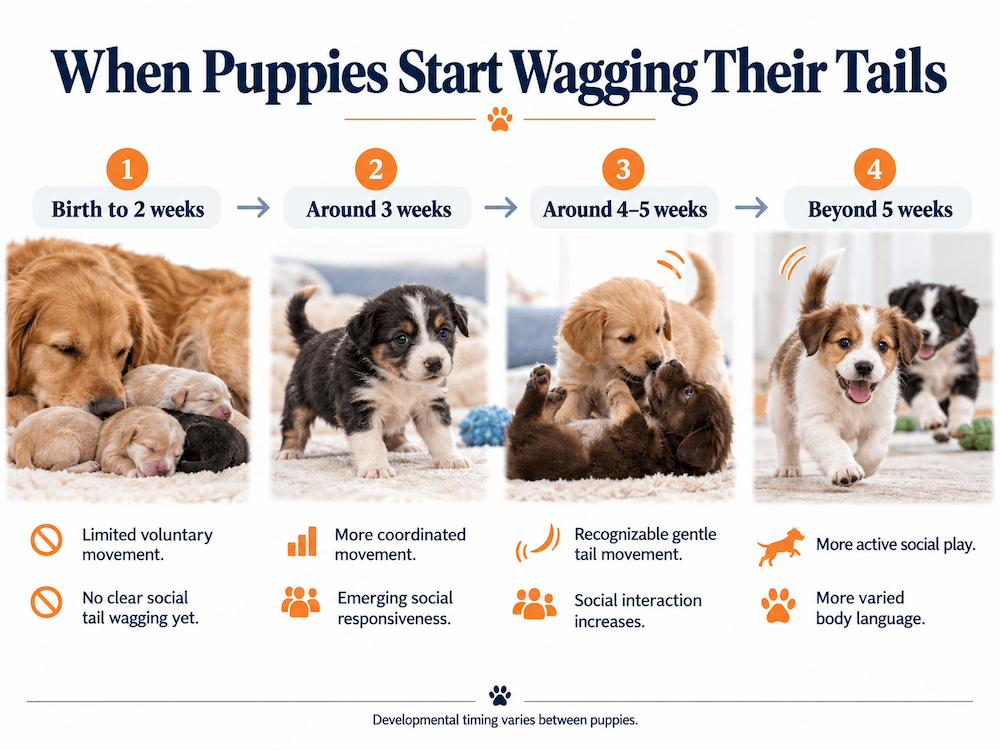
Puppies generally begin showing recognizable tail wagging at approximately 3–5 weeks of age, although development varies between individuals. The behavior emerges as their motor coordination, sensory awareness, and social responsiveness develop. It becomes increasingly noticeable as puppies interact more actively with littermates, their mother, and familiar caregivers.
Understanding Dog Tail Wagging: Direction and Evolution
Dog tail wagging involves more than simple side-to-side movement. Research suggests that the direction of a wag may reflect differences in emotional processing, while domestication may have shaped how frequently dogs wag their tails. Understanding these patterns offers insight into canine communication and how tail wagging may have evolved.
What Does Left vs. Right Tail Wagging Mean?
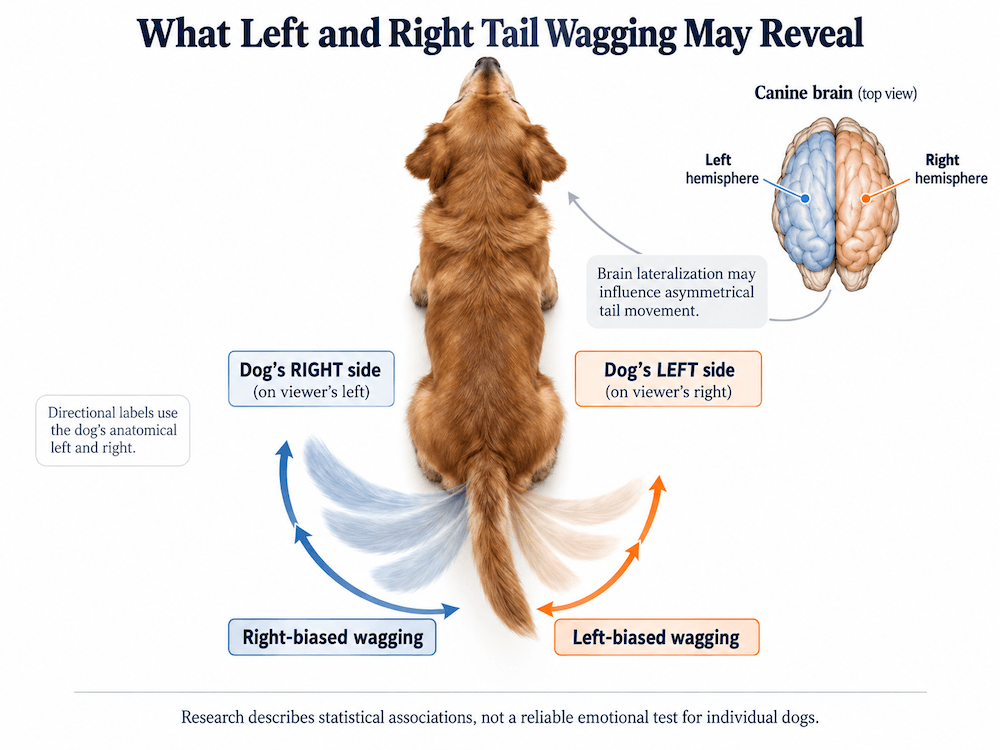
Dogs sometimes wag their tails more strongly toward one side of their bodies. This phenomenon, known as tail-wagging asymmetry, is associated with differences in how the brain processes emotional and social information. It involves brain lateralization, meaning that the two cerebral hemispheres can contribute differently to particular behavioral responses.
How Did Tail Wagging Evolve in Dogs?
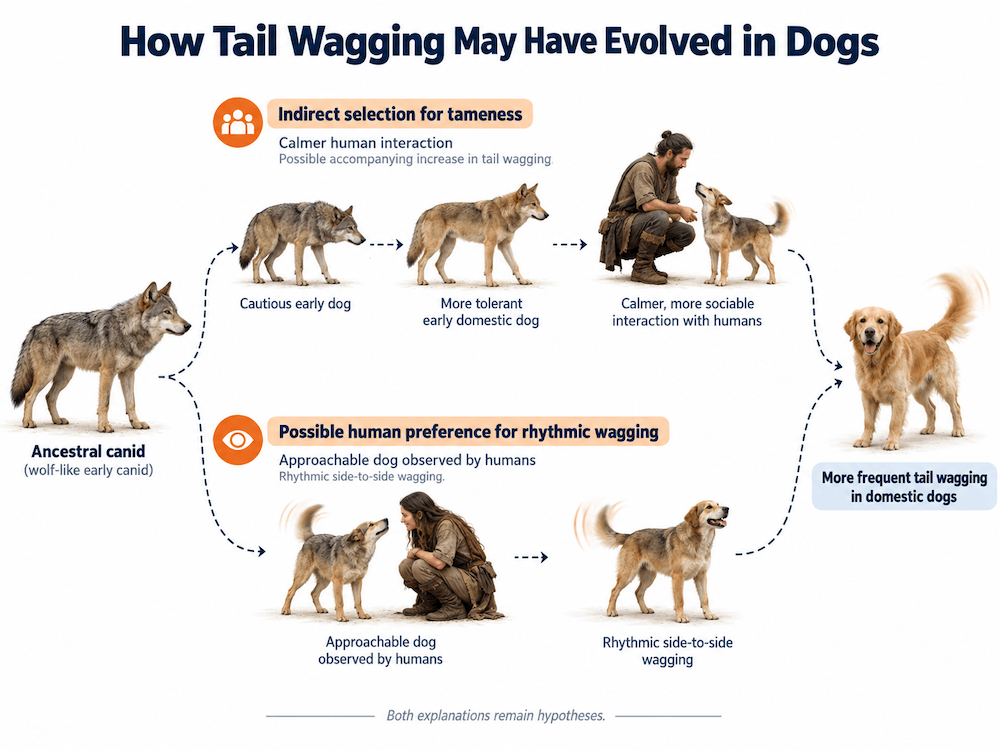
Tail movements are not unique to domestic dogs. Other canids, including wolves, also use their tails during social interactions. However, domestication may have increased the frequency and prominence of tail wagging as dogs developed alongside humans.
What Research Reveals About Tail Wagging in Dogs
Scientific evidence supports tail wagging as a behavior associated with emotional state and social communication, although not every proposed meaning has been independently established. McGowan and colleagues (2014) found increased tail wagging and activity when dogs completed tasks that gave them control over rewards.[1] Pedretti and colleagues (2022) found that tail wagging was associated with the presence of a social audience across experimental conditions involving anticipation and frustration.[2] These findings support positive-affect and social-communication interpretations without establishing a unique emotional meaning for every wag.
Research also identifies measurable differences in tail-wagging direction and social familiarity. Ren and colleagues (2022) documented a shift toward right-biased wagging over repeated interactions between dogs and a previously unfamiliar human, suggesting an association with developing familiarity.[3] Siniscalchi and colleagues (2013) observed higher cardiac activity and more anxiety-related behavior in dogs viewing left-biased rather than right-biased tail movements.[4] These findings suggest that directional asymmetry can carry information, but they do not justify treating it as a dependable emotional indicator in every dog.
Evidence for negative emotional contexts further demonstrates why tail wagging cannot be equated with happiness. Gobbo and Zupan Šemrov (2021) reported associations between tail-wagging measures and aggressive reactivity in dogs. More recently, Martvel and colleagues (2025) identified changes in tail-movement patterns during scent-detection tasks. The latter study involved trained detection dogs and does not establish a universal curiosity-related wag, just as behavioral observations during play do not prove that playful wagging is a distinct biological response.[5] [6]
Important questions remain about the developmental and evolutionary origins of tail wagging. Leonetti and colleagues (2024) reviewed the behavior’s mechanisms, development, functions, and evolutionary history, proposing alternative domestication-related explanations that remain unconfirmed. Their review also discusses evidence for early tail-wagging development in puppies and broader social functions across canids.[7] For medical changes affecting tail movement, Cornell University College of Veterinary Medicine describes limber tail as a painful muscular condition that can resemble other injuries, reinforcing the need for an appropriate veterinary diagnosis.
When Should You Worry About Your Dog’s Tail Wagging?
A change in tail wagging is not always behavioral. Pain, muscle injuries, trauma, and certain neurological problems can affect a dog’s ability or willingness to move its tail normally. A sudden loss of movement is particularly important when the dog previously wagged without difficulty.
| Symptom | Possible Cause | What Owners Can Do Immediately |
|---|---|---|
| Sudden inability to wag | Muscle injury, trauma, or nerve dysfunction. | Restrict strenuous activity and avoid pulling or manipulating the tail. |
| Painful, drooping tail | Limber tail syndrome or another painful condition. | Allow your dog to rest and avoid swimming, vigorous exercise, or handling the painful tail. |
| Bleeding tail tip | Happy tail injury or skin damage. | Apply gentle, steady pressure with clean gauze and prevent further tail impacts. |
| Swelling or tenderness | Injury, inflammation, infection, or another abnormality. | Prevent licking or chewing, and avoid squeezing or massaging the affected area. |
| Crooked tail after trauma | Possible fracture or dislocation. | Keep your dog calm and still. Never attempt to straighten or splint the tail yourself. |
| Open wound or discharge | Laceration, repeated injury, or infection. | Prevent licking and gently rinse superficial wounds with sterile saline. Avoid harsh antiseptics. |
| Limp tail with hind-leg weakness | Possible spinal or neurological injury. | Minimize movement and support the entire body during transport for emergency care. |
When to Call a Veterinarian About Tail Wagging Changes
Seek immediate veterinary attention if your dog has uncontrolled tail bleeding, severe pain, major trauma, or an obvious deformity after an injury. A suddenly limp tail accompanied by hind-leg weakness, difficulty walking, or loss of bladder or bowel control may indicate a serious neurological problem. Do not attempt to straighten an injured tail or manipulate a suspected fracture. Keep your dog as calm as possible while arranging emergency care.
Schedule a veterinary appointment for persistent or worsening tail abnormalities, including unexplained drooping, reduced movement, tenderness, swelling, or repeated tail-tip injuries. A sudden inability to wag deserves prompt assessment even if your dog otherwise seems comfortable. Small wounds that repeatedly reopen can become painful or infected and should not be ignored.
A professional examination is important when the cause is uncertain or a change does not resolve as expected. Your veterinarian may assess tail movement, check for pain, examine the surrounding tissues, and recommend imaging or neurological evaluation when appropriate. Treatment depends on the underlying condition and may involve activity restriction, veterinary-prescribed pain relief, or wound management. Never give human pain medications or apply tight tail bandages without veterinary instructions.
Frequently Asked Questions
The Bottom Line
Tail wagging is one of the most recognizable forms of canine communication, but it does not always indicate happiness. Dogs may wag their tails during greetings, play, anticipation, uncertainty, frustration, or defensive situations. The position, speed, and stiffness of a wag provide useful clues, but their meaning depends on the dog’s overall body language and surroundings. Breed characteristics and individual differences also influence how tail movements appear. Understanding your dog’s normal behavior can help you distinguish relaxed, friendly interactions from signs of discomfort or tension. Sudden changes in tail movement, particularly those accompanied by pain or injury, deserve veterinary attention. By observing the whole dog rather than focusing on the tail alone, you can better understand its emotions and respond appropriately.
To better understand canine communication, explore why dogs stare at you and what their eye contact reveals. You can also learn why dogs lick people and how licking can reflect different emotional states. For more communication clues, discover what different dog sounds mean. Finally, our guide on how to pet a dog safely explains how to recognize when a dog welcomes physical interaction.
Sources
- Positive affect and learning: exploring the “Eureka Effect” in dogs
- Audience effect on domestic dogs’ behavioural displays and facial expressions
- Left-right asymmetry and attractor-like dynamics of dog’s tail wagging during dog-human interactions
- Seeing left- or right-asymmetric tail wagging produces different emotional responses in dogs
- Neuroendocrine and Cardiovascular Activation During Aggressive Reactivity in Dogs
- Does the tail show when the nose knows? Artificial intelligence outperforms human experts at predicting detection dogs finding their target through tail kinematics
- Why do dogs wag their tails?