10 Signs of Respiratory Distress in Dogs: Risks & How to Respond

Canine Bible is reader-supported. We receive affiliate commissions via some of our links. Learn more.
The signs of respiratory distress in a dog include rapid or labored breathing, excessive panting, wheezing, flared nostrils, and pale or bluish gums. Dogs may also stretch their necks, breathe with their mouths open, or use their abdominal muscles to draw in air. These symptoms can indicate a medical emergency that requires immediate veterinary attention. However, not every change in breathing means your dog is in danger, as heat, exercise, and excitement can also affect breathing patterns. So, how can you tell the difference between normal panting and a serious breathing problem? Certain warning signs may be subtle at first, while others can appear suddenly and worsen within minutes. Understanding what to watch for, what might cause these symptoms, and when to seek emergency care can help you respond quickly and protect your dog’s health.
What to Know About Respiratory Distress in Dogs
Respiratory distress is a potentially life-threatening condition that affects a dog’s ability to breathe comfortably or exchange oxygen effectively. Here’s a quick overview of what dog parents should understand.
| Key Factor | What Dog Owners Should Know |
|---|---|
| Definition | Difficulty breathing or exchanging oxygen effectively. |
| Onset | Can develop suddenly or worsen gradually. |
| Common causes | Airway obstruction, lung disease, heart problems, or overheating. |
| Higher-risk dogs | Short-nosed breeds and dogs with heart or lung conditions. |
| Severity | Can quickly become life-threatening without treatment. |
| Veterinary care | May require oxygen support, emergency stabilization, and diagnostic testing. |
| Prognosis | Depends on the cause, severity, and speed of treatment. |
10 Signs of Respiratory Distress in Dogs
Respiratory distress can affect how a dog breathes, stands, moves, and behaves. Some signs are subtle, while others indicate severe breathing problems. These warning signs can help you recognize when your dog may be struggling.
1. Rapid Breathing at Rest
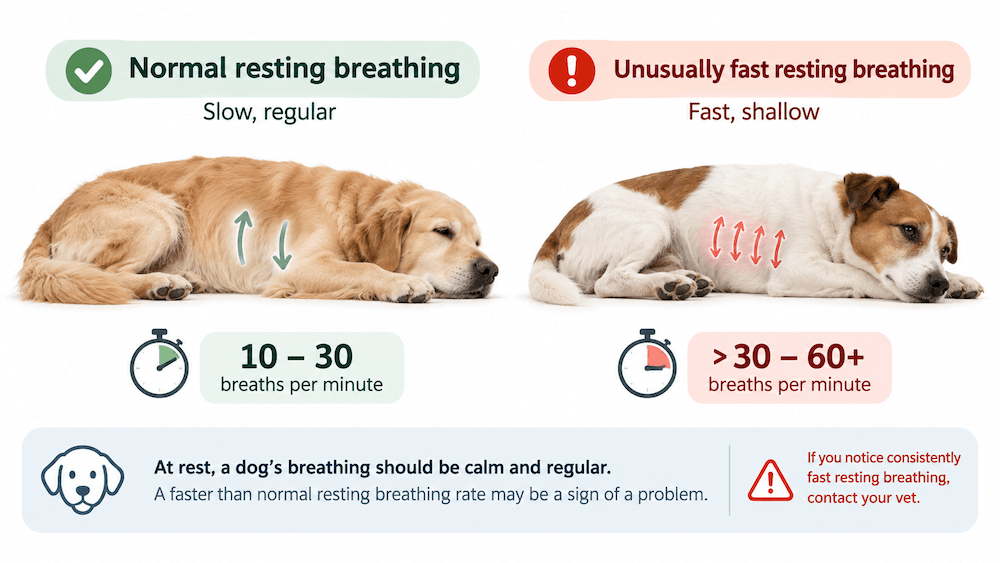
A dog breathing unusually fast while resting or sleeping may be experiencing an early respiratory problem. Rapid breathing, called tachypnea, can look like repeated, shallow chest movements even when the dog hasn’t been exercising. A persistent increase from your dog’s normal resting rate deserves veterinary attention.
2. Labored Breathing or Abdominal Effort
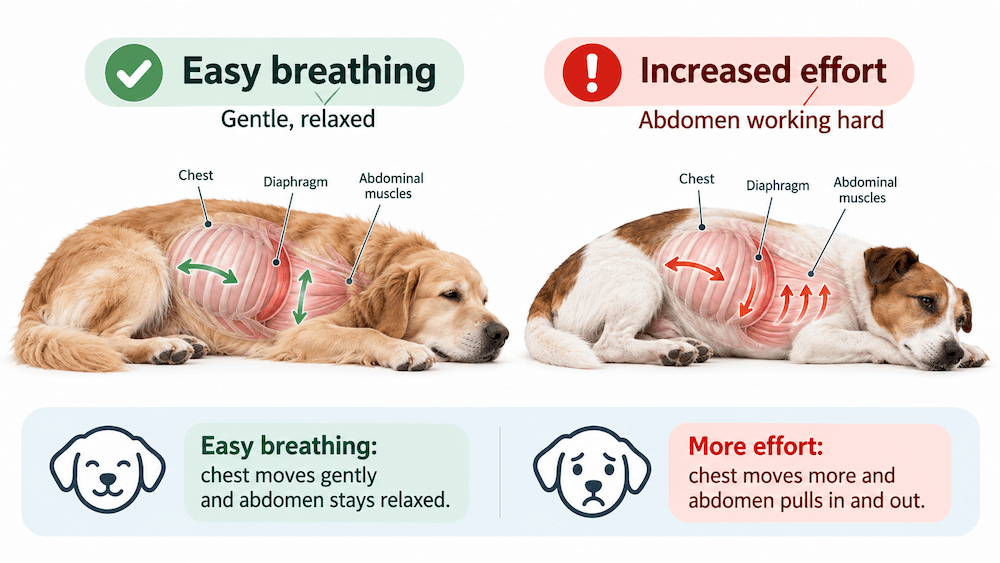
Labored breathing occurs when a dog must use extra muscle effort to move air. You may notice exaggerated chest movements, visible belly contractions, or the abdomen pushing forcefully with each breath. This pattern suggests that breathing has become physically difficult rather than simply faster.
3. Excessive Panting or Open-Mouth Breathing
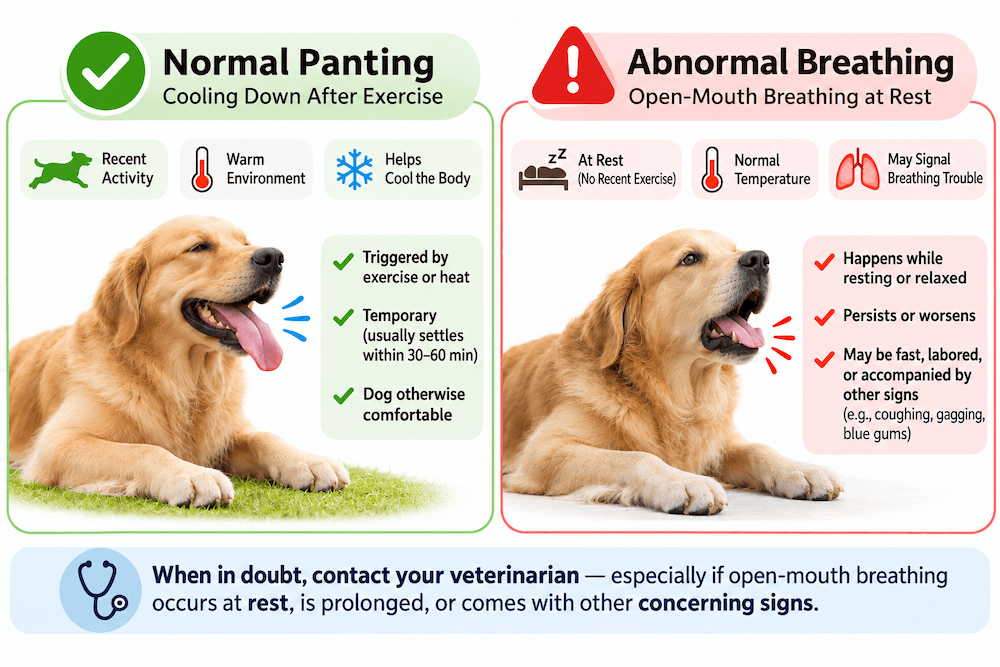
Dogs naturally pant to regulate body temperature, but heavy panting without exercise, heat, or excitement can signal trouble. A dog may hold its mouth open continuously, breathe rapidly, or appear to gasp for air. Open-mouth breathing with visible effort or an inability to settle is especially concerning.


4. Extended Neck or Unusual Breathing Posture
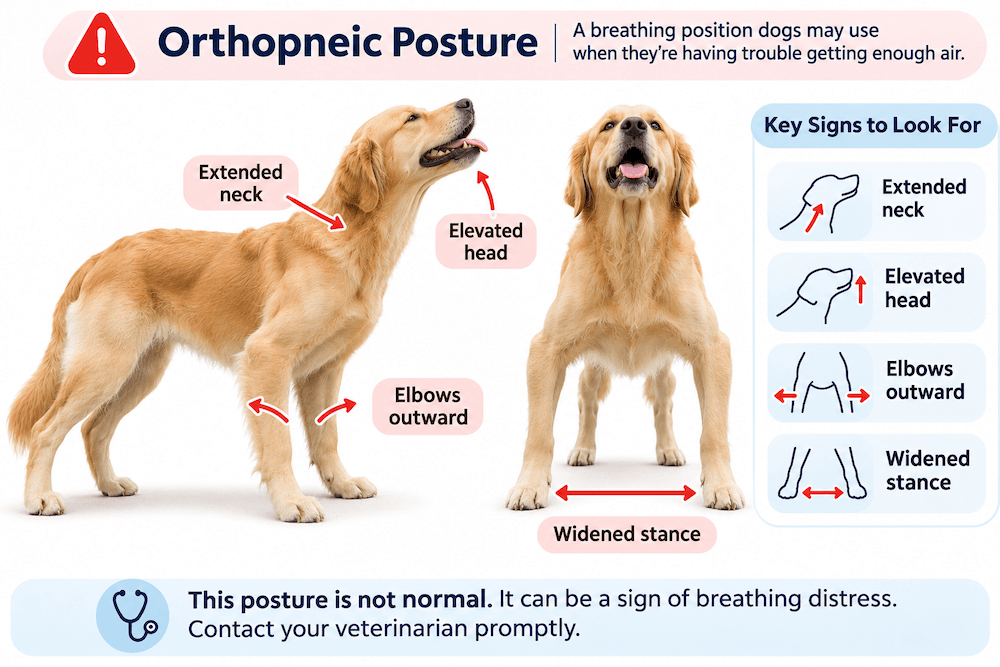
A dog struggling to breathe may stretch its head and neck forward to improve airflow. Some dogs stand with their front legs spread apart, elbows pointing outward, or their bodies positioned unusually upright. This posture, called orthopnea, helps the dog use its chest more effectively while breathing.
5. Flaring Nostrils
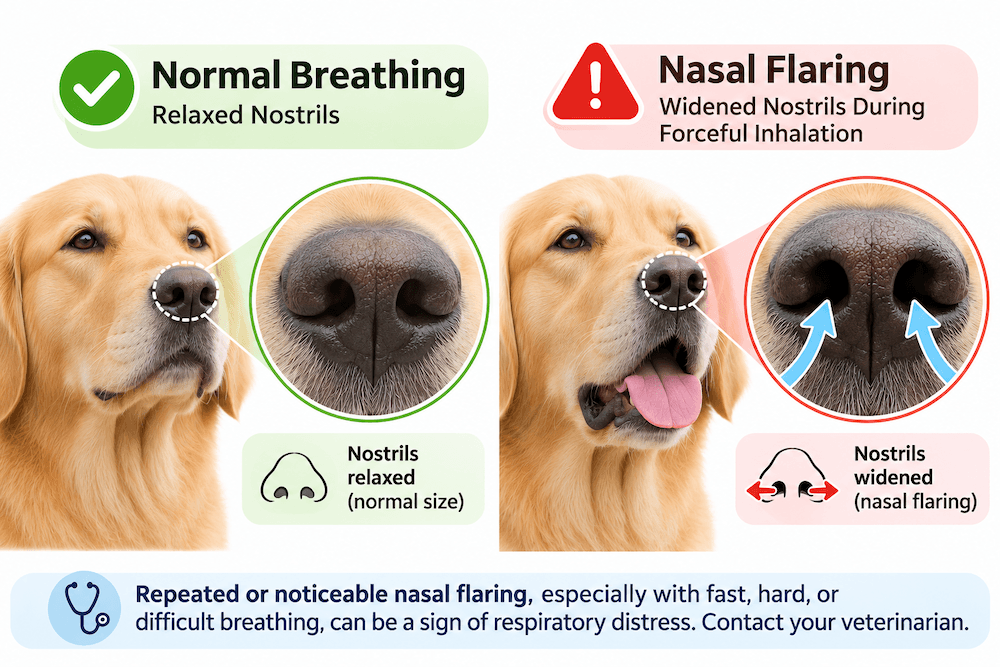
Some dogs widen their nostrils noticeably while trying to draw in more air. This may be accompanied by stronger facial movements or repeated nasal expansion during inhalation. Because nostril flaring can be subtle, it is most meaningful when accompanied by changes in breathing effort or posture.
6. Noisy Breathing, Wheezing, or Stridor
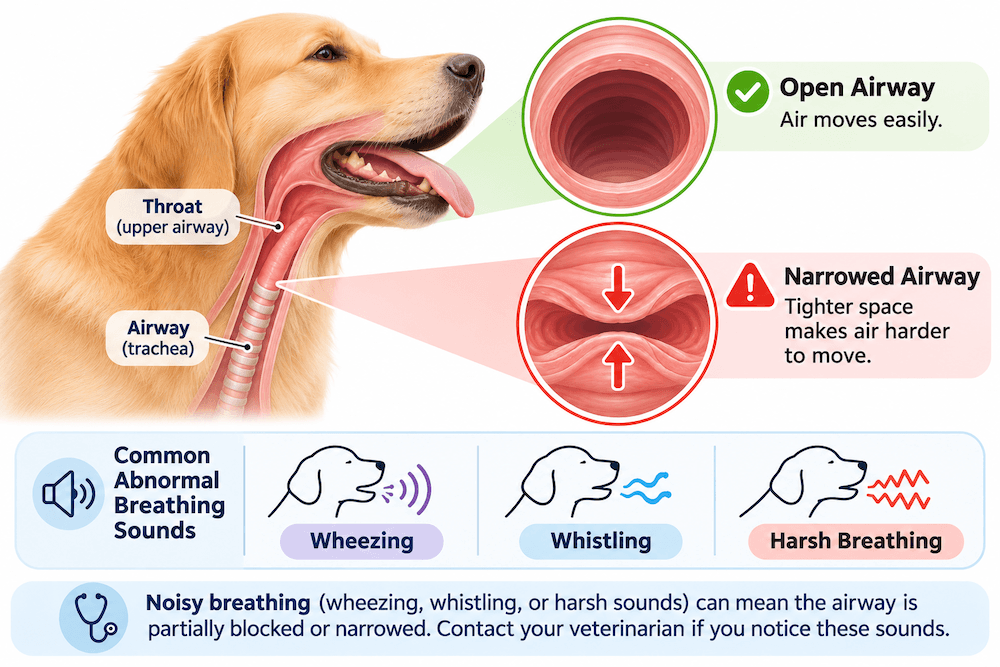
Respiratory distress may produce unusual sounds, including wheezing, harsh rasping, whistling, or high-pitched noises during inhalation. A high-pitched sound called stridor can indicate narrowing or obstruction in the upper airway. New or worsening breathing noises, particularly with visible effort, should never be dismissed as ordinary snoring.
7. Persistent Coughing With Breathing Changes
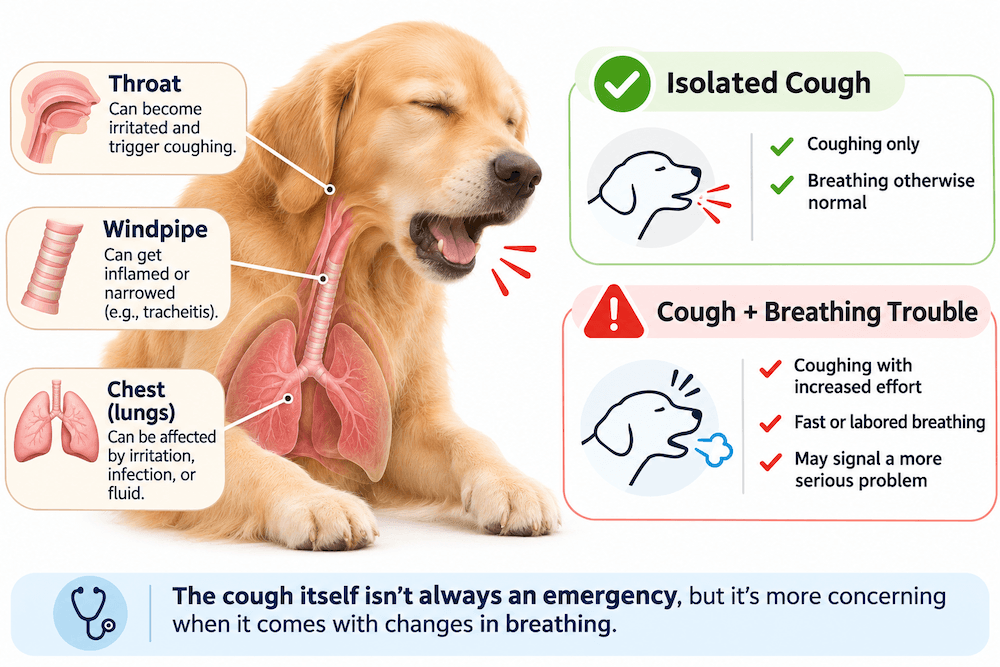
Frequent coughing, gagging, or repeated attempts to clear the throat can accompany respiratory disease. Coughing alone does not necessarily mean respiratory distress, but coughing combined with rapid breathing, unusual effort, or reduced activity raises concern. Some dogs may also develop a honking or harsh cough associated with airway disorders.
8. Restlessness or Inability to Lie Down
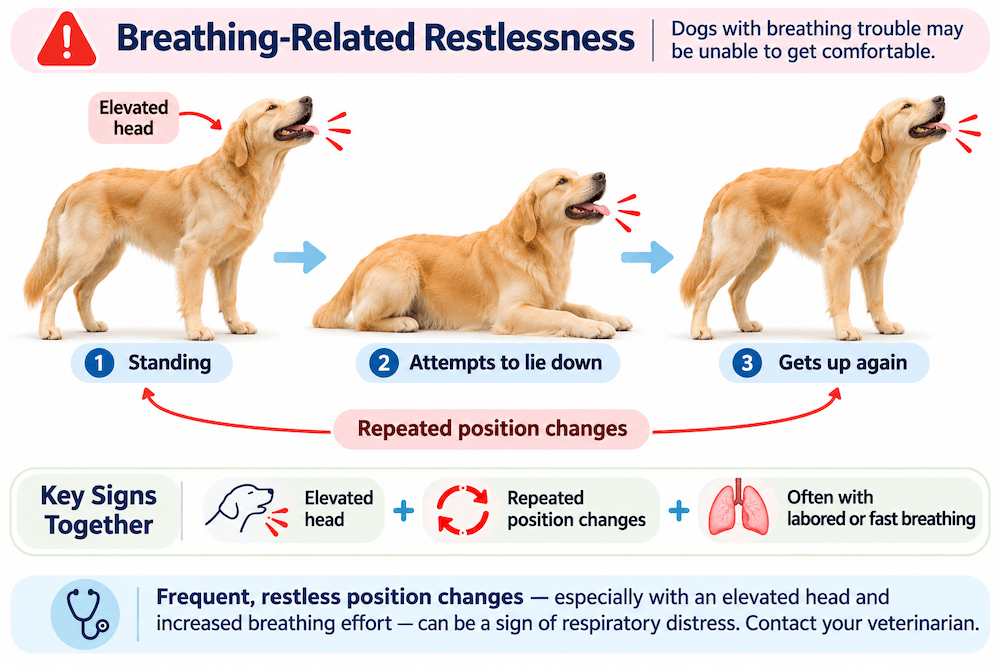
Dogs experiencing breathing discomfort may pace, repeatedly change positions, or struggle to get comfortable. Some sit or stand for extended periods because lying flat makes breathing harder. A dog that repeatedly lies down and immediately gets back up may be attempting to find a position that allows easier breathing.


9. Pale, Gray, or Bluish Gums and Tongue
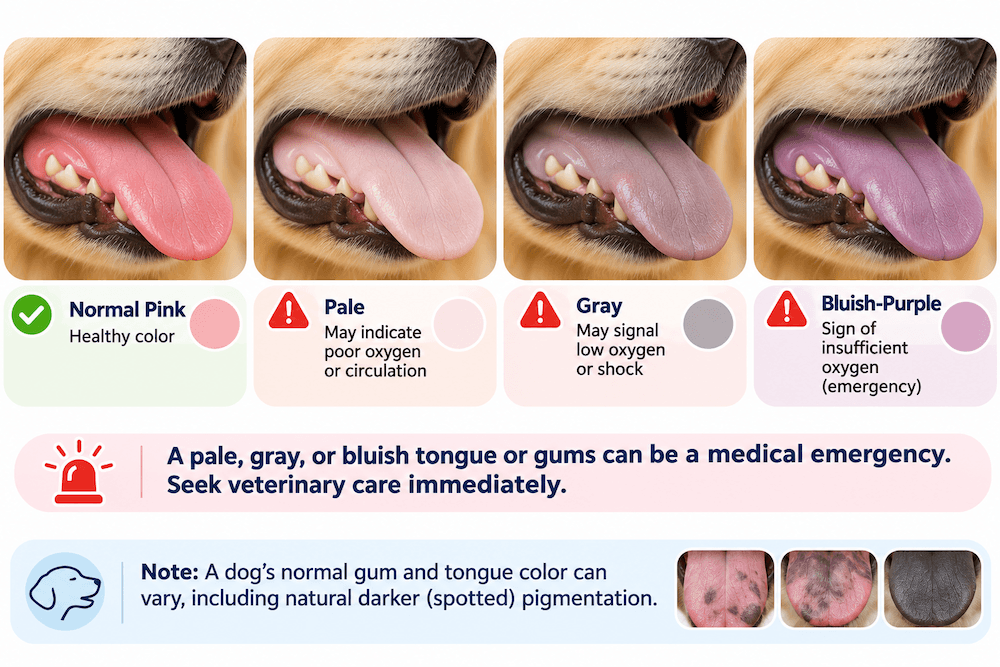
Healthy dogs generally have pink gums, although natural pigmentation varies. Pale, gray, blue, or purple discoloration may indicate inadequate oxygenation or circulation. Bluish discoloration, known as cyanosis, is a particularly serious warning sign that can develop late in respiratory distress.
10. Severe Weakness, Stumbling, or Collapse
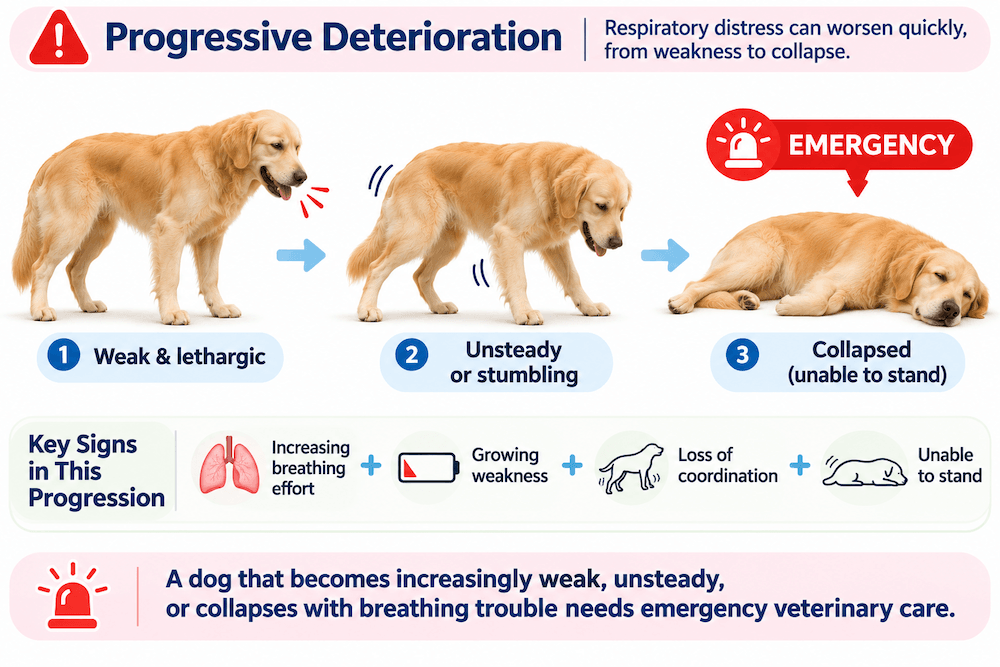
A dog experiencing severe respiratory compromise may become unusually weak, unsteady, or unable to remain standing. In advanced cases, the dog may collapse or become poorly responsive. These changes suggest a potentially life-threatening condition affecting oxygen delivery, circulation, or both.
Normal Panting vs. Respiratory Distress in Dogs
Not every increase in breathing rate is dangerous. Healthy dogs often pant after play, during excitement, or while cooling down. The important differences are how hard the dog is working to breathe, what triggered the change, and whether their breathing settles as expected.
| Feature | Often Normal | Potentially Concerning |
|---|---|---|
| Trigger | Recent exercise, excitement, or warmth | No obvious trigger or only minimal activity |
| Breathing effort | Relaxed, easy chest movements | Forceful chest or abdominal effort |
| Recovery | Gradually settles with rest and cooling | Persists or worsens despite rest |
| Body position | Comfortable standing, sitting, or lying down | Needs an unusual position to breathe |
| Behavior | Alert, responsive, and comfortable | Appears distressed, weak, or unable to settle |
Important: Heavy panting in hot weather can also be a sign of heatstroke. If a dog appears unwell or struggles to breathe, do not wait to see whether the panting stops.
When to Call a Veterinarian About Respiratory Distress in Dogs
Monitor briefly: If your dog is panting mildly after exercise, excitement, or warm weather but otherwise seems comfortable, allow them to rest in a cool environment. Normal breathing should gradually return as your dog relaxes.
Contact your veterinarian promptly: If your dog’s sleeping breathing rate remains unusually high, or new coughing or breathing noises develop, arrange a veterinary evaluation. Persistent or recurring changes may indicate an underlying respiratory or heart condition, even without obvious breathing difficulty.
Seek emergency veterinary care immediately: If your dog develops labored breathing, gasping, unusual breathing postures, pale or bluish gums, severe weakness, or collapse, seek emergency treatment. Do not wait for symptoms to worsen, as respiratory distress can quickly become life-threatening.
What to Do If Your Dog Is Struggling to Breathe
If your dog appears to be in respiratory distress, focus on reducing physical strain and getting veterinary help rather than attempting home treatment. Excessive movement, stress, and overheating can increase breathing demands and worsen an already serious condition.
What to tell the emergency team: Mention when the problem started, whether it followed heat exposure, exercise, choking, or an injury, and whether your dog has known heart or airway problems. A short video may help if it can be recorded safely without delaying care or distressing your dog.
How to Check Your Dog’s Resting Breathing Rate
Monitoring a comfortable dog’s breathing while asleep can help identify changes before they become obvious during everyday activities. Many healthy adult dogs breathe approximately 12–30 times per minute at rest, although a normal baseline varies. Measurements are most useful when a dog is sleeping quietly, not panting, dreaming actively, or recovering from exercise.
Follow these steps to measure the resting breathing rate:
- Watch your dog while they are sleeping or resting calmly.
- Count one complete rise and fall of the chest as one breath.
- Count breaths for 30 seconds, then multiply that number by two.
- Record the result and compare it with your dog’s usual sleeping rate.
Quick Breathing-rate Checker
Use the breathing-rate checker below to calculate your dog’s breaths per minute. Enter the number of breaths counted and select the corresponding counting duration to see the result.
Note: Count one complete chest rise and fall as one breath, preferably while your dog sleeps. This calculator cannot diagnose respiratory distress. If your dog struggles to breathe, seek emergency veterinary care regardless of the calculated rate.
For example, 12 breaths in 30 seconds equals 24 breaths per minute. A sleeping respiratory rate that remains above 30 breaths per minute, or is repeatedly higher than your dog's established baseline, warrants a call to your veterinarian—particularly in dogs with heart disease. The number is not a stand-alone diagnosis, and your veterinarian may give you an individualized threshold.
Do not use this method to assess an emergency. A dog can be in respiratory distress even with a rate near the usual range. If breathing is visibly difficult, seek emergency veterinary care instead of counting.
What Causes Respiratory Distress in Dogs?
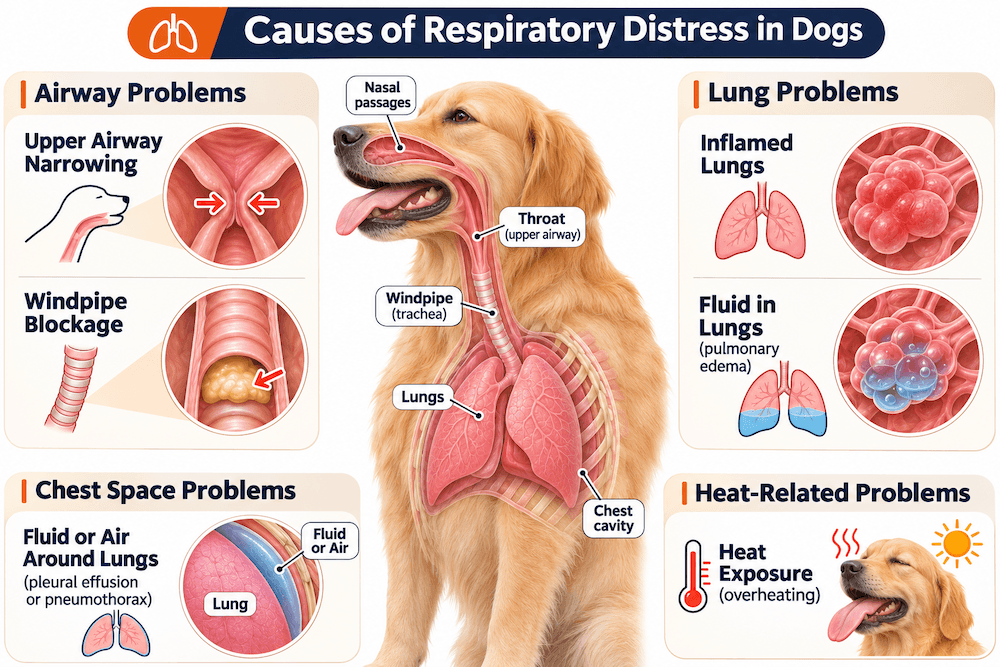
Respiratory distress can develop when airways become narrowed, lungs cannot exchange gases effectively, or the chest cannot expand normally. Some conditions develop gradually, while others arise suddenly and require rapid treatment.
Which Dogs Are More Vulnerable to Respiratory Distress?
Any dog can develop respiratory distress, but certain characteristics and conditions can increase the risk of breathing problems:
Risk factors do not predict exactly which dogs will have an emergency. A healthy dog can also develop sudden airway obstruction, trauma, or another serious condition.
How Veterinarians Diagnose and Treat Respiratory Distress
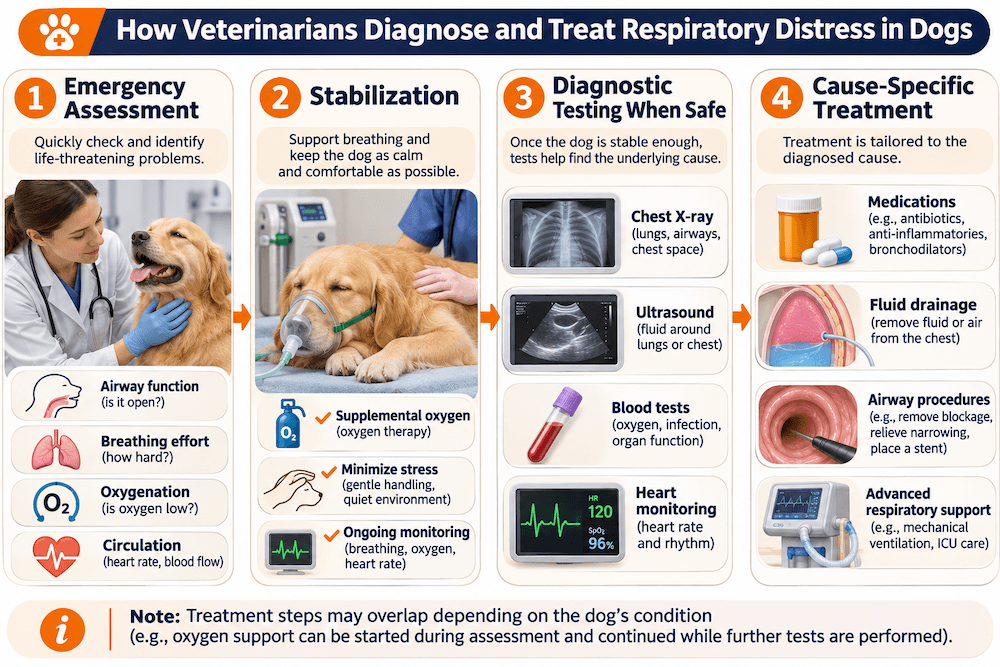
Veterinarians first assess how much effort a dog is using to breathe, whether the airway is open, and whether circulation and oxygenation are adequate. A dog in severe distress may receive supplemental oxygen and minimal-stress stabilization before extensive tests, because unnecessary restraint can worsen breathing.
How to Reduce the Risk of Respiratory Distress in Dogs
Not every cause of respiratory distress is preventable, but proper care, a healthy environment, and early management of underlying conditions can help lower your dog's risk. These preventive measures are especially important for dogs with existing breathing problems or short muzzles.
| Prevention Area | What Owners Can Do | Why It Helps |
|---|---|---|
| Heat exposure | Provide shade, cool spaces, and fresh water. | Reduces overheating and excessive panting. |
| Exercise | Adjust activity to your dog's fitness and weather. | Prevents excessive respiratory strain. |
| Healthy weight | Maintain an appropriate body condition. | Reduces extra pressure on the respiratory system. |
| Airway protection | Use a well-fitted harness instead of neck pressure. | Helps protect dogs with sensitive or narrowed airways. |
| Respiratory infections | Maintain recommended vaccinations and avoid sick dogs. | Lowers the risk of certain respiratory infections. |
| Air quality | Avoid smoke, strong fumes, and airborne irritants. | Limits irritation of sensitive airways. |
| Existing conditions | Follow veterinary plans for heart and lung disease. | Helps detect and manage complications early. |
| Short-nosed breeds | Limit heat and exertion; arrange airway assessments. | Helps manage breed-related breathing difficulties. |
Important: Prevention cannot eliminate every cause of respiratory distress. If your dog develops labored breathing, gasping, or other signs of breathing difficulty, seek emergency veterinary care immediately.
What Studies Show About Respiratory Distress in Dogs
A paper in the Journal of Veterinary Emergency and Critical Care established updated RECOVER first-aid guidelines identifying increased breathing effort, abnormal respiratory sounds, extended neck posture, and agitation as signs of respiratory distress. The guidelines emphasize rapid recognition and veterinary transport, with supplemental oxygen when appropriately available. Recommendations for oxygen during transport rely primarily on expert consensus rather than direct canine clinical trials.[1]
A study published in Research in Veterinary Science examined sleeping respiratory rates in 114 healthy adult dogs. Researchers found an average sleeping rate of approximately 13 breaths per minute, with dogs generally remaining below 30 breaths per minute. These findings support monitoring sleeping breathing rates at home to identify unusual changes.[2]
A study in The Veterinary Journal also evaluated 51 dogs with medically controlled congestive heart failure. Their median sleeping respiratory rate was 20 breaths per minute, and most maintained sleeping rates below 30. This suggests that tracking changes from a dog's usual sleeping rate can help veterinarians monitor heart-related breathing problems.[3]
A study in PLOS ONE assessed respiratory function in 89 French Bulldogs and found that 60% of owners failed to recognize clinically significant brachycephalic obstructive airway syndrome in affected dogs. This highlights why noisy breathing, increased respiratory effort, and exercise intolerance should not automatically be considered normal in short-nosed breeds.[4]
Frequently Asked Questions
The Bottom Line
Recognizing the signs of respiratory distress in dogs can help owners respond before breathing problems become life-threatening. Rapid breathing at rest, excessive respiratory effort, unusual breathing sounds, and abnormal body postures are important warning signs. While panting after exercise or excitement is often normal, breathing that remains difficult or worsens with rest requires attention. Monitoring your dog's sleeping respiratory rate can help identify changes from their usual breathing pattern. Maintaining a healthy weight, preventing overheating, and managing underlying health conditions may reduce certain respiratory risks. However, even well-cared-for dogs can develop sudden breathing emergencies. If your dog is struggling to breathe, seek immediate veterinary care rather than waiting for symptoms to improve.
For more help distinguishing normal panting from breathing problems, read our guide on why dogs pant. To understand how heart conditions can affect your dog's breathing, explore our article on heart failure in dogs. If your dog is coughing or making unusual respiratory sounds, learn about the symptoms and causes of kennel cough in dogs. You can also use our dog symptom checker to better understand other warning signs and when veterinary attention may be needed.
Sources
- RECOVER Guidelines: First Aid for Dogs and Cats. Clinical Guidelines
- Sleeping respiratory rates in apparently healthy adult dogs
- Sleeping and resting respiratory rates in dogs and cats with medically-controlled left-sided congestive heart failure
- Characterisation of Brachycephalic Obstructive Airway Syndrome in French Bulldogs Using Whole-Body Barometric Plethysmography