What Happens If a Dog Eats Too Much? Causes, Risks & Prevention

Canine Bible is reader-supported. We receive affiliate commissions via some of our links. Learn more.
When a dog eats too much, the immediate effects can range from temporary discomfort to more serious digestive problems. Overeating may cause bloating, vomiting, diarrhea, restlessness, or abdominal pain, depending on how much the dog consumed and what was eaten. In some cases, a suddenly swollen abdomen or repeated unproductive retching can signal an emergency that needs immediate veterinary care. The risks also differ between a one-time food binge and habitual overfeeding. A dog that raids a bag of kibble may face different concerns than one that regularly receives oversized meals or too many treats. Size, breed, age, health status, and the type of food involved can all influence what happens next. Knowing which symptoms are mild and which require veterinary attention can help owners respond quickly and safely.
What Happens If a Dog Eats Too Much?
When a dog eats too much, the stomach can become overly full and stretched, causing abdominal discomfort, gas, nausea, vomiting, or diarrhea. Most mild cases improve as the food moves through the digestive tract, but a very large meal can sometimes contribute to dangerous stomach distension or other complications.
The outcome depends on how much the dog ate, what was eaten, how quickly it was consumed, and the dog’s size and health. A one-time food binge also differs from regular overfeeding, which gradually leads to excess weight and associated health problems.
Immediate Symptoms That You May Notice When a Dog Eats Too Much
After eating too much, a dog may develop temporary digestive and abdominal symptoms as the stomach and intestines handle the excess food. Signs can range from mild fullness, gas, and nausea to vomiting, diarrhea, restlessness, or noticeable abdominal enlargement.
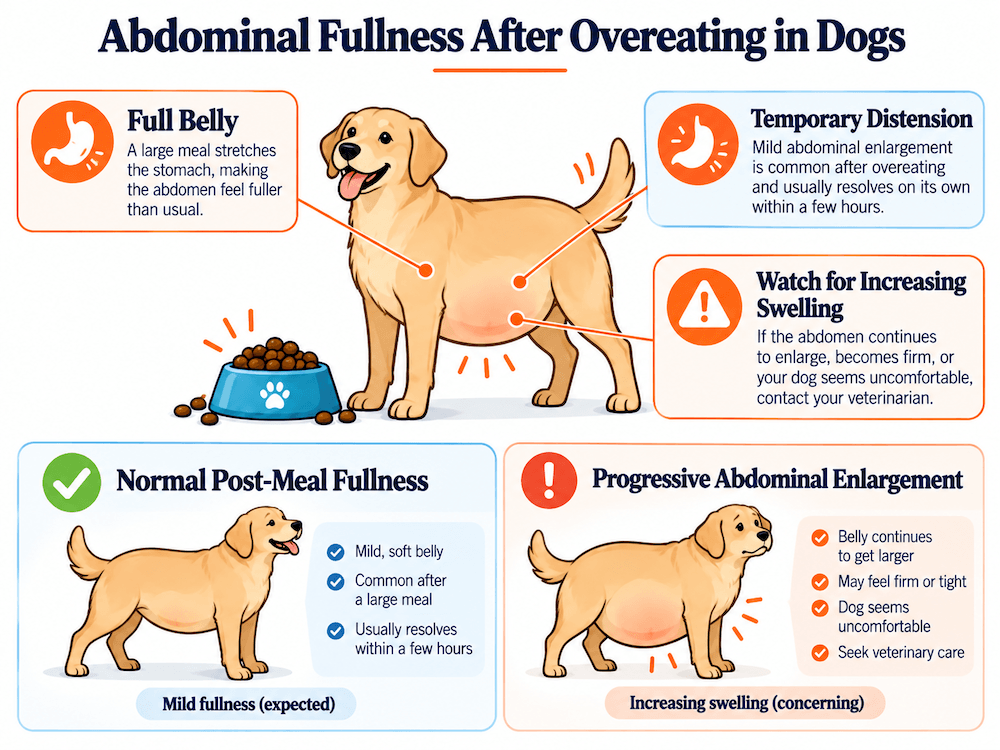
1. Abdominal Fullness or Swelling
A dog’s abdomen may look rounder or feel fuller than usual after eating a large amount of food. Mild fullness may settle as digestion progresses, but increasing or painful abdominal swelling is more concerning.


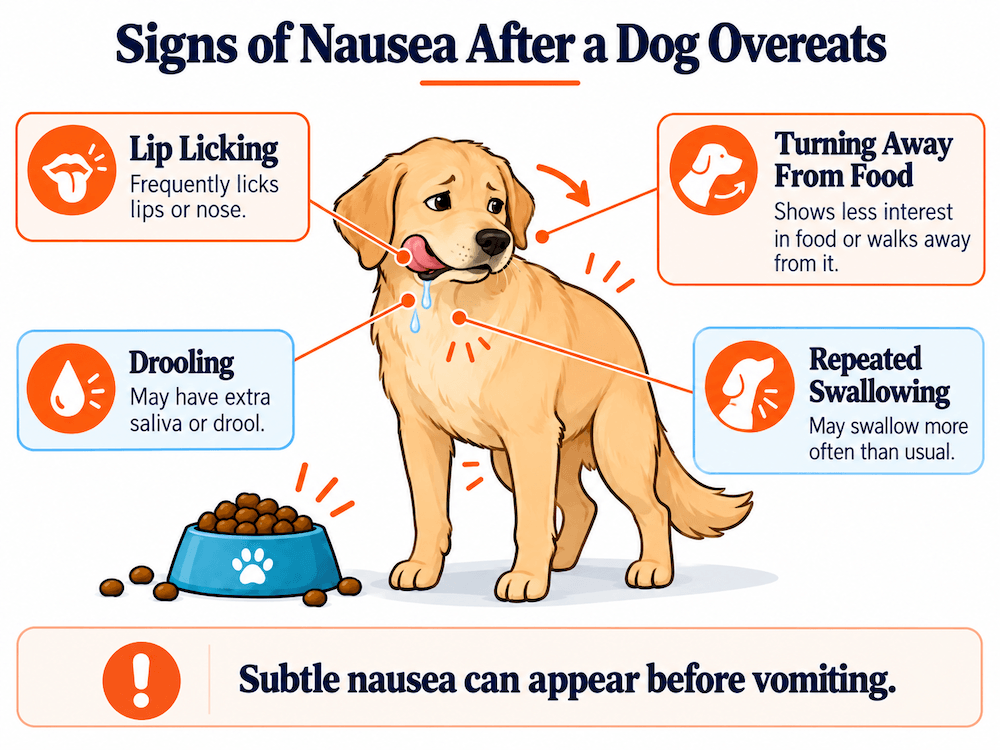
2. Nausea and Drooling
An overly full stomach can make a dog feel nauseated. Signs may include lip licking, excessive swallowing, drooling, licking the floor, or suddenly losing interest in food.
3. Vomiting or Regurgitation
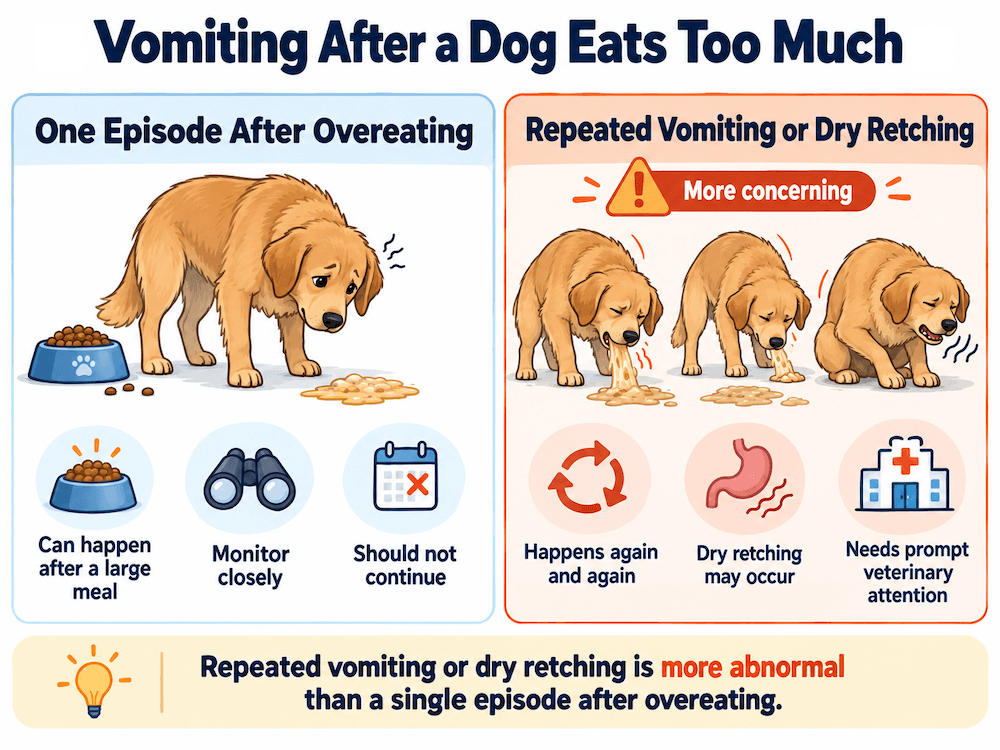
A stomach overloaded with food may empty some of its contents through vomiting or regurgitation. An isolated episode can occur after overeating, but repeated vomiting or unsuccessful attempts to vomit are more concerning and should not be dismissed as simple fullness.
4. Gas, Burping, or Gurgling
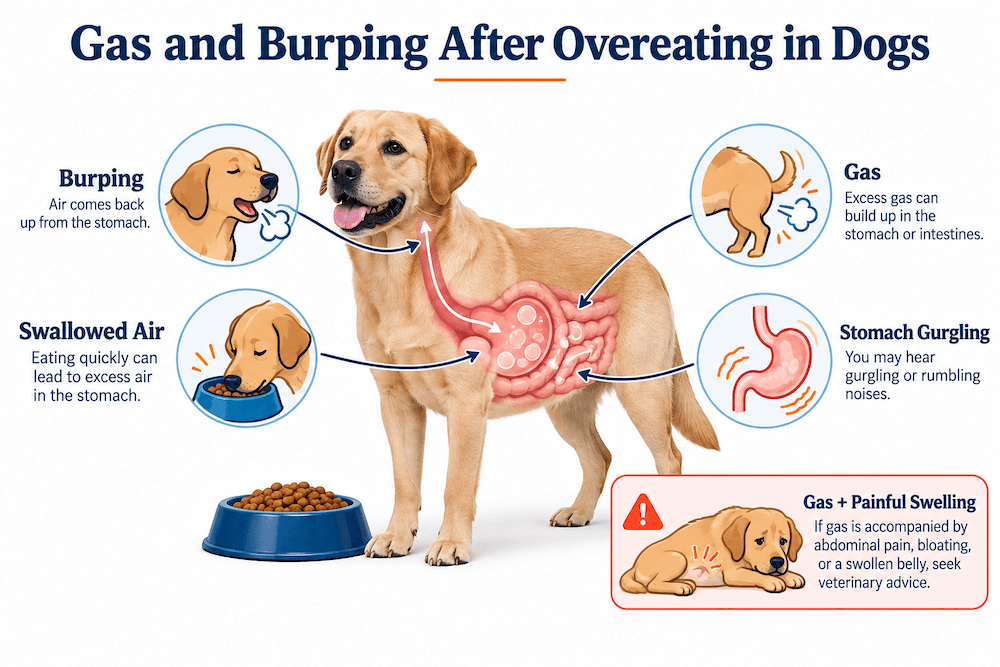
Eating a large amount—especially when food is swallowed quickly—can increase gas, burping, and noticeable stomach or intestinal sounds. Mild gas may simply reflect digestion, but it becomes more concerning when paired with significant swelling, pain, or restlessness.
5. Restlessness or Abdominal Discomfort
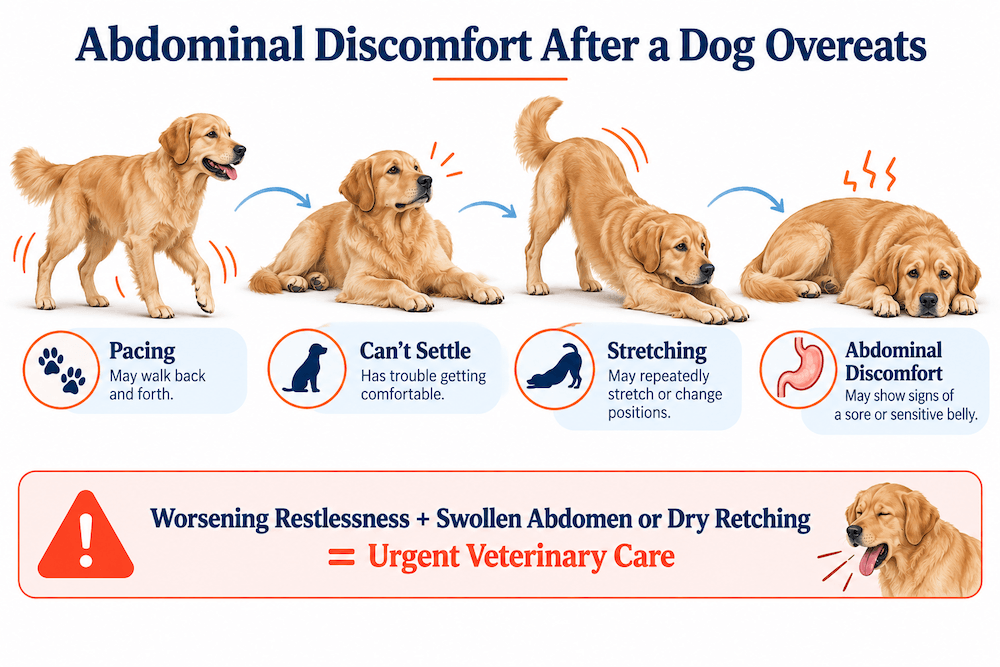
An overfilled stomach can make a dog temporarily uncomfortable, causing pacing, repeated position changes, stretching, whining, or difficulty settling down. Mild discomfort should improve rather than intensify; persistent restlessness combined with abdominal swelling or retching warrants prompt veterinary attention.
How Much Is “Too Much” for a Dog?
There is no single amount of food that counts as overeating for every dog. A portion that is excessive for a 10-pound dog may be relatively modest for a 70-pound dog, and different foods can contain very different numbers of calories in the same volume.


The situation becomes more concerning when a dog consumes several times its normal meal, empties a food bag or container, eats an unknown quantity, or develops symptoms afterward. The type of food matters too—a small amount of a toxic ingredient may be more dangerous than a much larger amount of the dog’s regular kibble.
For everyday feeding, calorie needs depend on body size, life stage, activity, reproductive status, health, and the calorie density of the diet. Feeding recommendations on the package can provide a starting point, but the dog’s weight and body condition should help determine whether the amount is appropriate.
Possible Health Concerns Associated With Overeating
Most isolated episodes cause a temporary upset stomach, but certain circumstances can lead to more significant problems. Some risks arise from the sheer volume eaten, while others depend primarily on the type of food or material swallowed.
| Health Concern | Why It May Occur | What You May Notice |
|---|---|---|
| Digestive upset | The stomach and intestines receive more food than usual. | Gas, nausea, vomiting, or diarrhea. |
| Stomach distension | A large volume of food or gas expands the stomach. | Round, enlarged, or uncomfortable abdomen. |
| GDV | The distended stomach rotates in susceptible dogs. | Swelling, dry retching, distress, weakness, or collapse. |
| Pancreatitis | A large intake of rich or fatty food may contribute. | Vomiting, abdominal pain, lethargy, or poor appetite. |
| Poisoning | The food contains a toxic ingredient or substance. | Signs vary widely depending on the toxin. |
| GI obstruction | Wrappers, bones, packaging, or other objects were swallowed. | Vomiting, pain, appetite loss, or reduced stool. |
| Overweight or obesity | Excess calories are consumed repeatedly over time. | Progressive weight gain and excess body fat. |
Mild Fullness vs. Emergency Bloat
A dog can develop a very full stomach after consuming a large quantity of food without the stomach twisting. This is sometimes informally called food bloat or gastric distension. However, owners cannot reliably determine at home whether an enlarged stomach is simply full or whether gastric dilatation-volvulus (GDV) is developing.
Large and giant breeds with deep chests have a higher predisposition to GDV, although serious abdominal signs should never be dismissed solely because a dog is not considered a high-risk breed.
The Biggest Risks Depend on What and How Your Dog Ate
The quantity matters, but what the dog consumed can completely change the risk. A dog that eats too much regular kibble presents a different problem from one that raids fatty leftovers or eats food together with its packaging.
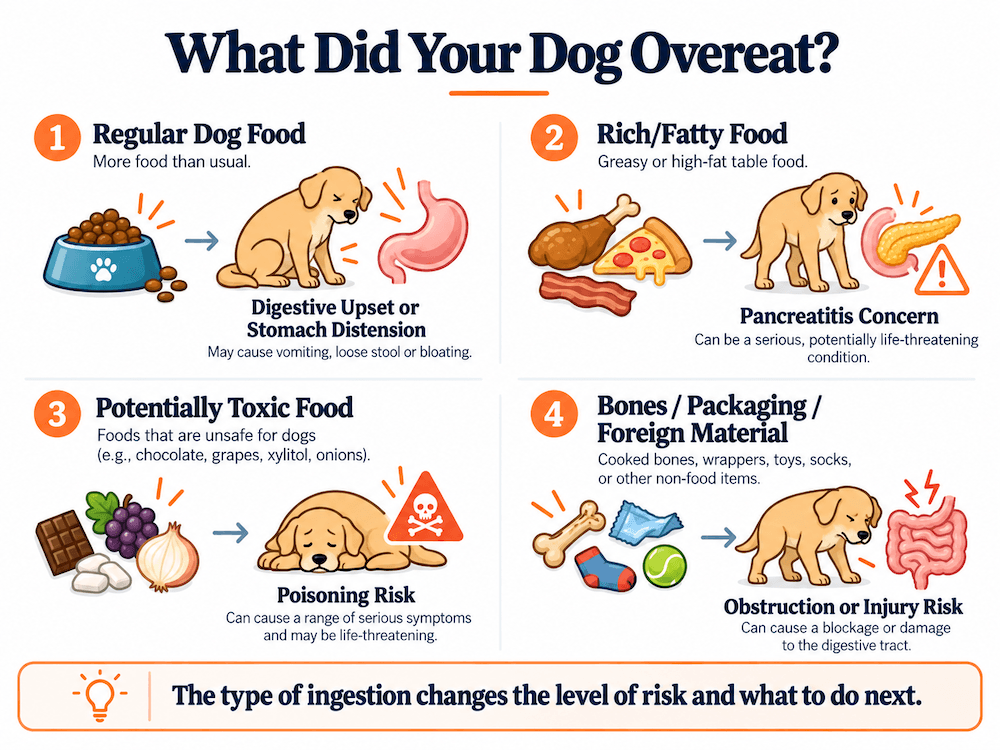
What Should You Do If Your Dog Ate Too Much?
Start by determining what was eaten, approximately how much is missing, and when it happened. Check the food container, trash, countertop, packaging, and surrounding area so you can tell whether the dog consumed only food or also swallowed something potentially dangerous.
Avoid severe fasting or other attempts to “compensate” for the calories without veterinary guidance. Once a mildly affected dog is comfortable and digestion has returned to normal, feeding can be returned to an appropriate routine.
What to Monitor Over the Next 12–24 Hours
A dog that remains comfortable after eating extra food may only need close observation, but the pattern over the following hours matters more than a single snapshot. Improvement is reassuring; worsening or newly developing symptoms are not.
| What to Monitor | What to Watch For |
|---|---|
| Abdominal size | Progressive enlargement rather than ordinary post-meal fullness. |
| Comfort | Pacing, whining, guarding the abdomen, or inability to settle. |
| Vomiting or retching | Repeated vomiting or unsuccessful attempts to vomit. |
| Energy level | Increasing weakness, unusual lethargy, or declining responsiveness. |
| Stool | Persistent diarrhea, blood, or black, tarry stool. |
| Appetite | Persistent appetite loss, especially with other illness signs. |
| Overall trend | Worsening discomfort or new symptoms instead of gradual improvement. |
When to Call a Veterinarian After a Dog Eats Too Much
The appropriate response depends on the amount consumed, the type of food or object involved, the dog’s symptoms, and individual risk factors. When in doubt after a very large or unknown ingestion, contacting your veterinarian provides safer guidance than trying to estimate risk at home.
Dogs with a rapidly enlarging abdomen, repeated unsuccessful retching, severe abdominal discomfort, excessive drooling, weakness, or collapse may be experiencing GDV. This is a time-critical emergency that cannot be safely diagnosed or ruled out at home.
A veterinarian evaluating significant overeating may examine the abdomen, assess hydration and circulation, and recommend imaging or blood tests depending on the symptoms and suspected ingestion. Treatment varies widely because simple gastrointestinal upset, pancreatitis, poisoning, foreign-body obstruction, and GDV require very different approaches.
One-Time Overeating vs. Regular Overfeeding
An isolated food binge and habitual overfeeding should not be treated as the same problem. One-time overeating primarily creates an immediate gastrointestinal concern, whereas chronic excess calorie intake gradually changes body weight and body condition.
| Pattern | What May Happen | Main Concern |
|---|---|---|
| One large meal | Temporary fullness, gas, nausea, or digestive upset. | Excessive stomach distension. |
| Major food binge | Vomiting, diarrhea, or abdominal discomfort may follow. | Amount and food type matter. |
| Regular overfeeding | Body weight and body fat gradually increase. | Overweight or obesity. |
| Frequent rich meals | Repeated digestive problems may develop. | GI upset and pancreatitis concern. |
Chronic overfeeding does not necessarily cause dramatic symptoms after each meal. Instead, the warning sign may be a gradual loss of the dog’s waistline, ribs becoming harder to feel, declining exercise tolerance, or a steadily increasing number on the scale.
Why Dogs Eat Too Much or Always Seem Hungry
Some dogs overeat because food is readily available, while others seem constantly hungry because of behavior, diet, medication, or an underlying medical condition. Separating opportunity to overeat from a genuine increase in appetite is important.
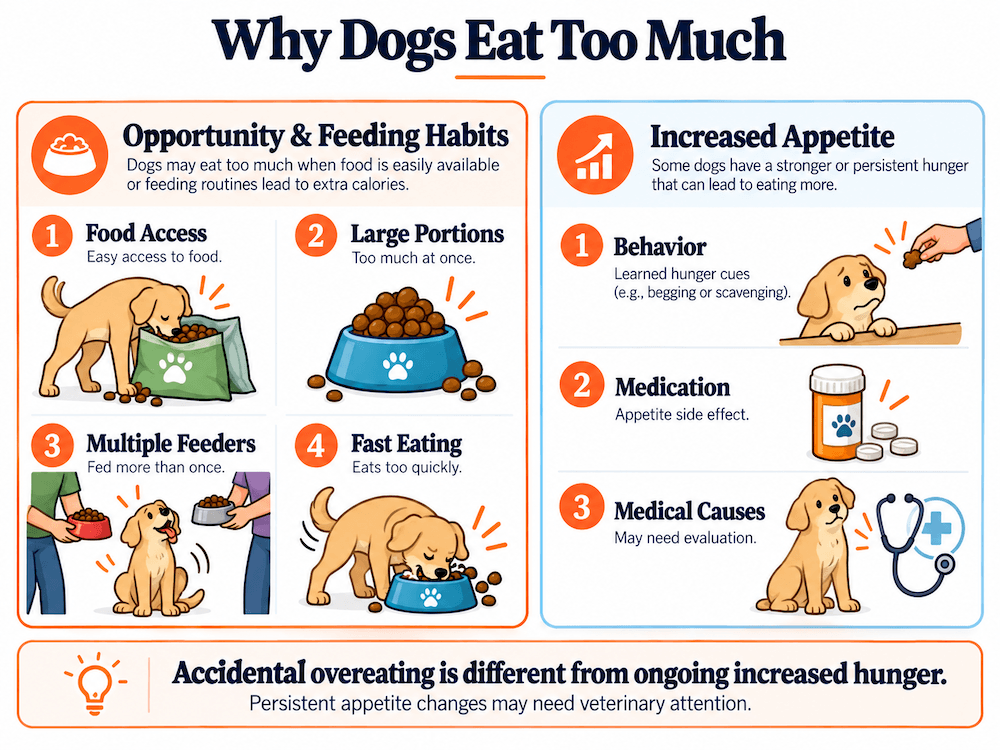
How to Prevent a Dog From Eating Too Much
Prevention involves controlling both meal portions and accidental food access. Consistent feeding habits also make it easier to recognize when a dog’s appetite truly changes.
If a dog repeatedly seems hungry despite receiving an appropriate diet, simply increasing portions may mask the real problem. A veterinarian can help determine whether calorie intake needs adjusting or whether the increased appetite needs investigation.
Veterinary Evidence Behind Overeating and Overfeeding in Dogs
A 2004 study in the Journal of the American Animal Hospital Association examined 1,634 dogs from breeds at increased risk of gastric dilatation-volvulus (GDV). Dogs fed a larger volume of food per meal had a significantly higher risk of GDV, regardless of how many meals they received each day; among large and giant breeds, risk was highest in dogs receiving a large-volume meal once daily. For owners of susceptible dogs, this supports avoiding unusually large individual meals.[1]
A prospective cohort study published in the Journal of the American Veterinary Medical Association followed 1,637 large- and giant-breed dogs and identified several factors associated with GDV risk. Faster eating was associated with increased risk, along with factors such as increasing age and having a first-degree relative with a history of GDV. This reinforces that meal size is not the only consideration—how quickly a predisposed dog eats may also matter.[2]
Long-term overfeeding has different consequences. In another Journal of the American Veterinary Medical Association study, 48 Labrador Retrievers were paired, with one dog in each pair receiving 25% less food than its pair-mate throughout life. The restricted-fed dogs remained leaner, had a significantly longer median lifespan, and generally developed signs of chronic disease later. This controlled study does not mean every dog should automatically receive 25% less food; instead, it demonstrates the long-term importance of avoiding excess calorie intake and maintaining an appropriate body condition.[3]
A much larger study published in the Journal of Veterinary Internal Medicine evaluated 50,787 middle-aged, neutered, client-owned dogs across 12 breeds. Dogs classified as overweight had shorter median lifespans than dogs in normal body condition in every breed studied, with estimated differences ranging from about five months to more than two years depending on breed and sex. Because this was an observational study, it demonstrates an association rather than proving that excess weight alone caused the difference, but it provides strong real-world evidence linking healthy body condition with longevity.[4]
Frequently Asked Questions
The Bottom Line
When a dog eats too much, the most common effects are temporary fullness, gas, nausea, vomiting, or diarrhea as the digestive system handles the excess food. The level of concern depends on how much was eaten, what the dog consumed, how quickly it was eaten, and the dog’s individual risk factors. Mild symptoms may improve with close monitoring, while progressive abdominal swelling, repeated dry retching, significant pain, weakness, or collapse require urgent veterinary care. Toxic foods, very fatty meals, bones, packaging, and other foreign material can create risks beyond simple overeating. Repeated overfeeding is a different problem, gradually contributing to excess body fat and long-term health concerns. Measuring meals, limiting extras, securing food, and monitoring body condition can help prevent future episodes. When the amount eaten is unknown, or symptoms are worsening, contacting a veterinarian is the safest next step.
Sources
- Diet-related risk factors for gastric dilatation-volvulus in dogs of high-risk breeds
- Non-dietary risk factors for gastric dilatation-volvulus in large and giant breed dogs
- Effects of diet restriction on life span and age-related changes in dogs
- Association between life span and body condition in neutered client-owned dogs