Dog Clindamycin Dosage Calculator: How Much to Give & Charts

Canine Bible is reader-supported. We receive affiliate commissions via some of our links. Learn more.
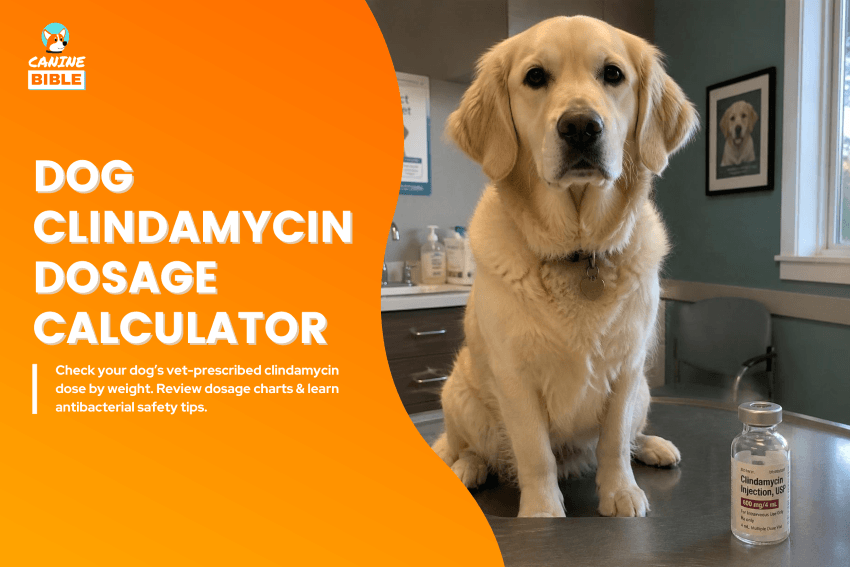
Clindamycin is a prescription antibiotic used to treat certain bacterial infections in dogs, including dental infections, infected wounds, abscesses, and bone infections. Because the correct dose depends on your dog’s weight, the type of infection, and the prescribed treatment plan, getting the calculation right is important. Our Dog Clindamycin Dosage Calculator helps you check a veterinarian-prescribed dose using your dog’s weight and medication strength. This guide also includes clindamycin dosage charts by weight, liquid and capsule comparisons, calculation examples, potential side effects, and essential safety precautions.
Always consult your veterinarian before giving clindamycin to your dog, changing the prescribed dosage, or stopping treatment, especially if your dog is a puppy, senior, pregnant or nursing, has kidney or liver disease, or takes other medications, and seek prompt veterinary advice if you notice vomiting, diarrhea, loss of appetite, difficulty swallowing, facial swelling, breathing difficulties, or other concerning symptoms. If you can't reach your vet, you can chat live with a registered online veterinary professional via our online vet chat or video chat support (24 hours a day, 7 days a week). Or use Chewy's online vet services (6 a.m. - midnight ET).
How Much Clindamycin Can I Give My Dog?
The amount of clindamycin your dog needs depends on their body weight, the infection being treated, and their veterinarian's instructions. Clindamycin dosage is typically expressed in milligrams per pound (mg/lb) or milligrams per kilogram (mg/kg) of body weight. For certain veterinary clindamycin products, the labeled oral dosage ranges for dogs include:
- Infected wounds, abscesses, and dental infections: 2.5–15 mg per pound (approximately 5.5–33 mg/kg) per dose, every 12 hours.
- Osteomyelitis (bone infection): 5–15 mg per pound (approximately 11–33 mg/kg) per dose, every 12 hours.
These are broad veterinary prescribing ranges, not doses for owners to select themselves. Your veterinarian determines the appropriate dose, frequency, and treatment duration based on the infection and your dog's individual health. For example, if a veterinarian prescribes 2.5 mg/lb per dose for a 20-pound dog, the calculated amount would be 50 mg per dose. However, that same dose may not be appropriate for another dog with a different infection or medical condition.
Clindamycin is not effective against every type of bacteria, and antibiotics do not treat viral infections. Your veterinarian may recommend testing or additional treatment to address the underlying cause.
Clindamycin Dosage Chart for Dogs
Clindamycin dosages are weight-dependent, but the appropriate amount also varies by diagnosis. The following charts provide reference calculations, infection-specific labeling, and medication strengths to help you understand a prescription.


Clindamycin Dosage Chart by Weight
The chart below illustrates how clindamycin amounts change with weight using an example rate of 2.5 mg/lb per dose. This is a calculation reference only, not a recommended dosage for every dog.
| Dog Weight (lb) | Weight (kg) | Example Amount (mg/dose) |
|---|---|---|
| 5 lb | 2.3 kg | 12.5 mg |
| 10 lb | 4.5 kg | 25 mg |
| 20 lb | 9.1 kg | 50 mg |
| 30 lb | 13.6 kg | 75 mg |
| 40 lb | 18.1 kg | 100 mg |
| 60 lb | 27.2 kg | 150 mg |
| 80 lb | 36.3 kg | 200 mg |
Note: These figures show mathematical examples at one reference rate. Do not use the chart to choose or change your dog's dose. Contact your veterinarian if the calculation does not match the prescription or you are unsure about the amount.
Clindamycin Dosage by Infection Type
Clindamycin dosing guidelines vary because different infections require different treatment approaches. The following table summarizes labeled oral dosage ranges for certain veterinary clindamycin products.
| Infection Type | Label Range (mg/lb per dose) | Label Frequency |
|---|---|---|
| Infected wounds | 2.5–15 mg/lb | Every 12 hours |
| Abscesses | 2.5–15 mg/lb | Every 12 hours |
| Dental infections | 2.5–15 mg/lb | Every 12 hours |
| Osteomyelitis | 5–15 mg/lb | Every 12 hours |
These label ranges do not mean every dog should receive the same amount or schedule. Your veterinarian may use a different treatment protocol when medically appropriate, particularly for infections requiring specialized care.
Clindamycin Liquid and Capsule Strength Chart
Clindamycin is available in several oral formulations. The strength determines how much medication is contained in a capsule, tablet, or milliliter of liquid.


| Formulation | Strength | What to Check |
|---|---|---|
| Antirobe capsule | 25 mg | Mg per capsule |
| Antirobe capsule | 75 mg | Mg per capsule |
| Antirobe capsule | 150 mg | Mg per capsule |
| Antirobe Aquadrops | 25 mg/mL | Liquid concentration |
| Other tablets or capsules | Varies | Product label |
| Compounded liquid | Varies | Pharmacy concentration |
For liquid medication, 25 mg/mL means each 1 mL contains 25 mg of clindamycin. This is different from a 25 mg capsule, which contains 25 mg in one capsule. Always check your specific product's label, especially if the medication was prepared by a compounding pharmacy. If the strength or formulation is unclear, contact your veterinarian or pharmacist before administering it.
Clindamycin Dosage Guidelines for Dogs
Clindamycin belongs to a group of antibiotics called lincosamides. It works by interfering with bacterial protein production, helping stop susceptible bacteria from multiplying and allowing the body's immune system to control the infection.
What Is Clindamycin Used for in Dogs?
Veterinarians prescribe clindamycin for infections caused by bacteria susceptible to the medication. Common uses include:
Antibiotics alone may not resolve every problem. For example, an infected tooth may still require extraction or another dental procedure, while an abscess may need drainage.
How Often Should Dogs Take Clindamycin?
Clindamycin is often prescribed every 12 hours for certain bacterial infections, but the actual schedule depends on the veterinarian's treatment plan. Some conditions and extra-label uses may require different instructions. It is important to distinguish between milligrams per dose and milligrams per day. If a prescription specifies 50 mg every 12 hours, that means 50 mg at each scheduled administration, not 50 mg divided across the entire day.
Give the medication at consistent intervals and follow the schedule printed on your dog's prescription. Do not increase the frequency or administer an additional dose because symptoms seem slow to improve.
How Long Should Dogs Take Clindamycin?
Treatment duration depends on the infection, its severity, and how well your dog responds. Some infections require relatively short treatment courses, while bone infections often require several weeks of therapy and follow-up examinations.
Your veterinarian will determine when treatment should end. If your dog's symptoms worsen or fail to improve within the expected timeframe, contact the clinic rather than extending the medication yourself. Do not stop treatment early simply because your dog appears better unless your veterinarian instructs you to do so.
How to Give Clindamycin to Your Dog Safely
Clindamycin can usually be given with or without food, depending on your veterinarian's directions. Giving it with a small meal may help dogs that experience mild stomach upset. For capsules or tablets, use a moist treat or a small amount of water or food to help the medication move into the stomach. Avoid giving clindamycin as a dry pill, since medication lodged in the esophagus can cause irritation or injury.
Liquid clindamycin can taste bitter, so some dogs may resist it. Use the oral dosing syringe provided by your veterinarian or pharmacist, measure carefully, and ask whether it can be mixed with a small amount of food. Store the medication according to its label, keep it away from children and other pets, and check the expiration date before use.
Factors That Can Affect Your Dog's Clindamycin Dosage
Several factors influence whether a prescribed amount is appropriate for an individual dog. The most important considerations are summarized below.
| Factor | Why It Matters | What to Check |
|---|---|---|
| Body weight | Determines weight-based calculations. | Use a recent, accurate weight. |
| Infection type | Different infections need different treatment plans. | Confirm the diagnosis. |
| Age | Puppies and seniors may need extra care. | Tell your vet your dog's age. |
| Liver or kidney disease | Severe disease can affect medication handling. | Review medical history with your vet. |
| Medication strength | Concentration determines the amount to measure. | Read the product label. |
| Other medications | Drug interactions may affect safety. | Share a complete medication list. |
| Pregnancy or nursing | Additional safety assessment may be needed. | Confirm with your veterinarian. |
If your dog has a chronic illness, develops new symptoms, or takes several medications, ask your veterinarian to review the treatment rather than relying solely on a weight-based calculation.
Common Clindamycin Dosage Mistakes to Avoid
Medication errors often come from confusing weight units, reading the wrong concentration, or misunderstanding dosing frequency. These are the most common mistakes to watch for.
| Mistake | Why It Matters | Better Approach |
|---|---|---|
| Mixing lb and kg | Can cause major dose errors. | Match weight and dose units. |
| Confusing mg and mL | Liquid volume depends on strength. | Check mg/mL before measuring. |
| Wrong formulation | Products may have different strengths. | Verify the exact medication label. |
| Daily vs. per-dose amount | Can lead to too much or too little. | Confirm the prescribed schedule. |
| Doubling a missed dose | May increase adverse effects. | Never give two doses together. |
| Using estimates as prescriptions | Math cannot establish medical suitability. | Follow veterinary directions. |
| Ignoring side effects | Problems may worsen without care. | Contact your vet if symptoms appear. |
| Delaying veterinary advice | Errors may require prompt intervention. | Call promptly after a suspected mistake. |
If you discover an error after giving medication, do not attempt to correct it by adding or withholding doses without professional advice. Contact your veterinarian with the exact amount and time administered.
Clindamycin Safety Guidelines for Dogs
Clindamycin is generally well tolerated when prescribed appropriately, but side effects and medication reactions can occur. Monitoring your dog's appetite, digestion, energy level, and overall condition throughout treatment can help you recognize problems early.
Common Clindamycin Side Effects in Dogs
The most frequently reported side effects involve the digestive system. These may include:
Mild symptoms do not always indicate a serious reaction, but they should not be ignored. Contact your veterinarian if your dog develops side effects, especially if symptoms persist or interfere with eating and drinking.
When Should You Contact Your Veterinarian?
Contact your veterinarian if your dog experiences repeated vomiting, persistent diarrhea, reduced food intake, difficulty swallowing, or unusual weakness. You should also request advice if the original infection appears to be worsening or your dog does not improve as expected. Certain symptoms require faster action than others. The chart below explains when veterinary assessment is especially important.
| Symptom | Concern | Recommended Action |
|---|---|---|
| Mild vomiting or diarrhea | Possible digestive irritation | Contact your vet for guidance. |
| Repeated vomiting | Risk of dehydration | Seek prompt veterinary care. |
| Refusing food | Possible medication intolerance | Contact your veterinarian. |
| Difficulty swallowing | Possible esophageal injury | Seek immediate veterinary advice. |
| Bloody diarrhea | Potential serious reaction | Seek urgent veterinary care. |
| Facial swelling or breathing difficulty | Possible severe allergic reaction | Seek emergency veterinary care. |
| Collapse or severe weakness | Possible medical emergency | Seek emergency veterinary care. |
If your dog develops severe symptoms, seek emergency veterinary care rather than waiting for the next scheduled appointment.
Drug Interactions and Contraindications
Clindamycin should not be given to dogs with a known allergy to clindamycin or lincomycin. It also requires additional caution in dogs with severe liver or kidney disease. Clindamycin may interact with certain other medications, including some antibiotics and drugs that affect muscle or nerve function. Always tell your veterinarian about prescription medications, supplements, and other treatments your dog receives.
What to Do If Your Dog Gets the Wrong Clindamycin Dose
Accidentally administering too much clindamycin, using the wrong liquid concentration, or giving doses too close together can increase the risk of adverse effects. The safest response is to get veterinary guidance promptly rather than trying to correct the mistake at home. If you suspect a dosing error:
- Contact your veterinarian immediately. Explain whether your dog received an extra dose, the wrong strength, or an unknown amount.
- Check the medication label. Record the concentration, prescribed amount, and actual quantity administered.
- Note the time. Tell the veterinary team when the medication was given and whether any symptoms have appeared.
- Do not induce vomiting. Only do so if a veterinarian or animal poison control expert specifically instructs you.
- Follow veterinary instructions. Do not give additional medication or attempt to compensate for the error without professional advice.
Special Considerations for Certain Dogs
How to Calculate Clindamycin Dosage for Dogs Manually
Clindamycin dosage calculations involve multiplying your dog's weight by the prescribed dose rate. The correct formula depends on whether the prescription uses pounds or kilograms. Manual calculations are helpful for checking prescription math, but they cannot determine which dose is medically appropriate.
Clindamycin Dosage Formula
- If your veterinarian prescribes mg/kg:
- Dose (mg) = Dog's weight (kg) × Prescribed dose (mg/kg)
- If your veterinarian prescribes mg/lb:
- Dose (mg) = Dog's weight (lb) × Prescribed dose (mg/lb)
- For weight conversions:
- Weight (kg) = Weight (lb) ÷ 2.20462
If the veterinarian has already prescribed a fixed amount in milligrams per dose, you do not need to multiply it by your dog's weight again.
How to Calculate Liquid Clindamycin Dosage
- Liquid clindamycin requires an additional calculation because medication strength is expressed in milligrams per milliliter.
- Liquid volume (mL) = Prescribed amount (mg) ÷ Medication concentration (mg/mL)
- For example, a 25 mg/mL solution contains 25 mg of clindamycin in each milliliter. The amount of liquid needed depends on the prescribed milligram dose.
Example Clindamycin Dosage Calculation
Suppose a veterinarian prescribes 2.5 mg/lb per dose for a dog weighing 20 pounds, using a liquid formulation containing 25 mg/mL.
- Calculate the prescribed milligram amount.
- 20 lb × 2.5 mg/lb = 50 mg per dose
- Check the liquid concentration.
- Medication strength = 25 mg/mL
- Convert milligrams into milliliters.
- 50 mg ÷ 25 mg/mL = 2 mL
- Calculated result: 50 mg, equivalent to 2 mL of the specified liquid.
This example demonstrates the mathematics of an existing hypothetical prescription. It does not mean that every 20-pound dog should receive 50 mg of clindamycin. The prescribed frequency and duration must also be confirmed separately. If your calculation differs from the medication label, contact your veterinarian or pharmacist before giving it.
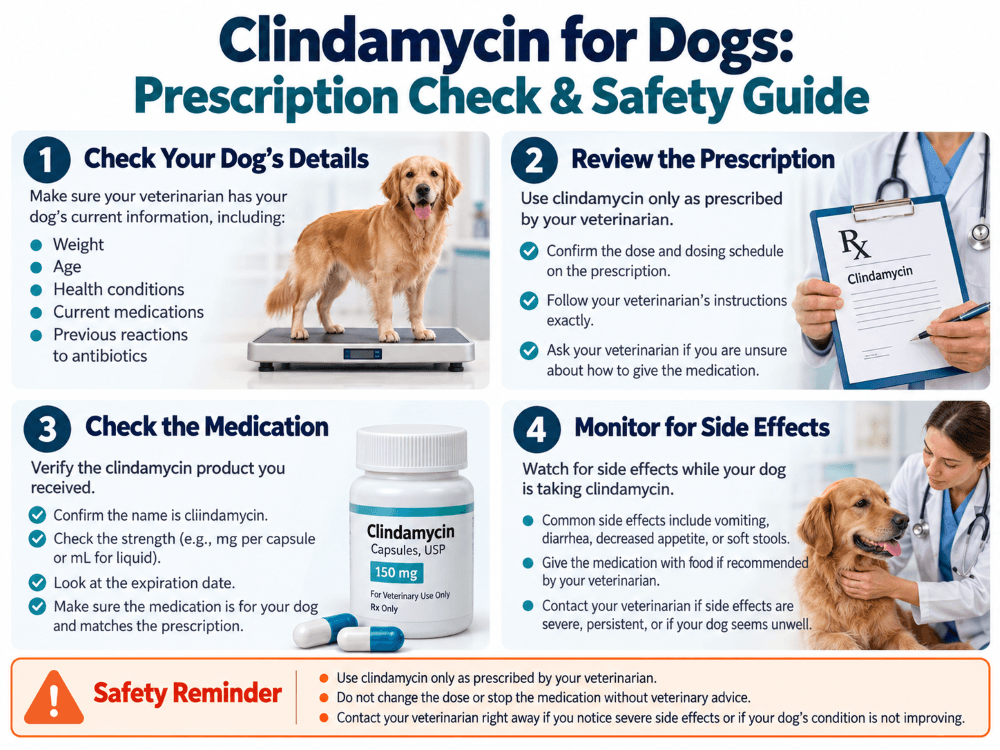
Dog Clindamycin Dosage and Safety Infographic
Frequently Asked Questions
The Bottom Line
The dog clindamycin dosage calculator helps you verify weight-based prescription calculations and understand the differences between liquid and capsule strengths. It is a useful reference for checking medication math, but it cannot determine the correct antibiotic treatment for your dog. Always follow your veterinarian's prescribed dose, frequency, and duration. Contact the veterinary team if the medication label is unclear, the calculation does not match, or your dog develops concerning symptoms. For additional guidance, explore Canine Bible's dog weight loss calculator and related antibiotic dosage resources, including the dog cephalexin dosage calculator and dog toxicity calculator