Dog Grape Toxicity Calculator: Assess Risk & Poisoning

Canine Bible is reader-supported. We receive affiliate commissions via some of our links. Learn more.
Whether your dog ate grapes, raisins, currants, or a food that may contain them, grape toxicity in dogs should be taken seriously. Because even small amounts can be risky and the toxic dose is unpredictable, we created this Dog Grape Toxicity Calculator to help you quickly estimate your dog’s potential risk based on weight, amount eaten, and type of fruit. In this guide, you’ll also find toxicity charts, warning signs, safety tips, and answers to frequently asked questions so you know what to do next and when to contact your veterinarian.
How Many Grapes Are Toxic to Dogs?
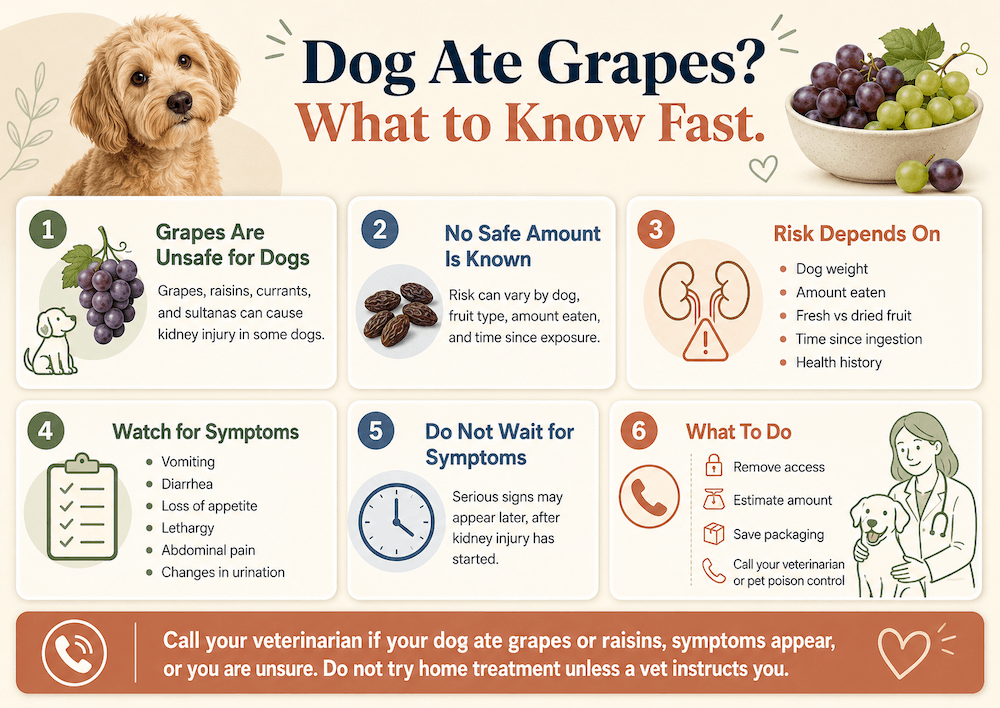
There is no confirmed safe number of grapes or raisins for dogs. Grapes, raisins, currants, and sultanas can cause acute kidney injury, and the amount that causes illness can vary widely from dog to dog.
A common screening benchmark is that more than one grape or raisin per 10 pounds of body weight may raise concern. However, this should not be treated as a “safe below this amount” rule because grape toxicity is unpredictable.
For example, if a 20-pound dog eats three grapes, that is above a common weight-based concern level. But the exact risk still depends on the dog’s size, health status, type of grape product, amount eaten, and individual sensitivity.
Will One Grape Kill My Dog?
One grape is unlikely to kill most dogs, but it should still be taken seriously because grape toxicity is unpredictable. Some dogs can develop vomiting, lethargy, appetite loss, dehydration, or kidney injury after eating grapes or raisins, and there is no confirmed “safe” amount for every dog.


If your dog ate one grape, call your veterinarian or pet poison control for guidance, especially if your dog is small, a puppy, senior, has kidney disease, ate raisins/currants too, or shows any symptoms. Do not induce vomiting or try home treatment unless a veterinarian tells you to.
Dog Grape Toxicity Chart for Dogs
The chart below gives a simple weight-based reference for grape and raisin exposure. Use it for quick context, not as a safety guarantee.
| Dog Weight | Amount That May Raise Concern | Owner Guidance |
|---|---|---|
| 5 lb | 1 grape or raisin may be concerning. | Call a veterinarian or poison control right away. |
| 10 lb | More than 1 grape or raisin. | Do not wait for symptoms. |
| 20 lb | More than 2 grapes or raisins. | Treat as urgent. |
| 30 lb | More than 3 grapes or raisins. | Call for professional guidance. |
| 50 lb | More than 5 grapes or raisins. | Risk still depends on the dog. |
| 70 lb | More than 7 grapes or raisins. | Use the highest realistic estimate. |
| 100 lb | More than 10 grapes or raisins. | Large dogs can still be affected. |
This chart is based on a screening threshold, not a safe-dose rule. Call your veterinarian if any grapes or raisins were eaten, symptoms appear, the amount is unknown, or you are unsure.
Grape Toxicity Risk by Type
The type of fruit or food matters because raisins and mixed foods can hide a larger or more concentrated exposure.


| Type Eaten | Risk Level | Why It Matters |
|---|---|---|
| Fresh grapes | Unsafe | Can cause vomiting and kidney injury in some dogs. |
| Raisins | High concern | Dried fruit is concentrated and easy to underestimate. |
| Currants or sultanas | Unsafe | These related dried fruits should be treated like raisins. |
| Trail mix | High concern | May contain raisins, chocolate, nuts, or other hazards. |
| Baked goods | High concern | Raisins or currants may be hidden inside bread, cookies, or cake. |
| Unknown food | Unknown risk | Use the highest realistic estimate and call for guidance. |
If the food contained chocolate, xylitol, alcohol, macadamia nuts, or raw dough, mention that when you call the veterinarian.
Symptom Timeline Chart
Symptoms can be delayed, so a dog may look normal at first. The timeline below explains what you may notice.
| Time Since Eating | Possible Signs | What to Do |
|---|---|---|
| 0–6 hours | Your dog may look normal. | Call a vet or poison control now. |
| 6–24 hours | Vomiting, diarrhea, low appetite, or tiredness may appear. | Get professional guidance urgently. |
| 24–48 hours | Lethargy, belly pain, dehydration, or urination changes may develop. | Seek emergency veterinary care. |
| 48–72+ hours | Kidney-related signs may become more serious. | Emergency care is needed. |
Do not wait for this timeline to “play out.” Earlier help can make a major difference.
Grape Toxicity Guidelines for Dogs
Grape and raisin toxicity is handled as an emergency because the toxic dose is not predictable. Weight, amount eaten, fruit type, and time since ingestion all matter, but none of those details can guarantee whether a dog will or will not develop kidney injury.
The calculator uses practical screening inputs to estimate risk. It should help you organize the information a veterinarian needs, not decide whether your dog is safe. The suspected toxic component is tartaric acid, which may explain why grapes, raisins, tamarind, and cream of tartar have been linked to similar kidney problems in dogs. Research is still evolving, and individual cases can vary.
A good rule for owners is simple: if your dog ate any grapes, raisins, currants, sultanas, or a food that may contain them, call for veterinary guidance. Do not induce vomiting, give hydrogen peroxide, give activated charcoal, force fluids, or try home remedies unless a veterinarian or poison control expert tells you to.
Factors That Can Affect Your Dog’s Results
Several details can change your dog’s estimated risk. Gather these before you call your vet if you can do so quickly.
| Factor | Why It Matters | What Owners Should Check |
|---|---|---|
| Weight | Small dogs reach higher exposure levels with fewer fruits. | Use your dog’s current weight if known. |
| Fruit type | Raisins and currants are dried and concentrated. | Identify grapes, raisins, sultanas, or mixed foods. |
| Amount eaten | Underestimating can lower the risk result. | Use the highest realistic number. |
| Time since eating | Early contact gives your vet more options. | Estimate when the exposure happened. |
| Symptoms | Vomiting, lethargy, or urination changes raise urgency. | Note any changes, even mild ones. |
| Health history | Kidney disease or dehydration can increase concern. | Mention illnesses and medications. |
Common Mistakes to Avoid
Most problems happen when owners underestimate the exposure or wait too long because the dog looks normal. Avoid these common mistakes.
| Mistake | Why It Matters | Better Approach |
|---|---|---|
| Waiting for symptoms | Kidney injury may start before severe signs appear. | Call as soon as you know or suspect exposure. |
| Calling one grape safe | No safe amount is confirmed for every dog. | Treat any ingestion seriously. |
| Using wrong units | Grams, ounces, handfuls, and counts can change risk. | Estimate carefully and share units clearly. |
| Missing raisins in food | Baked goods may hide dried fruit. | Check labels and save packaging. |
| Relying only on the calculator | The tool cannot test kidney function. | Use results to support a vet call. |
| Trying home treatment | Unsafe steps can delay proper care. | Follow veterinary instructions only. |
What to Do If Your Dog Eats Grapes or Raisins
1. Remove the grapes, raisins, or food item so your dog cannot eat more. Keep other pets away from the food too.
2. Estimate the amount eaten. Use the highest realistic estimate, especially if the fruit spilled, came from a bag, or was inside baked goods.
3. Call your veterinarian, an emergency clinic, or pet poison control. Be ready to share your dog’s weight, age, breed, amount eaten, type of fruit or food, time since ingestion, symptoms, and any health conditions. If you can't reach your vet, you can chat live with a registered online veterinary professional via our online vet chat or video chat support (24 hours a day, 7 days a week). Or use Chewy's online vet services (6 a.m. - midnight ET).
Do not induce vomiting or give hydrogen peroxide unless a veterinary professional tells you to. Do not give activated charcoal, milk, salt, oil, supplements, or extra water as a home treatment unless instructed.
Special Considerations for Certain Dogs
Puppies may become dehydrated more quickly if vomiting or diarrhea occurs. Their smaller size also means a small amount can represent a larger exposure.
Senior dogs may have less kidney reserve, even if they seem healthy. A dog with known kidney disease, urinary problems, dehydration, or chronic illness should be handled with extra caution.
Small breeds and toy breeds can reach a concerning exposure level with very few grapes or raisins. Dogs on medications should also be assessed carefully because some drugs can affect hydration, kidney function, or overall stability.
How to Calculate Grape Toxicity Risk Manually
Manual calculation can give you a quick estimate, but it cannot tell you whether your dog will develop kidney injury. Use it only to understand the exposure before contacting a professional.
- A simple screening formula is: Dog weight in pounds ÷ 10 = approximate number of grapes or raisins that may raise concern
- For example, a 30-pound dog has a screening number of 3. If that dog eats 5 grapes, the exposure is above that benchmark and should be treated as urgent.
Even if the number eaten is below the screening estimate, call your veterinarian. Grape and raisin toxicity is unpredictable, and a calculator cannot confirm that your dog is safe.
Example Calculation
- A 20-pound dog eats 3 raisins from a granola bar.
- First, divide 20 by 10. That gives a screening number of 2.
- Since the dog ate more than 2 raisins, the calculator may flag the exposure as elevated concern.
The better next step is not to watch and wait. Call your veterinarian or pet poison control, mention that the raisins were in a granola bar, and check the label for other ingredients such as chocolate, xylitol, or nuts.
Frequently Asked Questions
The Bottom Line
The Dog Grape Toxicity Calculator is designed to help you estimate your dog’s risk after eating grapes, raisins, currants, sultanas, or foods that may contain them. It should not be used to decide that an amount is safe, replace veterinary or poison-control guidance, or wait for symptoms before taking action. If your dog ate any grapes or raisins, use the calculator to gather key details such as weight, amount eaten, type eaten, timing, and symptoms, then contact your veterinarian or a pet poison-control service right away. Seek urgent help if your dog develops vomiting, diarrhea, low appetite, weakness, belly pain, dehydration, increased thirst, urination changes, tremors, collapse, or unusual behavior.
If your dog got into another risky food or household item, you may also find our Dog Chocolate Toxicity Calculator, Dog Caffeine Toxicity Calculator, and poisonous foods for dogs guide helpful. For grape-specific food safety, read our guide on whether dogs can eat grapes, but do not give home remedies or induce vomiting unless your veterinarian or poison-control expert tells you to.