How to Train a Dog to Pee Outside: 6 Easy Steps (Potty Guide & Tips)

Canine Bible is reader-supported. We receive affiliate commissions via some of our links. Learn more.
To train a dog to pee outside, take them to the same outdoor potty spot often, reward immediately after they pee, and prevent indoor accidents with close supervision. The goal is to teach your dog that outside is the only place that earns praise, treats, and relief. Most dogs learn faster with a predictable schedule, calm handling, and quick rewards, but age, health, previous habits, weather, fear, and your home setup can all affect progress. A puppy learning for the first time needs a different plan than an adult dog with long-standing indoor accidents. It also matters whether your dog is marking, having medical issues, or simply confused by inconsistent routines. This guide explains how to build a reliable outdoor potty habit and avoid the common mistakes that slow training down.
Why a Clear Routine Helps with Dog Pee Training Success
| Routine Element | How It Helps Pee Training |
|---|---|
| Same potty spot | Using one outdoor area helps your dog connect that scent and surface with peeing. |
| Predictable timing | Regular breaks reduce accidents by taking your dog out before their bladder is too full. |
| Clear reward pattern | Immediate praise or treats teach your dog that peeing outside earns a good result. |
| Focused potty trips | Calm, boring trips help your dog understand that the first job outside is to pee. |
| Indoor supervision | Watching your dog between breaks lets you catch early signals before accidents happen. |
| Consistent cleanup | Removing urine odor helps prevent your dog from returning to the same indoor spot. |
| Gradual freedom | Expanding room access slowly protects progress while your dog’s outdoor habit becomes reliable. |
Why Dogs Pee Inside Before They Are Fully Trained
Indoor peeing is usually not stubbornness or revenge; most dogs have accidents because they do not understand the rule yet, cannot hold it long enough, lack supervision, or have learned that certain indoor surfaces are okay.
Puppies need more frequent potty chances because their bladder control is still developing, while adult dogs may have accidents due to past habits, rescue or outdoor-dog backgrounds, or medical issues. The goal is to identify the real cause before choosing the right training plan.
| Possible Cause | What It Looks Like |
|---|---|
| Incomplete training | Your dog pees inside when unsupervised or off schedule. |
| Too much freedom | Accidents happen in hidden rooms or quiet corners. |
| Excitement | Pee happens during greetings, play, or emotional moments. |
| Fear outside | Your dog holds urine outdoors, then pees inside. |
| Urine marking | Small amounts appear on vertical surfaces or objects. |
| Medical issue | Accidents are sudden, frequent, painful, or unusual. |
What to Rule Out Before Outdoor Pee Training
Before treating indoor peeing as a training problem, make sure your dog can physically wait and pee normally, especially if accidents start suddenly after months or years of reliability. Pain, infection, increased thirst, urinary leakage, age, shelter or kennel history, or outdoor-living habits can all affect potty success.
| Sign to Check | Usually Training-Related | More Concerning |
|---|---|---|
| Timing | Accidents happen after missed potty breaks. | Accidents start suddenly in a trained dog. |
| Frequency | Your puppy pees often but seems comfortable. | Your dog strains or pees tiny amounts repeatedly. |
| Urine appearance | Urine looks normal and odor is typical. | Urine is bloody, cloudy, or unusually foul. |
| Comfort | Your dog relaxes after peeing outside. | Your dog cries, licks, or seems painful. |
| Water intake | Drinking matches weather, food, and activity. | Drinking increases sharply without clear reason. |
| Sleep leakage | No urine appears during rest or sleep. | Bedding is wet after naps or overnight. |
When to Use Pee Pads While Training a Dog to Pee Outside
Pee pads can be helpful when outdoor potty breaks are difficult, unsafe, or temporarily limited. They should usually be a short-term support tool, not the final goal, if you want your dog to pee outside only. The key is to use them clearly and transition toward outdoor potty breaks as soon as your dog is ready.


Set Up for Outdoor Pee Training Success
Outdoor potty training works best when the environment makes the right choice easy. Choose one outdoor potty area, use a leash at first, carry high-value treats, and keep the first few weeks boring and predictable. Your dog should not have to guess where to go, how long to wait, or whether peeing outside will be rewarded.
| Setup Item | Why It Helps | How to Use It |
|---|---|---|
| Leash | Keeps your dog focused near the potty spot. | Use it for every early potty trip. |
| Treats | Makes outdoor peeing worth repeating. | Reward within seconds after peeing finishes. |
| Potty phrase | Creates a simple cue for bathroom trips. | Say it calmly when your dog starts sniffing. |
| Cleaner | Removes urine odor that invites repeat accidents. | Use an enzymatic cleaner on soiled areas. |
| Baby gate | Stops unsupervised access to accident zones. | Block rooms until training is reliable. |
| Potty log | Reveals your dog’s natural timing pattern. | Track meals, naps, pee times, and accidents. |
| Safe surface | Helps your dog recognize the outdoor toilet area. | Use grass, gravel, mulch, or a chosen patch. |
Inside the home, success depends on supervision and access control. A dog with free access to bedrooms, rugs, hallways, and quiet corners can practice indoor peeing before you notice. Use gates, closed doors, a playpen, a properly sized crate, or a leash tethered to you while your dog is still learning.
How to Train a Dog to Pee Outside Step by Step
A good potty-training plan has two jobs: create many chances for your dog to pee outside, and stop indoor accidents from becoming a habit. Do not wait for your dog to “ask” at first. Take them out before they are likely to fail, then reward the outdoor pee so clearly that the pattern becomes obvious.
Step 1: Choose One Outdoor Pee Area
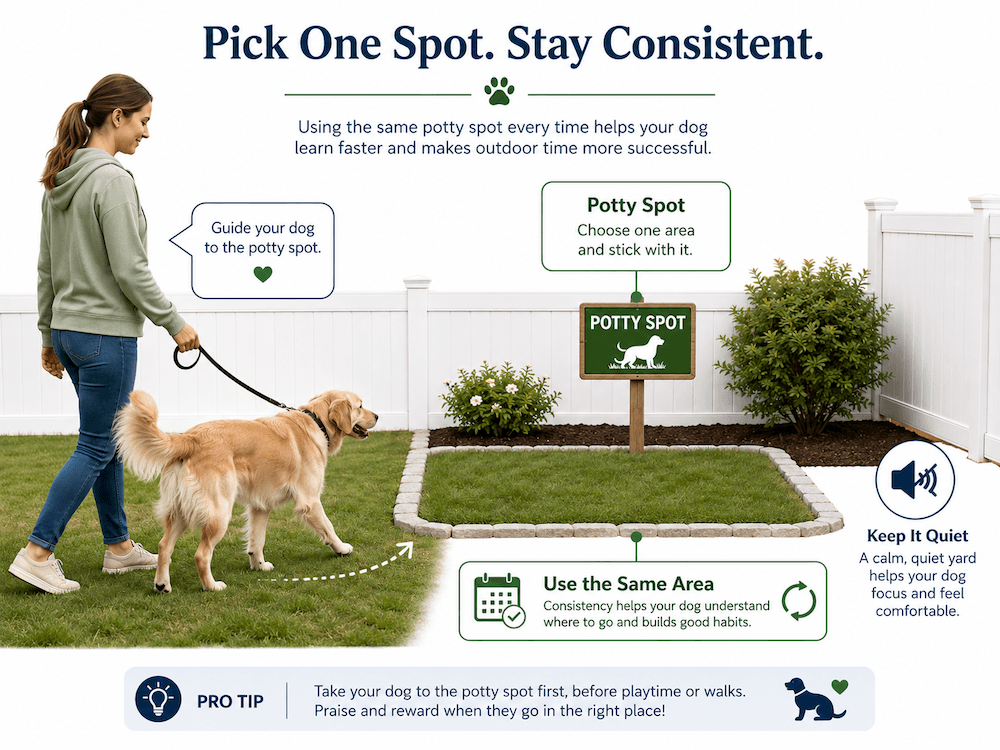
Pick one quiet, easy-to-reach outdoor area and use it consistently so your dog learns where peeing should happen. Choose a surface you can access in different weather, such as grass, gravel, mulch, or a designated yard patch. For young puppies, ask your veterinarian which outdoor areas are safest until vaccines are complete.


Step 2: Follow a Predictable Potty Schedule
Take your dog outside at key times, including after waking, meals, drinking, play, naps, confinement, and before bedtime. Add extra trips after excitement, visitors, travel, or routine changes. A simple potty log can help you spot patterns and prevent accidents before they happen.
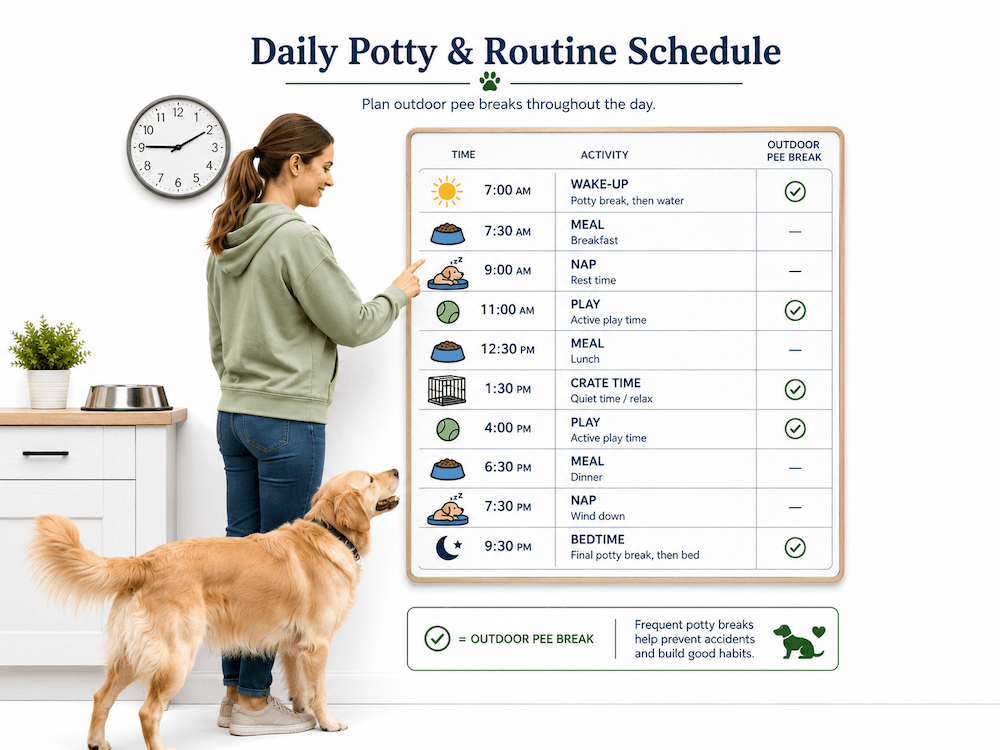
Step 3: Keep Potty Trips Calm and Purposeful
Walk your dog straight to the potty area and wait quietly without starting play or a long walk. Give your dog a little leash room to sniff, but keep the trip focused. If your dog does not pee after 5–10 minutes, go back inside, supervise closely, and try again soon.
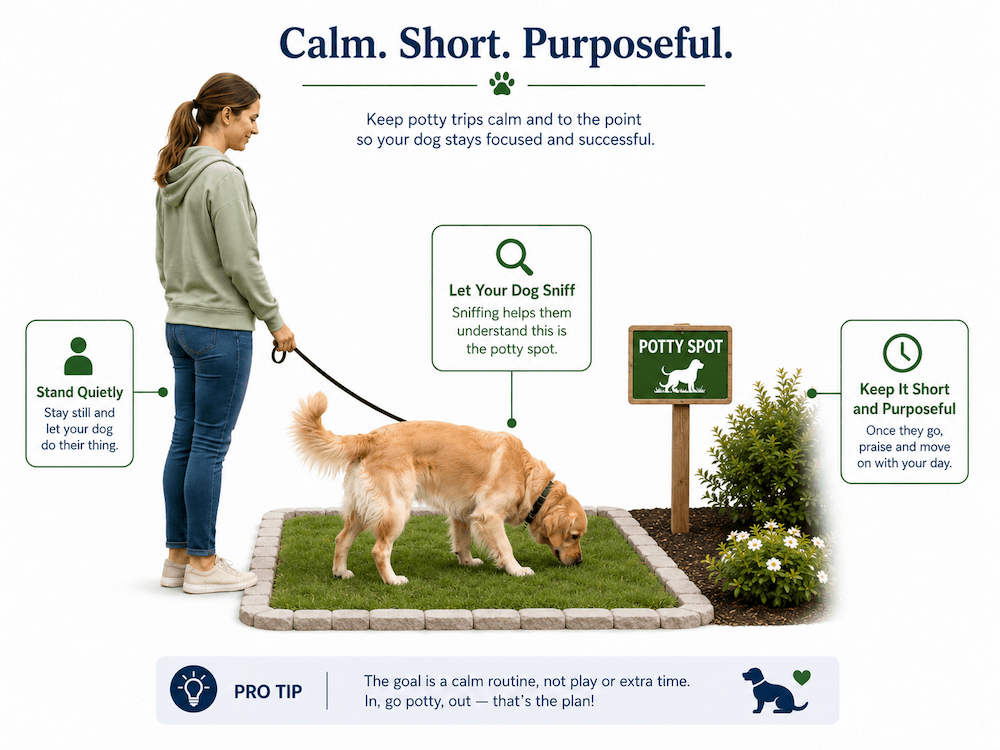
Step 4: Reward Outdoor Pee Right Away
Reward your dog within a few seconds after they finish peeing, while you are still outside. Use calm praise and a small treat so your dog connects the reward with peeing in the correct place. After the reward, you can offer a short sniff, walk, or play session as a bonus.
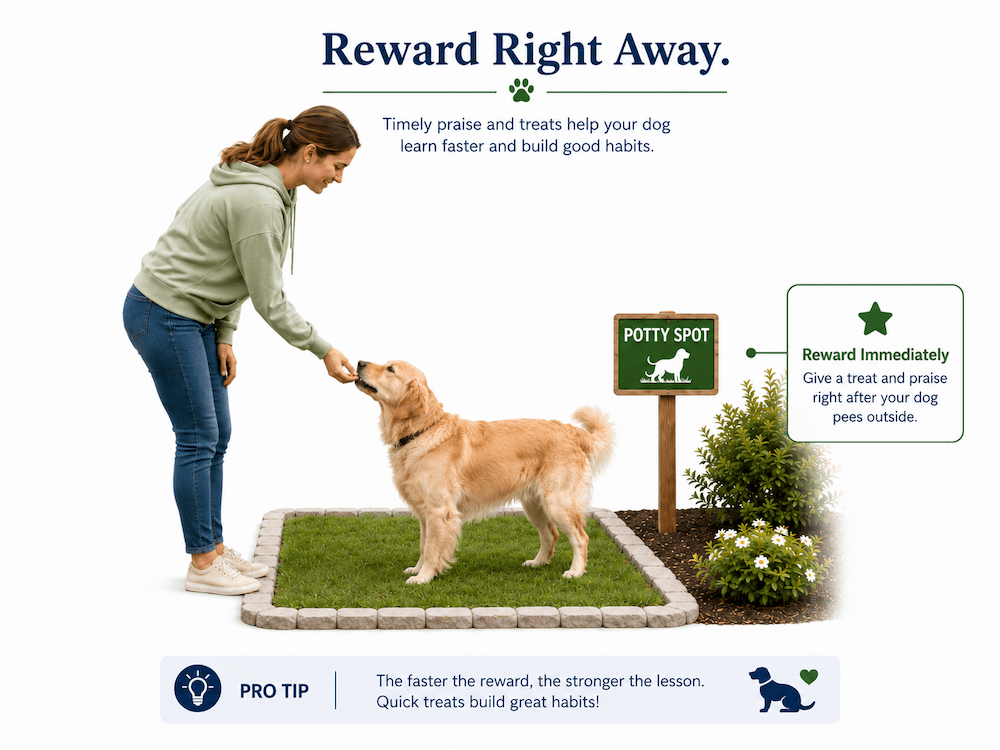
Step 5: Prevent Indoor Accidents Between Trips
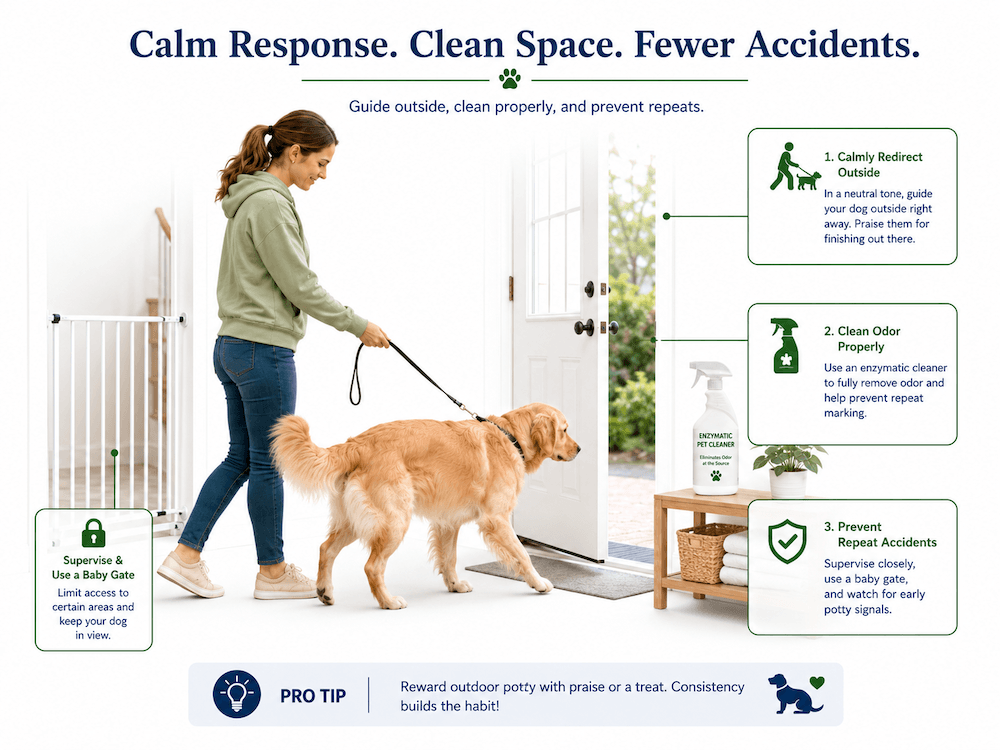
Indoors, keep your dog in sight and limit access to rooms where you cannot supervise closely. Watch for potty signals such as sniffing, circling, sudden pausing, pacing, or moving toward past accident spots. When you see those signs, take your dog outside right away.
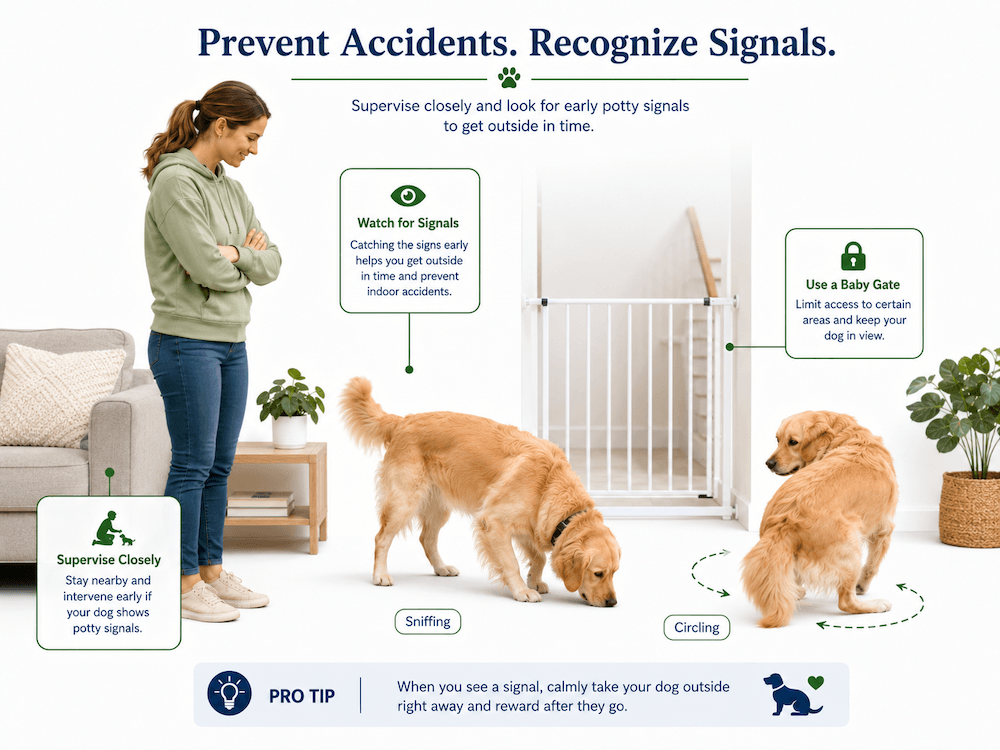
Step 6: Handle Accidents Without Punishment
If you catch your dog starting to pee inside, calmly interrupt with a cue like “outside” and guide them outdoors. Clean accidents with an a urine cleaner and block repeat accident spots until the outdoor habit is stronger. Do not yell, punish, or scare your dog, because that can make them hide accidents instead of learning.
Outdoor Pee Training Schedule for Puppies and Adult Dogs
A schedule should match your dog’s age, bladder control, health, and daily routine. Young puppies usually need very frequent breaks, while healthy adult dogs can often wait longer once trained. Newly adopted dogs may need a puppy-style schedule for the first few weeks because they are learning a new home, new door, new surface, and new routine.
Use this table as a starting point, then adjust based on your dog’s actual success. If accidents happen between scheduled trips, shorten the gap. If your dog consistently stays clean and pees promptly outside, gradually add more time between breaks.
| Dog Stage | Example Daily Potty Schedule | Owner Focus |
|---|---|---|
| Young puppy | 6:30 a.m. wake-up, after breakfast, every 45–60 minutes while awake, after naps, after play, after dinner, before bed, and once overnight if needed. | Give very frequent chances to pee outside before accidents happen. |
| Older puppy | 7:00 a.m. wake-up, after meals, every 2–3 hours, after play, after naps, early evening, and right before bedtime. | Stretch time gradually only after several accident-free days. |
| Adult beginner | 7:00 a.m., after breakfast, midmorning, lunch break, midafternoon, after dinner, evening walk, and bedtime. | Use a puppy-style routine while your dog learns the house rules. |
| Rescue dog | First thing in the morning, after meals, every 2–3 hours, after visitors or stress, after naps, after dinner, and before bed. | Keep the routine calm and predictable while your dog adjusts. |
| Senior dog | Morning, after meals, every 3–4 hours, after long naps, early evening, before bed, and overnight if accidents occur. | Offer more breaks and watch for thirst, leakage, pain, or straining. |
| Regression | Return to morning, after meals, every 2 hours, after play, after naps, after excitement, evening, and bedtime. | Temporarily tighten the schedule until accidents stop again. |
How to Handle Indoor Accidents Without Slowing Progress
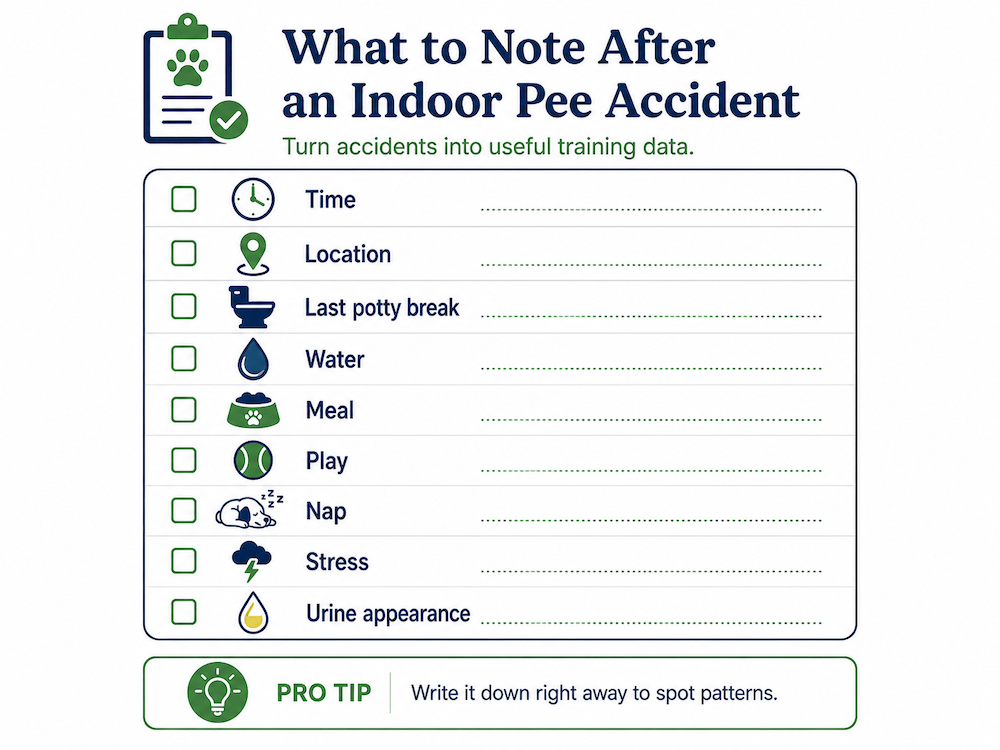
Indoor accidents are information, not proof that your dog is “bad.” They usually mean the schedule was too long, supervision slipped, the dog had too much freedom, the reward timing was unclear, or there is another issue to investigate. Instead of reacting emotionally, use each accident to tighten the next 24 hours of management.
Write down when it happened, where it happened, what your dog was doing beforehand, and when they last went outside. Patterns often appear quickly. For example, a puppy who pees 15 minutes after wild play needs an immediate post-play potty break, while an adult dog who pees only on a specific rug may need access blocked and that rug cleaned or removed during retraining.
Troubleshooting a Dog Who Still Pees Inside
If your dog is still peeing inside after consistent practice, do not simply add more corrections. Troubleshooting works better when you identify the pattern. A dog who pees in front of you needs a different fix than a dog who sneaks away, marks chair legs, leaks in sleep, or refuses to pee outdoors.
The most common training issue is too much indoor freedom too soon. Many owners relax supervision after a few good days, but the habit is not stable yet. Wait for a longer clean stretch before expanding access, and expand one room at a time rather than giving the whole home back at once.
| Pattern | Likely Meaning | What to Change |
|---|---|---|
| Pees after play | Excitement speeds up the need to go. | Take a potty break before and after play. |
| Sneaks away | Your dog has too much indoor freedom. | Use gates, leashes, or same-room supervision. |
| Pees on rugs | Soft surfaces may feel like acceptable toilets. | Remove access while retraining the habit. |
| Won’t pee outside | The spot may be distracting or scary. | Use a quieter area and reward small progress. |
| Marks objects | Scent or social triggers may be involved. | Block targets and supervise introductions carefully. |
| Leaks asleep | This may be urinary incontinence. | Schedule a veterinary exam promptly. |
Helpful Tips for Training a Dog to Pee Outside Faster
Helpful refinements can make the plan smoother, but they should not replace the basics. Your foundation is still timing, supervision, reward, and cleanup. These tips are most useful once you already have a schedule and a chosen outdoor potty spot.
| Training Tip | Why It Helps | How to Apply It |
|---|---|---|
| Reward outside | Your dog connects the treat to the correct location. | Carry treats and reward before going indoors. |
| Track patterns | Accidents become easier to predict and prevent. | Log meals, naps, pee times, and accidents. |
| Use calm praise | Excitable dogs stay focused and relaxed. | Celebrate warmly after the pee is finished. |
| Delay play | Your dog learns potty comes before fun. | Play only after your dog pees outside. |
| Limit rooms | Fewer choices mean fewer hidden accidents. | Expand access slowly after clean days. |
| Use routine words | Simple cues make the routine predictable. | Say the same phrase at the potty spot. |
Mistakes That Can Delay Outdoor Dog Pee Training
Most potty-training setbacks come from unclear timing, too much freedom, or punishment. A dog cannot learn the rule if they succeed outside once but practice peeing inside several times when no one is watching. The plan should make outdoor success frequent and indoor mistakes difficult.
| Mistake | Why It Backfires | Better Choice |
|---|---|---|
| Delayed rewards | Your dog may not know what earned the treat. | Reward immediately at the potty spot. |
| Too much freedom | Your dog can pee unseen and repeat it. | Use gates, crates, pens, or leashes. |
| Punishing accidents | Your dog may hide pee instead of learning. | Interrupt calmly or clean silently afterward. |
| Playing first | Your dog forgets the purpose of the trip. | Wait for pee before play begins. |
| Changing spots | Different locations can confuse early learners. | Use one main potty area first. |
| Ignoring symptoms | Medical problems can look like training failure. | Call the vet for sudden or painful accidents. |
When to Call a Veterinarian, Trainer, or Behaviorist
Some potty problems need more than a schedule. If your dog’s accidents are sudden, painful, frequent, or paired with other physical changes, start with your veterinarian. If your dog is healthy but fearful, marking heavily, guarding spaces, or struggling despite consistent training, a qualified trainer or veterinary behavior professional can help you adjust the plan humanely.
How to Maintain Progress After Your Dog Learns to Pee Outside
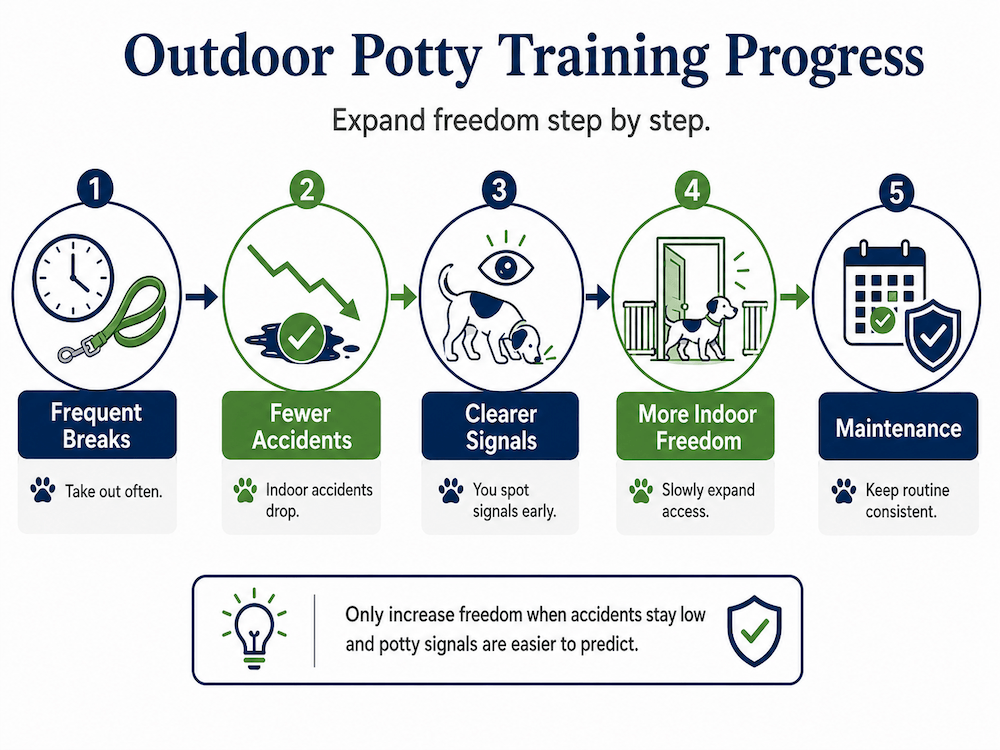
Once your dog is having fewer accidents, do not remove structure all at once. Keep rewarding outdoor peeing, keep the final bedtime potty break, and expand indoor freedom gradually. A dog who is clean in the kitchen for one week may not yet be ready for unsupervised access to bedrooms, rugs, and laundry piles.
Success looks like your dog peeing promptly outside, staying relaxed indoors, and showing clearer signs when they need to go. You may notice they walk to the door, look at you, pace briefly, or pause near the usual exit. Reward those communication signs by responding quickly so your dog learns that asking works.
Setbacks can happen during schedule changes, travel, moving homes, storms, illness, new pets, new rugs, or visitors. When that happens, return to the basics for a few days instead of assuming the training is ruined. Short-term structure usually restores the habit faster than frustration.
What Veterinary Research Says About Dog Pee Training
The Merck Veterinary Manual describes canine house soiling as a problem that can involve incomplete training, outdoor barriers such as frightening weather or animals, marking, and medical or behavioral causes. It also emphasizes immediate reinforcement for outdoor elimination, indoor supervision, and avoiding punishment because punishment can increase anxiety or make dogs hide elimination.[1]
Cornell’s canine health guidance lists common urinary tract infection signs that can overlap with “potty training problems,” including straining, frequent small urinations, accidents in the house, foul-smelling urine, genital licking, and blood in the urine. This supports the practical rule that sudden, painful, or unusual accidents should be checked medically rather than treated as stubborn behavior.
Veterinary behavior literature also supports reward-based training over aversive methods. A review in the Journal of Veterinary Behavior found that aversive training methods can create welfare risks and are not proven superior to positive reinforcement, while a PMC-indexed study on dog training methods discusses how reward-focused approaches are commonly compared with aversive and mixed methods in modern training research.[2][3]
The American Veterinary Society of Animal Behavior’s public position resources emphasize positive interactions and modern behavior guidance. For potty training, that fits the safest practical approach: reinforce the behavior you want, manage the environment to prevent mistakes, and address fear or health concerns instead of relying on punishment.
Frequently Asked Questions
The Bottom Line
Training a dog to pee outside works best when you make the right habit easy, predictable, and rewarding. Choose one outdoor potty area, follow a consistent schedule, and reward your dog immediately after they pee in the correct place. Indoors, supervision and limited freedom help prevent accidents before they become repeated habits. If accidents happen, stay calm, clean the area thoroughly, and adjust the routine instead of punishing your dog. Puppies, rescue dogs, senior dogs, and dogs with past indoor habits may need extra time and patience. Sudden accidents, frequent urination, straining, or urine changes should be checked by a veterinarian. With consistency and calm guidance, most dogs can learn to pee outside and become more reliable at home.