How to Stop a Dog From Eating Poop: 7 Vet-Backed Steps That Work

Canine Bible is reader-supported. We receive affiliate commissions via some of our links. Learn more.
To stop a dog from eating poop, remove feces quickly, supervise potty breaks, reward your dog for leaving it alone, and address any medical, dietary, or behavioral cause behind the habit. Most dogs need a mix of management, training, and consistency rather than punishment. Poop eating, also called coprophagia, can happen in puppies, adult dogs, multi-dog homes, and dogs with stress, boredom, hunger, or digestive issues. While the behavior is common, it can expose dogs to parasites, bacteria, or toxins depending on what they eat. Some cases are simple habit problems, while others may point to nutrition gaps, medications, anxiety, or an underlying health condition. This guide explains why dogs eat poop, when to worry, and the safest ways to stop the behavior for good.
What to Know About Dogs Eating Poop
| Key Point | What It Means for Your Dog |
|---|---|
| Common habit | Many dogs eat poop at some point, especially puppies or dogs in multi-dog homes. |
| Health risk | Poop can expose dogs to parasites, bacteria, viruses, or medication residues. |
| Fast cleanup | Removing feces quickly is one of the simplest ways to prevent repeat behavior. |
| Training helps | Rewarding “leave it” and quick recalls teaches your dog a safer response. |
| Diet matters | Hunger, poor digestion, or nutrient imbalance can sometimes contribute to the habit. |
| Stress trigger | Boredom, anxiety, confinement, or punishment around accidents may make the behavior worse. |
| Vet check | Sudden, intense, or persistent poop eating should be discussed with your veterinarian. |
Why Dogs Eat Poop in the First Place
Poop eating is called coprophagia. It can happen in puppies, adult dogs, senior dogs, multi-dog homes, and dogs that are bored, hungry, anxious, or simply drawn to the smell and texture of feces.
Dogs may eat poop for several reasons, and more than one can be happening at the same time. A puppy may explore feces out of curiosity, while an adult dog may do it because of habit, hunger, stress, competition, or an underlying digestive problem. The first question is not “How do I punish this?” It is “What is making this easy, rewarding, or more appealing to my dog?”
| Possible Cause | What You May Notice | Best First Response |
|---|---|---|
| Puppy curiosity | The puppy sniffs, mouths, or plays with fresh stool. | Supervise closely and reward coming away. |
| Easy access | Poop is left in the yard or indoor potty area. | Clean immediately after each bowel movement. |
| Hunger | The dog seems food-obsessed or searches constantly. | Review calories, meal timing, and body condition. |
| Boredom | The habit happens during unsupervised yard time. | Replace free roaming with walks and enrichment. |
| Stress | The dog eats stool after accidents or confinement. | Reduce pressure and avoid punishment. |
| Other pets | The dog targets another dog’s or cat’s feces. | Block access and separate potty areas. |
| Medical issue | The habit starts suddenly or comes with appetite changes. | Schedule a veterinary exam and fecal test. |
Health Problems That Can Contribute to Poop Eating in Dogs
Possible health conditions that may drive or contribute to poop eating in dogs include anything that increases hunger, reduces nutrient absorption, changes stool odor, or affects behavior.
Poop Eating Risks Dog Owners Should Not Ignore
A dog eating its own stool once is often less risky than eating feces from unknown dogs, wildlife, livestock, or cats. Still, feces can carry organisms or substances that may cause illness.


Risk depends on whose poop it is, how fresh it is, whether the animal is healthy, whether parasites are present, and whether medications or toxins could be in the stool.
| Risk | Why It Matters | What Owners Should Do |
|---|---|---|
| Parasites | Worms or protozoa may spread through feces. | Ask about fecal testing and prevention. |
| Bacteria | Fecal bacteria can upset the stomach. | Monitor vomiting, diarrhea, and energy. |
| Medication residue | Some drugs may pass through stool. | Prevent access to unknown animal feces. |
| Wildlife feces | Wild animals can carry parasites or pathogens. | Keep dogs leashed in high-risk areas. |
| Digestive upset | Some dogs vomit or develop loose stool. | Call if signs persist or worsen. |
| Human exposure | Mouth contact can spread fecal germs. | Wash hands and avoid face licking. |
How to Stop a Dog From Eating Poop: The Practical Plan
Stopping poop eating works best when you combine management, training, cleanup, and trigger control. The goal is not to wait for your dog to “grow out of it” while the habit gets stronger. Use the plan below for at least a few weeks. Dogs learn through repetition, so every prevented poop-eating attempt helps.
Step 1: Clean Up Poop Immediately
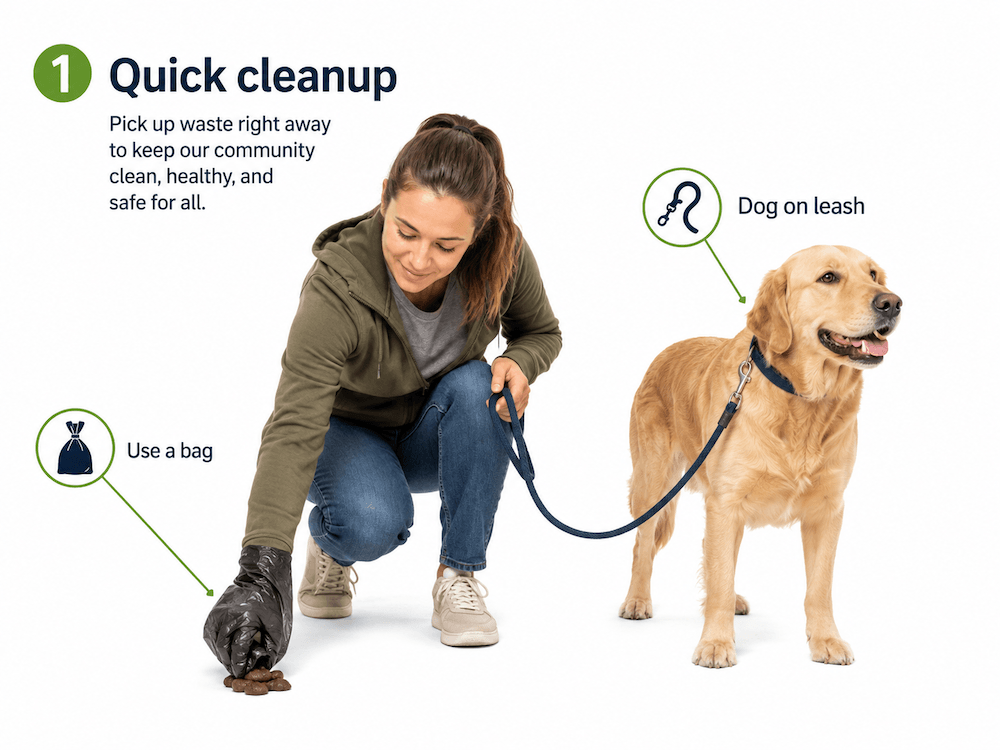
The most important first step is to remove the reward. Pick up stool right after your dog poops, especially in yards, potty pads, dog runs, and multi-dog areas. Do not let your dog wander back to inspect it. If your dog turns toward the stool, calmly guide them away and reward them for following you.
Step 2: Supervise Every Potty Break for Now
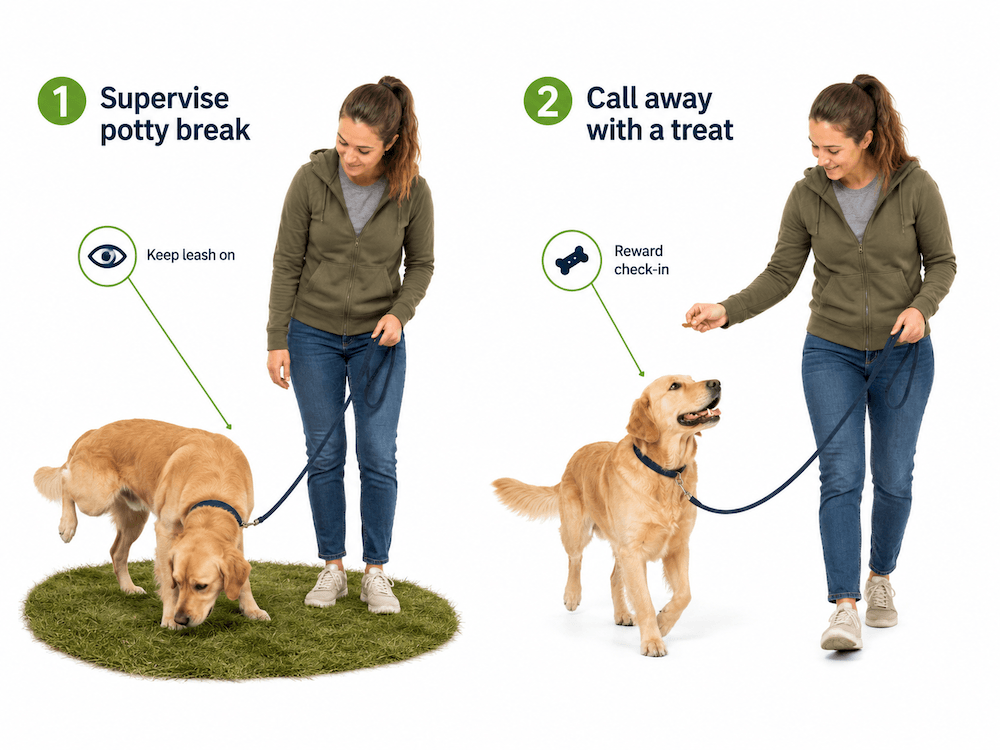
Unsupervised yard time is one of the easiest ways for this habit to continue. For a dog that eats poop, potty breaks should temporarily become supervised training sessions. Take your dog out on leash or a long line. Wait for the bowel movement, praise calmly, call your dog away, reward, then clean up.
Step 3: Build a Post-Potty Reward Routine
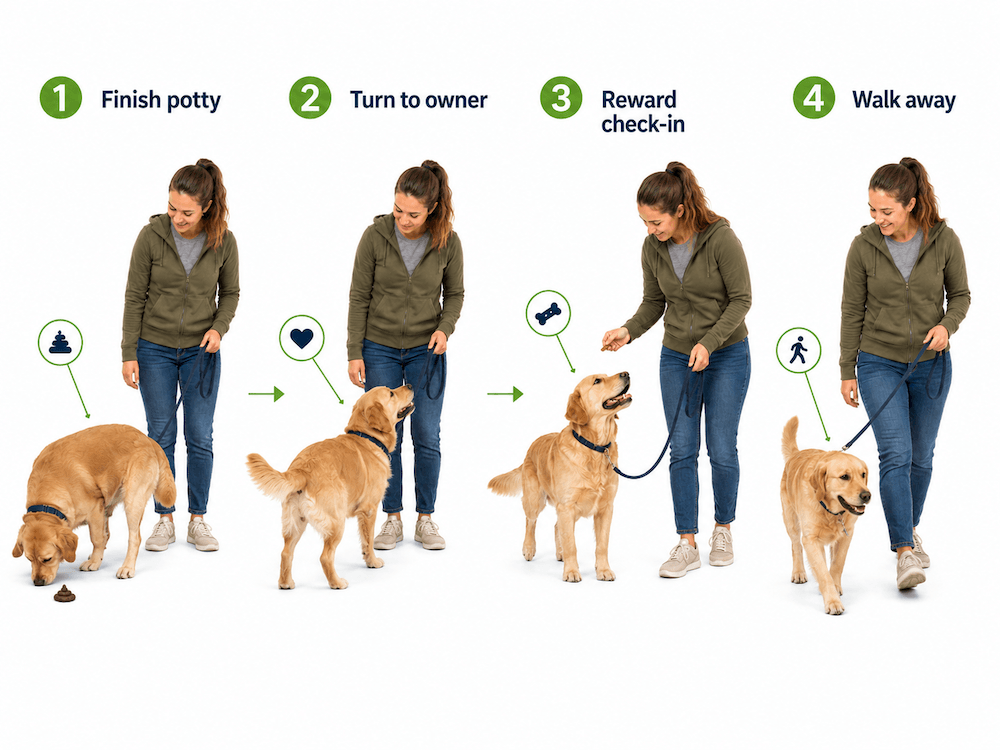
Many dogs run back to poop because nothing better happens after they eliminate. Create a predictable routine: poop, turn to owner, treat, move away. Use a high-value reward your dog does not get all day. Small pieces of cooked chicken, soft training treats, or a favorite toy can work better than ordinary kibble.
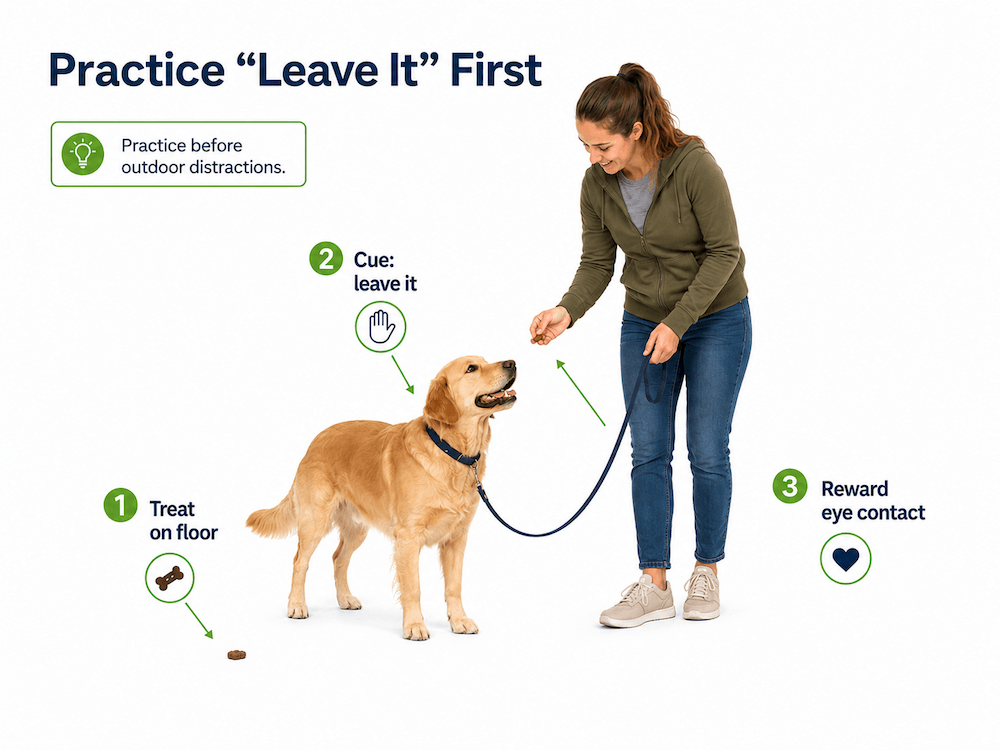
Step 4: Teach “Leave It” Before You Need It
“Leave it” should be practiced away from poop first. Start with low-value objects indoors, then progress to treats on the floor, then outdoor distractions. When your dog looks away from the item, reward generously. Once the cue is reliable, use it during potty breaks before your dog reaches the stool.
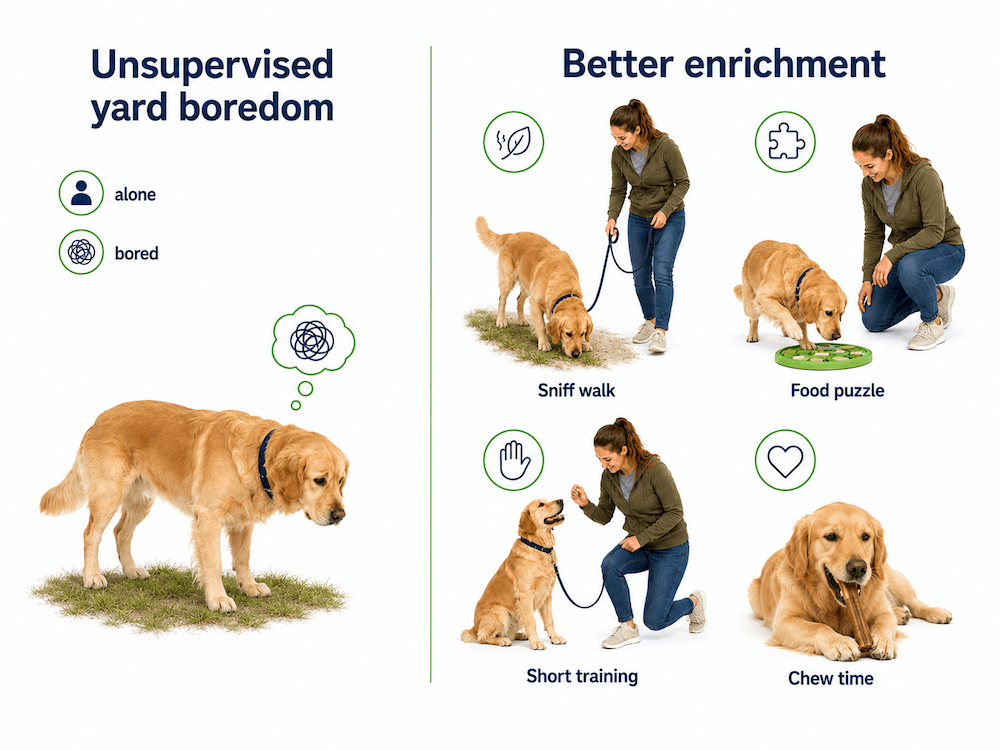
Step 5: Replace Yard Boredom With Real Enrichment
A bored dog may treat the yard like a scavenger puzzle. Instead of leaving your dog outside to self-entertain, provide structured sniff walks, food puzzles, training games, and calm chewing opportunities.
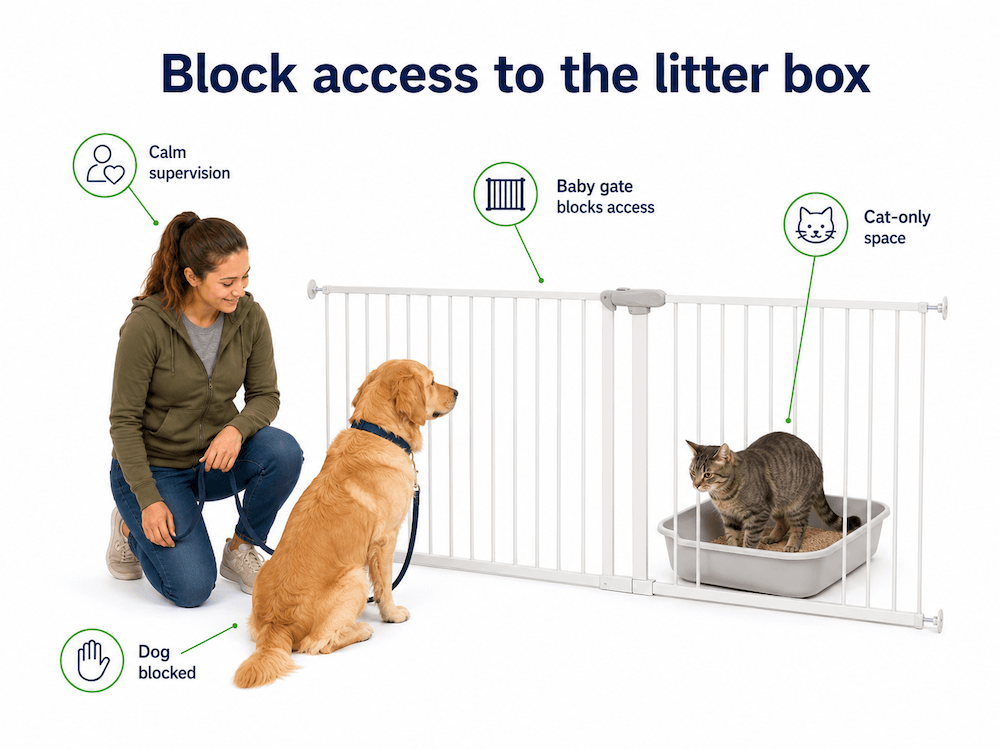
Step 6: Block Access to Cat Litter and Other Animal Poop
Many dogs find cat poop, rabbit droppings, horse manure, and wildlife feces highly appealing. This needs a separate prevention plan because feces from other animals may carry different risks.
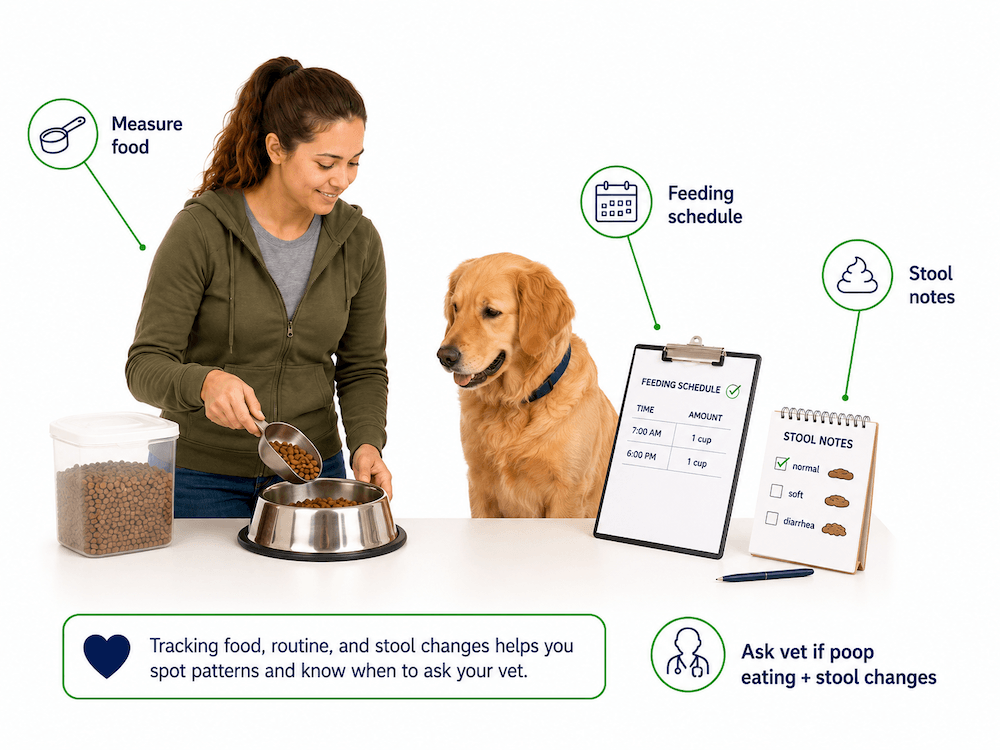
Step 7: Check Food, Feeding Schedule, and Digestive Health
Do not assume poop eating always means a nutrient deficiency. Still, diet and digestion are worth reviewing if your dog seems hungry all the time, has loose stool, loses weight, eats other non-food items, or suddenly starts eating feces.
Measure meals accurately, avoid extreme calorie restriction unless supervised, and ask your veterinarian whether a diet change, fecal test, deworming plan, or digestive workup is appropriate. Do not add supplements, enzymes, or deterrent products without checking that they are safe for your dog.
Helpful Tips for Stopping a Dog From Eating Poop
Small daily changes are usually more effective than one dramatic correction. The best plan makes poop less available, makes the right behavior more rewarding, and keeps the dog’s routine predictable.
| Tip | Why It Helps | How to Apply It |
|---|---|---|
| Use a leash | It prevents rushing back to fresh stool. | Leash your dog during every potty break. |
| Reward quickly | The right behavior must pay better than poop. | Treat within seconds of moving away. |
| Clean daily | Old yard poop keeps the habit available. | Do a yard sweep every morning. |
| Use one cue | Consistency helps your dog learn faster. | Say “leave it” or “let’s go.” |
| Track patterns | Timing can reveal the trigger. | Note when, where, and whose poop. |
| Add enrichment | Mental work reduces scavenging behavior. | Use sniff walks and food puzzles. |
| Check stool quality | Loose or undigested stool may attract interest. | Discuss changes with your veterinarian. |
Mistakes That Make Poop Eating Harder to Stop
Many owners accidentally make coprophagia worse by reacting too late, giving the dog unsupervised access, or turning cleanup into a chase game. The dog may learn to swallow faster, hide the behavior, or guard the stool. Avoid turning poop into a high-value event. Stay calm, interrupt early, redirect, and clean up without drama.
| Mistake | Why It Backfires | Better Choice |
|---|---|---|
| Scolding after | Your dog may not connect it clearly. | Prevent access and reward leaving it. |
| Nose rubbing | It can increase fear and stool focus. | Clean accidents calmly and supervise better. |
| Chasing | It can turn poop into a game. | Use a leash and calm recall. |
| Free yard time | The dog can practice the habit alone. | Supervise until the pattern improves. |
| Relying on additives | They may not solve the real trigger. | Use them only with a full plan. |
| Ignoring diet | Hunger or poor digestion may contribute. | Review food, stool, and appetite changes. |
| Delaying vet care | Medical causes can be missed. | Call if the habit is sudden or intense. |
Are Poop Deterrent Supplements Worth Trying?
Poop deterrent supplements and food additives may help some dogs, but they are not a complete solution. They usually work by trying to make stool taste less appealing, which does not fix access, stress, boredom, or medical causes.
Use deterrents only as part of a broader plan: supervise, clean quickly, reward moving away, and check your dog’s health. Avoid home remedies like large amounts of pineapple, hot sauce, garlic, onions, or harsh irritants, because they can upset the stomach or be unsafe.
If you try a commercial product, choose one made for dogs and ask your veterinarian first if your dog is a puppy, senior, pregnant, on medication, or has digestive disease.
How to Stop a Puppy From Eating Poop
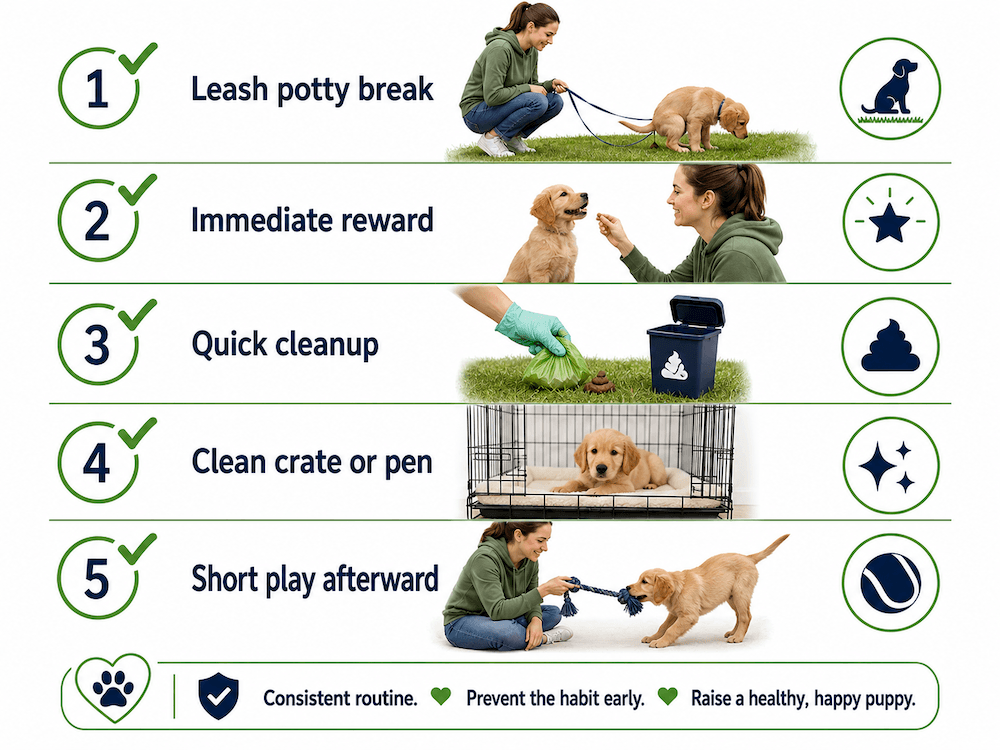
Puppies often eat poop because they are curious, mouthy, and still learning what is worth investigating. At this age, the goal is to prevent the behavior from becoming a normal part of potty time. Staying calm matters because scolding can make a puppy sneakier or more anxious around elimination.
Focus on building better habits before the puppy has too many chances to repeat the behavior. A predictable potty routine, gentle redirection, and enough enrichment can help reduce the urge to investigate stool. If the poop eating is intense, sudden, or paired with diarrhea, poor growth, or a huge appetite, it is worth asking your veterinarian to rule out an underlying issue.
How to Stop a Dog From Eating Other Dogs’ Poop
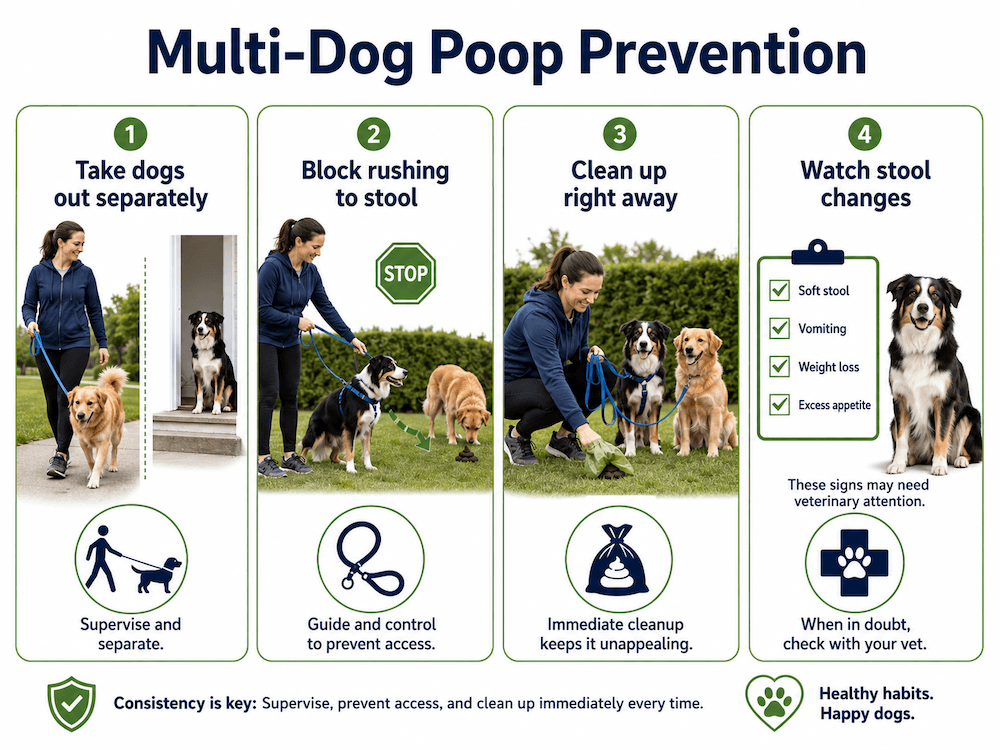
In multi-dog homes, poop eating can happen because one dog finds another dog’s stool more interesting, more available, or different in smell. The dog eating poop is not always the one with the health issue, so it helps to look at the whole household routine. Changes in stool texture, digestion, appetite, or weight can make another dog’s poop more tempting.
The best plan is to reduce opportunities while figuring out why the behavior keeps happening. Some dogs need more structure around potty time, while others need help with boredom, food motivation, or impulse control. If one dog’s stool is consistently loose, greasy, unusually smelly, or full of undigested food, improving that dog’s digestion may also reduce the other dog’s interest.
How to Stop a Dog From Eating Cat Poop
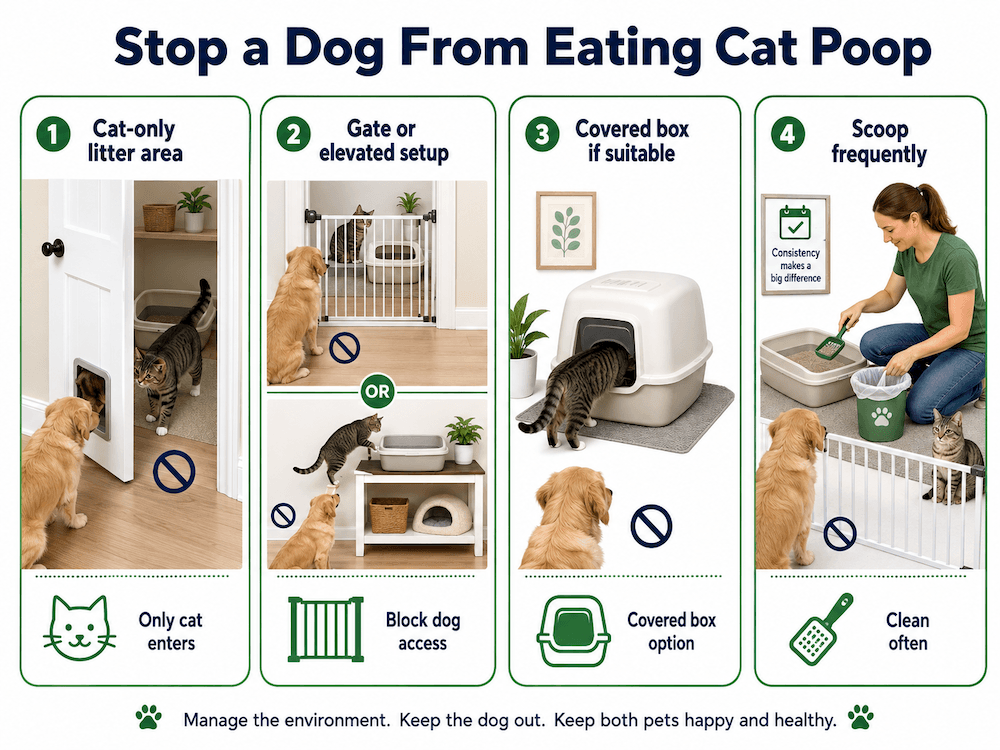
Cat poop is especially tempting to many dogs because it can smell like protein-rich food. This habit is usually more about access than obedience, so training alone may not solve it. The main goal is to protect the cat’s space while making the litter area less rewarding for the dog.
A dog that has learned to search for cat poop may keep checking the same area even after changes are made. That means the setup needs to stay consistent long enough for the habit to fade. If the dog is suddenly obsessed with litter box waste or is also showing appetite, weight, vomiting, or stool changes, a vet check can help rule out a medical reason.
When to Call a Veterinarian About Poop Eating
Call your veterinarian if poop eating is new, intense, getting worse, or happening alongside other changes. This is especially important for adult or senior dogs that suddenly start eating feces, because a behavior change can sometimes have a medical trigger.
Watch for signs such as vomiting, diarrhea, weight loss, bloating, poor appetite, ravenous hunger, food stealing, or eating non-food items. Stool changes also matter, especially if the stool is greasy, very soft, bloody, pale, unusually foul-smelling, or contains visible worms.
Puppies should be checked if they eat poop often, have a potbellied appearance, poor growth, or diarrhea. You should also call your vet if your dog ate feces from wildlife, unknown dogs, parks, or an animal taking medication, since parasite exposure or drug residue may be a concern.
How to Maintain Progress After Your Dog Stops Eating Poop
Once your dog improves, do not immediately return to unsupervised yard time. Gradually reduce support while keeping cleanup fast and rewarding good choices often enough to maintain the habit.
A good sign is when your dog poops, turns back toward you, and ignores the stool without needing a strong cue. A warning sign is when your dog starts scanning the yard, rushing after another dog, or sneaking to the litter box again.
Keep monitoring after diet changes, medication changes, boarding, dog-park visits, new pets, or stressful household events. These can bring the behavior back even after weeks of progress.
What Veterinary Research Says About Coprophagia in Dogs
A study published in Veterinary Medicine and Science found that frequent conspecific coprophagy, meaning repeated eating of dog feces, was reported in 16% of sampled dogs, while 23% had been seen eating stool at least once. The study also reported that many coprophagic dogs preferred fresh feces, which supports the practical advice to clean up immediately rather than waiting until later.[1]
A Journal of Veterinary Behavior study comparing coprophagic and non-coprophagic dogs found no clear difference by sex, lifestyle, number of meals, diet type, or reproductive status in that sample, but it did find that living with another coprophagic dog may influence the behavior. This matters for multi-dog homes because management may need to include all dogs, not just the one being caught eating feces.[2]
Veterinary behavior guidance from VCA Animal Hospitals emphasizes that medical causes should be ruled out before assuming the problem is purely behavioral. It also highlights stool testing, diet review, cleanup, supervision, and rewarding the dog for leaving stool as core parts of treatment.
The Merck Veterinary Manual explains that many gastrointestinal parasites can infect dogs, and some can also cause disease in people. This supports the safety advice to prevent stool eating, pick up feces promptly, and ask a veterinarian about fecal testing and parasite prevention when exposure risk is high.
Frequently Asked Questions
The Bottom Line
Stopping a dog from eating poop starts with removing access, cleaning up quickly, and supervising potty breaks before the habit can repeat. Most dogs also need a better routine after pooping, such as being called away, rewarded, and redirected to something more appropriate. Punishment is not helpful because it can make dogs hide the behavior, swallow faster, or become anxious around potty time. If the habit is sudden, intense, or paired with appetite, weight, stool, or energy changes, a veterinary check is the safest next step. For many dogs, poop eating improves when owners combine management, reward-based training, enrichment, and consistent cleanup. The key is to make eating poop harder while making the right behavior easier and more rewarding. With patience and a clear plan, most dogs can learn to leave poop alone and build safer, cleaner habits.