How to Tell If My Dog Has a Fever: Signs, Temperature Check & What to Do


Canine Bible is reader-supported. We receive affiliate commissions via some of our links. Learn more.
The most reliable way to tell if your dog has a fever is to check their temperature with a pet-safe rectal thermometer. A dog may have a fever if their temperature is above the normal range, especially around 103°F or higher. Signs like warm ears, lethargy, shivering, glassy eyes, or loss of appetite can raise concern, but they are not enough to confirm a fever on their own. Some dogs act almost normal with a mild fever, while others seem very sick from heat stress, pain, infection, or inflammation. It is also easy to confuse fever with overheating, anxiety, or a warm coat after exercise. Knowing what temperature is normal, when to call the vet, and which symptoms are urgent can help you respond safely. This guide explains how to check your dog’s temperature, what warning signs to watch for, and when a fever needs veterinary care.
Common Dog Fever Signs and What They Mean
| Fever Sign | What It May Mean for Your Dog |
|---|---|
| High temperature | A rectal thermometer reading around 103°F or higher is the clearest sign your dog may have a fever. |
| Low energy | Lethargy, weakness, or unusual tiredness can mean your dog’s body is fighting illness or inflammation. |
| Poor appetite | Skipping meals or refusing favorite treats may be an early clue that your dog does not feel well. |
| Shivering | Shaking can happen with fever, pain, stress, or cold, so check for other signs too. |
| Warm ears or nose | Warm ears, a hot nose, or glassy eyes can raise concern, but touch alone cannot confirm fever. |
| Panting at rest | Panting without recent exercise or heat exposure may suggest discomfort, fever, pain, or another problem. |
| Vomiting or diarrhea | Digestive upset with a high temperature can point to infection, inflammation, toxins, or another medical issue. |
| Trouble walking | Weakness, wobbliness, limping, or reluctance to move with fever should be checked by a veterinarian promptly. |
Dog Fever Temperature Ranges at a Glance
Dogs naturally run warmer than people, so a dog that feels warm to your hand is not automatically feverish. A thermometer reading matters more than nose temperature, ear warmth, or how hot your dog’s coat feels.
Use this table as a practical guide, but remember that your dog’s symptoms matter too. A sick-looking dog with a borderline temperature still deserves a veterinary call.
| Temperature Reading | What It Usually Means | Owner Action |
|---|---|---|
| About 99.5–102.5°F | This is commonly within a resting dog’s normal range. | Monitor symptoms if your dog still seems unwell. |
| 102.6–102.9°F | This may be borderline after stress, activity, or heat. | Rest indoors and recheck if your dog seems stable. |
| 103°F or higher | This is commonly treated as a fever concern. | Call your veterinarian for guidance. |
| 104–105°F | This may signal significant illness or overheating. | Contact a veterinarian promptly. |
| 105°F or higher | This can be dangerous, especially after heat exposure. | Seek urgent veterinary advice immediately. |
| 106°F or higher | This is a medical emergency. | Go to an emergency veterinary clinic. |
Fever vs Overheating in Dogs
A true fever usually comes from the body’s internal response to illness or inflammation. Overheating happens when a dog cannot cool down well enough after heat, humidity, exercise, poor ventilation, or being trapped in a hot place.
This distinction matters because overheating can become an emergency very quickly. If your dog is hot after exercise or heat exposure and is panting heavily, drooling, weak, vomiting, or unsteady, treat it as urgent rather than waiting to see if it is “just a fever.”


| Clue | More Like Fever | More Like Overheating |
|---|---|---|
| Recent trigger | No obvious heat or exercise trigger. | Heat, humidity, exercise, or poor ventilation. |
| Energy level | Quiet, sore, withdrawn, or not eating. | Weak, restless, frantic, or suddenly collapsing. |
| Breathing | Mild panting may occur with illness. | Heavy panting or breathing distress is concerning. |
| Temperature pattern | Temperature stays high despite resting indoors. | Temperature rises after heat exposure or exertion. |
| Other signs | May include wounds, cough, pain, or urinary signs. | May include drooling, vomiting, wobbling, or confusion. |
| Best action | Call your veterinarian for next steps. | Start cooling and seek urgent veterinary guidance. |
What Dog Owners Should Know Before Checking for Fever
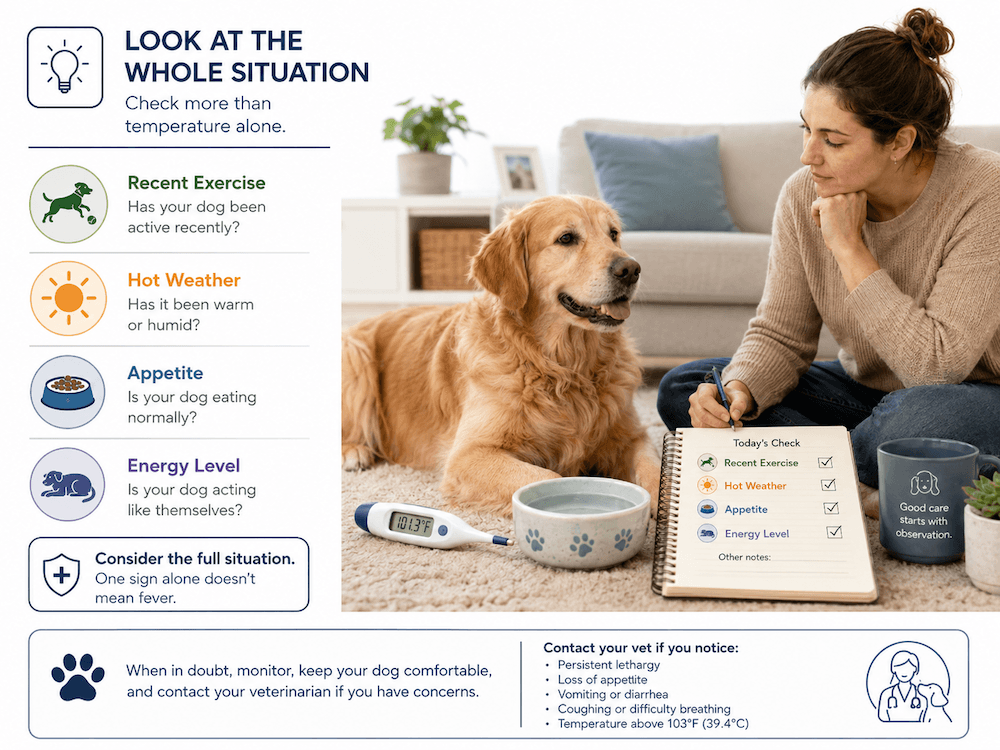
A fever is not a disease by itself. It is usually a sign that something else may be happening, such as infection, inflammation, pain, an immune reaction, or another medical problem.
Temperature can also rise for reasons that are not true fever, such as exercise, stress, hot weather, seizures, or heatstroke. That is why the context matters: a dog with a high temperature after lying in the sun is different from a dog with a high temperature, loss of appetite, and no recent heat exposure.
Supplies You Need to Check Your Dog’s Temperature
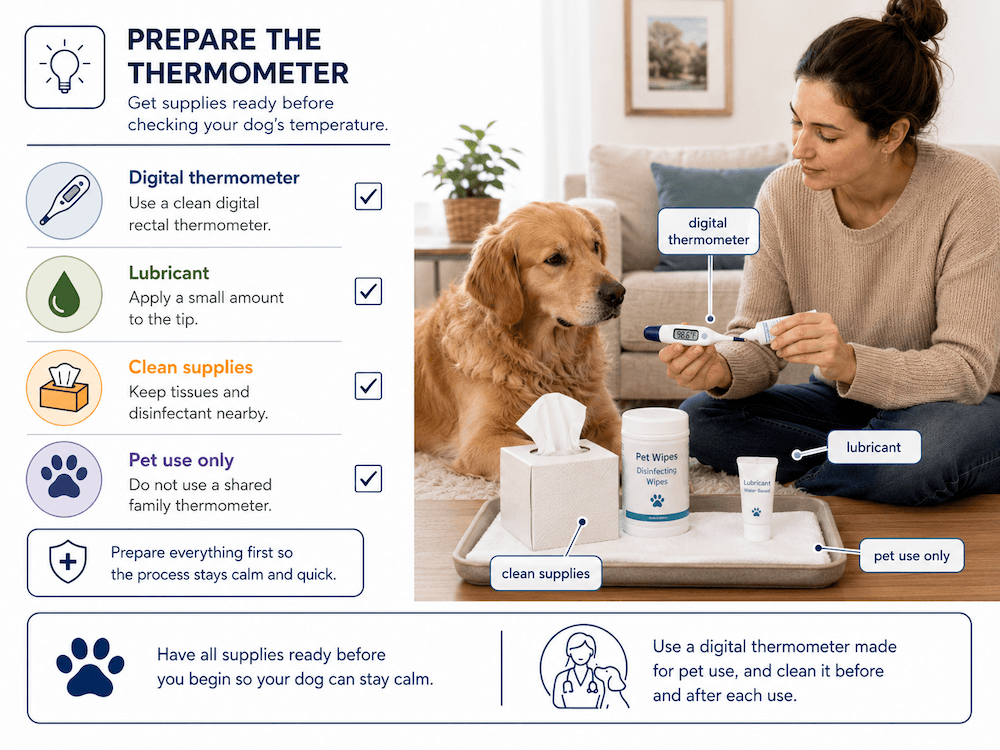
You do not need many tools, but the thermometer should be clean, quick, and easy to identify as your dog’s thermometer only. A flexible-tip digital rectal thermometer is usually the most practical home option.
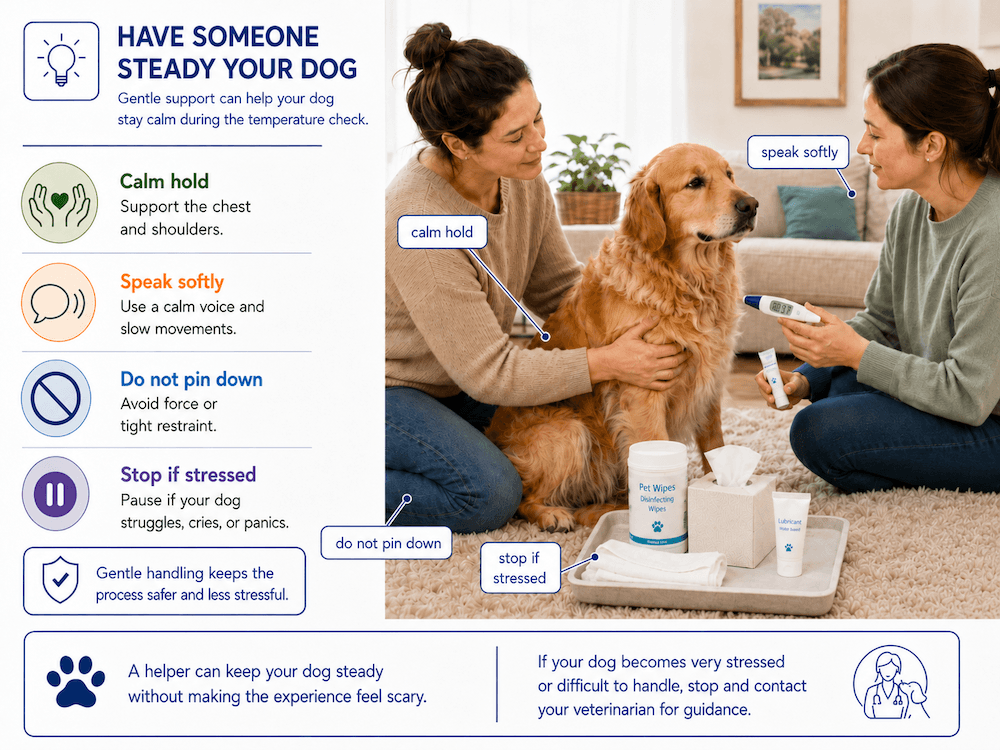
Keep the setup calm. Many dogs dislike having their temperature taken, so it helps to have another adult gently steady your dog while you work slowly.
| Supply | Why You Need It | Owner Tip |
|---|---|---|
| Digital thermometer | It gives the most useful home temperature reading. | Label it for pet use only. |
| Lubricant | It helps reduce discomfort during insertion. | Use petroleum jelly or water-based lubricant. |
| Clean tissue | It helps wipe the thermometer after use. | Clean before reading if needed. |
| Disinfectant wipe | It helps keep the thermometer sanitary. | Clean before storing it away. |
| Notebook | It helps track temperature and symptoms. | Record time, reading, and behavior. |
| Helper | A second person can steady your dog safely. | Stop if your dog panics or resists. |
How to Take Your Dog’s Temperature Safely at Home
Only check your dog’s temperature at home if your dog is calm enough to handle it safely. If your dog is painful, snapping, vomiting, struggling, or extremely weak, skip the home attempt and call a veterinarian.


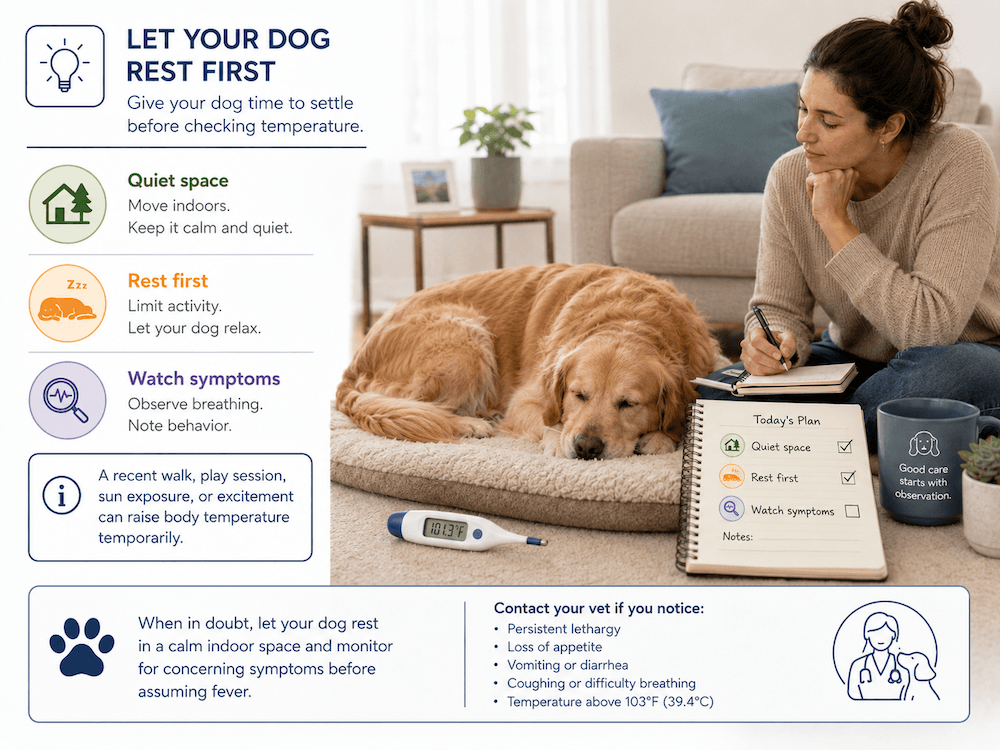
Step 1: Let Your Dog Rest First
Move your dog to a quiet indoor space. If your dog was just running, playing, sitting in the sun, or riding in a hot car, allow a short rest period unless symptoms look urgent.
Step 2: Prepare the Thermometer
Turn on the digital thermometer and apply a small amount of lubricant to the tip. Make sure it is clean and ready before positioning your dog.
Step 3: Ask Someone to Steady Your Dog
Have one person calmly hold your dog’s chest or shoulders while speaking softly. Avoid pinning your dog down or turning this into a fight.
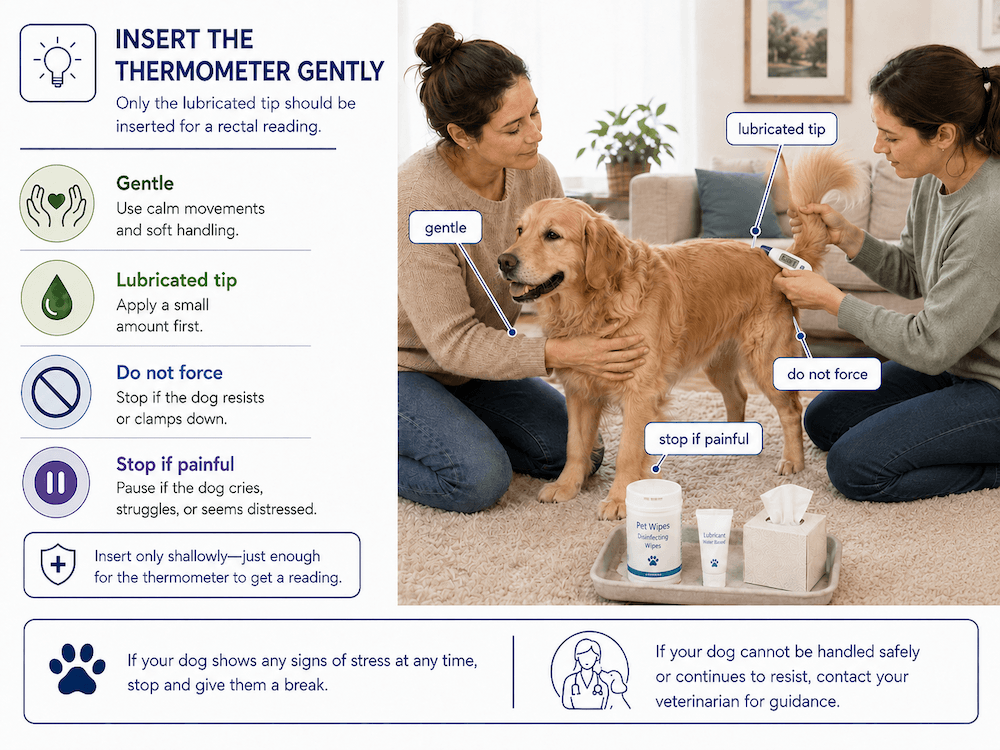
Step 4: Insert the Thermometer Gently
Lift the tail and gently insert only the tip far enough to get a rectal reading. Do not force the thermometer if your dog clamps down, sits, cries, or tries to bite.
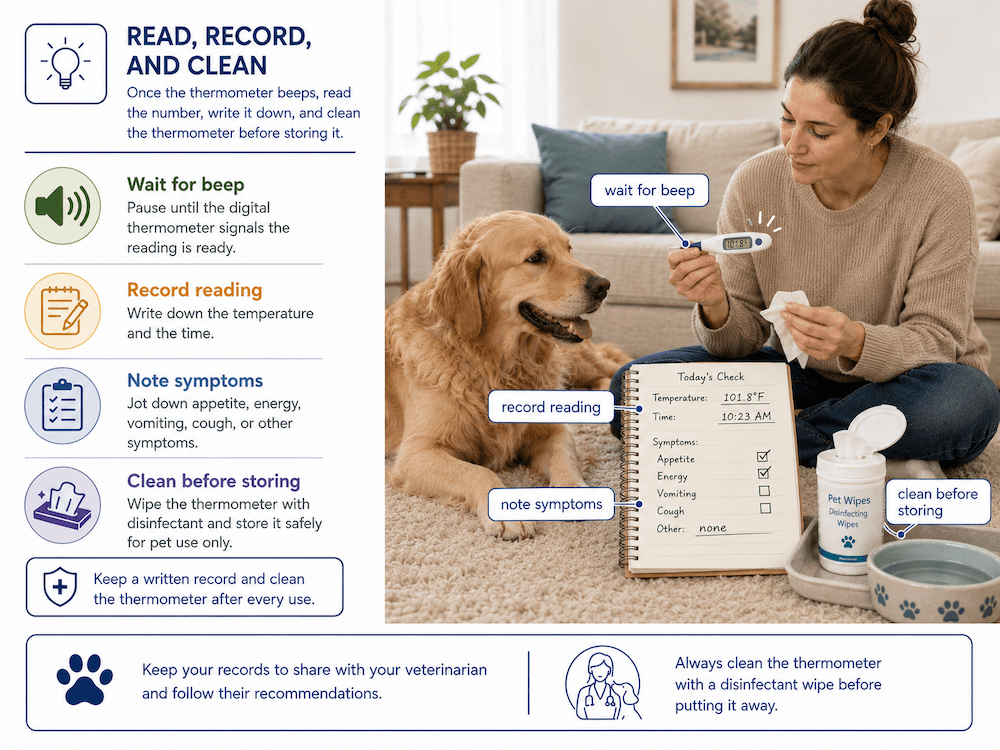
Step 5: Wait for the Beep, Remove, and Record
When the thermometer beeps, remove it slowly, read the number, and write down the time. Clean and disinfect the thermometer before storing it.
Helpful Tips for Checking and Tracking Dog Fever
A single number is useful, but it is more helpful when paired with context. Write down what your dog was doing before the reading, how they are acting, and whether symptoms are improving or worsening.
| Fever Check Tip | Why It Helps | How to Apply It |
|---|---|---|
| Use rectal readings | They are usually the most useful home measurement. | Use a labeled digital thermometer. |
| Record the time | Timing helps your veterinarian see the pattern. | Write the reading and symptoms together. |
| Check context | Exercise, stress, and heat can raise temperature. | Note recent activity before calling. |
| Watch appetite | Refusing food can signal illness or discomfort. | Track meals, treats, and water intake. |
| Look for pain | Pain may point toward the underlying cause. | Check for limping, wounds, or sensitivity. |
| Call early | Early guidance can prevent unsafe home treatment. | Share the exact temperature and signs. |
Common Causes of Fever in Dogs
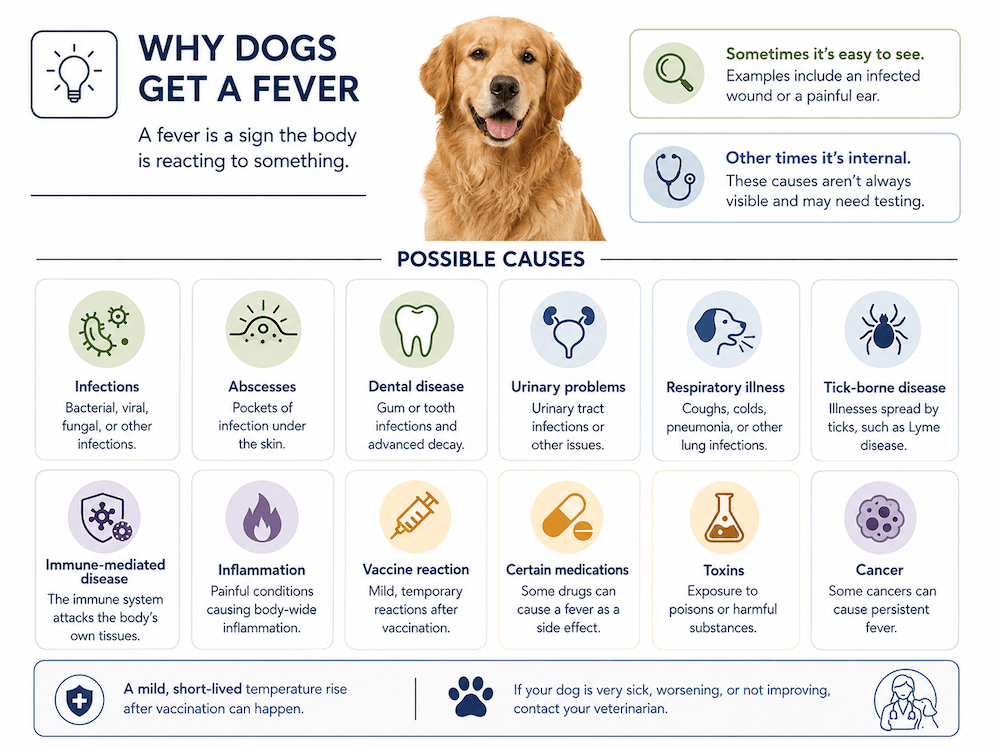
A fever means your dog’s body is reacting to something. Sometimes the cause is easy to see, such as an infected wound or painful ear. Other times, the cause is internal and needs testing.
Possible causes include infections, abscesses, dental disease, urinary problems, respiratory illness, tick-borne disease, immune-mediated disease, inflammation, vaccine reactions, certain medications, toxins, or cancer. A mild, short-lived temperature change after vaccination can happen, but a dog who is very sick, worsening, or not improving should still be checked.
What to Do If Your Dog’s Temperature Is High
If your dog’s temperature is high, your first job is to keep your dog calm and decide how urgent the situation is. Do not try to “break the fever” with human medication.
Move your dog to a cool, quiet room, offer small amounts of water, and call your veterinarian with the exact temperature, time taken, symptoms, and recent context. If heat exposure is involved, begin safe cooling while arranging urgent veterinary care.
| Situation | What It May Mean | What to Do Next |
|---|---|---|
| Warm but normal reading | Your dog may simply feel warm to you. | Monitor behavior and recheck only if needed. |
| Borderline reading | Stress, activity, or early illness may be involved. | Rest indoors and watch for symptoms. |
| 103°F or higher | This is a fever concern. | Call your veterinarian with the reading. |
| High with vomiting | Illness, toxin, or heat may be involved. | Seek veterinary care promptly. |
| High after heat | Overheating or heatstroke may be developing. | Cool safely and seek urgent help. |
| High with collapse | This is an emergency situation. | Go to an emergency clinic immediately. |
What Not to Give a Dog With a Fever
Do not give ibuprofen, acetaminophen, naproxen, aspirin, leftover antibiotics, or any human fever reducer unless your veterinarian specifically instructs you. Many human medications can harm dogs, and the wrong dose or drug can make the situation much worse.
Do not use ice baths, alcohol rubs, or extreme cooling methods. Rapid or harsh cooling can cause additional problems, especially if your dog is weak, shocked, or already dropping in temperature.
Safe support at home is limited: keep your dog calm, move them away from heat, offer water without forcing it, record the temperature, and call your veterinarian.
Mistakes That Can Make Dog Fever Harder to Assess
The biggest mistake is treating a dog’s fever like a human fever. Dogs have different normal temperatures, different medication risks, and different emergency signs.
Another common mistake is waiting too long because the dog still wags their tail. Dogs can stay affectionate even when they feel unwell, so appetite, breathing, weakness, temperature, and hydration often tell you more than mood alone.
| Mistake | Why It Can Be Risky | Better Choice |
|---|---|---|
| Touching the nose | Nose warmth does not confirm fever. | Use a thermometer instead. |
| Giving human medicine | Common pain relievers can harm dogs. | Use only veterinarian-approved medication. |
| Ignoring heat exposure | Overheating can become dangerous quickly. | Treat heat-related signs urgently. |
| Forcing the thermometer | Struggling can cause fear, pain, or injury. | Stop and call the clinic. |
| Waiting with severe signs | Collapse or breathing trouble can be life-threatening. | Seek emergency care immediately. |
| Skipping symptom notes | Missing details can delay diagnosis. | Record appetite, energy, and timing. |
When to Call a Veterinarian About Dog Fever
Call your veterinarian if your dog’s temperature is around 103°F or higher, especially if your dog also seems tired, painful, weak, or uninterested in food. Call sooner if your dog is very young, senior, pregnant, immunocompromised, or already has a medical condition.
What to Monitor After a Possible Dog Fever
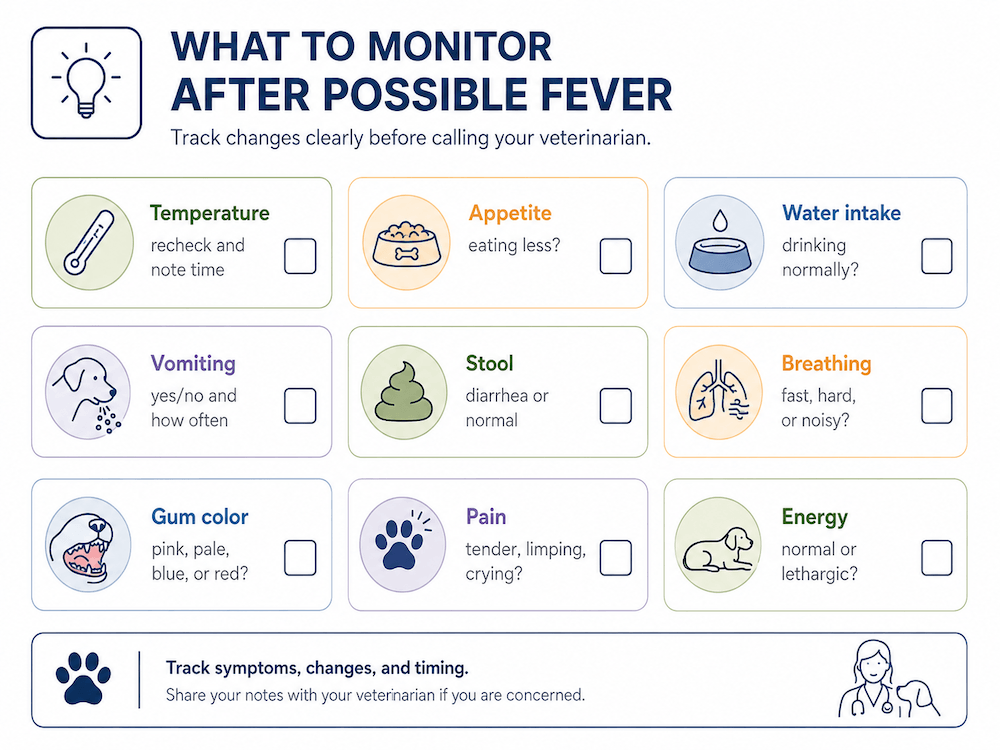
After you take your dog’s temperature, keep the next few hours calm and simple. Give your dog a quiet place to rest, offer water, avoid exercise, and do not give any medication unless your veterinarian tells you to.
Monitor temperature trends, appetite, drinking, urination, stool, vomiting, coughing, breathing, gum color, pain, and energy level. A good sign is a dog who rests comfortably, drinks normally, and returns to normal behavior; a concerning sign is a dog who worsens, refuses water, becomes weak, or develops new symptoms.
Veterinary Evidence Behind Dog Fever and Temperature Checks
The MSD/Merck Veterinary Manual lists the normal rectal temperature range for dogs as 99.5–102.5°F, which supports using a thermometer instead of judging fever by touch alone. It also explains that true fever and non-fever hyperthermia are different processes, which is why heat exposure, seizures, and exercise-related temperature spikes should be interpreted differently from illness-related fever.[1]
VCA Animal Hospitals describes common fever signs in dogs as lethargy, reluctance to move, appetite loss, increased heart and breathing rates, dehydration, shivering, and stiffness. This supports using symptoms as warning clues while still relying on a temperature reading and veterinary exam to understand the cause.[2]
Cornell’s canine health information explains that heatstroke can occur when dogs cannot regulate body temperature and highlights heavy panting, drooling, weakness, and heat exposure as important danger clues. This supports separating “possible fever” from “possible overheating,” because overheating can become an emergency quickly.[3]
Veterinary guidance on taking a pet’s temperature recommends lubricating the thermometer, inserting it gently, avoiding force, and letting trained professionals handle it if the pet resists.[3] FDA and veterinary toxicology resources also warn that human pain relievers or unapproved NSAIDs can be harmful to pets, which supports avoiding at-home human fever reducers.[4]
Frequently Asked Questions
The Bottom Line
A fever is not something you can reliably confirm by touch, so the safest first step is to check your dog’s temperature with a pet-safe digital rectal thermometer. Warm ears, shivering, glassy eyes, low energy, or loss of appetite can raise concern, but the number on the thermometer gives you the clearest answer. If your dog’s temperature is around 103°F or higher, call your veterinarian for guidance. Never give human fever reducers or leftover medication unless your vet specifically instructs you to. It is also important to consider whether your dog may be overheated, especially after exercise, hot weather, or time in a car. With calm monitoring, accurate temperature checks, and prompt veterinary care when needed, you can respond to a possible fever safely and confidently.