Progressive Retinal Atrophy (PRA) in Dogs: Symptoms, Types, Causes, Signs & Prevention

Canine Bible is reader-supported. We receive affiliate commissions via some of our links. Learn more.
Progressive Retinal Atrophy (PRA) is one of the most common inherited eye conditions in dogs, affecting up to 1 in 5 adults in certain high-risk breeds. Many owners mistake its early warning signs—such as night blindness, hesitation in dark areas, clumsiness, and bumping into objects—for normal aging. Left unmanaged, PRA causes the gradual degeneration of the retina, eventually leading to complete blindness. Although there is currently no cure, dogs with PRA can still live happy, active, and fulfilling lives with proper support and environmental adjustments. Advances in veterinary ophthalmology, genetic screening, and early diagnosis now make it easier to identify affected dogs and slow related complications. This guide covers everything you need to know about PRA in dogs—from causes and symptoms to diagnosis, management, prevention, and long-term quality-of-life care.
What Is Progressive Retinal Atrophy (PRA) in Dogs?
Progressive Retinal Atrophy (PRA), in simple terms, is a group of inherited eye diseases that cause the gradual degeneration of the retina, the light-sensitive tissue at the back of the eye. In dogs, it most often affects the rods and cones responsible for vision in low light and daylight. As these retinal cells slowly deteriorate over time, dogs typically develop night blindness first, followed by worsening daytime vision and, eventually, complete blindness.
Types
Progressive Retinal Atrophy (PRA) can take several forms, each with different genetic causes and rates of progression:
| Type | Description |
|---|---|
| Generalized PRA | The most common form, affecting both rod and cone cells throughout the retina and causing progressive vision loss. |
| Rod-Cone Dysplasia (rcd-PRA) | An inherited form where rod cells develop abnormally first, leading to early-onset night blindness followed by daytime vision loss. |
| Cone-Rod Dystrophy (CRD) | A type where cone cells are affected before rod cells, often causing reduced daylight vision and light sensitivity early in the disease. |
| Progressive Rod-Cone Degeneration (PRCD) | A late-onset inherited PRA commonly seen in breeds such as Labrador Retrievers, Poodles, and Cocker Spaniels. |
| Early-Onset PRA | Appears in puppies or young dogs due to abnormal retinal development and progresses rapidly. |
| Late-Onset PRA | Develops in adult or senior dogs as retinal cells gradually degenerate over time. |
Predisposed Dog Breeds
Progressive Retinal Atrophy (PRA) is commonly perceived as an inherited eye disease. However, some dogs may be more prone to developing PRA due to genetic predisposition, breed, or inherited retinal mutations.


| Size / Group | Breeds | Notes on Risk Factors |
|---|---|---|
| Sporting Breeds | Labrador Retriever, Golden Retriever, English Cocker Spaniel, Irish Setter | Inherited retinal mutations are common in several sporting breeds, increasing the risk of progressive vision loss. |
| Working Breeds | Siberian Husky, Samoyed, Tibetan Mastiff, Akita | Some working breeds carry breed-specific PRA gene mutations linked to retinal degeneration. |
| Herding Breeds | Border Collie, Australian Shepherd, Collie, Shetland Sheepdog | Genetic retinal disorders may appear earlier in life and gradually progress to blindness. |
| Hound Breeds | Dachshund, Basenji, Whippet | Certain hound breeds are predisposed to inherited retinal diseases affecting night and daytime vision. |
| Toy & Small Breeds | Toy Poodle, Miniature Poodle, Yorkshire Terrier, Papillon | Progressive Rod-Cone Degeneration (PRCD) is especially common in several toy and miniature breeds. |
| Mixed Breeds | Mixed-breed dogs with inherited PRA-related genes | Although more common in purebred dogs, PRA can also occur in mixed breeds carrying recessive genetic mutations. |
Causes
Progressive Retinal Atrophy (PRA) in dogs is most often caused by inherited genetic mutations that gradually damage the retina’s light-sensitive cells. These mutations affect the rods and cones responsible for night and daytime vision, leading to slow, progressive vision loss. Certain breeds are more prone to PRA because they carry breed-specific retinal genes, and symptoms may appear at different ages depending on the type. While lifestyle, diet, or injury do not directly cause PRA, genetic testing and responsible breeding are key to reducing risk.
Symptoms
Progressive Retinal Atrophy (PRA) in dogs is a common, progressive eye condition that affects the retina and can significantly impact vision and navigation. Early signs are often subtle—like night blindness or hesitation in dim lighting—but can worsen over time as retinal degeneration progresses.
This visual guide highlights the most common symptoms and how PRA affects different aspects of a dog’s daily life, helping you recognize changes early and take steps to support your dog’s safety, confidence, and quality of life.


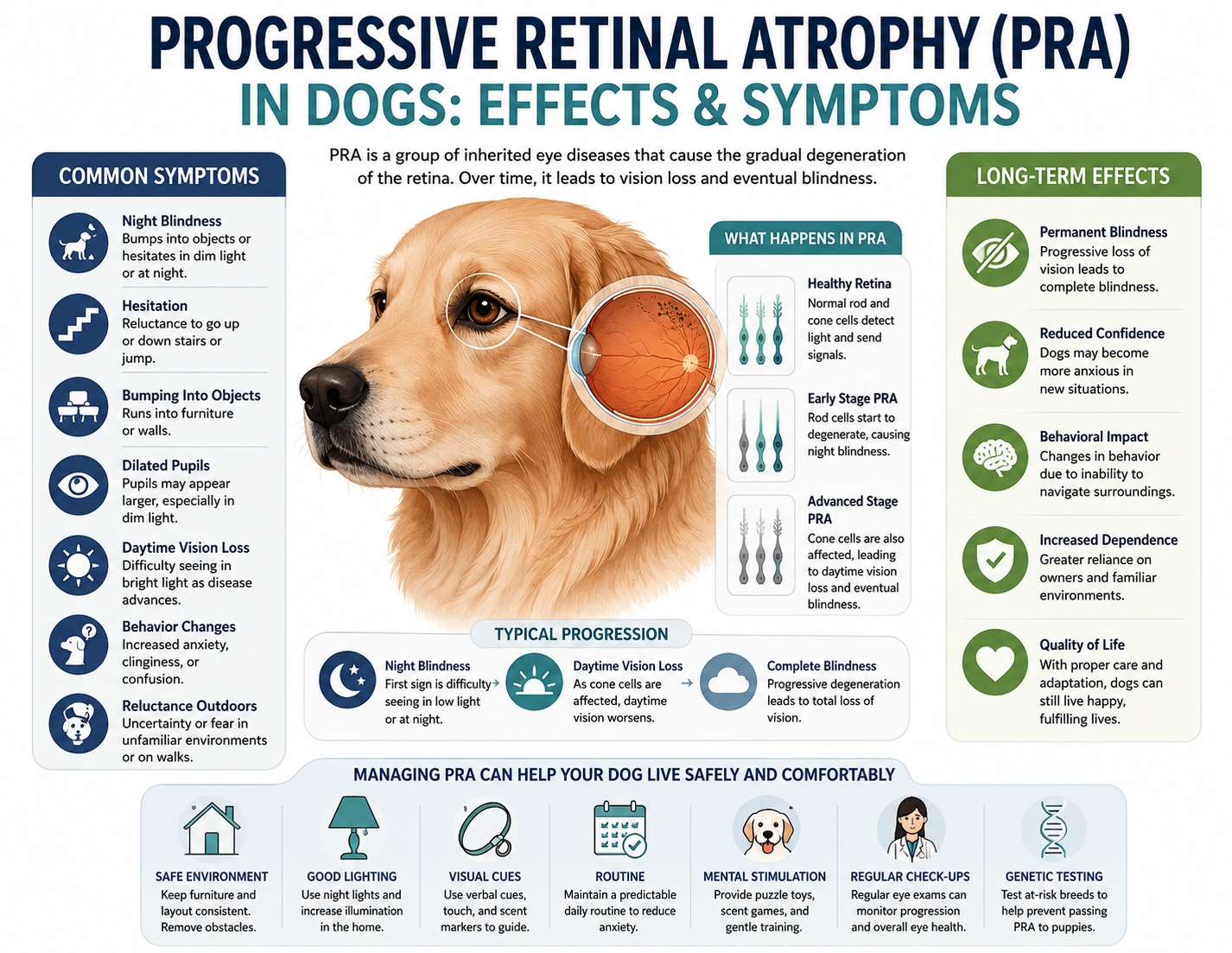
Stages of Progressive Retinal Atrophy (PRA)
- Early stage: Night blindness, hesitation in dim lighting, subtle vision changes.
- Moderate stage: Bumping into objects, dilated pupils, noticeable daytime vision loss.
- Advanced stage: Severe vision impairment, complete blindness, reduced confidence, and navigation ability.
Top Ways to Prevent Progressive Retinal Atrophy (PRA) in Dogs
Because PRA is an inherited and irreversible condition, early detection and responsible breeding are crucial. With timely monitoring, genetic screening, and supportive care, the progression of vision loss can be managed, and your dog’s safety and quality of life can be preserved for years.
| Prevention Strategy | Why It Helps | How to Do It |
|---|---|---|
| Genetic Testing Before Breeding | Helps identify dogs carrying PRA-related gene mutations. | Use certified DNA screening programs before breeding at-risk dogs. |
| Responsible Breeding Practices | Reduces the spread of inherited retinal diseases in future generations. | Avoid breeding affected dogs or known genetic carriers whenever possible. |
| Routine Veterinary Eye Exams | Early detection allows better monitoring and supportive management. | Schedule regular veterinary ophthalmology checkups, especially for predisposed breeds. |
| Monitor Vision Changes Early | Recognizing subtle symptoms can improve safety and quality of life. | Watch for night blindness, hesitation in dim light, or bumping into objects. |
| Maintain a Safe Home Environment | Helps prevent injuries as vision gradually declines. | Keep furniture consistent, block hazards, and use non-slip flooring. |
| Support Overall Eye Health | Good general health may help maintain eye function longer. | Provide balanced nutrition, antioxidants, and regular wellness care. |
| Educate Owners of At-Risk Breeds | Awareness encourages earlier diagnosis and long-term planning. | Discuss PRA risks with breeders and veterinarians before adopting predisposed breeds. |
Actionable Resources
If you want to prevent or reduce the progression of Progressive Retinal Atrophy (PRA) in your dog, here are some things you can do under veterinary guidance.
How Progressive Retinal Atrophy (PRA) Is Diagnosed in Dogs
Diagnosing Progressive Retinal Atrophy (PRA) requires a full veterinary eye assessment to rule out other causes of vision loss or blindness. Key steps include:
- Physical Examination: A veterinarian evaluates vision changes, pupil response, navigation ability, and overall eye health.
- Imaging: Specialized retinal examinations and ocular imaging help identify retinal degeneration and related abnormalities.
- Laboratory Tests: Genetic testing and blood work may be performed to identify inherited PRA mutations or rule out other eye diseases.
- Vision & Retinal Function Testing: Veterinary ophthalmologists may use electroretinography (ERG) and other vision assessments to measure retinal function and disease progression.
Early diagnosis is crucial because PRA is a progressive condition—catching it sooner allows for better long-term management, environmental adjustments, and quality-of-life support.
Treatment & Care
According to the latest research, the most effective management strategies for Progressive Retinal Atrophy (PRA) in dogs are supportive and lifestyle-based, focusing on environmental safety, routine consistency, and long-term vision support, alongside regular veterinary ophthalmology monitoring and genetic screening for at-risk breeds.
Remember to ALWAYS consult with your vet before starting any new supplement or care plan for PRA. If you can’t reach your vet, you can chat live with a registered online veterinary professional via our online vet chat or video chat support (24 hours a day, 7 days a week). Or use Chewy’s online vet services (6 a.m. – midnight ET).
Conventional Medical Treatments
| Treatments | Benefits / Role |
|---|---|
| Routine Veterinary Ophthalmology Care | Regular eye exams help monitor retinal degeneration and detect secondary complications early. |
| Genetic Testing | Identifies inherited PRA mutations and helps guide breeding and long-term care decisions. |
| Environmental Management | Maintaining consistent furniture placement and safe spaces helps visually impaired dogs navigate confidently. |
| Vision Support Supplements | Antioxidants, omega-3 fatty acids, and eye-support nutrients may help support overall ocular health. |
| Behavioral & Lifestyle Support | Structured routines, verbal cues, and enrichment activities improve confidence and quality of life. |
Supplement Support
| Supplement / Nutrient | Benefits / Role |
|---|---|
| Omega-3 Fatty Acids (Fish Oil) | May help support retinal cell health and reduce oxidative stress in the eyes. |
| Lutein & Zeaxanthin | Antioxidants that help protect retinal tissues from free radical damage. |
| Taurine | Supports normal retinal and overall eye function in dogs. |
| Vitamin A | Essential for maintaining healthy vision and supporting retinal function. |
| Vitamin C | Provides antioxidant support that may help protect eye tissues from cellular damage. |
| Vitamin E | Helps reduce oxidative stress and supports healthy retinal cells. |
| Zinc | Supports normal eye metabolism and immune function related to ocular health. |
| Astaxanthin | A powerful antioxidant that may help support long-term retinal health. |
| Coenzyme Q10 (CoQ10) | Supports cellular energy production and may help protect retinal tissues. |
Find the best over-the-counter treatments and supplements for Progressive Retinal Atrophy (PRA) in dogs on Amazon and Chewy.

Alternative & Integrative Therapies
| Therapy | Benefits / Role |
|---|---|
| Vision Support Supplements | Provide antioxidants and nutrients that may help support retinal and overall eye health. |
| Environmental Enrichment | Helps visually impaired dogs stay mentally stimulated, confident, and engaged. |
| Mobility & Navigation Training | Uses verbal cues, scent markers, and routines to improve safe movement around the home. |
| Light Therapy & Visual Aids | Improved lighting and contrast can help dogs with partial vision loss navigate more easily. |
| Behavioral Therapy | Reduces anxiety and stress associated with gradual vision loss and environmental changes. |
| Safe Home Modifications | Non-slip flooring, blocked hazards, and consistent layouts improve safety and independence. |
| Routine Veterinary Ophthalmology Monitoring | Supports long-term eye health management and helps detect secondary eye complications early. |
Surgical Options
| Surgical Option | Benefits / Role |
|---|---|
| Gene Therapy | Experimental treatment aimed at correcting inherited retinal mutations and slowing vision loss progression. |
| Retinal Implant Research | Emerging technologies being studied to help restore partial visual function in severe retinal degeneration cases. |
| Cataract Surgery | May improve vision in dogs that develop secondary cataracts alongside PRA, although retinal damage remains. |
| Specialized Veterinary Ophthalmology Procedures | Advanced diagnostics and supportive interventions help monitor disease progression and manage secondary eye complications. |
Emotional & Lifestyle Impact
Progressive Retinal Atrophy (PRA) affects more than just a dog’s vision—it can reshape both their daily life and emotional well-being. Dogs living with gradual vision loss may become less confident, more anxious, or easily startled in unfamiliar environments, as blindness often prevents them from navigating spaces or enjoying activities the way they once did.
For owners, the experience can be equally emotional, bringing the challenge of watching a beloved companion slowly lose their sight, along with the long-term commitment of supportive care. Daily routines may need to shift toward consistent layouts, verbal cues, supervised walks, and safer home environments, while household spaces often require adjustments such as non-slip flooring, blocked hazards, and improved lighting. With patience, reassurance, and consistency, pet parents can create a supportive lifestyle that not only improves safety and confidence but also preserves comfort, trust, and quality of life for their dogs.
Typical Annual Cost of Managing Progressive Retinal Atrophy (PRA) in Dogs
| Category | Estimated Annual Cost Range | Notes |
|---|---|---|
| Routine Vet Visits & Eye Exams | $300 – $1,200 | Includes ophthalmology consultations, retinal evaluations, and follow-up monitoring. |
| Genetic Testing | $70 – $250 | DNA screening for PRA-related mutations, especially in predisposed breeds. |
| Supplements & Nutritional Support | $200 – $1,000 | Includes antioxidants, omega-3 fatty acids, lutein, taurine, and eye-support diets. |
| Home & Environmental Modifications | $100 – $1,500 | Non-slip rugs, safety gates, improved lighting, scent markers, and navigation aids. |
| Behavioral & Vision Support Training | $200 – $1,200 | Training sessions and enrichment activities to improve confidence and adaptation. |
| Advanced Veterinary Ophthalmology Care | $500 – $3,000+ | Specialized diagnostics, ERG testing, cataract management, and advanced monitoring. |
| Insurance & Wellness Plans | $360 – $1,200 | May help offset costs related to diagnostics, eye exams, and long-term management. |
| Typical Annual Range | Standard Management: $800 – $4,000 | Advanced Care: $4,000 – $8,000+ | |
Progressive Retinal Atrophy (PRA) care can add up over time — from routine ophthalmology exams to specialized diagnostics and long-term supportive care. Pet insurance and pet wellness plans can help reduce the financial burden and ensure your dog receives the best possible care without compromise. If you want to compare plans and find out which providers offer the best coverage for PRA and hereditary eye conditions, check out our full guide to the Best Pet Insurance for Dogs and Best Pet Wellness Plans.
Other Health Issues Related to Progressive Retinal Atrophy (PRA) in Dogs
As vision loss progresses and daily navigation becomes more difficult, dogs may develop additional physical and behavioral challenges, and some PRA symptoms may also overlap with these related conditions.
- Night Blindness
- Anxiety & Stress
- Reduced Confidence
- Behavioral Changes (Fearfulness, Irritability)
- Cognitive Dysfunction in Senior Dogs
- Cataracts
- Dilated Pupils
- Increased Risk of Injuries
- Difficulty Navigating Stairs
- Reduced Mobility in Unfamiliar Environments
- Depression / Reduced Engagement
- Sleep Disturbances
- Separation Anxiety
- Hearing Loss in Senior Dogs
- Weight Gain / Obesity
Frequently Asked Questions
The Bottom Line
Progressive Retinal Atrophy (PRA) is one of the most serious inherited eye diseases in dogs, but it does not have to define a dog’s quality of life. Although there is currently no cure, early detection, regular veterinary eye care, and supportive lifestyle adjustments can help dogs adapt successfully to vision loss. By maintaining a safe and consistent environment, supporting overall eye health, and using routines that build confidence, pet parents can help their dogs continue to live happy, active, and emotionally fulfilling lives. With patience, reassurance, and proper long-term care, many dogs with PRA adjust remarkably well and continue to thrive despite blindness.