Hip Dysplasia in Dogs: Symptoms, Types, Causes, Signs & Prevention

Canine Bible is reader-supported. We receive affiliate commissions via some of our links. Learn more.
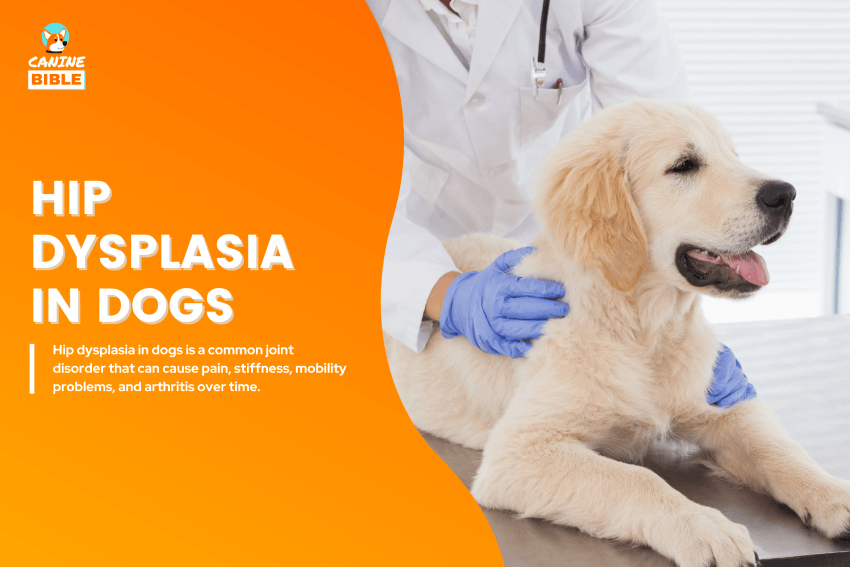
Hip dysplasia is one of the most common orthopedic conditions in dogs, particularly in large and giant breeds, affecting an estimated 3%–5% of all dogs overall, with rates reaching 15%–25% or higher in high-risk breeds such as German Shepherds, Labrador Retrievers, Golden Retrievers, and Rottweilers. Many owners mistake the early signs—difficulty rising, reluctance to climb stairs, bunny hopping, stiffness, and reduced activity—for normal aging, when they may actually signal joint instability and developing arthritis. Left untreated, hip dysplasia can lead to chronic pain, reduced mobility, and progressive osteoarthritis. With early diagnosis, weight management, controlled exercise, physical therapy, supplements, and veterinary care, many dogs can continue to live active, comfortable, and healthy lives. Early intervention can greatly improve a dog’s long-term quality of life.
What Is Hip Dysplasia in Dogs?
Hip dysplasia is a condition where a dog’s hip joint develops abnormally, causing the ball and socket to fit poorly together. This leads to joint looseness, pain, stiffness, and reduced mobility. Over time, the cartilage cushioning the joint wears down, causing inflammation and arthritis that can make walking, running, climbing stairs, and standing up difficult for affected dogs.
Types
Hip dysplasia can take several forms, each varying in severity, age of onset, and level of joint damage:
| Type | Description |
|---|---|
| Mild Hip Dysplasia | Slight looseness in the hip joint with minimal discomfort or mobility issues. |
| Moderate Hip Dysplasia | Noticeable joint instability causing pain, stiffness, reduced activity, and early arthritis. |
| Severe Hip Dysplasia | Major joint deformity leading to chronic pain, lameness, muscle loss, and advanced osteoarthritis. |
| Juvenile Hip Dysplasia | Occurs in puppies and young dogs due to abnormal hip joint development during growth. |
| Adult-Onset Hip Dysplasia | Symptoms appear later in life as years of joint wear and arthritis progress. |
| Bilateral Hip Dysplasia | Affects both hip joints, often causing greater mobility problems and discomfort. |
Predisposed Dog Breeds
Hip dysplasia is most commonly seen in large and giant dog breeds. However, some dogs are more genetically predisposed to developing the condition due to factors such as breed, rapid growth, body weight, and joint structure.


| Size / Group | Breeds | Notes on Risk Factors |
|---|---|---|
| Giant Breeds | Saint Bernard, Newfoundland, Great Dane, Mastiff | Rapid growth, heavy body weight, and increased joint stress raise the risk of severe hip dysplasia. |
| Large Breeds | German Shepherd, Labrador Retriever, Golden Retriever, Rottweiler, Bernese Mountain Dog | Genetic predisposition and high body mass make hip dysplasia especially common in these breeds. |
| Medium Breeds | Bulldog, Boxer, American Bulldog, Chow Chow | Body structure and abnormal joint alignment may contribute to hip joint instability. |
| Working & Sporting Breeds | Alaskan Malamute, Siberian Husky, Belgian Malinois, Weimaraner | High activity levels and repetitive joint stress can worsen underlying hip abnormalities. |
| Obesity-Prone Breeds | Labrador Retriever, Beagle, Cocker Spaniel | Excess weight increases pressure on the hip joints and may accelerate joint degeneration. |
| Mixed Breeds | Large mixed-breed dogs | Genetics, rapid growth, and poor weight management can still contribute to hip dysplasia risk. |
Causes
Symptoms
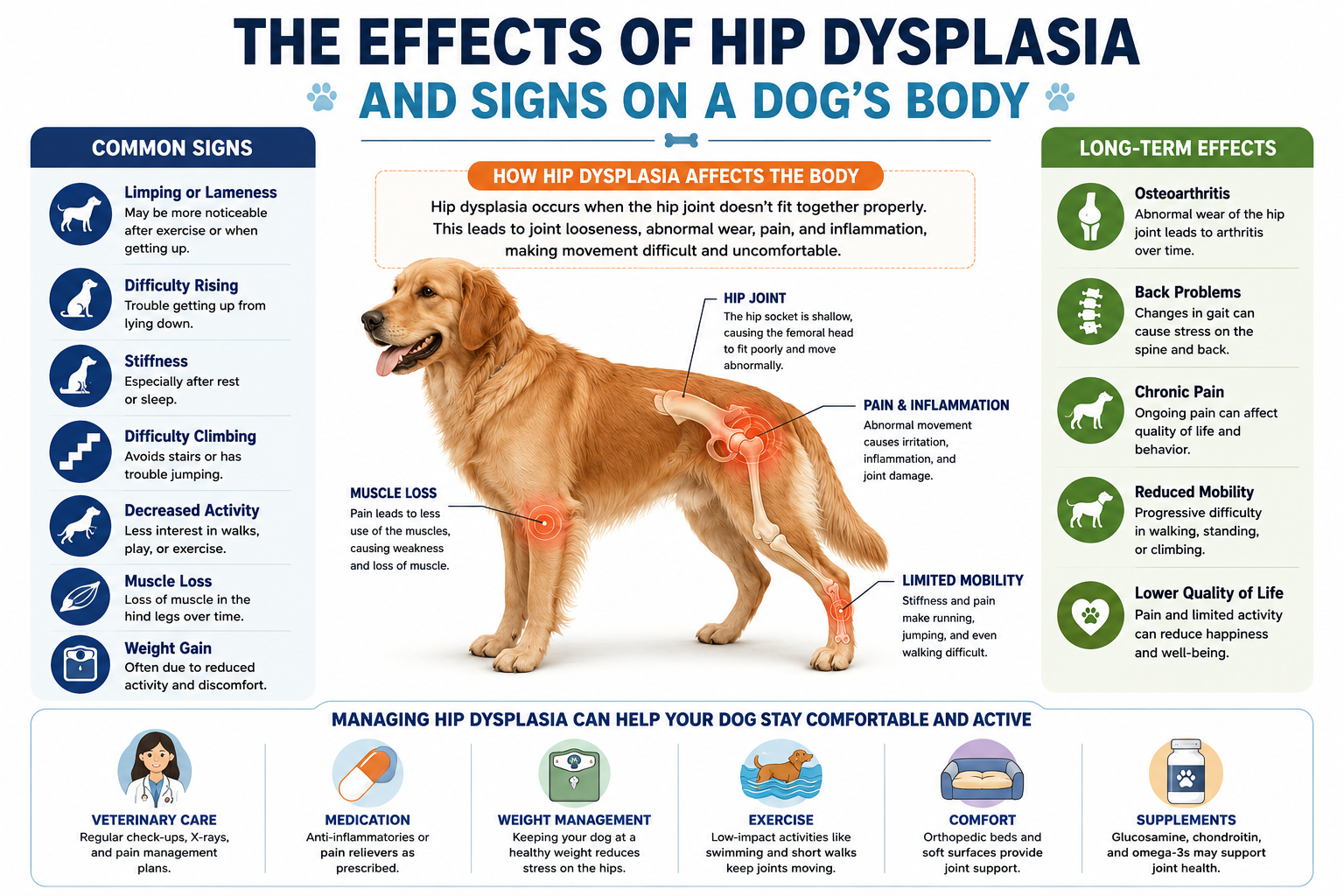
Hip dysplasia in dogs is a common developmental condition that affects the hip joints and can significantly impact mobility and comfort. Early signs are often subtle—such as stiffness, difficulty standing, bunny hopping, or a slight limp—but can worsen over time as joint damage and arthritis progress.
This visual guide highlights the most common symptoms of hip dysplasia and how it affects different parts of a dog’s body, helping you recognize changes early and take steps to support your dog’s mobility and quality of life.
Stages of Hip Dysplasia
- Early stage (Mild Hip Dysplasia): Slight joint looseness, stiffness, or occasional bunny hopping after activity.
- Moderate stage (Moderate Hip Dysplasia): Noticeable pain, limping, difficulty rising, and reduced activity levels.
- Advanced stage (Severe Hip Dysplasia): Chronic pain, major mobility loss, muscle wasting, and advanced osteoarthritis.
Top Ways to Prevent Hip Dysplasia in Dogs
Because hip dysplasia is a progressive joint condition, early prevention and proactive care are essential. With proper weight management, controlled exercise, responsible breeding practices, and early veterinary monitoring, the risk of hip dysplasia progression and long-term joint damage can be reduced, helping preserve your dog’s mobility and quality of life.


| Prevention Strategy | Why It Helps | How to Do It |
|---|---|---|
| Maintain a Healthy Weight | Excess weight increases stress on developing hip joints and accelerates joint damage. | Feed balanced portions, avoid overfeeding, and monitor body condition regularly. |
| Choose Responsible Breeders | Hip dysplasia has a strong genetic component. | Select breeders who perform OFA or PennHIP screening on parent dogs. |
| Controlled Exercise During Growth | Protects growing joints from excessive strain and abnormal development. | Use moderate walks and play; avoid repetitive jumping or intense running in puppies. |
| Balanced Puppy Nutrition | Proper nutrition supports healthy bone and joint development. | Feed large-breed puppy formulas with controlled calcium and calorie levels. |
| Low-Impact Exercise | Strengthens muscles that support the hips without excessive joint stress. | Encourage swimming, leash walks, and controlled activity on soft surfaces. |
| Joint Supplements | May help support cartilage health and reduce inflammation. | Use glucosamine, chondroitin, and omega-3 supplements as recommended by a veterinarian. |
| Regular Veterinary Checkups | Early detection allows earlier management and reduced progression. | Schedule routine exams and consider hip screening for at-risk breeds. |
| Provide Safe Flooring & Support | Reduces slips, falls, and unnecessary strain on the hips. | Use rugs, orthopedic beds, ramps, and non-slip surfaces at home. |
Actionable Resources
If you want to help prevent or slow the progression of hip dysplasia in your dog, here are some helpful resources and strategies you can explore under veterinary guidance.
How Hip Dysplasia Is Diagnosed in Dogs
Diagnosing hip dysplasia requires a thorough veterinary evaluation to assess hip joint stability, pain, and mobility issues. Key steps include:
- Physical Examination: A vet checks range of motion, joint swelling, pain response, and gait changes.
- Imaging:
- Mobility & Gait Assessment: Veterinarians evaluate limping, bunny hopping, difficulty rising, and reduced activity levels.
- Pain Evaluation: Dogs may be assessed for discomfort, stiffness, and reduced quality of movement during daily activities.
Early diagnosis is important because hip dysplasia is a progressive condition—earlier detection allows for earlier treatment, lifestyle adjustments, and better long-term mobility management.
Treatment & Care
According to the latest research, the most effective treatments for hip dysplasia in dogs are multimodal, combining weight control, low-impact exercise, physical therapy, NSAIDs, joint supplements, and sometimes surgery to reduce pain, improve mobility, and slow joint degeneration.
Always consult your veterinarian before starting any new treatment or supplement for hip dysplasia. You can get personalized joint-care advice from an online registered vet anytime, anywhere through Dutch. You can also chat with an online vet to ask questions about managing your dog’s hip dysplasia symptoms, treatment options, and lifestyle adjustments tailored to their condition.
Conventional Medical Treatments
| Treatments | Benefits / Role |
|---|---|
| NSAIDs (Non-Steroidal Anti-Inflammatory Drugs) | Carprofen, meloxicam, and deracoxib help reduce hip pain and inflammation (vet-prescribed only). |
| Pain Medications | Gabapentin, tramadol, and amantadine may help manage chronic discomfort and mobility issues. |
| Physical Therapy & Rehabilitation | Hydrotherapy, stretching, and controlled exercise improve strength, flexibility, and joint support. |
| Joint Supplements | Glucosamine, chondroitin, and omega-3 fatty acids may support cartilage health and reduce inflammation. |
| Weight Management | Maintaining a healthy body weight reduces pressure on the hip joints and improves mobility. |
| Surgical Treatments | Procedures such as FHO or total hip replacement may improve quality of life in severe cases. |
Supplement Support
| Supplement / Nutrient | Benefits / Role |
|---|---|
| Glucosamine & Chondroitin | Help support cartilage health and maintain smoother hip joint movement over time. |
| Omega-3 Fatty Acids (Fish Oil) | May help reduce inflammation and improve comfort, mobility, and stiffness in dogs with hip dysplasia. |
| Green-Lipped Mussel (GLM) | Provides omega-3s and joint-support compounds that may help ease hip discomfort. |
| MSM (Methylsulfonylmethane) | Supports connective tissues and may help with inflammation-related hip pain. |
| Collagen | Helps support cartilage, tendons, ligaments, and connective tissues surrounding the hips. |
| Turmeric / Curcumin | May provide natural anti-inflammatory support for dogs with hip stiffness and pain. |
| Vitamin C | Provides antioxidant support and assists collagen production for joint tissues. |
| Vitamin E | Helps protect hip joint tissues from oxidative stress and cellular damage. |
| Manganese | Supports normal cartilage formation and overall bone and joint health. |
Find the best supplements, joint-support products, and mobility aids for hip dysplasia in dogs on Amazon and Chewy.

Alternative & Integrative Therapies
| Therapy | Benefits / Role |
|---|---|
| Acupuncture | May help reduce hip pain, improve circulation, and support mobility. |
| Laser Therapy (Cold Laser) | Helps reduce inflammation and may promote tissue healing around the hip joints. |
| Hydrotherapy | Low-impact water exercise strengthens muscles while reducing stress on painful hips. |
| Physical Therapy & Rehabilitation | Custom exercise programs improve strength, flexibility, balance, and hip stability. |
| Massage Therapy | Helps relieve muscle tension, improve blood flow, and reduce discomfort associated with hip dysplasia. |
| Chiropractic Adjustments | May help improve body alignment and mobility when performed by certified veterinary professionals. |
| Stem Cell Therapy & PRP | Regenerative treatments that may support tissue repair and reduce inflammation in damaged hip joints. |
Surgical Options
| Surgical Option | Benefits / Role |
|---|---|
| Juvenile Pubic Symphysiodesis (JPS) | Performed in young puppies to improve hip joint development and reduce future dysplasia severity. |
| Triple Pelvic Osteotomy (TPO) | Repositions the hip socket in young dogs to improve stability and reduce joint wear. |
| Femoral Head Ostectomy (FHO) | Removes the damaged ball portion of the hip joint to reduce pain and improve comfort. |
| Total Hip Replacement (THR) | Replaces the damaged hip joint with an artificial implant, restoring mobility and reducing chronic pain. |
| Corrective Orthopedic Procedures | Used to improve hip alignment, joint function, and long-term mobility in selected cases. |
Emotional & Lifestyle Impact
Hip dysplasia affects more than just a dog’s hips—it can significantly impact both daily life and emotional well-being. Dogs living with chronic hip pain may become less active, less playful, hesitant to climb stairs or jump, and sometimes withdrawn or irritable due to ongoing discomfort and reduced mobility.
For owners, caring for a dog with hip dysplasia can also be emotionally and physically demanding, especially as mobility challenges progress over time. Daily routines may need to shift toward shorter walks, low-impact exercise, weight management, and supportive home adjustments such as ramps, orthopedic beds, and non-slip flooring. With patience, proper care, and lifestyle modifications, many dogs with hip dysplasia can continue to enjoy a comfortable, active, and fulfilling life.
Typical Annual Cost of Treating Hip Dysplasia in Dogs
| Category | Estimated Annual Cost Range | Notes |
|---|---|---|
| Routine Vet Visits & Imaging | $300 – $800 | Exams, bloodwork, and occasional X-rays for monitoring. |
| Medications (NSAIDs, pain meds) | $400 – $1,200 | Depends on dog size, dosage, and frequency of use. |
| Supplements & Nutritional Support | $240 – $1,200 | Glucosamine, fish oil, green-lipped mussel, turmeric; varies by quality and brand. |
| Physical / Alternative Therapies | $500 – $2,000 | Hydrotherapy, laser therapy, acupuncture; often weekly or biweekly sessions. |
| Surgery (if needed) | $1,500 – $7,000+ | Hip replacement, arthroscopy, arthrodesis; usually a one-time cost. |
| Insurance & Wellness Plans | $360 – $960 | Helps offset costs for meds, imaging, and surgery. |
| Typical Annual Range | Non-Surgical Cases: $1,000 – $3,500 | With Surgery: $3,000 – $10,000+ | |
Hip dysplasia care can become costly over time — from routine medications and physical therapy to advanced imaging and possible surgery. Pet insurance and wellness plans may help reduce the financial burden and ensure your dog receives proper treatment and long-term support. If you want to compare coverage options for hip dysplasia and orthopedic conditions, explore our guides to the Best Pet Insurance for Dogs and Best Pet Wellness Plans.
Other Health Issues Related to Hip Dysplasia in Dogs
As hip dysplasia progresses and mobility declines, dogs may develop additional physical and behavioral complications related to chronic pain, joint instability, and reduced activity.
- Osteoarthritis
- Muscle Loss / Atrophy
- Weight Gain / Obesity
- Reduced Mobility
- Chronic Pain
- Joint Inflammation
- Ligament Injuries
- Elbow Dysplasia
- Spinal Strain / Back Pain
- Behavioral Changes (Irritability, Anxiety)
- Depression / Reduced Activity
- Difficulty Standing or Climbing Stairs
- Exercise Intolerance
- Sleep Disturbances
- Reduced Quality of Life
Frequently Asked Questions
The Bottom Line
Hip dysplasia is one of the most common orthopedic conditions affecting dogs, especially large and giant breeds, but it does not have to define a dog’s quality of life. While there is no complete cure in many cases, early diagnosis, proper veterinary care, weight management, joint support, and lifestyle adjustments can greatly improve comfort and mobility. By maintaining a healthy weight, providing low-impact exercise, adapting the home environment, and working closely with a veterinarian, many dogs with hip dysplasia can continue to live active, happy, and fulfilling lives for years.