How Long Do Dogs Live? Average Lifespan by Breed, Size, Charts & Other Factors


Canine Bible is reader-supported. We receive affiliate commissions via some of our links. Learn more.
Most dogs live about 10 to 13 years, but their lifespan can vary a lot depending on breed, size, genetics, and overall health. Smaller dogs often live longer than larger breeds, though there are important exceptions. That simple answer only tells part of the story. A dog’s lifespan can be shaped by diet, weight, exercise, preventive care, and whether certain health problems show up early. Some dogs live well past the average, while others face risks that shorten their time. Understanding what affects longevity can help you set realistic expectations and make better choices for your dog’s health. In this guide, we’ll break down how long dogs live, what influences their lifespan, and what you can do to help them live longer.
Dog Lifespan at a Glance
| Dog Type | Average Lifespan | Key Notes |
|---|---|---|
| Toy breeds | 12–16 years | Often among the longest-living dogs, especially with good preventive care. |
| Small breeds | 11–15 years | Many small dogs outlive larger breeds and tend to age more slowly. |
| Medium breeds | 10–13 years | Lifespan varies by breed, genetics, body condition, and daily care. |
| Large breeds | 8–12 years | Bigger dogs usually have shorter average lifespans than smaller dogs. |
| Giant breeds | 6–10 years | These dogs often age faster and face higher risk of joint and heart issues. |
| Mixed-breed dogs | 10–14 years | Many mixed breeds live long lives, though it still depends on size and health history. |
| Indoor family dogs | Varies by breed | Routine vet care, safer surroundings, and stable nutrition can support longevity. |
| Dogs with chronic illness | Often below average | Conditions like heart disease, cancer, or obesity can shorten lifespan if not managed well. |
Average Dog Lifespan by Size
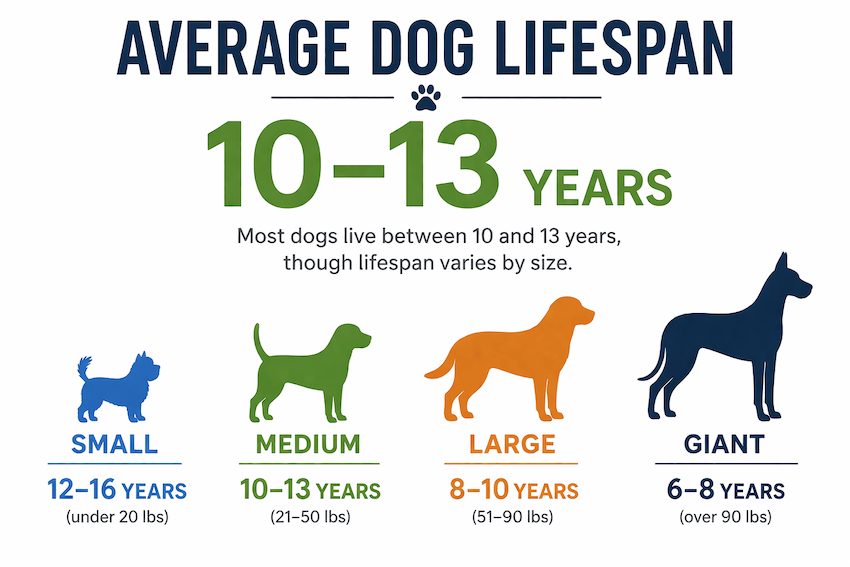
The average dog lifespan is often estimated at around 10 to 13 years, but that is only a general range, not a guarantee for every dog. A dog’s actual life expectancy can fall above or below that average depending on factors such as size, breed, genetics, body condition, and the quality of preventive care it receives throughout life.
When looking specifically at lifespan by size, the general pattern is that small breeds usually live the longest, while large breeds and especially giant breeds tend to have shorter average lifespans. Toy and small dogs often reach the early to mid-teens, medium dogs usually fall somewhere in the middle, and many large or giant dogs have shorter ranges that may be closer to the late single digits or low teens, depending on the breed.
Size matters because larger dogs typically grow faster, place more long-term stress on the body, and may age faster than smaller dogs. They are also more likely to face certain health risks, including joint, heart, and breed-related structural problems that can affect longevity. While size does not explain everything, it provides a useful starting point before looking more closely at lifespan differences by breed type or body type.
Dog Lifespan by Breed Type & Body Type
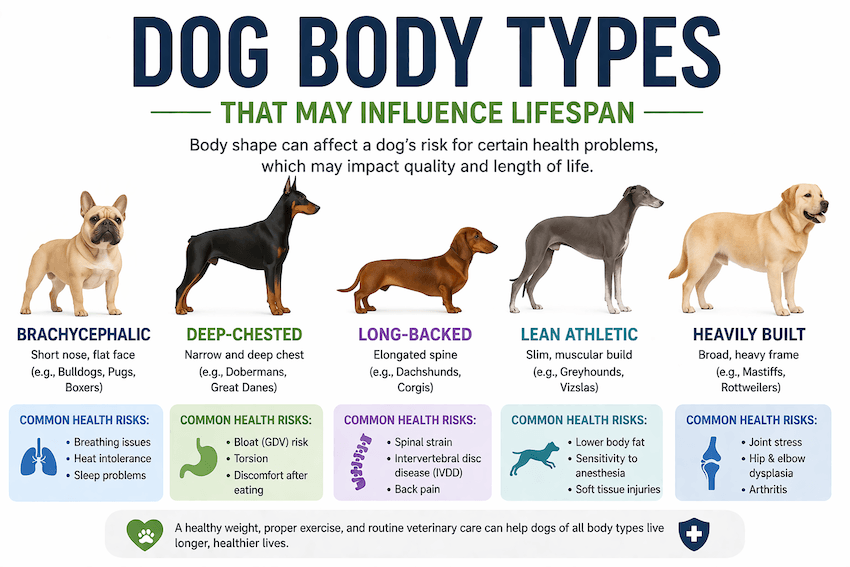
A dog’s lifespan can vary not only by breed name, but also by breed type and overall body type. Dogs with certain physical builds may face different long-term health risks that can influence longevity. For example, brachycephalic dogs may be more prone to breathing and heat-related issues, deep-chested dogs may face a higher risk of bloat, and long-backed dogs may be more vulnerable to spinal problems.


Body structure can also affect how the body handles movement, weight, and aging over time. Lean, athletic dogs may have different wellness patterns than heavily built or structurally exaggerated dogs, though these are broad trends rather than fixed rules. Looking at breed type and body type helps explain why average lifespan is not just about breed labels alone, which leads naturally into the bigger question of what affects lifespan overall.
Breeds That Tend to Live Longer
Some longer-lived breeds are often found among small breeds and toy breeds, which tend to have a higher average lifespan than many larger dogs. Commonly cited examples include the Chihuahua, Yorkshire Terrier, Maltese, Toy Poodle, and Jack Russell Terrier, all of which are often associated with lifespans that reach well into the teens. Even so, breed averages are only guidelines, not promises, because genetics, body condition, and consistent preventive care can all shift an individual dog’s outlook.
It is more accurate to think of these as longer-lived breeds on average rather than breeds guaranteed to live the longest. A well-cared-for dog from a shorter-lived breed may outlive a poorly managed dog from a long-lived one, which is why lifespan should always be viewed alongside health history and day-to-day care.
| Breed | Typical Lifespan | Key Note |
|---|---|---|
| Chihuahua | 14–16 years | Often cited among the longest-lived toy breeds. |
| Yorkshire Terrier | 11–15 years | Small size is often linked with longer lifespan. |
| Maltese | 12–15 years | Frequently listed among longer-lived companion breeds. |
| Toy Poodle | 12–15 years | Often benefits from small size and active build. |
| Jack Russell Terrier | 12–16 years | Commonly noted for strong average longevity. |
Breeds With Shorter Life Expectancies
Some breeds are more often linked with shorter life expectancy, especially certain large breeds, giant breeds, and dogs with more vulnerable body structures. Population-based research shows that the average lifespan can be lower in some breeds because larger body size is associated with faster aging, greater growth demands, and a higher burden of certain inherited or structural health risks. Even so, breed averages are only patterns across groups, not fixed outcomes for any one dog.
Breeds such as the Great Dane, Bernese Mountain Dog, English Bulldog, and French Bulldog are often cited among those with a lower average lifespan, though the reasons are not identical in every case. In some dogs, size and rapid growth play a bigger role, while in others, airway issues, orthopedic problems, or other breed-linked health risks tied to body structure may matter more.


| Breed | Typical Lifespan | Why It May Be Lower |
|---|---|---|
| Great Dane | 7–10 years | Giant size is linked with faster aging and body stress. |
| Bernese Mountain Dog | 7–10 years | Large size and breed-linked disease burden may reduce longevity. |
| Mastiff | 6–10 years | Heavy build and giant-breed health risks may affect lifespan. |
| English Bulldog | 7–10 years | Structural issues can raise long-term breathing and mobility risks. |
| French Bulldog | 8–11 years | Brachycephalic traits may contribute to shorter average lifespan. |
Purebred Dogs vs Mixed-Breed Dogs
Purebred dogs and mixed-breed dogs can both live long, healthy lives, but their average lifespan patterns may differ because of genetic diversity, body size, and breed-linked traits. Several large studies have found that mixed-breed dogs often show a modest lifespan advantage on average, while also making clear that this is not a universal rule for every dog or every breed comparison. Some purebreds live quite long lives, and some mixed-breed dogs still face meaningful health risks based on size, body type, or inherited background.
The practical takeaway is that inherited conditions and exaggerated physical traits can sometimes cluster more predictably in certain purebred lines, while broader genetic diversity may reduce some risks in mixed dogs. Still, lifespan is shaped by more than pedigree alone: body size, weight, preventive care, and individual disease history often matter just as much.
| Group | General Pattern | What to Keep in Mind |
|---|---|---|
| Purebred Dogs | Lifespan can vary widely across breeds and body types. | Some lines carry more predictable inherited disease risk. |
| Mixed-Breed Dogs | Often show a modest average lifespan advantage. | Size and health history still strongly affect outcomes. |
| Small Dogs | Often live longer in both groups overall. | Body size may matter more than label alone. |
| Large Dogs | Often have shorter average lifespans in both groups. | Growth rate and aging patterns can lower longevity. |
| Individual Dogs | Outcomes do not always match population averages. | Preventive care and body condition still matter greatly. |
What Affects Lifespan: Genetics, Size, Weight, Preventive Care
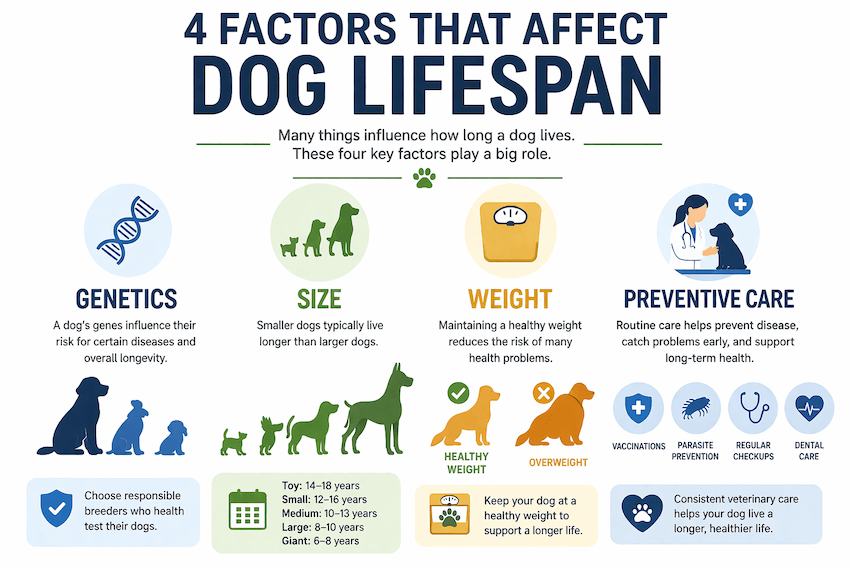
A dog’s lifespan is shaped by several factors working together, especially genetics, size, weight, and preventive care. In broad terms, smaller dogs often live longer than larger dogs, while inherited traits can raise or lower risk for certain diseases over time. That is why two dogs of the same age can have very different health outlooks depending on breed background, body build, and how early problems are found.
Daily management matters too. Keeping a dog at a healthy weight, staying current with routine exams, dental care, vaccines, and screening, and adjusting care as the dog ages can all support better long-term health. No single habit guarantees a longer life, but steady preventive care gives owners the best chance to catch issues early and reduce avoidable strain on the body.
Dog Years Into Human Years
The old idea that one dog year equals seven human years is too simple to be very useful. Dogs age much faster early in life, and dog years into human years also depend on size, because larger dogs tend to reach later life stages sooner than smaller dogs. In other words, a one-year-old dog is already far beyond a human toddler in physical maturity, and aging does not continue at the same pace every year after that.
For everyday use, it is better to think in terms of life stages than exact math. Puppy, adult, mature, and senior milestones vary by body size, which helps explain why a large dog may need senior-style monitoring earlier than a small dog of the same calendar age. That makes the next step less about memorizing a formula and more about recognizing the real-world signs of aging.
Common Signs of Aging in Dogs
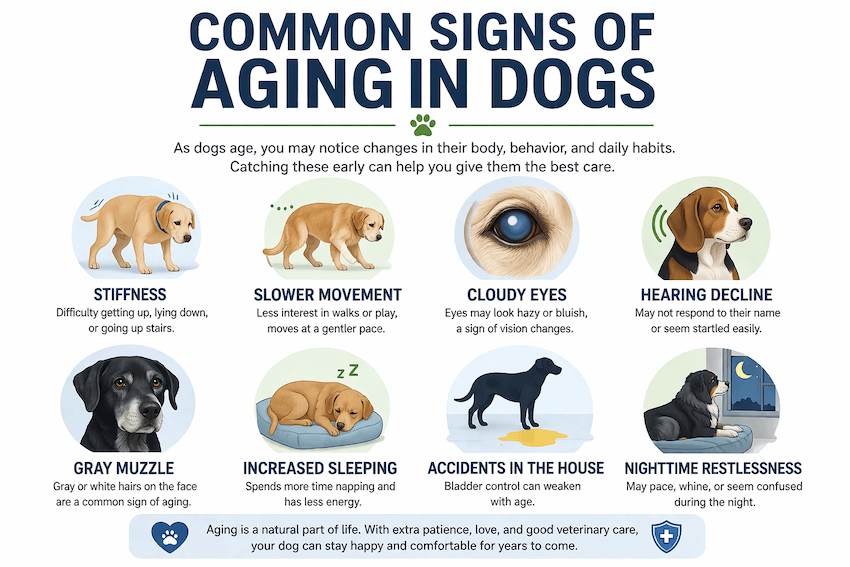
Common signs of aging in dogs often show up gradually rather than all at once. Owners may notice slower movement, stiffness after rest, reduced hearing or vision, more sleep, lower stamina, graying around the face, or changes in appetite and weight. Mild changes can be part of normal aging, but they still matter because they can overlap with treatable health problems.
Behavior can change, too. Some older dogs become more restless at night, seem confused in familiar places, have house-training accidents, or act less interested in play and interaction than before.
How to Help a Dog Live Longer
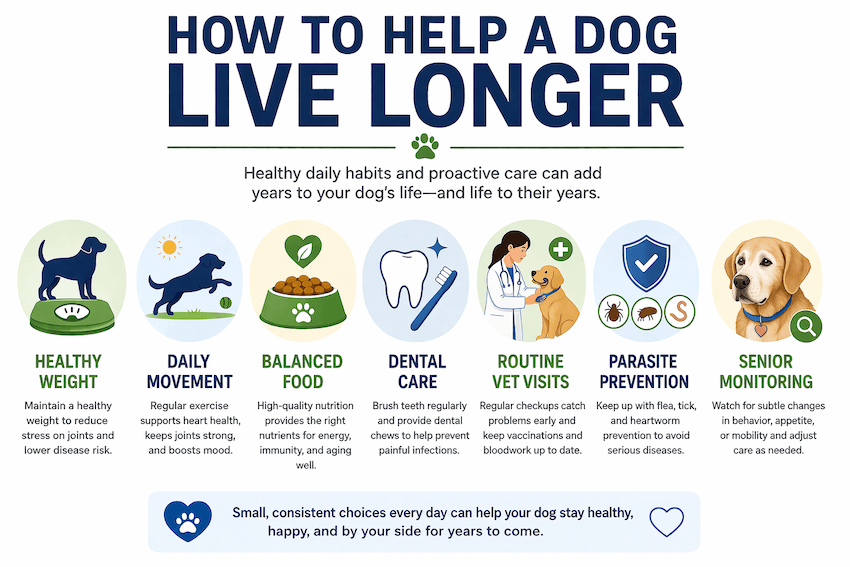
Helping a dog live longer usually comes down to doing the basics well and doing them consistently. A healthy weight, regular activity, balanced nutrition, dental care, parasite prevention, and taking care of a dog through routine checkups all support better long-term health and comfort. The goal is not to chase perfection, but to reduce avoidable wear on the body and spot problems before they become harder to manage.
It also helps to adjust care as a dog grows older. Senior dogs may need different calorie intake, more joint support, gentler but regular exercise, and more frequent monitoring for changes in mobility, thirst, appetite, or behavior. Those everyday choices cannot erase genetics, but they can improve quality of life and set up the next question: when age-related changes cross the line and need a vet visit.
When Aging Changes Need a Vet Visit
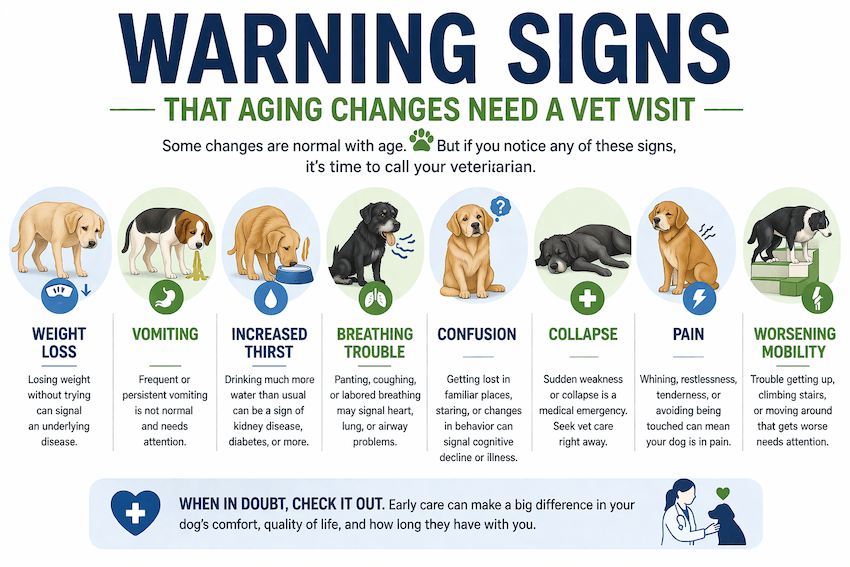
Some age-related changes deserve a veterinary visit sooner rather than later, especially if they appear suddenly, worsen quickly, or start affecting daily life. Red flags include unexplained weight loss, major appetite changes, vomiting, much more drinking or urinating, coughing, trouble breathing, collapse, signs of pain, or a sharp drop in mobility. These are not things owners should assume are “just old age.”
Behavior changes matter too when they are persistent or disruptive. Confusion, pacing, nighttime distress, new house-soiling, hiding, or no longer recognizing routines can all point to discomfort, sensory decline, cognitive changes, or other medical problems that deserve evaluation. Once owners know what to watch for, the final practical piece is having a short list of daily additional tips they can actually use.
Additional Tips That May Help Dogs Live Longer
| Tip | Why It Helps | How to Apply It |
|---|---|---|
| Keep Weight Healthy | Lean dogs tend to have better long-term health outcomes. | Monitor body condition and adjust food before gain worsens. |
| Schedule Routine Exams | Checkups can catch disease before signs become obvious. | Book at least yearly visits, or more often later. |
| Prioritize Dental Care | Oral disease can affect comfort, appetite, and overall health. | Use brushing, vet cleanings, and home dental support. |
| Feed for Life Stage | Nutritional needs change as dogs age and slow down. | Review diet with your vet as adulthood changes. |
| Protect Joint Health | Mobility problems often reduce comfort and activity later. | Keep exercise regular and prevent excess weight early. |
| Watch Breed Risks | Some breeds face inherited diseases much earlier than others. | Ask your vet about breed-specific screening priorities. |
Long-Term Monitoring for Healthy Dog Aging
Long-term monitoring helps owners notice gradual changes that are easy to miss day to day. Watching weight, appetite, thirst, mobility, sleep, bathroom habits, and behavior over time gives a clearer picture of how a dog is aging and whether its care plan still fits. This matters because healthy aging is usually about small patterns, not one dramatic change.
The goal is not to track every detail perfectly, but to build a simple routine that makes change easier to spot. Regular check-ins at home, paired with age-appropriate preventive care and veterinary exams, can help catch problems earlier and support better comfort, function, and quality of life as dogs move through their senior years.
What Research Says About Dog Lifespan
A 2023 Frontiers in Veterinary Science study using large-scale clinical data reported a mean age at death of 10.66 years and a median age at death of 11.57 years for dogs. That matters because it supports the widely used practical answer that most dogs live around the low teens, not just a single fixed number.[1]
RVC VetCompass research based on 30,563 dogs found an overall life expectancy at birth of 11.2 years in UK companion dogs, but also showed major breed differences. Clinically, that helps owners think in terms of both “average dog lifespan” and “my dog’s likely lifespan by breed and body type.”
A Journal of Veterinary Internal Medicine study found that overweight body condition was associated with shorter lifespan across all 12 breeds studied. This is especially useful because it points to one risk factor owners can often modify.[2]
AAHA guidance adds that smaller dogs generally live longer than larger dogs and that senior status begins earlier in large breeds. That matters in practice because earlier screening and closer monitoring may need to start sooner in bigger dogs.
Frequently Asked Questions
The Bottom Line
Most dogs live around 10 to 13 years, but that average only tells part of the story. Lifespan can vary widely based on size, breed, genetics, body condition, and the quality of care a dog receives over time. Smaller dogs often live longer than larger ones, while preventive care, healthy weight, and early detection of problems can all make a meaningful difference. Just as important, aging does not look the same in every dog, so it helps to focus on patterns rather than assumptions. Understanding what affects longevity can help you set better expectations and make smarter health decisions throughout your dog’s life. In the end, while you cannot control every factor, good daily care can help your dog live not just longer, but better.