How to Take Care of a Dog 101: Complete Checklist & Care Guide

Canine Bible is reader-supported. We receive affiliate commissions via some of our links. Learn more.
Taking care of a dog means meeting their daily needs for food, water, exercise, grooming, training, and regular veterinary care. It also means giving them a safe home, a clear routine, mental stimulation, and consistent attention so they can stay healthy and happy. But good dog care is not one-size-fits-all, and what works for a puppy may be very different from what an adult or senior dog needs. Breed, size, age, energy level, and health conditions can all change how much exercise, grooming, and support a dog requires. Many owners also overlook important basics, such as socialization, dental care, weight control, and recognizing when a behavior or symptom is not normal. That is why learning the fundamentals matters, especially if you want to prevent common mistakes before they become bigger problems. In this guide, we will break down exactly how to care for a dog at every stage and what to pay close attention to along the way.
Why Knowing How to Take Care of a Dog Matters
| Why It Matters | Key Impact |
|---|---|
| Supports health | Good daily care helps keep your dog healthy and lowers the risk of preventable problems. |
| Catches problems early | Knowing what is normal makes it easier to notice changes in appetite, energy, or behavior. |
| Improves behavior | Exercise, training, and routine help reduce boredom, stress, and unwanted habits. |
| Prevents accidents | Safe handling, supervision, and dog-proofing can lower the chance of common injuries at home. |
| Saves money | Preventive care and early action can help avoid more serious and expensive health issues later. |
| Builds confidence | Learning the basics helps owners feel more prepared and less overwhelmed day to day. |
| Supports long-term well-being | Consistent care helps your dog stay comfortable, active, and better supported through every life stage. |
Dog Owner Checklist: What Your Dog Needs From Day One
Starting with the right basics can make dog care feel much more manageable. This checklist highlights the essentials that support your dog’s comfort, safety, health, and day-to-day routine, while also helping you stay organized as an owner. Once these are in place, you can move into feeding, exercise, grooming, training, and long-term care more confidently.
How to Take Care of a Dog Step by Step
Follow these steps to take care of your dog and make his life the best it can be.
Step 1: Set Up the Basics Before You Focus on Anything Else
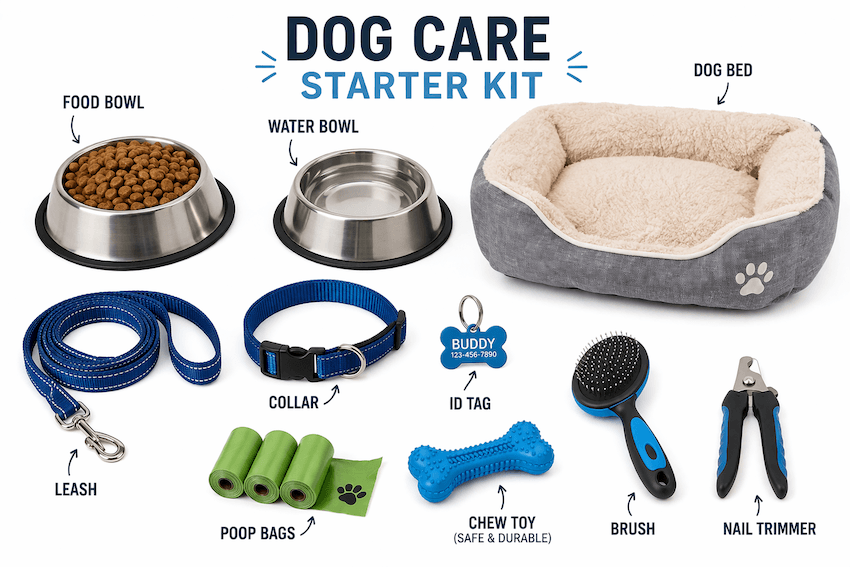
Start with the essentials: a safe sleep space, food and water bowls, a leash and collar or harness, ID tags, safe chew items, waste bags, grooming basics, and a plan for where your dog will rest, eat, and go outside. Make sure identification is in place early, because tags and microchips improve the chance of a lost dog being reunited with you.


Step 2: Feed the Right Food and Keep Water Available
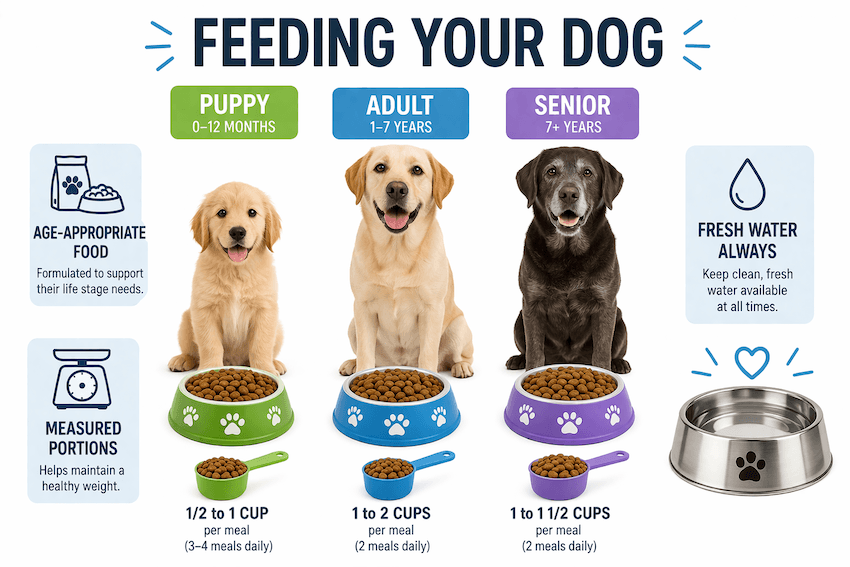
Choose a diet that matches your dog’s life stage and size, then feed measured portions consistently instead of guessing. Keep fresh water available at all times, avoid sudden changes in food when possible, and watch body condition closely, as underfeeding and overfeeding can both cause problems.
Step 3: Build a Daily Routine for Bathroom Breaks, Rest, and Observation
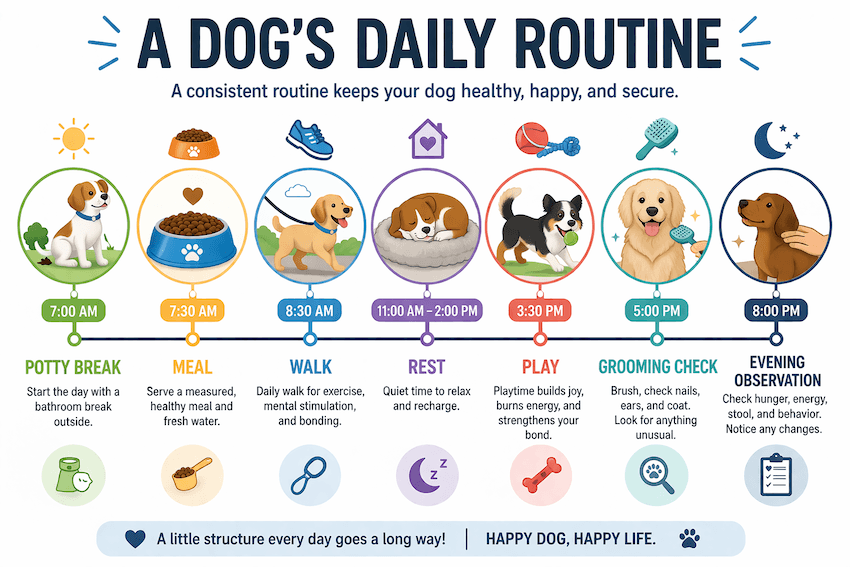
Dogs do best when meals, walks, more frequent potty breaks, rest, and interaction happen on a predictable schedule. Every day, quickly observe appetite, thirst, energy, stool quality, urination, gait, skin, and behavior so you can catch changes early instead of waiting until your dog is clearly ill.
Step 4: Give Daily Exercise and Mental Enrichment
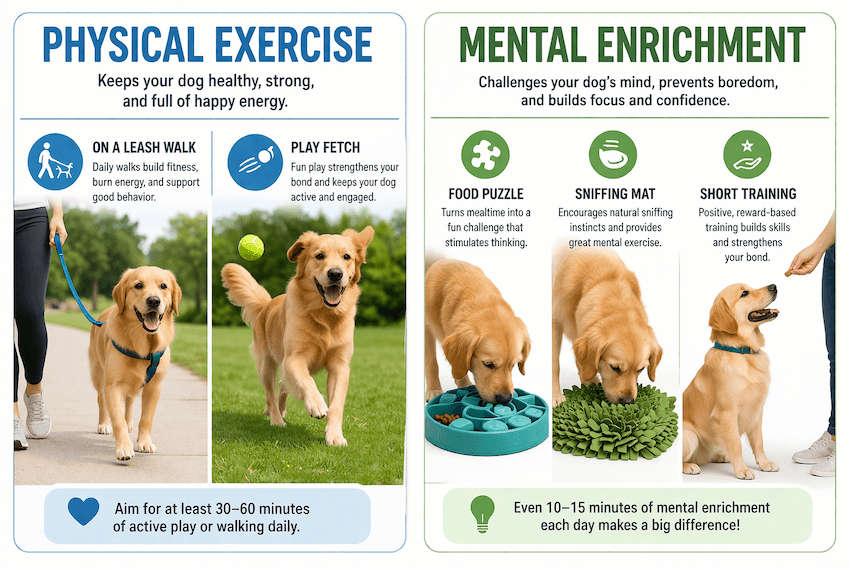
Exercise should match your dog’s age, health, and breed tendencies, but most dogs need more than just being let into the yard. Use walks, sniffing time, play, short training sessions, food puzzles, and safe chews to meet both physical and mental needs, because enrichment and activity support welfare and help reduce boredom-related problems.


Step 5: Stay on Top of Grooming and Hygiene
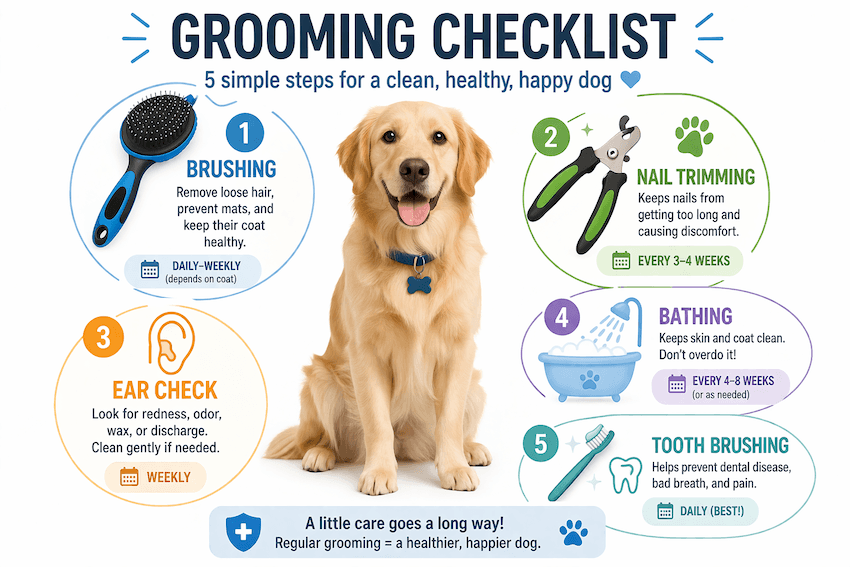
Brush your dog based on coat type, cut their nails before they become overgrown, clean ears regularly, wash your dog when needed, and brush teeth consistently. Grooming is not just cosmetic; it helps prevent mats, discomfort, hygiene issues, and missed skin or dental problems.
Step 6: Schedule Preventive Veterinary Care
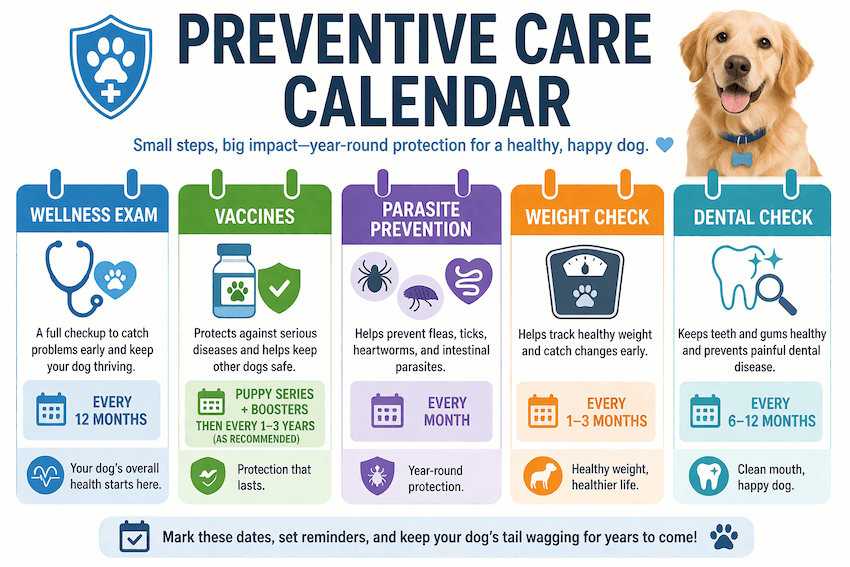
Book a veterinary visit early, keep vaccines and parasite prevention current, and discuss weight, dental care, spay or neuter decisions, and breed-specific concerns during routine checkups. Preventive care is usually simpler, safer, and less expensive than waiting until a problem becomes advanced.
Step 7: Use Reward-Based Training and Safe Socialization
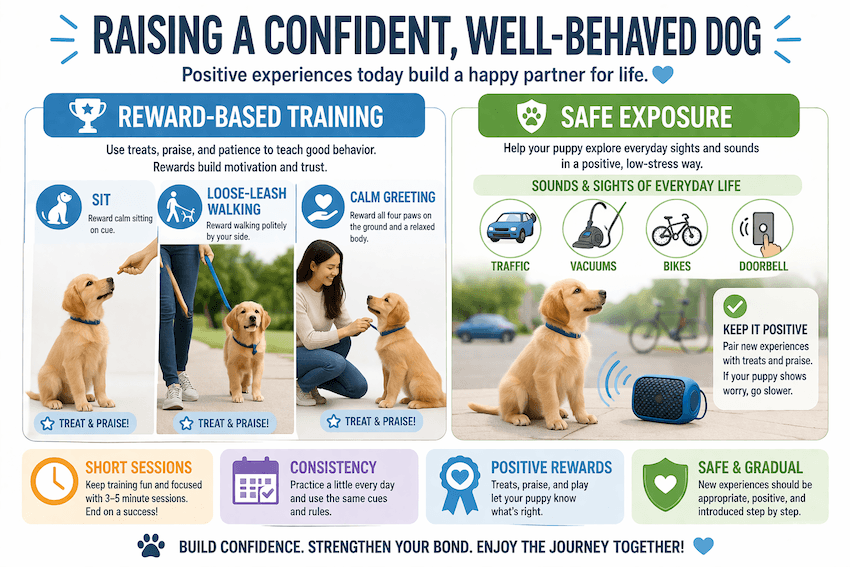
Teach basic skills such as name response, sit, come, leash manners, handling tolerance, and settling calmly in the home. Use rewards, repetition, and consistency, and for puppies especially, provide safe exposure to people, places, sounds, and normal life experiences during the early socialization window.
Step 8: Keep Your Home and Outdoor Routine Safe
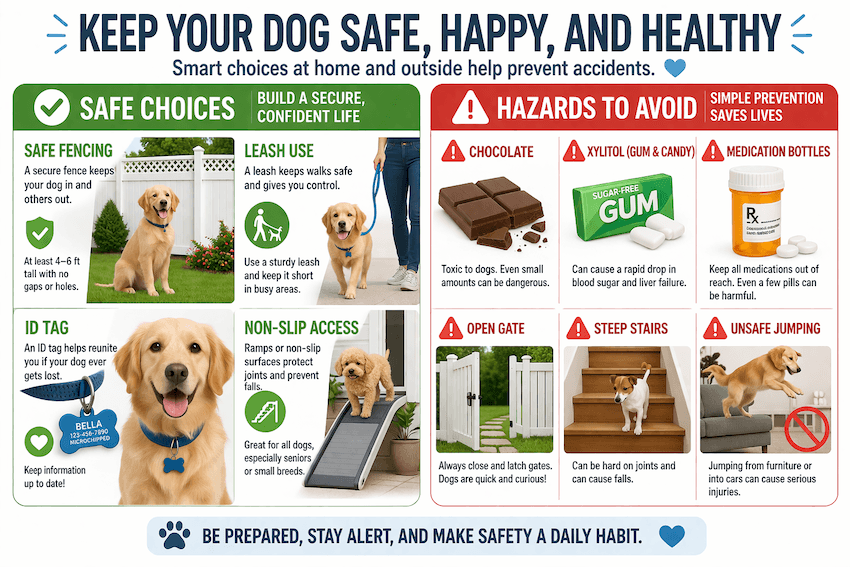
Use secure leashes, fencing, and supervision, especially around roads, pools, stairs, chew hazards, poisonous foods, medications, and household chemicals. Some dogs also need special caution because of body shape or breed traits, such as flat-faced dogs in heat, giant breeds during growth, or long-backed dogs that should avoid repeated strain and rough jumping.
Caring for Dogs by Life Stage
A dog’s care needs change with age, so the right routine for a puppy, adult dog, or senior dog will not look exactly the same. Understanding each life stage can help owners focus on the right priorities, adjust daily care more effectively, and spot potential problems earlier.
| Life Stage | Main Care Priorities | What Owners Should Focus On | Common Things to Watch For |
|---|---|---|---|
| Puppies | Frequent potty breaks, socialization, sleep, teething support, and close supervision. | Short training sessions, safe chewing options, routine building, and gentle handling practice. | Accidents, chewing, overtired behavior, stomach upset, and missed socialization opportunities. |
| Adult Dogs | Exercise, consistency, dental care, weight control, and ongoing mental enrichment. | Regular walks, measured meals, behavior upkeep, grooming, and preventive vet care. | Weight gain, boredom, plaque buildup, reduced activity, and behavior changes. |
| Senior Dogs | Mobility support, comfort changes, health monitoring, and lower-impact daily routines. | Easy access to beds, joint-friendly exercise, appetite tracking, and more frequent check-ins. | Stiffness, slower movement, sleep changes, appetite shifts, and confusion or restlessness. |
Taking Care of High-maintenance Breeds for Grooming
Some dog breeds need much more coat care than others, and grooming needs can affect how much time, effort, and money daily care takes. Breeds with continuously growing, dense, curly, or long coats often need regular brushing, mat prevention, and routine professional grooming to stay comfortable and healthy.
| Breed | Why Grooming Needs Are Higher | What Owners Should Stay On Top Of |
|---|---|---|
| Poodles | The curly coat keeps growing and mats easily without regular brushing and clipping. | Brush to the skin, prevent mats, and schedule routine professional trims. |
| Doodles | Curly or wavy coats often trap loose hair and can mat close to the skin. | Brush thoroughly with a comb check, focus on friction spots, and keep grooming appointments. |
| Shih Tzus | The long, dense coat tangles quickly and face hair needs regular upkeep. | Brush daily, keep the face clean, and prevent mats around the coat and topknot. |
| Maltese | The long, silky coat mats easily and needs frequent coat care to stay manageable. | Brush and comb regularly, keep up with baths, and trim nails and check ears. |
| Yorkshire Terriers | The fine, continuously growing coat tangles easily, especially when kept long. | Brush regularly, keep the coat clean, and trim or maintain the face and body coat. |
| Old English Sheepdogs | The heavy double coat needs thorough line brushing to prevent deep mats. | Brush all the way down to the skin and stay consistent with full-coat maintenance. |
Taking Care of Breeds That Often Need Extra Training and Commitment
Some dog breeds often need more training time, structure, and consistency because of their intelligence, drive, size, or guarding tendencies. That does not make them bad dogs, but it does mean owners usually need to be more intentional about socialization, boundaries, daily practice, and responsible handling.
| Breed | Why Training Commitment Is Often Higher | What Owners Need to Be Consistent About |
|---|---|---|
| Belgian Malinois | Very high drive and quick learning usually require structured work, not casual handling. | Daily training, impulse control, clear rules, and enough mental and physical outlets. |
| German Shepherds | They are intelligent, powerful, and often naturally watchful, so guidance matters early. | Socialization, leash manners, obedience, and calm responses around people and dogs. |
| Border Collies | Extreme intelligence and herding drive can turn into fixation or problem behaviors if underworked. | Daily mental enrichment, recall, focus work, and productive outlets for energy. |
| Akitas | They are often independent and reserved, so training needs patience, structure, and responsible management. | Early socialization, reliable handling, boundary setting, and careful introductions to others. |
| Cane Corsos | Large size, strength, and guarding tendencies often make steady training especially important. | Obedience, polite public behavior, handling skills, and consistent supervision and control. |
Some Dog Breeds That Need More Specialized Care
Some dogs need more than the standard basics of food, walks, grooming, and routine vet visits. Breed traits can affect how owners manage exercise, heat, body weight, mobility, and day-to-day safety, so it helps to know where extra care may be needed.
Brachycephalic Breeds
- Bulldog: Bulldogs need extra caution in hot weather and during exercise because their short muzzle can make breathing less efficient and raise the risk of overheating.
- French Bulldog: French Bulldogs can overheat quickly and often do best with shorter, lower-intensity activity, especially in warm or humid conditions.
- Pug: Pugs are more prone to heat stress than many other breeds, so owners should be careful with temperature, excitement, and strenuous activity.
- Boston Terrier: Boston Terriers may be active and playful, but they still need sensible limits in heat and during intense exercise to avoid breathing stress.
Large and Giant Breeds
- Great Dane: Great Danes need enough space, careful weight management, and attention to joint support, and their daily care often costs more because of their size.
- Mastiff: Mastiffs need close attention to body condition, mobility, and appropriate exercise because excess weight can place significant strain on large joints.
- Saint Bernard: Saint Bernards need room, steady routines, and careful weight control to help support long-term comfort and mobility.
- Bernese Mountain Dog: Bernese Mountain Dogs benefit from thoughtful exercise planning, joint support awareness, and keeping their weight in a healthy range.
Long-Back or Joint-Sensitive Breeds
- Dachshund: Dachshunds need careful body weight control and reduced jumping strain because their long back makes the spine more vulnerable to injury.
- Corgi: Corgis benefit from staying lean and avoiding too much repetitive high-impact movement because their body shape can place extra stress on the back and joints.
- Basset Hound: Basset Hounds need attention to weight, mobility, and repeated impact because their heavy build and shorter legs can make strain more noticeable over time.
Extra Tips That Make Dog Care Easier
| Tip | Why It Helps | How to Apply It |
|---|---|---|
| Use a Routine | Dogs usually settle faster when daily events stay predictable. | Feed, walk, and potty at roughly the same times. |
| Measure Meals | Portion control helps prevent slow, unnoticed weight gain. | Use a scoop or scale instead of eyeballing food. |
| Train Daily | Short practice builds habits better than occasional long sessions. | Do five minutes after walks or before meals. |
| Brush Early | Early handling makes grooming less stressful over time. | Start with calm, brief sessions and food rewards. |
| Track Changes | Small changes are easier to catch before problems worsen. | Note appetite, stool, energy, scratching, and sleep. |
| Use Enrichment | Mental work can reduce boredom and nuisance behavior. | Rotate chews, snuffle mats, puzzles, and sniff walks. |
| Check ID Often | Up-to-date identification improves recovery if your dog escapes. | Confirm tags and microchip contacts still are correct. |
Common Mistakes When Taking Care of a Dog
| Mistake | Why It’s a Problem |
|---|---|
| Skipping Routine Care | Problems often stay hidden until they become harder to treat. |
| Overfeeding Treats | Extra calories can quietly lead to unhealthy weight gain. |
| Only Yard Time | Many dogs still need walks, training, and mental stimulation. |
| Ignoring Teeth | Dental neglect can lead to pain and chronic mouth issues. |
| Late Socialization | Puppies may develop more fear around normal experiences later. |
| Using Punishment | Harsh methods can increase stress and damage learning. |
| Missing Early Signs | Subtle appetite or behavior changes can signal illness. |
Taking Care of a Dog Long-Term
After you establish the basics, keep reviewing your routine instead of assuming it will always fit. A dog’s care needs change with age, body condition, weather, training progress, and medical status, so success looks like stable weight, normal appetite, comfortable movement, healthy skin and coat, manageable behavior, and a dog that can settle and enjoy daily life.
Keep monitoring for changes in energy, breathing, itching, thirst, stool, urination, gait, sleep, and mood, and contact your veterinarian sooner rather than later when something feels off. Long-term dog care works best when you treat food, exercise, grooming, training, safety, and veterinary care as one connected system instead of separate tasks.
Frequently Asked Questions
The Bottom Line
Taking care of a dog means showing up for the basics every single day, not just when it is convenient. Good care includes the right food, exercise, training, grooming, preventive health care, safety, and plenty of attention, all adjusted to your dog’s age, breed, and individual needs. Some dogs are easier to care for than others, but every dog depends on consistency, patience, and responsible ownership to thrive. The more you understand what your dog needs and what changes to watch for, the better prepared you will be to support their health and happiness over time. In the end, caring for a dog well is not about being perfect, but about being attentive, informed, and committed for the long run.