What to Do If Your Dog Eats Rat Poison: 5 Emergency Steps

Canine Bible is reader-supported. We receive affiliate commissions via some of our links. Learn more.
If your dog eats rat poison, contact your veterinarian or an emergency animal hospital immediately, even if your dog appears healthy and shows no symptoms. Rat poison can be life-threatening, and prompt treatment is essential to prevent serious complications. Do not induce vomiting or try home remedies unless a veterinarian specifically instructs you to do so. Different types of rat poison can cause internal bleeding, neurological problems, or organ damage, with some symptoms taking hours or even days to appear. But how much rat poison is dangerous, and what if your dog eats a poisoned rat instead of the bait itself? Knowing which poison your dog encountered, how to recognize early warning signs, and what treatments are available can make a critical difference. This guide explains the immediate steps to take, symptoms to watch for, and how veterinarians treat rat poisoning in dogs.
Why Acting Quickly Matters After Rat Poison Exposure
The risk of rat poisoning depends on the product and circumstances of exposure. Understanding these factors helps explain why prompt veterinary care is essential.
| Key Factor | Why It Matters |
|---|---|
| Poison Type | Different ingredients cause different complications and require specific treatments. |
| Poison Concentration | More concentrated products may deliver a dangerous dose in smaller amounts. |
| Amount Swallowed | Larger exposures generally increase the risk of severe poisoning. |
| Dog’s Size | Smaller dogs may receive a higher dose relative to body weight. |
| Time Since Exposure | Early treatment may reduce toxin absorption before serious complications develop. |
| Veterinary Intervention | Prompt assessment allows appropriate treatment before symptoms appear or worsen. |
Signs of Rat Poisoning in Dogs
Symptoms of rat poisoning vary considerably because different ingredients affect different body systems. Some dogs become sick quickly, while others remain outwardly normal until significant internal damage has developed. Common warning signs include:
Remember to ALWAYS contact your vet or a pet poison control service immediately if your dog may have ingested rat poison, even if your dog appears normal or shows no symptoms. If you can’t reach your vet, you can chat live with a registered online veterinary professional via our online vet chat or video chat support (24 hours a day, 7 days a week). Or use Chewy’s online vet services (6 a.m. – midnight ET).
What to Do If Your Dog Eats Rat Poison: 5 Immediate Steps
The following steps explain what to do immediately after discovering that your dog has eaten or may have eaten rat poison. Follow them promptly, without delaying veterinary care, to complete every step.


Step 1: Remove Your Dog From the Poison
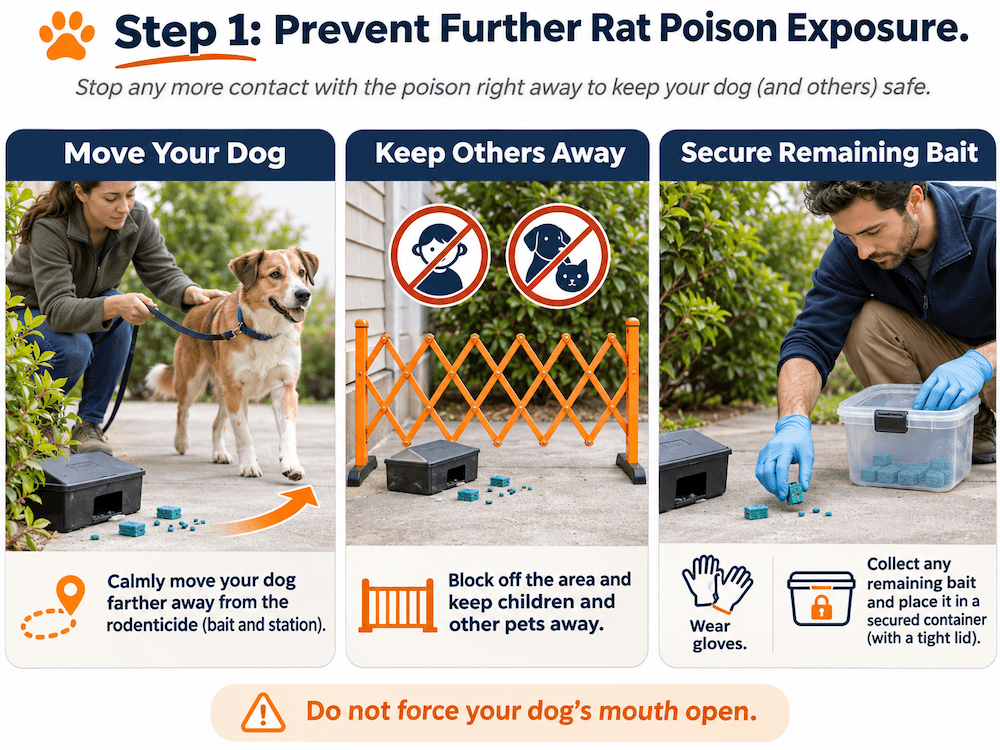
Immediately move your dog away from the rat poison to prevent further ingestion. Keep other pets and children away from the contaminated area, and safely secure any remaining bait without touching it directly. If poison is visibly loose in your dog’s mouth, remove it only if you can do so safely without forcing your dog’s mouth open or risking a bite.
Step 2: Contact a Veterinarian Immediately
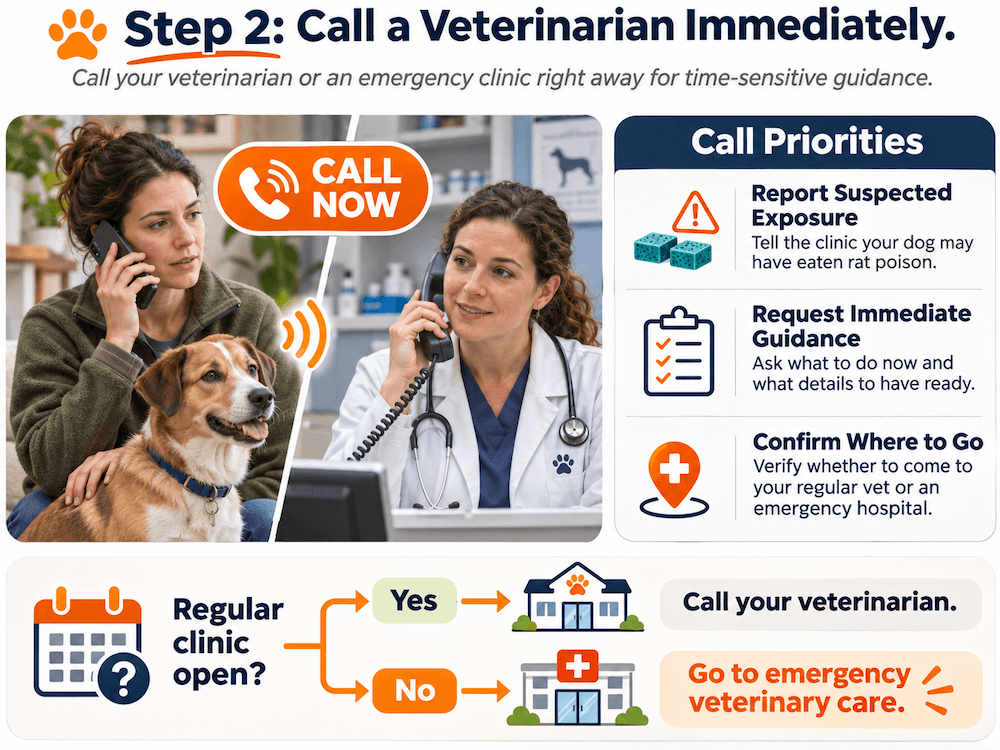
Call your veterinarian or the nearest emergency animal hospital as soon as you suspect rat poison ingestion. Explain what happened and follow their instructions about urgent assessment, even if your dog has no symptoms. If your regular veterinarian is unavailable, contact an emergency clinic or veterinary poison service rather than waiting for normal business hours.
Step 3: Identify the Poison and Gather Important Details
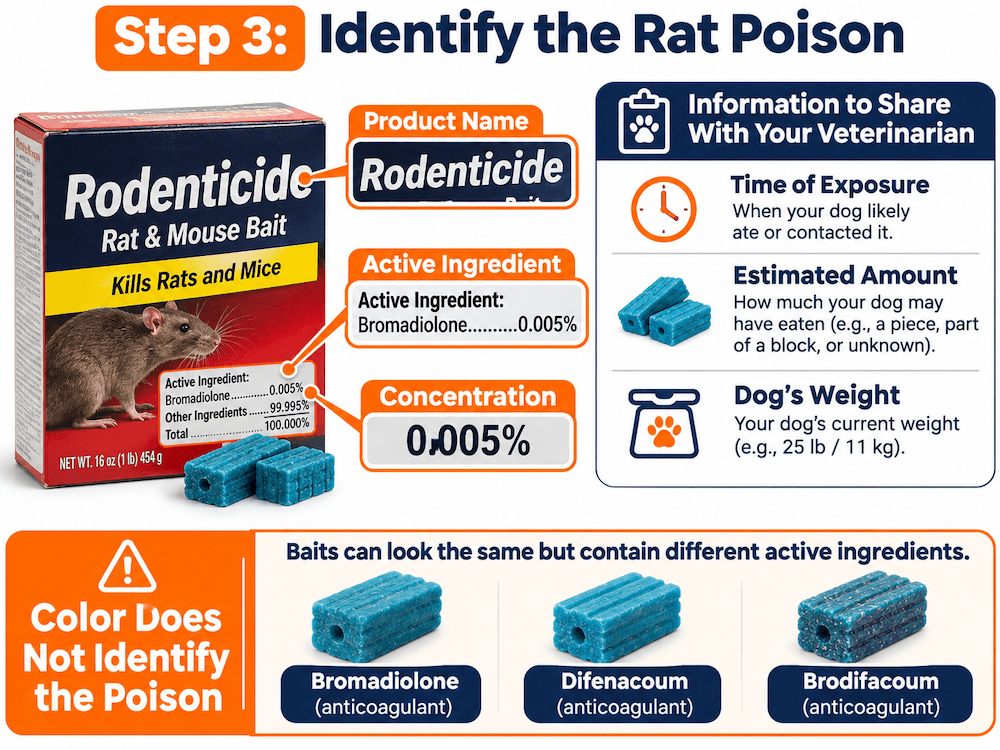
Find the rat poison packaging and photograph the active ingredient, concentration, and product label. Record approximately when your dog encountered the bait, how much might be missing, and your dog’s weight. Bring the packaging or photographs to the veterinary clinic, but do not delay leaving if the product cannot be identified; bait color and shape alone are unreliable clues.
Step 4: Avoid Home Remedies and Unapproved Treatments
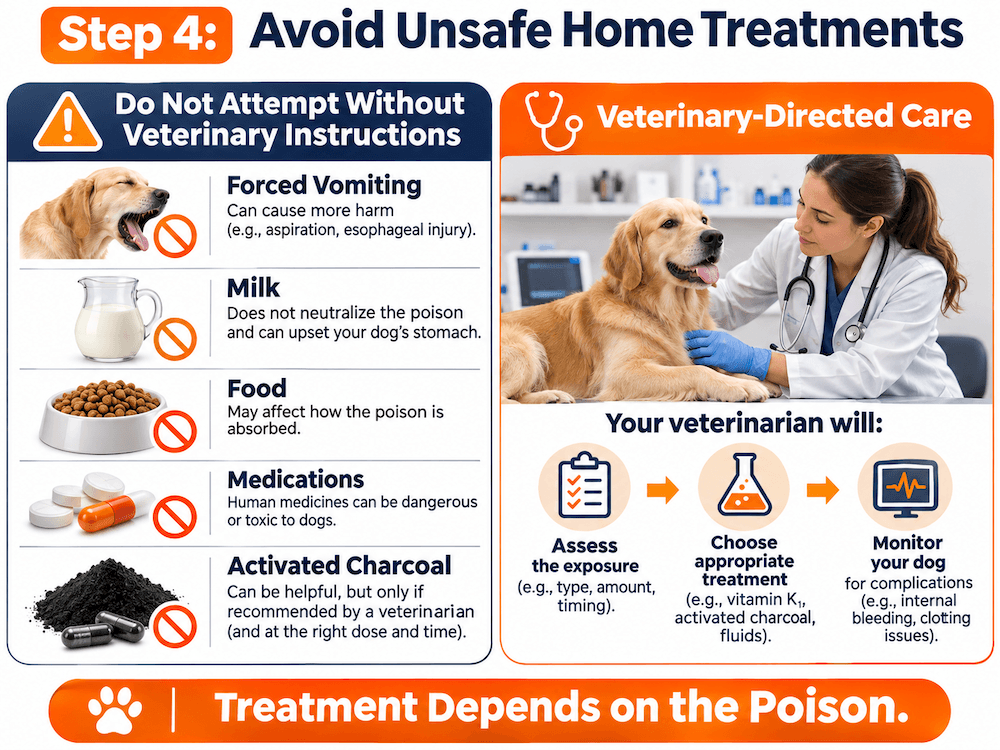
Do not attempt to make your dog vomit or administer milk, oil, salt, activated charcoal, vitamin K, or other treatments without specific veterinary instructions. Some rat poisons can release hazardous gas during vomiting, and inappropriate home treatments may worsen the situation. Avoid giving food until a veterinarian advises you, particularly when the poison type is unknown.


Step 5: Transport Your Dog Safely for Emergency Care
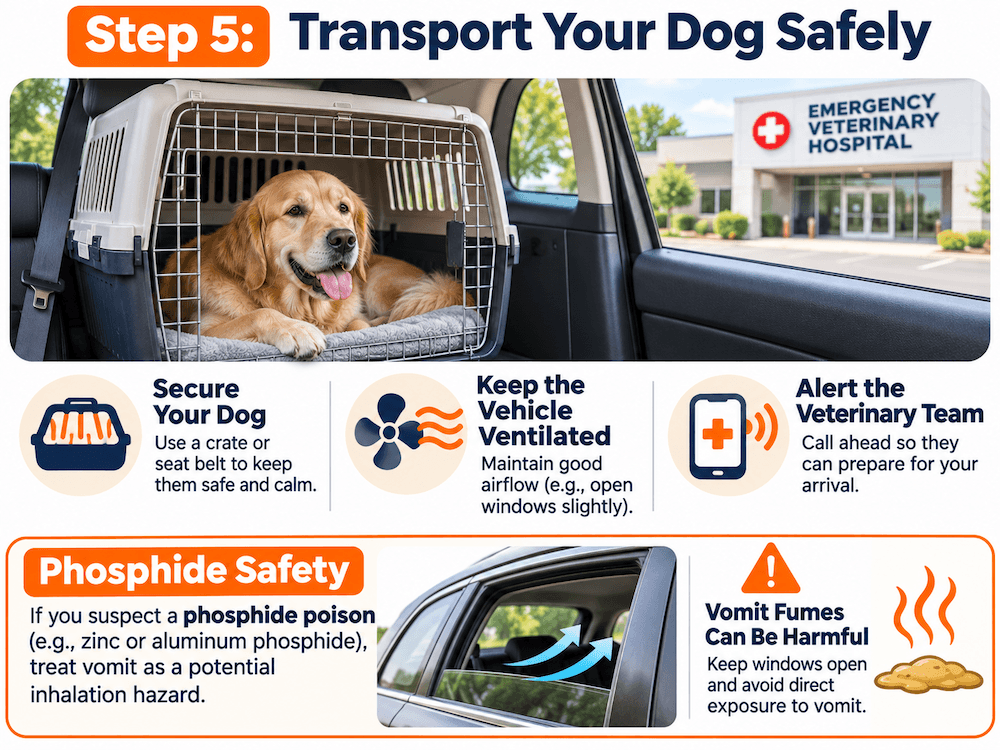
Follow your veterinarian’s instructions for bringing your dog to an emergency clinic, keeping your pet calm and securely restrained during transport. If zinc phosphide or another phosphide poison may be involved, keep the vehicle well-ventilated because fumes from vomit can also harm people. Avoid inhaling or directly handling vomit, and alert the veterinary team about the suspected phosphide exposure before entering the treatment area when possible.
What to Do at Home While Waiting for Emergency Vet Care
While arranging emergency veterinary care, focus on keeping your dog calm, comfortable, and safe. These temporary precautions can help prevent additional complications but should never delay professional treatment.
| What to Do | How to Keep Your Dog Safe |
|---|---|
| Keep Your Dog Calm | Provide a quiet resting area and avoid unnecessary excitement or activity. |
| Limit Physical Exertion | Prevent running, jumping, or strenuous play that could worsen complications. |
| Prevent Falls | Keep your dog away from stairs and elevated surfaces if weakness develops. |
| Record New Symptoms | Note when unusual behaviors or physical changes appear for your veterinarian. |
| Respond Safely to Seizures | Clear nearby hazards without restraining your dog or touching its mouth. |
| Prepare for Departure | Keep your phone, keys, and secure carrier or leash readily accessible. |
Types of Rat Poison and How They Affect Dogs
Not all rat poisons work the same way. Their active ingredients determine which organs may be affected, how quickly symptoms develop, and which veterinary treatments are appropriate.
| Poison Type | Common Ingredients | Main Health Risk | Typical Symptom Onset |
|---|---|---|---|
| Anticoagulants | Brodifacoum, bromadiolone, warfarin | Impaired blood clotting and potentially severe internal bleeding. | Bleeding signs often appear 3–7 days later. |
| Bromethalin | Bromethalin | Brain and nervous system damage. | Within hours to several days. |
| Vitamin D3-Based | Cholecalciferol | Dangerously elevated calcium and kidney injury. | Often within 18–36 hours. |
| Phosphides | Zinc, aluminum, or magnesium phosphide | Toxic gas formation and potentially severe organ damage. | Minutes to hours; occasionally longer. |
| Cellulose-Based | Corn cellulose or corn gluten meal | Usually gastrointestinal upset; large amounts may cause obstruction. | Variable, depending on ingestion. |
Important distinction: Cellulose-based rodent-control products generally have a much lower systemic toxicity risk than conventional chemical rodenticides. However, no suspected ingestion should be assumed harmless until the exact product and exposure have been assessed.
Can a Dog Get Rat Poisoning From Eating a Poisoned Rat or Mouse?
Yes. Dogs can experience secondary poisoning after eating rodents that have consumed rat poison, even if they never touch the bait directly. This is particularly concerning with certain long-acting anticoagulants, which can remain in rodent tissues after ingestion.
The risk depends on the poison involved, how much the rodent consumed, how much of the rodent your dog ate, and whether exposure occurs repeatedly. A single poisoned rodent does not always cause serious toxicity, but the risk cannot be reliably judged at home. Dogs that swallow potentially poisoned rodents should receive prompt veterinary guidance, especially when the bait ingredient is unknown.
How Veterinarians Treat Rat Poisoning in Dogs
Veterinary treatment depends on the active ingredient, the amount consumed, the time since ingestion, and the dog’s condition. Early treatment may involve professionally supervised decontamination, while more serious cases may require hospitalization, blood tests, or intensive supportive care.
| Poison Type | Possible Veterinary Treatment | Follow-Up Care |
|---|---|---|
| Anticoagulants | Prescription vitamin K1; blood transfusions in severe cases. | Repeat blood-clotting tests after treatment. |
| Bromethalin | Early decontamination when appropriate and neurological supportive care. | Monitor coordination, seizures, and neurological recovery. |
| Cholecalciferol | IV fluids and medications to control elevated calcium. | Repeated calcium and kidney-function testing. |
| Phosphides | Controlled decontamination with ventilation and intensive supportive care. | Monitor respiratory function and organ health. |
| Unknown Ingredient | Exposure assessment and treatment based on suspected toxins. | Targeted testing and monitoring as indicated. |
Vitamin K1 is an effective antidote for anticoagulant rodenticides, but it does not reverse bromethalin, cholecalciferol, or phosphide poisoning. Dogs treated for long-acting anticoagulant exposure may require several weeks of medication, followed by clotting tests to confirm that treatment can safely end.
The prognosis varies with the poison, dose, symptoms, and how promptly treatment begins. Dogs treated before serious complications develop often have a better outlook, although severe neurological or organ damage can make recovery more uncertain.
Can a Dog Survive Rat Poisoning?
Yes, many dogs survive rat poisoning, especially when veterinary treatment begins before serious symptoms develop. The chances of recovery depend on the poison type, amount ingested, time before treatment, and extent of organ damage. Dogs treated early often have a favorable prognosis, while severe internal bleeding, seizures, paralysis, or kidney failure can make recovery more difficult.
Some dogs recover fully after treatment, while others require hospitalization, ongoing medication, or extended monitoring. Certain neurological injuries may cause lasting complications, and severe poisoning can be fatal despite treatment.
Recovery and Follow-Up Care
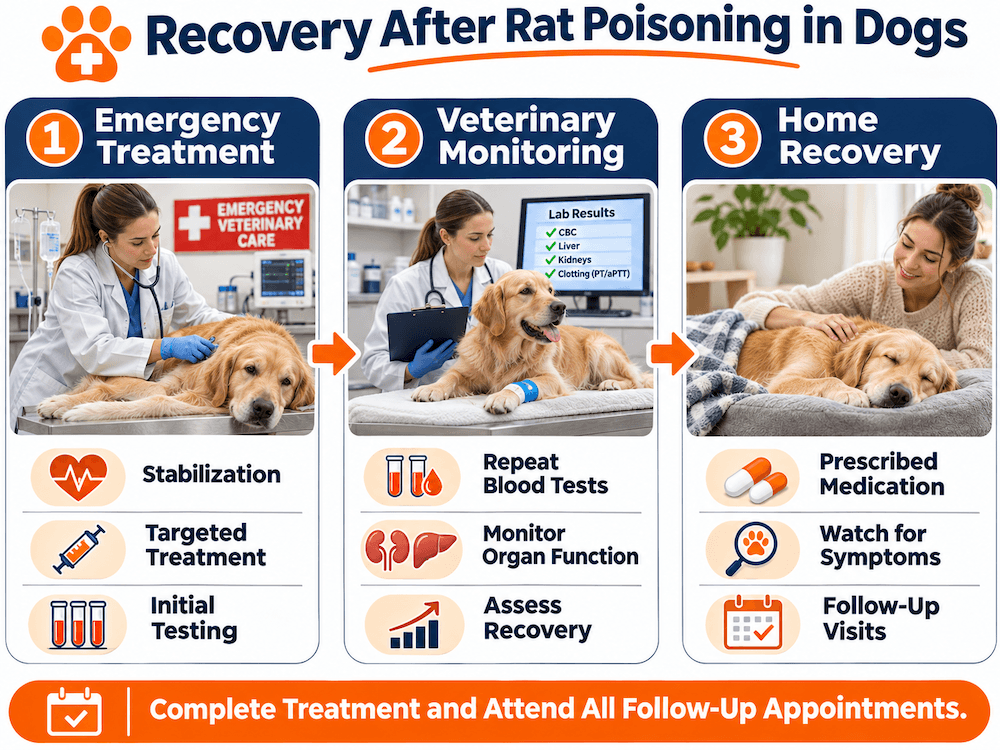
After discharge, follow your veterinarian’s medication instructions carefully and never stop prescribed treatment early, even if your dog appears healthy. Dogs treated for anticoagulant poisoning may need several weeks of vitamin K1, followed by repeat blood-clotting tests, often 2–3 days after treatment ends. Other poison types may require kidney-function tests, calcium monitoring, or neurological assessments. Watch for returning symptoms, keep activity restricted if advised, and attend all scheduled follow-up appointments.
How to Prevent Rat Poisoning in Dogs
Reducing access to rodenticide is the most reliable way to prevent another poisoning episode. Prevention is especially important in homes where pest-control products are regularly used or where dogs have access to outdoor areas.
What Veterinary Research Says About Rat Poisoning in Dogs
Veterinary toxicology references and clinical studies help explain why rat poison exposure requires prompt assessment, even before symptoms appear. The Merck Veterinary Manual explains that rodenticides have different mechanisms of toxicity and that bait appearance cannot reliably identify the active ingredient. This makes product identification particularly important when determining an appropriate treatment plan.[1]
A 2025 review in the Merck Veterinary Manual describes how blood-clotting abnormalities may develop two to five days after toxic anticoagulant exposure, with visible bleeding often emerging three to seven days afterward. This explains why a normal appearance shortly after ingestion is not reassuring.[2]
A 2024 retrospective study published in the Canadian Veterinary Journal examined 349 dogs with confirmed anticoagulant rodenticide intoxication. Among dogs that developed hemorrhage, 86% survived to discharge, demonstrating that recovery is possible with veterinary treatment, although outcomes vary by case severity.[3]
A 2025 study in the Journal of Veterinary Internal Medicine examined suspected bromethalin exposures in dogs and cats, documenting neurological signs that included seizures, tremors, weakness, and paralysis.[4] These findings reinforce the importance of distinguishing neurological rodenticides from anticoagulants when planning treatment.
Frequently Asked Questions
The Bottom Line
Rat poison exposure is a veterinary emergency, even if your dog appears healthy. The most important steps are to prevent further ingestion, contact a veterinarian immediately, and identify the poison whenever possible. Different rodenticides affect the body in different ways, and some can cause serious complications before noticeable symptoms develop. Because treatment depends on the active ingredient, home remedies and unapproved medications should always be avoided. Fortunately, many dogs can recover with prompt veterinary intervention, although the prognosis depends on the severity of poisoning. Following prescribed medications, attending follow-up appointments, and completing recommended blood tests are essential for a safe recovery. Ultimately, acting quickly and recognizing the risks can make a critical difference in protecting your dog’s health.
For more guidance on accidental ingestion, read our guide on how to make a dog throw up to understand when inducing vomiting may be unsafe. You can also explore our dog toxicity calculator to learn how different substances, amounts, and your dog’s weight influence poisoning risks, although it cannot replace veterinary assessment. For additional prevention tips, review our comprehensive list of poisonous foods for dogs to identify other potentially dangerous substances around your home.
Sources
- Overview of Rodenticide Poisoning in Animals
- Anticoagulant Rodenticide Poisoning in Animals
- Anticoagulant rodenticide toxicity in dogs: A retrospective study of 349 confirmed cases in Saskatchewan
- Bromethalin Exposure in Dogs and Cats: A 14‐Year Retrospective Study (2010–2023) From the California Animal Health and Food Safety Laboratory System