How to Stop Dogs From Chewing Everything: 7 Proven Steps (& Tips)

Canine Bible is reader-supported. We receive affiliate commissions via some of our links. Learn more.
If your dog keeps chewing furniture, shoes, or anything else within reach, stopping the habit takes more than simply telling them “no.” The key is understanding what drives the chewing and changing what happens before your dog reaches for the wrong object. Most dogs improve when you combine management, appropriate chew alternatives, training, exercise, and consistent redirection. However, the best approach can vary depending on whether you have a teething puppy, a bored adult dog, or a dog chewing because of stress or anxiety. Some chewing is completely normal, while sudden or destructive chewing can point to an underlying behavioral or medical issue. Knowing what your dog should be allowed to chew is just as important as protecting household items they should avoid. In this guide, we’ll explain how to stop dogs from chewing, what commonly causes the behavior, and when persistent chewing may require professional help.
How to Stop Dogs From Chewing
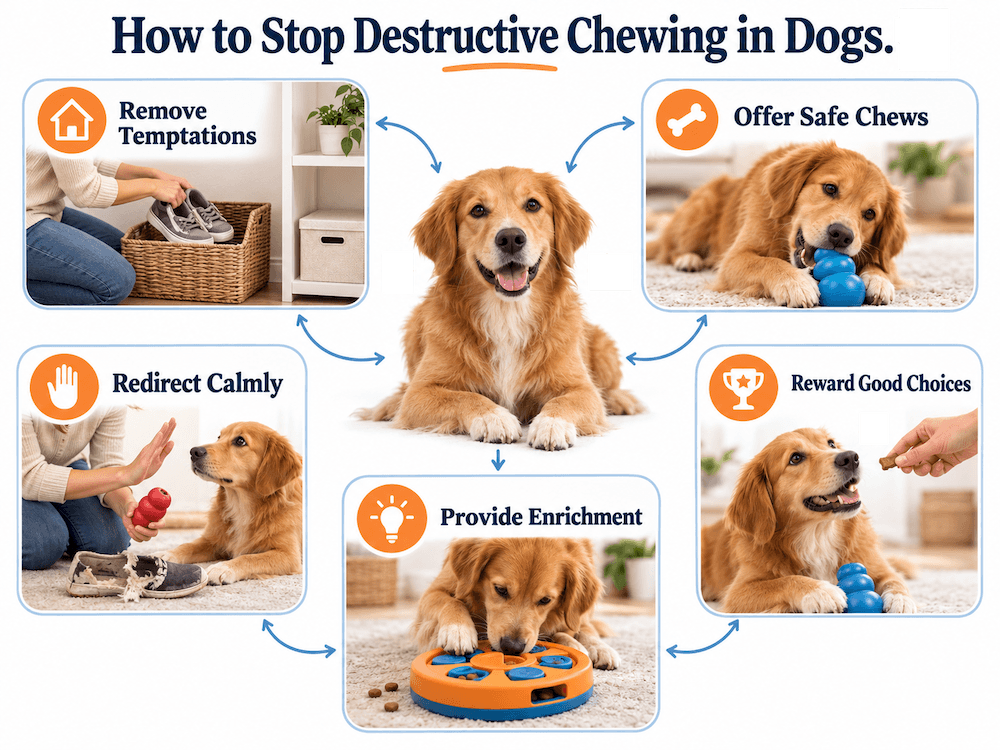
To stop dogs from chewing furniture, shoes, and other household items, remove access to inappropriate objects, provide safe chewing alternatives, and reward your dog for making better choices. The goal is not to eliminate chewing entirely, since it is a natural canine behavior, but to teach your dog what is acceptable to chew. Successful training combines consistent supervision, environmental management, mental stimulation, and positive reinforcement. The right approach also depends on whether your dog is teething, exploring, bored, anxious, or experiencing an underlying health problem.
Why Do Dogs Chew Everything?
Dogs chew for several reasons, including natural exploration, teething, entertainment, frustration, and the need for mental stimulation. Puppies often investigate unfamiliar objects with their mouths, while adult dogs may chew because they enjoy certain textures or have developed habits that feel rewarding. Some dogs also engage in destructive chewing because of anxiety, changes in routine, or insufficient opportunities for appropriate activities.
Chewing is normal, but destructive chewing is a problem when dogs target inappropriate or dangerous objects. Understanding what motivates your dog makes it easier to choose an effective training approach. Consider your dog’s age, favorite chewing targets, daily routine, and behavior immediately before and after chewing.
Common Reasons Dogs Chew Household Items
The following table compares common chewing patterns and their possible motivations. These observations can help identify what to investigate, although the same behavior may have more than one cause.

| Possible Cause | Chewing Pattern | What It May Indicate |
|---|---|---|
| Teething | Puppy chews toys and furniture. | Developing teeth and gum discomfort. |
| Natural Exploration | Chews unfamiliar objects. | Normal curiosity and exploration. |
| Boredom | Chews during inactive periods. | Insufficient mental or physical stimulation. |
| Separation Distress | Destroys items when left alone. | Possible separation-related anxiety. |
| Frustration | Chews barriers or doors. | Confinement or restricted access. |
| Learned Habit | Repeatedly chews the same objects. | Previously rewarding chewing behavior. |
| Medical Issue | Sudden chewing changes or eating nonfood items. | Possible dental or medical problem. |
Puppy Chewing vs. Adult Dog Chewing
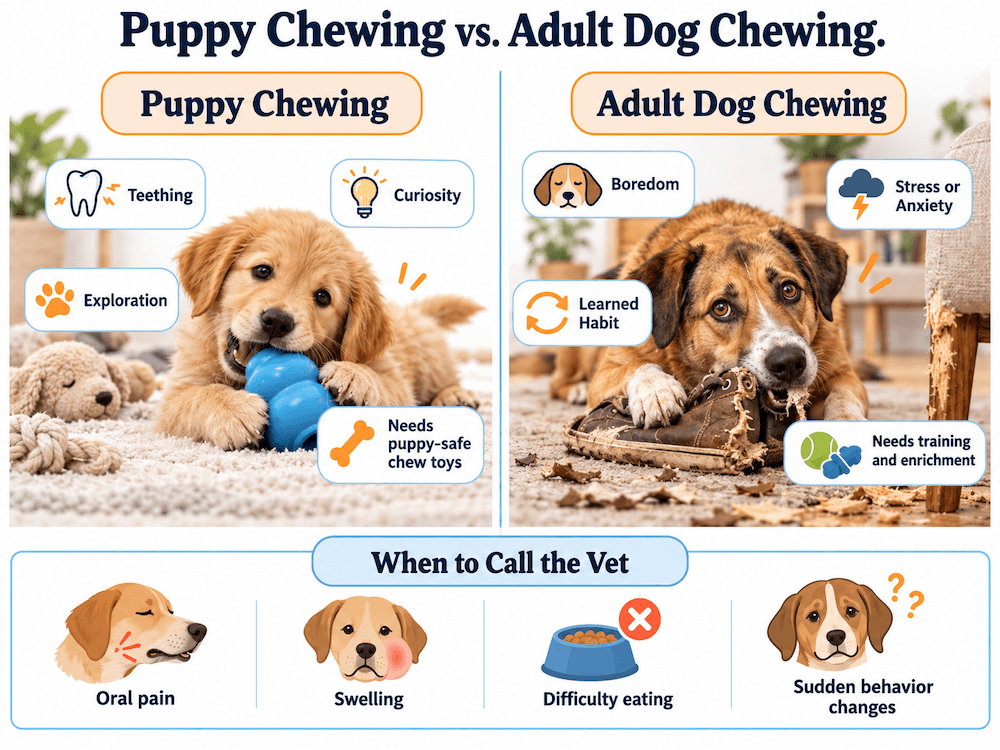
Puppy chewing and adult destructive chewing may look similar on the surface, but they often have different causes and training implications. Puppies usually chew because of teething, curiosity, and normal development, while adult dogs are more likely to chew because of boredom, stress, frustration, or learned habits. Comparing the two side by side helps readers understand when chewing is expected and when it may signal a training, environmental, or health concern.
What to Check Before Trying to Stop Your Dog’s Chewing
Before beginning training, determine whether the behavior is ordinary chewing or something that requires medical or behavioral attention. Chewing itself is natural, but swallowing nonfood objects, damaging teeth, or displaying intense distress can create more serious problems. Observing what your dog chews and how they behave during chewing helps you decide whether home training is appropriate.
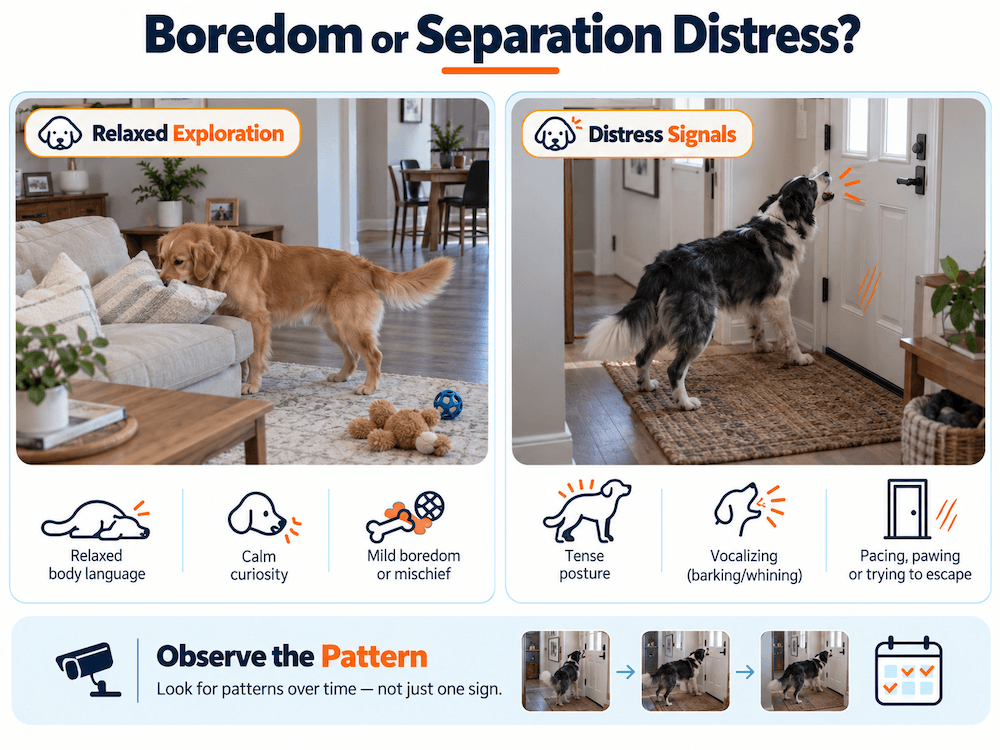
Why Dogs Chew When Left Alone
Chewing during owner absences does not automatically mean a dog has separation anxiety. Some dogs explore available household objects because they are under-stimulated, while others experience significant distress when separated from their owners. The distinction matters because anxiety-driven destruction requires treatment of the underlying emotional problem, not simply tougher chew toys.
How to Stop Dogs From Chewing: 7 Training Steps
The most effective chewing training combines prevention with teaching your dog what to do instead. Begin by controlling access to tempting objects, then consistently reward appropriate chewing and gradually develop reliable habits. Dogs learn through repeated experiences, so creating opportunities for success is generally more effective than waiting for unwanted behavior and reacting afterward.
Step 1: Remove Items Your Dog Should Not Chew
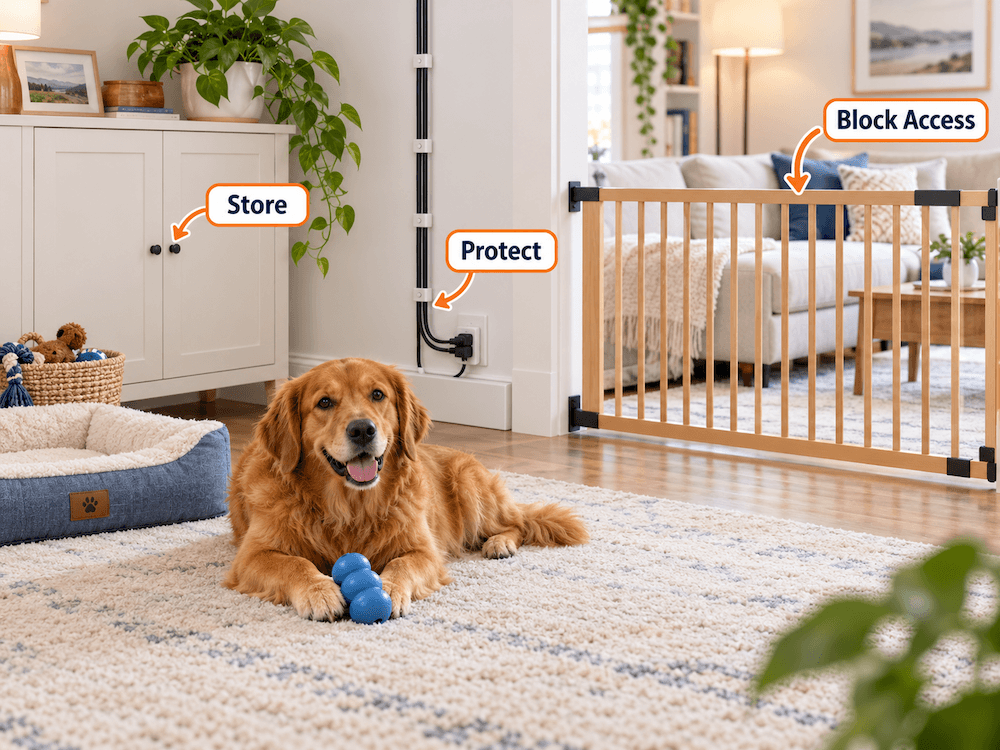
Start by dog-proofing your home to prevent access to tempting or dangerous objects. Store shoes, clothing, remote controls, and small items securely, protect electrical cords, and block access to vulnerable furniture. Use baby gates or a comfortable, dog-proofed area when supervision is not possible, provided confinement does not cause distress. Preventing unwanted chewing helps stop your dog from repeatedly practicing the behavior while learning better habits.


Step 2: Introduce an Appealing Chew Alternative
Offer appropriately sized chew toys that match your dog’s chewing preferences and encourage voluntary exploration. Make the toys more appealing by adding dog-safe treats to a food-stuffable toy or briefly engaging your dog in play. Introduce alternatives in a quiet environment with few distractions, and observe which textures and activities your dog enjoys most. The goal is to make approved toys more rewarding than household objects.
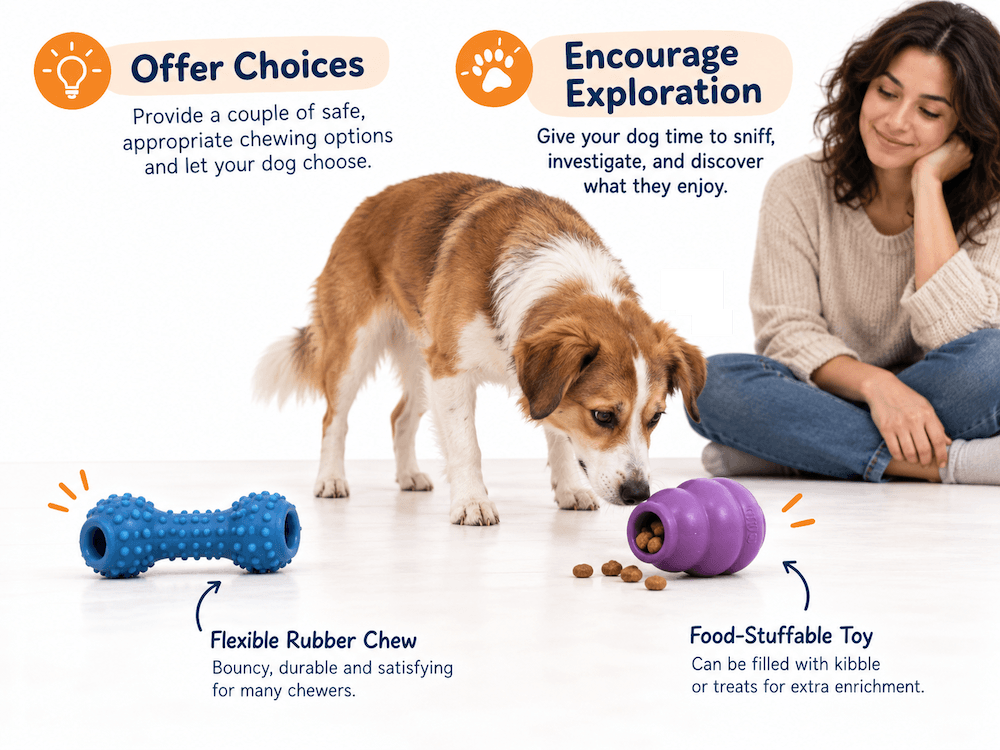
Step 3: Redirect Your Dog Before Chewing Escalates
When your dog approaches an inappropriate object, calmly redirect their attention toward an approved chew toy using a familiar cue or gentle invitation. If they already have something in their mouth, offer a desirable treat or toy in exchange and wait for them to release it voluntarily. Avoid chasing, grabbing, or forcibly removing objects, as these reactions may encourage avoidance or defensive behavior. Reward your dog when they willingly choose the appropriate alternative.
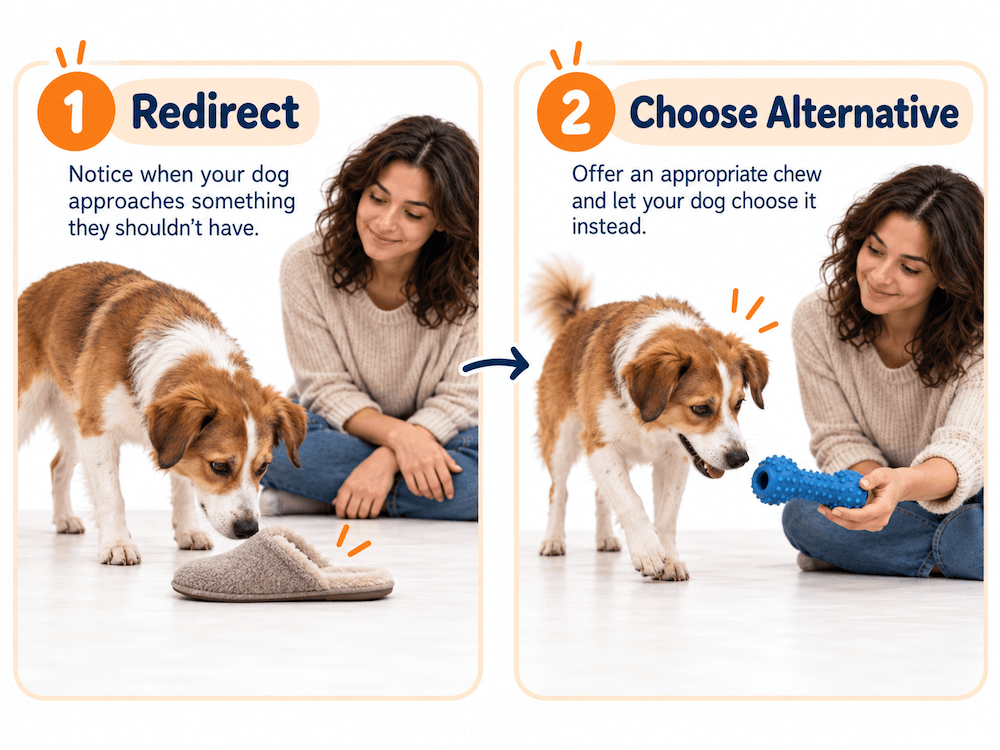
Step 4: Reward Your Dog for Chewing the Right Objects
Reinforce appropriate chewing by offering calm praise or a small treat whenever your dog voluntarily chooses an approved toy. Deliver the reward immediately so your dog associates it with the correct behavior. During early training, reward successful choices frequently, then gradually reduce food rewards as appropriate chewing becomes more consistent. Positive reinforcement helps your dog learn which objects are acceptable to chew.

Step 5: Teach “Leave It” and “Drop It”
Teach “leave it” by covering a low-value treat, rewarding your dog when they disengage, and gradually introducing the verbal cue. For “drop it,” offer a low-value toy, present a more appealing reward, and reinforce your dog for voluntarily releasing the object. Practice both cues in short sessions, gradually increasing difficulty and occasionally returning released toys to encourage cooperation. Stop training and seek professional guidance if your dog shows resource guarding, such as stiffening, growling, or snapping.
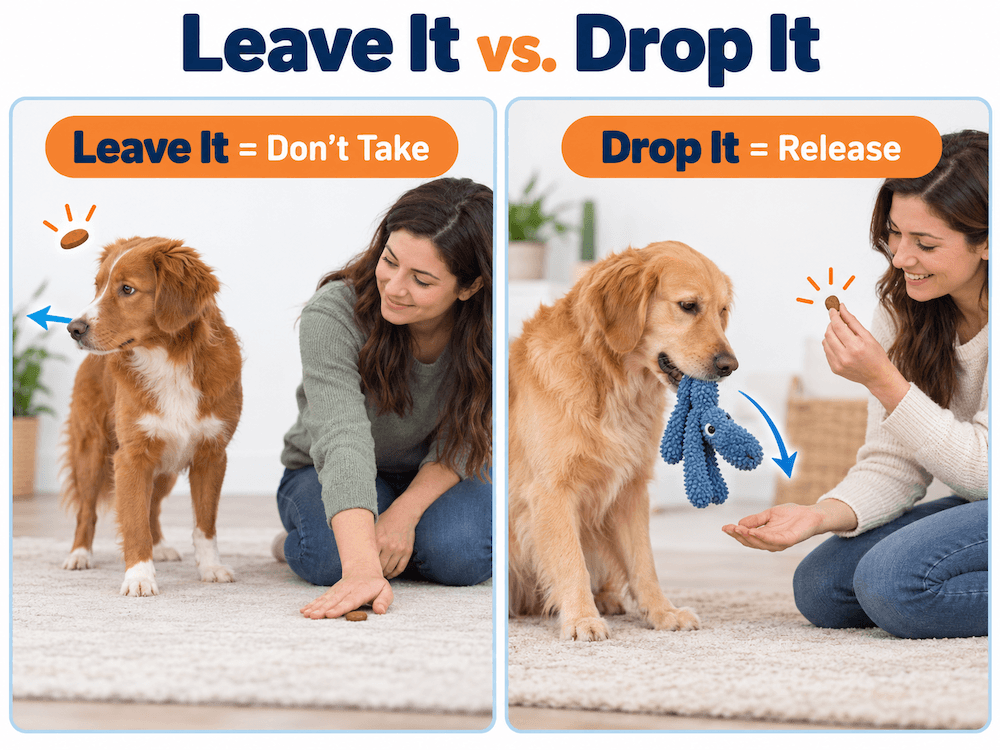
Step 6: Provide Daily Physical and Mental Enrichment
Give your dog appropriate opportunities for physical activity, exploration, and mental stimulation to reduce boredom-related chewing. Combine age-appropriate walks, sniffing activities, interactive play, short training sessions, and food puzzles throughout the day. For example, a relaxed morning walk followed by breakfast in a food puzzle can provide both exercise and mental engagement. Adjust activities to your dog’s age, health, and energy level rather than relying on excessive exercise.
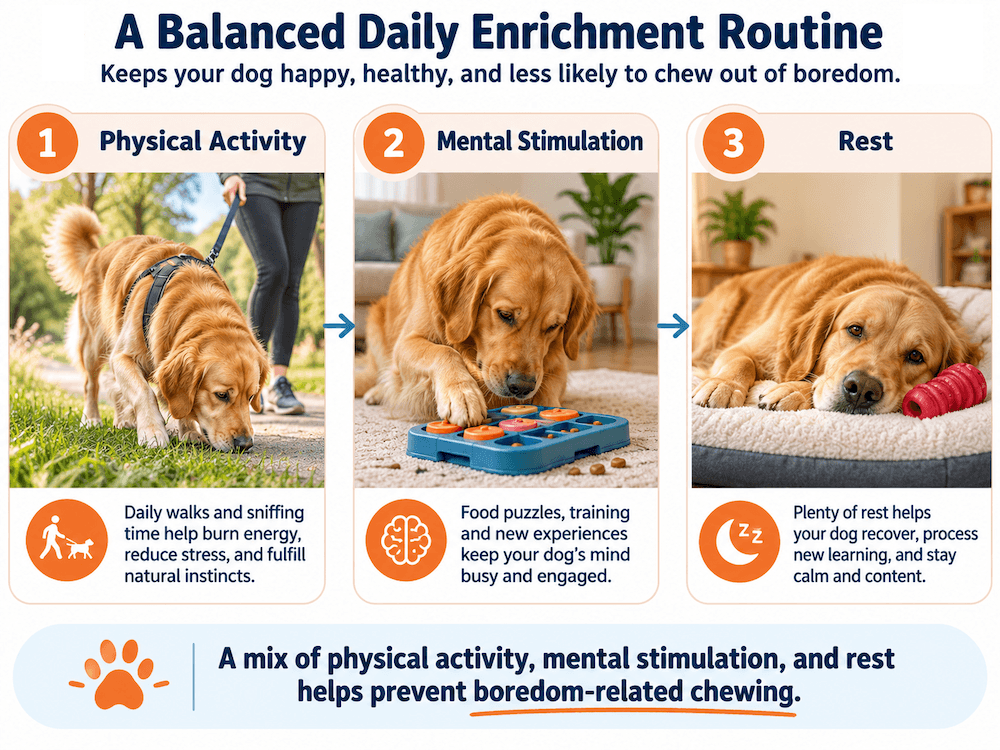
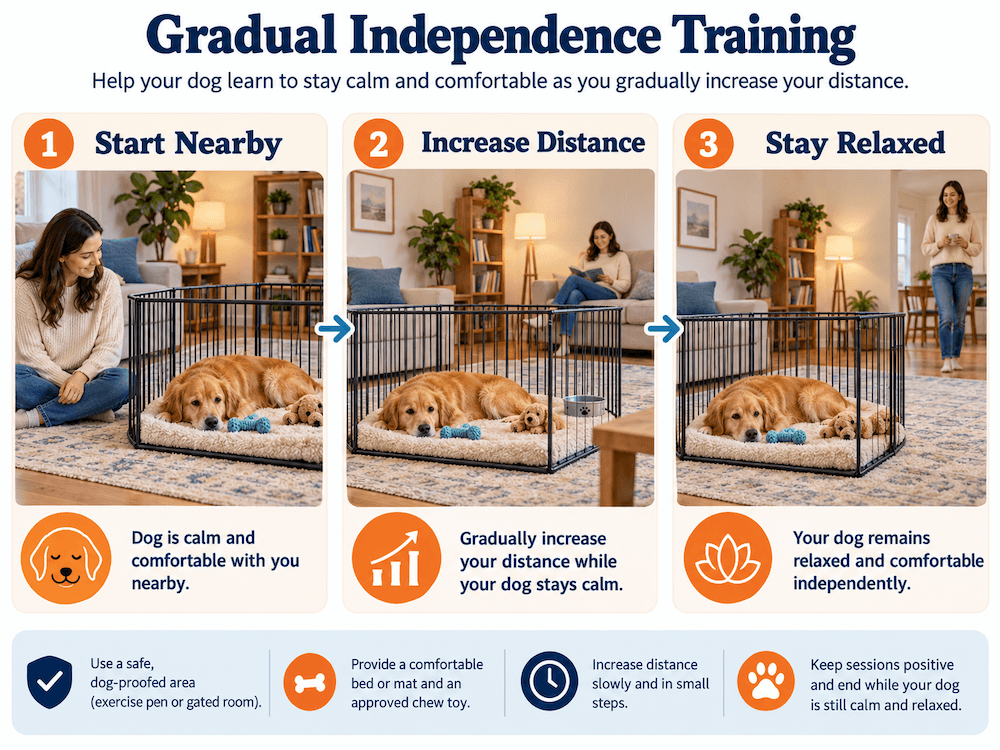
Step 7: Practice Calm Independence in a Safe Space
Encourage your dog to spend short periods relaxing independently in a comfortable, dog-proofed room or exercise pen. Begin with the owner nearby, then gradually increase distance and duration while your dog remains calm. Provide suitable enrichment only when it is safe for independent use, and avoid confinement that triggers barking, frantic scratching, or escape attempts. Dogs showing separation-related distress may need an individualized behavior plan rather than routine independence training.
When Chewing May Be a Dental Problem
Sudden changes in chewing behavior can indicate dental pain, damaged teeth, or gum disease rather than a training problem. Watch for the following signs, especially if your dog previously chewed normally.
| Warning Sign | What It May Indicate |
|---|---|
| Avoiding Hard Toys | Tooth sensitivity or oral pain. |
| Chewing on One Side | Discomfort affecting one side of the mouth. |
| Dropping Food or Toys | Painful or damaged teeth. |
| Bad Breath or Drooling | Possible dental disease or oral irritation. |
| Bleeding or Swollen Gums | Gum inflammation, infection, or injury. |
| Sudden Chewing Changes | Possible dental discomfort or another health issue. |
How to Choose Safe Chew Toys for Your Dog
Providing an appropriate chewing outlet is essential, but not every toy is suitable for every dog. The safest choice depends on your dog’s size, jaw strength, chewing habits, dental health, and tendency to swallow pieces. A toy that works well for a gentle chewer may be unsafe for a dog that aggressively destroys materials.
| Chew Type | Best For | Safety Considerations |
|---|---|---|
| Flexible Rubber Toys | Everyday chewing and interactive play. | Choose the right size; replace damaged toys. |
| Food-Stuffable Toys | Mental stimulation and rewarding appropriate chewing. | Supervise initial use; check for damage. |
| Plush or Fabric Toys | Gentle chewers who prefer soft textures. | Supervise; remove loose stuffing or squeakers. |
| Edible Dental Chews | Chewing satisfaction and potential dental benefits. | Use appropriately sized products; supervise consumption. |
| Rawhide and Similar Chews | Dogs that enjoy longer-lasting edible chews. | Choking or blockage risk; consult your vet. |
| Antlers, Hooves, and Bones | Not recommended as routine chew alternatives. | Very hard surfaces can fracture teeth. |
Which Dog Chews Should You Avoid?
Avoid extremely hard chews, such as antlers, hooves, bones, and rigid synthetic toys, which can fracture teeth. A chew that cannot be indented with a fingernail may be too hard, although this is not a foolproof safety test. Also avoid toys small enough to swallow, damaged products, and items with detachable parts that pose choking or intestinal blockage risks. Edible chews should be appropriately sized, supervised, and included in your dog’s daily calorie intake. For food-stuffable toys, use dog-safe ingredients and avoid toxic substances such as xylitol (birch sugar).
How to Stop Different Types of Destructive Chewing
Dogs may chew for different reasons depending on their age, routine, environment, and emotional state. The circumstances surrounding the behavior often provide more useful clues than the damaged object alone. Use the following examples to identify situations that may require adjustments beyond basic chewing training.
| Chewing Situation | What It May Indicate | Best Next Step |
|---|---|---|
| A Five-Month-Old Puppy Gnaws Chair Legs | Teething discomfort or normal exploratory chewing. | Offer a chilled, flexible puppy toy during supervised downtime. |
| A Young Dog Destroys Items Every Evening | Unmet activity needs or difficulty settling after an active day. | Schedule an age-appropriate sniffing walk followed by quiet downtime. |
| A Dog Chews Only During Calm Periods Alone | Possible boredom or insufficient independent enrichment. | Try food-puzzle activities during short, manageable absences. |
| An Adult Dog Chews Doors While Howling | Possible separation-related distress, particularly with pacing or drooling. | Record the behavior and arrange a veterinary behavioral assessment. |
| A Dog Chews Gates When Other Animals Pass | Frustration or excitement triggered by animals outside. | Reduce visual exposure and teach a calm response away from the gate. |
| A Dog Suddenly Chews Excessively After a Routine Change | Possible stress associated with an unfamiliar environment or schedule. | Restore predictability and monitor for additional signs of distress. |
What to Do If Your Dog Swallows Something They Chewed
Swallowing pieces of toys, fabric, plastic, wood, or other household objects can cause choking, digestive injuries, or intestinal blockages. Contact your veterinarian promptly if you suspect your dog has swallowed a foreign object, even if they appear normal. The safest response depends on what was swallowed, its size, and your dog’s symptoms.
Helpful Tips to Make Chewing Training More Effective
Once your dog understands the basic training exercises, small adjustments can improve consistency and engagement. These refinements are especially useful when your dog loses interest in toys, becomes distracted, or continues testing household boundaries.
| Training Tip | Why It Helps | How to Apply It |
|---|---|---|
| Rotate Toys | Keeps chewing options interesting. | Swap safe toys regularly. |
| Match Toy Textures | Encourages interest in approved toys. | Offer different safe textures. |
| Time Training | Helps prevent predictable chewing episodes. | Practice before usual chewing times. |
| Use Food Rewards | Motivates appropriate chewing. | Use measured portions of daily food. |
| Keep Sessions Short | Maintains focus and reduces frustration. | Practice for a few minutes. |
| Stay Consistent | Reinforces clear household rules. | Use the same cues and boundaries. |
Mistakes That Can Make Destructive Dog Chewing Worse
Unwanted chewing can persist when dogs have inconsistent boundaries, confusing alternatives, or unpleasant experiences during training. Some responses may temporarily interrupt chewing without teaching the dog a replacement behavior. Others increase stress or make dogs more reluctant to release objects.
| Mistake | Why It Backfires | Better Approach |
|---|---|---|
| Punishing After Damage | Doesn’t teach which behavior was wrong. | Prevent access and reward good choices. |
| Yelling or Scaring | Increases fear without teaching alternatives. | Redirect calmly and reward. |
| Forcing Objects Away | May trigger guarding or aggression. | Teach voluntary object exchanges. |
| Punitive Confinement | Can increase stress and anxiety. | Use a comfortable, positively introduced safe space. |
| Relying Only on Sprays | Doesn’t teach appropriate chewing. | Provide safe alternatives and training. |
| Offering Hard Chews | Can cause tooth fractures. | Choose tooth-friendly chew toys. |
| Expecting Instant Results | Overlooks the need for consistent practice. | Track progress and stay consistent. |
When to Contact a Veterinarian or Dog Behavior Professional About Chewing
Most destructive chewing improves with consistent training and environmental management, but certain situations require professional attention. Seek emergency veterinary care if your dog is choking, struggling to breathe, collapses, or may have swallowed batteries, sharp objects, or toxic substances. These situations can become life-threatening and should not be managed at home.
Contact your veterinarian promptly if your dog may have swallowed a foreign object or develops repeated vomiting, abdominal pain, loss of appetite, broken teeth, oral bleeding, or sudden chewing changes. Repeatedly eating nonfood materials, compulsive chewing, or severe separation-related distress also warrants evaluation. These behaviors may indicate underlying medical or behavioral conditions that training alone cannot resolve.
If destructive chewing persists despite consistent management, consider working with a qualified, reward-based dog trainer or veterinary behaviorist. Professional help is especially important if your dog stiffens, growls, snaps, or guards objects when approached. A veterinarian can rule out medical causes and recommend appropriate behavioral support without relying on punishment or intimidation.
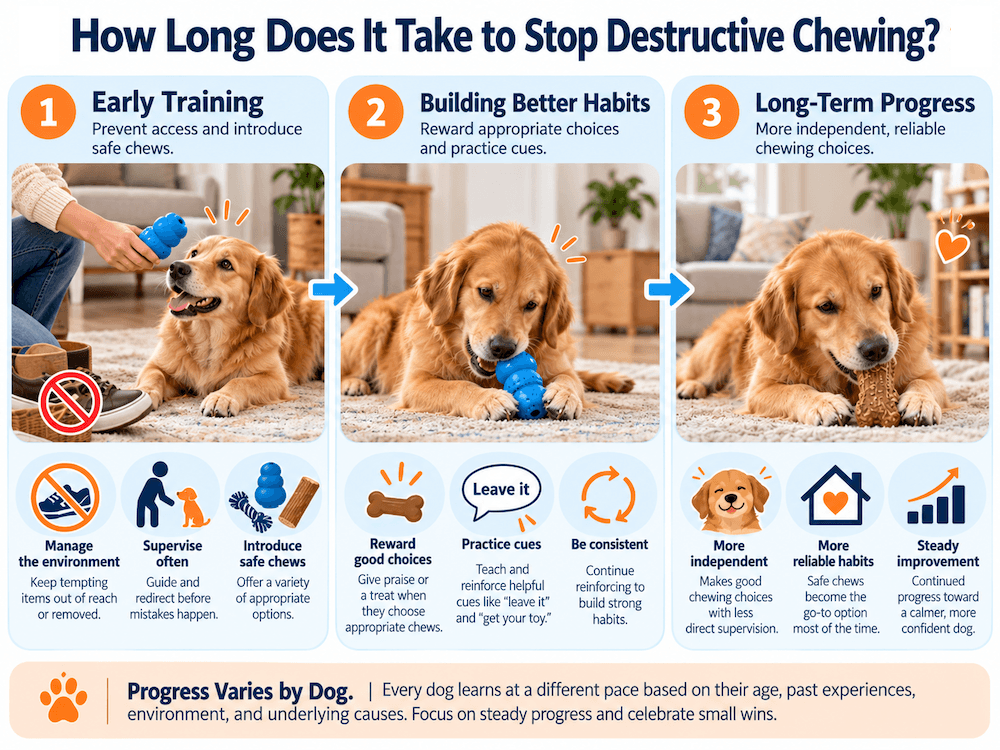
How Long Does It Take to Stop a Dog From Chewing?
Some dogs begin making better chewing choices within several days, while others require weeks or months of consistent training. Progress depends on your dog’s age, motivation, environment, and established habits, with puppies sometimes continuing exploratory chewing into adolescence. Early improvement may involve fewer destructive incidents, followed by voluntarily choosing appropriate toys and responding reliably to training cues. Focus on gradual, lasting improvement rather than a fixed deadline, since occasional setbacks are normal, especially during changes in routine or stress.
How to Maintain Progress After Chewing Training
Maintaining progress requires gradually increasing your dog’s freedom while continuing to reinforce appropriate chewing habits. The table below outlines practical ways to preserve results, recognize improvement, and respond to setbacks.
| Maintenance Habit | What to Do | Signs of Progress |
|---|---|---|
| Increase Freedom Gradually | Allow short, supervised access to additional rooms. | Your dog ignores inappropriate objects. |
| Provide Safe Chews | Keep appealing, appropriate chew toys available. | Your dog chooses approved toys independently. |
| Reinforce Good Choices | Occasionally reward appropriate chewing with praise or treats. | Good habits continue with fewer reminders. |
| Inspect Chew Toys | Check for damage and replace unsafe toys. | Toys remain intact and suitable for use. |
| Monitor Chewing Attempts | Record unwanted chewing incidents each week. | Attempts decrease in comparable situations. |
| Manage Setbacks | Review triggers and temporarily reduce unsupervised access. | Appropriate chewing habits become consistent again. |
What Research Says About Destructive Chewing in Dogs
The Merck Veterinary Manual explains that destructive chewing is often a normal exploratory behavior that becomes problematic when dogs lack appropriate activities or supervision. Its veterinary guidance emphasizes environmental management, enrichment, and identifying underlying anxiety when destruction occurs during owner absences. Similarly, the ASPCA’s destructive chewing guidance identifies teething, boredom, frustration, and separation-related distress as possible causes. Together, these resources support identifying the motivation behind chewing before choosing a training approach.
The American Veterinary Society of Animal Behavior (AVSAB) recommends reward-based methods for dog training and behavior modification. Its humane dog training position statement reviews evidence on training effectiveness and animal welfare, highlighting the risks associated with aversive methods. This supports using positive reinforcement, appropriate chewing alternatives, and consistent management instead of punishment when addressing destructive chewing.
The World Small Animal Veterinary Association’s 2026 Global Dental Guidelines, published in the Journal of Small Animal Practice, identify tooth fractures as a risk associated with very hard chews, including antlers, hooves, and nylon bones. The guidelines also discuss potential risks involving swallowed dental chews and their calorie content. These findings reinforce the importance of choosing appropriately sized, tooth-friendly chewing products and supervising their use, rather than assuming that the hardest or longest-lasting chew is the safest.[1]
Frequently Asked Questions
The Bottom Line
Stopping destructive chewing starts with understanding your dog’s behavior and providing safe, rewarding alternatives. Removing tempting household items, offering appropriate chew toys, and consistently reinforcing good choices can help prevent damage. Daily exercise, mental stimulation, and calm redirection also play important roles in building better habits. While puppies may chew more during teething, persistent chewing in adult dogs can require a closer look at their environment and emotional needs. Avoid punishment, and watch for signs of dental discomfort, unsafe object ingestion, or anxiety that warrant professional attention. Remember that progress takes time, and occasional setbacks are a normal part of training. With patience, supervision, and consistent positive reinforcement, most dogs can develop healthier chewing habits.
For help choosing appropriate alternatives, explore our best dog chew toys and best teething toys for puppies guides. If your dog needs help settling in a safe space, our crate training guide explains how to build comfort gradually. For dogs that become destructive when left alone, learn more about the signs and treatment options in our guide to separation anxiety in dogs.