What Are Designer Dogs? 30 Popular Breeds, Traits & Costs

Canine Bible is reader-supported. We receive affiliate commissions via some of our links. Learn more.
Designer dogs are intentionally bred from two different purebred dog breeds, often with the goal of combining desirable traits from each parent. These crosses can vary widely in appearance, temperament, coat type, and health, even among puppies from the same litter. Names such as Labradoodle, Goldendoodle, and Cockapoo have made designer dogs increasingly familiar, but the label itself can create confusion about what these dogs really are. Some people assume designer dogs are healthier, hypoallergenic, or more predictable than purebred dogs, yet those claims are not always guaranteed. Genetics can be complex, and mixed breeding does not automatically eliminate inherited health problems or produce a specific personality. Breeding practices also vary considerably, making the health testing and care provided by the breeder especially important. Understanding how designer dogs are bred, what traits they may inherit, and what risks to consider can help prospective owners make more informed choices.
What to Know About Designer Dogs
| Key Point | What Dog Owners Should Know |
|---|---|
| Definition | Designer dogs are intentional crosses between established breeds. |
| Examples | Goldendoodles, Labradoodles, Cockapoos, Cavapoos, and Maltipoos. |
| Predictability | Size, coat, temperament, and shedding can vary. |
| Health | Crossbreeding does not guarantee better health. |
| Allergies | No designer dog is guaranteed to be hypoallergenic. |
| Generations | F1, F1b, and F2 labels describe ancestry, not quality. |
| Breeder Choice | Prioritize health testing, temperament, and responsible breeding. |
| Best Fit | Choose based on the individual dog and your lifestyle. |
Designer Dogs vs. Purebred and Mixed-Breed Dogs
The main difference is how ancestry is documented and how deliberately the breeding was planned. “Designer dog” is an informal term rather than a scientific classification, and crossbreed is generally more accurate than hybrid because the parents are both domestic dogs.
| Dog Type | Typical Ancestry | Trait Predictability | Example |
|---|---|---|---|
| Designer crossbreed | Intentional cross of identifiable breeds. | Variable, especially in early generations. | Labradoodle or Cockapoo. |
| Purebred | Established breed with documented lineage. | Generally more consistent within breed standards. | Labrador Retriever or Poodle. |
| Mixed breed | Multiple breeds may contribute to ancestry. | Often less predictable without known parents. | Dog with several ancestral breeds. |
Why People Choose Designer Dogs
People are often drawn to designer dogs because they hope to combine appealing traits from two established breeds. However, these traits can vary considerably between individual puppies, even within the same litter.
30 Examples of Designer Dog Breeds
Designer dogs come in many combinations, often pairing breeds with different sizes, coat types, and temperaments. Here are 20 of the most recognizable designer dog crosses.


-

Parent breeds Labrador Retriever × Poodle
- Size
- Medium–large
- Lifespan
- 12–15 years
- Coat
- Straight · Wavy · Curly
- Energy
- High
- Grooming
- Moderate–high
- Shedding
- Low–moderate; varies
Common coat colors
- Cream
- Apricot
- Chocolate
- Black
- Red
General temperament
Best for
Active owners and families with time for daily exercise, companionship, regular training, and coat care.
Learn more about the Labradoodle
The Labradoodle combines Labrador Retriever and Poodle ancestry, and individual dogs can differ noticeably in size, coat, and temperament. Many are sociable, energetic companions who enjoy shared activities and training. Grooming needs and shedding vary, so consider the individual dog’s coat and your routine when deciding whether this cross is a good fit.
Read the full breed guide -
Parent breeds Golden Retriever × Poodle
- Size
- Medium–large
- Lifespan
- 10–15 years
- Coat
- Straight · Wavy · Curly
- Energy
- Moderate–high
- Grooming
- Moderate–high
- Shedding
- Low–moderate; varies
Common coat colors
- Cream
- Gold
- Apricot
- Red
- Brown
General temperament
Best for
Social households that enjoy daily walks, play, and regular grooming.
Learn more about the Goldendoodle
Goldendoodles often enjoy being involved in family activities. Poodle ancestry can influence adult size and coat texture, so meeting the parents can help set expectations. A curly coat still needs consistent brushing and does not guarantee an allergy-friendly dog.
Read the full breed guide -
Parent breeds Cocker Spaniel × Poodle
- Size
- Small–medium
- Lifespan
- 12–15 years
- Coat
- Wavy · Curly
- Energy
- Moderate–high
- Grooming
- Moderate–high
- Shedding
- Low–moderate; varies
Common coat colors
- Cream
- Apricot
- Red
- Brown
- Black
General temperament
Best for
Owners who want a playful companion and can provide activity, attention, and coat care.
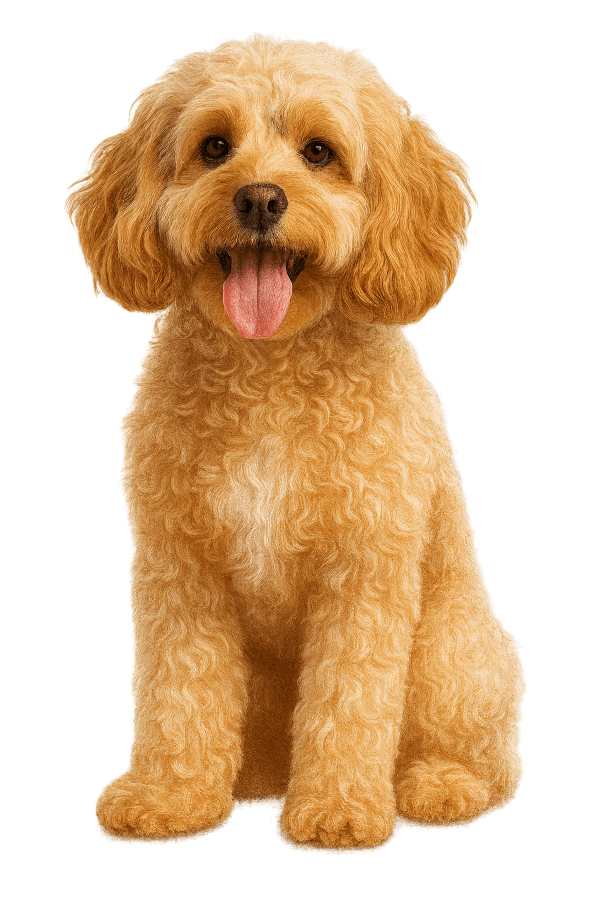
Learn more about the Cockapoo
Cockapoos can bring a lively, affectionate presence to the home. Their size and coat depend partly on the Poodle and Cocker Spaniel ancestry involved. Short training sessions and shared games offer useful outlets for their enthusiasm.
Read the full breed guide -
Parent breeds Cavalier King Charles Spaniel × Poodle
- Size
- Small
- Lifespan
- 12–15 years
- Coat
- Wavy · Curly
- Energy
- Moderate
- Grooming
- Moderate–high
- Shedding
- Low–moderate; varies
Common coat colors
- Cream
- Gold
- Apricot
- Red
- Parti
General temperament
Best for
Attentive households seeking a small companion for daily walks and gentle play.
Learn more about the Cavapoo
Cavapoos often form close relationships with their people. Their compact size does not remove the need for exercise, training, or time spent learning to settle independently. Coat texture and adult size can differ between dogs.
Read the full breed guide -
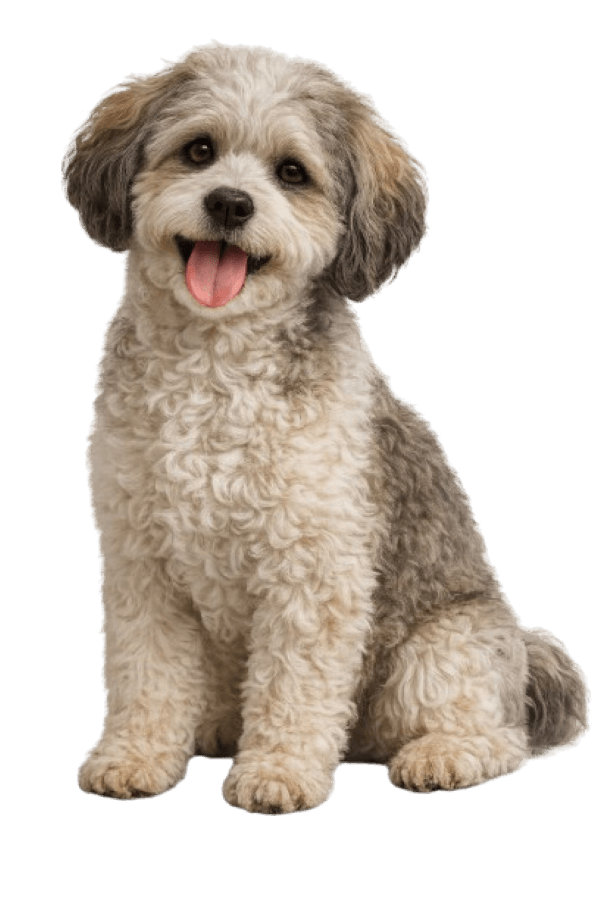
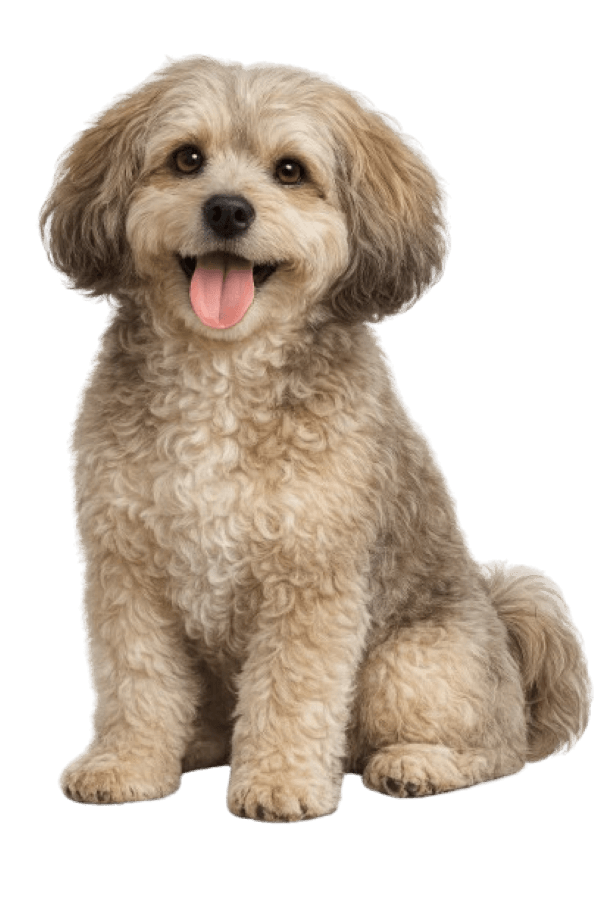
Parent breeds Maltese × Poodle
- Size
- Small
- Lifespan
- 12–15 years
- Coat
- Soft · Wavy · Curly
- Energy
- Moderate
- Grooming
- High
- Shedding
- Low; varies
Common coat colors
- White
- Cream
- Apricot
- Brown
- Black
General temperament
Best for
Owners with time for companionship, gentle handling, and frequent grooming.
Learn more about the Maltipoo
Maltipoos are small companion dogs whose coats may be soft, wavy, or curly. Many enjoy interactive play alongside quiet time with their owners. Plan for regular brushing and individual variation in shedding.
Read the full breed guide -
Parent breeds Bernese Mountain Dog × Poodle
- Size
- Medium–large
- Lifespan
- 12–15 years
- Coat
- Straight · Wavy · Curly
- Energy
- Moderate–high
- Grooming
- Moderate–high
- Shedding
- Low–moderate; varies
Common coat colors
- Black
- Brown
- White
- Tricolor
General temperament
Best for
Families prepared for an affectionate dog with substantial grooming and exercise needs.
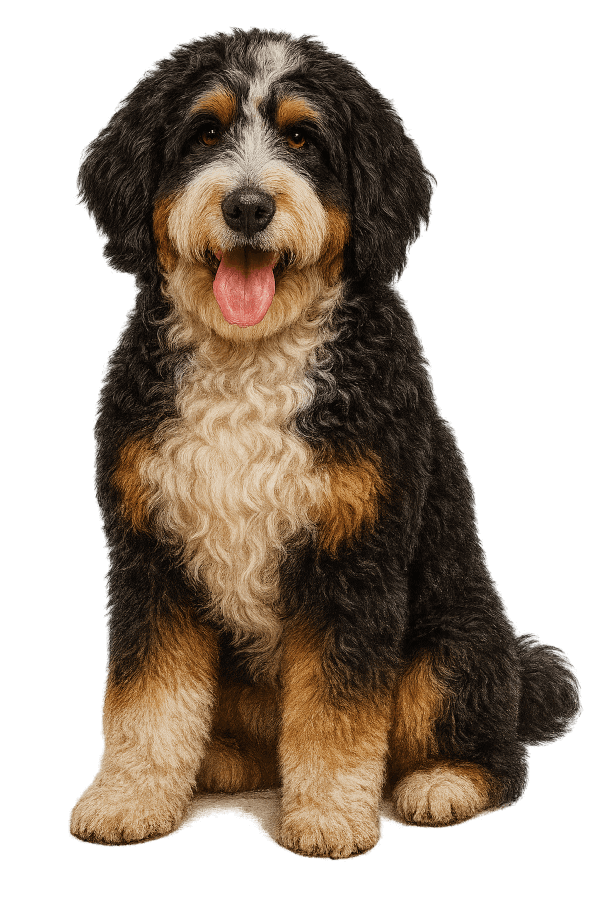
Learn more about the Bernedoodle
Bernedoodles can vary widely in size, depending on the Poodle ancestry. Some are outgoing while others need more time to feel comfortable with unfamiliar people. Consistent training and a manageable grooming routine matter more than expecting a fixed personality.
Read the full breed guide -
Parent breeds Schnauzer × Poodle
- Size
- Small–large
- Lifespan
- 12–15 years
- Coat
- Wiry · Wavy · Curly
- Energy
- Moderate–high
- Grooming
- Moderate–high
- Shedding
- Low; varies
Common coat colors
- Black
- Gray
- Silver
- Brown
- White
General temperament
Best for
Owners who enjoy training and can match the individual dog’s size and activity needs.
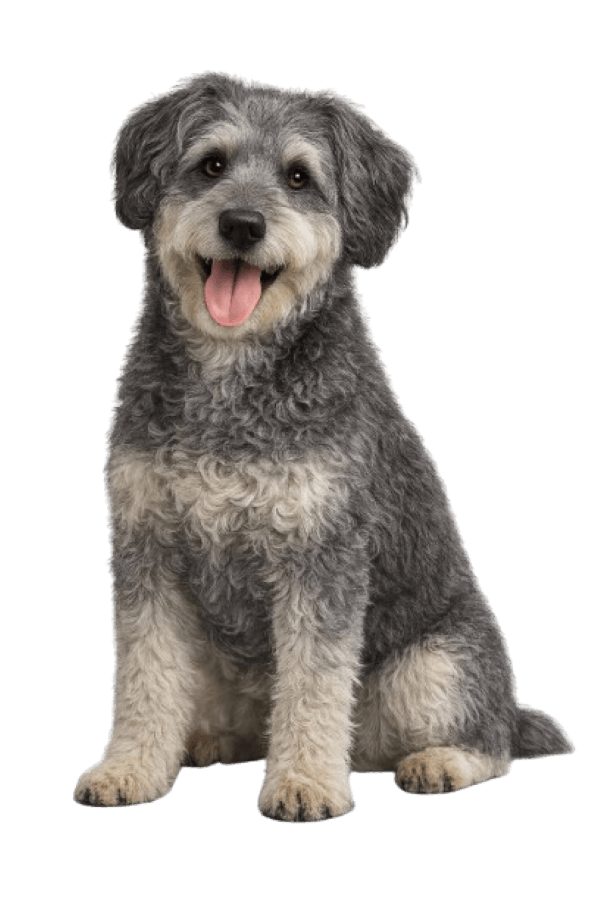
Learn more about the Schnoodle
Schnoodles may have Miniature, Standard, or Giant Schnauzer ancestry, so the name covers a broad size range. Coat texture can also differ. Their alert, engaged nature often suits owners who enjoy teaching skills and providing interactive play.
Read the full breed guide -
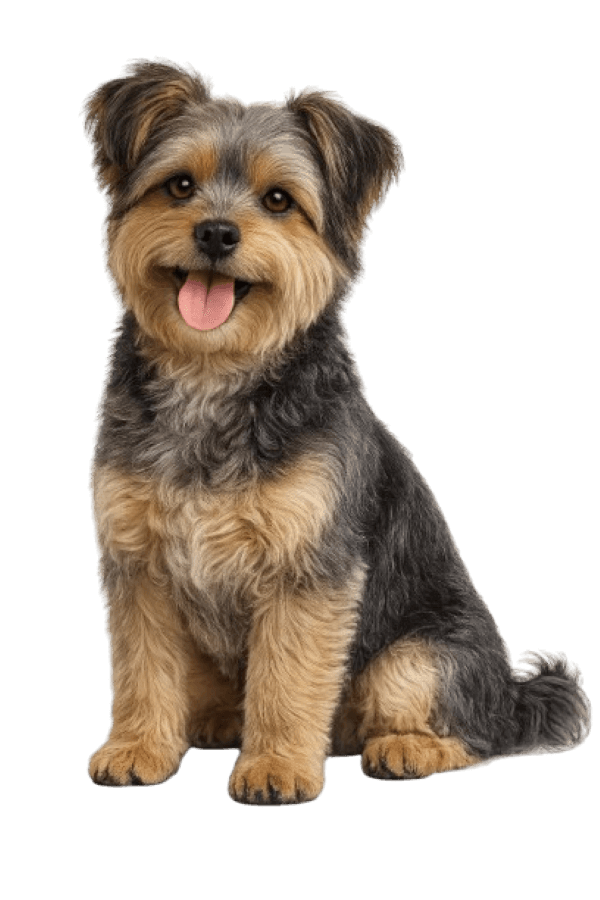
Parent breeds Yorkshire Terrier × Poodle
- Size
- Small
- Lifespan
- 12–15 years
- Coat
- Silky · Wavy · Curly
- Energy
- Moderate
- Grooming
- Moderate–high
- Shedding
- Low; varies
Common coat colors
- Black
- Tan
- Brown
- Silver
- Cream
General temperament
Best for
Households seeking a small, lively companion with time for grooming and training.
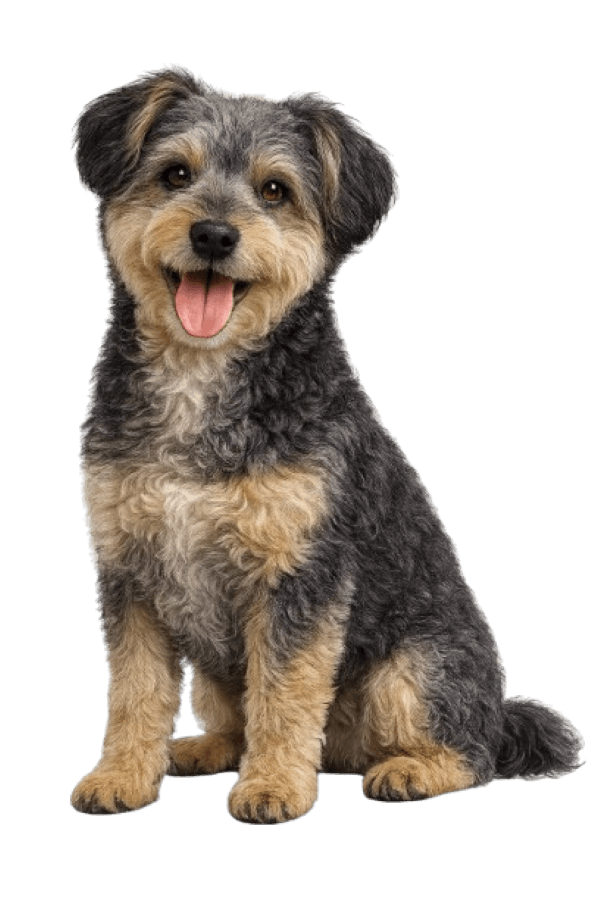
Learn more about the Yorkipoo
Yorkipoos can combine a small frame with an alert, expressive personality. Their coats may lean toward silky hair or softer curls. Rewarding calm behavior and introducing everyday sounds gradually can help build good habits.
Read the full breed guide -

Pomapoo
Parent breeds Pomeranian × Poodle
- Size
- Small
- Lifespan
- 12–16 years
- Coat
- Fluffy · Wavy · Curly
- Energy
- Moderate
- Grooming
- Moderate–high
- Shedding
- Low–moderate; varies
Common coat colors
- Cream
- Red
- Brown
- Black
- White
General temperament
Best for
Owners who enjoy small companion dogs and can provide daily play and coat care.
Learn more about the Pomapoo
Pomapoos may inherit a fluffy Pomeranian-style coat or a wavier, curlier texture. Their size and shedding are not completely predictable from the cross’s name. Give them gentle handling, regular activity, and opportunities to learn.
-
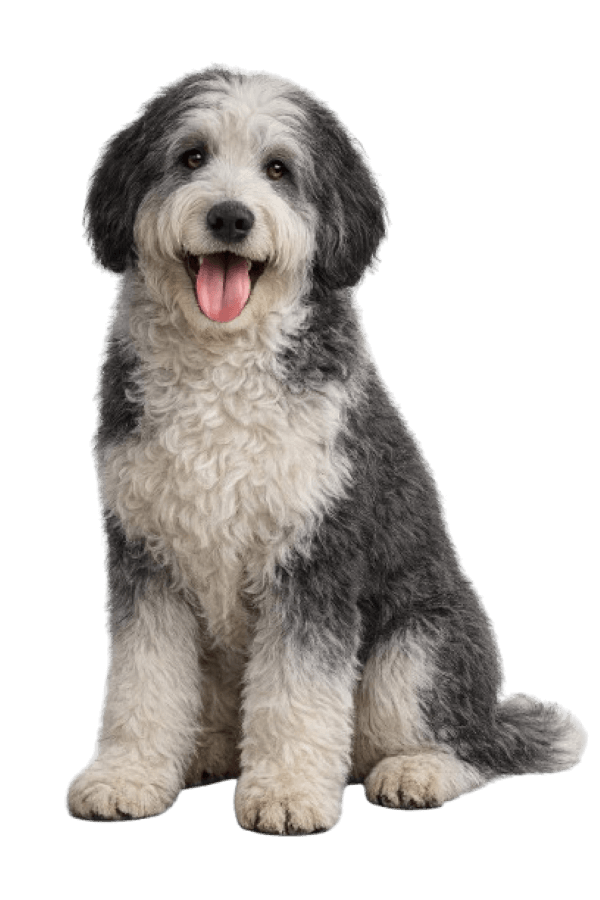
Parent breeds Old English Sheepdog × Poodle
- Size
- Medium–large
- Lifespan
- 12–15 years
- Coat
- Wavy · Curly
- Energy
- High
- Grooming
- High
- Shedding
- Low–moderate; varies
Common coat colors
- Black
- White
- Gray
- Mixed
General temperament
Best for
Active families with time for training, companionship, and demanding coat maintenance.
Learn more about the Sheepadoodle
Sheepadoodles can be playful, substantial dogs with coats that require considerable upkeep. Herding tendencies may appear during exciting games. Structured activities and consistent household routines help channel their enthusiasm.
Read the full breed guide -

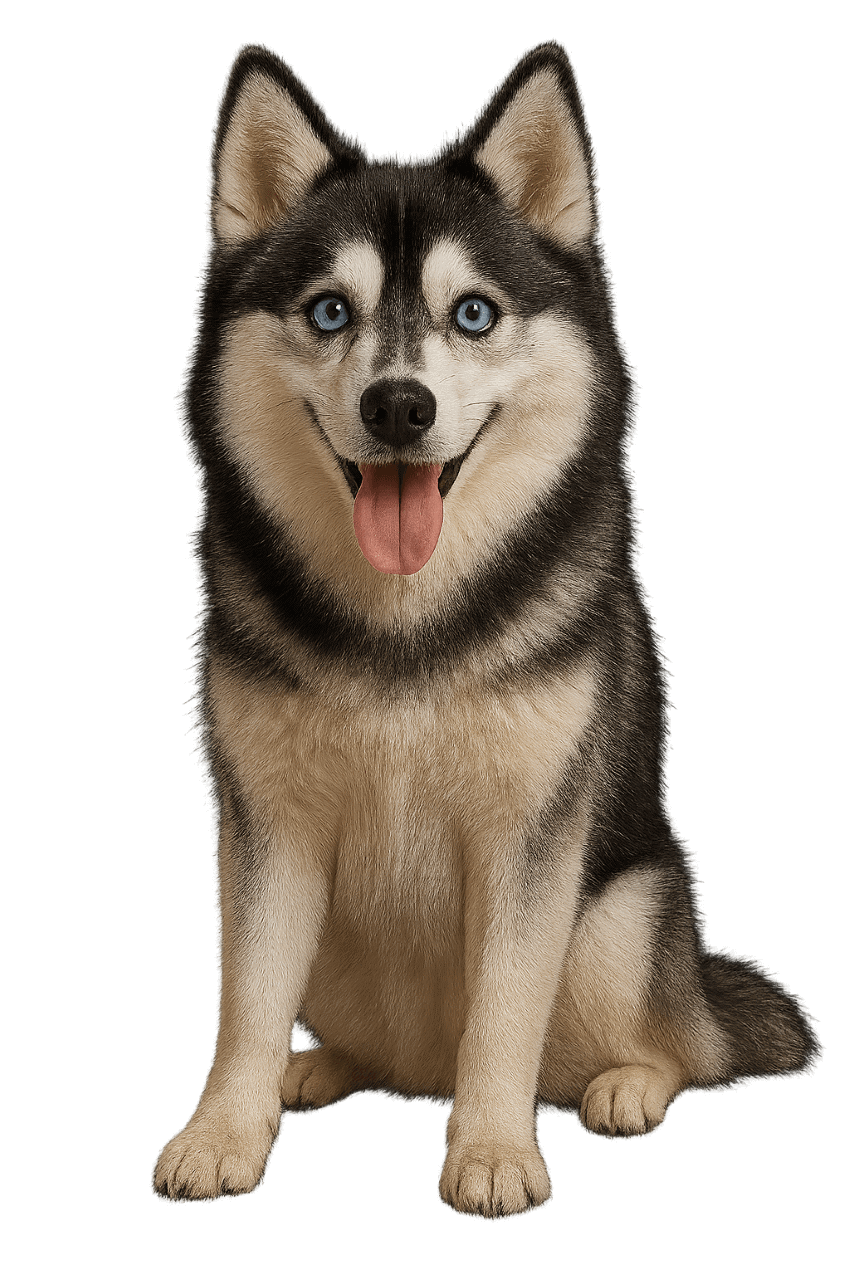
Parent breeds Pomeranian × Siberian Husky
- Size
- Small–medium
- Lifespan
- 12–15 years
- Coat
- Dense · Double coat
- Energy
- High
- Grooming
- Moderate–high
- Shedding
- High
Common coat colors
- Gray
- White
- Black
- Red
- Brown
General temperament
Best for
Active owners comfortable with vocal dogs, shedding, and consistent training.
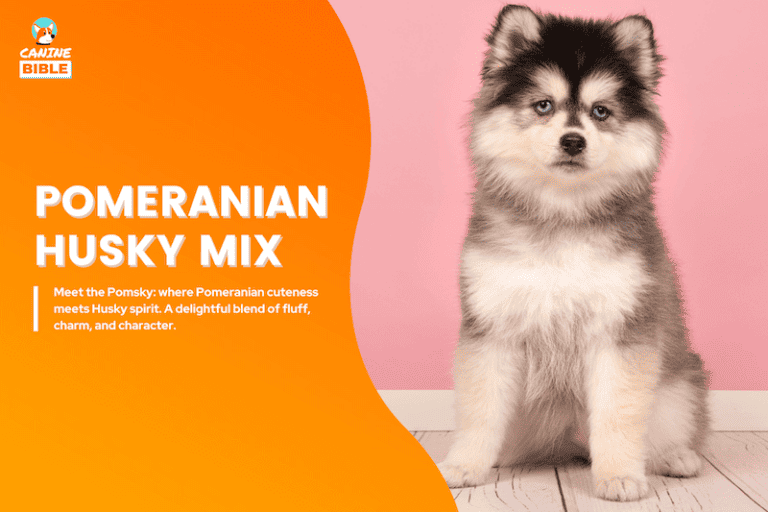
Learn more about the Pomsky
Pomskies vary in adult size and may inherit strong independence alongside a playful nature. Their dense coats can shed heavily. Daily enrichment and secure outdoor spaces are useful considerations for this energetic cross.
Read the full breed guide -
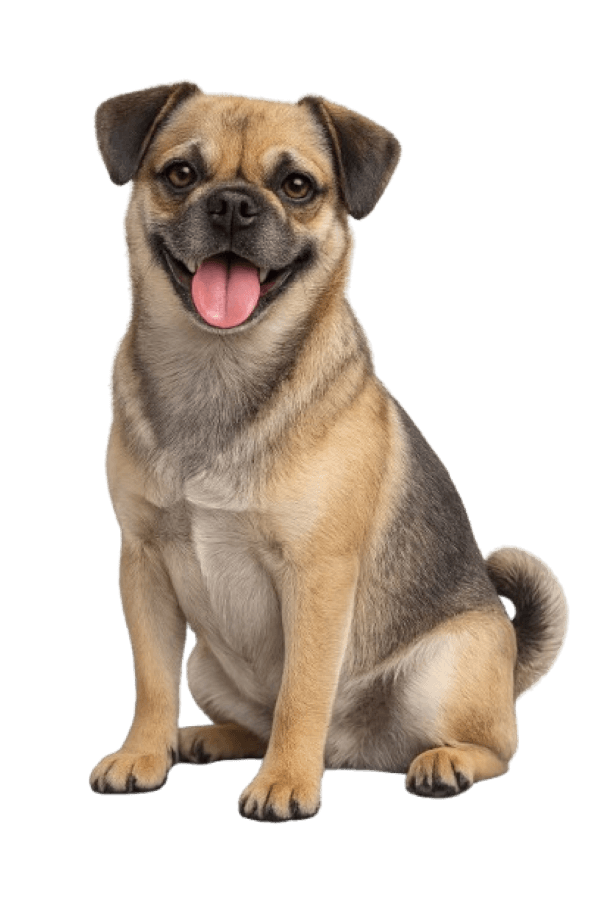
- Size
- Small–medium
- Lifespan
- 10–15 years
- Coat
- Short · Smooth
- Energy
- Moderate–high
- Grooming
- Low
- Shedding
- Moderate
Common coat colors
- Fawn
- Black
- Brown
- Mixed
General temperament
Best for
Households that enjoy daily walks, scent games, and patient reward-based training.
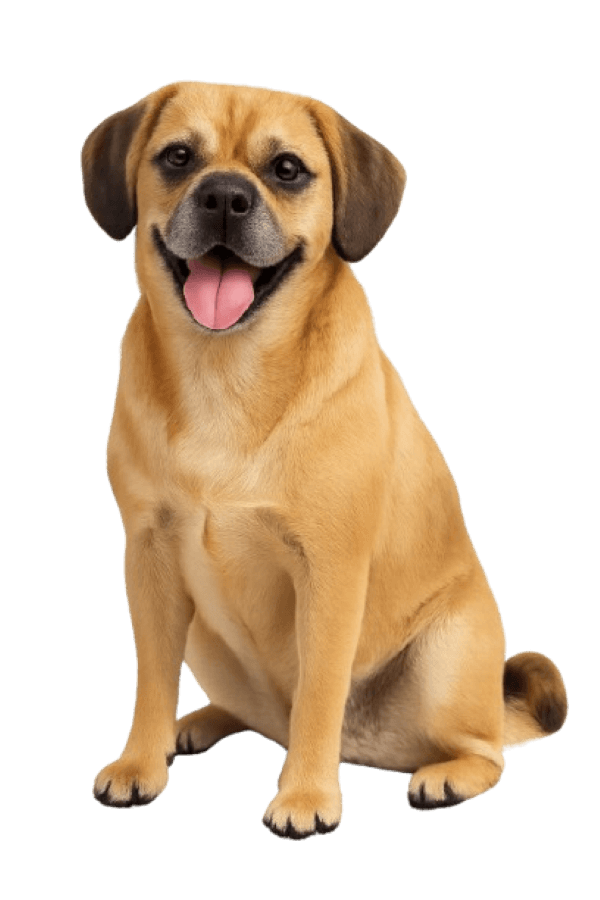
Learn more about the Puggle
Puggles may pair a Beagle’s curiosity with a Pug’s affectionate nature. Their interest in smells can make walks especially engaging. Build routines around the individual dog’s stamina and temperament rather than expecting every Puggle to behave alike.
Read the full breed guide -
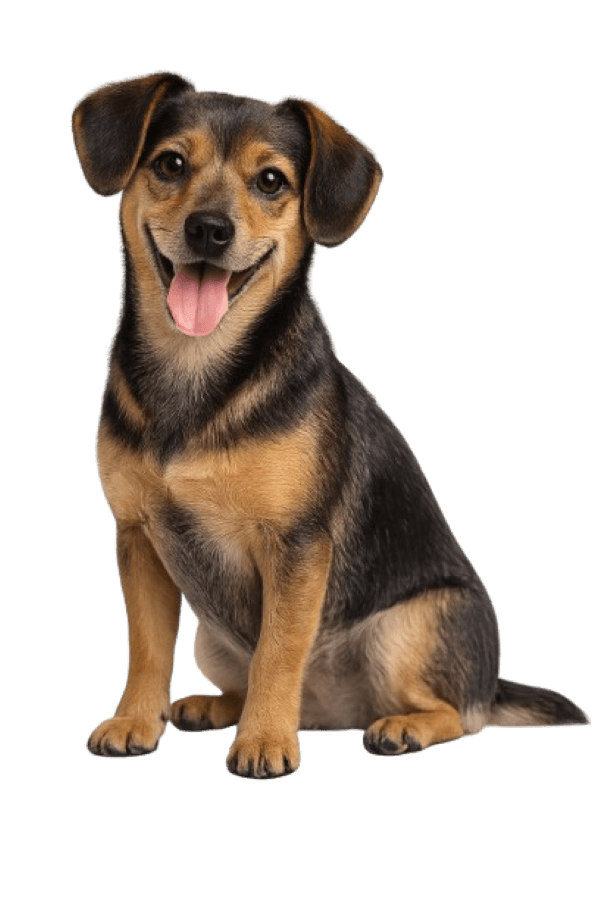
Parent breeds Chihuahua × Dachshund
- Size
- Small
- Lifespan
- 12–16 years
- Coat
- Short · Long · Wiry
- Energy
- Moderate
- Grooming
- Low–moderate
- Shedding
- Low–moderate
Common coat colors
- Black
- Tan
- Brown
- Cream
- Red
General temperament
Best for
Owners seeking a small, devoted companion and willing to build confidence gradually.
Learn more about the Chiweenie
Chiweenies can inherit different coat lengths and body proportions from their parents. Some are outgoing, while others need gentle introductions to new people and places. Consistent, positive training supports their lively personalities.
Read the full breed guide -
Chorkie
Parent breeds Chihuahua × Yorkshire Terrier
- Size
- Small
- Lifespan
- 12–15 years
- Coat
- Silky · Medium-length
- Energy
- Moderate
- Grooming
- Moderate–high
- Shedding
- Low–moderate
Common coat colors
- Black
- Tan
- Brown
- Gray
General temperament
Best for
Attentive owners who can offer gentle handling, coat care, and short daily activities.
Learn more about the Chorkie
Chorkies often have a spirited personality in a small body. Their coats can vary in length and texture, and some are more vocal than others. Calm introductions and rewarding relaxed behavior help establish everyday manners.
-
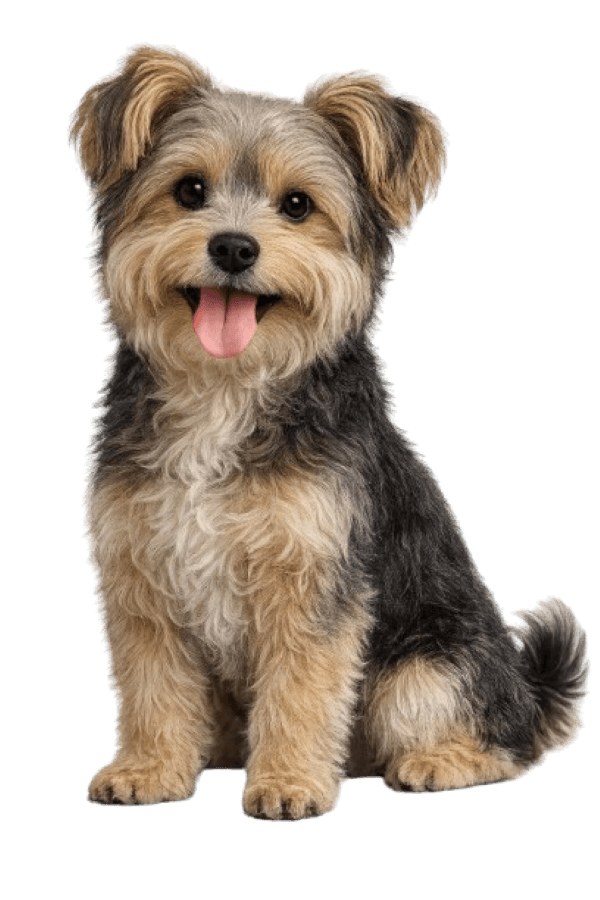
Parent breeds Shih Tzu × Yorkshire Terrier
- Size
- Small
- Lifespan
- 11–16 years
- Coat
- Silky · Straight · Wavy
- Energy
- Moderate
- Grooming
- High
- Shedding
- Low; varies
Common coat colors
- Black
- Brown
- Gold
- White
General temperament
Best for
Companion-focused homes with time for frequent brushing, play, and training.
Learn more about the Shorkie
Shorkies often enjoy close involvement in their owners’ routines. Their longer coats need regular attention even when kept in a shorter trim. Small size should still be paired with clear boundaries and positive learning opportunities.
Read the full breed guide -
Parent breeds Maltese × Yorkshire Terrier
- Size
- Small
- Lifespan
- 12–15 years
- Coat
- Fine · Silky · Wavy
- Energy
- Moderate
- Grooming
- High
- Shedding
- Low; varies
Common coat colors
- Black
- Tan
- Brown
- White
- Silver
General temperament
Best for
Owners seeking a close companion and able to maintain a regular grooming routine.
Learn more about the Morkie
Morkies may have fine, silky coats and a lively approach to play. Gentle handling is especially important with small dogs. Daily engagement and gradual practice spending time independently can support a balanced routine.
Read the full breed guide -
Parent breeds Australian Shepherd × Poodle
- Size
- Medium–large
- Lifespan
- 10–15 years
- Coat
- Wavy · Curly
- Energy
- High
- Grooming
- Moderate–high
- Shedding
- Low–moderate; varies
Common coat colors
- Black
- Brown
- Red
- Blue merle
- Mixed
General temperament
Best for
Active owners who enjoy training, enrichment, and outdoor activities.
Learn more about the Aussiedoodle
Aussiedoodles often benefit from activities that challenge both body and mind. Some inherit herding tendencies from their Australian Shepherd ancestry. Their Poodle ancestry influences size and coat, but it does not make either trait completely predictable.
Read the full breed guide -
Parent breeds Boxer × Labrador Retriever
- Size
- Large
- Lifespan
- 10–12 years
- Coat
- Short · Smooth
- Energy
- High
- Grooming
- Low
- Shedding
- Moderate
Common coat colors
- Black
- Brown
- Fawn
- White
General temperament
Best for
Active households comfortable with a large, enthusiastic dog and consistent training.
Learn more about the Boxador
Boxadors can be strong, playful companions who enjoy shared activities. Their shorter coats are generally simpler to maintain than long or curly coats. Early work on polite greetings and everyday manners is valuable for a boisterous dog.
Read the full breed guide -
Gerberian Shepsky
Parent breeds German Shepherd × Siberian Husky
- Size
- Medium–large
- Lifespan
- 10–14 years
- Coat
- Dense · Double coat
- Energy
- High
- Grooming
- High
- Shedding
- High
Common coat colors
- Black
- Gray
- White
- Tan
- Sable
General temperament
Best for
Experienced, active owners with time for exercise, training, and substantial shedding.
Learn more about the Gerberian Shepsky
Gerberian Shepskies combine two active working-breed backgrounds. Independence, alertness, and a strong desire for activity can all appear. Their dense coats and need for engagement make them a substantial day-to-day commitment.
-
Goberian
Parent breeds Golden Retriever × Siberian Husky
- Size
- Medium–large
- Lifespan
- 10–15 years
- Coat
- Medium · Dense · Double coat
- Energy
- High
- Grooming
- Moderate–high
- Shedding
- Moderate–high
Common coat colors
- Cream
- Gold
- Gray
- Black
- White
General temperament
Best for
Active households that enjoy outdoor time and can manage a dense, shedding coat.
Learn more about the Goberian
Goberians may combine a Golden Retriever’s sociability with a Husky’s independence. Individual dogs differ in how strongly either influence appears. Shared exercise, enrichment, and consistent training help meet their needs.
-
Parent breeds Shih Tzu × Poodle
- Size
- Small
- Lifespan
- 10–15 years
- Coat
- Silky · Wavy · Curly
- Energy
- Moderate
- Grooming
- High
- Shedding
- Low; varies
Common coat colors
- Black
- White
- Brown
- Cream
- Apricot
General temperament
Best for
Owners seeking a small companion with time for play, attention, and regular brushing.
Learn more about the Shih-Poo
Shih-Poos are often affectionate dogs who enjoy close contact with their households. Their coats may lean silky, wavy, or curly. Daily play and short training sessions suit their companion-oriented nature.
Read the full breed guide -
- Size
- Small
- Lifespan
- 10–13 years
- Coat
- Short · Smooth; varies
- Energy
- Moderate
- Grooming
- Low–moderate
- Shedding
- Moderate
Common coat colors
- Fawn
- Black
- Brown
- Cream
General temperament
Best for
Households seeking a compact companion for gentle daily activity and shared time.
Learn more about the Chug
Chugs can be playful, attentive dogs with a strong attachment to their people. Coat and facial shape vary between individuals. Patient training and a predictable routine help their alert personality fit comfortably into home life.
Read the full breed guide -
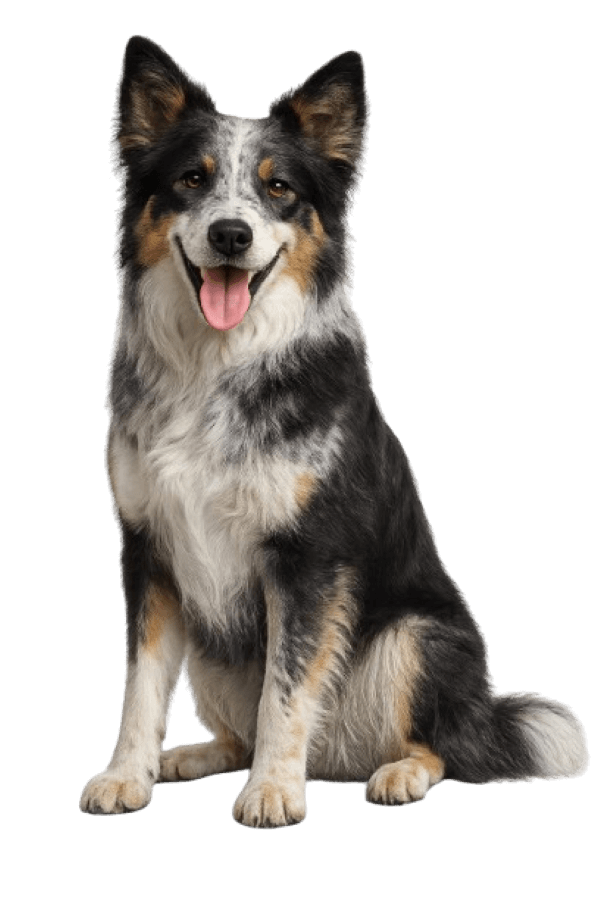
Parent breeds Border Collie × Australian Shepherd
- Size
- Medium
- Lifespan
- 12–15 years
- Coat
- Medium · Double coat
- Energy
- High
- Grooming
- Moderate
- Shedding
- Moderate–high
Common coat colors
- Black
- White
- Red
- Blue merle
General temperament
Best for
Very active owners who enjoy training, agility-style games, and daily mental challenges.
Learn more about the Border-Aussie
Border-Aussies combine two herding backgrounds and often need a substantial amount of engagement. They may notice movement quickly and try to herd during play. Purposeful activities suit them better than relying on an outdoor space alone.
Read the full breed guide -
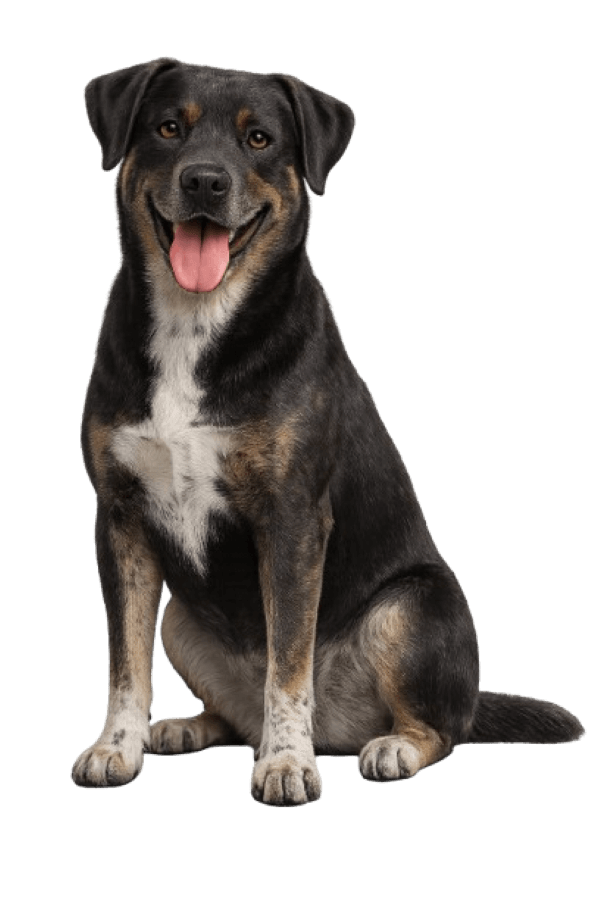
Parent breeds American Pit Bull Terrier × Labrador Retriever
- Size
- Medium–large
- Lifespan
- 10–14 years
- Coat
- Short · Dense
- Energy
- High
- Grooming
- Low
- Shedding
- Moderate
Common coat colors
- Black
- Brown
- Fawn
- White
General temperament
Best for
Active owners ready to provide exercise, consistent training, and companionship.
Learn more about the Pitador
Pitadors can be strong, energetic dogs who enjoy spending time with their people. Their short coats need routine brushing, particularly during shedding. Assess sociability and exercise needs individually rather than assuming every dog will inherit the same traits.
Read the full breed guide -
Parent breeds Pekingese × Poodle
- Size
- Small
- Lifespan
- 12–15 years
- Coat
- Soft · Wavy · Curly
- Energy
- Moderate
- Grooming
- Moderate–high
- Shedding
- Low; varies
Common coat colors
- Cream
- White
- Black
- Brown
General temperament
Best for
Owners seeking a small, affectionate companion and able to provide frequent coat care.
Learn more about the Peekapoo
Peekapoos combine Pekingese and Poodle ancestry and often enjoy close family bonds. Their coats and facial features can vary. A regular grooming routine and daily play help meet their everyday needs.
Read the full breed guide -

Parent breeds French Bulldog × American Pit Bull Terrier
- Size
- Small–medium
- Lifespan
- 10–14 years
- Coat
- Short · Smooth
- Energy
- Moderate
- Grooming
- Low
- Shedding
- Low–moderate
Common coat colors
- Brindle
- Fawn
- Black
- White
General temperament
Best for
Owners comfortable with a sturdy, affectionate dog and patient, consistent training.
Learn more about the French Pitbull
French Pitbulls combine French Bulldog and American Pit Bull Terrier ancestry. Build, facial shape, and energy can differ considerably between dogs. Focus on the individual’s behavior and needs when considering whether this cross suits your home.
Read the full breed guide -
Parent breeds French Bulldog × Havanese
- Size
- Small
- Lifespan
- 12–15 years
- Coat
- Short · Soft · Wavy
- Energy
- Moderate
- Grooming
- Moderate
- Shedding
- Low–moderate; varies
Common coat colors
- White
- Cream
- Fawn
- Black
General temperament
Best for
Companion-focused households that can provide daily play, attention, and brushing.
Learn more about the Frenchnese
Frenchnese dogs combine French Bulldog and Havanese ancestry. Their coats can range from relatively short to softer and wavier. Many enjoy family interaction, while grooming needs depend on the coat they inherit.
Read more about this mix -
Parent breeds French Bulldog × Border Collie
- Size
- Medium
- Lifespan
- 11–15 years
- Coat
- Short–medium
- Energy
- Moderate–high
- Grooming
- Moderate
- Shedding
- Moderate
Common coat colors
- Black
- White
- Brindle
- Fawn
General temperament
Best for
Owners who enjoy interactive games, daily walks, and regular training.
Learn more about the French Bull Collie
This French Bull Collie refers to the French Bulldog–Border Collie cross. These dogs can inherit enthusiasm for learning and activity, with variation in build and coat. Their needs should be assessed individually rather than assuming a fixed balance between the parents.
Read more about this mix -
Parent breeds French Bulldog × Boston Terrier
- Size
- Small
- Lifespan
- 12–15 years
- Coat
- Short · Smooth
- Energy
- Moderate
- Grooming
- Low
- Shedding
- Low–moderate
Common coat colors
- Brindle
- Black
- White
- Fawn
General temperament
Best for
Households seeking a small, sociable companion for everyday play and shared routines.
Learn more about the Frenchton
Frenchtons combine French Bulldog and Boston Terrier ancestry. Their short coats usually require relatively simple brushing, and many enjoy interactive play. The parent breeds can influence build, facial shape, and temperament in different proportions.
Read more about this mix -
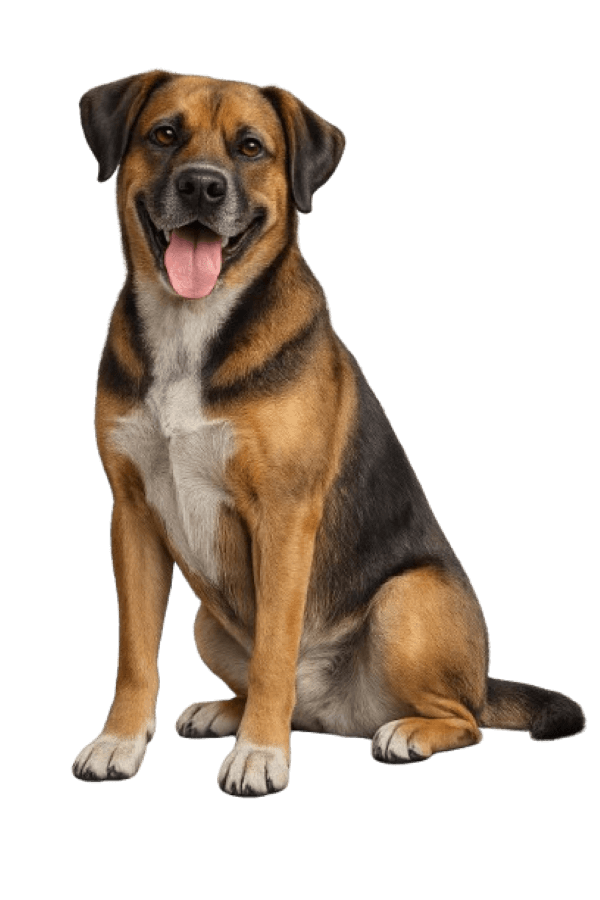
Parent breeds Beagle × Labrador Retriever
- Size
- Medium
- Lifespan
- 10–14 years
- Coat
- Short · Dense
- Energy
- High
- Grooming
- Low–moderate
- Shedding
- Moderate; seasonal
Common coat colors
- Black
- Brown
- Tan
- White
General temperament
Best for
Active owners who enjoy walks, scent games, and consistent reward-based training.
Learn more about the Beagador
Beagadors combine Beagle and Labrador Retriever ancestry. Many enjoy following scents, exploring, and taking part in family activities. Individual dogs can differ in build, coloring, energy, and how strongly they inherit traits from either parent breed.
Read more about this mix

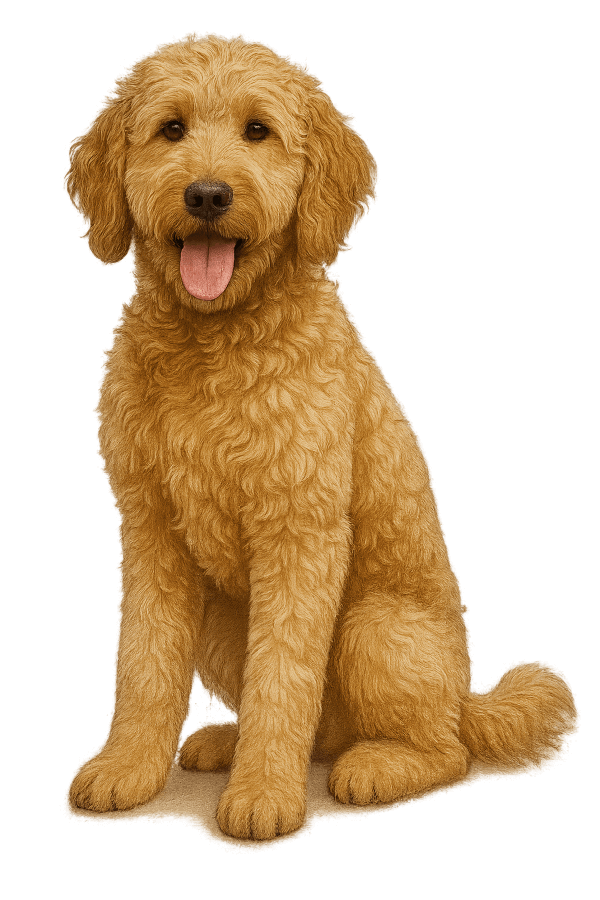
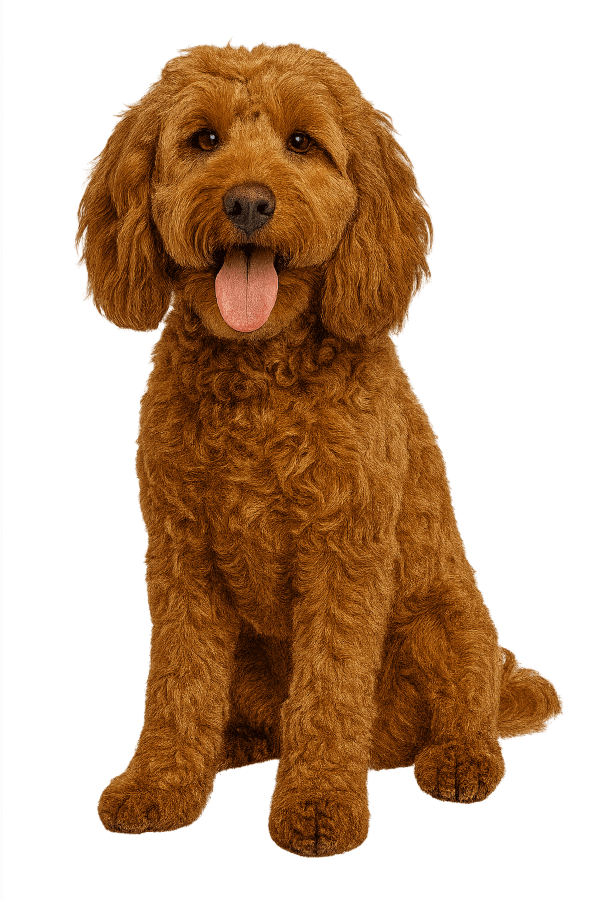








Keep in mind: Designer dogs can vary considerably even within the same cross. Size, lifespan, coat type, color, shedding, grooming needs, energy level, and temperament are approximate tendencies rather than guarantees. Parent size, ancestry, genetics, socialization, training, health, and environment can influence these traits. Miniature and toy lines may be smaller than the size categories shown. No cross is guaranteed to be hypoallergenic. Color swatches are illustrative.
How Much Does a Designer Dog Puppy Cost?
A designer dog puppy from a breeder may cost roughly $1,500–$5,000 or more in the U.S., although there is no single standard price across all crosses. Popularity, location, parentage, breeder practices, health testing, and veterinary care included before pickup can all affect the final cost.
What Affects the Price of a Designer Dog?
Purchase Price Isn’t the Only Cost
The initial puppy price is only one part of the budget. Costs of owning a dog can vary substantially depending on the dog’s adult size, coat, health, and training needs.
| Expense | What to Consider |
|---|---|
| Grooming | Some coats require professional grooming every several weeks. |
| Food | Larger dogs generally cost more to feed. |
| Veterinary Care | Budget for preventive care and unexpected health problems. |
| Training | Puppy classes or professional help can add costs. |
| Supplies | Crate, bed, leash, toys, bowls, and grooming tools. |
| Pet Insurance | Premiums vary by age, size, location, and coverage. |
How Are Designer Dogs Bred?
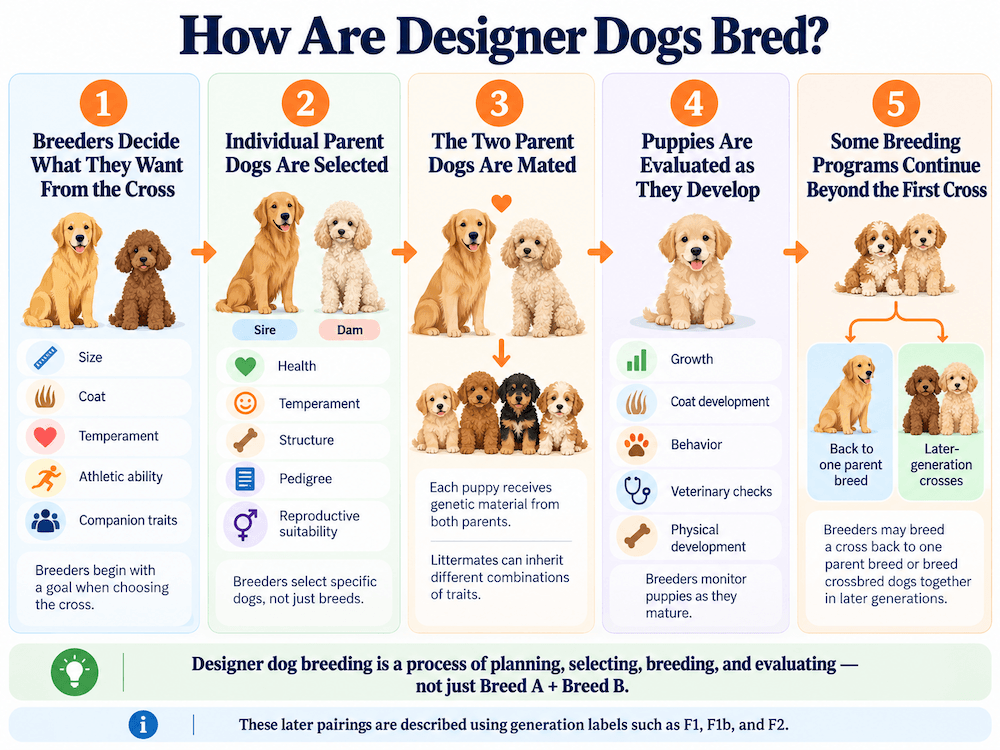
Designer dogs are produced by intentionally mating dogs from two different established breeds. Breeders usually begin with a goal, such as achieving a certain size, coat type, appearance, working ability, or general temperament. However, breeding creates a new genetic combination rather than a guaranteed result, so puppies can inherit different traits from either parent.


How Designer Dog Generations Work
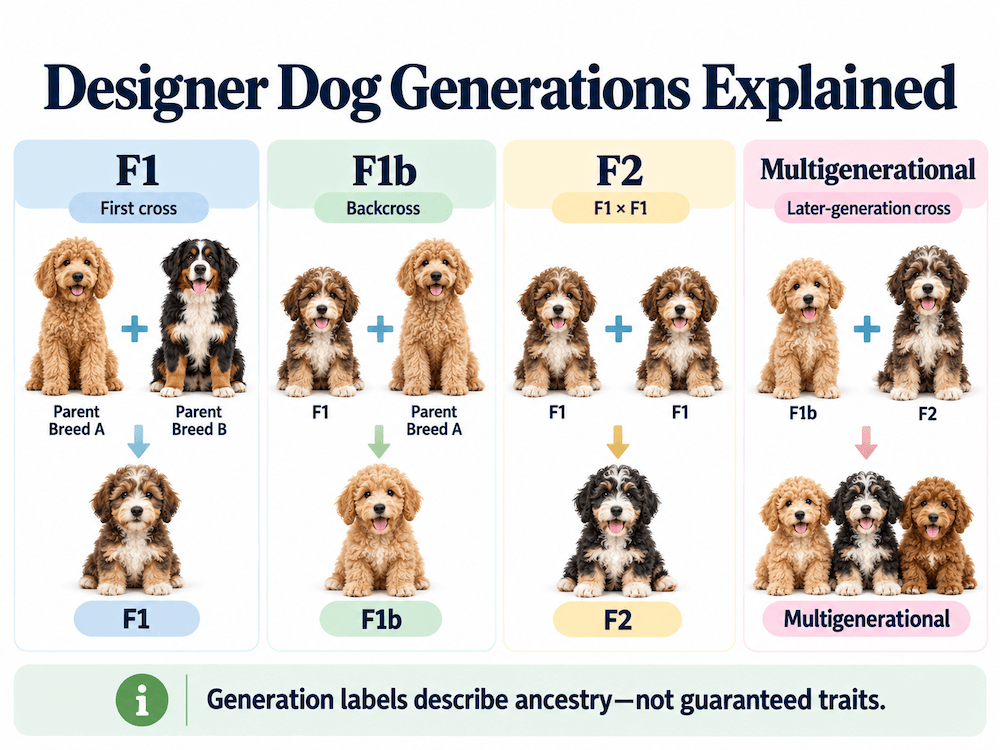
Labels such as F1, F1b, and F2 describe ancestry, not quality. They can help explain how a litter was produced, but they do not guarantee a particular coat, personality, size, or health outcome.
How Predictable Are Designer Dogs?
Designer dogs can inherit genes from either parental line in combinations that are difficult to predict. Coat texture, shedding, adult size, body structure, activity level, trainability, and temperament can all vary. Predictability is often especially limited in first-generation crosses.
A puppy also develops through more than genetics alone. Early puppy socialization, training, maternal care, environment, exercise, and individual experiences can influence behavior as the dog matures.
Are Designer Dogs Healthier or Hypoallergenic?
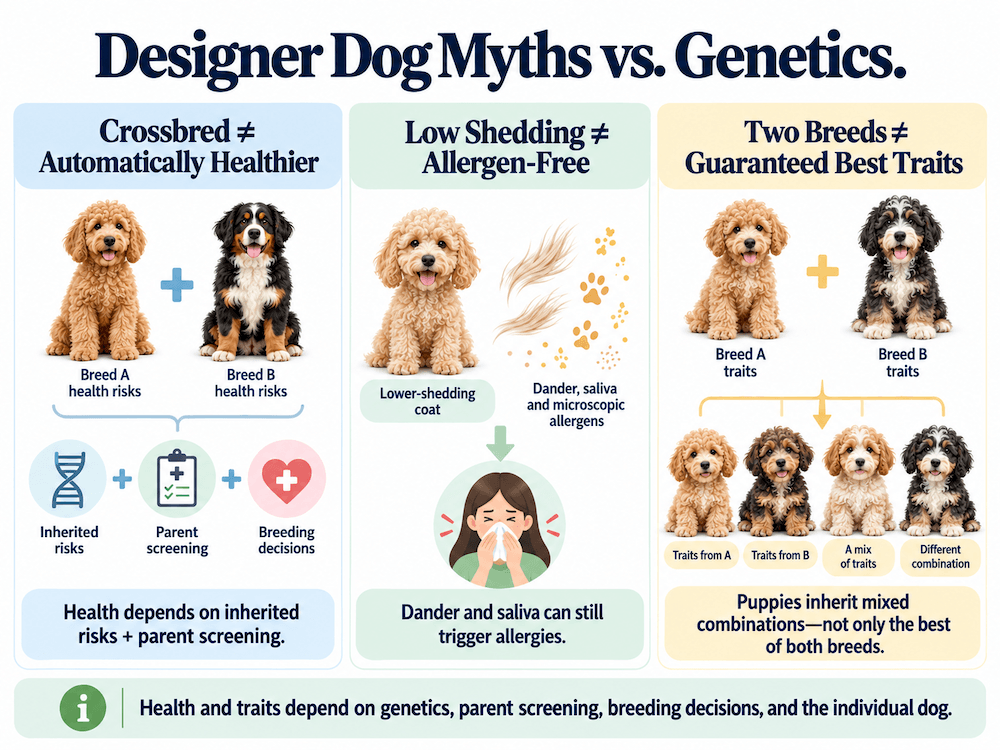
Crossbreeding can increase genetic diversity and may reduce the chance of certain recessive inherited conditions when the parental breeds carry different harmful variants. However, this does not make designer dogs automatically healthier. Both parent breeds may contribute inherited disorders, and some health problems involve many genes plus environmental factors.
Claims about allergy-friendly coats also need caution. Dog allergens come from sources including skin and saliva, so low shedding is not the same as allergen-free.
What Research Says About Designer Dog Health
A 2024 PLOS ONE study led by Royal Veterinary College researchers compared 9,402 Cockapoos, Labradoodles, Cavapoos, and their parental breeds. Across 342 comparisons involving 57 health disorders, 86.6% showed no statistically significant difference, providing little evidence that these three popular designer crosses were generally healthier or less healthy than their purebred progenitors. For owners, this means crossbreeding alone should not be treated as a reliable health guarantee.[1]
Earlier research from UC Davis examined inherited disorders among more than 27,000 affected purebred and mixed-breed dogs. Thirteen of 24 disorders occurred at similar frequencies, while some were more common in purebreds and one was more common in mixed breeds. The findings reinforce that the effect of breed ancestry on disease risk depends on the specific disorder, rather than fitting a simple “mixed is healthier” rule.[2]
A study published in the Journal of Allergy and Clinical Immunology measured the major dog allergen Can f 1 in dogs and their homes and found no evidence supporting classification of particular breeds as truly hypoallergenic. This is important for families considering a Poodle cross primarily because of dog allergies: coat appearance or reduced shedding cannot guarantee low allergen exposure.[3]
For breeding decisions, the Orthopedic Foundation for Animals’ Canine Health Information Center uses breed-specific health-screening protocols developed with participating parent clubs. Its guidance highlights why potential owners should look for documented screening relevant to each parental breed, rather than assuming that a cross automatically avoids inherited conditions.
Grooming, Training, Exercise & Care Expectations of Designer Dogs
Care needs can vary widely because designer dogs may inherit different coat types, energy levels, body sizes, and behavioral traits from either parent breed. Owners should base daily care on the individual dog and both parent breeds, not the designer name alone.
| Care Area | What to Expect | Owner Priority |
|---|---|---|
| Grooming | Needs range from occasional brushing to frequent coat care. | Match grooming to coat type and matting risk. |
| Training | Trainability and focus can vary between individuals. | Use consistent, reward-based training from puppyhood. |
| Exercise | Activity needs may range from moderate to very high. | Consider both parent breeds’ energy levels. |
| Mental Stimulation | Many crosses benefit from games, training, and enrichment. | Provide regular problem-solving and interactive activities. |
| Socialization | Early experiences can strongly influence adult behavior. | Introduce people, dogs, sounds, and environments gradually. |
| Health Care | Preventive needs reflect size, age, and inherited risks. | Maintain routine veterinary and dental care. |
Pros and Cons of Designer Dogs
Designer dogs can offer appealing combinations of size, coat type, temperament, and appearance, but those traits are never guaranteed. Crossbreeding may increase genetic diversity, yet inherited health problems and demanding grooming needs can still occur. Some designer dogs may shed less, but none should be assumed to be truly hypoallergenic. The best choice depends on the individual dog, both parent breeds, health testing, and responsible breeding practices.
Pros
-
Trait Combination
May combine desirable traits from two breeds.
-
Size Options
Many crosses come in different size ranges.
-
Coat Variety
Some may have lower-shedding coat types.
-
Genetic Diversity
Crossbreeding can increase genetic diversity.
-
Lifestyle Choices
Wide variety of energy levels, looks, and companion types.
Cons
-
Less Predictable
Size, coat, temperament, and shedding can vary.
-
Health Risks Remain
Puppies can inherit conditions from either parent breed.
-
Not Truly Hypoallergenic
Low shedding does not guarantee low allergen exposure.
-
High Grooming Needs
Some designer coats mat easily and require frequent care.
-
Breeder Quality Varies
Popularity can encourage irresponsible or poorly screened breeding.
Evaluate the individual dog, both parent breeds, health testing, and breeder practices—not the designer name alone.
How to Choose a Designer Dog Responsibly
The name of the cross matters less than how the parents were selected, tested, housed, and bred. A responsible breeder should understand the health concerns associated with both parental breeds rather than treating crossbreeding itself as health protection.
Because designer crosses combine two genetic backgrounds, screening only for one parent breed’s problems can leave important risks unaddressed.
Frequently Asked Questions
The Bottom Line
Designer dogs are intentional crosses between two established breeds, created with the hope of combining desirable traits from both parents. Their size, coat, temperament, shedding, and health can still vary considerably, even among puppies from the same litter. Crossbreeding may increase genetic diversity, but it does not guarantee better health or a hypoallergenic coat. Generation labels such as F1, F1b, and F2 describe ancestry rather than quality or predictable outcomes. Prospective owners should consider the characteristics and health risks of both parent breeds instead of relying on the designer name alone. Responsible health testing, good puppy rearing, realistic breeder claims, and proper lifelong care are especially important. Ultimately, choosing a designer dog should come down to the individual dog’s needs and how well they fit your household and lifestyle.
Sources
- The doodle dilemma: How the physical health of ‘Designer-crossbreed’ Cockapoo, Labradoodle and Cavapoo dogs’ compares to their purebred progenitor breeds
- Prevalence of inherited disorders among mixed-breed and purebred dogs: 27,254 cases (1995-2010)
- Can f 1 levels in hair and homes of different dog breeds: lack of evidence to describe any dog breed as hypoallergenic