How to Breed Dogs for a Particular Trait: Selective Breeding Guide

Canine Bible is reader-supported. We receive affiliate commissions via some of our links. Learn more.
To breed dogs for a particular trait, breeders must selectively mate dogs that consistently show the desired characteristic and are likely to pass it to their offspring. This usually requires careful pedigree evaluation, health screening, genetic testing when available, and selection across multiple generations. However, producing a trait reliably is more complicated than simply breeding two dogs that share the same appearance or behavior. Some traits are controlled by a single gene, while others depend on many genes and environmental influences. Selecting too narrowly for one feature can also increase the risk of inherited health problems or reduce genetic diversity. Breeders must therefore balance predictability with health, temperament, and overall breed quality. Understanding how inheritance, selection, and responsible breeding work together explains why developing a particular trait can take years of careful planning.
What Does Breeding for a Particular Trait Mean?
Breeding for a particular trait means changing the probability that a characteristic will appear in future generations. Dogs that are genetically more likely to transmit the desired characteristic are given greater reproductive influence within the breeding population.
The breeder is therefore selecting genes, not simply appearances. What a dog looks like or how it behaves is its phenotype, while the genetic variants it can pass to puppies form part of its genotype. Because phenotype is influenced by both genetics and environment, an outstanding individual is not automatically an outstanding genetic producer.
What Traits Can Be Selectively Bred For?
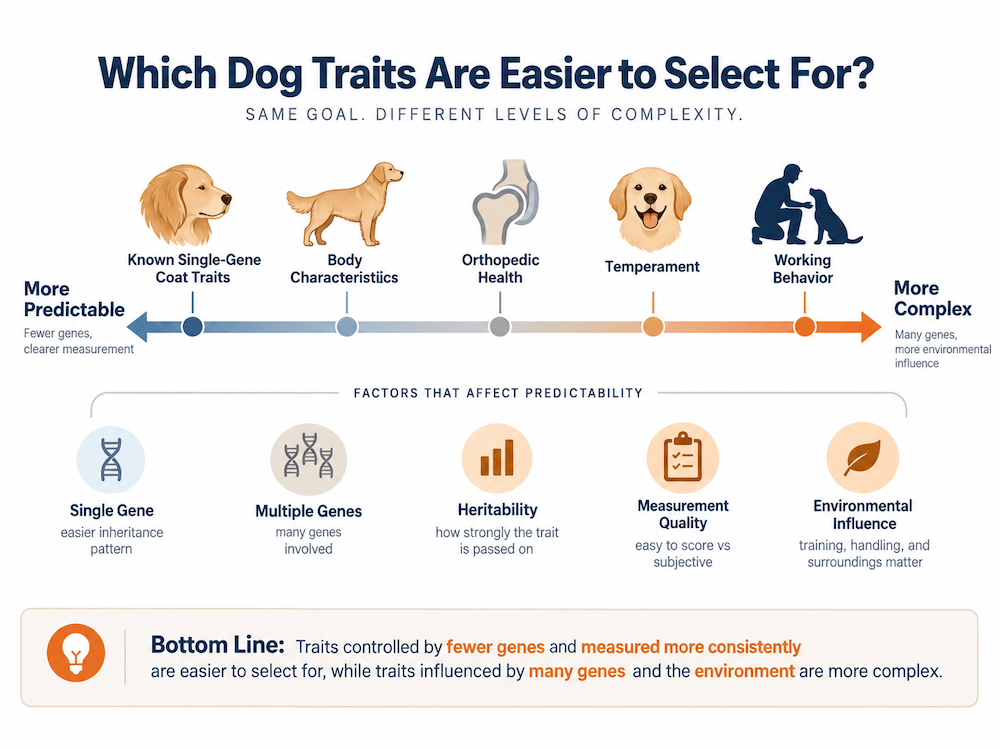
Almost any characteristic with a meaningful genetic component can respond to selection. The difficulty depends on how the trait is inherited and how accurately it can be measured.
| Trait Category | Examples | Typical Complexity | Useful Information |
|---|---|---|---|
| Coat Traits | Color, length, curl, furnishings | Some are relatively simple genetically | DNA testing may identify relevant variants |
| Body Traits | Size, proportions, structure | Often influenced by multiple genes | Measurements and family records are useful |
| Working Traits | Retrieving, herding, scent work | Usually complex | Standardized performance records improve selection |
| Temperament | Confidence, sociability, trainability | Genes and environment both matter | Repeated behavioral assessments are valuable |
| Health Traits | Hip quality, eye health, disease resistance | Ranges from simple to highly complex | DNA tests and clinical screening may be combined |
Why Some Traits Are Easier to Select Than Others
A trait controlled primarily by a known genetic variant can sometimes be predicted fairly accurately from the parents’ DNA. Complex characteristics such as temperament, athletic ability, body size, hip quality, or longevity may involve many genes plus environmental influences.
Should Every Trait Be Selectively Bred?
No. A trait being heritable does not automatically make it a responsible breeding goal. Selection should improve or preserve the dog’s overall function and welfare rather than creating a feature that causes foreseeable health or quality-of-life problems.


What Must Be Done to Breed Dogs for a Particular Trait?
Selective breeding works best as a long-term, multigenerational process, not an attempt to produce one exceptional litter. Breeders must define the desired trait, make informed mating decisions, evaluate the offspring, and repeat selection over generations while protecting health and genetic diversity.
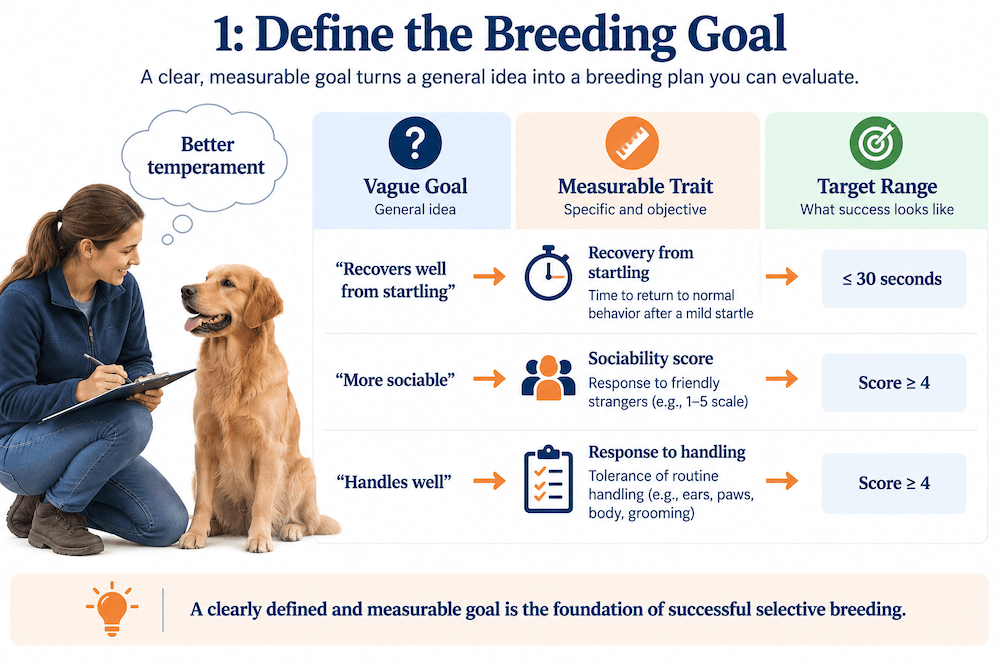
1. Define the Trait and Set a Measurable Breeding Goal
Start by defining exactly what characteristic you want to improve or preserve. The goal should be measurable—such as adult height, hip score, coat type, working-test performance, or a standardized behavior measure—so progress can be compared objectively across dogs and generations.
2. Determine How the Trait Is Inherited
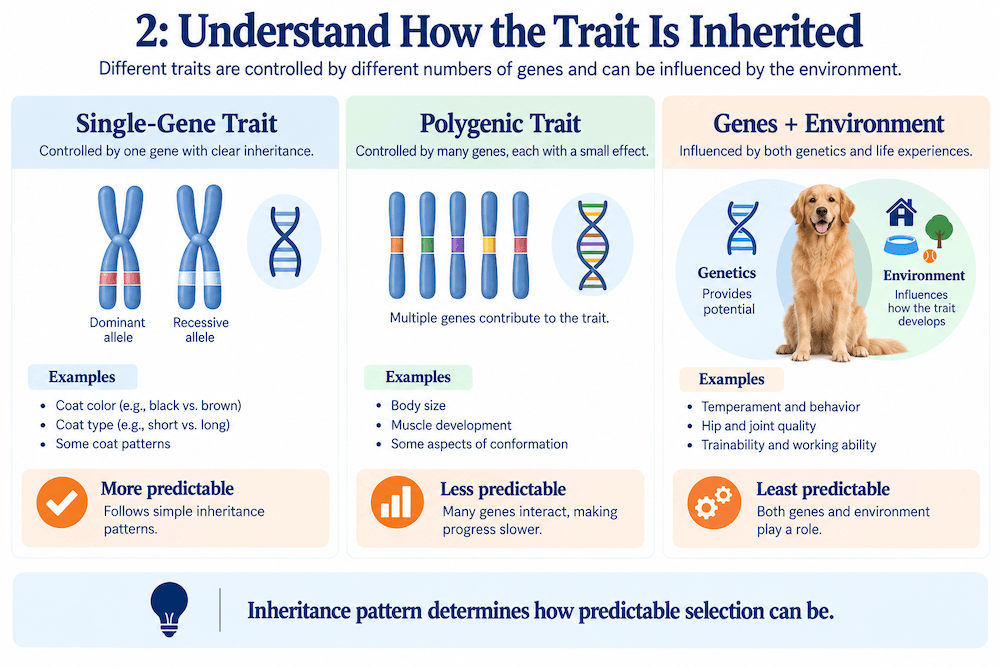
Next, determine whether the trait is controlled mainly by one gene, several genes, or a combination of genetics and environment. Understanding inheritance helps breeders estimate how predictable the trait may be and which information—such as DNA results, family records, or performance data—will be most useful.
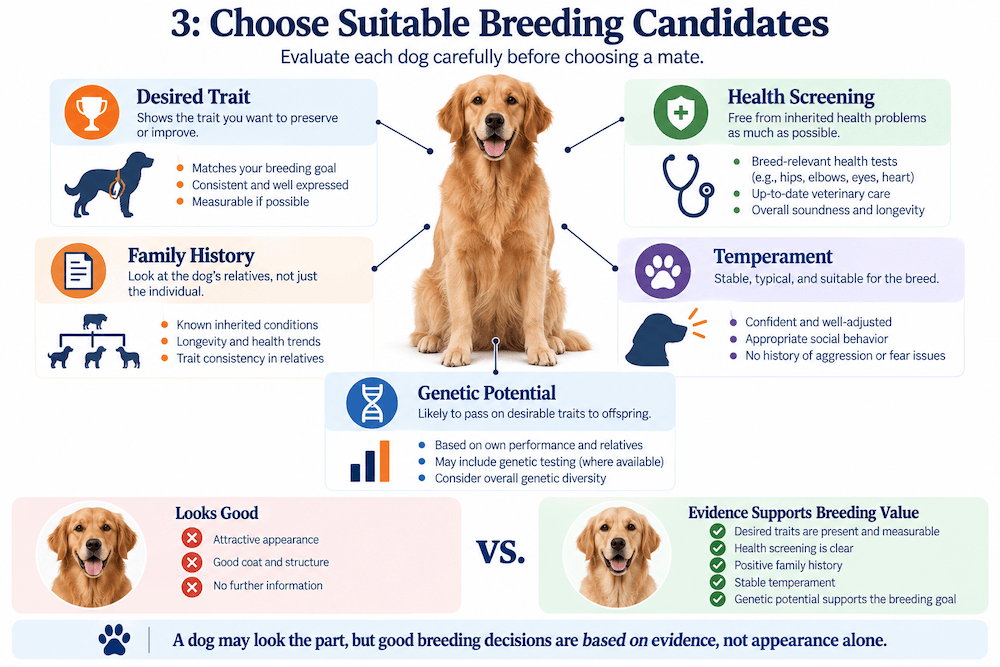
3. Select Healthy Dogs With the Desired Genetic Potential
Breeding candidates should show evidence that they are likely to pass on the desired trait, not merely express it themselves. Their health screenings, family history, temperament, physical function, and available genetic or breeding-value information should also support their use in the breeding program.
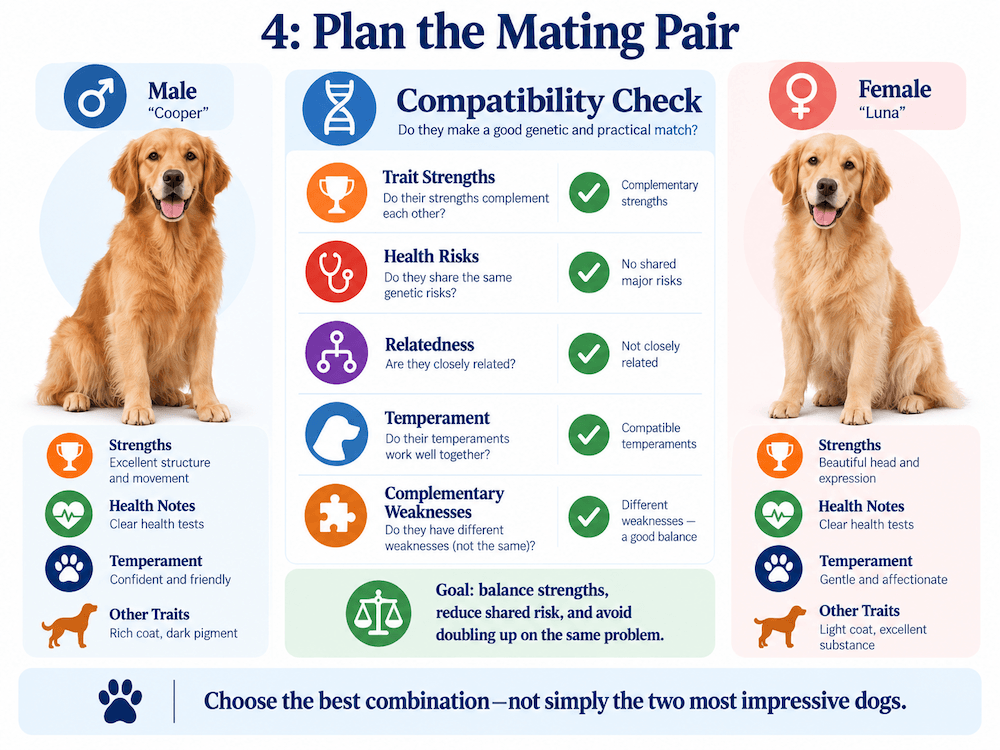
4. Plan a Compatible Mating
Once suitable candidates are identified, choose a pair whose strengths, weaknesses, genetic risks, and degree of relatedness complement one another. The goal is to improve the desired trait while avoiding combinations that could increase inherited disease, exaggerate structural problems, or unnecessarily narrow genetic diversity.


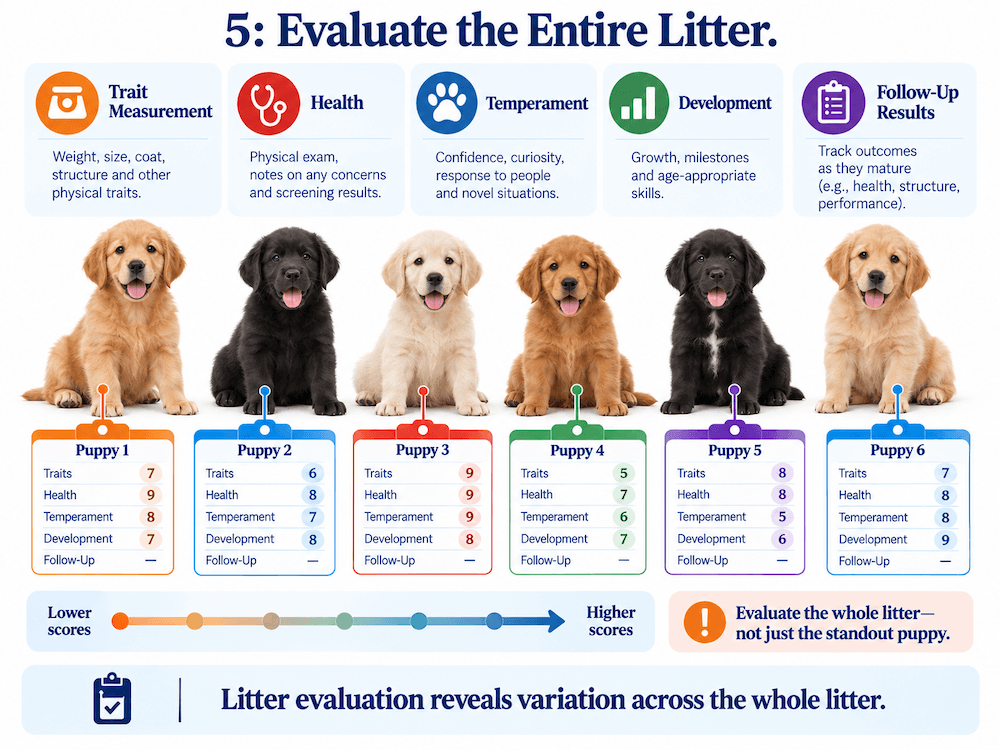
5. Evaluate the Offspring and Record the Results
After the litter is born, evaluate as many puppies as possible using the same criteria established for the breeding goal. Recording health, development, temperament, and expression of the target trait helps determine whether the mating produced the expected genetic progress and reveals variation within the litter.
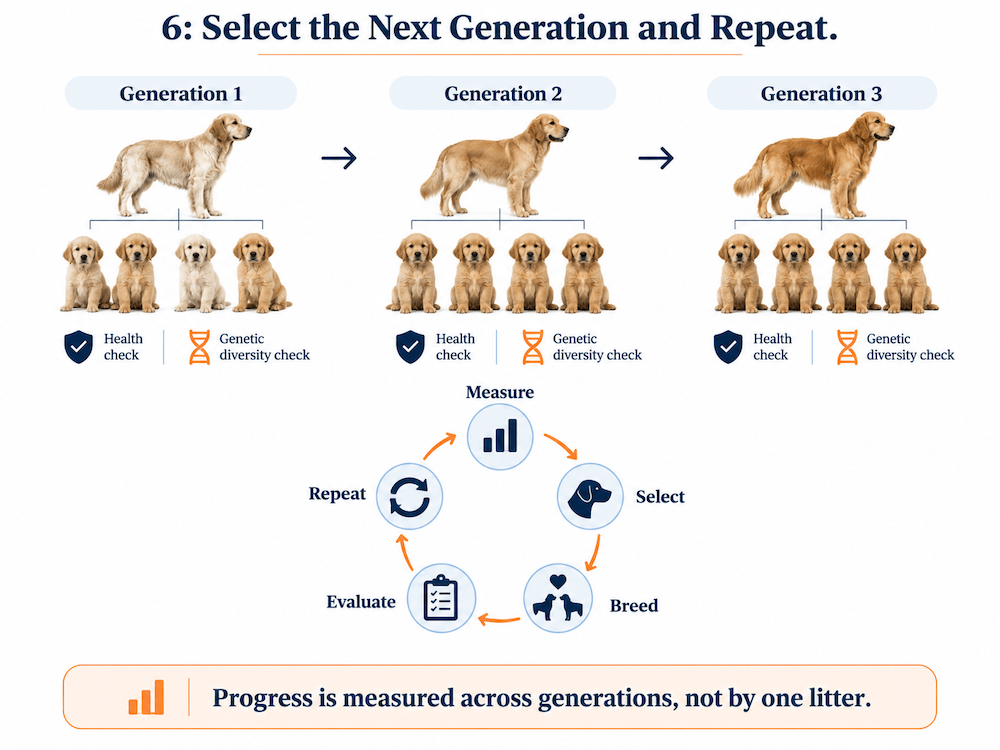
6. Select the Next Generation and Repeat
Use the offspring data to identify dogs that best advance the overall breeding goal without sacrificing health, function, temperament, or genetic diversity. Repeating this process over multiple generations gradually increases the frequency and consistency of the desired trait while allowing breeders to monitor unintended effects.
How Do Breeders Know Which Dogs Are Most Likely to Pass on a Trait?
The most informative breeding decisions combine several sources of evidence rather than judging a dog solely by what can be seen.
| Information Source | What It Shows | Main Advantage | Important Limitation |
|---|---|---|---|
| Individual Phenotype | What the dog actually expresses | Direct and easy to observe | Includes environmental influences |
| Family & Pedigree | Patterns among genetically related dogs | Reveals hidden family tendencies | Depends on complete, accurate records |
| Progeny Information | What a dog has actually produced | Strong evidence of transmitting ability | Available only after offspring are evaluated |
| Estimated Breeding Value | Predicted genetic merit for a trait | Combines information statistically | Requires a suitable population database |
| Genomic Information | Genome-wide genetic relationships and markers | Can improve early prediction | Accuracy depends on reference data |
How Do DNA Tests and Health Screening Affect Breeding Decisions?
Genetic testing and clinical health screening answer different questions. Responsible breeding programs use the appropriate tool for the condition rather than assuming that one DNA panel can replace all health evaluation.
DNA Testing
A validated DNA test can identify specific genetic variants associated with inherited traits or diseases. It is especially powerful for conditions with well-understood Mendelian inheritance. A negative result only means the dog lacks the particular tested variant. It does not mean the dog is genetically free of every inherited health risk.
Phenotypic Health Screening
Many important canine disorders cannot be predicted by one DNA variant. Orthopedic examinations, eye examinations, cardiac evaluations, hearing tests, and other clinical assessments may therefore remain necessary. These screenings measure the dog’s actual phenotype and can be combined with family data to improve breeding decisions.
Clear, Carrier, and Affected Results
For a simple autosomal recessive condition, test results are often described as clear, carrier, or genetically affected.
For a straightforward recessive disease, a carrier bred to a clear dog should not produce genetically affected puppies, although some offspring may be carriers. Automatically excluding every healthy carrier can sometimes remove useful genetic diversity unnecessarily, so breeding decisions should consider the disease, variant frequency, population size, and available alternatives.
What Should Be Evaluated Before Two Dogs Are Bred?
A mating should be assessed as a complete genetic and welfare decision rather than solely on the target characteristic.
| Factor | What to Check |
|---|---|
| Desired Trait | Evidence that the trait is consistently present in the dog, close relatives, or previous offspring. |
| Breed-Specific Health | Appropriate orthopedic, cardiac, eye, DNA, and other recommended health screening for the breed. |
| Family History | Inherited disease, temperament, longevity, fertility, and reproductive problems among close relatives. |
| Temperament | Stable, predictable behavior without serious fear, aggression, or other undesirable inherited tendencies. |
| Physical Function | Healthy movement, breathing, vision, body structure, and other features needed for normal daily function. |
| Relatedness | How closely the proposed parents are related and whether the pairing could increase inherited risks. |
| Reproductive Health | Overall fitness for mating, pregnancy, delivery, and recovery without unreasonable reproductive risk. |
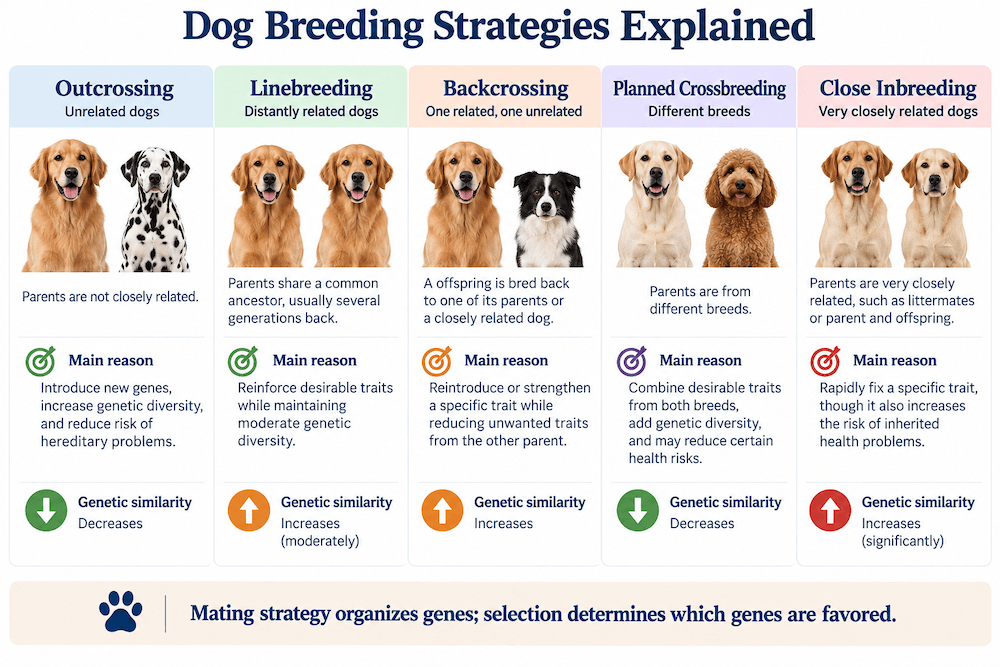
What Breeding Strategies Can Be Used to Reinforce or Introduce a Trait?
The mating strategy determines how genetic material is combined. None of these approaches can substitute for good selection; the same strategy can produce beneficial or harmful results depending on the dogs chosen.
Why Breeders Must Select for More Than One Trait at a Time
Breeding for one desirable trait should never come at the expense of health, temperament, function, or reproductive fitness. Responsible selection balances several priorities at once, sometimes using a selection index to weigh each trait according to the breeding program’s goals.
| Breeding Factor | Why It Matters | Role in a Selection Index |
|---|---|---|
| Target Trait | Drives the main breeding goal. | Receives weight based on desired improvement. |
| Health | Helps prevent progress at the expense of welfare. | Keeps disease risk within acceptable limits. |
| Temperament | Preserves stable, functional behavior. | Balances performance with behavioral suitability. |
| Structure & Function | Protects movement, breathing, and physical soundness. | Prevents exaggerated traits from dominating selection. |
| Reproductive Fitness | Supports fertility and successful breeding. | Prevents selection that weakens reproductive performance. |
| Selection Index | Combines several traits into one decision framework. | Weights each trait according to breeding priorities. |
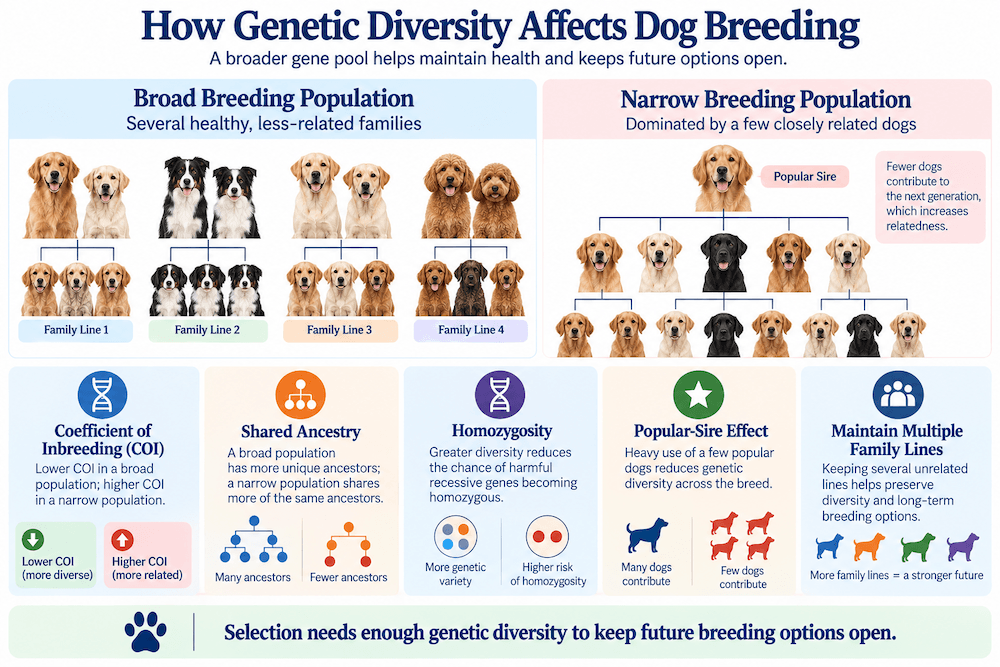
How Genetic Diversity and Relatedness Affect Trait Selection
Selection changes more than the target trait. Every time certain dogs contribute disproportionately to the next generation, some genetic variants become more common while others can disappear.
Maintaining sufficient diversity gives future breeders more genetic options for improving health, adapting breeding goals, and avoiding excessive homozygosity.
Why Selecting for Extreme Traits Can Backfire
Selection can continue beyond the point where a characteristic is useful or harmless. Exaggerating a physical feature may alter anatomy in ways that compromise normal function, while extreme selection for behavioral intensity can produce dogs that are poorly suited to typical home environments.
Problems can also arise through genetic correlation, where genes affecting the desired characteristic influence another trait, or through linkage, where neighboring genetic variants tend to be inherited together. Breeders therefore need to watch for unintended changes across the whole dog rather than assuming that selection affects only the visible target.
Examples include increasingly shortened muzzle structure associated with functional airway concerns in some dogs, exaggerated body proportions that can affect movement, or selection for unusually large size that may create additional orthopedic and reproductive challenges.
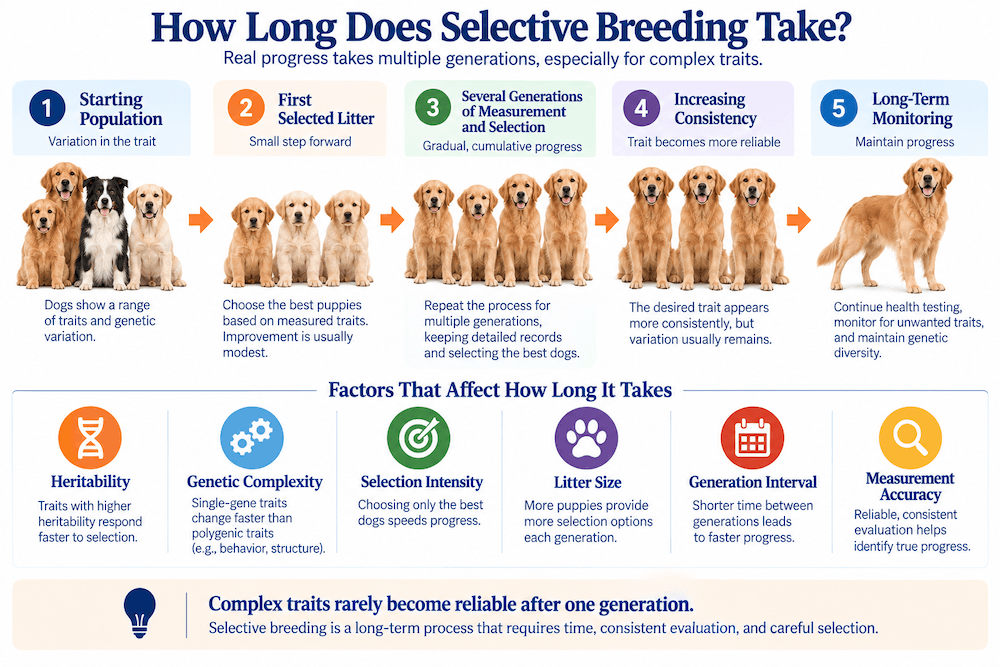
How Long Does It Take to Breed a Trait Reliably?
There is no fixed number of generations. A simple characteristic controlled mainly by a known gene can change rapidly when compatible genotypes are selected, while complex traits may require many generations of consistent selection and recordkeeping.
Common Mistakes When Breeding for a Particular Trait
Breeding programs can lose progress when decisions are based on appearance, one litter, or a single genetic result. Avoiding these common mistakes helps preserve health, genetic diversity, and more reliable long-term trait selection.
| Common Mistake | Why It Can Be a Problem |
|---|---|
| Selecting by Appearance Alone | Phenotype does not always predict what a dog will pass on. |
| Ignoring Relatives | Family history may reveal hidden inherited risks. |
| Relying Only on DNA Panels | Many health traits still require clinical screening. |
| Removing All Carriers | Can unnecessarily reduce useful genetic diversity. |
| Overusing One Dog | Can spread hidden risks and increase population relatedness. |
| Selecting for Extremes | More of a trait may reduce health or function. |
| Judging One Litter | Complex traits require broader, multigenerational evidence. |
Veterinary and Professional Guidance Before Breeding for a Particular Trait
Selective breeding involves genetics, reproductive medicine, population management, and animal welfare. Professional input is especially useful when inherited disease, unclear DNA results, fertility issues, or pregnancy and delivery risks are involved.
A mating should be reconsidered if achieving the desired trait would require accepting a substantial, avoidable welfare problem.
What Should Dog Owners Look for in a Breeder Selecting for a Trait?
Puppy buyers should look for breeders who can explain their goals, testing, and breeding decisions clearly and provide evidence to support them.
| What to Look For | Good Sign |
|---|---|
| Clear Breeding Goal | The breeder can explain the trait being selected and why. |
| Health Testing | Relevant results are completed, documented, and available to review. |
| Family Knowledge | The breeder tracks health and traits across relatives and previous litters. |
| Balanced Selection | Health, temperament, and function matter alongside the target trait. |
| Realistic Expectations | The breeder explains probabilities instead of guaranteeing complex traits. |
| Long-Term Records | Previous offspring are followed to guide future breeding decisions. |
| Genetic Responsibility | Relatedness, diversity, and overuse of popular lines are considered. |
What Research Says About Selective Breeding in Dogs
A large 2017 analysis examined more than one million canine hip evaluations and over 275,000 elbow evaluations across 60 breeds. Long-term phenotypic selection was associated with improvement in hip and elbow conformation, demonstrating that systematic screening and selection can shift complex health traits across dog populations rather than merely changing individual litters.[1]
A 2021 review described how estimated breeding values can combine individual, family, pedigree, and progeny information to improve genetic selection in working dogs. Modern breeding programs can improve desired characteristics while managing multiple traits and genetic diversity, particularly when statistical selection methods are used.[2]
A 2014 study examining seven dog breeds found that increasing inbreeding was associated with reductions in litter size and survival. These findings support considering biological fitness alongside selection for specific characteristics, while research across larger pedigree populations has also identified overuse of popular sires as an important contributor to genetic diversity loss.[3]
More recently, a 2026 study in Genetics Selection Evolution analyzed behavioral records from 4,841 Labrador Retrievers used in guide-dog programs. Adding genomic information improved breeding-value prediction for the behavioral traits studied compared with pedigree-based prediction alone, although estimated heritabilities were relatively modest and the improvement depended on the available genomic reference data. This illustrates both the potential and the limitations of genomic selection for complex canine behavior.[4]
Frequently Asked Questions
The Bottom Line
Breeding dogs for a particular trait requires much more than pairing two dogs that share the desired characteristic. Breeders must define the trait clearly, understand how it is inherited, and select healthy dogs with strong genetic potential. Careful mating decisions should also account for health, temperament, physical function, relatedness, and genetic diversity. DNA testing, health screening, pedigree information, offspring records, and breeding values can all improve selection when used appropriately. Complex traits usually require consistent evaluation across several generations before they become more predictable. Responsible breeding also means avoiding exaggerated traits or narrow selection that could compromise welfare or create new genetic problems. Ultimately, successful selective breeding aims to make useful traits more consistent while protecting the overall health and quality of future dogs.
Sources
- Long-term genetic selection reduced prevalence of hip and elbow dysplasia in 60 dog breeds
- Advancing Genetic Selection and Behavioral Genomics of Working Dogs Through Collaborative Science
- Inbreeding impact on litter size and survival in selected canine breeds
- Genomic information increases prediction accuracy of behavior traits of Labrador Retrievers used as guide dogs