
What Should I Do If My Dog Is Shaking? 7 Vet-Approved Steps


Canine Bible is reader-supported. We receive affiliate commissions via some of our links. Learn more.
If your dog is shaking, start by checking for an obvious cause such as cold, fear, excitement, pain, or stress, while watching closely for other symptoms. Mild trembling may pass on its own, but sudden, persistent, or severe shaking can signal a medical problem that needs veterinary attention. Urgency depends on what triggered the shaking, how long it lasts, and whether your dog is also vomiting, weak, disoriented, in pain, or struggling to breathe. Some dogs tremble during thunderstorms or vet visits, while others may shake because of illness, toxin exposure, low blood sugar, or neurological problems. Age, breed, recent activity, medications, and possible access to harmful substances can also change what shaking means. Knowing which signs are harmless and which are warning signs can help you decide whether to monitor your dog at home or seek immediate veterinary care.
What to Know About Shaking in Dogs
| Key Point | What Dog Owners Should Know |
|---|---|
| Common triggers | Cold, fear, excitement, stress, pain, and illness can all cause shaking. |
| Context matters | When the shaking starts and what happens around it can help narrow the cause. |
| Other symptoms | Vomiting, weakness, pain, poor balance, or confusion make shaking more concerning. |
| Movement pattern | Whole-body, localized, resting, or action-related tremors may point to different problems. |
| Immediate action | Keep your dog calm, remove obvious triggers, and check for possible toxin exposure. |
| Useful evidence | A short video and notes about timing can help your veterinarian evaluate the episode. |
| Veterinary care | Persistent, recurrent, unexplained, or worsening shaking should be assessed by a veterinarian. |
| Emergency warning | Collapse, seizures, severe weakness, breathing trouble, or suspected poisoning require urgent care. |
What Does Shaking in Dogs Look Like?
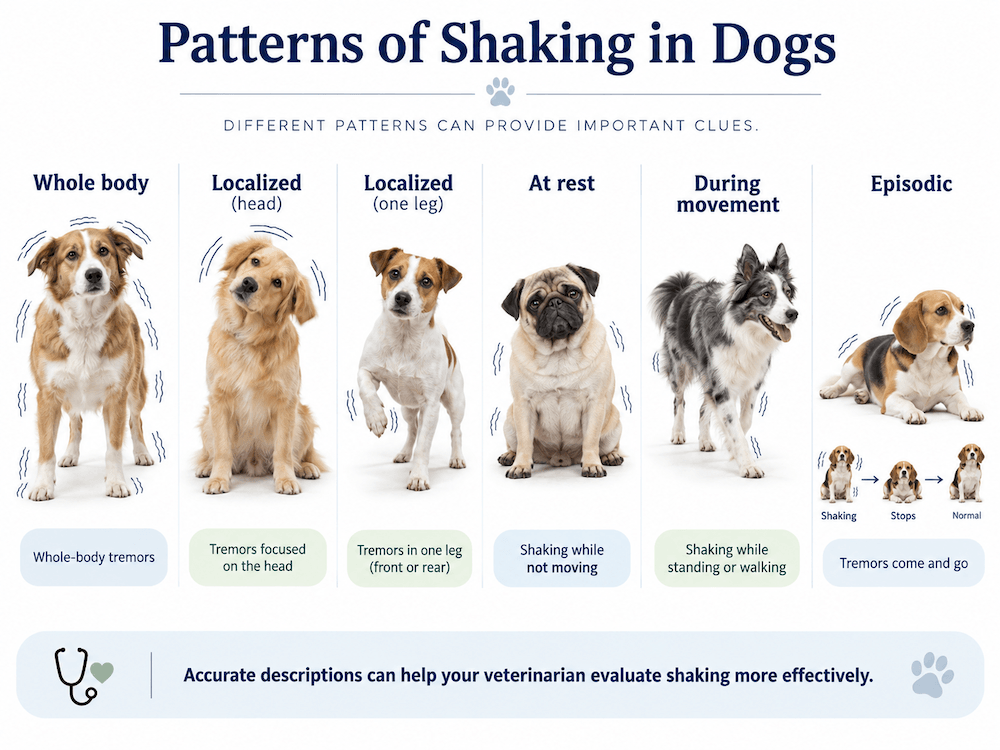
The pattern of the movement can give your veterinarian useful diagnostic clues, although appearance alone cannot determine the cause. Notice whether the shaking affects the entire body or only one area, whether it occurs at rest or during movement, and what your dog is doing immediately before and after it.
Is Shaking the Same as a Seizure?
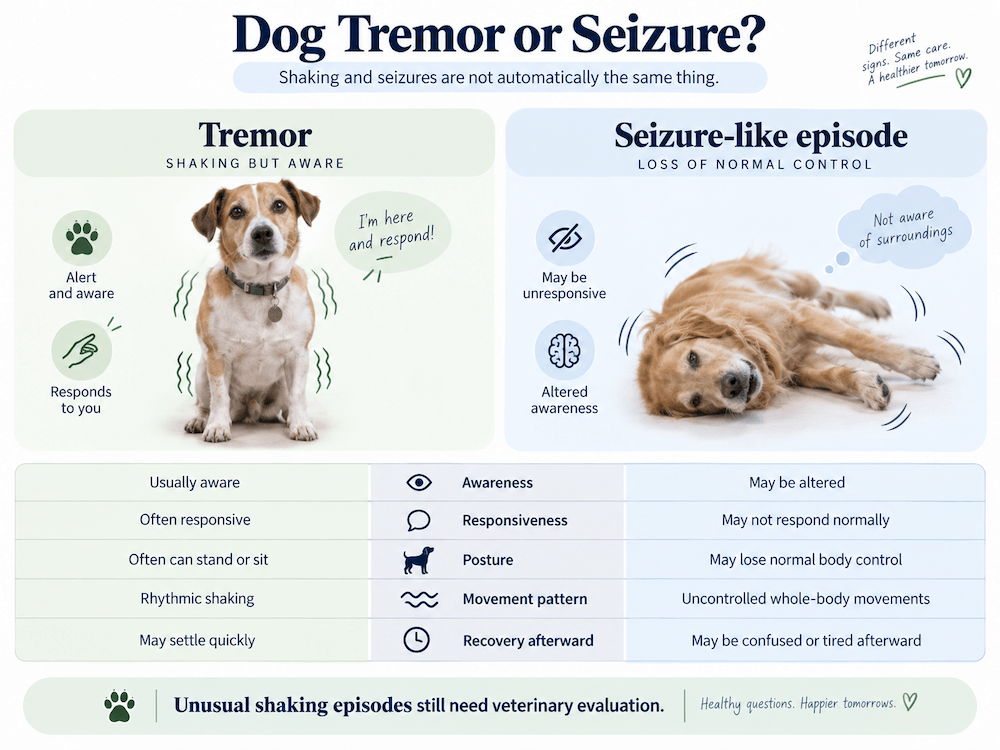
No. Trembling or tremors are not automatically seizures. A dog experiencing a tremor may remain awake, aware, responsive, and able to interact throughout the episode.
Seizures can look different depending on their type, but more dramatic episodes may involve loss or alteration of awareness, falling over, stiffening, repetitive paddling or jerking, drooling, or involuntary urination or defecation. Because unusual movement disorders can sometimes resemble seizures, recording an episode on video can be extremely helpful for your veterinarian.


Common Causes of Shaking in Dogs
Shaking in dogs can have many causes, ranging from normal responses like cold, fear, or excitement to medical problems such as pain, illness, toxin exposure, or neurological disease. The clues that occur alongside the shaking can help narrow down the most likely cause and show when veterinary attention may be needed.
| Possible Cause | Common Clues |
|---|---|
| Cold | Shivering after getting wet or spending time in a cold environment. |
| Fear or anxiety | Shaking during thunderstorms, fireworks, travel, vet visits, or other stressful situations. |
| Excitement | Brief trembling during greetings, play, meals, or anticipation of a favorite activity. |
| Pain | Trembling with panting, stiffness, guarding, restlessness, limping, or reluctance to move. |
| Nausea | Shaking with drooling, lip licking, swallowing, poor appetite, or vomiting. |
| Fever or illness | Shivering may occur with lethargy, appetite loss, weakness, or other signs of sickness. |
| Low blood sugar | Tremors may accompany weakness, wobbliness, disorientation, collapse, or seizures. |
| Electrolyte or metabolic problems | Internal imbalances can cause tremors, weakness, abnormal behavior, or poor coordination. |
| Toxin exposure | Sudden shaking may occur with vomiting, drooling, agitation, weakness, or seizures. |
| Medication reaction | Trembling may begin after starting a new medication or receiving an incorrect dose. |
| Neurological disease | Persistent tremors may occur with abnormal gait, head movements, weakness, or poor coordination. |
| Generalized tremor syndrome | Continuous or episodic whole-body tremors can develop without an obvious environmental trigger. |
| Seizure activity | Abnormal shaking may occur with altered awareness, stiffening, paddling, drooling, or unusual recovery. |
| Muscle fatigue or strenuous exercise | Temporary trembling can occur after intense activity, especially when muscles are fatigued. |
| Inflammatory or infectious disease | Some illnesses affecting the nervous system or whole body can produce tremors and other neurological signs. |
Dog Shaking Plus Other Symptoms & What They Mean
Shaking can become more concerning when it appears alongside other symptoms such as vomiting, weakness, pain, confusion, collapse, or breathing difficulty. The combination of signs can provide important clues about the underlying cause and help determine how quickly your dog may need veterinary care.
| Shaking Plus… | What It May Suggest | Urgency |
|---|---|---|
| Vomiting or drooling | Nausea, toxin exposure, or illness. | Moderate to High |
| Weakness or wobbliness | Metabolic, toxic, or neurological problem. | High |
| Pain or stiffness | Injury, abdominal pain, or another painful condition. | Moderate |
| Heavy panting | Pain, stress, overheating, or illness. | Moderate |
| Diarrhea | GI illness, toxin exposure, or systemic disease. | Moderate |
| Confusion or disorientation | Neurological, metabolic, or toxic cause. | High |
| Collapse | Serious cardiovascular, metabolic, toxic, or neurological problem. | High |
| Seizure-like movements | Possible seizure or severe neurological disturbance. | High |
| Breathing difficulty | Potential respiratory or cardiovascular emergency. | High |
| Loss of appetite or lethargy | Pain, infection, nausea, or systemic illness. | Low to Moderate |
Dog Shaking in Fear or Pain: How to Tell the Difference
Fear-related shaking and pain-related shaking can look similar, but the surrounding clues often help tell them apart. Comparing triggers, body language, movement, touch response, and what happens after the trigger ends can help you judge whether your dog is frightened or may be dealing with pain or illness.
| Clue | Fear | Pain or Illness |
|---|---|---|
| Trigger | Often linked to noise, strangers, travel, or stressful events. | May begin without an obvious emotional trigger. |
| Body language | Cowering, tucked tail, hiding, flattened ears, or seeking escape. | Guarding, stiffness, hunched posture, or reluctance to move. |
| Movement | Usually physically able to walk normally despite trembling. | May limp, move slowly, wobble, or resist certain movements. |
| Touch | May seek reassurance or avoid contact due to anxiety. | May flinch, yelp, tense, or guard a painful area. |
| Other signs | Panting, pacing, hiding, whining, or trying to escape. | Lethargy, vomiting, appetite loss, weakness, or abnormal behavior. |
| After trigger ends | Shaking often improves as the dog feels safe again. | Shaking may continue despite a calm environment. |
| When to worry | Persistent or severe fear may need behavioral or veterinary help. | Persistent, unexplained, or worsening signs warrant veterinary evaluation. |
What to Do If Your Dog Is Shaking: 7 Practical Steps
Follow these steps to quickly assess your dog’s shaking, rule out obvious triggers, and gather the most useful information for your veterinarian. This step-by-step guide can help you decide whether your dog can be monitored at home, should be evaluated by your vet, or needs urgent care right away.


Step 1: Check Your Dog’s Overall Condition
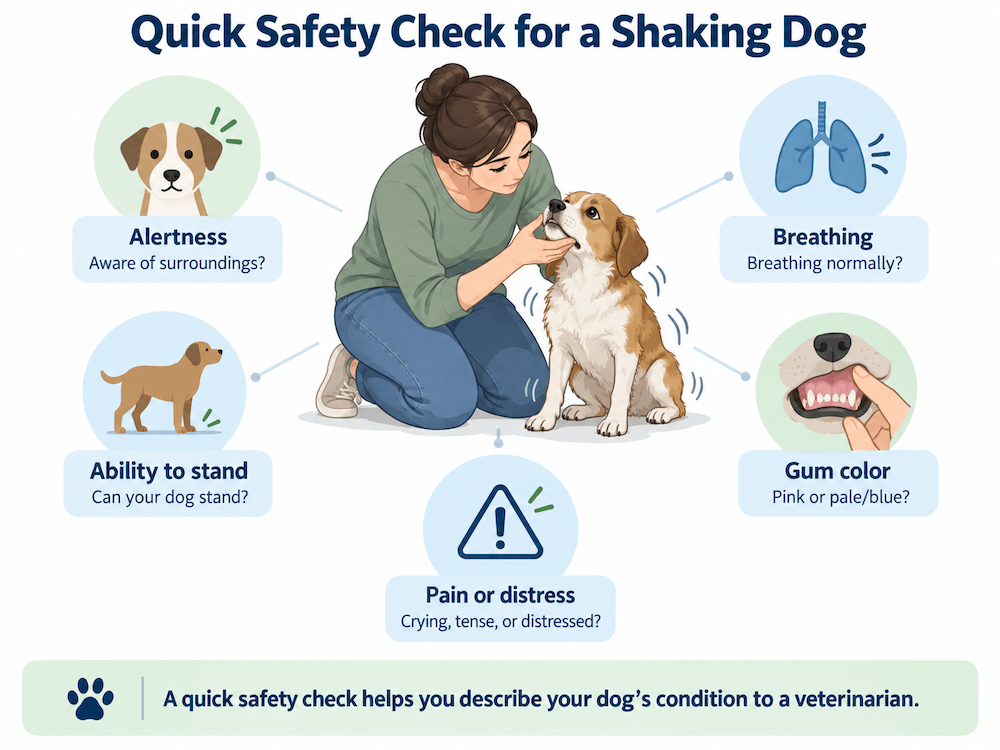
Start by checking whether your dog is alert, responsive, breathing normally, and able to stand or walk. Look for obvious distress, severe weakness, collapse, unusual gum color, or signs of significant pain. These observations help determine whether the shaking may require immediate veterinary care.
Step 2: Remove Any Obvious Trigger
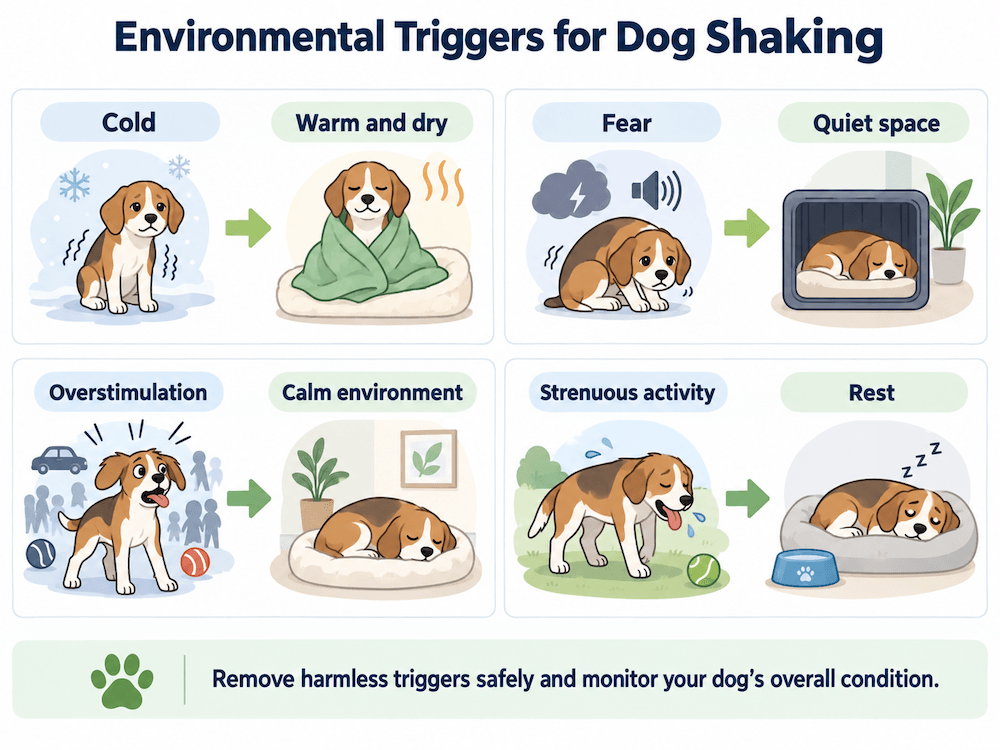
Move your dog somewhere quiet, safe, and comfortably warm if cold, fear, excitement, or overstimulation may be contributing. Dry a wet dog, reduce noise, and allow an anxious dog space to settle without forcing interaction. Shaking caused by a temporary environmental trigger should begin improving once that trigger is removed.
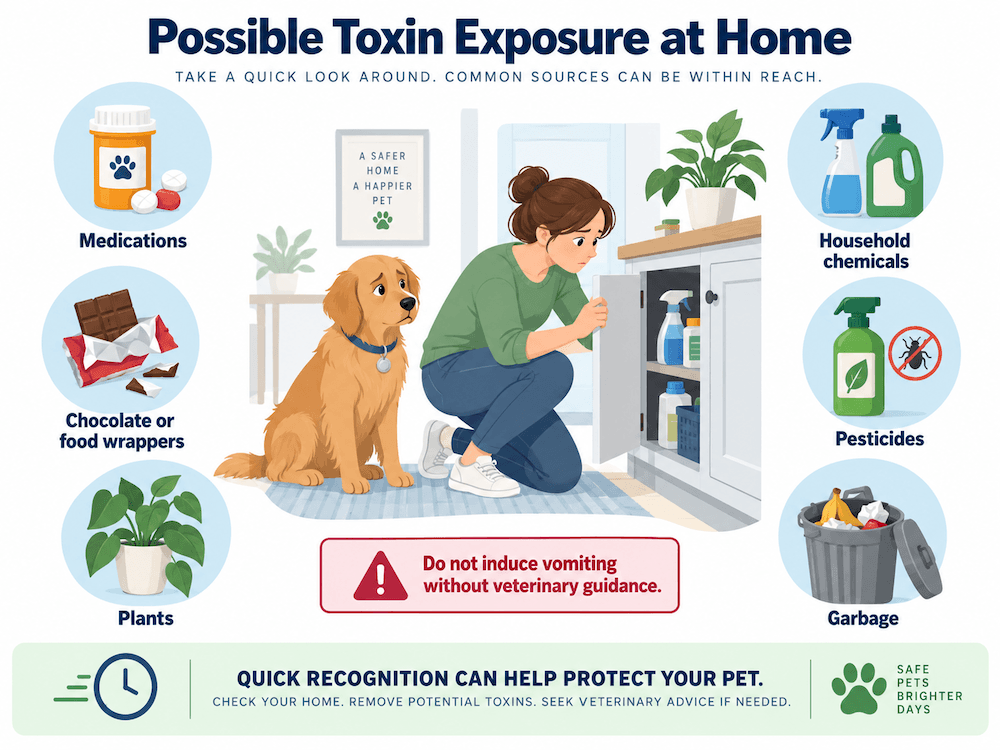
Step 3: Check for Possible Toxin or Medication Exposure
Quickly look for anything your dog may have chewed, eaten, or accessed, including medications, food wrappers, chemicals, pesticides, plants, garbage, or other unfamiliar substances. If poisoning is possible, keep any packaging or product information available for the veterinarian. Do not induce vomiting or give a home remedy unless a veterinary professional specifically instructs you to do so.
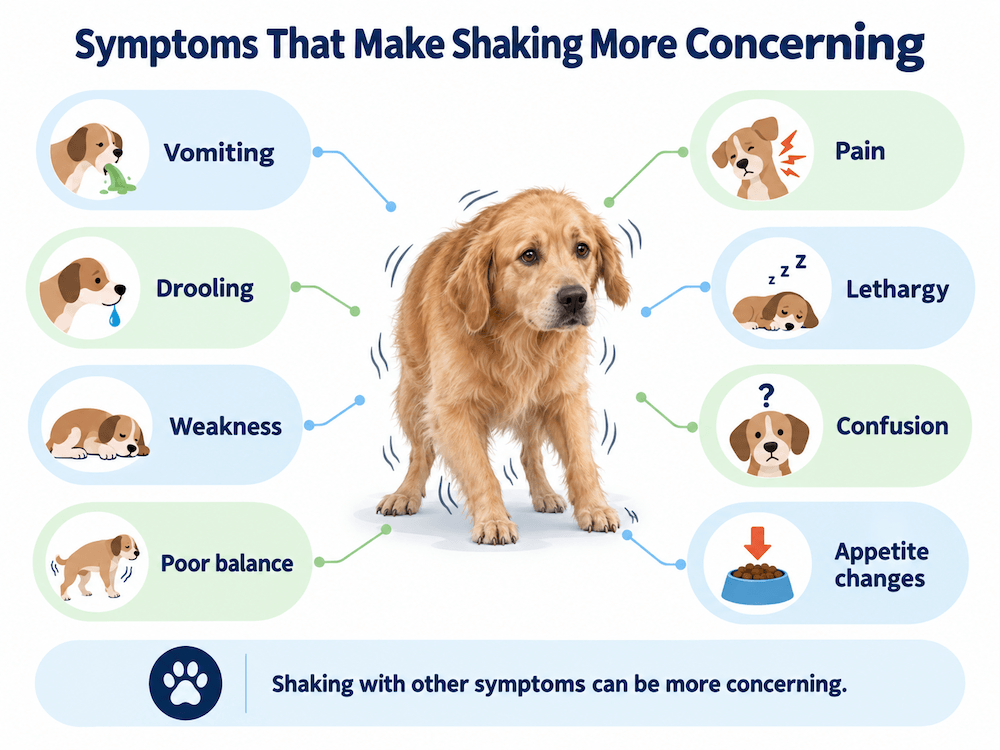
Step 4: Look for Other Symptoms
Shaking becomes more concerning when it appears with symptoms such as vomiting, diarrhea, drooling, weakness, wobbliness, pain, lethargy, confusion, or appetite changes. Pay attention to whether your dog can walk normally and whether their behavior has changed. The combination of signs is often more informative than shaking alone.
Step 5: Observe and Record the Shaking
Note when the shaking started, how long it lasts, which body parts are affected, and what your dog was doing beforehand. If it is safe, record a short video showing the episode and your dog’s response to their surroundings. A video can help a veterinarian distinguish trembling, tremors, abnormal movements, and possible seizure activity.

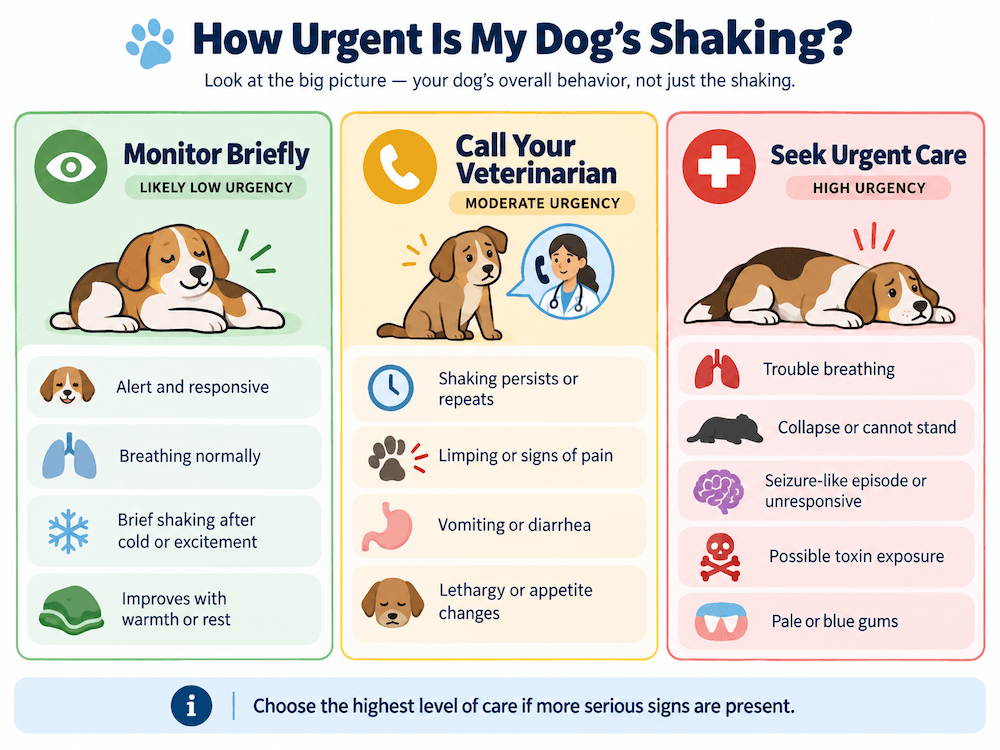
Step 6: Decide How Quickly Your Dog Needs Veterinary Care
Brief shaking linked to an obvious mild trigger may be monitored if your dog returns completely to normal. Contact your veterinarian if shaking is unexplained, persistent, recurrent, worsening, or accompanied by other physical or behavioral changes. Seek urgent veterinary care for collapse, seizures, severe weakness, breathing difficulty, major disorientation, or suspected poisoning.
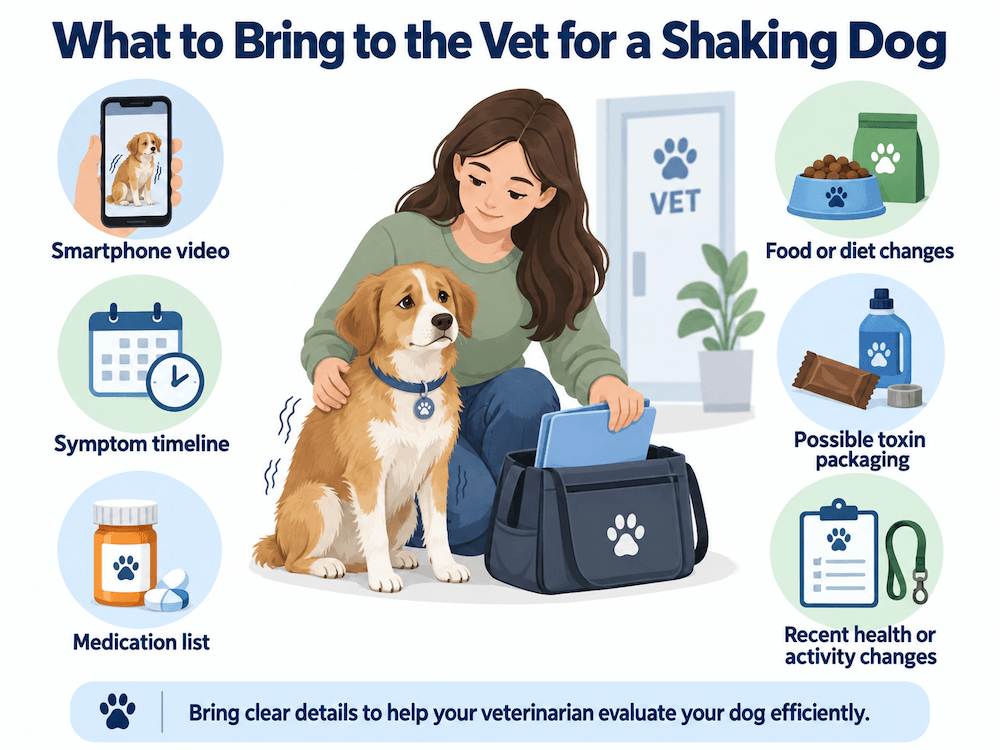
Step 7: Bring Useful Information to Your Veterinarian
If your dog needs veterinary evaluation, bring the video, symptom timeline, medication list, recent diet changes, and details of any possible toxin exposure. Mention recent illness, injury, unusual activity, travel, or stressful events that occurred before the shaking began. Clear information can help your veterinarian narrow the possible causes and choose appropriate tests more efficiently.
How to Care for a Shaking Dog at Home
Home care is appropriate only when your dog is alert, stable, and not showing emergency signs such as collapse, breathing difficulty, seizures, severe weakness, or suspected poisoning.
When to Call a Veterinarian About a Shaking Dog
Call your veterinarian if your dog’s shaking is persistent, recurrent, worsening, or has no obvious explanation. An exam is also appropriate when trembling appears with pain, lethargy, appetite loss, vomiting, diarrhea, or changes in movement or behavior.
Seek more urgent veterinary care if your dog is weak, disoriented, unable to walk normally, repeatedly vomiting, or showing severe pain. Sudden shaking after possible exposure to medications, chemicals, toxic foods, or other harmful substances should also be treated seriously.
Go to an emergency veterinarian if shaking occurs with collapse, seizures, breathing difficulty, profound weakness, or loss of responsiveness. When possible, bring a video of the episode and details about when it started, how long it lasted, and anything your dog may have eaten or been exposed to.
How Veterinarians Determine Why a Dog Is Shaking
Your veterinarian will usually begin with the history surrounding the episode, including when it started, possible toxin or medication exposure, recent illness, trauma, diet changes, exercise, and whether your dog remained conscious and responsive. A physical and neurological examination can help determine whether pain, weakness, fever, abnormal coordination, or a movement disorder is present.
Depending on the findings, diagnostic testing may include blood glucose, blood counts, blood chemistry, electrolyte measurements, urinalysis, toxin-related testing, or other laboratory tests. Dogs with persistent or unexplained neurological abnormalities may require more specialized evaluation, such as advanced imaging or referral to a veterinary neurologist.
What Veterinary Research Says About Shaking in Dogs
A 2025 study reviewed 198 dogs with generalized tremors and found that the underlying diagnoses were diverse. Intoxication was the most commonly identified category in that referral population, followed by idiopathic generalized tremor syndrome, while metabolic abnormalities and inflammatory or degenerative neurological disorders were also represented. The practical takeaway is that generalized shaking can look similar across very different diseases, making history, examination, and diagnostic testing important when the cause is not obvious.[1]
A review published in The Veterinary Journal emphasized that veterinarians characterize tremors according to features such as whether they occur at rest or during action and whether action-related tremors are postural or movement-related. The authors also noted that the appearance of a tremor does not necessarily reveal its underlying cause, supporting the value of videos and careful clinical assessment rather than diagnosis from appearance alone.[2]
Research on idiopathic generalized tremor syndrome (IGTS) further shows why neurological tremors deserve appropriate evaluation. A 2022 Veterinary Record study of 75 affected dogs found that all presented with tremors and most also had other neurological signs, while a 2024 Frontiers in Veterinary Science investigation described IGTS as an acute generalized tremor disorder that often responds to corticosteroid treatment but can occasionally relapse or leave mild persistent signs.[3]
Veterinary references also recognize metabolic and toxic causes of shaking. Low blood glucose can produce weakness, disorientation, tremors, collapse, or seizures, while exposures such as xylitol and certain other toxins can cause tremors alongside gastrointestinal or neurological signs.
Frequently Asked Questions
The Bottom Line
If your dog is shaking, the most important first step is to look at their overall condition and any other symptoms, not the trembling alone. Brief shaking caused by cold, fear, excitement, or stress may improve once the trigger passes, while persistent or unexplained shaking deserves closer attention. Pain, nausea, toxin exposure, metabolic problems, and neurological conditions can also cause trembling or tremors. Keep your dog comfortable, monitor changes carefully, and record unusual episodes when possible. Avoid giving human medications or attempting home treatments for suspected poisoning without veterinary guidance. Contact your veterinarian if the shaking persists, recurs, worsens, or appears alongside pain, vomiting, weakness, appetite changes, or abnormal behavior. Seek urgent care for collapse, seizures, breathing difficulty, profound weakness, major disorientation, or suspected toxin exposure.
If you are trying to understand what may be behind your dog’s shaking, you may also find our guides on what to do when a dog has a seizure, vomiting in dogs, how to tell if a dog is in pain, and our dog symptom checker helpful for evaluating related warning signs and deciding when veterinary care may be needed.