Fear-Based Aggression in Dogs: Symptoms, Types, Causes, Signs & Prevention

Canine Bible is reader-supported. We receive affiliate commissions via some of our links. Learn more.
A comprehensive guide to fear-based aggression in dogs, including common triggers, warning signs, causes, diagnosis, behavior modification, management strategies and what pet parents should know when caring for a fearful or reactive dog.

Fear-Based Aggression at a Glance
Most common in
Fearful dogs, poorly socialized dogs or dogs with negative past experiences.
Common signs
Growling, barking, lunging, snapping, biting or attempting to escape.
Diagnosis
Behavioral history, physical exam and evaluation of specific triggers.
Treatment
Trigger management, behavior modification and medication when appropriate.
Prognosis
Varies with severity, triggers, management and response to behavior therapy.
Common triggers
Strangers, unfamiliar dogs, handling, restraint, loud noises or confined spaces.
What Is Fear-Based Aggression in Dogs?
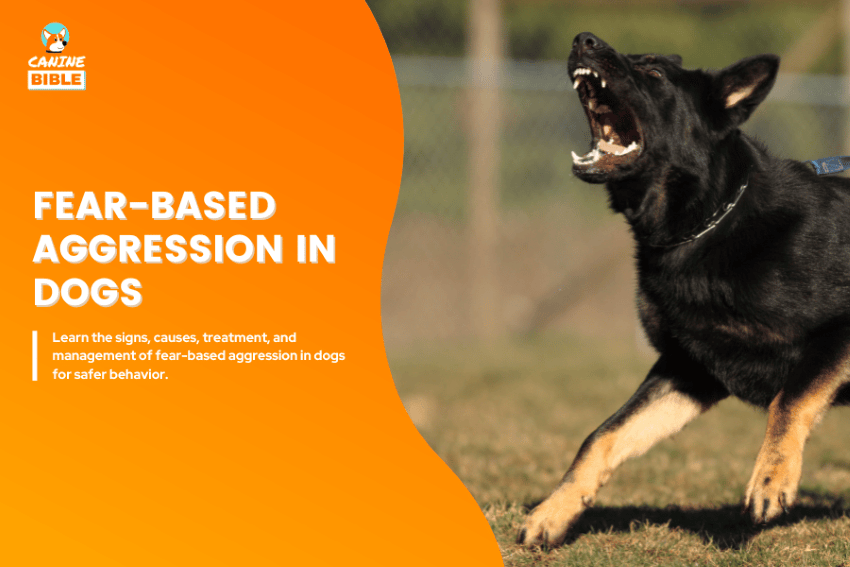
Fear-based aggression is defensive behavior that occurs when a dog perceives a person, animal, object or situation as threatening. A fearful dog will often attempt to increase distance from the perceived threat through avoidance, retreating or defensive body language. If the dog feels trapped, cornered or unable to escape, those warnings may escalate to growling, barking, lunging, snapping or biting. Common contributing factors include inadequate early socialization, frightening experiences, unfamiliar environments, previous punishment, genetic temperament and medical problems that cause pain or discomfort. Fear-based aggression is not simply a dog being “mean.” The aggressive behavior is typically a defensive response intended to make the perceived threat move away. Management focuses on preventing situations that overwhelm the dog while gradually changing its emotional response to triggers through safe, reward-based behavior modification.


Types
Fear-based aggression in dogs can appear in several different forms depending on what triggers the dog’s fear. Some dogs react aggressively toward strangers, unfamiliar dogs, handling, restraint, loud noises, specific environments, or certain objects. Understanding the type of fear-based aggression and its triggers can help pet parents recognize warning signs, reduce stressful situations, and choose appropriate behavior-management and training strategies.
Stranger-Directed Fear Aggression
Occurs when a dog feels threatened by unfamiliar people and responds by barking, growling, lunging or snapping.
Dog-Directed Fear Aggression
Triggered by unfamiliar or intimidating dogs, especially when the fearful dog cannot create enough distance.
Handling-Related Fear Aggression
Appears when a fearful dog is touched, picked up, examined or handled in ways it finds uncomfortable or threatening.
Restraint-Related Fear Aggression
May occur when a dog feels trapped by a leash, crate, physical restraint or another situation that prevents escape.
Veterinary or Grooming Fear Aggression
Triggered by examinations, nail trims, grooming tools, injections or previous stressful veterinary experiences.
Noise or Startle-Triggered Aggression
Sudden noises or unexpected movements can frighten some dogs enough to trigger defensive snapping, barking or biting.


Novelty-Related Fear Aggression
Unfamiliar places, objects, surfaces or situations may provoke defensive behavior in particularly fearful dogs.
Approach or Space-Invasion Aggression
Some dogs react defensively when a person or animal approaches too closely, corners them or ignores requests for distance.
Pain-Associated Fear Aggression
Pain or discomfort can make a dog fearful of being touched or approached and may lead to defensive aggression.
Generalized Fear Aggression
Some dogs react fearfully to several different triggers, making careful management and individualized behavior treatment important.
Predisposed Dog Breeds
While fear-based aggression can affect any dog, certain breeds may have a higher genetic risk. Factors such as temperament, sensitivity, and inherited traits make some breeds more prone to fear-based aggression than others.
| Size / Group | Breeds | Notes on Risk Factors |
|---|---|---|
| Large & Giant Breeds | German Shepherd, Great Dane, Doberman Pinscher, Rottweiler, Cane Corso | Some individuals may be naturally vigilant, sensitive, or reserved with unfamiliar people. Limited socialization or frightening experiences can increase defensive fear responses. |
| Medium Breeds | Border Collie, Australian Shepherd, Shetland Sheepdog, Australian Cattle Dog, Standard Poodle | Highly alert and sensitive dogs may react strongly to unfamiliar people, movement, noises, or environments when they feel threatened. |
| Small Breeds | Dachshund, Miniature Schnauzer, Jack Russell Terrier, Cocker Spaniel, Beagle | Smaller dogs may become defensive when frightened, cornered, restrained, or handled in ways they perceive as threatening. |
| Toy Breeds | Chihuahua, Yorkshire Terrier, Maltese, Toy Poodle, Pomeranian | Small body size can make some dogs feel vulnerable around larger people or animals. Fearful responses may escalate to barking, snapping, or biting if warnings are ignored. |
| Working & Herding Breeds | Belgian Malinois, German Shepherd, Border Collie, Australian Shepherd, Collie | Strong awareness of surroundings, sensitivity to movement, and high arousal can contribute to defensive reactions when dogs are poorly socialized or repeatedly exposed to stressful situations. |
| Other Predisposed Breeds | Shiba Inu, Basenji, Greyhound, Whippet, Akita | Some breeds or individual bloodlines may be naturally reserved, cautious, or sensitive. Genetics can influence temperament, but early socialization, learning history, and environment strongly affect fear-based aggression. |
Causes
Fear-based aggression in dogs usually develops from a combination of genetic, developmental, environmental, and learned factors rather than a single cause. While fear-based aggression cannot always be completely prevented, understanding the factors that may increase risk can help pet parents make informed decisions about socialization, training, management, and early intervention.
Genetics & Temperament
Some dogs inherit temperamental traits such as heightened sensitivity, caution, or fearfulness that can increase their tendency to respond defensively when threatened.
Inadequate Early Socialization
Puppies that have limited positive exposure to people, animals, environments, sounds, and handling may be more likely to react fearfully to unfamiliar situations later in life.
Traumatic or Frightening Experiences
Painful, threatening, or highly stressful experiences can create lasting fear associations that cause defensive aggression when similar situations occur again.
Punishment & Aversive Handling
Harsh corrections, physical punishment, or forceful restraint can increase fear and may make defensive growling, snapping, or biting more likely.
Pain & Medical Conditions
Pain, illness, sensory impairment, or neurological problems can make dogs more fearful of touch or approach and may contribute to sudden or worsening aggressive behavior.
Chronic Stress & Environment
Repeated exposure to stressful environments, unpredictable interactions, crowding, or situations where a dog cannot escape can intensify fear and defensive behavior.
Learned Defensive Behavior
If barking, growling, lunging, or snapping repeatedly makes a frightening person or animal move away, the dog may learn that aggressive behavior successfully creates distance.
Symptoms
Fear-based aggression symptoms in dogs can vary widely depending on the trigger, intensity, frequency, and situation involved. Some signs may be subtle at first, while others can become more noticeable as the dog feels increasingly threatened or stressed. Common warning signs include cowering, trembling, lip licking, yawning, pinned ears, tucked tail, avoidance, growling, barking, lunging, snapping, or biting. Because many of these symptoms can also be linked to pain, anxiety, or other behavioral conditions, any persistent or unusual changes should be evaluated by a veterinarian or qualified behavior professional.
- Cowering or trying to hide
- Trembling or shaking
- Ears pinned backward
- Tail tucked between the legs
- Avoiding eye contact or turning away
- Lip licking, yawning or panting
- Freezing or becoming very still
- Growling or showing teeth
- Barking, lunging or snapping
- Biting when feeling trapped or threatened
Fear-based aggression is often preceded by subtle signs of fear, stress and avoidance.
Stages & Progression of Fear-Based Aggression in Dogs
Fear-based aggression in dogs can progress at very different rates depending on the trigger, intensity of fear, past experiences, and the dog’s ability to escape or cope with the situation. Early signs may include avoidance, cowering, freezing, or retreating, while more severe responses can escalate to growling, barking, lunging, snapping, or biting. Understanding how the behavior progresses can help pet parents recognize warning signs earlier, reduce exposure to overwhelming triggers, and determine the level of training, management, or professional behavioral support their dog may need.
Subtle Fear Signals
The dog may turn away, lower its body, lick its lips, yawn, avoid eye contact, tuck its tail, or attempt to increase distance from the trigger.
Increasing Fear
The dog may tremble, hide, crouch, pace, freeze, retreat, or become increasingly tense as the perceived threat becomes more difficult to avoid.
Defensive Warnings
Growling, barking, showing teeth, raised hackles, stiff posture, or lunging may occur as the dog attempts to make the frightening person, animal, or situation move away.
Snapping or Biting
If the dog feels trapped or its earlier warnings are ineffective, defensive behavior may escalate to snapping or biting in an attempt to stop or escape the threat.
This chart is a simplified visual guide, not a formal staging system. Fear-based aggression does not always progress through every level in order. Some dogs may escalate rapidly, while others may show only subtle fear signals. Recognizing and responding to early signs of fear can help prevent escalation.
- Stage I: Subtle fear signals such as lip licking, yawning, lowered posture, avoidance, or a tucked tail.
- Stage II: Noticeable anxiety, trembling, hiding, freezing, pacing, or attempts to escape the trigger.
- Stage III: Defensive behaviors such as growling, barking, showing teeth, stiffening, or lunging.
- Stage IV: Snapping or biting when the dog feels trapped, overwhelmed, or unable to escape.
Top Ways to Prevent Fear-Based Aggression in Dogs
Because fear-based aggression is a multifactorial behavioral problem influenced by genetics, socialization, learning, and environment, early prevention and careful management are essential. By providing positive early socialization, avoiding harsh punishment, respecting warning signals, reducing exposure to overwhelming triggers, and using reward-based training, the risk of fear-based aggression may be reduced. Proactive care can also help identify fear and anxiety early, improving your dog’s confidence, safety, and overall quality of life.
| Prevention Strategy | Why It Helps | How to Do It |
|---|---|---|
| Provide Positive Early Socialization | Positive exposure to people, animals, sounds, and environments can help dogs develop confidence and reduce fear of unfamiliar situations. | Introduce puppies gradually to different people, friendly dogs, surfaces, sounds, handling, and environments while keeping experiences positive and manageable. |
| Use Reward-Based Training | Positive reinforcement helps build trust and teaches dogs appropriate ways to respond when they feel uncertain. | Reward calm behavior with treats, praise, play, or distance from a trigger. Teach cues such as “look,” “come,” “leave it,” and “go to place.” |
| Avoid Punishment & Harsh Corrections | Punishment can increase fear and may suppress warning signals such as growling without changing the underlying emotion. | Avoid yelling, hitting, leash corrections, intimidation, or forcing a frightened dog toward a trigger. Redirect and reward safer behavior instead. |
| Identify & Manage Fear Triggers | Preventing overwhelming encounters reduces repeated fear and lowers the chance that defensive aggression will be reinforced. | Learn what situations trigger your dog and create enough distance to keep them calm. Use barriers, leashes, gates, or quiet spaces when necessary. |
| Use Gradual Desensitization & Counterconditioning | Controlled exposure can help change a dog’s emotional response from fear toward a more neutral or positive association. | Expose the dog to a trigger at a low intensity or safe distance and pair it with high-value rewards. Increase exposure gradually only while the dog remains comfortable. |
| Create a Safe, Predictable Environment | Consistency and access to safe spaces can reduce chronic stress and help fearful dogs feel more secure. | Maintain regular routines for meals, walks, rest, and training. Provide a quiet retreat where the dog can move away from stressful people, animals, or situations. |
| Schedule Regular Veterinary Checkups | Pain, illness, sensory changes, and neurological problems can increase fear, irritability, or defensive behavior. | Have sudden or worsening aggression evaluated by a veterinarian, especially when accompanied by pain, mobility changes, confusion, or other physical symptoms. |
| Recognize Early Fear Signals | Responding before fear escalates can prevent growling, lunging, snapping, or biting. | Watch for lip licking, yawning, tucked tail, pinned ears, trembling, freezing, avoidance, or attempts to escape. Give the dog more distance when these signs appear. |
| Seek Professional Behavioral Support Early | Early intervention can prevent fearful reactions from becoming more intense, frequent, or difficult to manage. | Work with a veterinarian, veterinary behaviorist, or qualified reward-based behavior professional experienced in fear and aggression cases. |
Actionable Resources
If you want to prevent or reduce the progression of fear-based aggression in your dog, here are some things you can do under veterinary or behavioral guidance.
How Is Fear-Based Aggression in Dogs Diagnosed
Diagnosing fear-based aggression in dogs requires a comprehensive veterinary and behavioral evaluation to identify triggers, understand the circumstances surrounding aggressive responses, and rule out pain or underlying medical conditions. Key steps may includes:
1. Veterinary Examination
Your veterinarian performs a physical examination and reviews your dog’s medical history to look for pain, illness, sensory changes, or other medical problems that may contribute to fearful or aggressive behavior.
2. Behavioral History
A detailed history helps identify when the aggression began, how often it occurs, what happens immediately before and after an incident, and whether previous frightening experiences, punishment, or limited socialization may be involved.
3. Trigger Identification
The veterinarian or behavior professional identifies specific triggers such as unfamiliar people, other dogs, handling, restraint, loud noises, confined spaces, or particular environments that consistently provoke fear.
4. Body Language Assessment
Fear-related signals such as cowering, freezing, tucked tail, pinned ears, avoidance, lip licking, growling, barking, lunging, or snapping are evaluated to understand how the dog responds as fear increases.
5. Medical Testing When Needed
Bloodwork, urinalysis, imaging, neurological testing, or other diagnostics may be recommended when the veterinarian suspects pain, illness, hormonal disease, sensory decline, or another medical cause contributing to the behavior.
6. Risk & Behavior Assessment
The severity, predictability, frequency, bite history, warning signals, household environment, and ability to avoid triggers are assessed to guide management and determine whether referral to a veterinary behaviorist is appropriate.
Early recognition is vital because fear-based aggression often responds best when addressed before defensive behaviors become more intense—allowing for safer management and better long-term outcomes.
Nutritional Support & Supplements
Proper behavioral support can play an important role for dogs with fear-based aggression by helping improve confidence, emotional regulation, safety, and overall quality of life. Depending on your dog’s needs, veterinarians or qualified behavior professionals may recommend strategies such as desensitization, counterconditioning, reward-based training, environmental management, calming aids, or prescription anti-anxiety medications when appropriate.
Important: Supplements and calming products do not replace
behavior modification or appropriate safety management.
Always discuss supplements or medications with your veterinarian, especially
if your dog is already taking other medications or has a history of biting.
Supportive care—such as behavior modification, environmental management, calming strategies, and veterinary support—plays a crucial role in improving safety, reducing stress, and maintaining quality of life. These approaches are not an instant cure for fear-based aggression, and supplements or medications may interact with other treatments, so any behavior or medication plan should be reviewed with your veterinarian or veterinary behaviorist.
Over-the-Counter Products
Over-the-counter treatments and supplements mentioned in this article for fear-based aggression in dogs can be found on Amazon and Chewy.


Always consult your veterinarian before starting any new treatment, medication, or home-care regimen for canine fear-based aggression. Puppies and dogs with persistent vomiting, diarrhea, weakness, or dehydration may require prompt veterinary care. If you can’t reach your vet, you can chat live with a registered online veterinary professional via our online vet chat or video chat support (24 hours a day, 7 days a week). Or use Chewy’s online vet services (6 a.m. – midnight ET).
Treatment & Care
According to current behavioral medicine approaches, the most effective treatment for fear-based aggression in dogs is usually multimodal, combining several strategies for the best outcome. These may include behavior modification to change emotional responses, environmental management to reduce exposure to triggers, reward-based training to build safer coping skills, and medication or calming support to help reduce fear and anxiety when needed.
Medications
Common medications used to treat fear-base aggression in dogs include:
| Medication / Class | Examples | How It Is Used | Important Considerations |
|---|---|---|---|
| Selective Serotonin Reuptake Inhibitors (SSRIs) | Fluoxetine, sertraline | Often used for ongoing fear, anxiety, reactivity, or aggression associated with an underlying anxiety disorder. They are typically combined with behavior modification and environmental management. | These medications generally take several weeks to reach their full effect. Possible adverse effects include decreased appetite, gastrointestinal upset, restlessness, or changes in sleep and behavior. |
| Tricyclic Antidepressants | Clomipramine, amitriptyline | May be prescribed for dogs with chronic anxiety, fearfulness, or related behavioral problems when longer-term medication support is appropriate. | Effects develop gradually. These drugs can interact with other medications and may cause sedation, gastrointestinal effects, dry mouth, or changes in heart rate. |
| Serotonin-Modulating Medication | Trazodone | Commonly used for situational anxiety or as an adjunct to daily medication. It may help dogs cope with predictable stressful events, veterinary visits, visitors, travel, or other known triggers. | Sedation, gastrointestinal upset, or unsteadiness may occur. It should be used carefully with other serotonin-affecting medications under veterinary supervision. |
| Gabapentinoids | Gabapentin | May be used to reduce situational fear and anxiety, particularly before veterinary visits, grooming, handling, travel, or other predictable stressful situations. | Sedation and poor coordination can occur, especially when first started or when combined with other calming medications. |
| Alpha-2 Adrenergic Agonists | Clonidine | Sometimes used as an adjunct for dogs that become highly aroused or reactive in response to specific fear triggers. It may help reduce the physical signs of heightened arousal. | Can cause sedation, weakness, or changes in blood pressure and heart rate. Veterinary guidance is important, particularly for dogs with cardiovascular disease. |
| Benzodiazepines | Alprazolam, diazepam | Fast-acting medications sometimes used for predictable, short-term fear or panic, such as severe noise-related fear or specific stressful events. | Some dogs may become disinhibited or unusually excited rather than calmer. Because reduced inhibition can affect aggressive behavior, these medications should be prescribed and monitored carefully by a veterinarian. |
| Azapirones | Buspirone | May be considered for certain dogs with chronic fear or anxiety, particularly when increased confidence and reduced generalized anxiety are treatment goals. | It is not an immediate calming medication and may take time to produce noticeable effects. Response varies between individual dogs. |
| Situational Anti-Anxiety Medication | Dexmedetomidine oromucosal gel | Used in selected dogs for acute fear and anxiety associated with specific events, particularly noise-related fear. | Can affect heart rate and blood pressure and is not appropriate for every dog. It should be used exactly as prescribed by a veterinarian. |
| Pain Management | Gabapentin, NSAIDs, or other veterinarian-prescribed analgesics | Pain treatment may be essential when discomfort contributes to fear, irritability, defensive behavior, or aggression during handling or approach. | Sudden aggression can sometimes be associated with pain or illness. The underlying medical condition should be identified and treated rather than assuming the behavior is purely psychological. |
| Combination Medication Plans | Daily medication plus situational medication, as prescribed | Some dogs benefit from a long-term medication that lowers baseline anxiety combined with a faster-acting medication for predictable high-stress situations. | Medication plans should be individualized. Drug interactions, health conditions, behavior history, and bite risk should all be considered by the prescribing veterinarian or veterinary behaviorist. |
The best way to get these medications is at Chewy Pet Pharmacy:
Alternative & Integrative Therapies
Integrative and supportive therapies can help reduce fear, lower stress, and improve quality of life for dogs with fear-based aggression. Options such as calming pheromones, pressure wraps, massage, enrichment, structured relaxation exercises, and certain veterinarian-approved supplements may be used alongside behavior modification and environmental management, but should always be discussed with your veterinarian or veterinary behaviorist to ensure they are safe and appropriate for your dog.
Surgical Options
Surgery is generally not a direct treatment for fear-based aggression in dogs because the behavior is usually driven by fear, anxiety, learning history, environment, or underlying medical problems rather than a condition that can be surgically removed. However, surgery may occasionally play an indirect role when a painful injury, orthopedic problem, neurological condition, or other treatable medical disorder is contributing to defensive aggression. In these cases, correcting the underlying source of pain or discomfort may help reduce fear-related reactions. Spaying or neutering is not considered a reliable treatment for fear-based aggression. Your veterinarian will determine whether any surgical procedure is appropriate based on your dog’s physical health, medical findings, pain level, and behavioral history.
Emotional & Lifestyle Impact
Fear-based aggression can be emotionally challenging for both dogs and their families. Dogs may experience ongoing fear, stress, hypervigilance, avoidance, and difficulty relaxing, while families may need to adjust routines, visitors, walks, and social interactions to keep everyone safe. With thoughtful management, behavior support, and veterinary guidance, many dogs can become more comfortable, confident, and better able to cope with everyday situations.
For Dogs
- May experience ongoing fear, stress, and hypervigilance
- May avoid unfamiliar people, dogs, places, or situations
- Daily routines may need adjustment to reduce stressful triggers
- May have difficulty relaxing in busy or unpredictable environments
- Can improve confidence with patient, reward-based behavior support
For Pet Parents
- Managing aggression can feel stressful, frustrating, or overwhelming
- Walks, visitors, travel, and social activities may require planning
- Safety management may include barriers, leashes, or controlled introductions
- Learning your dog’s early fear signals can help prevent escalation
- Veterinary and professional behavior support can make management easier
“Fear-based aggression can change everyday routines, but patient management, trust, and positive training can help a fearful dog feel safer and more confident.”
Calmer lives.
Fear-Based Aggression in Dogs Prognosis
A dog’s prognosis for fear-based aggression depends on several factors, including the severity of the behavior, specific triggers, bite history, underlying medical issues, response to treatment, and consistency of management. Some dogs can improve significantly with behavior modification, environmental management, and appropriate veterinary support, while others may require long-term precautions and ongoing treatment. Working closely with your veterinarian or veterinary behaviorist can help reduce fear, manage aggressive responses, and maintain the best possible quality of life for your dog.
Key Factors That Influence Prognosis
Typical Annual Cost of Treating Canine Fear-Based Aggression
| Category | Estimated Annual Cost Range | Notes |
|---|---|---|
| Initial Veterinary Evaluation | $75 – $300 | Includes a physical examination and medical history review to identify pain, illness, or other health problems that may contribute to aggressive behavior. |
| Veterinary Behaviorist Consultation | $300 – $800+ | Includes a detailed behavioral assessment, trigger evaluation, risk assessment, and individualized treatment or management plan. |
| Behavior Modification & Training | $500 – $3,000+ | May include private sessions focused on desensitization, counterconditioning, reward-based training, and safe management around known triggers. |
| Prescription Medications | $100 – $1,200+ | Anti-anxiety or behavior medications may be prescribed for chronic fear, situational anxiety, or severe reactivity. |
| Follow-Up Behavioral Visits | $200 – $1,000+ | Follow-up appointments help monitor progress, adjust medication, review triggers, and modify the treatment plan when needed. |
| Safety & Management Equipment | $50 – $500 | May include basket muzzles, secure harnesses, baby gates, barriers, crates, long lines, or other equipment used to prevent unsafe interactions. |
| Calming Supplements & Pheromones | $150 – $800 | May include veterinarian-approved calming supplements, pheromone diffusers, or other supportive products used alongside behavior modification. |
| Environmental & Enrichment Support | $100 – $600 | Food puzzles, enrichment toys, safe retreats, visual barriers, and other environmental changes may help reduce stress and prevent exposure to overwhelming triggers. |
| Additional Medical Testing | $200 – $1,500+ | Bloodwork, imaging, neurological testing, or pain evaluation may be recommended when sudden or worsening aggression suggests an underlying medical problem. |
| Pet Insurance Coverage | Varies | Coverage for behavioral treatment varies considerably by policy. Some plans may cover veterinary behavior consultations or medications when behavioral care is included. |
| Typical Annual Range | Mild or Manageable Cases: $500 – $2,000 | Moderate to Severe Cases: $2,000 – $6,000+ | |
Fear-Based Aggression care can add up quickly — from daily medications to possible surgeries. Pet insurance can ease the financial burden and ensure your dog gets the best treatment without compromise. If you want to compare plans and find out which providers offer the best coverage for fear-based aggression and chronic conditions, check out our full guides to the Best Pet Insurance for Dogs and Best Pet Wellness Plans.
Related Health Conditions
Some health and behavioral conditions are closely linked to fear-based aggression because they may increase anxiety, lower a dog’s tolerance, cause pain, or produce overlapping behavioral signs. Understanding these related conditions can help dog owners recognize potential triggers, distinguish fear-based aggression from other problems, and better understand the behavioral and veterinary care their dog may need. Anxiety, separation distress, and resource guarding can all overlap with defensive behavior, while pain and medical problems may contribute to sudden or worsening aggression.
- Anxiety
- Separation Anxiety
- Resource Guarding
- Pain-related Behavioral Changes
- Arthritis
- Depression
- Noise Anxiety & Phobias
- Social Anxiety
- Confinement Anxiety
- Neurological or Cognitive Disorders
Frequently Asked Questions
The Bottom Line
Fear-based aggression in dogs can be challenging for both dogs and their families, but it’s important to remember that improvement is often possible with the right support. Early recognition of fear signals, careful trigger management, reward-based behavior modification, and veterinary guidance can help reduce stress and prevent aggressive responses from escalating. By creating predictable routines, avoiding punishment, respecting your dog’s need for distance, and seeking professional help when needed, you can play a vital role in helping your dog feel safer and more confident. Above all, patience, consistency, and thoughtful management can greatly improve your dog’s quality of life and make everyday interactions safer for everyone.