
What Is a Dog? Origins, Characteristics & Fascinating Facts

Canine Bible is reader-supported. We receive affiliate commissions via some of our links. Learn more.
A dog is a domesticated mammal belonging to the species Canis lupus familiaris, a descendant of ancient wolves that evolved alongside humans over thousands of years. Dogs are known for their loyalty, intelligence, strong senses, and remarkable ability to form close bonds with people. Today, they serve as beloved companions, working animals, protectors, and service animals in communities worldwide. But what exactly makes a dog different from a wolf, and how did these animals become such an important part of human life? With hundreds of breeds varying dramatically in size, appearance, temperament, and abilities, dogs are among the most diverse domesticated animals. Understanding their biology, behavior, instincts, and communication can help explain why dogs act the way they do and what they need to thrive. From their evolutionary origins to their unique relationship with humans, dogs are more than their reputation as man’s best friend.
Dog Classification and Quick Facts
Dogs belong to the order Carnivora, a biological group that also includes cats, bears, and other meat-eating mammals. However, belonging to this order does not mean dogs must eat an exclusively meat-based diet.
| Classification | Dog Facts |
|---|---|
| Common Name | Domestic dog |
| Scientific Name | Canis familiaris; also classified as Canis lupus familiaris |
| Kingdom | Animalia |
| Class | Mammalia |
| Order | Carnivora |
| Family | Canidae |
| Genus | Canis |
| Closest Living Wild Relative | Gray wolf |
Where Did Dogs Come From? History & Origin
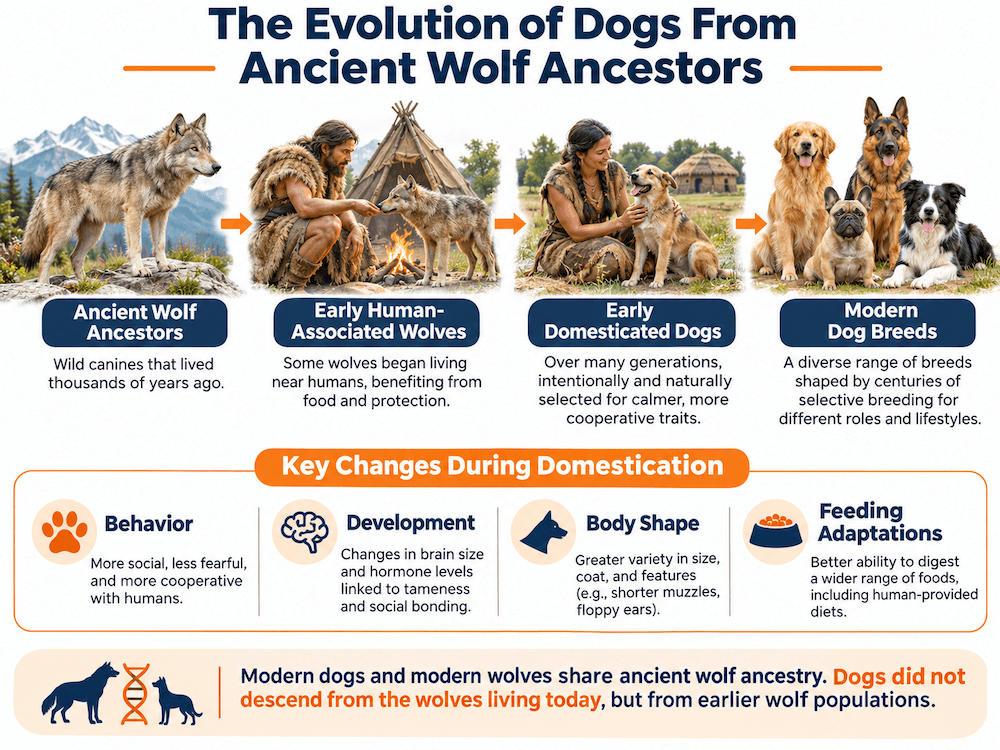
Domestic dogs evolved from ancient wolf populations through a gradual process called domestication, in which animals became increasingly adapted to living around humans. The exact location and timing remain uncertain, but dogs were already established companions in prehistoric human societies long before modern dog breeds existed.
The Evolution of Dogs From Wolves
Dogs did not evolve directly from the gray wolves living today. Instead, modern dogs and modern wolves share ancient wolf ancestry, and domestication likely involved wolf populations that no longer exist. Over many generations, dogs became increasingly different from their wild relatives. Changes in behavior, development, body shape, and feeding adaptations helped them thrive in human environments.
When Were Dogs First Domesticated?
The origins of dogs extend back at least 15,000 years, although some genetic estimates suggest the domestication process began earlier. Archaeological discoveries and ancient DNA provide important clues, but scientists have not established a single definitive birthplace.
-
More than 15,000 years ago — Early domestication
Ancient wolf populations began developing the traits associated with domestic dogs.
-
Approximately 14,000 years ago — Early archaeological evidence
Dog remains associated with prehistoric human burials provide strong evidence of close relationships.
-
By 11,000 years ago — Genetic diversification
Dogs had already developed several distinct ancestral lineages across different regions.
-
Recent centuries — Modern breed development
Selective breeding increasingly standardized dogs for particular appearances and functions.
How Dogs Became Different From Wolves
Although dogs retain many wolf-like features, domestication shaped how they interact with humans and adapt to different environments.
| Characteristic | Domestic Dogs | Gray Wolves |
|---|---|---|
| Relationship With Humans | Adapted to living alongside people. | Generally avoid close human contact. |
| Appearance | Highly variable sizes, coats, and body shapes. | More consistent, survival-adapted body proportions. |
| Feeding | Adapted to diverse diets, including starch-rich foods. | Primarily consume animal prey and some other foods. |
| Social Behavior | Often form close bonds with humans and other dogs. | Typically live in cooperative family groups. |
| Reproduction | Can breed throughout the year. | Usually breed seasonally. |
What Are the Physical Characteristics of Dogs?
Dogs have four legs, a muscular body, a flexible spine, a tail in most breeds, and a coat that varies considerably in texture and length. Although their appearance differs, domestic dogs share the same fundamental anatomy and body systems.


Basic Dog Anatomy
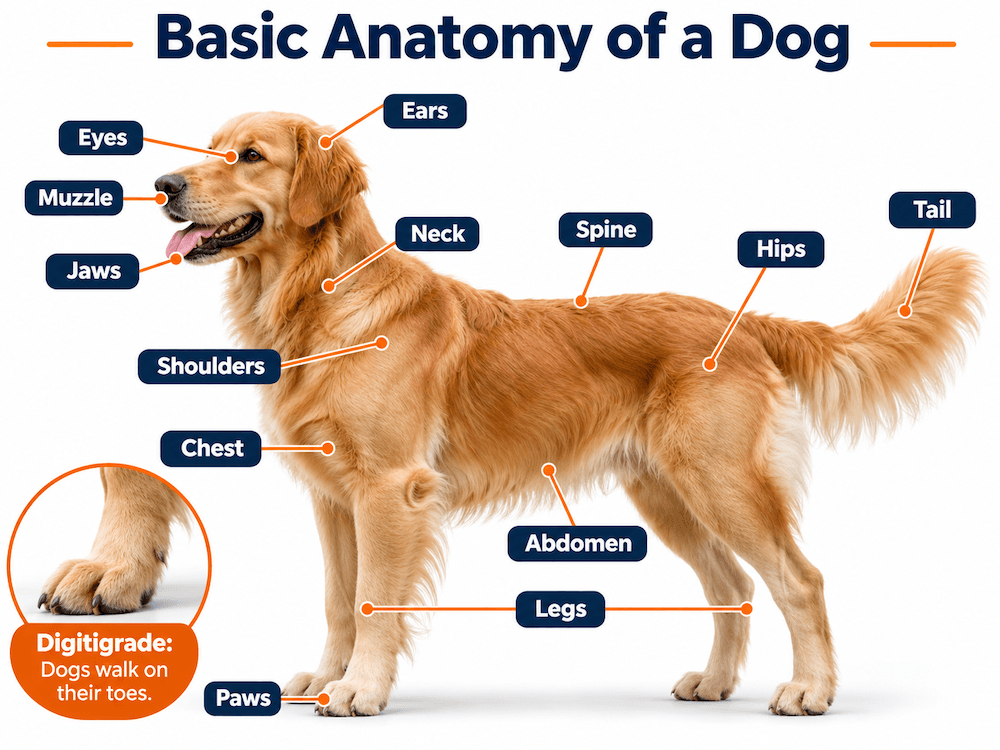
A dog’s body is designed for movement, sensory awareness, and physical activity. Its skeleton supports the body, muscles move, and internal organs perform essential functions such as breathing, digestion, and circulation. Important anatomical features include the muzzle and jaws, chest, abdomen, spine, shoulders, hips, paws, and tail. Dogs are digitigrade animals, meaning they walk primarily on their toes rather than placing their entire feet on the ground.
Dog Sizes, Body Shapes, and Coat Types
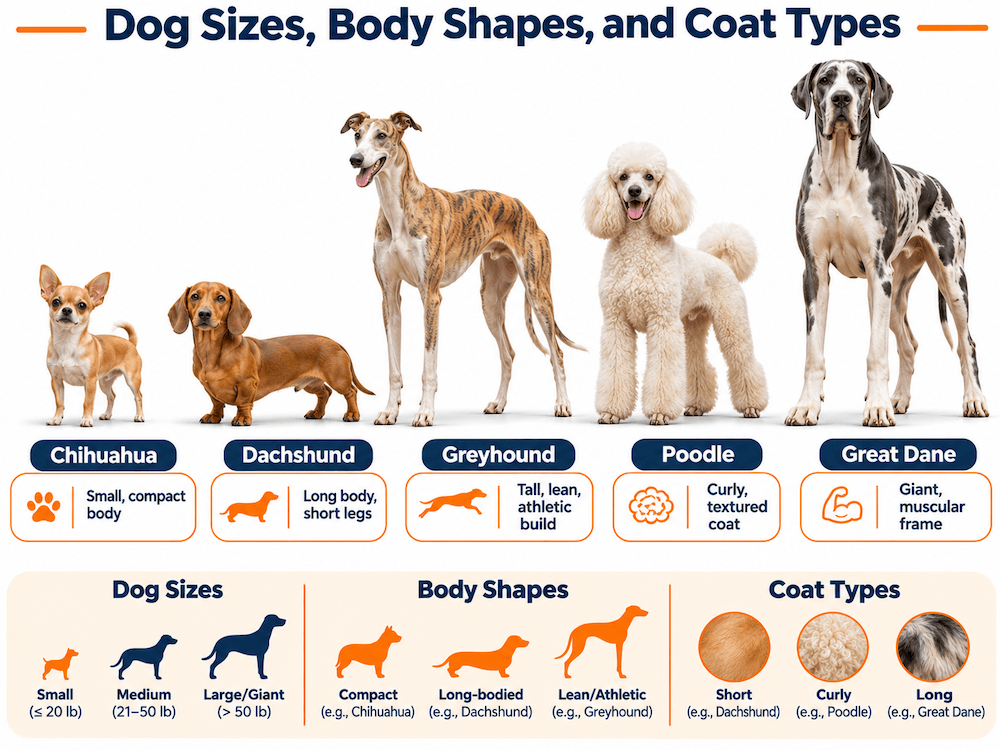
Selective breeding has produced remarkable physical diversity. A Chihuahua may weigh only a few pounds, while a giant Mastiff can weigh more than 150 pounds. Dogs also have different body proportions, including long-backed, short-legged, deep-chested, and short-muzzled builds. Their coats may be short, long, curly, wiry, double-layered, or nearly hairless.
These differences affect grooming, exercise tolerance, and certain health risks. For example, dogs with very short muzzles may experience breathing and heat-regulation difficulties.
How Dogs Move and Regulate Body Temperature
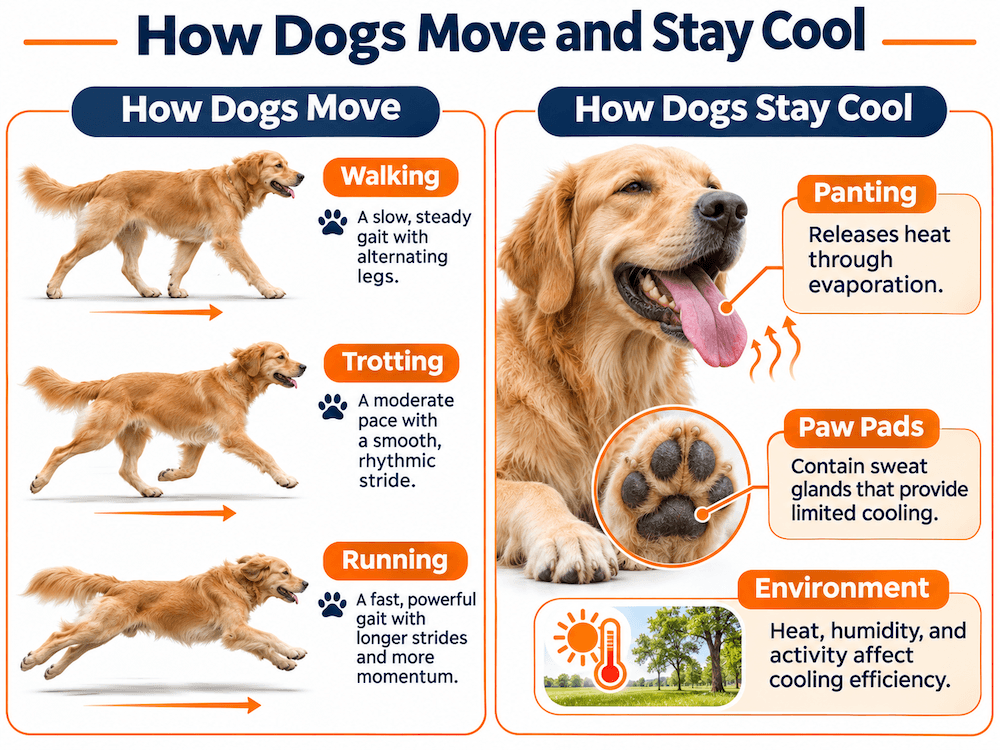
Dogs move using coordinated muscle movements and flexible joints. Depending on their build, they can walk, trot, run, jump, and change direction quickly. Unlike humans, dogs rely primarily on panting to release excess body heat, with limited cooling from sweat glands in their paw pads. Their ability to stay cool depends on factors such as temperature, humidity, activity level, coat, and physical condition.
How Do Dogs Experience the World?
Dogs experience their surroundings through the same five basic senses humans use, but their sensory priorities are different. Smell plays a particularly important role in how dogs identify people, explore environments, and recognize familiar places.
A Dog’s Five Senses
For owners, these differences explain why a dog might investigate a seemingly ordinary object for several minutes or respond to a faint sound before anyone else notices it.


What Are the Different Types of Dogs?
There are hundreds of recognized dog breeds worldwide, with breed recognition varying among national and international kennel clubs. Breeds differ in appearance, historical function, and some inherited tendencies, but individual dogs can vary considerably within the same breed.
How Many Dog Breeds Are There?
There is no single worldwide count of dog breeds because kennel organizations follow different recognition standards. As of 2026, the American Kennel Club (AKC) recognizes 205 breeds, while the Fédération Cynologique Internationale (FCI) recognizes approximately 356 breeds internationally. These figures can change as additional breeds receive official recognition, and some established breeds are recognized by one organization but not another.
The Seven Major Dog Breed Groups
One commonly used classification system organizes recognized breeds into seven groups based largely on their traditional functions.
| Breed Group | Traditional Purpose | Examples |
|---|---|---|
| Sporting | Finding and retrieving game. | Labrador Retriever, Golden Retriever |
| Hound | Tracking animals using scent or sight. | Beagle, Greyhound |
| Working | Guarding, pulling, and other demanding tasks. | Boxer, Siberian Husky |
| Terrier | Hunting vermin and small animals. | Scottish Terrier, Bull Terrier |
| Toy | Companionship in a small body. | Chihuahua, Pomeranian |
| Non-Sporting | Varied historical purposes and characteristics. | Bulldog, Dalmatian |
| Herding | Controlling and moving livestock. | Border Collie, Australian Shepherd |
Purebred vs. Mixed-Breed Dogs
A purebred dog has ancestry associated with a particular recognized breed, while a mixed-breed dog descends from two or more breeds or more diverse breeding populations. Neither category automatically guarantees better health, intelligence, or temperament. Responsible breeding practices, inherited disease risks, early experiences, and individual care matter more than a pedigree label alone. When choosing a dog, consider its expected adult size, exercise needs, grooming requirements, potential health concerns, and suitability for your household.
What Are the Natural Behaviors and Instincts of Dogs?
Many everyday dog behaviors originate from natural survival, exploration, feeding, and social instincts. Understanding their underlying purpose helps owners distinguish normal canine behavior from habits that may require additional training or management.
Six Common Natural Dog Behaviors
Are Dogs Naturally Social Animals?
Dogs are generally social animals capable of forming relationships with people and other dogs. However, sociability varies, and not every dog enjoys unfamiliar animals, crowded environments, or constant physical attention. Healthy social development involves positive experiences, predictable interactions, and opportunities to choose when to engage or move away.
Why Do Dogs Have Different Personalities?
A dog’s personality develops through a combination of genetics, age, early socialization, learning experiences, and environment. Some dogs are naturally more energetic or cautious, while others are more independent or people-oriented.
How Do Dogs Communicate?
Dogs communicate through vocal sounds, body language, facial expressions, and scent signals. Understanding these forms of communication helps owners recognize what their pets may be feeling and respond appropriately.
Vocal Communication
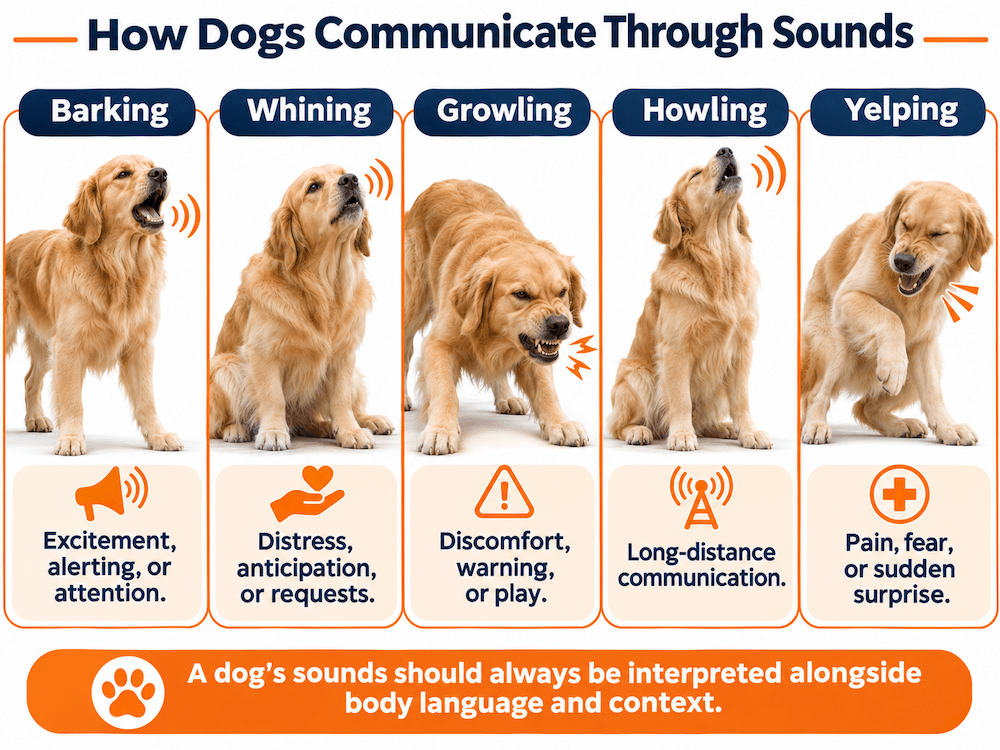
Barking, whining, growling, and howling can serve different purposes depending on the situation. A bark may indicate excitement, frustration, alarm, or a request for attention, while growling often communicates discomfort or a desire for more distance. The meaning depends on the dog’s overall behavior and surroundings rather than the sound alone.
Body Language and Facial Expressions
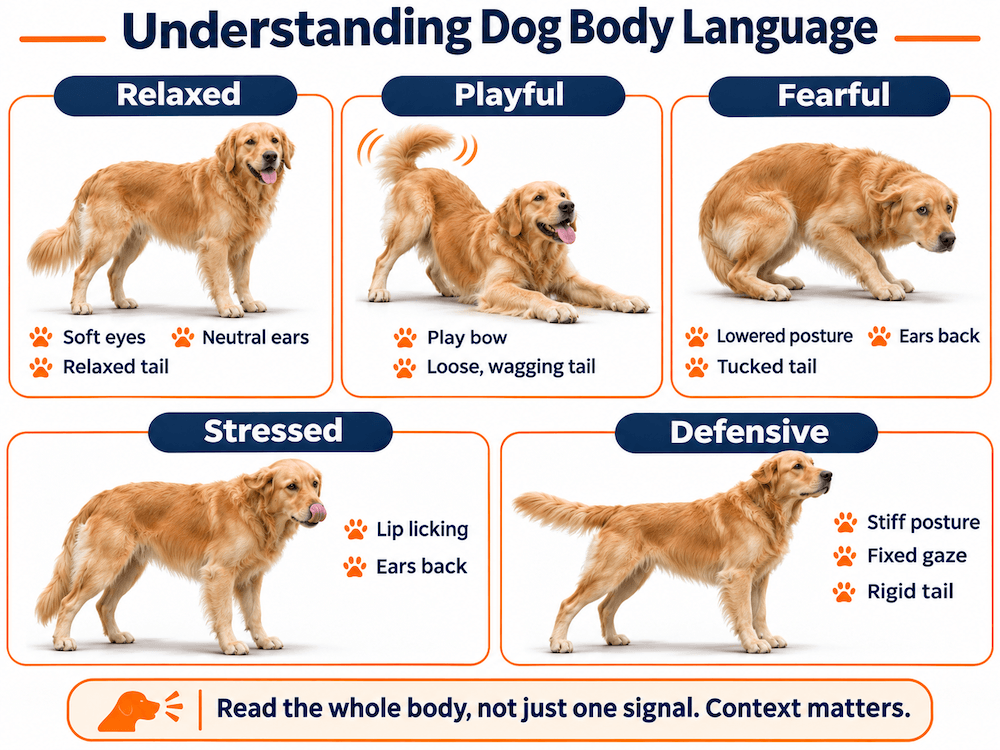
Dogs use their ears, eyes, mouth, tail, and posture to communicate. These signals should be interpreted together because one movement can have different meanings in different situations.
Scent-Based Communication
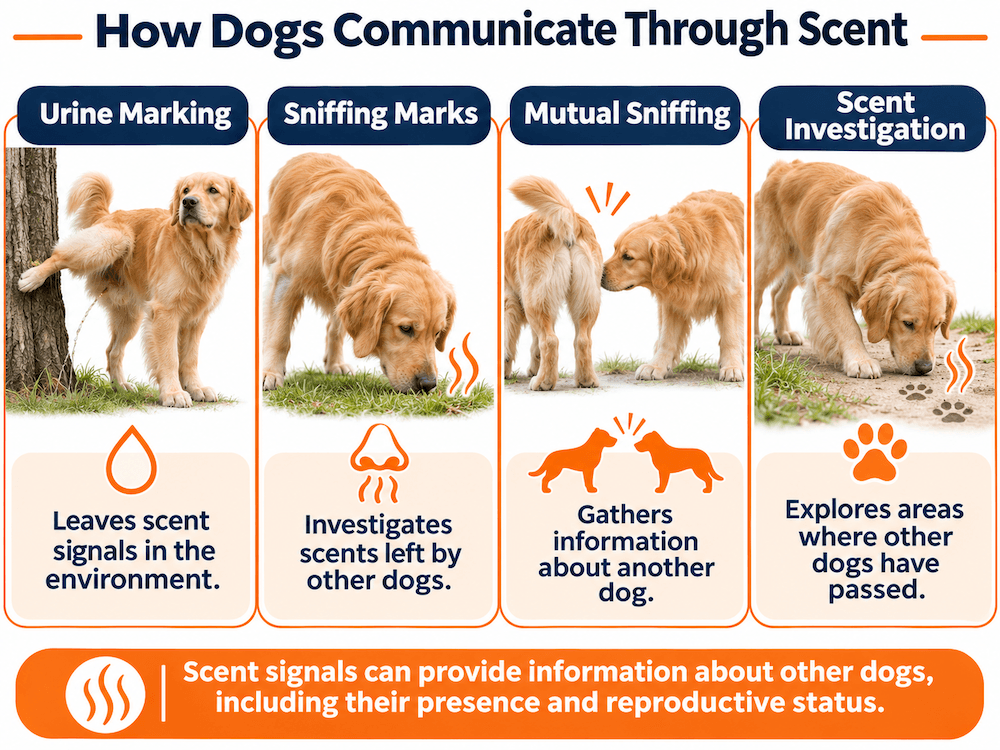
Dogs also communicate through odors released in urine, feces, and other body secretions. Scent marking can provide information about an animal’s presence, identity, and reproductive status. This is one reason dogs frequently investigate locations where other dogs have recently visited.
How Intelligent Are Dogs?
Dogs are intelligent animals capable of learning from experience, recognizing patterns, remembering familiar information, and adapting to human communication. Their abilities vary among individuals, and intelligence cannot be measured accurately by obedience alone.
| Ability | What Dogs Can Do | Real-Life Example |
|---|---|---|
| Learning & Memory | Learn through associations, rewards, repetition, and experience. | Remember familiar people, routines, and trained commands. |
| Understanding Humans | Interpret gestures, pointing, body language, and familiar words. | Follow a pointing gesture to locate a hidden treat. |
| Emotional Intelligence | Experience fear, excitement, pleasure, frustration, and social attachment. | Seek comfort from a trusted person when frightened. |
| Problem-Solving | Use experience and trial and error to overcome challenges. | Solve a puzzle toy to access a food reward. |
How Do Dogs Reproduce?
Dogs reproduce sexually and typically give birth to litters of live puppies. Their reproductive development and breeding cycles vary according to age, breed, body size, and individual health.
Sexual Maturity and Reproductive Cycles
Pregnancy and Birth in Dogs
How Mother Dogs Care for Their Puppies
What Are the Life Stages of a Dog?
A dog’s life progresses through distinct developmental and aging stages, each involving different nutritional, behavioral, and health needs. Because dogs mature at different rates, life stages depend on more than chronological age alone.
The Four Main Life Stages
The following stages provide a practical framework for understanding canine development and adjusting care as a dog grows older.
| Life Stage | Approximate Age | Primary Care Focus |
|---|---|---|
| Puppy | Birth to approximately 6–9 months. | Growth, socialization, vaccination, and early training. |
| Young Adult | Approximately 6–9 months to 3–4 years. | Continued maturity, exercise, and behavior development. |
| Mature Adult | Approximately 3–4 years until the final quarter of life. | Preventive care, weight management, and fitness. |
| Senior | Final 25% of expected lifespan. | Mobility, comfort, and age-related health monitoring. |
How Long Do Dogs Live?
Many domestic dogs live approximately 10–13 years, although some live considerably longer. Lifespan varies with genetics, body size, inherited health conditions, lifestyle, and access to veterinary care.
Smaller dogs generally have longer life expectancies than giant breeds, but there is substantial variation within every size category. Maintaining a healthy body condition and providing appropriate preventive care can help support a dog’s long-term well-being.
Why Do Dogs Age Faster Than Humans?
Dogs reach physical and reproductive maturity much earlier than humans and generally have shorter lifespans. However, canine aging is not uniform across breeds or life stages.
The familiar idea that one dog year equals seven human years is an oversimplification. Dogs develop especially rapidly during their first years, while later aging patterns differ according to size, breed, and health.
What Do Dogs Eat?
Dogs are nutritional omnivores, meaning they can obtain nutrients from both animal and plant ingredients. Although their ancestors relied heavily on animal prey, domestic dogs have developed adaptations that help them digest and use starch-rich foods. A dog’s diet should provide the nutrients needed for healthy growth, energy, tissue maintenance, and normal body function.
Essential Nutrients Dogs Need
Dogs need a balanced combination of nutrients to support energy, growth, muscle maintenance, and overall health. Protein, fats, carbohydrates, vitamins, minerals, and water each play important roles in maintaining normal body functions. The appropriate amounts depend on a dog’s age, size, activity level, and health status.
Protein
Fats
Carbohydrates
Vitamins and Minerals
Water
What Foods Should Dogs Avoid?
Not all human foods are safe for dogs, and some common ingredients can cause serious health problems even in small amounts. Certain foods contain toxic substances that can damage a dog’s kidneys, liver, nervous system, or red blood cells, while others pose choking or digestive injury risks.
Chocolate and caffeine
Grapes and raisins
Onions and garlic
Xylitol
Alcohol and macadamia nuts
Cooked bones
Why Are Dogs Important to Humans?
Dogs play important roles in human society, from providing companionship to performing specialized tasks that support safety, accessibility, and everyday life. Their adaptability and ability to develop cooperative relationships with people make them particularly valuable domestic animals.
Dogs as Companion Animals
Companion dogs provide friendship, affection, and opportunities for social interaction. Their daily care can encourage physical activity, establish routines, and create meaningful relationships between pets and their owners. However, dogs are not interchangeable companions. Their individual needs, energy levels, and tolerance for different environments determine how successfully they adapt to a household.
Dogs as Working Animals
Dogs have historically helped people with hunting, livestock management, transportation, and property protection. Many continue to perform specialized jobs that depend on their physical abilities and training.
Dogs That Assist People
Specially trained assistance dogs help people with disabilities perform important daily tasks. Examples include guide dogs for people with visual impairments, hearing dogs that alert their handlers to sounds, and service dogs trained to perform disability-related tasks.
Therapy dogs may also participate in supervised programs that provide comfort and positive interaction. Their role differs from that of task-trained assistance dogs, and legal classifications vary by location.
Where Do Dogs Live?
Domestic dogs live in nearly every region of the world, adapting to different climates, communities, and living arrangements. Although many live as household pets, others roam freely or live with limited direct human supervision.
| Living Environment | Characteristics & Considerations |
|---|---|
| Dogs Living With Humans | Live in homes, apartments, or farms. Need safe shelter, exercise, enrichment, and regular care suited to their individual needs. |
| Free-Roaming & Community Dogs | Move freely through communities, sometimes with owners or caregivers. Face risks from traffic, disease, parasites, and limited veterinary access. |
| Feral & Independent Dogs | Survive with little direct human care by scavenging or hunting. Remain domestic dogs biologically, even when living independently. |
What Do Dogs Need to Stay Healthy and Happy?
Dogs require more than food and shelter to maintain their physical and emotional well-being. Responsible ownership involves providing appropriate nutrition, veterinary care, exercise, enrichment, safe living conditions, and positive social experiences.
Essential Dog Care Checklist
Use this checklist to evaluate whether your dog’s everyday needs are being met.
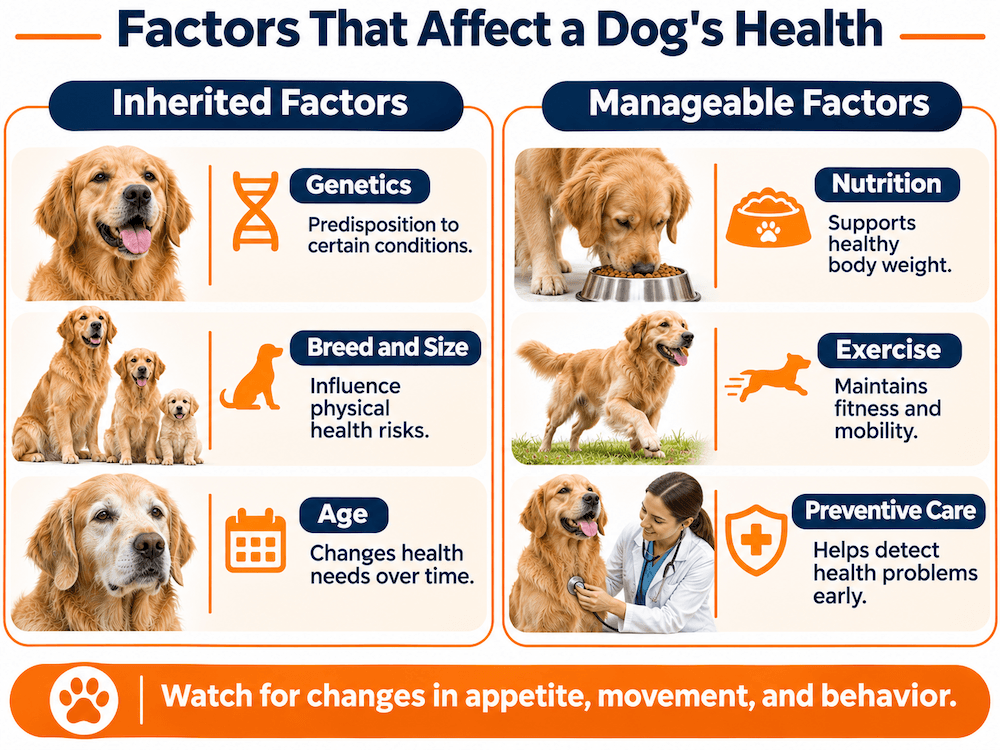
Common Factors That Affect a Dog’s Health
A dog’s health is influenced by both inherited traits and factors owners can manage through daily care. Genetics, breed, size, and age can affect susceptibility to certain health conditions, while proper nutrition, regular exercise, and preventive veterinary care support overall well-being.
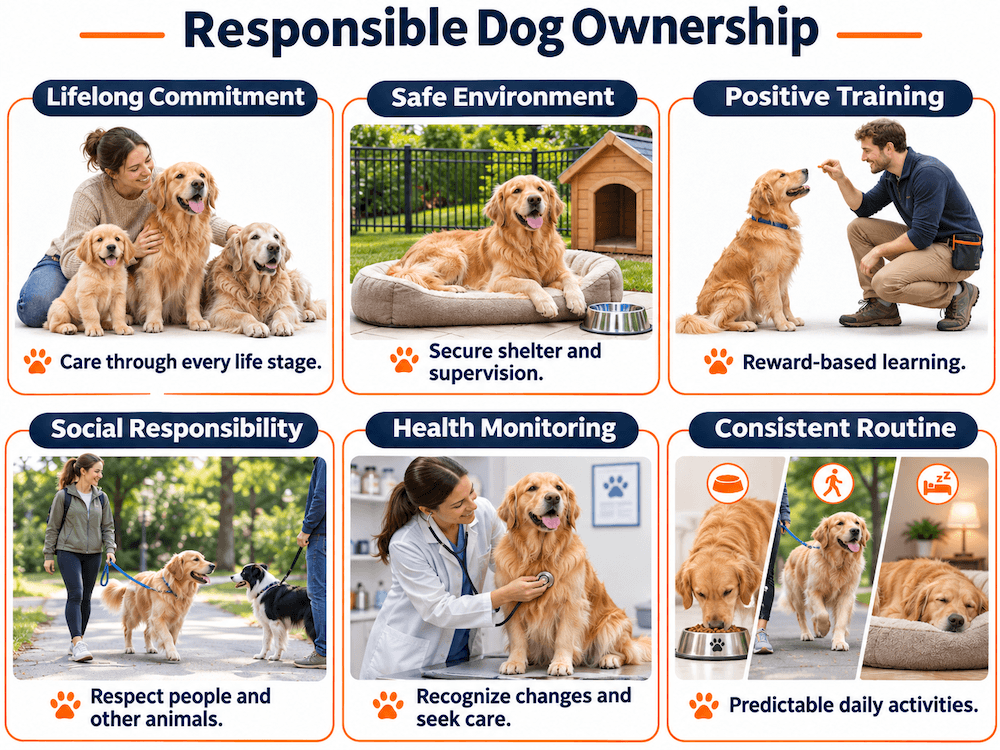
Understanding Responsible Dog Ownership
Responsible dog ownership involves a lifelong commitment to meeting a dog’s physical, emotional, and behavioral needs. This includes providing a safe environment, consistent routines, positive training, and appropriate veterinary care throughout every life stage.
Interesting Facts About Dogs
Dogs have several fascinating biological and genetic characteristics that are easy to overlook. Here are seven scientifically supported facts about domestic dogs.
Frequently Asked Questions
The Bottom Line
Dogs are remarkable domesticated animals whose evolutionary history, physical characteristics, and behavior reflect thousands of years of living alongside humans. Although all dogs share the same basic biology, they differ considerably in size, appearance, temperament, and individual needs. Their highly developed senses, instincts, and unique communication methods influence how they experience and respond to the world. Dogs are also intelligent, emotionally responsive animals capable of learning, solving problems, and forming strong social bonds. Throughout their lives, their nutritional, physical, and behavioral needs change as they grow from puppies into adults and seniors. Understanding these differences helps owners make informed decisions about training, nutrition, exercise, and preventive healthcare. By recognizing and respecting each dog’s individual characteristics, owners can provide the care, companionship, and environment needed for a healthy, fulfilling life.
Want to learn more about your dog’s unique abilities? Explore our guide on how smart dogs are to understand canine intelligence, memory, and learning. Discover why dogs wag their tails to better interpret their emotions and communication, or read about how long dogs live and the factors influencing their lifespan. For practical advice on building a stronger relationship with your pet, check out our complete guide on how to train a dog using positive reinforcement.