
What Music Do Dogs Like? 10 Types of Genres & Songs (According to Science)


Canine Bible is reader-supported. We receive affiliate commissions via some of our links. Learn more.
Dogs tend to respond best to calming music, particularly classical music, soft rock, and reggae. Research suggests these genres may help dogs relax, reduce stress, and feel more comfortable in unfamiliar environments. However, not every dog enjoys the same sounds, and some may prefer silence over music altogether. A dog’s reaction can depend on the volume, rhythm, individual temperament, and situation, whether they’re home alone, resting, or dealing with anxiety. But can music actually soothe a dog during thunderstorms, fireworks, or separation anxiety? And are specially designed dog playlists more effective than the songs you already enjoy? Understanding how dogs respond to different types of music can help you choose sounds that support their comfort and well-being.
Do Dogs Actually Like Listening to Music?
Dogs can hear music and distinguish between different sounds, rhythms, and acoustic patterns. However, it remains unclear whether they appreciate music in the same emotional or aesthetic way humans do. Their responses may reflect changes in alertness, comfort, or stress rather than enjoyment of a particular song.
In controlled kennel environments, certain music has been associated with increased resting, reduced barking, and changes in physiological stress indicators. These observations suggest that music can influence canine behavior, particularly in environments where unfamiliar noises and confinement may contribute to stress.
However, calmer behavior does not automatically prove musical preference. Much of the strongest evidence comes from shelter and kennel dogs, while research involving companion dogs at home has produced more limited and mixed results. A dog lying quietly during music may simply be relaxing, becoming accustomed to background noise, or responding to its surroundings.
What Kind of Music Do Dogs Like Most?
Five music categories have been examined in canine relaxation research: classical, soft rock, reggae, specially designed dog music, and pop. Although some have produced more promising outcomes than others, there is no scientifically established ranking of dogs’ favorite music genres.


The following options represent different types of auditory enrichment that dog owners can explore based on their dog’s individual responses.
1. Classical Music
Classical music has one of the strongest research foundations for promoting calmer behavior in dogs. Studies involving shelter and kenneled dogs have associated classical music with increased resting, more sleeping, and reduced barking. Soft piano compositions, slower melodies, and gentle instrumental arrangements are practical starting choices, while dramatic orchestral crescendos may be less suitable for relaxation.[1],[2],[3]

2. Soft Rock
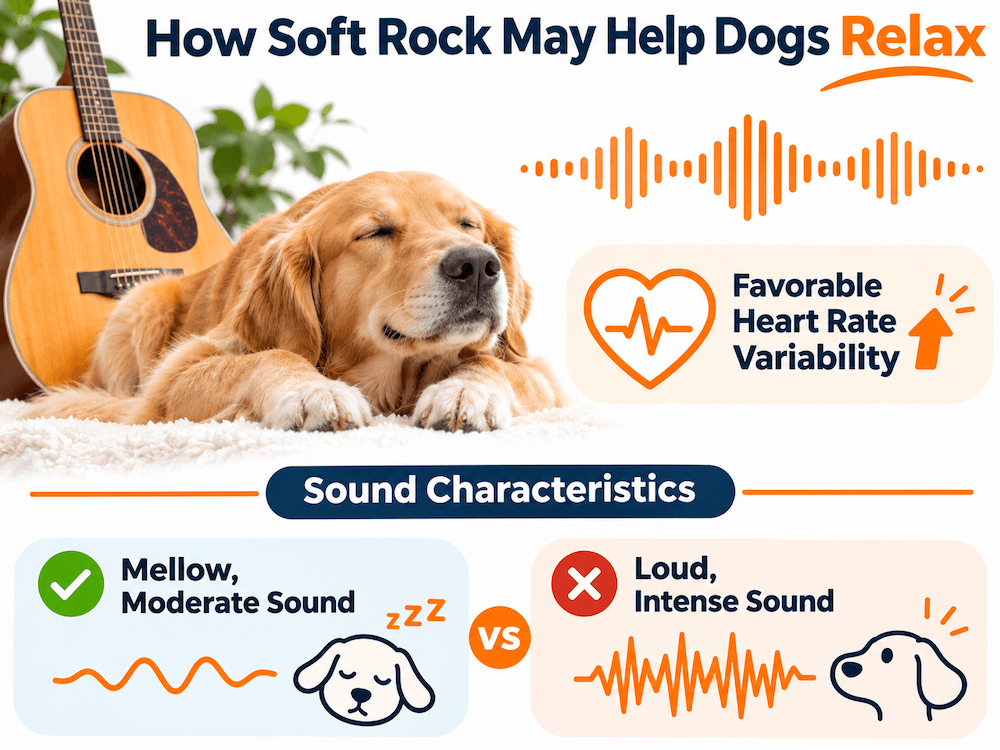
Soft rock features mellow guitar arrangements, moderate rhythms, and generally less intense vocals than harder rock styles. In a controlled study of 38 kenneled dogs, soft rock produced some of the most favorable heart rate variability responses, a measurement that can reflect changes in stress regulation.[4] These results make gentle, consistently paced soft rock a reasonable option, although they do not apply to all rock songs.
3. Reggae Music
Reggae often features steady rhythmic patterns, mellow instrumental arrangements, and a relaxed musical flow. In the same 2017 kennel study, reggae was associated with favorable heart rate variability responses compared with several other genres.[4] Gentle reggae tracks with consistent volume may therefore be worth trying, but the findings do not establish that all reggae songs calm dogs.



4. Music Specifically Designed for Dogs
Dog-specific relaxation music is composed or modified with the intention of creating a calmer listening experience for dogs. These tracks often feature simplified classical arrangements, gentle instrumentals, and reduced musical complexity. However, research has not consistently demonstrated that specially designed dog music works better than ordinary classical music, and a 2025 experiment involving 37 pet dogs found only limited benefits during brief owner separation.[5]

5. Pop Music
Softer pop music with consistent volume, smoother melodies, and fewer abrupt sound changes may be comfortable for some dogs. Pop was included in research comparing musical genres, but it produced less convincing calming responses than soft rock and reggae in the 2017 kennel study.[1],[4] It remains an additional listening option rather than an established canine favorite.

6. Ambient or Lo-Fi Instrumental Music
Ambient and lo-fi instrumental music may be useful for some dogs because it often features steady rhythms, soft textures, and minimal abrupt changes. These sound characteristics are similar to the calmer acoustic features that appear more tolerable in canine music studies, even though lo-fi itself has not been directly studied in dogs. It is best presented as a practical low-stimulation option, not a proven canine favorite.

7. Soft Jazz
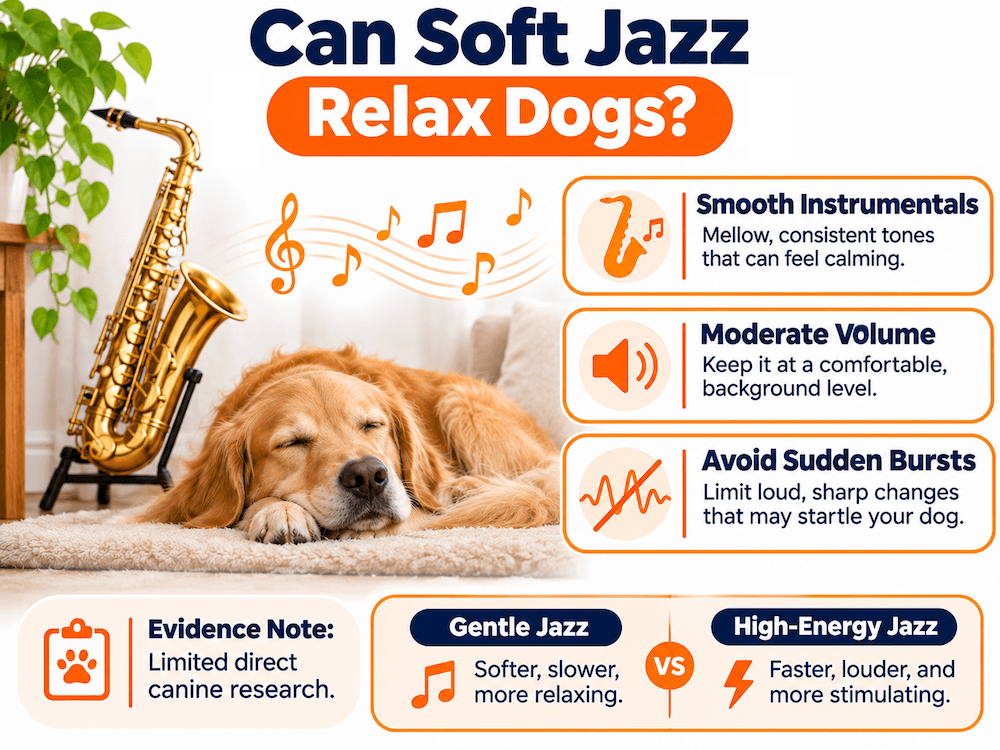
Soft jazz may suit some dogs when it is slow, mellow, and instrumentally light, especially if it avoids sudden brass bursts or highly energetic improvisation. While there is not enough direct research to identify jazz as a preferred canine genre, gentler jazz shares some of the same low-intensity qualities that may support relaxation. It should be framed as an optional trial choice for dogs that do well with smooth background sound.
8. Gentle Country or Folk Music
Gentle country or folk music may work for some dogs because it often includes predictable rhythms, acoustic instruments, and moderate pacing. However, dogs are more likely responding to the music’s sound qualities than to the genre itself, and direct evidence for country or folk is lacking. Songs with loud choruses, sharp twang, or sudden volume shifts may be less relaxing than softer acoustic tracks.

9. Instrumental Piano Playlists
Instrumental piano playlists are a practical option for dog owners who want a simple, low-intensity listening choice without vocals or heavy percussion. This category overlaps somewhat with classical music, but it deserves separate mention because many owners use standalone soft piano playlists specifically for naps, bedtime, or quiet time at home. The most suitable tracks are usually slow, consistent, and emotionally gentle, rather than dramatic or highly dynamic.

10. Nature-Integrated Relaxation Tracks
Some relaxation tracks combine soft instrumental music with nature sounds such as rain, streams, or light wind. These may help some dogs by creating a smoother, lower-intensity sound environment, particularly when the goal is to reduce the impact of sudden household or outdoor noise. Evidence is limited, so they should be presented as another enrichment option, especially for quiet resting periods rather than as a proven treatment.

What Kind of Music Do Dogs Dislike?
Dogs do not universally dislike specific musical genres. Their discomfort is more likely to depend on sound intensity, unpredictability, and individual sensitivity.
Why Do Dogs Respond Differently to Music?
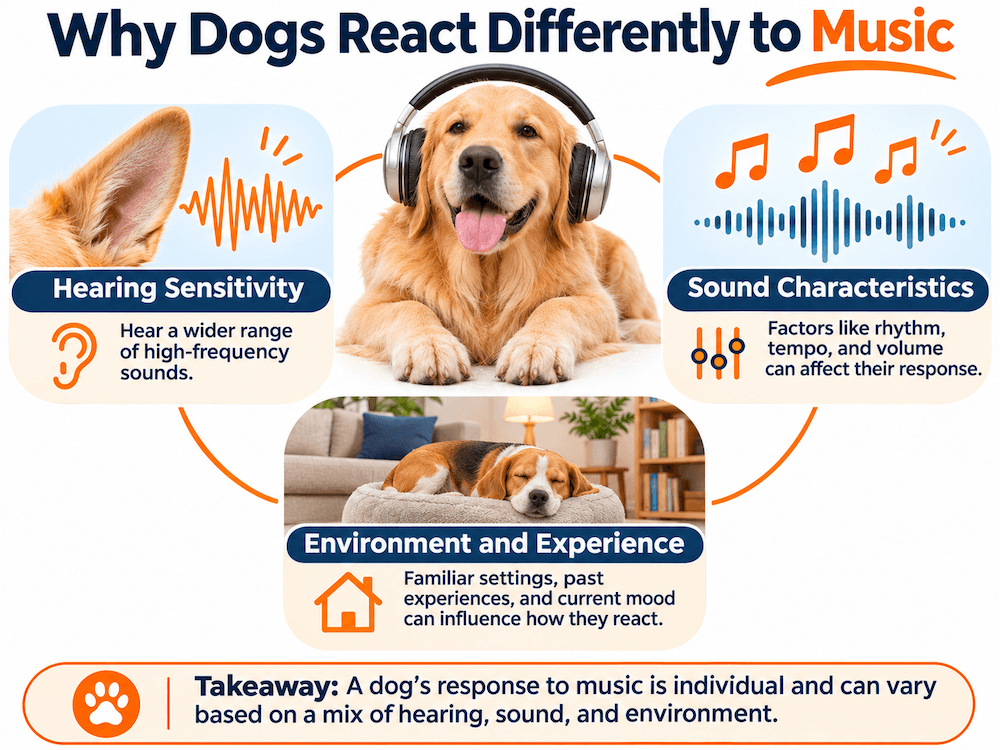
Dogs respond differently to music because of their hearing sensitivity, the characteristics of the sound, and their individual experiences. Factors such as volume, pitch, rhythm, and familiarity can influence whether music feels calming or uncomfortable. Understanding these differences can help you choose sounds that better suit your dog’s preferences and environment.
How Can Music Benefit Dogs?
Music can be a simple form of environmental enrichment, providing background stimulation that may make certain situations more comfortable. Its usefulness depends on the individual dog and the circumstances.
| Situation | Potential Benefit |
|---|---|
| Bedtime or naps | May encourage settling and comfortable resting. |
| Home alone | May provide familiar background sound during short absences. |
| Thunderstorms or fireworks | May partially mask outside noises for some dogs. |
| Shelters and kennels | May promote resting and reduce some stress-related behaviors. |
| Grooming or veterinary visits | May support a calmer environment during handling. |
Music should be treated as a supportive environmental tool rather than a guaranteed anxiety treatment. Its effects during short-term owner separation appear limited, and severe separation anxiety or noise phobias typically require more targeted behavioral management.
Watch a Dog Relax to Piano Music
Meet Bradford, a senior dog who appears calm and comfortable while listening to his owner’s piano playing. His reaction offers a heartwarming example of how dogs may settle around gentle music.
How to Tell If Your Dog Likes Music
Your dog’s body language provides the most useful clues about whether music appears comfortable or unpleasant. Look for patterns across several listening sessions rather than judging a reaction from a single moment.

Watch a Golden Retriever React to Guitar Music
Watch how Bailey the Golden Retriever responds when her owner plays the guitar. Her adorable expressions and playful head movements offer a heartwarming glimpse into how dogs react to music.
How to Find the Best Music for Your Dog
Finding the best music for your dog is a process of testing different sounds and observing their reactions. A simple, gradual approach can help you identify which tracks appear useful without overwhelming your pet.
When to Call a Veterinarian About Your Dog’s Reaction to Music
Occasional reactions to music are usually harmless, especially if your dog settles once the sound stops. However, persistent fear, increasing sensitivity to everyday noises, or sudden changes in sound tolerance may indicate an underlying behavioral or medical issue. Contact your veterinarian if these reactions become frequent, worsen, or interfere with your dog’s normal activities.
Sound sensitivity accompanied by ear pain, frequent head shaking, balance problems, or other physical symptoms warrants prompt veterinary attention. Dogs with severe noise phobias or separation anxiety may also benefit from professional behavioral support. A veterinarian can identify possible causes and recommend appropriate management, including behavior modification or medication when necessary.
Frequently Asked Questions
The Bottom Line
Dogs may respond positively to classical music, soft rock, and reggae, although no single genre is guaranteed to relax every dog. Gentle melodies, consistent rhythms, and low volumes are generally better choices than loud or unpredictable sounds. A dog’s response also depends on individual temperament, familiarity, and surroundings. Watching for relaxed body language, comfortable resting, or signs of discomfort can help you understand how your dog responds. Experimenting with different tracks and comparing their reactions during quiet periods can reveal what works best. While music can create a more peaceful environment, it should not replace proper care for anxiety or sound sensitivity. Ultimately, the best music for your dog is whatever helps them feel comfortable, even if that means choosing silence.
Sources
- The Influence of Auditory Stimulation on the Behaviour of Dogs Housed in a Rescue Shelter
- Behavioral effects of auditory stimulation on kenneled dogs
- Classical cuts: a pilot study of classical music’s effects on dogs in grooming settings
- The effect of different genres of music on the stress levels of kennelled dogs
- The effects of music designed for canine and human relaxation on short-term stress in dogs